

A corps member committed to prison
Ajibare Oluwasegun, a serving National Youth Service Corps (NYSC) member, shockingly found himself at the Oke-Kura Correctional Facility in Ilorin, Kwara State, on May 9, 2026.
The Digital Tracking Unit of the Nigeria Security and Civil Defence Corps (NSCDC), Kwara State Command, tracked him after he criticised the collapse of the state’s Moro Bridge on social media.
In the post, Oluwasegun, a native of Arandun in Ifelodun Local Government Area (LGA), Kwara State, accused the state government of wasting taxpayers’ money on the bridge, which reportedly collapsed shortly after repair.
He expressed sadness over the damage to the bridge, which he said served more than 20 communities whose residents and other users would face difficulties moving through the area. He told the ICIR that the comment had offended the state government.
Soon after, NSCDC officers, allegedly acting on a court’s directive, travelled to Ikirun in Osun State and arrested Oluwasegun at his place of primary assignment. They moved him approximately 70 kilometres away to Ilorin and remanded him at the correctional facility alongside convicted criminals until June 8, when the Kwara State High Court granted him bail.
The head of the NSCDC Digital Tracking Unit in Kwara State, Musa Jude, with whom Oluwasegun had developed a friendship in the past, insisted he acted on the court’s directive to produce Oluwasegun.
“We were requested by the court to track, arrest and hand over the accused,” he stressed, adding that “Even though I knew him before then, I must not be unprofessional in my duty. I had to carry out the task.”
Asked why Oluwasegun was thrown into jail rather than the custody of the NSCDC, Jude said the court warrant issued against the corps member was “a warrant of commitment to prison.”
He hinted that the corps member must have ignored the court’s invitations, which mandated a warrant to be issued against him, adding that the NYSC headquarters in Osun State was briefed after his arrest.
Jude, however, boasted of the NSCDC’s tracking facilities, saying it was why the corps was tasked with tracking and producing Oluwasegun. He, however, declined to provide further details on the tracking devices used to locate the corps member.
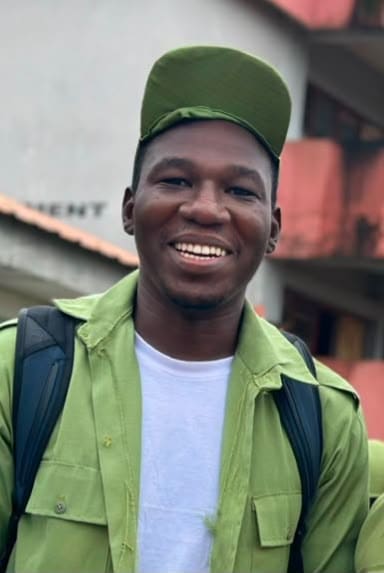
Meanwhile, Oluwasegun denied receiving the court’s invitation, accusing the NSCDC officials of swooping in on him.
“I was not informed of any court invitation,” he said. “The police invited me via a call, and I duly informed them that I am serving in Osun State. I said they have to go through the NYSC. After that, I did not hear from them again,” he added.
Speaking on his travails, the corps member alleged that he was tracked through his phone number and the people he often communicated with. “They arrested my neighbour before he brought them to my place of primary assignment in Ikirun,” he said.
This reporter contacted Oluwasegun’s father, Gbadebo, and his ailing mother, Folasade, who described their son as a kind-hearted young man whose commitment to the well-being and happiness of those around him had been evident since childhood.
The ICIR reports that Oluwasegun’s activism has been evident since his university days. He was admitted to Kwara State University in 2017, but his graduation was delayed after the school rusticated him for allegedly inciting students against the school authority.
“It took me seven years to graduate. I was rusticated at 500 level. I was re-admitted a year later to complete my Food and Agricultural Engineering programme,” he told the reporter.
Though his case with the Kwara State government remains in court, Oluwasegun, a member of the Batch 2025 B1 stream of the NYSC, left Kwara State prison on June 8 and passed out as a corps member a day later.
Tracked from Ilorin to Abuja for protesting against insecurity
In early 2026, police detectives stormed the Abuja residence of Musa Saidu Tsaragi, leader of the Take It Back Movement and the African Action Congress (AAC) governorship candidate in Kwara State. They whisked him to Ilorin, where he had led a protest against insecurity in July 2025.
Tsaragi accused the state officials of being peeved by the 2025 protest, which was against the rampant killings, abductions, and other violent crimes. Though he was arrested alongside other protest leaders in early 2026, Tsaragi said they were all released the same day, but alleged that Kwara State officials were displeased and consequently petitioned the police to rearrest him.
Narrating how he was rearrested, Tsaragi said, “I was sleeping in my house around 3 pm when a detachment of police officers in three vans stormed my Abuja home. They first arrested one person in Ilorin, and me in Abuja. One other person came in from Lagos.”
He said he was taken to court and thereafter kept at the Oke-Kura Correctional Centre in the state capital.
Tsaragi explained that a magistrate court in Ilorin granted him bail and later dismissed the case against him and others. But the state Commissioner of Police filed another case against them at the State High Court.

He described himself as a regular visitor to Oke-Kura Prison following his alleged repeated arrests and detention for leading protests in the state since early 2025.
Providing details as to how the police had located his home, the activist said the law enforcement agents had previously boasted that they would get him or anyone they targeted wherever they were in the country.
After that experience, Tsaragi said he took several precautionary measures, including abandoning the phone numbers through which he had previously communicated with people.
Reacting to the use of public funds to procure tracking devices that are used on citizens, Tsaragi wondered why security agents in the state could not use their surveillance and tracking devices to fight insecurity in the state, insisting that “There are a lot of kidnappings and other forms of insecurity going on in Kwara State. The Civil Defence, the Army, and the SSS could not track them. Their tools only work when they have issues with civil actors because they know we are unarmed.”
Akande Daniel: Tracked, tried for treason, later acquitted by court
The story of Akande Daniel and 10 others tried in the August 2024 #EndBadGoverance protest remains fresh in the minds of many Nigerians.
“On the 1st of September, 2024, I was tracked down by members of the Nigeria Police Force. Before then, they intruded into my phone calls – the conversations I had with some people. About four or five people were arrested before they got to me.”
He said security agents had stormed his church in New Nyanya, arrested him and moved him to the Intelligence Response Team (IRT) facility in Guzape, Abuja, where he said he was detained for two months in a “freezingly cold underground detention” before being charged in court.
But Danied said he noticed signs that security agents were onto him even before the arrest. “Before my arrest in September 2024, I received repeated calls from unfamiliar numbers asking me to come and collect a parcel. I also received messages asking me to click on links.”
He said the incidents were particularly concerning because other activists had experienced similar messages which led to their arrests, adding that, “These similarities raised serious questions for us about whether the calls and messages were connected to attempts to target activists.”
Narrating what happened on the day of his arrest, Daniel said, “While they were trying to confirm my identity, they took a photograph of my face and sent it to their unit head. During a telephone conversation with the officers, the unit head asked where Macaulay (another activist) was and referred to a telephone conversation I had previously had with him, mentioning the specific date, time and duration of the call. I was struck by the level of detail he appeared to have about our communication.”
While at the IRT facility, Daniel said a police officer told him his telephone conversations with Macaulay and another activist, Salako Kayode, had been tracked. “The circumstances surrounding my arrest and detention gave me concrete reasons to question whether my telephone records had been accessed and whether attempts had been made to compromise my digital security,” he told The ICIR.
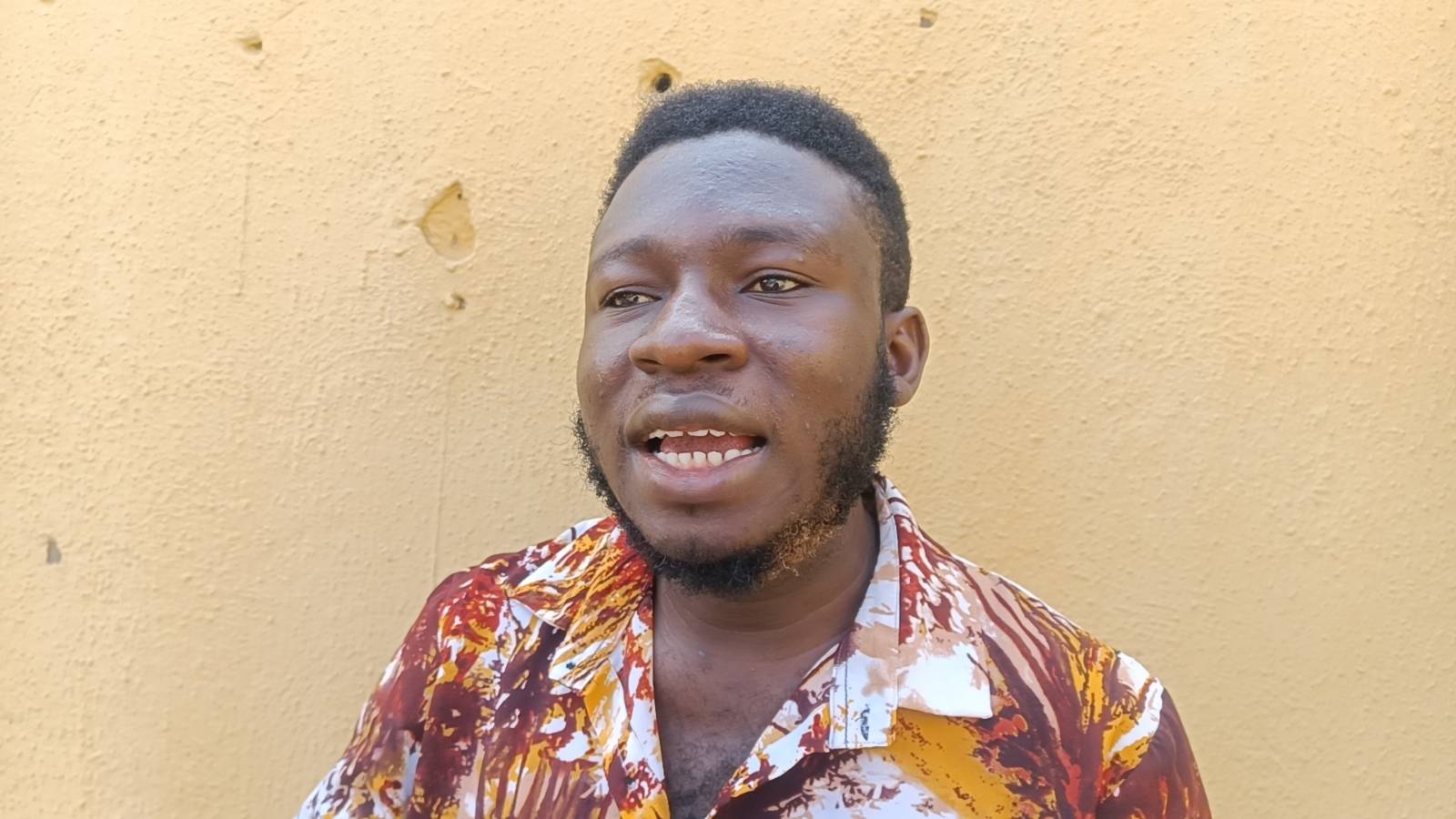
These experiences remain fresh in Daniel’s memory two years later. He recalled that what happened during their detention could best be described as “brutal harassment and torture of the detainees,” adding that many people were detained without the knowledge of their family members.
He said the police had gone as far as Kano, Kaduna, and Jos to bring protesters to Abuja to face treason and terrorism charges following their involvement in the EndBadGovernance protest.
Omole Ibukun – Tracked, evades arrest during #EndBadGovernance Protest
Omole Ibukun realised he was on the radar of security agents after some of his colleagues, including Michael Lenin, were arrested during the #EndBadGovernance protest of August 1, 2024.
He alleged that unidentified individuals repeatedly tried to hack his WhatsApp account during the planning of the protest.
Ibukun explained that though protest organisers had been tracked by the security agents weeks before the demonstration, the surveillance climaxed with the arrest of his comrades. “By chance, I was not in the house that day. Everybody in the house was picked. That was evidence that tracking happened that day.”
“The Nigerian government has invested more in surveilling activists just to make it impossible to do activism. You can see a lot of instances; people just say something online, and the state operatives get them picked up. Activists, journalists, other citizens get picked up,” he said.
He explained that surveillance serves a legitimate purpose when used for public interest rather than against government critics, adding that the intention to suppress activism often ends in futility as those seeking the nation’s good would not be discouraged.
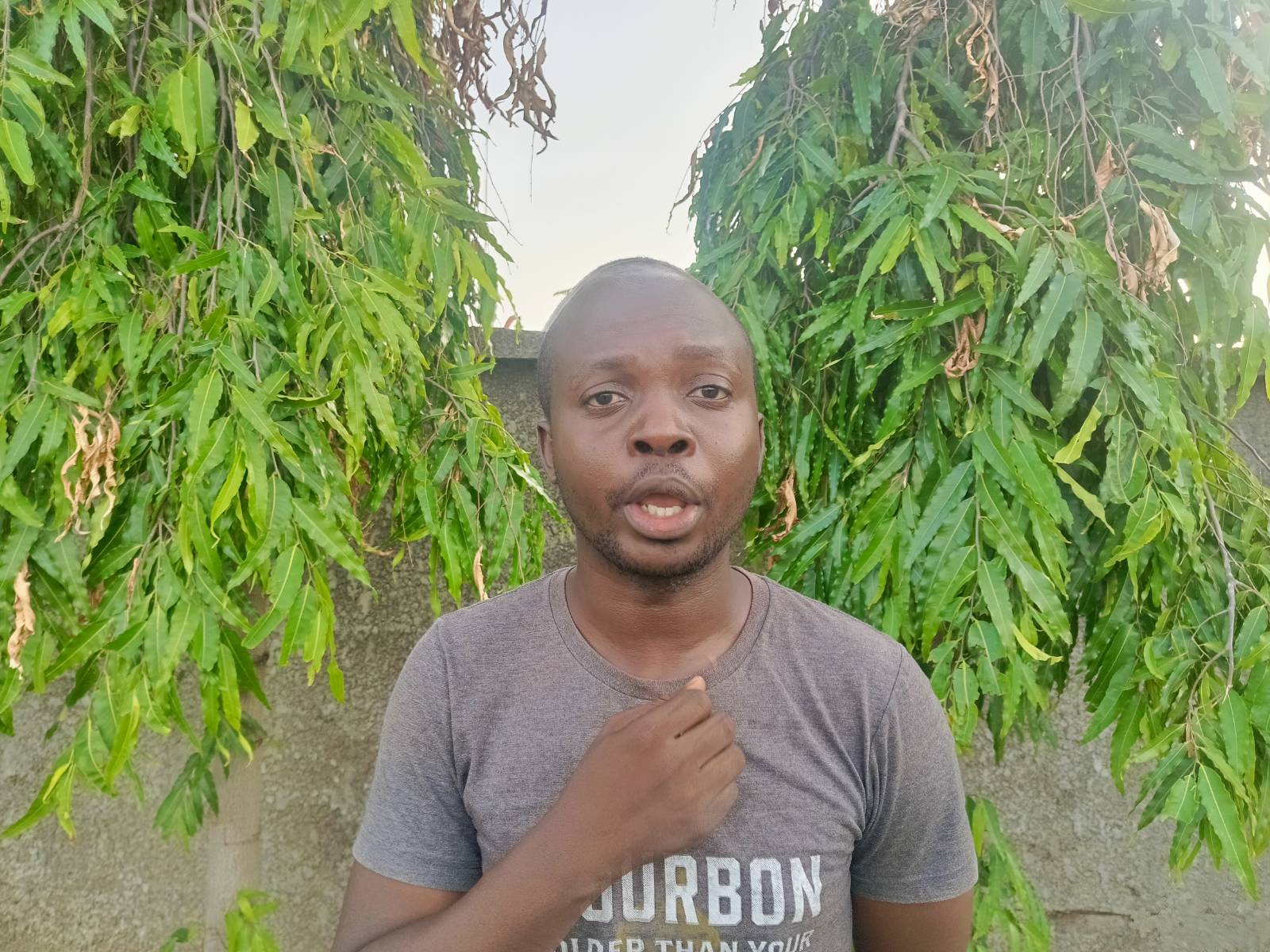
Ibukun believes that Nigeria is no longer safe for activism. He said everyone who speaks against the government is just a comment or post away from arrest.
He urged Nigerians not to relent, adding that every form of resistance counts. “If it is one post that you can make, if it is one article that you can write. If it is one investigative piece that you can write. If it is one placard that you can raise, every form of resistance matters because Nigeria has a population of about 250 million people. You can’t just change Nigeria with one protest or act of resistance. Change happens gradually.
Nigeria’s huge investment in digital tracking devices
Oluwasegun’s experience, with others captured in this report, highlights the widespread human rights abuses by state actors in the country. In addition to using brutal force, state officials bank on splurging state funds to procure technologies capable of wiretapping citizens’ digital communications.
Meanwhile, Section 37 of the Nigerian Constitution protects citizens’ privacy, their homes, correspondence, telephone and telegraphic conversations. Similarly, Section 39 of the Cybercrimes (Prohibition, Prevention, etc.) Act 2015 (as amended in 2024) states that any interception of electronic communications by state actors must be carried out under lawful authorities, including through a court order.
Events in Nigeria show that citizens’ rights in this regard have been widely abused, leaving many people too afraid to speak out or protest, either physically or online, against unfavourable government policies.
The government has also relied on the widely criticised Cybercrime Act to investigate, arrest and prosecute civil actors and journalists over online publications critical of public officials, government policies and other issues of national importance.
Reports show that both the federal and state governments use digital surveillance technology to track citizens in Nigeria, with states in the South-South, namely Bayelsa, Delta and Rivers, leading the pack.
In a 2023 report, the Institute of Development Studies and African Digital Rights Network described Nigeria as Africa’s largest surveillance customer, spending $12 per citizen.
The report showed that the nation has contracts with leading surveillance technology producers in Israel, the UK, the US, China, and the EU.
Several reports, including this, this, and this, exposed how the Office of the National Security Adviser (NSA), Nigeria Police Force (NPF), Nigeria Intelligence Agency (NIA), Defence Intelligence Agency (DIA), State Security Services (SSS) and other security institutions, as well as some state governments in the country, procure surveillance tools to monitor and arrest citizens without a court warrant as required by law.
These devices, including Graphite, manufactured by Israel-based Paragon Solutions Ltd; Pegasus by the NSO Group, also based in Israel; and FinFisher, otherwise known as FinSpy, Predator, developed by Cytrox; Reign, associated with QuaDream; DarkMatter Karma, linked to the former UAE-based company DarkMatter; and DevilsTongue, developed by the Israeli company Candiru, are examples of commercially developed spyware platforms used by governments for tracking citizens, including journalists, activists, political opponents and criminals.
These tools are highly sophisticated and can monitor a wide range of activities on people’s phones, computers, and laptops, including calls, text and WhatsApp messages, and Facebook Messenger conversations, even if they have been deleted from the devices.
While advanced digital spyware has become more widespread and publicly documented over the last 10–15 years, spyware first emerged in the 1990s, when early programmes tracked users’ behaviour primarily for advertising and data collection.
Nigeria’s budget for digital spyware tools
A 2020 report by the University of Toronto’s Citizen Lab gives a big picture of how public funds are funnelled into spying on citizens. Another report by the ICIR in 2021 revealed how the National Assembly approved N4.8 billion for the NIA to monitor WhatsApp, phone calls, and text messages of Nigerians.
Two years later, more damning research by the Institute of Development Studies showed that Nigeria spent at least $2.7 billion on surveillance tools from 2013 to 2022.
Similarly, the UN Comtrade reported that Nigeria imported an estimated $6.61 billion worth of spyware tools between 2015 and 2024.
The NSCDC, which tracked Oluwasegun in Kwara, got a total of ₦5.56 billion in the Federal Government’s appropriation acts between 2021 and 2026. The budgets covered the purchase of security, operation, and communication equipment, and the establishment of infrastructure for surveillance.
A breakdown of the budgets, obtained by The ICIR from the Budget Office of the Federation, shows that the organisation received ₦972 million and ₦402.5 million in 2021 for the purchase of security, operation, and communication equipment. In 2022, the government approved ₦1.57 billion and ₦319.8 million, plus an additional ₦451.8 million for the purchase of security equipment, establishment of infrastructure for surveillance, intelligence gathering and forensic investigations, and for operation and communication, in that order.
In 2023, the NSCDC was awarded ₦1.146 billion for the purchase of security equipment, another ₦136.46 million for the establishment of infrastructure for surveillance, intelligence gathering and forensic investigations, while it secured an allocation of ₦365.3 million for the purchase of operation and communication equipment.
Similarly, it was awarded ₦56 million in 2024, ₦82.1 million in 2025 and N57.5 million in 2026 for the purchase of security equipment. 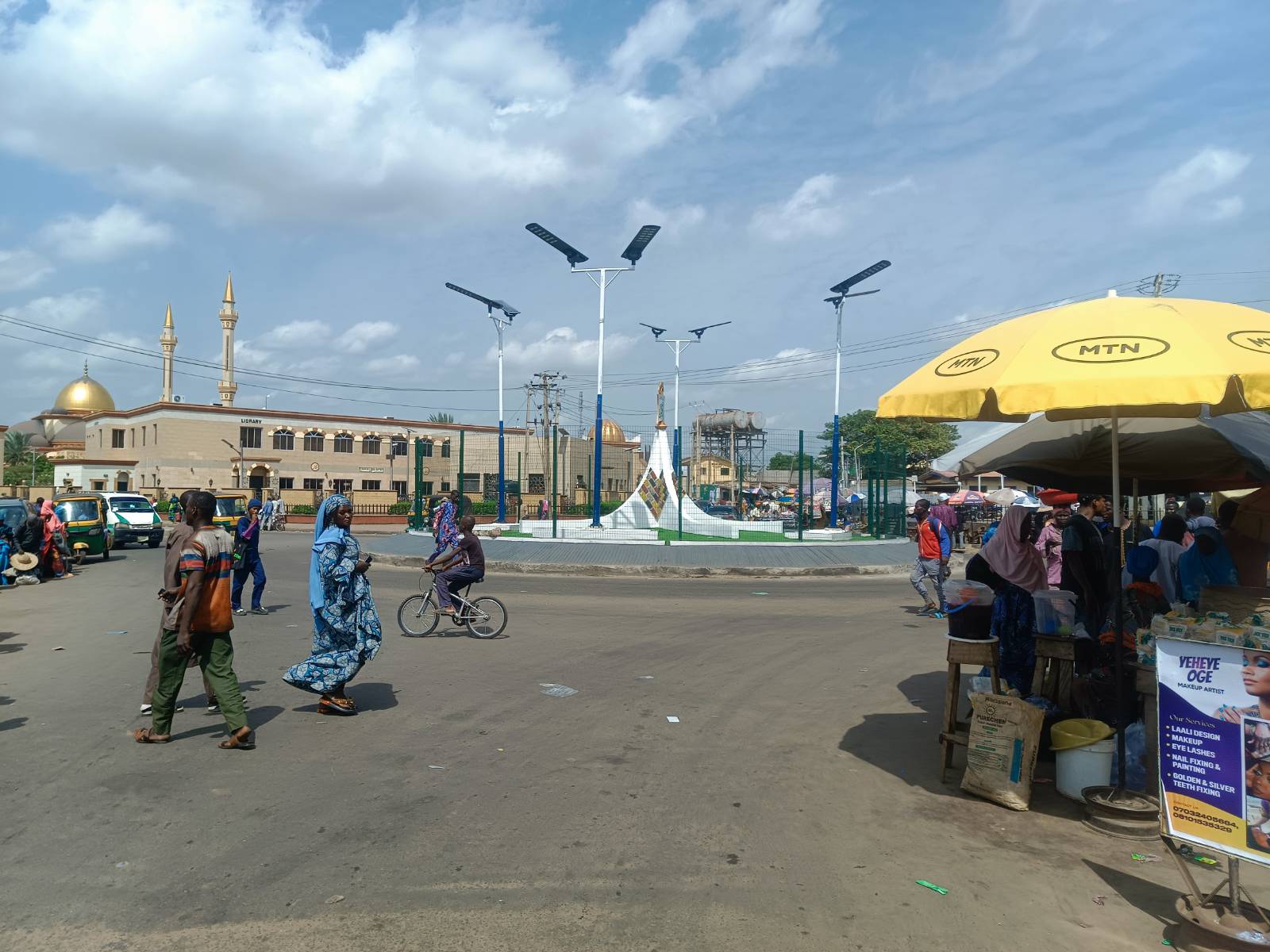
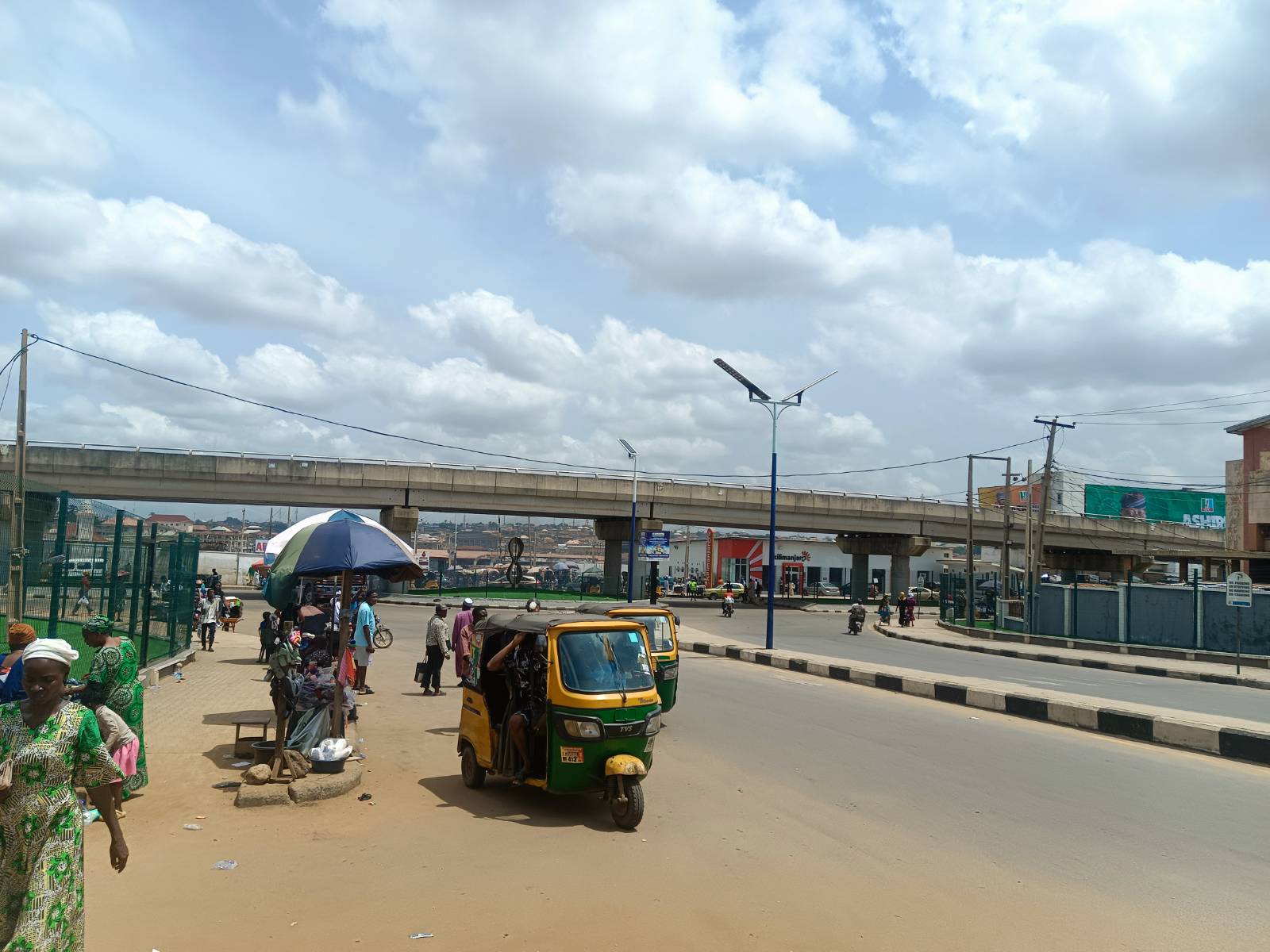
Oke Kura Roundabout, Ilorin. Meanwhile, between 2020 and 2025, the Nigeria Police Force reportedly received multibillion-naira allocations to procure intelligence equipment, tracking technologies and upgrade a strategic surveillance platform codenamed COBWEB.
“In 2020 alone, the Force under the Ministry of Police Affairs budgeted ₦38 million for intelligence equipment, ₦257 million for the upgrade of intelligence tracking/monitoring systems, including the COBWEB OEM Licensing renewal and system. The following year, it allocated ₦154 million for intelligence tracking and monitoring systems, including COBWEB Original Equipment Manufacturer (OEM) licence renewal and system maintenance, alongside another ₦125 million for intelligence equipment.
According to the report, in 2022, the police budgeted ₦1.1 billion for intelligence equipment for the Technical Intelligence Unit (TIU), Intelligence Response Team (IRT) and Interpol. Funding increased significantly in 2023 with a budget of ₦7.5 billion as a Special Intervention Fund for the procurement of a Cyber Intelligence Tracking System (CITS), while another ₦4 billion was budgeted for the activation and upgrade of the COBWEB strategic surveillance platform.
“The system was allocated an additional ₦2.9 billion in 2024, and another ₦2.9 billion in 2025 for further activation and upgrades under the Technical Intelligence Unit,” the report said.
Despite these significant allocations, the nation continues to face severe insecurity, with criminal groups operating with sheer impunity.
Security experts and lawyers who spoke with this reporter said countries procure spyware tools mainly for the protection of their people, and not for use against law-abiding citizens.
Lateef Hamzat, founder/COO of CyberPlural MSSP, a security operations & engineering cyber warfare, adversarial cyber firm, and a digital rights researcher and lawyer, Ridwan Oloyede, insist that when such devices are used to monitor citizens’ communications, they should be done with a court warrant and for the prevention of crimes.
Kwara government, police decline comment
The ICIR contacted the Kwara State Government and the state Police Command on Friday, July 24, for reactions to Tsaragi and Oluwasegun’s claims.
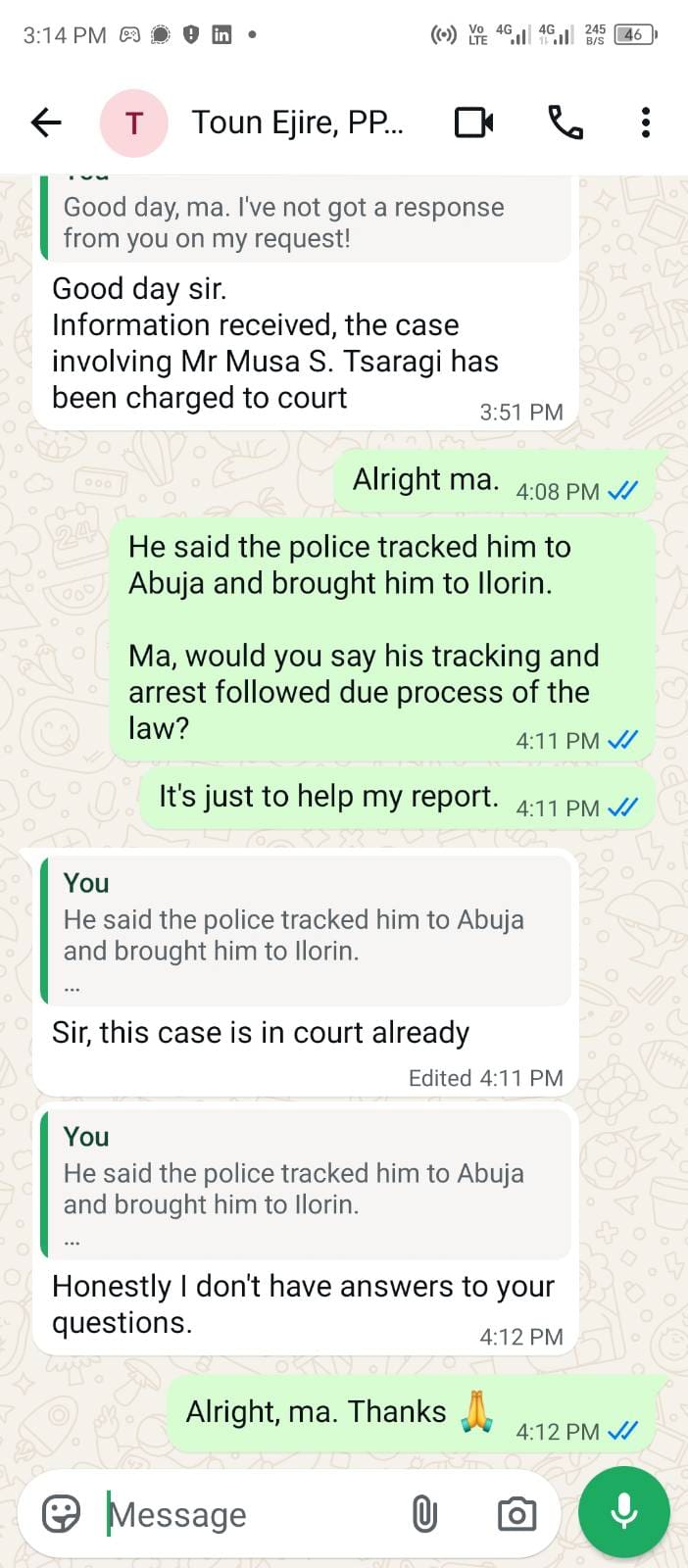
The police spokesperson in the state, Ejire Adetoun, a deputy superintendent of police, said she could not comment on claims by Tsaragi because his case was in court.
Similarly, the Kwara State Government did not respond to the allegations raised by both Tsaragi and Oluwasegun.
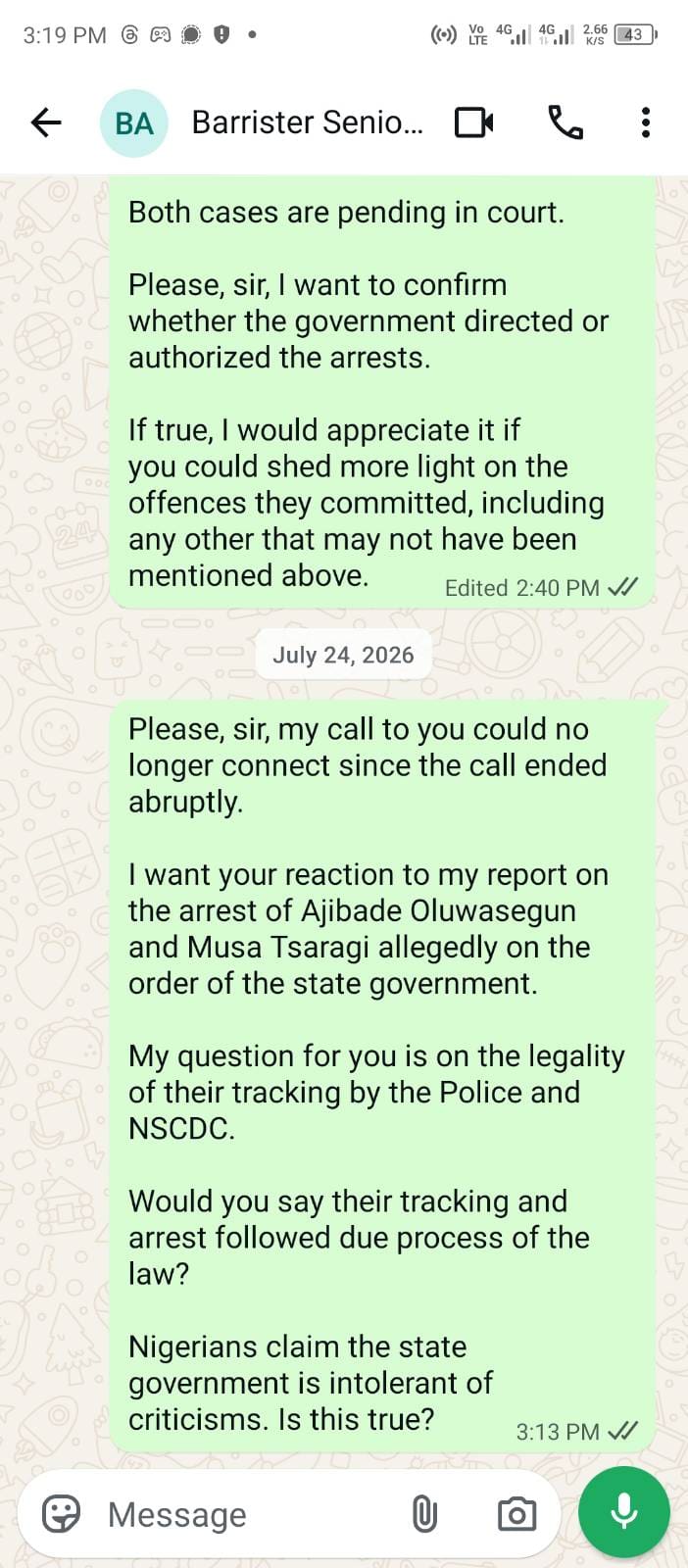
When contacted, the state’s Commissioner for Justice and Attorney-General, Ibrahim Sulyman, abruptly ended a telephone conversation on Friday, July 24. He remained on the call until the reporter mentioned the cases involving Tsaragi and Oluwasegun. Subsequent attempts to reach him by phone were unsuccessful.
He also did not respond to follow-up text and WhatsApp messages seeking his comments on the matter.
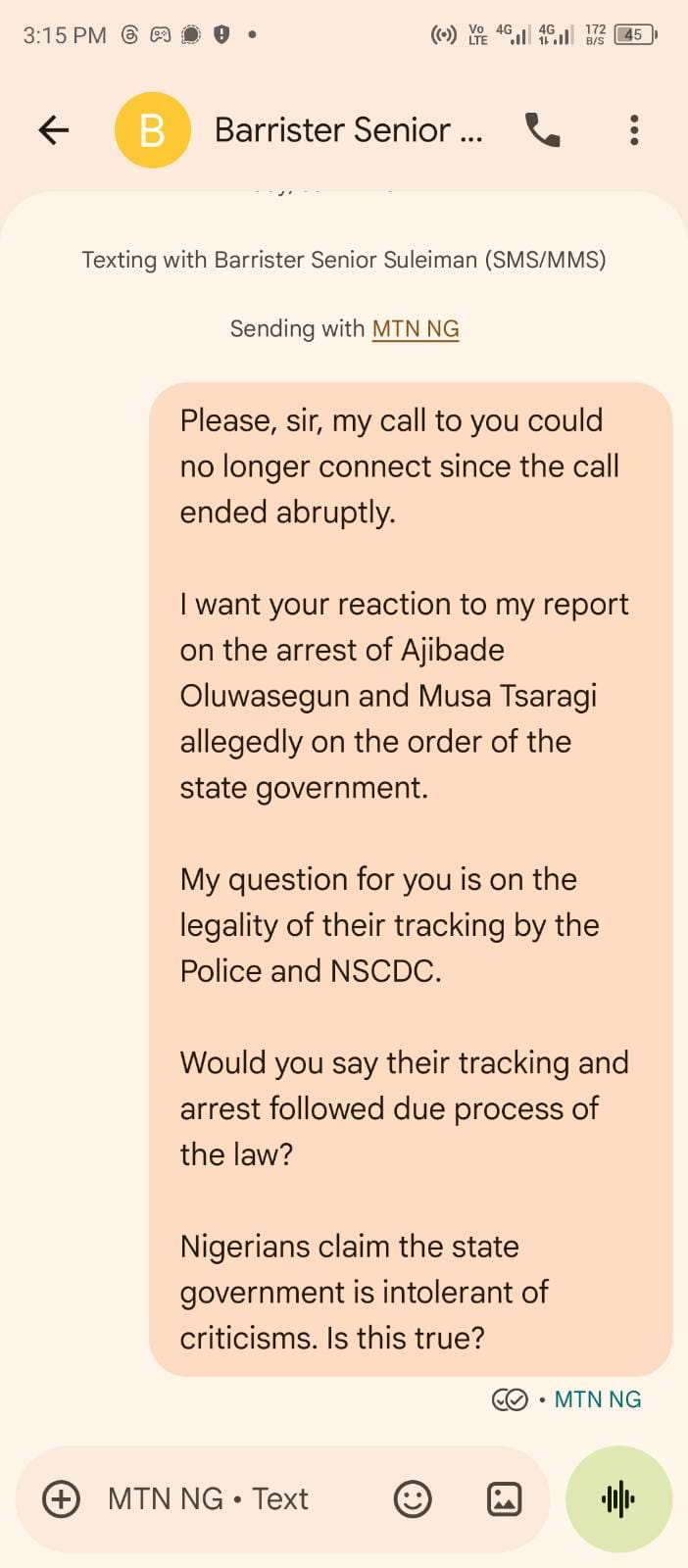
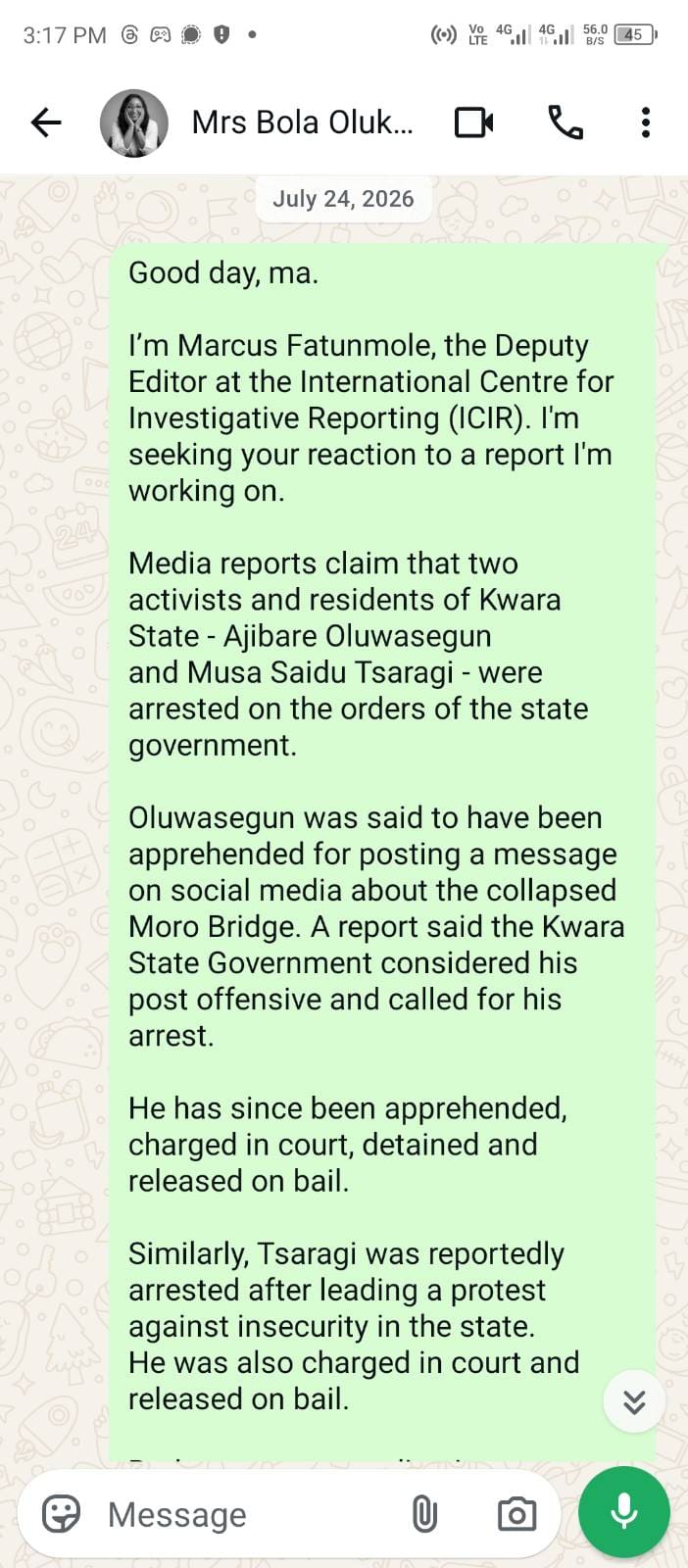
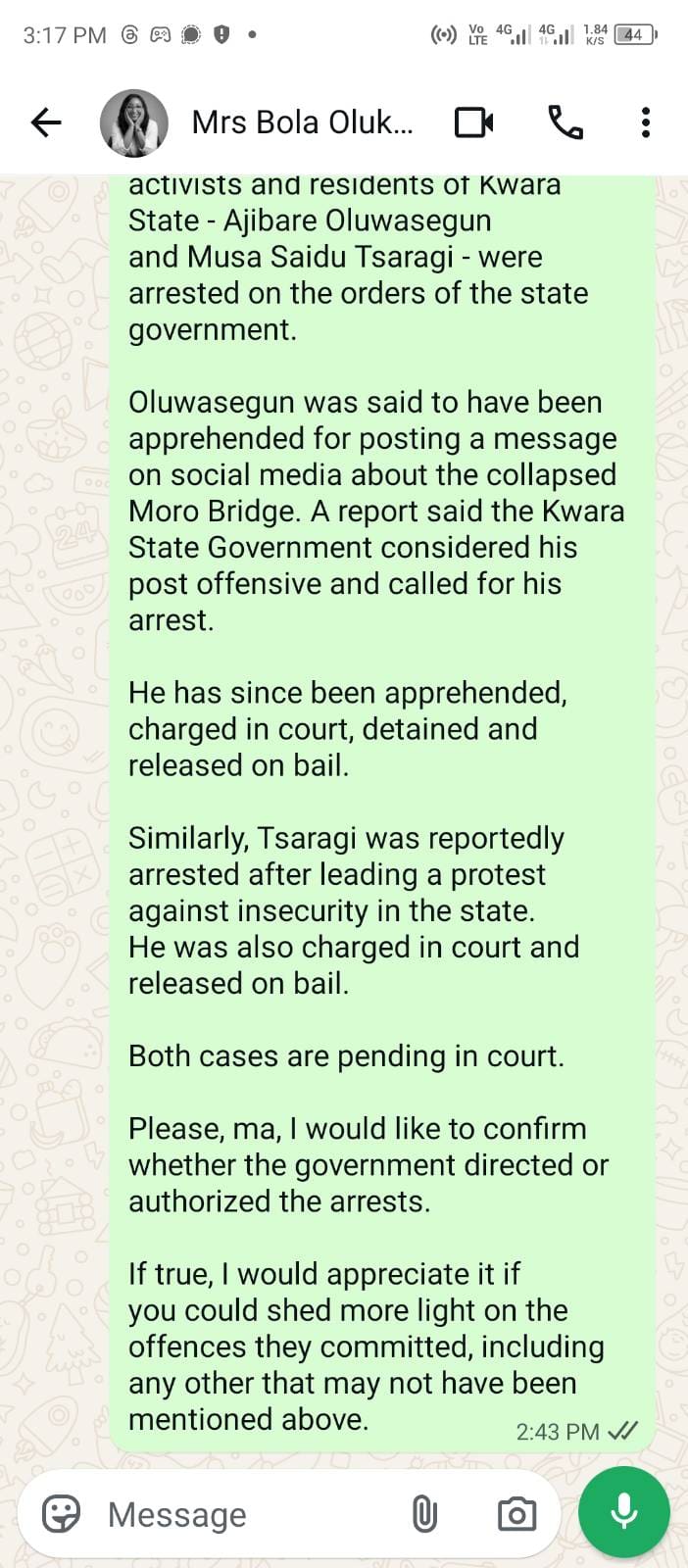
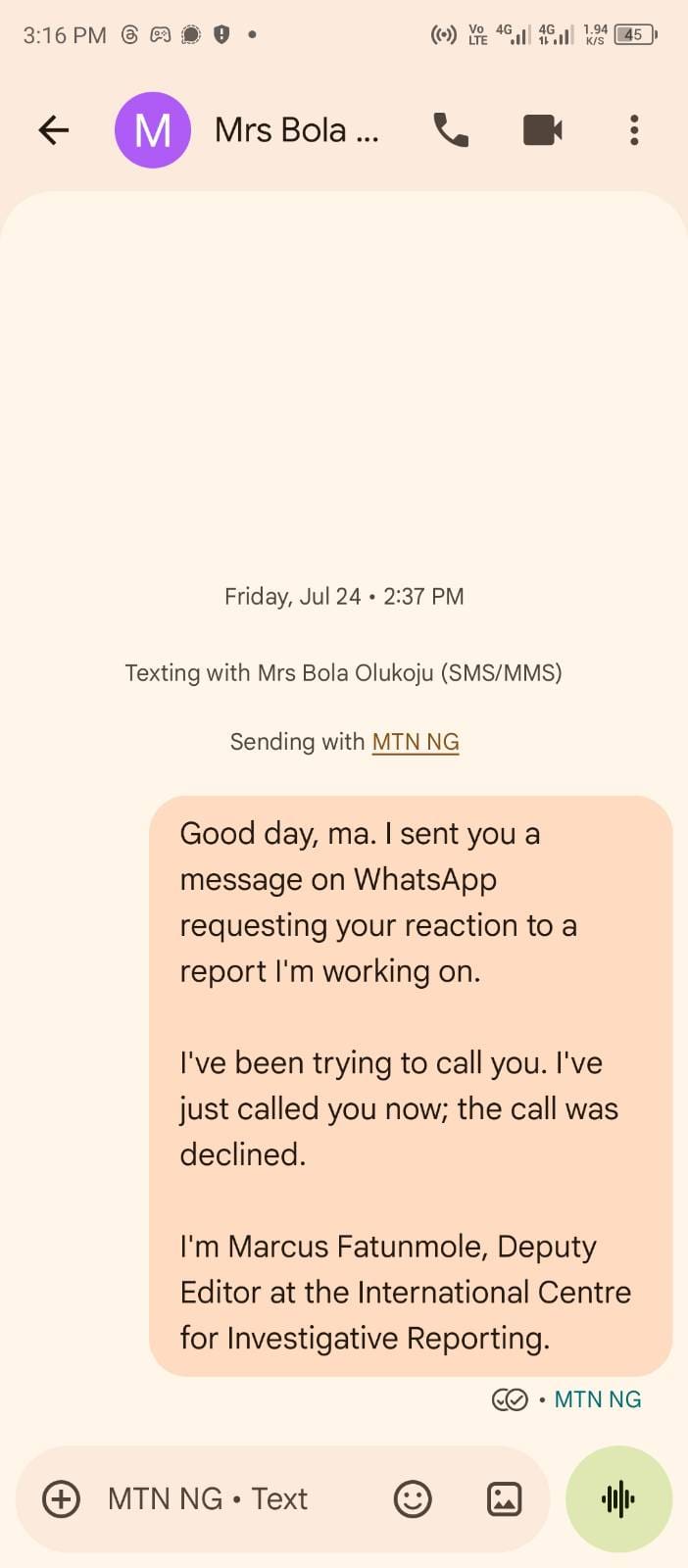
Efforts to also get the government’s position on the allegations from the state Commissioner for Communication, Bola Olukoju, proved abortive.
Olukoju repeatedly declined the reporter’s calls. She also did not respond to text and WhatsApp messages sent to her line on Friday, July 24, seeking her reaction to the claims.
Digital spyware tools are used globally but should be used legally – Cyber-security Expert
Founder/COO of CyberPlural MSSP, Lateef Hamzat, whose organisation provides security services to government, businesses and financial sectors, said attacks by security operatives on the media and civil actors were previously physical, but evolving technology is changing things.
He, however, said the need to protect citizens amid growing security threats from non-state actors has compelled the government to increase investment in digital surveillance tools. He added that advances in technology have not only enabled criminal activities to evolve but also enhanced the capacity of security operatives to tackle them.
“There are certain legalities that exist for them to listen to certain communications, as far as national security is concerned. There are a lot of requirements that the government will have that will help it pre-empt pending incidents or attacks. For you to be aware of some of these things, you need to have some facilities in place.”
He, however, said that court warrants remain essential for those using these devices to track and arrest citizens.
Hamzat argued that countries with digital surveillance tools hardly get the court’s nod to deploy them against civic actors, including journalists and activists, stressing that doing so sends the wrong signal about their use.
He said a lack of governance over the use of digital surveillance devices would result in abuse, adding that abuses had already been recorded in countries where the devices are used.
Besides, he said the benefits of using spyware equipment outweigh the disadvantages.
Reacting to allegations that the government uses the devices more against its critics than criminals, he said citizens have enough data that makes them more easily accessible to law enforcement officials than terrorists and other criminals.
He explained that ordinary citizens usually leave digital footprints that make identification easy. He said information such as educational history, religious affiliations, banking records and social networks can be used to establish a person’s identity even without the need for a sophisticated surveillance tool. But for terrorists operating in forests, it becomes difficult for security agents to obtain credible data to trace them.
“Let’s look at it this way: the people in the intelligence community see that the same way they’re planning to make things work and ensure that they stop the bad guys from achieving their goals, this is the same way the bad guys are making their plans. If I put it on the budget of the intelligence agency that they are buying a type of equipment, and anyone can see that equipment on the internet and know exactly what that device is doing, the bad guys can also go ahead and procure a product that will counter the function of that equipment,” he said.
Surveillance against fundamental right to privacy – Oloyede
A lawyer and digital rights researcher, Ridwan Oloyede, explained that countries acquire surveillance equipment to boost security and track crimes but stressed that use should comply with the law and individual rights must not be abused.
“If you live in a society where insecurity is rife, then it means, and also with technology, that you need to stay ahead of crime. One way to stay ahead of crime definitely is through surveillance, but a legal one that conforms to human rights standards and all of that. The biggest problem has always been that some of the surveillance being done doesn’t conform with some of the existing safeguards. But even the existing safeguards themselves fall far short of international safeguards recommendations.”
The lawyer argued that no amount or budget is too big to protect a society where citizens can freely move and conduct their lawful businesses safely. He, however, explained that mistrust creeps in where there is a wide disparity in funding for surveillance and the level of crime prevention.
He said victims of unlawful surveillance would hardly get compensation when they approach the courts for redress but emphasised the need to ensure that compensation is awarded.
“One very good way you can definitely support victims is supporting them to go to court to do such strategic litigation. Sometimes, it’s not the judgment in itself, or being able to get the money that is the most symbolic. Sometimes, it’s not symbolic; it’s just getting that judgment, having the court pronounce on it,” he said.
Marcus bears the light, and he beams it everywhere. He's a good governance and decent society advocate. He's The ICIR Reporter of the Year 2022 and has been the organisation's News Editor since September 2023. Contact him via email @ mfatunmole@icirnigeria.org