
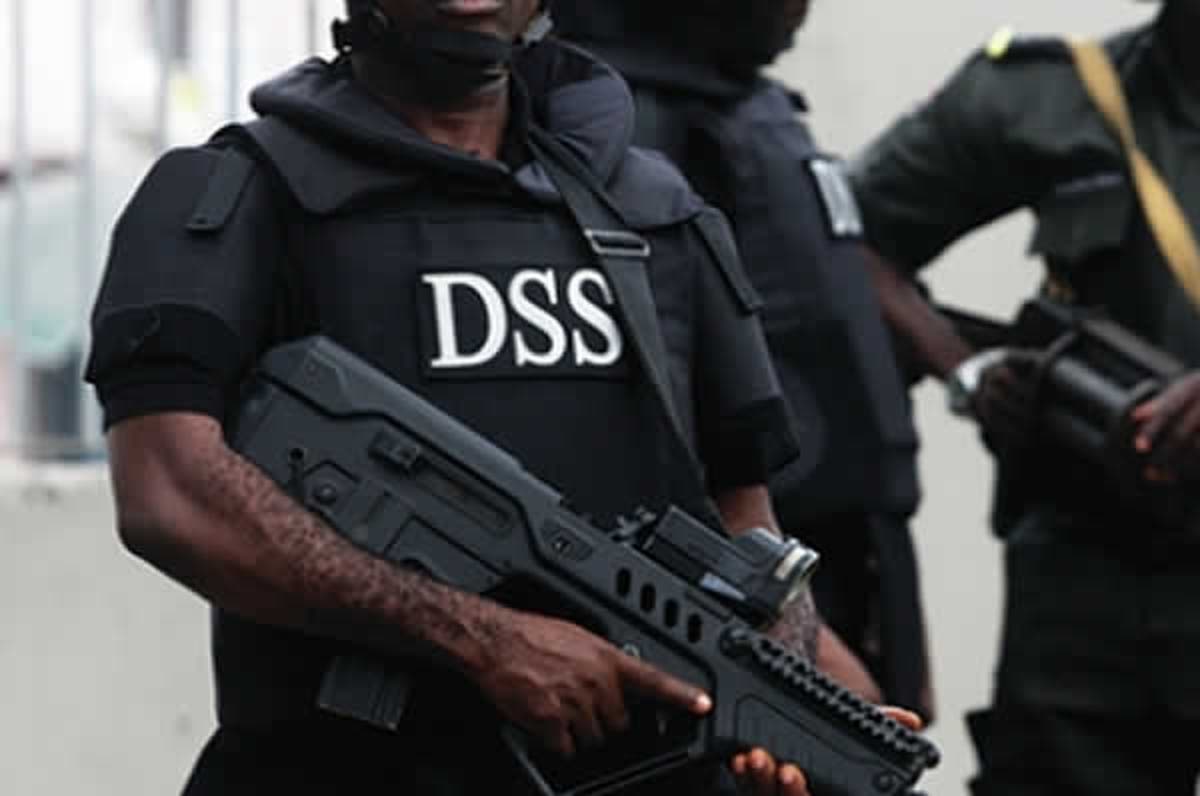

FIRST, the phones pinged. Then the knocks came. For suspects apprehended by operatives of the Department of State Services (DSS) since 2021 and taken to the military detention facility at Wawa, a border town in Niger State, the pattern was identical: strange calls, dropped signals, then arrests without warrants. Court filings and victim testimonies reviewed by The ICIR in this investigation reveal how spyware equipment acquired by Nigeria’s secret police for “national security” has become an instrument for illegal wiretapping. Targets are monitored in secret, picked up, and hauled into horrible detention camps without trial dates or accountability.
By Fidelis Mac-Leva
He sounded like a fan from America
First came the strange calls. Then the arrests.
An ICIR investigation reveals how spyware acquired by Nigeria’s DSS for national security is allegedly being used to conduct illegal wiretaps, track citizens, and facilitate arrests without warrants raising fresh concerns about… pic.twitter.com/DExfgchooK
— The ICIR (@TheICIR) July 8, 2026
On his way to Abuja from Abia State, a social media critic, Saheed Jamilu, got a call from a strange number. The caller claimed to be a fan of his based in the United States who once lived in Abia.
“He hailed me and professed love for the South-East,” Jamilu said in a viral Facebook video. The caller later advised him to “soft-pedal” criticism of leaders, including the Ogun State governor, Dapo Abiodun. Thirty minutes later, Jamilu checked the number. Curiously, it carried a Nigerian code, not that of the U.S.
“It occurred to me something was fishy. I shared the number with my lawyer for verification. We later confirmed the caller was from the DSS,” Jamilu said. He wondered why the secret police would chase critics instead of kidnappers holding hostages in forests across Nigeria.
Stories like his have flooded the social media space in Nigeria. Activists and content creators, including the popular VDM (Very Dark Man), allege DSS surveillance and threats of arrest.
Where is ‘Blood’?
For lawyer Pius Awoke, 49, student Onyibe Chinonso, 34, and builder Nwocha Chinedu, 43, it was not an online alarm. It was years of unspeakable horrors in detention.
On a wet Thursday morning in June 2021, along the Abuja-Lokoja highway, their Enugu-bound Sienna was flagged down near the Murtala Mohammed Bridge close to Lokoja. Soldiers manning a checkpoint said the DSS had ordered a stop for a suspected IPOB (Indigenous People of Biafra) member.
Fifteen minutes later, plainclothes operatives arrived in an unmarked SUV. Among the eight passengers in the intercepted Sienna, the trio were ordered out and forced to surrender their phones.
Awoke recalled: “One operative brought out a paper and started dialling numbers with each phone. ‘Where is Blood?’ they barked, searching for a contact.”

Chinonso said they repeated the dialling three times and found nothing. After body and vehicle searches, the operatives began beating them.
“They kept beating and asking us ‘who is Blood?’ while we showed ID cards. After five hours of torture, they handcuffed us and took us to their Lokoja office,” Chinonso recalled.
The next day, they were ferried to DSS headquarters, Abuja, with face masks, phones and money seized. They were dumped in an underground cell called “Basement-2.”
Chinonso said one of the operatives, Jonah Daniel, urinated in a bottle and sprinkled it on their heads. “After that, our legs were chained together. We were kept incommunicado in a dark, cold, unventilated cell for two days,” he said.
Torture at the ‘Hell’ called Wawa
Wawa Military Cantonment in Borgu LGA, Niger State, near Benin Republic, is used for training and operations. However, some ex-detainees told The ICIR that their ordeals in the hands of the DSS ended with detention at Wawa, describing it as “hell.”
On September 23, 2021, Chinonso and Awoke were driven there in a Coaster bus with a heavy security convoy. They spent three years each in Wawa without trial until the Nigerian Bar Association (NBA) intervened in 2024. Chinedu, who spent five years there, told The ICIR that he saw several #EndSARS protesters.
“There are nine two-storey structures packed with detainees routinely tortured under inhuman conditions. No visitors are allowed except the Red Cross,” he said.

Arrested in Aba, ferried to Abuja
On February 12, 2025, Esther Egbon, 34, and Ogadimma Iwu were sleeping on the premises of God’s Solution Bible Ministry, Aba, after a prayer session. At 1:30 am, alleged DSS operatives wearing black face masks broke in, searching for a suspected IPOB/ESN commander named Osanwa Ifeanyi.
The women were ordered to surrender their phones and lie on the floor. The operatives took two phones belonging to Ifeanyi, who had escaped. They went through the phone without permission and later drove the two women through the night to DSS headquarters, Abuja.
Abuja lawyer Nnaemeka Ejiofor said he filed a fundamental rights suit against the DSS and the Federal Government of Nigeria on April 7, 2025, and on July 9, 2025, Justice O.O. Bamodu ordered the DSS to charge Esther within 48 hours or release her. The ICIR confirmed she remained in Wawa as of press time.
For Iwu, Justice A. Usman, on September 24, 2025, ordered for her immediate release and awarded N500,000 compensation against the DSS and the Attorney General of the Federation. Ejiofor confirmed that Iwu was released in April 2026 with N3.5 million in compensation and an oral apology.
Tracked from Abuja to Zamfara
Kasimu Aliyu, 28, and his cousin, Sabitu Abdullahi, 22, were traders from Zamfara but lived with their elder brother, Mudashiru Aliyu, in Abuja. They disappeared in May 2024 while travelling home for Sallah. Their phones went off.
Their whereabouts were confirmed in May 2025 as Ejiofor said the DSS had used IMEI tracking to arrest them in transit, blindfolded and detain them at their Abuja headquarters without family contact. He said a request he made to the DSS to allow him and family members access to his clients was ignored.
Ejiofor filed a suit at the Federal High Court, Jabi, seeking a declaration that their arrest was illegal. As of press time, the case was still pending, and both men had remained in detention for over two years.

‘Clandestine surveillance, proxy arrests violate the law’
Ejiofor told The ICIR that DSS also used spyware to track Awoke and Chinonso.
“Their arrest was not known until people started calling. It took months before we realised that they were at DSS headquarters, then Wawa,” he said.
Justice A.R. Mohammed of the Federal High Court, Abuja, had ordered the DSS to release them or charge them within one month. The order was ignored until NBA pressure secured their release after three years. DSS still holds their phones.
“By law, you cannot track one individual and arrest the whole lot. That’s proxy arrest, forbidden by law,” Ejiofor said. “DSS violated Chapter Four rights: liberty, fair hearing, privacy. You cannot detain someone from 2021 to 2024 without trial.”

Nigeria: Africa’s top surveillance spender
Accountability Lab – a global civic accountability organisation with a Nigerian chapter- says Nigeria spent $2.7 billion on surveillance tech between 2013 and 2022, making it Africa’s largest consumer, according to its Country Director, Friday Odeh.
Odeh, who spoke during a stakeholders’ dialogue held in Abuja in July 2024, said the spending covers internet/mobile interception, social media monitoring, biometrics, and “safe city” systems.
Research by the Institute of Development Studies and African Digital Rights Network in 2023 called Nigeria Africa’s largest customer of surveillance contracts, spending $12 per citizen.
Titled ‘Mapping the Supply of Surveillance Technologies to Africa,’ the report reveals that surveillance technology was used to spy on peaceful activists, opposition politicians, and journalists, singling them out for harassment, arrest and torture, in violation of international human rights law and supplier companies’ own self-policing measures.
The researchers reveal that Nigeria is a leading customer of every major surveillance technology they studied, including internet and mobile interception, social media monitoring, biometric ID data and the so-called ‘safe city’ monitoring of citizens in public spaces.
They also found that the Nigerian state permits far more government agencies to conduct surveillance than the other countries studied. The nation also has contracts with each of the leading surveillance technology suppliers based in the US, China, EU, UK and Israel.
In 2020, Citizen Lab reported that Nigeria’s Defence Intelligence Agency bought Circles spyware from an Israeli firm to exploit telecom flaws and access calls, SMS, and location.
Amnesty International in March 2025 condemned the DSS’s crackdown on Nigerians commenting on the Middle East war, warning of a “dangerous shift toward authoritarian practices.”
Tools: Pegasus, FinSpy, Athena
Security sources say DSS uses Pegasus by NSO Group and FinSpy by Gamma Group to intercept calls, messages, and track locations.
A source who sought identity protection said DSS also uses Athena Forensic Solution, acquired in 2017 with a N648 million budget allocation. Checks reveal Athena can recover deleted texts, capture images/video, and record GPS location.
Budget: Billions for security, DSS surveillance
The 2013 budget allocated N9.496 billion for “Wise Intelligence Network Harvest Analyser” and internet monitoring. In the same year, the Goodluck Jonathan administration signed a pact with an Israeli firm, Elbit, for a multi-million-dollar internet surveillance system, Wise Intelligent Technology (WIT). Between 2011 and 2021, security agencies budgeted at least N104.46 billion for communications tracking.
By 2017, the DSS acquired the Athena Forensic Solution through an allocation of N648, 000,000 in the National Budget and in 2021, the National Assembly approved N4.87 billion for the procurement to intercept Thuraya calls and WhatsApp messages, plus N7.46 billion for DIA’s “independent lawful interception platform.”
The 2026 budget earmarks N213.2 million for surveillance equipment and N11 billion for “security equipment.” Although full contract documents are not publicly available, public records on DSS security spending show huge sums of money were allocated for the purchase of surveillance equipment.
This is clear in budget lines for surveillance equipment for 2015, which indicate that the whopping sum of SN10.32 billion was earmarked for DSS. And in 2024, the secret police had a vote of N3.3 billion, out of which N2.89 billion was earmarked for security equipment. Out of this, the sum of N425.6 million was earmarked for the procurement of Polaris mass location and wireless tracking system, N359 million for strontium sky digit recovery system, N412 million for mobile hammers, while GSM interception got N359 million.
Research findings indicate that on July 3, 2024, a UK-based surveillance technology developer, Signum Intelligence Limited, through its UAE subsidiary, delivered a shipment of “Network Equipment” to Nigeria’s DSS. This was part of 75 shipments of surveillance technology equipment that were delivered to Nigeria in 2024, according to findings.
Athena, according to experts, is equipped with an integrated camera to capture still images and motion videos while its internal GPS system can also capture and record positional information to deliver a complete intelligence package.
How DSS uses spyware tools without warrants
Findings reveal a pattern of how the DSS uses surveillance tools to track and arrest suspects without court warrants. The secret police primarily rely on telecom interception technologies, cell tower triangulation, IMEI tracking and NIN-SIM database to locate suspects.
Under national security laws and specific statutory mandates, the agency uses these techniques to apprehend targets without warrants in emergencies or when the suspects pose an immediate terror risk.
“By law, they are generally required to obtain a warrant or secure lawful authority to intercept private communications,” says Chinedu Agu, a lawyer and human rights activist.
However, Agu notes that these oversight mechanisms are frequently bypassed.
Under telecommunications interception, findings reveal that the DSS routinely gathers Call Data Records (CDR) and uses cell tower triangulation to map a target’s live physical location.
It was also gathered that the secret Police deploy specialised extraction tools—like Athena Forensic Solutions –to recover deleted text messages, contacts and chat histories from seized devices.
In February this year, while testifying before the Federal High Court in Abuja, a DSS operative revealed how digital forensic tools were used to track and arrest suspects
He specifically spoke on how the secret police tracked and arrested suspects involved in the June 5, 2022, attack on St. Francis Catholic Church in Owo, Ondo State.
The witness, identified as SSK, said investigators relied on call geospatial network filtering, cell tower triangulation and international mobile equipment identity (IMEI) analysis to trace the movement of one of the suspects.
He said the agency filtered thousands of phone numbers that connected to cell towers in Owaluwa, Elegbeka and Ifon shortly before and after the attack.
Legal perspective
Section 37 of the Constitution guarantees the privacy of communications. Section 45 allows interference only when authorised by law.
A UK-based law lecturer, Uchenna Nnwawuchi, told The ICIR: “Section 39 of the Cybercrimes Act 2015 requires a court order before interception.
He said a court order alone is not an audit trail. “There must be a record of who authorised it, grounds, data collected, access, use, and destruction. The Nigeria Data Protection Act 2023 also demands lawful processing and data minimisation, even for national security,” he said.
According to Nnawuchi, the difficulty in Nigeria is not the absence of constitutional principles but the absence of accountability mechanisms.
“There is no statutory requirement for comprehensive access logs, independent oversight, periodic review, or post-surveillance reporting. As a result, judges are often asked to assess legality without the documentary trail necessary to do so,” he said, stressing that “A surveillance power that leaves no footprint leaves little room for accountability.”
Dragnet surveillance
On proxy arrests by DSS operatives, Nnawuchi said the legal distinction is one of proportionality, noting that surveillance is generally justified when directed at a specific individual with reasonable grounds for suspicion.

“It becomes problematic when the surveillance of that individual effectively becomes a gateway to monitoring everyone connected to them. Section 39 of the Cybercrime Act 2015 requires judicial authorisation for interception. Still, it does not clearly distinguish between surveillance of a named suspect and that of that suspect’s wider network of contacts,” he said.
‘Lack of oversight fuels abuse’
Security expert Kabiru Adamu said Nigeria needs surveillance capability, but the lack of legislative oversight enables abuse.
Adamu said: “Every government tries to have capabilities for technical surveillance. That means it’s a requirement for mostly the intelligence communities in every government. Nigeria is not doing anything exceptional in attempting to obtain surveillance capabilities, especially given the current security challenges.
“As far back as under the Buhari administration, we scrutinised certain components of the budget, especially the intelligence community, and what was apparent was that there were aspects for obtaining surveillance capabilities within those budgets, and this continued into this administration.”
He said that with the doctrine of separation of powers, the legislature should have the capacity for oversight and ask critical questions regarding the procurement and usage of those items.
What obtains in other climes
From an international viewpoint, Nnawuchi, a former Associate Researcher at the ALERT Research Group, said the most important lesson from comparative practice is that democratic states do not merely regulate surveillance through powers; they regulate it through oversight.
Referencing Kenya, South Africa and the UK, the law lecturer at the University of Sheffield revealed that Kenya requires the National Intelligence Service to obtain judicial authorisation before intercepting communications. “Warrants must be supported by written reasons, and there is a statutory oversight structure through which intelligence activities may be reviewed,” he said, adding: “While not perfect, the framework recognises that surveillance should begin with independent scrutiny rather than executive discretion alone.
He said under the Regulation of Interception of Communications Act (RICA), surveillance in South Africa requires judicial approval, and intelligence services are subject to oversight by the Inspector General of Intelligence and parliamentary scrutiny.
Nnawuchi disclosed that the United Kingdom operates perhaps the most elaborate framework. Under the Investigatory Powers Act 2016, warrants are subject to what is often described as a “double-lock” mechanism: executive authorisation followed by independent judicial approval.
“Oversight is provided by the Investigatory Powers Commissioner’s Office, while complaints may be brought before the Investigatory Powers Tribunal.
“What unites these jurisdictions is a common constitutional insight: surveillance powers are not legitimised simply because they exist in legislation. Their legitimacy depends upon independent authorisation, continuous oversight, and effective remedies for abuse,” Nnawuchi said.
He averred that Nigeria possesses surveillance powers but lacks many of the institutional safeguards found in these comparator jurisdictions. The difference is not the existence of power; it is the architecture of accountability surrounding its exercise.
DSS responds: ‘New vision, SOPs followed’
Spokesperson for the DSS, Favour Dozie, told The ICIR that “nobody is doing anything without SOPs” (Standard operating procedures) since new leadership came in 2024.
“Nobody is carrying out indiscriminate arrests or harassment. If suspects are in our custody, our review committee will look into their cases. Some found not culpable were released and paid compensation,” she said.
She said those who allege that their relatives or wards are still in custody should first determine if indeed the suspects were arrested by the DSS, after which they should write to the agency.
“Not all arrests are made by us. Once people don’t see their wards, they begin to point towards the DSS. If the suspects you are referring to are indeed in our custody, I’m sure our review committee will look into their cases,” Dozie said.
On spyware, Dozie said: “All SOPs are being duly followed. Anybody who feels otherwise should go to court. What if I say there are valid legal instruments backing our operations?”
She added: “Intelligence operations are not for media discussion. We don’t have anything to hide in the DSS now. With a new vision, when we are wrong, and it is proven, we admit and atone. Our priority is national security.”