
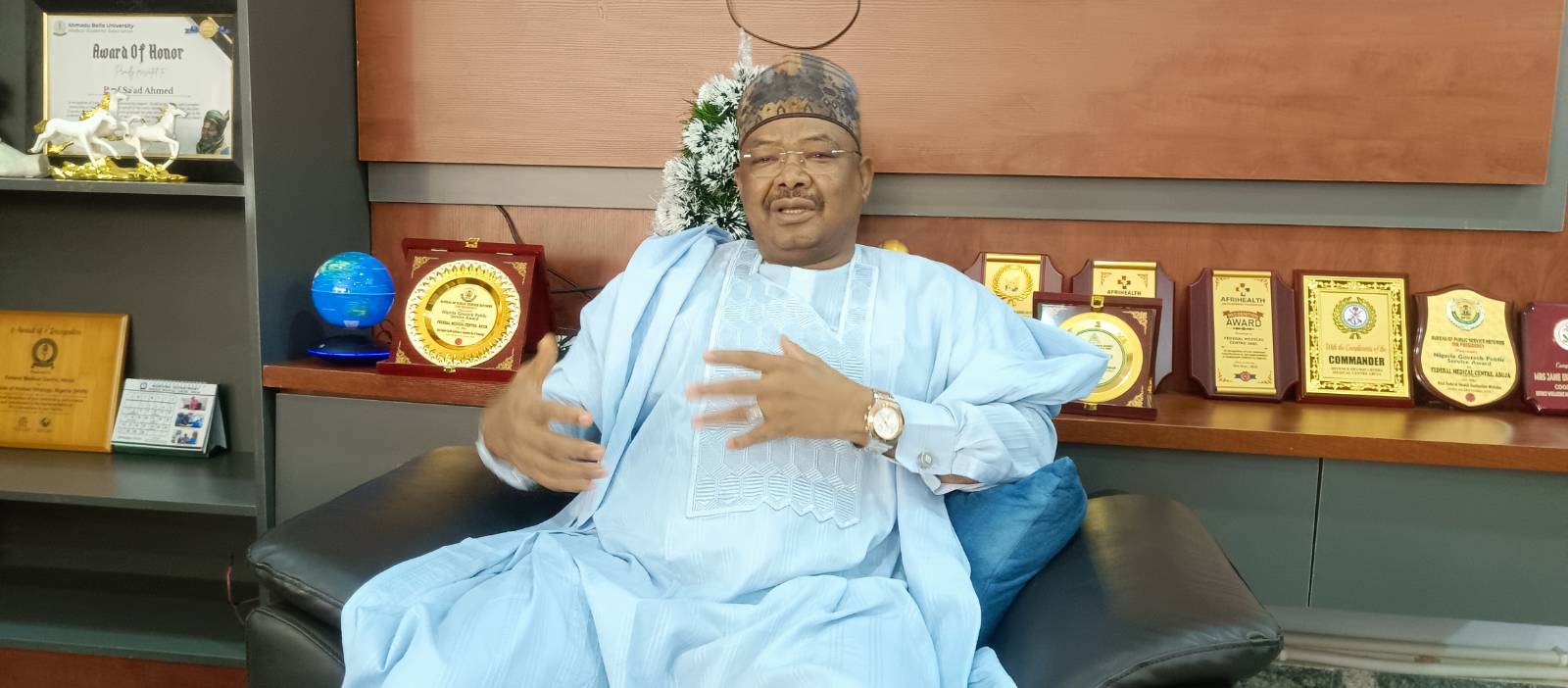
Snake bites and scorpion stings can turn life-threatening within minutes. But timely medical intervention could prevent fatalities, says Sa’ad Ahmed, professor and Medical Director of the Federal Medical Centre (FMC), Jabi, Abuja. In this interview with The ICIR’s Marcus Fatunmole, Ahmed sheds light on the growing concerns about reptiles encroaching on residential areas and explains why the first 15 to 30 minutes after a snakebite are often the difference between life and death. Excerpt
Your hospital recently treated a lady bitten by a mamba snake. From a medical perspective, how can people avoid snakebites, especially during this hot season, amid concerns over El Niño?
Yes. El Niño, we all know, is a situation where we have increased environmental temperatures arising from the rise in temperature around the Pacific. So it affects, basically, what I can say is global warming. With that, you expect some reptiles to be affected. Certainly, they’ll come out of their hiding places to get to cooler environments where they can live.
That affects snake habitats as well. So you see cases where snakes will be moving from hotter areas to cooler environments for better conditions. In doing so, they can come into contact with humans. And if someone mistakenly comes into contact with one, it can actually lead to an encounter. So I think that may lead to the snakebite that we are talking about.
What has been the experience with snakebites at the FMC this year?
So far, I think we have had 11 cases of snakebites this year. Virtually every month, we see one case until, I think, July, when we had two cases. In August, we had three cases and in October, two cases. So we have had 11 cases so far.
What are the first aid measures in the event of a snakebite?
I think the first thing, once there is a snakebite, is to first look at the affected area. You don’t need to wash it. You don’t need to start panicking. What needs to be done is to start preparing to move the patient to the nearest hospital.
If a tourniquet is to be applied, then it shouldn’t be so tight that it affects the blood supply. Otherwise, there could be loss of blood supply to the distal part of the limb. What is most important is to get the person to the nearest hospital as soon as possible.

We are witnessing rapid urban development with buildings increasingly taking over natural habitats of reptiles. How does this affect the frequency of snakes creeping into homes?
When you have development, it is expected that it should push reptiles far away. But when we keep things indiscriminately, then we leave spaces where these reptiles can actually hide. If everywhere is clean, the reptiles will have no chance of living in that place, which means they have to move away from those areas.
So, I think with proper development, we expect the reptiles to move far away. But where you have clusters of people, houses built indiscriminately, or a lot of items kept around where people live, then you are certainly inviting snakes to come in and stay in those places. And, of course, from time to time, those snakes can come out to look for food or other things around the area.
If you mistakenly, let’s say, step on one, the snake can bite. So, I think that with good development, we shouldn’t be living with snakes. But where we don’t have good planning, and people keep things indiscriminately around their homes, then we’ll be inviting snakes.
There are those who fear scorpions as much as they fear snakes. Can scorpion stings be as fatal as snakebites?
They all have toxins, but the nature of toxins may differ. For snakebites, it depends on the kind of snake. Some may not be poisonous, but there are poisonous ones; it all depends. Some toxins affect the neurons, whereby the nervous system can be affected, and that may lead to cessation of breathing.
There are some that destroy the blood. They lyse the red blood cells within the system, and then someone can start bleeding. And, you know, red blood cells are the components of the blood that carry oxygen to various tissues of the human body.
So, if they are lysed, there will be no transmission of oxygen to the tissues. Of course, there will be multi-organ failure and what have you. Scorpions also have toxins. First, the pain itself can lead to serious discomfort.
Secondly, it causes an anaphylactic reaction. In an anaphylactic reaction, you basically go into shock. Therefore, there will be less blood supply to the vital organs, and you can have multi-organ failure as well. When all these things happen, one needs to get to the hospital as quickly as possible.
What’s your advice to those who rush to traditional homes when bitten by reptiles? Is there evidence that such treatments work?
Well, I may not speak much about the application of traditional medicine because I’m not knowledgeable about it. I’m more of the orthodox type. So, my advice would be to go to the nearest hospital to access proper care. However, we can research some of the things they do, which we don’t know much about. We could actually see if they are beneficial. We can recommend that they be incorporated into orthodox practice.
Let’s talk about the challenges of having antivenom. Many people in Nigeria believe many hospitals don’t have it. What does it take?
We have always had stocks of anti-snake venom. Unfortunately, a case involving our hospital went viral on social media. It was reported that they brought the patient here and we didn’t have anti-snake venom. That wasn’t really true because that person was given two doses of anti-snake venom – polyvalent, not even monovalent- because polyvalent antivenom takes care of whatever type of snakebite. If you are sure of the type of snake, you can use monovalent anti-snake venom. We gave two doses of polyvalent antivenom.
But unfortunately, because of the delay in conveying that person to this facility, a lot had already happened. One thing I have kept hammering on is the fact that a person who has been bitten by a snake needs to be brought to the hospital on time. That’s very important because once the venom starts affecting the organs, there is really nothing one can do.
But if the person is brought in quite early, the anti-snake venom can take care of whatever complications that could have occurred. Beyond that, lately, the federal government has also started stocking anti-snake venom at the Federal Ministry of Health. They distribute it to various health facilities.
Currently, that’s where we source our anti-snake venom. My general advice is that, if there is any case of snakebite, people should reach out to the nearest health facility to get the necessary care. The earlier you institute the modalities of treatment by giving anti-snake venom and all the other supportive treatment, the better the outcome.
How soon should someone bitten by a snake report to the hospital?
When I say immediate, I mean immediate. If you are able to transport the person in less than 15 to 30 minutes, that’s a very good time within which intervention can be provided.
A recent Climate Impact Lab projection suggests that Nigeria could record about 56,000 additional heat-related deaths by March 2027. What advice would you give Nigerians on how to protect themselves from extreme heat and prevent heat-related deaths?
I think what is important is to appreciate and also know that El Niño is real. It’s going to warm up our area. Therefore, there will be a lot of heat. Try to wear light clothing, drink a lot of water, and avoid sunny places. Always look for shelter. Mostly, what we are running away from is dehydration and heat stroke. If we can manage our exposure to heat and drink a lot of water to prevent dehydration, I think everything will be good. It’s not a period that will last for too long, but while it is here, let’s see how we can take care of ourselves and also be mindful of reptiles that could come out during this period.
Be mindful of our environment. Let’s keep them lit. Let’s also keep them clean, and let’s be vigilant.
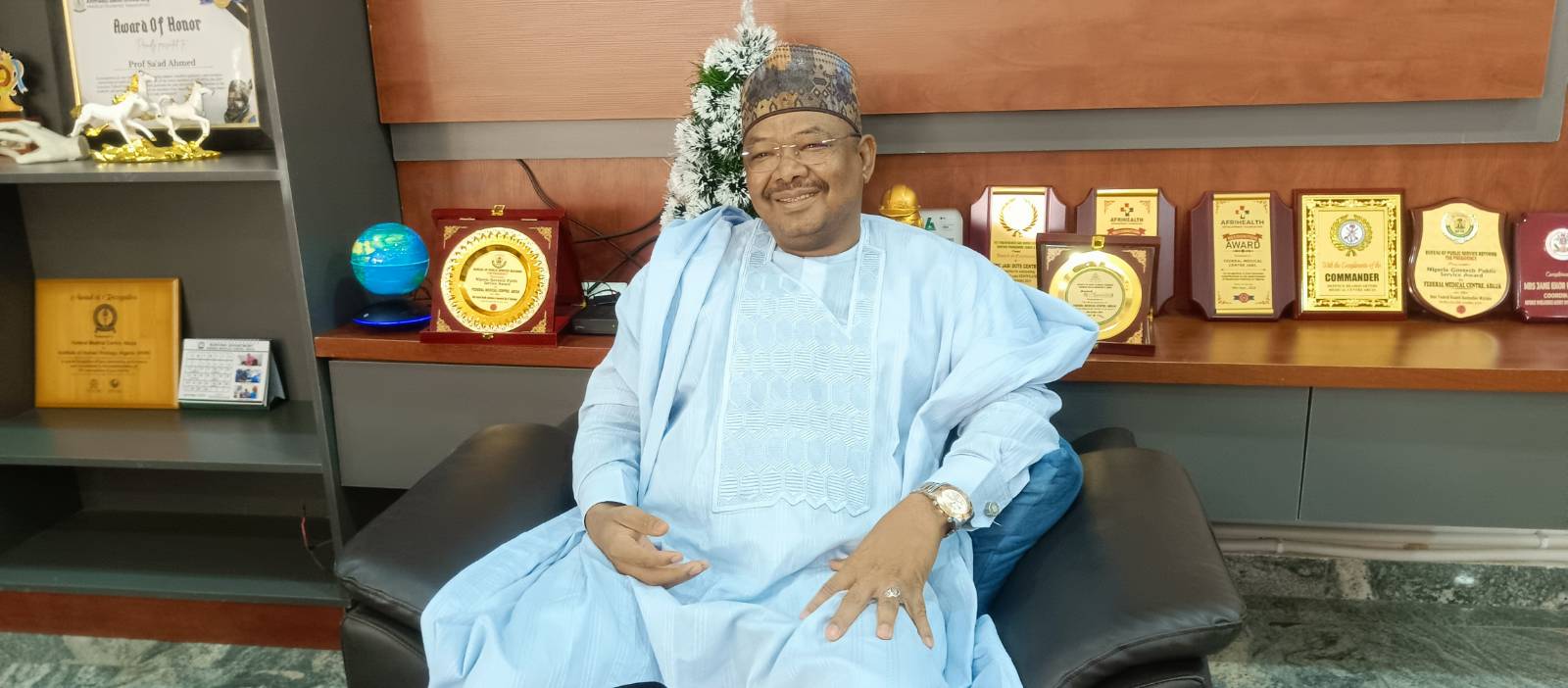
The FMC was formerly a federal civil servants’ hospital before it was upgraded. What can you say are your challenges and achievements?
It is a facility that has evolved, or I can say is still evolving. It started from a place that was not bigger than the size of this room where we are. It went from being a clinic to becoming a federal staff hospital, where they occupied just a bungalow. Then the whole wing of this hospital was built in 2012, when it was a federal staff hospital.
But as soon as the structure was completed, I think the government, in its wisdom, felt there was a need to upgrade it to a tertiary level of care. It was then christened the Federal Medical Centre, Abuja. Since then, we’ve been expanding gradually, both in terms of staffing, infrastructure and equipment.
While doing that, we also looked at the system. How do we change the system to accommodate the increased clientele? I can tell you that I came here early in 2020, and at that time, our outpatient load was basically 5,000 to 6,000 a month. Currently, we have about 30,000 a month. So, you know, it’s gradual, and we knew that this facility would accommodate more and more patients.
So, what do we do about it? We started expanding. If you see some of our facilities, where there are just bungalow-type buildings, we have raised most of them to two or three storeys. We don’t have the advantage of space, for expansion but at least we can build vertically and start moving upwards.
With that, we are able to expand accordingly. We had to move all administrative staff, heads of departments and others into this administrative building. We left the other side purely for clinical services so that more people can access care. As the clientele increases, we also noticed that we needed to use technology to provide services. Currently, I can say that clinical services are 100 per cent paperless at the FMC. Everything is based on the system. In terms of payments, we have also linked them to the electronic medical records.
This is one public hospital where you can get a kidney transplant. This is one public hospital where we routinely perform open-heart surgeries. We also perform laser surgeries, complex neurosurgical procedures and many complex orthopaedic procedures.
Beyond that, we have also tried to address the issue of manpower. Most of our departments and units are accredited by the West African College of Physicians, the West African College of Surgeons, or the National Postgraduate Medical College of Nigeria.
So we train lots of healthcare specialists and doctors who become consultants. In that regard, we can say we are not doing badly because the pass rate from this centre is around 90 to 95 per cent for each part of the exam our candidates take. We have also won awards for being the best, either within the country or across West Africa.
How do you handle brain drain, which is a major crisis in Nigeria’s health sector?
Japa syndrome is real. I can say 2020 and 2022 were the worst years for us. Post-COVID, the West realised that they needed more healthcare workers. Where could they get it? They started poaching from Africa. A lot of staff from Nigeria and other parts of Africa have moved over to the UK, US, Saudi Arabia, Australia and others. It got to a point during that period that I was afraid to open many staff members’ files. Immediately you opened, you would see things like that (resignation).
Within the last two years, things have stabilised. What we are seeing now is the normal thing, maybe one or two people leaving, which is not unusual. The unusual part was what we had around those periods. We must thank the government for expediting and prioritising the recruitment process for hospitals.

Marcus bears the light, and he beams it everywhere. He's a good governance and decent society advocate. He's The ICIR Reporter of the Year 2022 and has been the organisation's News Editor since September 2023. Contact him via email @ mfatunmole@icirnigeria.org