
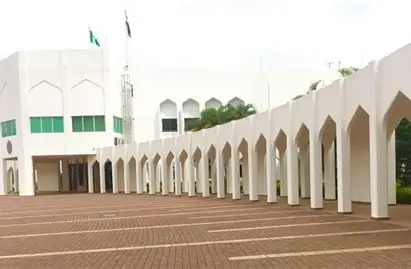
THE Nigerian government allocates over N16 billion for energy-related projects and maintenance at the State House, including N7 billion for a solar mini-grid and nearly N2 billion for diesel fuel in its 2026 proposed budget.
Documents show that alongside the planned solar project, the government will continue to fund diesel generators and electricity payments to the Abuja Electricity Distribution Company (AEDC).
The President Bola Tinubu administration set aside N1.99 billion on plant/generator fuel cost in the budget proposal.
It further budgeted N8.35 billion for line items, including the AEDC, Sid/liquid waste disposal, Julius Berger liabilities, and other maintenance liabilities ‘owed as from 2022 till date.’
The allocations are from the N58.18 trillion appropriation bill for the 2026 financial year.
The spending pattern at the State House follows a similar trend from last year, when the 2025 budget included N10 billion for solarisation of the Villa.
At that time, the allocation was part of a the N57 billion operational budget for the State House, which also included conventional energy costs of over N300 million.
Historically, the Presidential Villa has received substantial allocations for energy projects. The 2025 mini-grid project, according to the Presidency, was an attempt to reduce reliance on the national grid and operational spending on diesel and electricity.
It also noted that it was part of efforts to reduce the cost of governance and promote cleaner, more sustainable energy use.
Meanwhile, the 2026 budget shows a continuation of this dual funding to solar and grid electricity.
Nigeria in darkness
Against this backdrop, The ICIR reports that Nigeria has continued to grapple with the worsening power outages, as the national grid already fell two times in 2026.
Just as in 2025, where it experienced repeated collapses, plunging homes, hospitals, small businesses, and entire communities into darkness, the national grid experienced its first collapse this year on January 23.
A check on the website of the Nigerian Independent System Operator (NISO) also showed that all the Discos had no allocated supply on January 27, as of 11. am, consequently marking its second collapse.
Electricity generation dropped sharply from over 4,500 megawatts to as low as 0 megawatts as of 11 am on Tuesday.
Checks showed that all 23 power generation plants connected to the grid lost output during the incident, resulting in zero power allocation to power distribution companies.
Grid collapses have largely been attributed to a combination of technical faults, including inadequate maintenance of transmission lines, and fluctuations in generation capacity.
Across the country, residents have increasingly turned to small solar panels to power their bulbs due to the unreliable public power, and the soaring fuel prices.

Mustapha Usman is an investigative journalist with the International Centre for Investigative Reporting. You can easily reach him via: musman@icirnigeria.com. He tweets @UsmanMustapha_M