


THE first thing visitors now notice at Gog and Magog is not the height of the twin rocks, nor the panoramic sweep of Jos, the Plateau State capital. Beneath these lie the scars of years of quarrying activities that have affected the community’s heritage. The ICIR visited the community and digs into the impact of quarrying activities on these ‘sacred rocks’
White dust hangs permanently in the air, the ground trembles from distant blasting, and the paths that once guided hikers and worshippers toward the summit are being eaten away gradually by quarrying activities, driven by the growing demand for granite for construction.
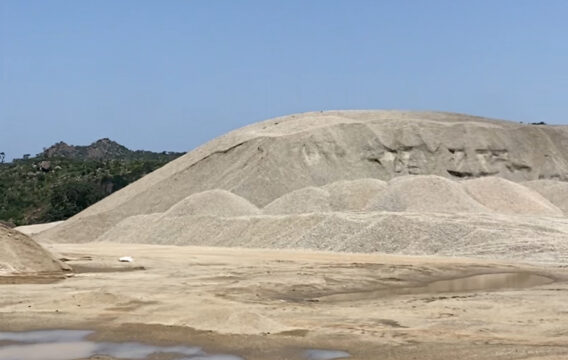
Gradually, the landscape that the Afizere people have revered for generations is being fractured. Residents say the destruction has accelerated in recent years as quarry operators push deeper into the terrain, extracting the stone that feeds the expanding local building industry.
‘For the community living around the 5,500-foot formation called Kukwasa Gbum, this is not merely environmental degradation; it is an erasure of memory, livelihood, and identity.
The quarrying activities are not strange or surprising to the locals. They had heard the blasts long before anyone raised an alarm.
But in July 2025, the issue came to public attention when a Plateau-based tourism advocate, Ephraim “Freezle” Bulus, posted on social media about an active quarry near the formations.
I recently came across something quite disturbing that I believe needs urgent attention.
There appears to be an active quarry operation happening near the iconic Gog Magog rock in the Shere Hills area.
Thread pic.twitter.com/y61XBVpqck
— Freezle 🇳🇬 (@freezle_) July 28, 2025
His observation prompted an immediate response from residents; many of whom pointed to the company they believed to be responsible for the slow encroachment: Moulds Nigeria Limited.
Locals who spoke to The ICIR said the impact visible today is the cumulative result of years of steady extraction—each blast shaving away parts of a landscape tied to history, spirituality, and survival.
The public outcry forced the Plateau State government to visit the area and offer assurances, officials insisted that the site was safe and “not under threat”, arguing that Moulds was operating legally and at a “reasonable distance” from the twin rocks.
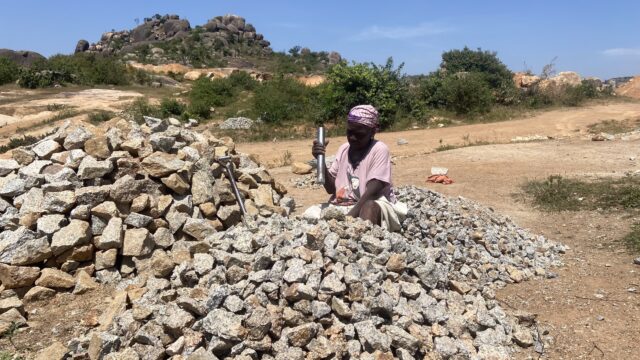
However, residents disagreed. When The ICIR visited on October 24, 2025, the evidence was unavoidable: fresh blast marks, rising plumes of white dust, and piles of fractured stone, some of which were later broken manually by women who rely on the quarry’s leftovers for a living.
For the Afizere, the indigenous group in the area, what is at stake is not just the rock but everything embedded in it. Sitting on a brown couch in his home in Gwafam, Ayuba Yohanna Azi, the Chiroma of Jos Ezire Chiefdom, and protocol officer to His Royal Highness, Adagwom Emmanuel Legic, explained how deeply Gog and Magog sit within Afizere identity.

From oral history, Ayuba said, their ancestors migrated from Yemen, moved through the Kanem-Bornu region after the fall of Ngazargamu in 1808. They gradually settled in Shere, a community in Plateau State, after journeys through Chaweh, Piti, Pengana, and Toroh. Every phase of movement was shaped by farming, survival, and spiritual custodianship, he said.
“Kukwasa Gbum (Gog Magog),” he said, “was where our people chased away the baboons before going to the farms. There are spirits there, and those spirits matter to us.”
Today, the baboons are gone. The quarry blasts drove them away, he said.
This sense of loss is sharpened by the community’s long history of displacement. When Europeans followed tin deposits to the Plateau in 1902, farmlands stretching from the Jos City Centre to nearby Gada Biyu were gradually taken over by mining interests, pushing Afizere families deeper into the hills.
Many see the quarrying around Gog and Magog as a continuation of that pattern—another moment where economic activity displaces cultural memory.
Yet the significance of Gog and Magog extends far beyond Afizere history. In the 1950s, the Citizenship and Leadership Training Centre, a parastatal in the Federal Ministry of Youth and Sports, popularly linked with Man O’ War, used the hills as a training ground.
Generations of Nigerians tested their endurance, navigation, and teamwork on this same terrain. By the early 2000s, cultural groups featured the rocks in dance and performance art. In 2007, Gulder Ultimate Search broadcast the formations into homes across the country, cementing their status as a national landmark. Images of the rocks appeared in artefacts, underscoring their symbolic value.
But the hills are now under multiple pressures—ecological, recreational, and cultural. Hikers now speak of grit in the air and trails that end abruptly at excavation sites. Birdwatchers report the disappearance of species that depend on rocky habitats, adding that quarrying threatens birds such as the Gosling’s bunting, Rock-loving cisticola, and the regionally endemic Rock Firefinch—found only in Nigeria and northern Cameroon.
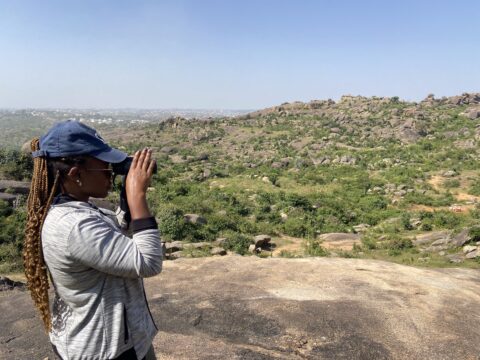
Migratory species like the Whitethroat, which winters in the nearby Shere Hills, may also lose their habitat.

“The Gog and Magog rock formations are very crucial for birds,” Nanchin Winnifred, a conservation biologist and ornithologist at the University of Jos, told The ICIR. “In Ornithology, we have birds that are generalists and some that are specialists. Some birds prefer rocky habitats, and you wouldn’t find them in any other place.
“For example, the Gosling’s bunting and Rock-loving cisticola. They will be displaced if there are no rocks. When a natural habitat like this is lost through anthropogenic activities, it changes the status of the birds from least concerned to threatened or completely extinct in the world.
“Preserving the site is important to birds like this and others, because birds are indicators of a healthy environment; preserving this environment is equally preserving the birds and helping ourselves in the long run,” she explained.
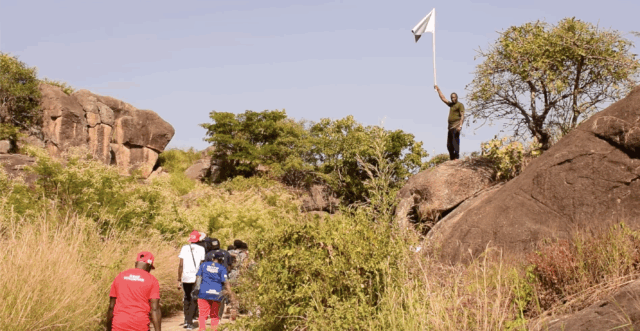
The impact extends beyond wildlife—hiking and outdoor recreation are being affected, too. According to a report by Harvard Medical School, “hiking is a good way to improve your cardiovascular fitness.” To understand the local impact, the ICIR reporter joined the Wayfarers of Jos, a hiking group, on one of their excursions on the rocks. Participants spoke of how quarrying and mining have altered their experience of Plateau State’s hills.
John Okupji, a medical doctor at the Jos University Teaching Hospital, who took part in the hike, said: “Hiking is heart-friendly, it helps you to lose weight, it helps you to burn a lot of calories, it helps the lungs. It’s recommended for everyone, especially after the age of 35.”
Hikers who regularly trek in Plateau State expressed concern over mining and quarrying activities. Their main issue is the distortion of the natural beauty of the state and the need for strict regulation. Erimiya Sunny Wayel, a hiker, explained: “If control is put in place to regulate quarrying, hiking activities will not be impeded much. When there is no control, some mountains and hills, if brought low, affect activities like hiking.”
Stone crushing
The damage is ecological or recreational. For the women who crush stones by hand for survival—like 65-year-old Ladi Ager Itse—the quarry is both a source of income and a source of harm.
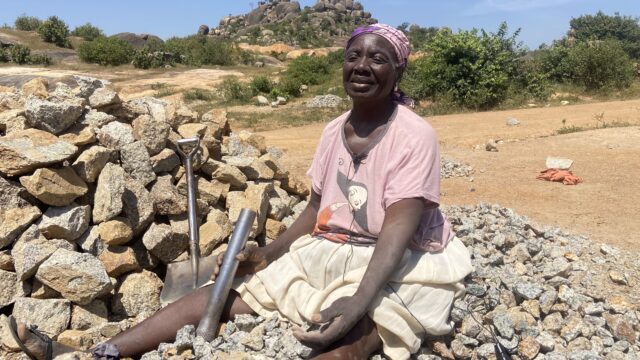
She has worked as an artisanal stonemason for 13 years to support her six children, breaking rocks without protective gear and earning just ₦45,000 per truckload. Her hands bear the scars of this labour; her lungs bear the dust.
Geoscientists warn of deeper risks. Tersoo Aga, whose postgraduate research focused on Gog and Magog, described the formations as part of the Jos–Bukuru younger granite complex, one of the largest in West Africa. He explained that the rocks contain radioactive elements that are exposed and dispersed when blasted.
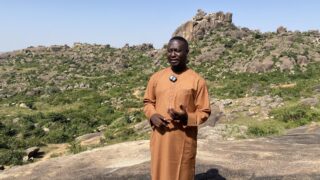
“If quarrying continues,” he said, “the health risks from radioactive exposure, air pollution, and water contamination will become severe.”
These, according to him, are the same concerns UNESCO evaluates when considering a site for heritage status—a recognition Gog and Magog could qualify for if preserved.
Moulds defends its operation
But preservation seems distant. Moulds Nigeria Limited insists its operations follow the law and that it will rehabilitate the site once extraction ends, even promising to convert part of the quarry into a recreational centre.
“The company’s activities are legal, and as you can see, Gog and Magog are far off, there’s a government reserve that protects it, and nobody has encroached on it and nobody will encroach on it,” said Kayode Oyafemi, a senior official at Moulds Nigeria.
Residents sceptical
However, residents remain sceptical, pointing to the countless abandoned mining pits across Plateau State—now stagnant ponds contaminated by past extraction.
Under Nigerian law, quarrying requires licences and Environmental Impact Assessments, including measures to protect cultural sites and agreements on community benefits. Enforcement, however, has historically been weak, and communities often see little of the promised corporate social responsibility.
For now, the dust rises, the blasts continue, and one of Nigeria’s most significant geological, spiritual, and historical landscapes continues to shrink under the pressure of human activity.
“If developed and managed with proper standards, the Hills could host various mountaineering activities, professional hiking trails, eco-tourism projects, and heritage conservation efforts. But that future is at risk if quarrying continues unchecked,” Bulus noted.

Joshua Laven, the Plateau State Commissioner of Works, told journalists that the heritage site will remain intact and under no threat from the quarry activities.
“The community has sold everything to Moulds but were now pleading that he should still step further so that he should allow more allowance of almost a kilometre from the Gog and Magog,” he said.