
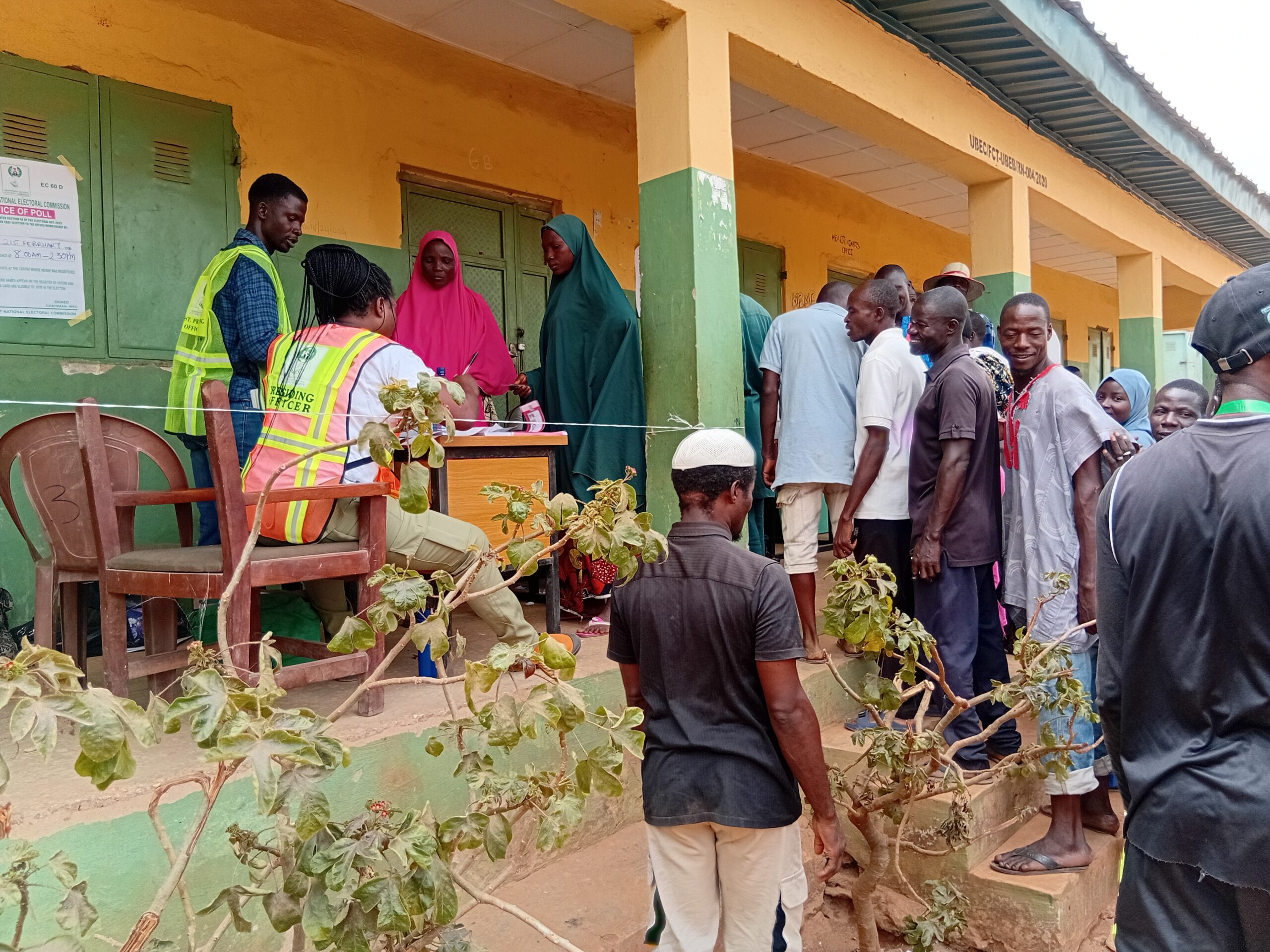
VOTERS across several polling units in Kuje Area Council of the Federal Capital Territory (FCT) turned out in large numbers on Saturday, February 21, for the Area Council election.
They expressed hope that newly elected officials would prioritise basic infrastructure and social services in their communities.
The elections, conducted by Nigeria’s Independent National Electoral Commission (INEC), are being held across the six area councils of the FCT to elect chairpersons and councillors who will administer local governance for the next four years.
Although some polling units earlier in the day recorded low voter participation, the turnout eventually improved as residents trooped out to cast their ballots particularly in Central and Chibiri wards.
“We voted because we want leaders who will remember the people after elections,” Martina Joseph, a resident of Kuje Central Ward said.
Some of the residents said they hoped incoming council officials would deliver essential services like healthcare, water, and quality education that directly impact on the lives of residents in the area council.
“My expectation is for them to provide basic amenities that can improve living conditions like acceble water,” Safiya Filibus, a resident of Angwan Mangoro said.
Several women said primary healthcare centres in their communities lacked adequate medical personnel, forcing residents especially pregnant women and children to travel long distances for treatment.
“We still depend on unsafe water sources. We hope the next council leadership will provide accessible boreholes and potable water,” Mary Danjuma said.
Similarly, Hajara Timothy called for better-equipped primary and secondary schools, improved learning materials, and more teachers to reduce overcrowding in classrooms.
“The role of our council leadership is to provide social amenities, and we expect that whoever gets elected will provide water and quality education for our children. In the primary school, there are no chairs in most of the classes. No light, no computer,” Hajara said, referring to Chibiri Primary School.
Analysts note that Area Council elections are particularly important in the FCT because local authorities are directly responsible for community-level services such as primary healthcare, basic education, sanitation, and rural infrastructure.
Unlike Nigeria’s states, the FCT has no elected governor, making area council administrations central to grassroots development and service delivery.
With over 1.5 million registered voters and a high Permanent Voter Card (PVC) collection rate recorded ahead of the polls, expectations remain high that elected officials will respond to citizens’ demands for tangible improvement governance, especially in the provision of security, healthcare, education, access roads and other important amenities.

Nanji is an investigative journalist with the ICIR. She has years of experience in reporting and broadcasting human angle stories, gender inequalities, minority stories, and human rights issues. She has documented sexual war crimes in armed conflict, sex for grades in Nigerian Universities, harmful traditional practices and human trafficking.