
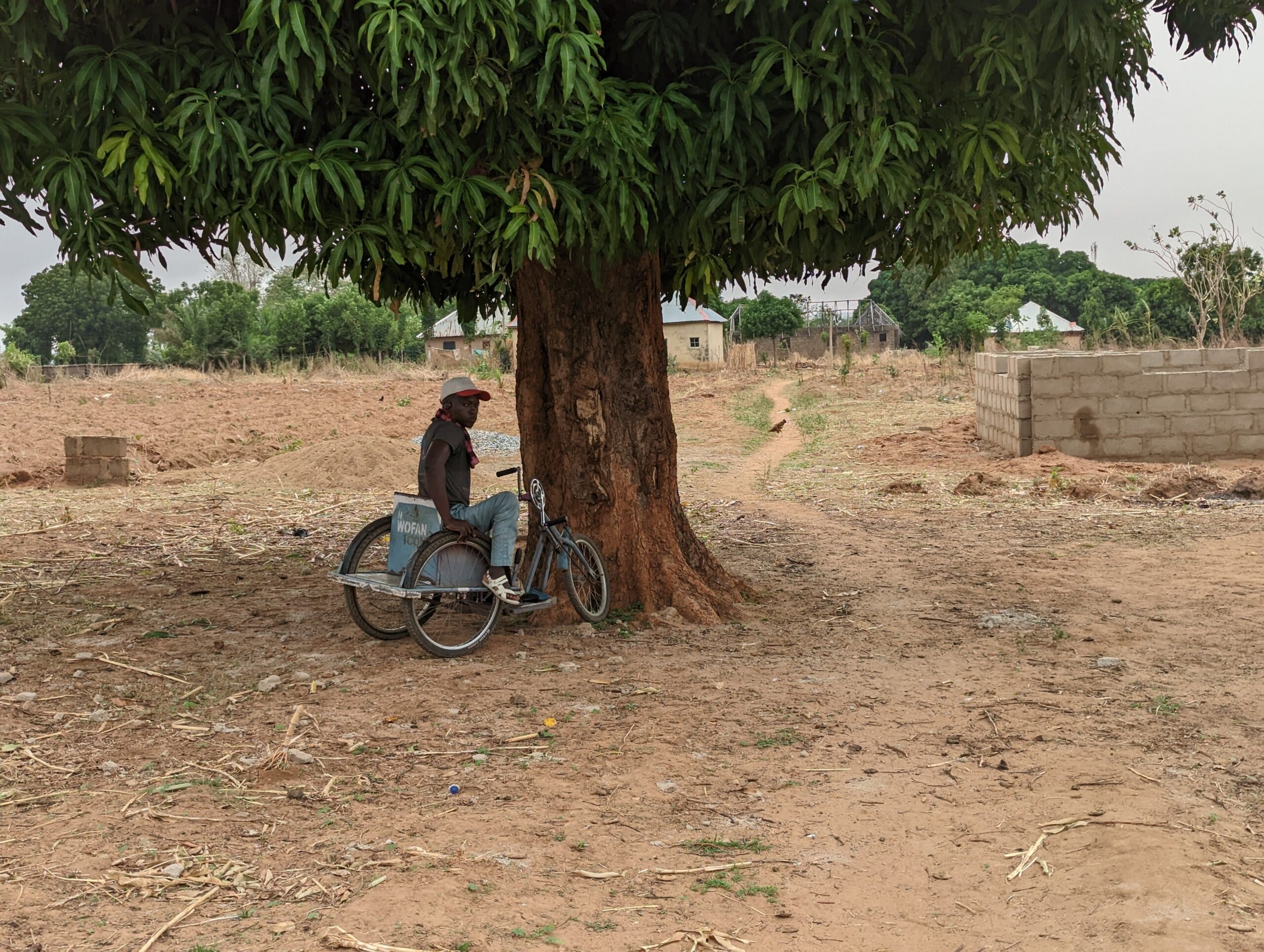
Nigeria’s worsening security crisis is exposing people living with disabilities to heightened risks, findings from a new investigation by Disability Justice Project have revealed.
Findings from the investigation “Forgotten People,” a multimedia report published by the Disability Justice Project and reported by Alexander Ogheneruemu, who describes himself as a deaf journalist and disability advocate, also revealed that emergency responses leave many people with disabilities unable to receive timely information or escape violence.
The investigation examines how kidnappings, robbery and communal violence are affecting people with disabilities, including survivors who say they were unable to hear warnings or access critical information before violence erupted.
One of those featured in the report is Ayoade Beyioku-Alase, who recalled narrowly escaping death as a child in Kano after failing to hear warnings that violence was approaching.
“A deaf person can walk right into the middle of danger. We were unaware when the killings started; we got no information, no alarm, no warning,” Beyioku-Alase said.
He said people with disabilities have nevertheless continued to organise and advocate for their rights.
“Truly, persons with disabilities are trying. Many of them are coming up with different organisations to represent their interests,” he added.
The investigation, by Ogheneruemu, who works with the Voice for the Deaf Foundation, also documents the experiences of wheelchair users who may be unable to flee quickly during attacks, as well as disabled farmers and small-business owners whose livelihoods have been disrupted by insecurity.
According to the story, inaccessible emergency alerts create an additional layer of danger for deaf people, while the absence of disability-inclusive emergency planning can leave people with physical disabilities without practical means of escape.
Ogheneruemu carried out the investigation using filmmaking skills acquired through training provided by the Disability Justice Project, and the journalist explained that the two Google Pixel smartphones donated by Google played a central role in the reporting process. He said the devices allowed him to film and photograph interviewees and locations during the investigation, noting that he used the phones’ Live Transcribe feature to communicate with interviewees when a sign-language interpreter was unavailable.
The investigation argues that these experiences point to wider shortcomings in Nigeria’s emergency and security systems.
Although Nigeria is a party to the United Nations Convention on the Rights of Persons with Disabilities (CRPD), the report stated that disability-specific protections remain poorly implemented. It also highlights what it describes as limited disability-inclusion training among security agencies responding to conflict and emergencies.
According to the Disability Justice Project, Forgotten People is the sixth instalment in the project’s series examining the intersection of conflict and disability.
The multimedia investigation combines written reporting with original video interviews filmed on location, bringing the experiences of deaf and disabled Nigerians directly into the country’s wider conversation about insecurity and civilian protection.

Nanji is an investigative journalist with the ICIR. She has years of experience in reporting and broadcasting human angle stories, gender inequalities, minority stories, and human rights issues. She has documented sexual war crimes in armed conflict, sex for grades in Nigerian Universities, harmful traditional practices and human trafficking.