
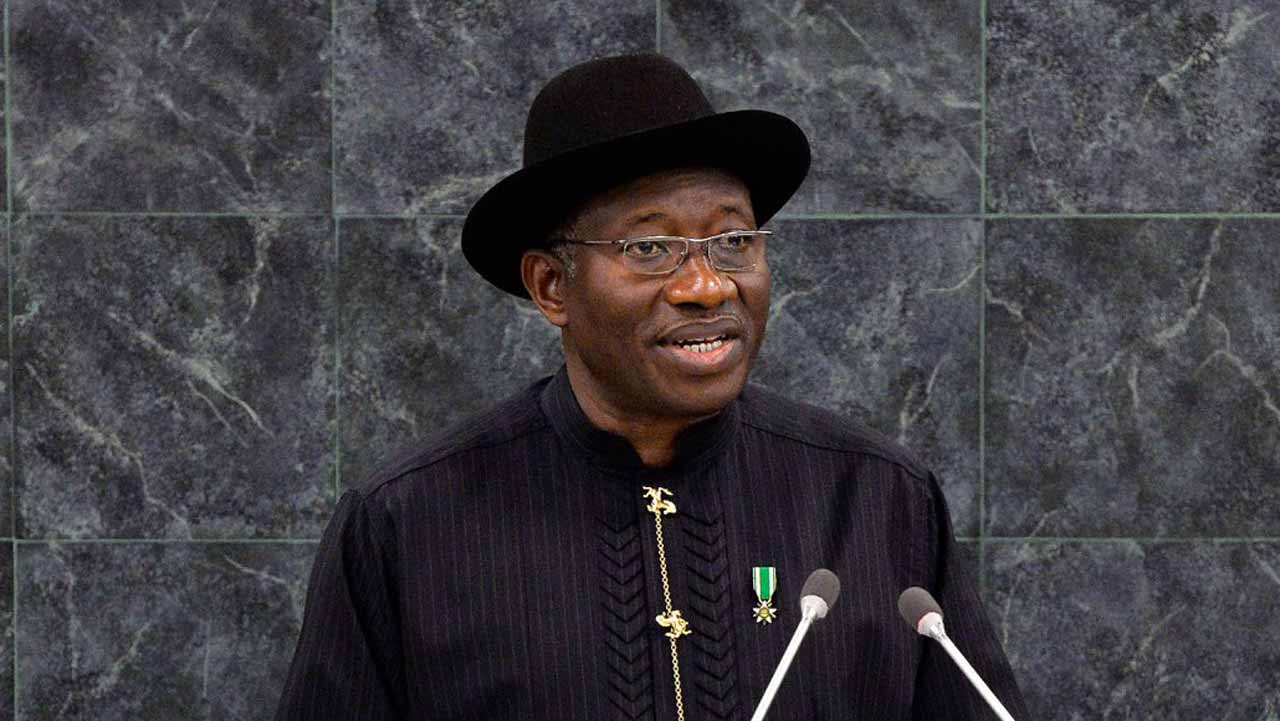
FORMERPresident Goodluck Jonathan has revealed that Boko Haram insurgents once nominated his successor, Muhammadu Buhari, to represent them in peace talks with the Federal Government.
Jonathan made the disclosure on Friday, October 3, in Abuja at the public presentation of Scars, a book authored by former Chief of Defence Staff, Lucky Irabor, according to media reports.
He stressed that his administration established several committees to explore dialogue with the insurgents, noting that in one of such instances, the group named Buhari as its preferred negotiator.
“One of the committees we set up then, the Boko Haram nominated Buhari to lead their team to negotiate with the government,” Jonathan said. “So I was feeling that, oh, if they nominated Buhari to represent them and have a discussion with the government committee, then when Buhari took over, it could have been an easy way to negotiate with them and they would have handed over their guns. But it was still there till today.”
The former president added that Buhari’s inability to defeat the group after assuming power showed that the crisis was more complex than often portrayed.
“If you conduct research and interview many people, you will only get part of the story, but never the full story of Boko Haram. I was there. Boko Haram started in 2009 when I was vice president. I took over in 2010 and spent five years battling the insurgency until I left office.
“I thought that after I left, within a reasonable time, General Buhari would wipe them out. But even today, Boko Haram is still there. The issue of Boko Haram is far more complex than it is often presented.
“So, it’s a bit complex, and not a matter of a single story. But I believe, as a nation, we have to look at the Boko Haram issue differently from the conventional approach. I believe one day we’ll overcome it. Once again, let me thank General Irabor for this, because I always appreciate people who document events clearly. That way, when we write our own accounts, we can borrow from such documentation,” he said.
He said Boko Haram, whose activities began in 2009 when he was vice president, was not simply a product of poverty or hunger, stressing that his administration employed multiple approaches that failed to end the insurgency,” he said.
He said Boko Haram, which began in 2009 when he was vice president, was not simply a product of poverty or hunger, stressing that his administration employed multiple approaches that failed to end the insurgency.
Jonathan further described the 2014 abduction of the Chibok schoolgirls as a “permanent scar” he ‘will die with,’ and urged that future governments adopt a carrot-and-stick approach to resolving the crisis.
He further expressed hope that leaders of the sect might one day document their actions, just as actors of the Nigerian Civil War did, to provide greater understanding of the insurgency’s motives.
“What did they really want? Our chairman once raised the issue when he interviewed some of them, and they gave him certain perspectives. But I pray that one day, some of the Boko Haram leaders may be literate enough to document what they have done, so that people will truly understand what they wanted. It is similar to the story of the Nigerian Civil War.”
Background
Boko Haram, which refers to itself as Jama’at Ahl al-Sunna li al-Da’wa wa al-Jihad, was founded in the early 2000s by Mohammed Yusuf became violent after his death.
The group carried out a string of deadly attacks during Jonathan’s presidency (2010–2015), including the bombing of the United Nations headquarters in Abuja in 2011 and multiple assaults on churches, mosques, and schools.
Also, in April 2014, more than 270 schoolgirls in Chibok, Borno State, were abducted by the terror group,
When Buhari assumed office in 2015, he pledged to end Boko Haram ‘within months.’ His administration initially recaptured territories held by the insurgents and announced their ‘technical defeat’ in 2015.
However, the group splintered into factions, including the Islamic State West Africa Province (ISWAP), which has since become the dominant force in the region.
In July 2025, The ICIR reported that both the Jama’atu Ahlis Sunna Lidda’awati wal-Jihad (JAS) and ISWAP had conducted over 300 attacks in the North-East region since the beginning of 2025.
The report stressed that while JAS was responsible for the highest number of attacks, ISWAP overran at least 16 military bases in Nigeria within the first six months of 2025.

Mustapha Usman is an investigative journalist with the International Centre for Investigative Reporting. You can easily reach him via: musman@icirnigeria.com. He tweets @UsmanMustapha_M