
WIFE of former Prime Minister of Nepal, Rajyalaxmi Chitrakar, has been killed in violent Gen Z protests sparked by a social media ban after Monday’s killing of 19 people.
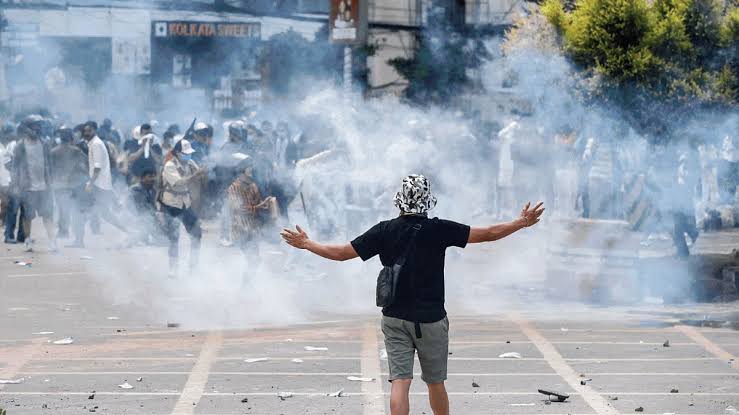
The protests began on Monday when thousands of young people stormed the city, wielding weapons and setting ablaze the Supreme Court, the Attorney General’s office, the Prime Minister’s residence, Parliament, and several homes of politicians.
Chitrakar, the wife of former Prime Minister Jhalanath Khanal, was reportedly killed after being trapped inside the residence, while at least 500 people have been injured in the violent protests that broke out earlier this week.
Young protesters carrying placards with slogans such as “enough is enough” and “end to corruption” said they were also demonstrating against what they described as the government’s authoritarian stance, while authorities have since imposed curfews in several districts.
In Damak, some protesters threw stones at Prime Minister KP Sharma Oli’s residence, prompting security forces to deploy tear gas and water cannons in an effort to safeguard politician’s homes.
“Kathmandu is burning. Smoke is emanating across the capital’s seat of power as protesters have set fire to many important offices,” a member of parliament, Rajendra Bajgain told The Telegraph.
In the weeks leading up to the ban, a “nepo kid” campaign gained traction on social media, exposing the extravagant lifestyles of politicians’ children and raising allegations of corruption.
Last week, the government directed authorities to shut down 26 social media platforms including Facebook and YouTube, after they failed to meet the deadline to register with the Ministry of Communication and Information Technology.
The government defended the social media ban as a move to curb fake news, hate speech, and online fraud, shutting down platforms which millions of Nepalis depend on for news, entertainment, and business.
After seeing the angry reaction by the protesters, the government lifted the ban hours later.
A minister said they lifted the ban after an emergency meeting late Monday night to “address the demands of Gen Z”.
Prime Minister Oli said he was “deeply saddened” by the violence and casualty toll. He blamed the incidents on infiltration by various vested interest groups”.
He announced that the government would establish a panel to investigate the protests, while also pledging “financial relief” for the families of those killed and free medical care for the injured.
Home Minister, Ramesh Lekhak, resigned on Monday evening after facing heavy criticism over his administration’s handling of the protests and the use of force against demonstrators.

Nanji is an investigative journalist with the ICIR. She has years of experience in reporting and broadcasting human angle stories, gender inequalities, minority stories, and human rights issues. She has documented sexual war crimes in armed conflict, sex for grades in Nigerian Universities, harmful traditional practices and human trafficking.