
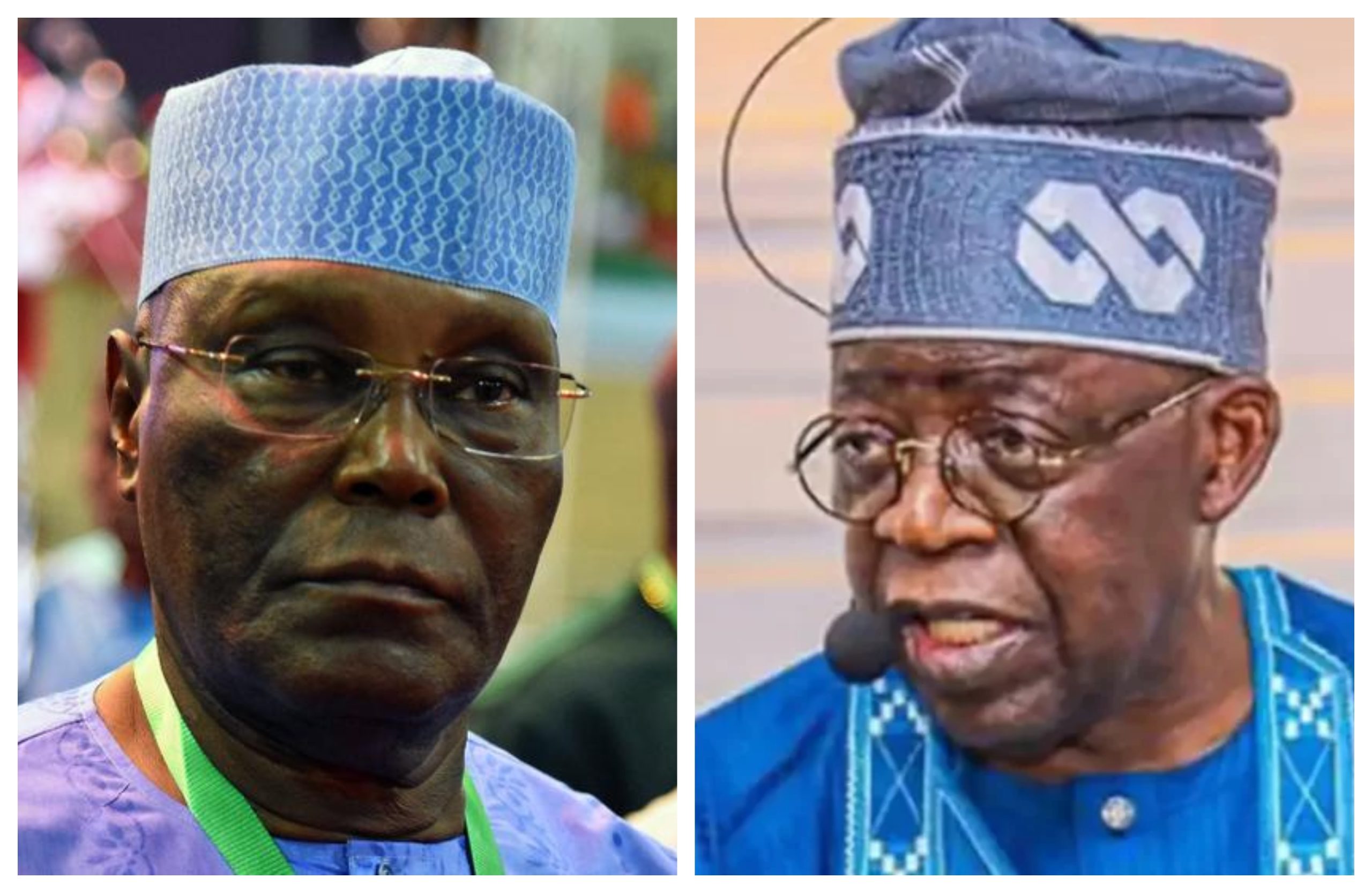
A FRESH debate over Nigeria’s controversial petrol subsidy regime has divided public opinion after former Vice President and African Democratic Congress (ADC) presidential candidate, Atiku Abubakar, said he would restore fuel subsidy if elected president in 2027.
The ICIR’s review of the reaction on X shows a mix reaction ranging from strong support for the proposal to accusations that Abubakar is abandoning his previous position on subsidy removal for political reasons.
Jack the Builder, said he initially became worried when he saw reports on the issue because he had assumed Nigerians had reached a consensus that the policy should end. He said after reviewing what he described as the thinking behind the proposal, he considered it a potentially transformative idea.
“So what OUR Government will do is to bring back the subsidy but this time not to subsidise importation of petroleum products but to subsidise local production. What this means is that instead of giving Dangote and other refineries crude at $80 for instance, we will give him as $50 or even as low as $30 so he can sell fuel to Nigerians at N400 or less per litre. This for me will be a game changer,” he said.
Maitangaran, on the other hand challenged the economics of the proposal, arguing that the relationship between the price of crude and the eventual pump price was more complicated than suggested.
He said crude priced at $50 could result in petrol selling at substantially lower prices, but questioned the calculations being used to support the proposal.
Chimezie Uzokwu, defended the proposal, arguing that affordable energy is essential to Nigeria’s economic growth.
“Atiku understands how crucial affordable energy is in a largely proto-industrial economy like Nigeria,” he wrote.
According to him, reducing energy costs would improve the productive capacity of businesses, lower the cost of goods and services, and ease the financial pressure on ordinary Nigerians.
The latest controversy followed Abubakar’s appearance on the PAP show on Wednesday, saying anyone who had stolen funds meant for fuel subsidy would be made to return the money if he assumes office.
He discussed the consequences of President Bola Tinubu’s decision to remove petrol subsidy and questioned what had happened to the savings expected from the policy, noting that he initially did not oppose the removal of subsidy but questioned whether the funds previously committed to petrol price support had been redirected to healthcare, education and security.
Abubakar’s critics, pointed to his 2022 position that subsidy removal was inevitable and accused him of changing direction as the 2027 election approaches.
The All Progressives Congress (APC) spokesperson, Felix Morka, described the proposal as a backflip from Atiku’s earlier position and accused him of embracing populism.
“Former Vice President Atiku Abubakar, presidential candidate of the African Democratic Congress (ADC) has backflipped from his 2023 policy support for fuel subsidy removal to a promise to restore fuel subsidy if elected president in 2027,” he said.
Victor Abisoye said Nigerians deserve to know the economic rationale behind Abubakar’s promise to revoke the Petroleum Industry Act that took Nigeria nearly two decades to enact.
Presidency rejects Atiku’s proposal
Tinubu on Thursday, while addressing Osun State Governor Ademola Adeleke who visited him at the State House in Abuja, said that Abubakar’s proposal shows serious ignorance of governance and economy.
“Let’s look at the trajectory of the history. I saw one of my opponents, now say he will go back to subsidy. I read it. That is demonstration of a serious ignorance on governance and economy. Before I came here, 27 states were unable to pay salaries, not to even talk of pensioners, salary of workers,” he said.
Similarly, in a press statement released on Thursday, Tinubu’s Special Adviser on Information and Strategy, Bayo Onanuga, described Abubakar’s proposal as a volte-face and questioned the former vice president’s economic rationale
Onanuga accused him of attempting to revive a system he said placed a heavy burden on public finances and discouraged investment in domestic refining, noting that the subsidy regime was not simply government giving consumers a discount on petrol.
He also challenged Abubakar to explain how a restored subsidy would be financed, including its annual cost, source of funding and whether government would have to borrow to sustain it.
The Presidency further questioned what exactly would be subsidised under the proposed arrangement now that Nigeria has significantly expanded its domestic refining capacity.
It argued that the emergence of local refining has fundamentally changed the petroleum market and that returning to the old subsidy structure could undermine investment in smaller domestic refineries and reverse progress in the sector.
The Special Adviser to the President on Media and Public Communication, Sunday Dare, was even more direct in his criticism, describing Abubakar’s promise as drenched in hypocrisy and deceit. He accused him of attempting to manipulate Nigerians ahead of the 2027 election.
Dare argued that the Dangote Refinery would probably not have commenced local petrol production under the previous subsidy arrangement because the market was distorted by regulated prices and government intervention.
He also argued that the current market-driven system has allowed Nigeria to move towards domestic refining and exports of refined petroleum products, while reducing reliance on imported petrol.
He estimated the economic cost of petrol at about N1,200 to N1,300 per litre and argued that selling it substantially below that level would leave government responsible for the difference through reduced public spending, lower allocations, borrowing or increased debt.
Abubakar’s current position is particularly contentious because he previously advocated the removal of petrol subsidy.
In July 2022, while campaigning for the presidency under the Peoples Democratic Party (PDP), he told Arise Television that subsidy removal was inevitable and should be completed through negotiations with organised labour and other stakeholders.
He said that while serving as vice president, he had chaired a subsidy-removal committee and that the administration had already removed subsidy in phases before leaving office.
The position was also documented by the Centre for Democracy and Development’s fact-checking platform, which found that Abubakar had advocated removal of the subsidy and said in December 2022 that he would address the issue within his first 100 days if elected.
The subsidy was formally brought to an end byTinubu in his inaugural address on May 29, 2023, when he declared: “Subsidy is gone.”
The decision immediately triggered a sharp increase in petrol prices and contributed to higher transportation and living costs, while the government argued that the resources previously used to support petrol prices could instead be redirected towards development and social programmes.
In a July 2023 national broadcast, Tinubu defended the decision, saying the subsidy had cost Nigeria trillions of naira annually and had outlived its usefulness.
He said the money could instead be used for public transportation, healthcare, schools, housing and national security. He also said that within a little over two months of the removal, the government had saved more than N1 trillion that would otherwise have been spent on the subsidy.
The Federal Ministry of Finance says Nigeria’s fiscal position had become increasingly constrained, estimating that maintaining a full-year petrol subsidy in 2023 could have cost about N6.7 trillion, equivalent to roughly 70 per cent of the Federal Government’s actual revenue.
The National Extractive Industries Transparency Initiative (NEITI), in a 2022 policy advisory, also reported that Nigeria spent N13.7 trillion financing fuel subsidy between 2005 and 2021. It warned that the cost of the policy extended beyond the direct subsidy payments because it discouraged investment in domestic refining and created opportunities for smuggling and other distortions.
In June 2024, after Abubakar accused the administration of secretly continuing subsidy payments, the Presidency rejected claims that N5.4 trillion had been budgeted for petrol subsidy that year.

Nanji is an investigative journalist with the ICIR. She has years of experience in reporting and broadcasting human angle stories, gender inequalities, minority stories, and human rights issues. She has documented sexual war crimes in armed conflict, sex for grades in Nigerian Universities, harmful traditional practices and human trafficking.