Home Blog Page 1001

Alleged defamation: Court remands Agba Jalingo in prison

0

A Federal High Court in Nigeria’s Federal Capital Territory (FCT) has remanded a journalist, Agba Jalingo, at the Kuje Medium Security Custodial Centre over an article published against Elizabeth Frank Ayade, sister-in-law to Cross River State governor Ben Ayade.

The court remanded Jalingo following a ruling by Justice Zainab Bage Abubakar on Monday, March 27.

The charges brought against Jalingo, the publisher of Cross River Watch, bordered on false publication intended to cause “annoyance, ill will and insult” on the person of Elizabeth Ayade.

Justice Abubakar ordered that Jalingo be remanded till Thursday, March 30 and declined his lawyers’ request to move for bail.

Jalingo was arrested in August 2022 by security operatives who laid siege to his Lagos residence for hours and transported him to Abuja after that.

A petition by Elizabeth Ayade, claiming that Jalingo wrote a defamatory article about her, led to the journalist’s arrest. The complainant also demanded N500 million as compensation.

Jalingo had reported that a law lecturer at the University of Calabar, being tried by a court in Abuja for examination malpractice, had been writing exams for a “prominent Obudu woman”.

The journalist has been detained several times previously, including in 2021, when officials of the Cross River State Police Command arrested him over a planned June 12 protest.

Canon student development program seeks entries

THE Canon Student Development Program is inviting applications for its five-day photojournalism event scheduled for September.

The programme offers students across Europe, the Middle East, and Africa an incredible opportunity to meet leading experts, attend key industry events, and have their portfolios professionally assessed.

The event will feature online talks, webinars and a virtual portfolio review by experienced photographers.

Canon says 5 participants will receive up to €9K worth of Canon kit & a €2K grant, helping them take the next step to turn pro.

Participants must submit a digital portfolio of up two to stories, including up to 20 fully captioned images, with an accompanying synopsis or description.

College students can apply for this program.

The deadline for the submission of applications is April 16, 2023. Interested applicants can apply here.

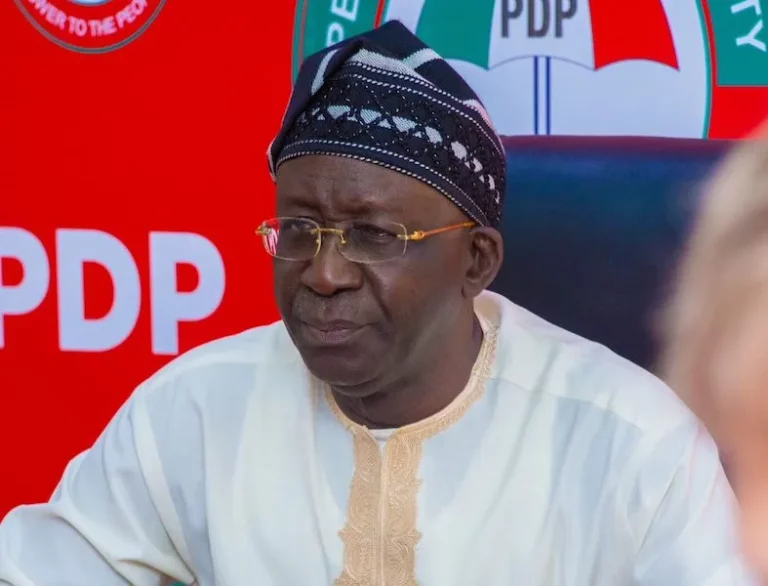
Ayu breaks silence, says only PDP NEC can suspend him

THE National Chairman of the Peoples Democratic Party (PDP) Iyorchia Ayu has declared that only the National Executive Committee (NEC) of the party has the constitutional powers to suspend him.

Ayu was suspended on Sunday, March 27 by the Executive Committee of the PDP in Igyorov Ward of Gboko Local Government Area of Benue State for alleged anti-party activities.

Ayu reacted to the suspension in a statement released Monday, March 27 by his Special Adviser on Media and Communications Simon Imobo-Tswam.

The PDP national chairman stated that there was no constitutional backing for any organ of the party or executive committee at either the ward, state or national levels to take disciplinary measures against any member of the party’s NEC.

Ayu described the announcement of the suspension as a futile exercise.

“The purported suspension is, therefore, an exercise in futility as it derives its strength majorly from gross illiteracy, ignorance, gambling and desperation. It has only mischief, drama and propaganda value.

“For starters, Article 57(7) of the PDP Constitution as Amended in 2017 expressly prohibits any organ of the party or executive committee of the party at the Ward or State Level from taking any disciplinary measure against any member of the party’s National Executive Committee.

“The purported suspension is, therefore, an exercise in futility as it derives its strength majorly from gross illiteracy, ignorance, gambling and desperation. It has only mischief, drama and propaganda value,” the statement said.

Ayu added that the ward executive members were forced and intimidated into taking the action.

“At the time they were supposed to be in Makurdi with the other coerced, intimidated and induced members of the exco, they were actually in their villages, going about their normal businesses.

“From what we know, the document itself is fraudulent as the signatures of the Ward Executives were forged or obtained under duress.

“The chairman, his deputy and legal adviser didn’t sign. The 14th person on the list didn’t sign too. She was at NKST Ambighir for the Holy Communion.

“This is why the original date is typexed and 24 March imposed on it. And this is also why it states that the presidential/NASS and governorship/state assembly elections held on 25th and 18th March, 2023 respectively,” the statement added.

Ayu urged Nigerians to ignore reports of his suspension.

The ICIR earlier reported that the governor of Rivers State, Nyesom Wike backed Ayu’s suspension.

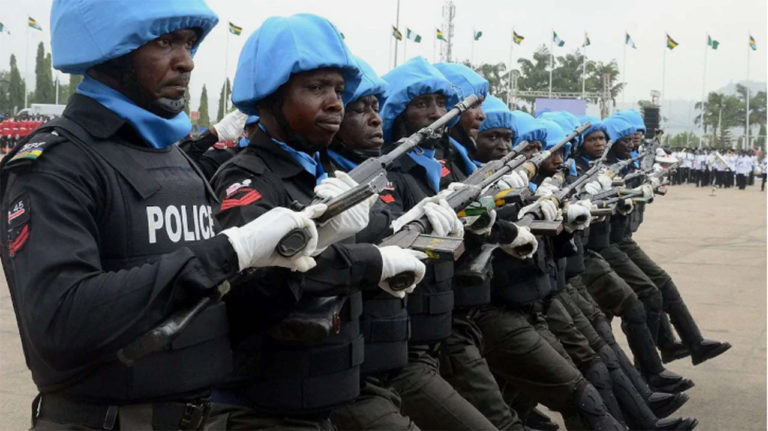
IGP meets senior police officers over electoral violence

0

THE Inspector General of Police (IGP) Usman Baba has met with senior police officers to discuss the high level of electoral violence recorded during the just concluded general elections.

The meeting, which appraised security measures implemented during the polls, was held at the Goodluck Jonathan Peace Keeping Center, Force Headquarters, Abuja,

Senior officers in attendance include Deputy Inspectors General of Police (DIGs), Assistant Inspectors General of Police (AIGs), Commissioners of Police (CPs) and others.

According to the PUNCH Newspaper, the agenda of the meeting includes general review of the elections, electoral offences and suspects detained during the elections, and reported and recorded cases of police misconduct.

Cases of violence were recorded nationwide during the just concluded 2023 general election.

The ICIR reported that the police arrested a Federal lawmaker in Kano State during the March 18 elections.

The Benue State Police Command also arrested 26 suspects over electoral violence during the governorship and state assembly elections held on Saturday, March 18.

This was disclosed in a statement by the Public Relations Officer (PRO) Catherine Anene on Monday, March 20.

In Dekna, Kogi State, during the elections, thugs of the All Progressives Congress (APC) attacked Polling Unit 25 and injured some INEC officials and a voter.

Some people also got injured when youths disrupted the election process at a polling unit in Nyong Nyong community of Plateau State’s Kanam Local Government Area.

Police officers arrested some of those causing the chaos and took them to Dengi Divisional headquarters, Kanam LGA.

In Akwa Ibom, arguments between two people led to the scattering and burning of electoral materials at Lutheran Primary School, Atai Nto Obo, Etim Ekpo, LGA.

Armed men also disrupted voting in Akinyele, Aguda Surulere, Lagos, housing polling units 081,082 and 083 and took away the ballot boxes and papers.

Meanwhile, the Socio-Economic Rights and Accountability Project (SERAP) has asked the Independent National Electoral Commission (INEC) to urgently appoint an independent counsel to investigate allegations of electoral violence and bribery against state governors during the just concluded general elections.

The organisation, in a letter signed by its deputy director Kolawole Oluwadare on March 25, also urged the electoral body to “promptly and effectively investigate reports of electoral violence and other electoral offences committed during the general elections, and to identify suspected perpetrators and their sponsors, and ensure their effective prosecution, regardless of their political status or affiliations”.

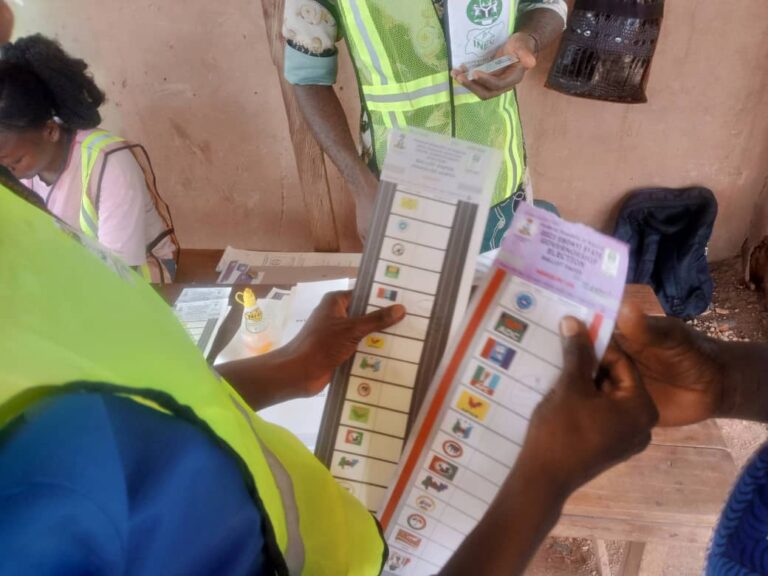
All outstanding elections to hold April 15 – INEC 

THE Independent National Electoral Commission (INEC) has scheduled all outstanding elections from the National Assembly, Governorship and House of Assembly polls for April 15, 2023.

INEC announced this on Monday, March 27, in Abuja.

The ICIR reports that the Adamawa and Kebbi governorship elections on March 18 are among the inconclusive and rescheduled polls.

There are also inconclusive elections from the National Assembly of February 25.

Declaring the Adamawa governorship election inconclusive on March 20, INEC explained that its decision was due to the margin of votes recorded in the election by the contestants.

According to the electoral body, the cancelled votes were more than the margin of victory between the top two candidates.

The incumbent governor of the state, who contested under the Peoples Democratic Party (PDP) Ahmadu Fintiri, polled 421,524. His closest rival, the candidate of the All Progressives Congress (APC) Senator Aishatu Dahiru (popularly known as Binani), secured 390, 275.

The margin between the two contestants is over 30,000 votes, which INEC said was less than the cancelled votes.

Fintiri was declared the winner in 13 of Adamawa’s 21 local government areas, while Binani won eight LGAs.

The ICIR reported how INEC declared the Kebbi State governorship poll inconclusive on March 20.

The INEC returning officer Yusuf Sa’idu, a Professor at Danfodio University in Sokoto, announced the development at the collation centre in Birnin Kebbi.

He said cancellations occurred across several Registration Areas (RAs) in various voting districts in 20 of the 21 Local Government Areas in the state.

According to him, the declaration of the election as inconclusive was in line with provisions of the Electoral Act 2022.

“Sub-section three of section 51 states that where the result of an election is cancelled in accordance with sub-section two, there shall be no return for the election until another poll has taken place in the affected polling unit.

“By virtue of these provisions and the powers vested in me as the collation and returning officer of the 2023 gubernatorial election in Kebbi State, I, Prof. Yusuf Sa’idu of the Usman Danfodio University, Sokoto, hereby declare the gubernatorial election in Kebbi State inconclusive,” he said.

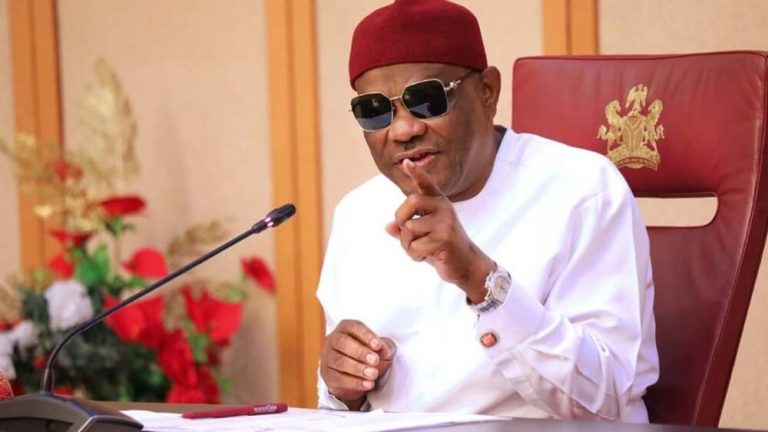
Wike backs Ayu’s suspension by Benue PDP ward exco

GOVERNOR of Rivers State, Nyesom Wike has backed the suspension of the National Chairman of the Peoples Democratic Party (PDP) Iyorchia Ayu.

Ayu was suspended on Sunday, March 27 by the Executive Committee of the PDP in Igyorov Ward of Gboko Local Government Area of Benue State for alleged anti-party activities.

Speaking with Channels TV on Monday, March 27, Wike said Ayu played a major role in the defeat of the PDP in the 2023 general elections.

According to Wike, PDP lost the presidential election and key states in the governorship poll as a result of the inefficiency of the national chairman.

“First of all, if you are a member of the PDP will you be happy with the way the party is today? It is only in this country that you see someone who has failed woefully and without any conscience would still like to occupy the position.

“In advanced countries if you are the head of the party after such a colossal failure you do not need anybody to tell you to turn in the towel.”

According to Wike, the national chairman’s refusal to resign, as demanded by the G5 governors, had a huge impact on the outcome of the 2023 general elections.

“So those in his ward from Benue are angry. Why are they angry? Before now Ayu ought to have left that office. People were saying we were pushing for Ayu to leave and that we had a hidden agenda to make PDP fail.

“Ayu remained and PDP didn’t win. You lost your unit as national chairman; you lost your ward as national chairman; you lost your local government as national chairman of the party. Not only did you take a distant third in the presidential election you also lost in the state gubernatorial election,” Wike added.

The ICIR earlier reported that the Peoples Democratic Party (PDP) referred Benue State governor, Samuel Ortom to a disciplinary committee over alleged anti-party activities.

In the same vein, former governor of Ekiti State Ayodele Fayose, and a former Senate President and Secretary to the Government of the Federation (SGF), Anyim Pius Anyim, were also suspended over alleged anti-party activities.

When banks go bust: the four factors at play

By Jannie Rossouw, University of the Witwatersrand

BANKS are in the news again. Two bank failures in the US, and the forced takeover of Credit Suisse by UBS in Switzerland, have triggered the worst turmoil in the banking sector since the 2008 financial crisis. There’s talk of a lack of trust, of a collapse in confidence, of contagion and systemic risk. Jannie Rossouw explains why they’re concepts worth understanding.

Trust

The whole principle of banking is built on trust. Clients deposit money with banks to receive interest and trust that their deposits will be repaid at maturity. Banks lend money to borrowers, trusting that lenders will pay the interest on borrowed funds and will repay the borrowed capital in accordance with the loan agreements.

Staff members work at banks, trusting the institution’s ability to pay salaries and provide other agreed benefits. Bank supervisors trust that their models and control mechanisms will raise warnings about liquidity, solvency and other risks facing any bank in a timely fashion. This will allow them sufficient time to step in, for instance by appointing a curator for a bank about to get into trouble.

In South Africa, the South African Reserve Bank is responsible for bank supervision. Stakeholders trust that it will do its job and keep their money safe. They trust that the individuals managing the banks will do so in a proper and sound way, thus not putting the economy or the banking system at risk.

Lastly, shareholders in a bank provide the permanent capital for the institution, based on the trust that their investment will grow in value and pay them dividends over time.

Confidence

All this confidence rests on the ability of banking institutions to manage risks appropriately. The very basis on which banks operate is risky. Banks are exposed to various types of risks that can contribute to failure. This is where confidence is important.

Banks are in the business of taking short-term deposits and converting those into long-term borrowing. Loan duration is longer than deposit (also called funding) duration. Therefore, if all depositors are spooked, and lose confidence in the bank’s ability to keep their money safe, they might start demanding repayment of their deposits on the same day. A bank can simply not meet such a demand for simultaneous withdrawals.

Another major potential hurdle is liquidity risk. Liquidity risk emerges when depositors want their deposits back and the bank can’t repay them all at once. It can trigger other problems.

Liquidity risk can also emerge when the assets of banks drop in value. The assets of a bank are the loans made to the public. Defaults on the repayment of such loans require write-offs. This erosion of asset value can trigger liquidity and solvency risks.

Silicon Valley Bank in the US invested heavily in government bonds. When bond rates increased, the capital value of the bonds held by the bank declined. This resulted in a liquidity shortage and a solvency crisis.

Once sufficient risks are triggered, a bank will run into serious financial difficulty. It might not survive, because trust will be shattered.

Under such circumstances, the authorities appoint a curator to manage the bank’s affairs. A curator will either manage a bank back to sound health, or will wind down its business and bring the bank to a closure.

In recent years in South Africa, VBS Bank and African Bank were placed under the control of curators. VBS Bank was completely insolvent and therefore closed. Many depositors suffered large losses.

In the case of African Bank, the curator could split the assets into a “good bank” (performing assets) and a “bad bank” (non-performing assets). These two parts were managed differently, with the good bank and performing assets moved back into private management as African Bank. The non-performing assets were kept apart and managed with the aim of recovering as much as possible from lenders.

Contagion

Contagion happens when a lack of trust in one banking institution spreads to others. This happened in 2008, when so-called sub-prime mortgage bonds were repriced with higher interest rates and borrowers could not afford larger repayments. Problems at some banks resulted in distrust in the whole banking industry.

In the past two weeks, there was again a risk of contagion after problems emerged at Silicon Valley Bank and at Credit Suisse in Switzerland. In both instances, the regulators stepped in to contain fears about the banking system. It was agreed that Credit Suisse would be sold to UBS, another Swiss bank. The announcement of this sale contained fears of contagion.

Contagion can spread beyond the banking system. Financial contagion refers to the spread of an economic crisis from one market (for instance the banking sector) or one country to other markets (for instance the insurance industry) or other countries.

Under these conditions, confidence in industries or even in countries can dissipate overnight. This is what happened in 2008, when there was doubt about the continued existence of the international banking system. Under such conditions, people revert to cash and keep their savings in banknotes. This in itself places a liquidity squeeze on the banking system, as cash flows out of the system.

Systemic risk?

Systemic risk is linked to contagion. It’s the risk of a breakdown of an entire system rather than the failure of an individual institution. A typical example is where the failure of an individual bank results in the failure of more banks, then the failure of the banking system and then the failure of the entire financial system.

Systemic failure can occur because different financial institutions hold exposures against one another. If bank A has a substantial deposit with bank B or insurer C and any one of the latter two run into financial difficulty, the result can be that bank A also faces financial difficulty.

Confidence in banking is hard-earned and easily shocked. This makes individual banks and the banking sector susceptible to knock-on effects from other institutions.

What can be done to manage these factors?

Risks in banks are managed at two levels.

The management of the bank is responsible for its sound operation. Management must assess and mitigate risk. In the recent case of SVB in the US, reports suggest that the bank didn’t manage its risk portfolio well, putting it at risk from major changes in the market, like sustained higher interest rates.

At the same time, banks are subject to supervision by the authorities. Banks must meet the regulatory requirements of supervisors and manage their affairs accordingly.

In South Africa, legislation makes provision for different types of banks to allow for different levels of sophistication in banking operations.

How vulnerable are banks on the African continent?

Africa is a vast continent of 54 countries. African countries are also at vastly different levels of economic development. It is therefore impossible to pronounce on the soundness of the continent’s banking system.The Conversation

Jannie Rossouw, Visiting Professor at the Business School, University of the Witwatersrand

This article is republished from The Conversation under a Creative Commons license. Read the original article.


Police defy human rights laws, ban protests in Nasarawa

0

THE Nasarawa State Police Command says it has banned all forms of protests across the 13 Local Government Areas of the state.

The Command’s spokesman Ramhan Nansel, announced this in a statement on Sunday, March 26, in Lafia, the state capital.

Nansel disclosed that the development is to forestall the breakdown of law and order in the state.

The statement reads, “The Nasarawa State Police Command wishes to inform the general public that all forms of protest have been banned throughout the state.

“Therefore, all proposed protests under any guise are hereby prohibited.

“The police Command took this decision in order to prevent a breakdown of law and order and to sustain the peace currently being enjoyed in the state; as the intelligence report on security can no longer sustain any form of protest in the state.

“Consequently, parents and guardians are advised to ensure their children and wards do not violate this order as anyone caught shall be arrested and prosecuted accordingly.”

Some residents of Nasarawa have been protesting against the outcome of the just concluded governorship and state assembly elections in the state.

On March 24, women in the Akwanga area of the state stripped off their clothes in public while protesting the outcome of the poll.

The women claimed their votes did not count in the election and insisted that the Independent National Electoral Commission must nullify the governorship election results.

Meanwhile, the ban on protests by the Police contravenes Nigeria’s Constitution and international law.

Under Section 40 of the 1999 Constitution of the Federal Republic of Nigeria (as amended), every person is entitled to assemble freely and associate with other persons.

“Every person shall be entitled to assemble freely and associate with other persons, and he may form or belong to any political party, trade union or any other association for the protection of his interests,” Section 40 reads.

Also the United Nations Human Rights law stressed on the right of peaceful assembly.

According to the United Nation law: “Everyone has the right to freedom of peaceful assembly. The right of peaceful assembly includes the right to hold meetings, sit-ins, strikes, rallies, events or protests, both offline and online.”

A human rights Lawyer Abdulrasaq Ahmad said although the police have the duty to maintain public safety, law and order the society, right to peaceful protest is guaranteed by sections 38, 39, 40, and 41 of the Constitution.

“Right to protest is not expressly spelt out in the Nigerian Constitution. It can, however, be deduced from the community of rights in Chapter IV of the Constitution. For instance, the right to freedom of thought, conscience, peaceful assembly, association, and movement are all guaranteed by sections 38, 39, 40 and 41 of the Constitution of the Federal Republic of Nigeria, 1999 (as altered), respectively.

”Police have the duty to maintain public safety, law, and order under Section 4 of the Police Act, 2020. It suffices to say that the rights to protest must be done within the ambits of the law to avoid the intervention of the Police.

He further explained that there is a very thin line between lawful and unlawful gathering.

“There is a very thin line between a lawful protest and an unlawful gathering. This explains the active involvement and participation of the police in protests across Nigeria,” Ahmad added.

CIBN urges bank auditors to use technology to prevent emerging risks

THE Chartered Institute of Bankers of Nigeria (CIBN) has called on internal auditors of banks to embrace the use of technology in the discharge of their duties with a view to identifying emerging risks and prevent their occurrences.

The CIBN president/chairman of Council, Ken Opara, made the call at the annual conference of the Association of the Chief Audit Executives of Banks in Nigeria (ACAEBIN), according to a statement made available to The ICIR on Sunday, March 26.

Opara noted that the Covid-19 pandemic brought about the need to accelerate and adopt technological innovation in today’s businesses.

The infectious disease, which emerged in the Chinese city of Wuhan in 2019 and spread over the world, affected lives and ground businesses to a halt.

A survey by McKinsey and Company showed that responses to COVID-19 have speeded the adoption of digital technologies by several years.

Given this development, all aspects of businesses were subjected to disruptive innovation, including the internal audit functions, Opara stressed.

“The emergence of new technologies, changing behaviours of bank customers, changing regulatory requirements, and evolving business models mean that the traditional methods of internal audit may no longer be adequate,” he said.

The CIBN president also noted that many factors that have been driving the adoption of technology in internal audit, which include increase in the volume of data, and shift towards automation, as well as change in business models.

“With the increasing use of data analytics, artificial intelligence, and automation tools, internal audit professionals must be able to utilise these tools to identify risks and essentially add value to their respective organisations,” he said.

He noted, however, that the adoption of technology in audit was not without its threats.

To be effective, internal auditors must have a thorough understanding of their respective organisation’s strategy, operations, and risk landscape, adding, “This means working closely with other functions within the organisation, such as finance, ICT, risk management, compliance and operations to gain a holistic view of the business.

“With this understanding, internal auditors can identify emerging risks and ensure that they are adequately addressed. This puts them at an advantage, compared to professionals who have not invested time to understand the domain within which they operate.”

The Nigeria Deposit Insurance Corporation (NDIC), in its 2020 Annual Report, put the total amount that resulted from bank fraud and forgery cases at N120.79 billion in 2020.

Besides having a continuing presence in a company, internal auditors supplement other staff within the organisation when it comes to fraud detection and prevention, the World Bank said in a report, ‘Public Sector Internal Audit: Focus on Fraud’, released in October 2022.

FEMA to assess FCT flood-prone communities

THE Federal Capital Territory Emergency Management Agency (FEMA) has said it will assess flood risk communities to prevent flooding in the territory ahead of the rainy season.

A statement released on Sunday, March 26, by Director General, Abbas Idriss said the assessment of the infrastructural improvements made by the agency and other stakeholders is aimed to mitigating the impact of flooding in the FCT.

Idriss disclosed that the 2023 Annual Flood Outlook by the Nigeria Hydrological Services Agency revealed that FCT and 178 local governments across the country were at risk of high flooding.

Idris stated that the demolition of shanties in parts of the FCT was part of the efforts to prevent flooding by opening waterways to allow the free flow of water.

“All hands are on deck to ensure that flood, even when it happens, will not be devastating. You will see that since the last rainy season, we are still working to remove shanties to open the blocked waterways to allow free flow of water when the rain comes,” he said.


READ ALSO:


“Assessment and findings on the blockage of waterways with illegal structures helped in 2022, which is why we did not have any fatalities from flooding in the FCT. We are expecting the same this year and we are already working to mitigate the impact of floods.”

The FEMA boss, however, urged residents to cooperate the actions of the agency towards preventing flooding.

The ICIR earlier reported the Federal Government forecasted that 32 states, 178 local government areas (LGAs) and the Federal Capital Territory (FCT) are at risk of heavy flooding in 2023.