Home Blog Page 1007

Over 400 rebels accused of killing ex-Chadian President Derby sentenced for life

MORE than 400 rebels accused of killing Chad’s former President Idriss Deby Itno, have been sentenced to life in prison.

The rebels were convicted after they were subjected to a mass trial for terrorism, mercenarism, using child soldiers and undermining Chad’s integrity and security.

An appeal court handed down the sentence at a closed hearing on Tuesday, March 21.

The month-long trial charged 454 members of the Front For Change and Concord rebel group for killing longtime President Debt, who died in murky circumstances in 2021 just two days after winning a sixth term in office.

Two dozen people on trial were acquitted and it’s unclear exactly how many were convicted.

In addition to life imprisonment, leader of the rebel group, Mahamat Mahdi Ali has been fined some $30 million to be paid to Chad’s government for damages.

Lawyers for the defendants said they will appeal the verdict at Chad’s Supreme Court. “As this decision has been made public by the court of appeal, there is only the right to appeal,” said Lokoulde Francis, a lawyer for the accused persons.

Deby seized power in 1990 when his rebel forces overthrew then-President Hissene Habre, who was later convicted of human rights abuses at an international tribunal in Senegal.

He ran the country for more than three decades and died of unspecified injuries when he visited troops fighting the rebel group, which was seeking to gain control of the oil-rich Central African nation. No details of his death were made public.

Hours after Deby’s death, Chad’s military named his son, Mahamat Idriss Deby, as the country’s interim leader for what was intended to be an 18-month period. However, last year the government announced it was extending the transition for two more years, which led to protests across the country.

Elections: UK to impose sanctions on masterminds of voter intimidation, violence

THE United Kingdom (UK) government has said it will impose sanctions on persons behind incidents of voter intimidation and violence that marred the March 18 governorship and state assembly elections in Nigeria.

This is coming a day after the United States (US) threatened to sanction perpetrators of electoral violence in a statement that said it witnessed violent voter intimidation “first-hand”.

The UK Minister of State for Development and Africa, Andrew Mitchell, in a statement issued on Wednesday, March 22, said: “We can confirm that we are collating relevant information, with a view to taking action against some individuals.”

Mitchell added, “Members of our observation mission personally observed violence, and voter suppression in numerous voting locations.

“We witnessed and received credible reports from other observer missions and civil society organisations of vote buying and voter intimidation, the destruction and hijacking of election materials and the general disruption of the process in numerous states, including Lagos, Enugu and Rivers.

“In addition, we observed incidents of harassment of journalists. Freedom of speech and a free press is crucial for a healthy democracy, and journalists must be able to go about their work without being threatened.”

The statement also condemned inflammatory speeches by some public and political figures under the guise of ethnicity and religion.

“We call on all leaders not just to distance themselves from this kind of language, but to prevent those who speak on their behalf from doing so in this way,” the statement said.

Andrew Mitchell

Mitchell applauded Nigerian voters who participated in the voting process despite being faced with intimidation and hostility

“It is a testament to their commitment to democracy that many Nigerians were prepared to vote, despite being faced with intimidation and hostility.”

The statement urged political parties and candidates challenging the outcome of the elections to go to court.

“We will be observing the course of legal challenges made. The 2023 elections are not only important to Nigeria and Nigerians but also to Africa and the world as a whole.”

However, the UK Mission also observed technical and operational improvement during the gubernatorial and state assembly polls.


READ ALSO:


“More polling units opened on time, there was greater evidence of BVAS and IREV working and results uploaded in real-time from polling units and collation centres. These are positive markers to build on for future elections,” the statement noted.

Earlier, The ICIR reported how several election observers deployed to monitor the March 18 gubernatorial and state assembly elections across states in Nigeria suffered one form of assault or the other.

The report identified security operatives, political thugs and a federal lawmaker as some of the perpetrators of the assaults.

Hacks/Hackers media party calls for workshop proposals

HACKS/Hackers, with the support of the Knight Foundation and the International Center for Journalists (ICFJ), is inviting applications for its new edition of the Media Party.

The program is slated for June 8, 2023, to June 10, 2023, for the first time in Chicago, United States.

This is an international event that brings together journalists, entrepreneurs, developers, and designers from five continents to work together for the future of media.

The organisation is accepting proposals from those interested in giving workshops or lightning talks. Additionally, there will be a hackathon focused on the synthetic world and simulation models.

To submit a workshop proposal, click here.

To submit a lightning talk proposal about your media project, click here.

To apply for the hackathon, click here.

Journalists, entrepreneurs, developers, data activists, media analysts, and others can submit their proposals to this media event.

The deadline for the submission of applications is March 31, 2023. Interested applicants can apply here.

GIJN offers cyber investigations training course

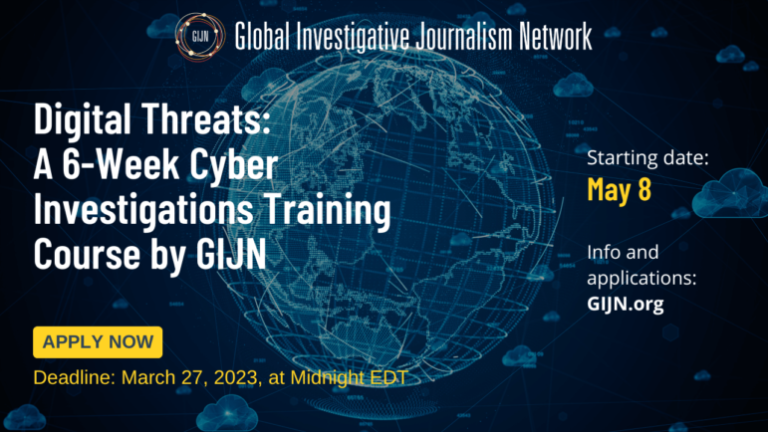
THE Global Investigative Journalism Network (GIJN) is inviting applications for its online course themed ‘Digital Threats: A Cyber Investigations Training Course’.

In this training course, reporters from around the world will learn how to investigate the digital environment in order to understand and expose attacks and manipulation. The goal is to provide them with the expertise needed to deliver cyber investigations across a range of beats and topics.

The organiser says the course is free, part-time, and limited to 20 participants. It will take place online each Monday and Thursday for six consecutive weeks starting from May 8, 2023.

Investigative journalists around the world can apply for this free course.

The deadline for submission applications is March 27, 2023. Interested applicants can apply here.

Voter apathy, violence, other issues that marred Rivers guber poll

0

BETWEEN 8:30 am and 9:00 am on Saturday, March 18, officials of the Independent National Electoral Commission (INEC) had begun to appear at various polling units in Rivers State, setting up booths for the voting exercise scheduled for the day.

Hours after the booths were set up, the low turnout of voters was the first pointer to a looming apathy, as many polling units were utterly devoid of voters for long periods.

At a polling unit in Ndah-Bros, Elekahia Ward, Port Harcourt, INEC officials told The ICIR that they had to send passers-by to inform other residents that the polling booth had been set up for voting.

This is despite the fact that residents were spotted walking individually or in small groups past the polling unit.

Some young men had also gathered a short distance away, drenched in sweat, energetically running after a football down the street.

Speaking with THE ICIR, some residents gave various reasons for non-participation in the exercise, including lack of faith in the process and the threat of violence that hovered over the state prior to the election.

Early signs of violence

Ahead of the March 18 elections, several abduction cases were recorded across the state.

The Local Government Secretary of the All Progressives Congress (APC) in Ikwerre, Amadi Osaronu, was abducted on Wednesday, March 15, and Publicity Secretary Darlington Nwauju said the abductors were dressed in police uniforms.

Nwauju also accused the ruling People’s Democratic Party (PDP) of recruiting thugs to destabilise the exercise.

The police had also confirmed another abduction involving the Accord Party’s candidate for the State House of Assembly, Ogba/Egbema/Ndoni constituency, Chukwudi Ogbonna. He was kidnapped by gunmen while driving in his car at Rumuigbo, near Port Harcourt, on Monday, March 13.

The presidential and National Assembly elections held in the state on February 25 were also marred by cases of violence which left at least two persons dead and two houses burnt down.

These, among other incidents, had instilled a fear of possible violence in some residents, including Victor Bassey, who told The ICIR that he would not be involved in the elections during a chat on Friday, March 17.

“I gave a man a ride last week, and he was in a long conversation with somebody on the phone. I realised from the discussion that he was probably one of these grassroots politicians.

“His statements suggested that the elections will be rough. I also know that some of the candidates have has thugs, including APC or PDP candidates. They have boys who work for them. So no, I will not even come out on that day,” Bassey said.

The ICIR observed during the elections that ballot papers provided at several polling booths in Port Harcourt were less than the number of registered voters per unit.

This led to a clash between party agents and INEC officials at Unit 046, Ward 19, Elekahia, in Port Harcourt.

The agents insisted that voting would not proceed until the required number of ballot papers were provided, regardless of the presence of only a few voters.

“Even if it is only five persons that vote here, the remaining papers should be cancelled,” the APC agent screamed.

The argument which ensued at the unit and some other areas observed by The ICIR were early signs that the exercise could get rowdy in the state.

Movement of essential workers restricted 

Despite tags issued by INEC to essential workers in the state, movement was an arduous task, as journalists experienced some difficulty visiting polling units on election day.

Police officers stationed along Port Harcourt roads to enforce the restriction of movement stopped The ICIR reporter along with other journalists on election duty, delaying them in some cases before eventually allowing them to go.

During one of the numerous stops, a policeman explained to The ICIR that the checks were necessary as there were reports of hoodlums making away with ballot boxes in the state.

There were also at least five deaths reported during the polls in Khana and Emohua local government areas of the state.

Although INEC officials arrived at polling units between 8:30 am and 9:00 am, sorting and counting began in several polling units as early as 2:30 pm due to the low turnout of voters.

As ballot boxes were delivered to Registration Area Centres (RAC), The ICIR observed some violence at the Ward 3 RAC, Rumuokwurusi, resulting from issues relating to uploading of results.

There was an exchange of words and blows between some party agents present, including the Social Democratic Party (SDP) candidate for the Obio-Akpor House of Assembly Bright Chizzi Amadi.

He was seen crying and drenched in sweat, and speaking to The ICIR, he and some party agents alleged that INEC officials had not uploaded figures announced at polling units to the result viewing portal (IREV).

“All the agents I sent to my unit, they chased them away. Now I have come to the RAC centre. I said let them upload and show me their BVAS let me see if they uploaded it, they refused. Is it good? Rather they want to fight me,” he said in tears.

Regardless of the irregularities recorded at the polls, and despite being stuck with a corruption case brought against him by the Economic and Financial Crimes Commission (EFCC), candidate of the Peoples Democratic Party (PDP) Siminalaye Fubara emerged winner of the elections in Rivers.

Fubara was declared winner by INEC on Monday, March 20, after polling 302,614 votes, followed by Tonye Cole of the All Progressives Congress (APC) with 95,274 votes, while Beatrice Itubo of the Labour Party (LP) took third place with 22,224 votes.

INEC declares PDP’s Mbah winner of Enugu guber poll

0

THE Independent National Electoral Commission (INEC) has declared candidate of the Peoples Democratic Party (PDP), Peter Mbah, as the winner of the March 18 governorship election in Enugu State.

Mbah was declared winner of the governorship election on Wednesday, March 22, after the results of the controversial Nkanu East Local Government Area were collated.

Mbah polled 160,895 votes to defeat his closest challenger, Chijioke Edeoga of the Labour Party (LP), who scored 157,552 votes.

The result is as declared by the Returning Officer of the state Prof Maduebibisi Ofo-Iwe, who is also the Vice Chancellor of the Michael Okpara University of Agriculture Umudike, Abia State.

Ofo-Iwe said, “Mbah Peter Ndubuisi of Peoples Democratic Party, having satisfied the requirement of the law, is hereby declared the winner and returned elected.”

He said that the total number of registered voters in Enugu State is 2,112,793 while the number of accredited voters is 381,971. The total valid votes cast is 358,463 out of which 9,088 were rejected.

The ICIR had on March 20, reported that INEC suspended collation in the state due to allegations of overvoting and results manipulation in Nkanu East and Nsukka local government areas of the state.

Ofo-Iwe while declaring the result on Wednesday acknowledged that the commission received petitions about Nsukka and Nkanu east local government area.

He said “This afternoon I was requested to return to Enugu that the Commission has concluded and resolved the issues in Nsukka and Nkanu East. We received a particular petition about Nsukka and Nkanu East local government.

“The petition against Nsukka was overruled by the Commission. However, the petition about Nkanu East was sustained.

“The Commission found that there was over-voting. From 30,350 the Commission reduced it to 16,956 votes for PDP.

“The Labour Party was 1,855, after review, it became 1,864 votes that is the summary of what happened in Abuja. And based on the fact that the petition of Nkanu East is sustained we call on the collation officer of Nkanu East to come forward to collate the results of the Nkanu East.”

Tinubu’s return certificate is a dud with no value – Datti Baba-Ahmed

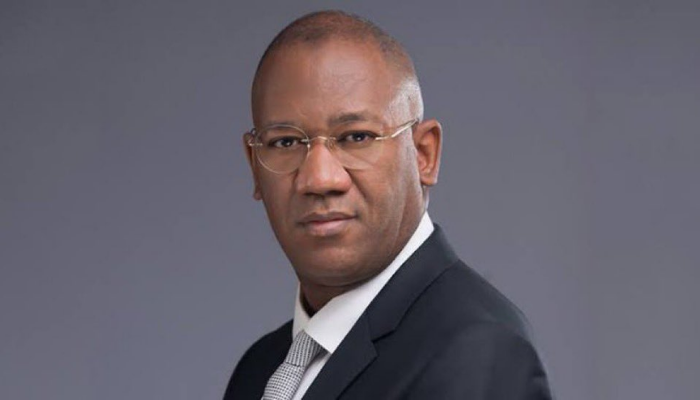
THE Labour Party (LP) vice presidential candidate, Yusuf Datti Baba, has said the President-elect, Bola Tinubu of the All Progressives Congress (APC), cannot be sworn in as the President of Nigeria.

He said this on Wednesday, March 22, while speaking on Arise TV.

APC candidate, Bola Tinubu, won the election with 8,794,726 votes, defeating his major contenders, Peoples Democratic Party (PDP) candidate Atiku Abubakar, who had 6,984,520 votes, and LP flagbearer, Peter Obi, who came a distant third with 6,101,533 votes.

Tinubu also had over 25 per cent of the votes cast in 30 states, more than the 24 states constitutionally required.

But the Labour Party VP candidate said Tinubu is constitutionally unfit to be the President.

According to Baba-Ahmed, there was a constitutional breach during the presidential poll that produced Tinubu as President-elect.

He described the certificate of return issued to him by the Independent National Electoral Commission (INEC) as “a dud” with no value.

He said swearing in Tinubu would be as good as swearing in a military regime.

“We cannot have a President-elect when there has been a constitutional breach. There’s a clear interpretation of Section 134 and INEC’s interpretation of Section 134.

“Asiwaju Tinubu is no President-elect. What he holds is a dud certificate that has no value.

“Swearing in Tinubu is an assault on the constitution. Swearing in Tinubu is as good as swearing in a military regime,” Baba-Ahmed said.

Meanwhile, the LP presidential candidate, Peter Obi, on Tuesday, March 21, filed a petition at the Election Petition Tribunal in Abuja, challenging the declaration of Tinubu as the winner of the February 25 presidential election.

The petition alleged that at the time of the election, Tinubu was not qualified to contest.

The Labour Party also claimed the election was invalid due to corrupt practices and non-compliance with provisions of the Electoral Act 2022.

Obi asked the tribunal to cancel the election and compel INEC to conduct a fresh election that would exclude Tinubu, his running mate Shettima, and the APC.

Drop in foreign reserves widens by $1.22bn in March – CBN

THE steep drop being witnessed in gross foreign reserves since the beginning of the year has widened by $1.22 billion, figures obtained from the Central Bank of Nigeria (CBN) website have shown.

Nigeria’s foreign reserves, which stood at $37.08 billion at the beginning of the year, had fallen to $35.87 billion by March 20.

Findings by The ICIR showed that in the month of March, foreign reserves slumped by $811.25 million, that is from $36,678,837,822 to $35,867,588,998 as at March 20.

In February, the reserves had dropped by $317.32 million from $36,996,157,229 to $36,678,837,822; and earlier in January, it had gone down by $86.62 million, from $37,082,778,138 to $36,996,157,229.

Held by the CBN, foreign reserves are assets that include foreign currencies, bonds, treasury bills, and other government securities.

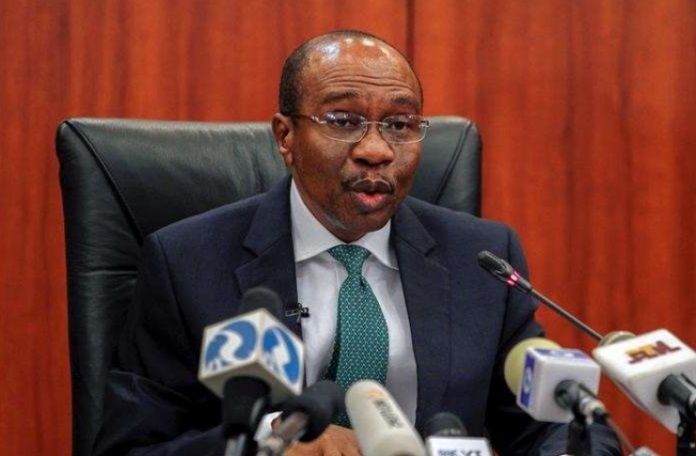
The CBN Governor, Godwin Emefiele, had on Tuesday March 21 noted the decline in foreign reserves in his briefing at the end of the apex bank’s Monetary Policy Committee (MPC) meeting.

Emefiele said, “The Committee, however, noted the marginal decline in the level of gross external reserves to US$36.13 billion in February 2023, from US$36.4 billion in January 2023, a decrease of 0.7 per cent, reflecting the downtrend in crude oil prices, as global uncertainties persist.”

Analysts say proceeds from crude oil owes much to the movement of the foreign reserves either to move upward or downward. So, a rise in the price of crude oil will automatically bring about a noticeable increase in foreign reserves.

Crude oil price, which stood at $82.81 per barrel at the beginning of the year, has fallen to $75.29 as at March 21.

The apparent decline in the price of crude oil, coupled with the fact that Nigeria is barely meeting up with its Organisation of the Petroleum Exporting Countries’ quota, arising from insecurity and theft, is a strain on the foreign reserves, besides other internal and external factors.

Ooni declares Quilombola Yoruba territory in Brazil

“They hold our gods like Sango, Ogun, Yemoja, and Obatala in high esteem”.

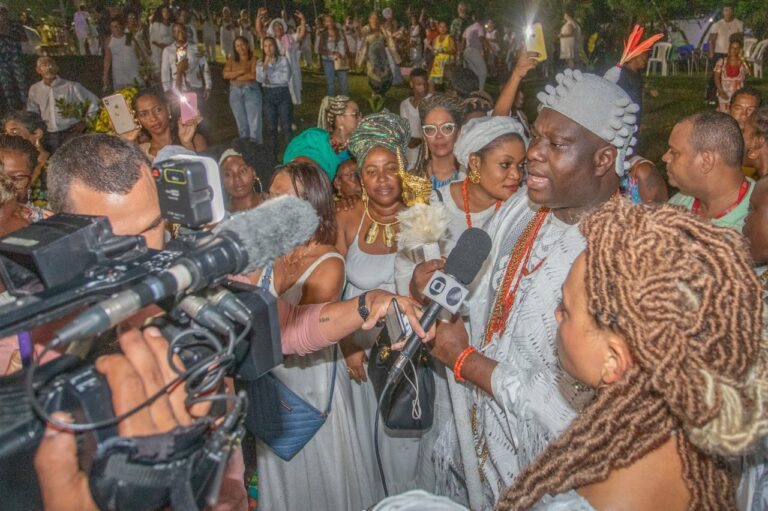
THE Ooni of Ife Arole Oduduwa, Ooni Adeyeye Enitan Ogunwusi Ojaja II, has declared Quilombola, an Afro-Brazilian settlement in Brazil, as a Yoruba territory.

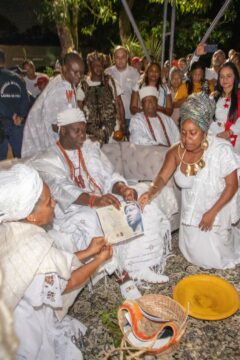
The monarch who was on a visit to the South American country for his “Back to Home” project, also presented a Certificate of Territory to the people in a ceremony that took place on Sunday, March 19, in the Quingoma community, located in Lauro de Freitas in the metropolitan region of Salvador.

Quilombola is popular for housing Yoruba people, who were enslaved and forcibly removed from their base in Nigeria during the era of the slave trade in Africa.


READ ALSO:


Addressing Brazil’s Federal House of Assembly on Tuesday where he officially inaugurated the first-ever National Orisa Day in the country, the Ooni said the recognition of Quilombola as Yoruba territory is yet another step in the fight for respect for African history and a move to further preserve the rich and robust history of the Brazilians and the Yoruba people.

The ceremony for the declaration Yoruba territory took place in the Quingoma community, Brazil.

“This event is a very big one for me because I am passionate about preserving the Yoruba culture and its deep-rooted values. This event will lay precedence for the Yoruba language and its culture to be more acceptable globally,” he said.

“You can see the excitement on their faces. Their Babalawos are well grounded in the teachings of Ifa and can render the Odu-Ifa and its panegyrics like our Ifa priest do in Nigeria,” the Ooni said.

He said further: “They hold our gods like Sango, Ogun, Yemoja, and Obatala in high esteem. They have designated days to celebrate these gods with colorful displays infused with plenty of aesthetics. They also speak Yoruba which is one thing I love about them.”

According to him, it was essential to harmonize and show solidarity with the people of the community as a way of fostering good bilateral trade between Brazil and Nigeria, as well as advancing the cause of the Yoruba race.

Petroleum authority launches regulations to promote transparency in oil, gas business

THE Nigerian Midstream and Downstream Petroleum Regulatory Authority (NMDPRA) has launched a six-priority Midstream and Downstream Petroleum Regulations. 

The regulations launched are geared towards promoting transparency and enabling business environment in Nigeria’s oil and gas business.

The new regulations are Midstream and Downstream Petroleum Operations Regulations, 2023; Assignment or Transfer of Licence and Permit Regulations, 2023; Petroleum Measurement Regulations, 2023; Gas Pricing and Domestic Demand Regulations, 2023; Petroleum (Transport and Shipment) Regulations, 2023; and Natural Gas Pipelines Tariff Regulations, 2023.

Speaking today at the official launch ceremony in Abuja, the Authority’s chief executive, Farouk Ahmed, said the regulations would no doubt aid the Authority in controlling processes, setting standards, and monitoring operations in the technical and commercial aspects of the midstream and downstream petroleum sector in Nigeria, as well as provide internally generated revenue for the Authority.

Ahmed described the Petroleum Industry Act (PIA) 2021 as the key legislative instrument that governs the business of petroleum operations in Nigeria and sets the rules for all activities in the petroleum sector.

Farouk noted that the NMDPRA had consulted with relevant stakeholders on the regulations, adding that they would help to drive transparency in the oil and gas business and enable it become globally competitive.

Giving further insights, Ahmed said the Midstream and Downstream Petroleum Operations Regulations 2023 would regulate operations of the companies in the Nigerian midstream and downstream petroleum sector, provide procedures for the grant of licences, permits, authorizations and payment of fees; and provide sanctions and penalties for non-compliance.

He said that the Assignment or Transfer of Licence and Permit Regulations, 2023 was designed to establish procedure for assignment or transfer of licence or permit by licensee or permit holder; prescribe fees for such assignments or transfer, and provide sanctions or administrative penalties for failure to comply with the regulations.

Accordingly, Gas Pricing and Domestic Demand Regulations, 2023 is to regulate the prices of marketable natural gas of the strategic sectors under the Act, identify the unregulated markets and make provisions for such markets.