Home Blog Page 1011

Technology will enhance investors’ participation – NGX

THE Nigerian Exchange Limited (NGX) has said that leveraging technology would enable an increase in investors’ participation in the capital market.

The divisional head, Trading Business, at the Exchange, Jude Chiemaka, made the submission on Tuesday, March 21 during an interview with ARISE TV, while responding to a question on the Global Money Week, which held on Monday, March 20.

The Global Money Week, an educational programme, is aimed at enhancing financial literacy in children and youths, while driving financial inclusion.

“The global money week is an opportunity to amplify the various works we do around financial literacy, financial inclusion,” Chiamaka said, adding, “Technology will continue to be the gateway to increase investors participation.”

He explained that the Exchange had taken the event to the level where it could address the importance of savings and investing.

He cautioned that investing in stocks was not so much about making money quickly, but about being careful and concerned about the environment in order to make good investment.

“As you are opening your investment account, it is tied to your bank account. When dividends is paid, it is automatically credited into your account. When you sell your shares it is credited into your account. So the risk of fraud is reduced,” Chiamaka added.

Borrowing cost to rise as MPC raises monetary rate to 18%

COST of funds for businesses is set to go higher as the Monetary Policy Committee (MPC) meeting of the Central Bank of Nigeria (CBN) today once again jacked up the monetary policy rate (MPR) to 18 per cent.

The CBN’s MPR sets the tone for lending rate by commercial banks to their customers. Banks’ interest rate on borrowings by its customers, most of them businesses, always consequently flows in tandem with the MPR movement.

A multiplier effect is the inflationary rate, which tends to also move up as businesses pass on the increased cost of production and services to the end-chain, the consumers.

At the last MPC meeting in January, the committee had raised the rate to 17.5 per cent.

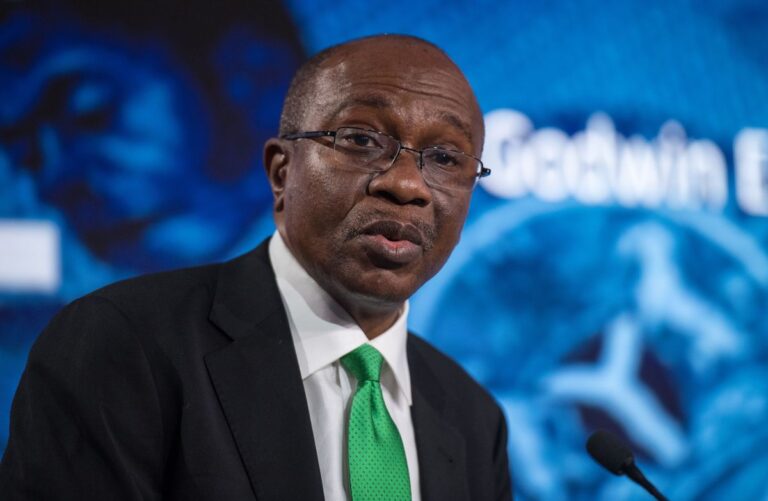
The CBN Governor, Godwin Emefiele, who spoke after the end of the meeting, cited concerns of upward risks and price adjustments in a build-up to petroleum subsidy removal, rising prices of other energy sources, continued exchange rate pressure and uncertain economic climate as conditions that informed the upward adjustment of the policy rate.

Emefiele, explaining how the MPC members arrived at the new rate, said 10 members voted to raise the MPR to 50 basis point, one member voted to leave the MPR at 25 basis point, while one member voted to retain the old rate.

He noted that all members voted for other parameters to remain constant.

Summarily, the MPC voted to raise the MPR to 18 per cent, leave the assymetrical corridor at +100/-700, hold the cash reserve ratio at 32.5 per cent, and also hold liquidity ratio at 30 per cent.

The CBN governor observed that the committee deliberated on the naira redesign policy, frequent down-time in transfers in banking channels, and glitches in online payments, noting that these areas were being addressed to lessen the economic burden on the people.

He observed, however, that the naira redesign policy had led to an inroad into the apex bank’s cashless policy programme.

Increase in the monetary rate is always bad news for the average Nigerian; this time, the inflation rate currently at 21.91 per cent is expected to head north as prices of goods and services react to the new monetary rate.

The chief economist, Coronation Merchant Bank, Chinwe Egwim, who spoke on the impact of the development on the economy, feared it would, indeed, increase borrowing costs.

“The MPR is a tool to tackle inflation. The concerns raised by the CBN governor on legacy infrastructure gap affecting food price is expected. This is part of the reason why the interest rate is high to manage inflation and cost of borrowing,” Egwim said.

She noted that high energy prices should be expected, advising that small scale businesses would have to sustain cost management posture to enable them be in business.

The economist said, “SMEs should adopt innovative changes at this time and expand their investment portfolio to enable them generate additional income.”

On the global scale, she noted that the international capital market would remain expensive for Nigeria considering its high appetite for borrowing, and considering the rate hikes by European central banks and other global lenders.

She also stressed the importance of the monetary and fiscal policy aligning together.

A development economist, Kelvin Emmanuel, told The ICIR that the hike in rate would have consequences on the real sector part of the economy.

Emmanuel said, “The decision to hike MPR by 50 basis points in a continuous attempt to align the inflation to interest yield curve and maintain a band of 400 basis points, while it might seem to be a good way to prevent a negative real return on yield for institutional capital, has a counter-productive impact on the cost of capital to the real sector.

“And this is because producers pass on to end consumers the higher cost of capital for production. In attempting to solve one problem of negative return on yield, the MPC is creating another problem of a hike in demand pull inflationary buffers for the consumer price index.”

 

Guber polls: We witnessed voter intimidation, violence first-hand – US

THE United States (US) has threatened sanction on masterminds of violence and voter intimidation during the March 18 governorship and state assembly elections in Nigeria.

In a statement posted on its website, the US Consulate in Nigeria said it “witnessed some of the these incidents first hand” in Lagos, kano and other states.

“The United States is deeply troubled by the disturbing acts of violent voter intimidation and suppression that took place during those polls.

“The use of ethnically charged language before, during, and after the gubernatorial election in Lagos was particularly concerning,” the statement said.

While calling on the Nigerian authorities to bring those involved in intimidating voters and suppressing the voting process to justice, the US Embassy threatened sanctions on those found guilty of the acts.

“The United States likewise will consider all available actions, including additional visa restrictions on individuals believed to be responsible for, or complicit in, undermining the democratic process in Nigeria.”

The Consulate commended “all Nigerian political actors, religious and community leaders, youth, and citizens who have chosen to reject and speak out against such violence and inflammatory language, affirming Nigerians’ commitment to and respect for the democratic process”.

The statement urged those challenging the election results to go through the established legal processes “which must not be interfered with”.

However, the US observed operational and technical improvement on the February 25 presidential and National Assembly elections during the state polls.

“Polling stations generally opened on time and most results were visible on an electronic viewing platform in a timely manner,” the statement said.

Earlier, The ICIR reported how several election observers deployed to monitor the March 18 gubernatorial and state assembly elections across states in Nigeria suffered one form of assault or the other.

The report identified security operatives, political thugs and a federal lawmaker as some of the perpetrators of the assaults.

Here’s what you should know before you destroy your Nigerian passport

TWO Nigerians abroad have shredded their Nigerian passport booklets and denounced their citizenship in protest over the conduct of the 2023 general elections.

Separate videos posted by @Gidi_Traffic and @Ogundamisi, which have gone viral show two men who said they had lost faith in the country after observing how the highly criticised Nigeria elections were carried out and for that reason, no longer wanted to be associated with the country.

Many have expressed their thoughts on the act of destroying the Nigerian document ranging from hilarious to solemn.

@deoluakinyemi, a Nigerian cleric wrote on twitter: “I also have a few expired passports I can tear. We need to see the names and dates so that people don’t make mistake.”

A Nigerian lawyer and social entrepreneur, Brian Jude, residing in Texas, United States, also reacted: “Una don come again. To collect a new passport at Atlanta office usually takes around 3-7 years. Think before you do.”

The videos also caught the attention of the Special Assistant to the President on New Media Tolu Ogunlesi, who explained that it was not the passport that made one a Nigerian citizen.

“Millions of Nigerian citizens do not have passports. The only way to stop being a Nigerian citizen is to follow the due process of citizenship renunciation, not by tearing or burning your passport, which is a crime by the way,” Ogunlesi said.

The spokesperson for the Nigerian Immigration Service Tony Akuneme, could not be reached for comments as of the time of reporting, but a senior staff of the office who does not want to be named because she is not authorised to speak on the issue, said that the passport document remains a property of the Nigerian Government, not the person to whom it is issued and may only be legally destroyed by the government.

Checks by The ICIR revealed that while renouncing Nigerian citizenship is a constitutional right afforded to citizens above the age of 18 years, the process is not as easy as tearing one’s passport, an act that is in fact, counterproductive.

However, the power to approve renunciation or restoration of Nigerian citizenship is the sole prerogative of the President, as enshrined in Chapter III, Article 29, sub. Section 1-2, of the 1999 Constitution of the Federal Republic of Nigeria, as amended.

Nigerian Missions abroad can only facilitate such applications but do not hold the ultimate decision and prospective applicants must fulfil certain basic requirements.

These include a formal application letter duly signed by the applicant, a duly completed application form provided by the Mission, an affidavit for renunciation of citizenship in a Nigerian court and two copies of recent passport photographs.

Other requirements are applicant’s original letter of identification from the Local Government Area of origin, evidence of alternative citizenship, original birth certificate, and original Nigerian international passport and fee payment receipt as may be determined by the Mission.

Court sentences 6 drug traffickers to 156 years imprisonment

0

SIX drug traffickers have been sentenced to a total of 156 years imprisonment for offences bordering on drug dealing, transportation and conspiracy to transport illicit substances.

The cases were filed against the convicts by the National Drug Law Enforcement Agency (NDLEA).

This was disclosed in a statement released on Tuesday, March 21 by the spokesperson of the agency, Femi Babafemi.

According to the statement, one of the victims, 27-year-old Ahmed Abdulsabur, was arrested in 2022 by NDLEA operatives and prosecuted in charge number FHC/AB/20C/2022 at the Federal High Court, Abeokuta, presided over by Justice Joyce Obehi Abdulmalik.

“Delivering her judgment on the six counts charge brought against Ahmed, Justice Abdulmalik convicted and sentenced him to 10 years imprisonment on each count, bringing the total number of his in jail term to 60,” the agency stated.

In a similar ruling, Justice Abdulmalik also sentenced another dealer, Olumide Elegbede, 32, to 20 years jail term, ten years for each of the two counts of the charge brought against him in charge number: FHC/AB/128C/2I.

The judge ruled that the years of imprisonment in both cases will run concurrently.

At the Federal High Court in Lagos, the quartet of Okechukwu Umeh, Lanre Adebayo, Adigun Adeshina and Emmanuel Omijeh were arraigned on three counts in charge numbered FHC/L/87C/2023.

“The trial judge, Justice Akintayo Aluko, on Thursday 16th March, convicted and sentenced each of them to five years on count one; seven years each on counts two and three. This brings the total number of years for each of them to 19 years jail term and the four of them to 76 years imprisonment.


READ ALSO:


“While the judge ruled that the sentences should run concurrently, he also gave the four convicts the option of paying N20 million in lieu of the jail terms. This is in addition to granting the application by the NDLEA for the final forfeiture of a white colour Ford bus with registration number: PHC 315 ZT, used in conveying 532. 8 kilograms of the Loud variant of cannabis on the day of their arrest, Sunday 22nd January 2023 along Lagos/ Ibadan expressway,” the NDLEA stated.

The NDLEA added that the court also granted the final forfeiture of N3 million offered as a bribe by the convicts to its officers.

The agency said the drugs concealed in ‘take away’ food packs in 19 big cartons were seized in the white Ford bus heading to Port Harcourt, Rivers State, along the Lagos-Ibadan expressway at 2:35 am on Sunday, January 22.

Canon, Visa pour L’Image offer grants, awards

THE Visa pour l’Image – Perpignan Festival, in partnership with Canon, is seeking entries for its competition.

The contest recognizes the best visual journalism around the world from September 2, 2023 to September 17, 2023 in Perpignan, France.

The festival is accepting entries for the following competitions: the Canon Female Photojournalist Grant, the Françoise Demulder Photography Grants, the Camille Lepage Award for a photojournalist, the ICRC Humanitarian Visa d’or Award – International Committee of the Red CrossVisa d’or franceinfo: Award for the Best Digital News Story, and the Figaro Magazine Lifetime Achievement Visa d’or Award.

Winners will receive EUR8,000 (US$8,540).

Photojournalists and documentarians can enter this contest.

The timeline for the submission of entries is from May 23, 2023 to April 30, 2023. Interested applicants can apply here.

Dag Hammarskjöld Scholarship Fund for Journalists seeks reporting fellows

THE Dag Hammarskjöld Scholarship Fund for Journalists is inviting applications for its fellowship.

The programme aims to give participants the opportunity to report on international affairs during the 78th session of the United Nations General Assembly in New York.

Fellows will make professional contacts, interact with seasoned journalists and gain a broader perspective on global issues.

The fellowship is open to journalists working full time in developing countries in Africa, Asia, Latin America and the Caribbean.

Applicants should have a compelling interest in international affairs and the work of the U.N. and its member agencies. Freelance journalists can also apply.

The fellowship includes travel, accommodations and a per diem allowance.

Journalists who are 25 to 35 years old and from developing countries can apply for a fellowship to report on the United Nations from September to November 2023.

The submission of application deadline is April 24, 2023. Interested applicants can apply here.

Presidential poll: Peter Obi finally petitions Election Tribunal

0

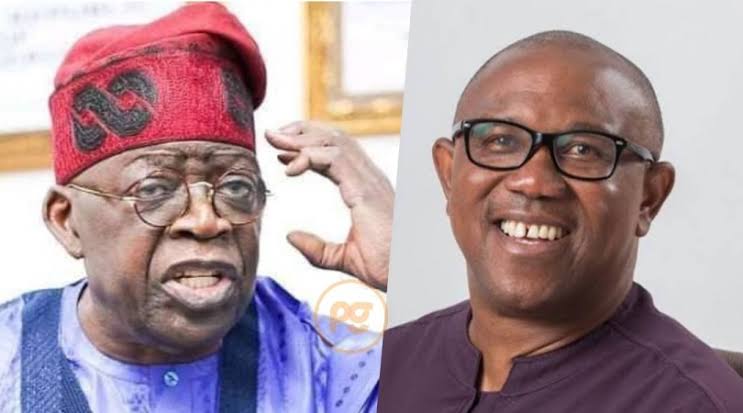
THE candidate of the Labour Party (LP) in the just concluded Presidential election, Peter Obi, has finally submitted a petition challenging the outcome of the election held on February 25.

This was announced by the spokesperson of the Obi-Datti Presidential Campaign Council, Yunusa Tanko, on his official Twitter handle on Tuesday, March 21.

“It is official. The Labor Party Presidential candidate Peter OBI has filed his petition to the presidential elections tribunal in Abuja. The process of reclaiming the people’s mandate has started.” he tweeted.

The Independent National Electoral Commission (INEC) declared Bola Ahmed Tinubu of the All Progressives Congress (APC) winner of the presidential poll ahead of 17 other candidates that contested the election.

The Chairman of INEC, Mahmood Yakubu, announced the result of the election on March 1.

According to the result released by INEC, Tinubu scored a total of 8,794,726 votes to defeat Atiku Abubakar of the Peoples Democratic Party (PDP), who polled a total of 6,984,520 votes, and Peter Obi of the Labour Party (LP), who came third with 6,101,533 votes.

The PDP and LP candidates had since rejected the outcome of the election and vowed to challenge it in court.

An election petition must be presented and filed within 21 days of the declaration of the result. 

When a petitioner misses the deadline to file his petition and it is later ruled to be statute-barred, he forfeits his right to bring the case.

Guber polls: Lagos, Kano worst-hit by violence, INEC lacked transparency – EU observers

…vote-buying as directly witnessed by EU EOM observers, further detracted from an appropriate conduct of the elections.

THE European Union (EU) Election Observation Mission to Nigeria’s 2023 general election has expressed worry over the “obstruction and use of organised violence” during the March 18 governorhip polls across the country.

The EU Mission noted that even though the elections mostly started on time, obstruction and organized violence limited the free expression of the will of voters, despite efforts by the civil society to promote democratic standards.

It noted that polling on election day was disrupted by multiple incidents of thuggery and intimidation of voters, polling officials, observers and journalists, resulting in many casualties and fatalities.

“Lagos, Kano, and other states in the southern and central part were most affected,” EU Chief Observer, Barry Andrews stated during a press conference in Abuja while presenting the Mission’s second preliminary statement on the process of the 2023 general elections.

He added that although the Independent National Electoral Commission (INEC), introduced some corrective measures ahead of the governorship and state assembly elections which enabled sensitive materials to be delivered on time and election technologies to be improved, the Commission continued to lack transparency.

“Throughout the mission we saw that Nigerians have a great appetite for democracy and are keen to engage in various civic activities. However, in many parts of the country, their expectations were not met.

“Many were disappointed and we witnessed voter apathy that is in part a clear consequence of failures by political elites  and, unfortunately, also by INEC,” Andrews said.

According to the report, vote buying which was directly witnessed by EU EOM observers, further detracted from the appropriate conduct of the elections.

According to the report, there was also a clear underrepresentation of women as political parties lacked internal policies to support the constitutionally prescribed inclusion, contrary to Nigeria’s international commitments to eradicate discrimination against women.

Public confidence and trust in INEC were “severely damaged” due to the lack of transparency and operational failures and the polls revealed systemic weaknesses in the country’s electoral framework.

The first report of the EU EOM was issued on February 27, two days after the Presidential and National Assembly elections and a final report containing recommendations for improving the country’s electoral framework is expected to be published in a few months, as the Mission continues to observe post-election developments.

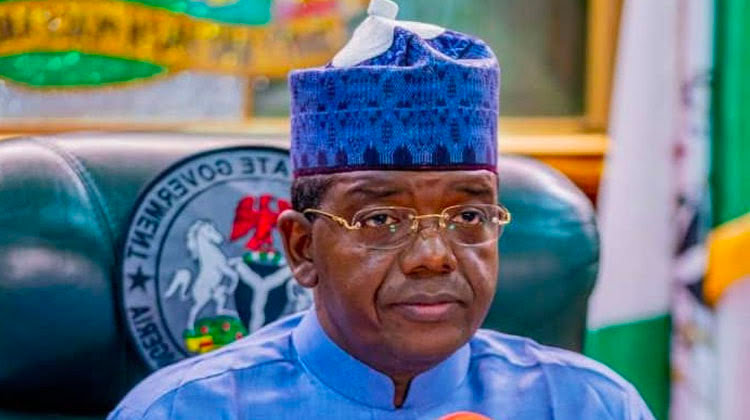
Matawalle loses reelection bid in Zamfara as Fubara, Sani win in Rivers, Kaduna

THE Independent National Electoral Commission (INEC) has declared the results of governorship elections in Zamfara, Rivers and Kaduna states.

The announcement was made by the INEC returning officers in each state after collating the results from polling units.

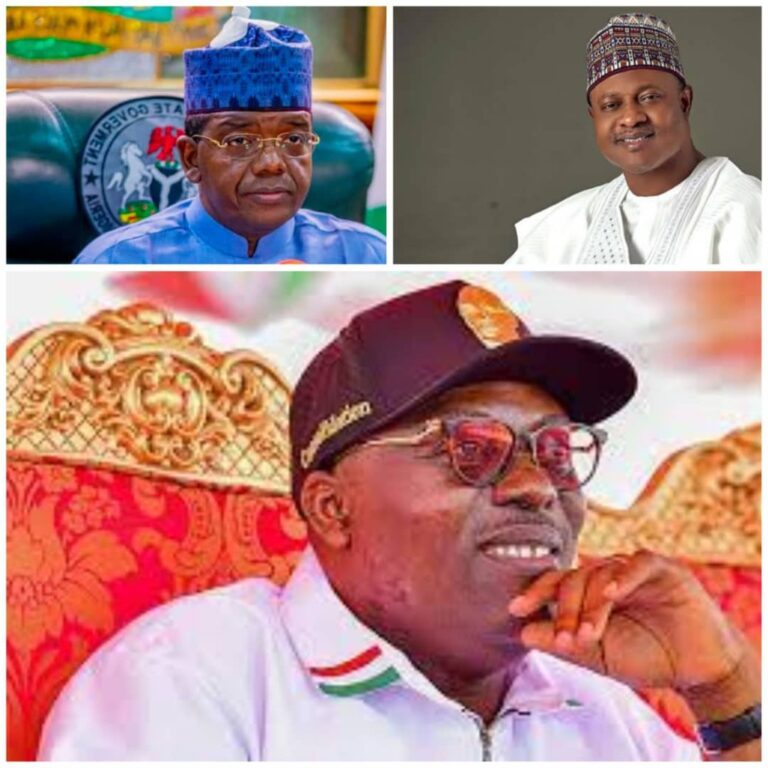
Zamfara’s incumbent governor, Matawalle Bello, lost his reelection bid to Lawal Dare of the Peoples Democratic Party (PDP).

Bello-Matawalle

The returning officer for the election, Kasimu Shehu, said Dare scored 377,726 votes to defeat Matawalle, who polled 311, 976 votes.

In Rivers State, Sim Fubara of the PDP emerged victorious in the gubernatorial election after polling 302,614 votes.

Siminalayi Fubara/PC: Channels TV

According to INEC, Tonye Cole of the All Progressives Congress (APC) came second with 95,274 votes, while Beatrice Itubo of the Labour Party (LP) came third with 22,224 votes.

Meanwhile, Uba Sani of the APC has been declared winner of the Kaduna State gubernatorial election.

INEC collation officer, Lawal Bilbis said Sani secured 730,002 votes to defeat his closest rival, Isah Ashiru Kudan of the PDP, who garnered 719,196 votes. Jonathan Asake of the Labour Party (LP) came third with 58,283 votes.

Uba Sani/PC: Punch Newspaper

Sani won in 10 local government areas (LGAs) of the state, while Ashiru won in 13. The LGAs won by Ashiru include Kaura, Sanga, Kajuru, Jaba, Makarfi, Jema’ah, Zango-Kataf, Soba, Chikun, Kagarko, Kachia, Lere, and Kudan.

The APC candidate won in Giwa, Ikara, Kauru, Sabon-Gari, Zaria, Kubau, Kaduna South, Kaduna North, Igabi, and Birnin-Gwari.

The governorship elections in the three states were keenly contested by the major political parties. The polls were also marred by pockets of violence and irregularities.

However, INEC has assured Nigerians that the results reflect the true wishes of the electorate.

Reacting to his victory in Zamfara, Lawal Dare of the PDP said his victory was a sign that the people of the state have rejected Matawalle’s administration. He promised to work hard to fulfil his campaign promises and take the state to greater heights.

Similarly, Sim Fubara of the PDP expressed gratitude to the people of Rivers State for giving him the opportunity to serve them. He promised to work tirelessly to ensure that the state experiences more development.

Uba Sani of the APC also thanked the people of Kaduna State for their support. He promised to run an all-inclusive government that will bring development to all parts of the state.