Home Blog Page 1036

NIPOST fails to deliver printer’s parcel to Benin Republic, one year after billing N181,000

AN ABUJA-BASED printer, Sola Ogunlola, has accused the Nigerian Postal Service (NIPOST) of failing to deliver his consignment to Benin Republic one year after he allegedly paid the Service N181,000 for a waybill.

Ogunlola told The ICIR he got an order from one Mrs Neo Ale from Benin Republic in early 2022 to print her some branded nylons.


READ ALSO:

NIPOST, FRSC parley to make digital address compulsory for issuance of drivers’ license

NIPOST in charge of adhesive stamps, not stamp duties ― FIRS

NIPOST reclaims collection of stamp duty charges from FIRS

We consulted OAGF, operate a CBN approved Stamp Duty account – NIPOST replies FIRS


He got the fund for the work through the Western Union.

The money he received covered his work and the parcel’s postage cost to the Benin Republic.

The consignment sent by Sola Ogunlola, a printer in Abuja, through NIPOST, to the Benin Republic but has not been delivered a year after. Photo credit: Sola Ogunlola

“I finished the printing and took it to EMS Post Office Garki Area 10 Abuja for a waybill to Cotonou, Benin, on 13th March 2022. I paid N181,500 as charges for delivery, and to date, the receiver didn’t get the nylons.

“The receiver has called me, my business and my country with all kinds of unprintable names, labelling me a fraudster.

“I don’t want this case to be swept under the carpet. If they can’t deliver, let them refund my money and the nylons so that the consignment can go through another route,” Ogunlola fumed.

One of the two receipts containing the N181,000 allegedly paid by Sola Ogunlola to NIPOST to deliver a consignment to the Benin Republic from Abuja that has yet to be delivered a year later. Photo credit: Sola Ogunlola

Efforts by the printer to know the parcel’s whereabouts have been futile.

Ogunlola has met with NIPOST officials at its Area 10 office and the Garki headquarters in Abuja.

According to him, the head of the Area 10 office he met, Dickson Ugbomoiko, told him he was about to retire and could not do much to help.

He said Ugbomoiko told him to contact any other person he knew at NIPOST that could assist in tracking the parcel’s whereabouts.

“He said even if I go to court, the court will only award me a percentage of the cost of the parcel that I sent, and the matter will drag for a very long time in the court.

One of the two receipts containing the N181,000 allegedly paid by Sola Ogunlola to NIPOST to deliver a consignment to the Benin Republic from Abuja that has yet to be delivered a year later. Photo credit: Sola Ogunlola

One of the two receipts on which Sola Ogunlola, a printer in Abuja, allegedly paid N181,000 to NIPOST to deliver a branded nylon to his client in Benin Republic, which has not been delivered a year after. Photo credit: Sola OgunlolaThe ICIR contacted Ugbomoiko, who confirmed he had tried his best but could not locate the consignment.

He, however, assured The ICIR that the parcel was not stolen or missing but could be at the NIPOST warehouse in Lagos State or stuck on arrival in Benin Republic.

The ICIR also contacted NIPOST’s spokesperson, Frank Alao, who promised to investigate the matter.

Alao did not respond to subsequent enquiries on the matter from this organisation.

CUNY seeks business journalism fellows

THE McGraw Center for Business Journalism at the City University of New York’s (CUNY) Craig Newmark School of Journalism is seeking entries for its fellowship.

The program aims to support in-depth coverage of business and the global economy.

The fellowship provides editorial and financial support to journalists who need the time and resources to tackle complex, time-consuming stories.

The program is accepting applications for in-depth text, video, or audio pieces. Fellows will receive grants of up to US$15,000 to complete investigative and enterprise stories.

Reporters and editors working at news organisations, as well as freelancers, may apply.

International journalists are also eligible as long as their reporting is completed in English and targeted to a U.S. media outlet and audience.

Journalists with at least five years of experience can apply for a remote fellowship.

The application deadline is March 31, 2023. Interested applicants can apply here.

Gunman kills self after shooting seven dead during church service in Germany

A GUNMAN shot seven people dead at a Jehovah’s Witness church next to a car repair shop in the Gross Borstel District of Germany on Thursday night before turning the weapon on himself, Police have said.

Police spokesman Holger Vehren said officers were alerted to the shooting at about 9.15 pm and arrived at the scene promptly to find people with apparent gunshot wounds on the ground floor of the building.

Vehren added that officers, subsequently, heard a shot from an upper floor and found a fatally wounded person upstairs who may have been the gunman and acted alone with unclear motives.

German Chancellor Olaf Scholz described the shooting as “a brutal act of violence”.

“My deepest condolences to the families of the victims,” Hamburg Mayor Peter Tschentscher wrote on Twitter on Thursday.

The incident happened during a Bible Study and local media outlets reported that the shooting had also left at least 25 people seriously injured.

“The Police measures in the surrounding area are gradually being discontinued. Investigations into the background of the crime are continuing,” Hamburg Police tweeted in the earlier on Friday.

Photo does not show Peter Obi, Gbadebo Rhodes-Vivour drunk at Lagos airport

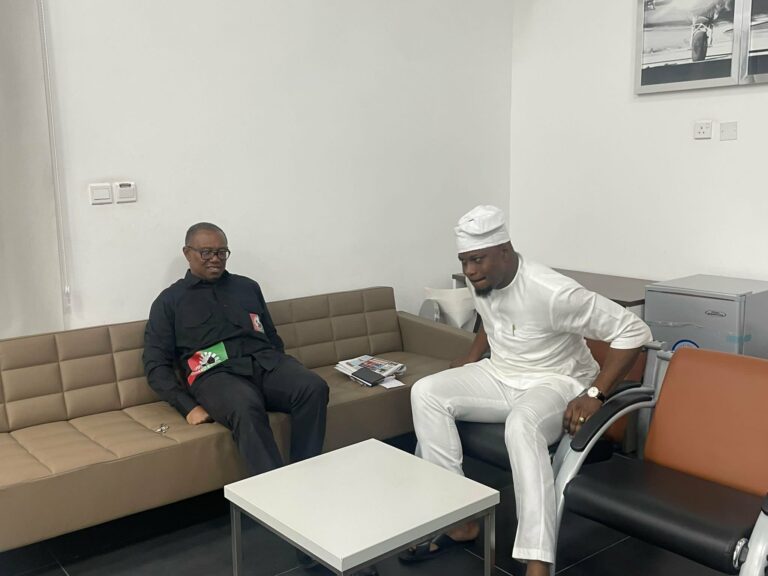
A photo showing the Labour Party’s presidential candidate in Nigeria’s 2023 general election, Peter Obi and the gubernatorial candidate of the party in Lagos State, Gbadebo Rhodes-Vivour, with alcoholic drinks on their table has surfaced online.

The photo is circulating alongside another one which showed the duo taking a nap at the Ikeja Airport in Lagos, with a claim that both of them were drunk and caught sleeping at the Airport.

The image shows four bottles of Hero beer directly in front of Obi and a bottle of Heineken and a glass cup in front Rhodes-Vivour on the shared table.

A Twitter user, @Gasbytweet tweeted the claim with a caption that read:  “How it started and how it ended. Drunks” 

The tweet was also shared here.

A Facebook user, Zara Onyinye posted the photo with a caption thus:

HOW IT STARTED AND HOW IT ENDED

PICTURE NO DEY LIE

OBI NA 419

My uncle Obi was not sleeping at all. It was all stages managed

This Man started staging this film after he took his hero beer and got high somehow …

No amount of this yahoo yahoo strategies, campaigns on ethnicity, and religious bigotry can make him the next President of Nigeria.

I did not hate you but his lies is just so much

I sympathize with those covering under race and ecclesiastical small-mindedness supporting Peter Obi and asserting he will be the messiah to unravel Nigeria’s difficulty, records of Peter Obi’s divisiveness, looting from the treasury, and ineptitude then as Governor of Anambra are intactCLAIM

The CLAIM

Photo shows Peter Obi and Gbadebo Rhodes-Vivour with alcoholic drinks on their table.

Doctored image circulated online.

THE FINDINGS

Findings by The FactCheckHub show that the claim is MISLEADING.

When the FactCheckHub conducted a Google Reverse Image search on the photo, the result shows that the image has been manipulated.

Further checks show that the original image had been shared online, among several others, by a Twitter user, Pearls on February 17, 2023 with a caption thus:

“BREAKING: The Incoming President of Nigeria, HE Peter Obi, is currently meeting with the Incoming Governor of Lagos, Gbadebo Rhodes-Vivor at Ikeja Airport!”

Another Tweep, @Morris_Monye tweeted the original images same day with a caption that read: “Happening now at Lagos Airport. Peter Obi in a chit-chat with Gbadebo Rhodes-Vivour (Incoming Governor of Lagos state under LP).”

The image shows Peter Obi and Gbadebo Rhodes-Vivour before it was doctored.

In the original image, no bottle was seen on the table of the duo contrary to what the doctored version looked like.

THE VERDICT

The claim that the photo shows Obi and Rhodes-Vivour with alcoholic drinks on their table is MISLEADING; findings revealed that the image has been doctored.

*This report is republished from The FactCheckHub read the original here

INEC to appeal judgment allowing use of temporary voter cards

THE Independent National Electoral Commission (INEC) has said it will appeal a court order asking it to allow Nigerians to vote with their temporary voter cards (TVCs).

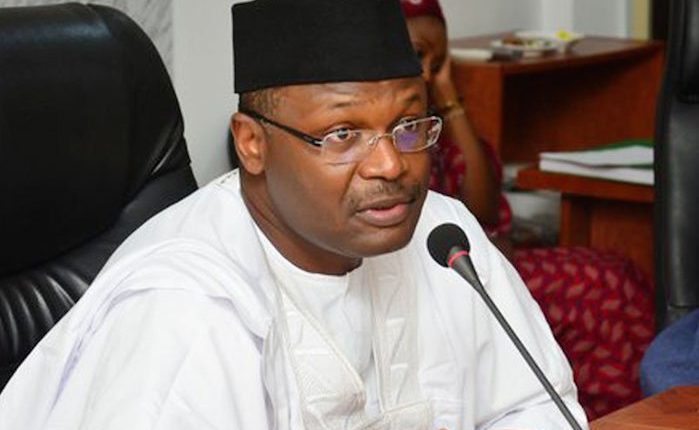
The Chief Press Secretary (CPS) to the INEC Chairman Rotimi Oyekanmi, in a statement on Thursday, March 9, said the Commission will approach the appellate court to overturn the judgment of the Federal High Court.

“The Independent National Electoral Commission (INEC) has been served a copy of the judgement delivered today by the Federal High Court, Abuja Division which ordered it to allow two Plaintiffs to vote with their Temporary Voter’s Card (TVC).

“The Commission is taking immediate steps to appeal against the judgement of the trial court,” the statement read.

An Abuja Federal High Court presided by Justice Obiora Egwuatu had, on Thursday in Abuja, ordered the Commission to allow the applicants use their TVCs in the absence of the PVCs.

The two applicants, Kofoworola Olusegun and Wilson Allwell, in the suit marked FHC/ABJ/CS/180/2023 and filed on February 8, challenged INEC on the position that only a permanent voter card (PVC) can be used in an election.

Meanwhile, Justice Egwuatu, in his judgment, noted that there is no law that prohibits Nigerians from voting using the temporary voter’s cards.

“An order is made compelling the defendant (INEC) to allow the plaintiffs to vote using their temporary voter cards issued by the defendant, the plaintiffs having been duly captured in the national register of voter’s database,” the judge held.

“This court makes a declaration that the plaintiffs, having fulfilled all necessary legal requirements to register and having consequently been captured in the defendant’s (INEC’s) central database and manual, printed paper-based record or hard copy format of the defendant’s maintained register of voters, the plaintiffs are entitled to vote using their Temporary Voter Cards in the  forthcoming 2023 general election.” 

Nigerian Army arrests 71 oil thieves, destroys 74 illegal refineries in 2 weeks

The Nigerian Army have discovered and destroyed 74 illegal refining sites in the Niger Delta region in the last two weeks.

The Director of Defence Media Operations Musa Danmadami disclosed this on Thursday, February 10, at a press briefing on operations of the armed forces in Abuja.

He also disclosed that troops nabbed 71 oil thieves in the course of Operation Delta Safe in the South-South zone of the country.

The defence spokesman also disclosed that the troops destroyed 341 storage tanks, 31 wooden boats, 260 ovens and 15 dugout pits while recovering 209,000 litres of crude oil, 145,000 litres of diesel, and 4,500 litres of petrol.

Danmadami stressed that 27 variety of weapons, 468 assorted ammunition, two speed boats, two outboard engines, eight vehicles and four motorcycles were recovered while a total of 71 criminals were apprehended.

According to him, the troops had continued to sustain the war against oil theft, illegal refineries and other criminal activities in the region through aggressive patrols, raids and clearance operations among other activities.

He noted that the oil thieves were denied N173.9 million.

Meanwhile, he added that troops of the joint Task Force in South-East zone, Operation Udoka, sustained the fight against the outlawed Indigenous People of Biafra/Eastern Security Network terrorists, aimed at restoring peace in the zone.

He noted that two IPOB/ESN terrorists were killed, 14 arrested and recovered several high-calibre weapons during the operation.

Danmadami further disclosed that the troops of operation AWATSE in the South-West region arrested 30 suspected criminals and recovered different categories of arms and ammunition as well as hard drugs within the period.

Similarly, in the North-East zone, the troops of the Joint Task Force, Operation Hadin Kai, also recovered assorted weapons from terrorists, killed eight Boko Haram/ISWAP fighters, and arrested 35 terrorist logistics suppliers.

He added that the soldiers rescued 19 civilians while a total of 1,332 terrorist and their family members comprising 222 adult males, 411 adult females and 699 children surrendered to troops at different locations within the theatre of Operations.

Danmadanmi stressed that the troops of Operation Hadarin Daniel in the North-West recovered 7 AK47 rifles, 12 AK47 magazines, 158 rounds of 7.62mm special, one locally fabricated weapon, four Improvised Explosive Devices, and the sum of N10.5 million.

The defence spokesman commended the unrelenting efforts of troops and other security agencies in the various theatres of operations across the country.

He also acknowledged the media community for “ their partnership and continued cooperation with the military and other security agencies, in our quest to restore peace and security to our dear country”.

“We are also urging them to continue to provide prompt and creditable information on the activities of terrorists and other criminal elements, in their respective areas,” he added.

Kenya’s first skyscraper closes – and leaves a complicated legacy

0

By Constance Smith, University of Manchester

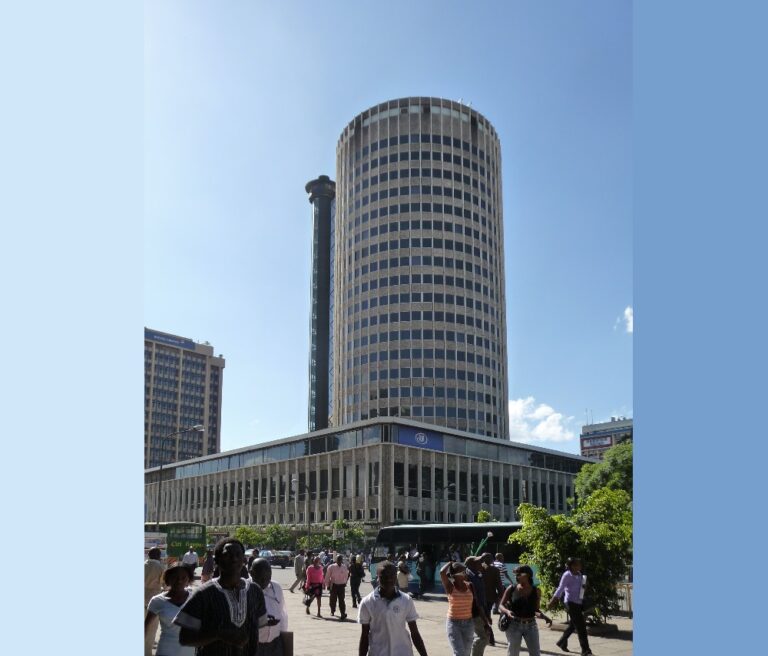
THE Hilton Hotel was Nairobi’s first skyscraper. The iconic cylindrical tower was opened in 1969 by President Jomo Kenyatta, six years after Kenya’s independence from Britain.

The recent closure of the hotel after more than 50 years of operation comes at a time of vertical transformation in the city’s skyline. As Nairobi grows ever taller, and as newer suburbs take over from the central business district as the city’s commercial centres, the Hilton is a landmark from a different era of urban life.

The Hilton’s modernist shape was part of a post-independence shift away from colonial hotel architecture in Nairobi. As seen in the exclusive Norfolk and Fairview hotels, the colonial style had mimicked the English country house.

Across the continent, a new African modernism emerged in the 1960s. Like the Hotel Independence in Dakar, Senegal, or the soaring Hotel Ivoire in Abidjan, Côte d’Ivoire, the vertical reach of the Hilton was symbolic of a new era of ambition and a means to express an emerging national identity. As the anthropologist Filip de Boeck has said, by

pointing towards the sky, it also pointed towards the future.

The Hilton helped to shape the character of central Nairobi. It quickly became an urban landmark and a meeting place of the new elite. It also gained notoriety for what went on behind closed doors. More recently, it has symbolised the declining fortunes of the city centre. As my research has examined, Nairobi’s high-rise transformation is closely linked to the politics of urban change.

Upwardly mobile lifestyles

In the Hilton’s early years of the 1970s, hotels in Nairobi were an important part of the upwardly mobile lifestyles of aspirant families. Something like the Kenyan equivalent of the country club, hotels were where you went to see and be seen. Business and political elites took their families for lunch and a day by the pool, knowing that others would be doing the same.

Hotels were places where alliances were made and deals were struck in a more informal atmosphere. Different hotels had different personalities and were associated with different social sets. Some were more exclusive; others were associated with certain political allegiances.

This was a deliberately exclusive and exclusionary scene. A world where you had to dress a certain way to get in, where you were judged on what car dropped you or on where you’d bought your dress. It was part of how new forms of socio-economic difference were established and experienced in the aftermath of colonialism. In downtown Nairobi, spaces of racial exclusion began to be overwritten by distinctions based on class and wealth.

High-end sleaze

Whereas the nearby Intercontinental or Panafric hotels were regarded as family-friendly, the Hilton was more closely associated with government and politics. It was known as a place for government-funded conferences and “trainings” that were held in its huge salon; extravagant functions that were another indication of the way power and finance circulated in the 1980s and 1990s.

Over time, however, the Hilton also gained a reputation for high-end sleaze. It was a place where the predominantly male politicians of the time would go to pick up women, where notorious parties were held, and rooms could be booked for “a short time.”

Urban landmark

The future of the building is uncertain. The Kenyan government still holds a controlling stake in it through the Kenya Development Corporation, with a decision still to be made.

As an exclusive hotel, the Hilton was perhaps irrelevant to most Kenyans’ lives: most have never been inside, and now likely never will. Yet many city residents still speak of it fondly, using it as a landmark to find one’s way around the city.

Despite its inaccessibility, it is a familiar and even comforting part of the urban landscape. ‘You see it every day almost without noticing’, as one friend put it. ‘We grew up with it. We’d miss it if it wasn’t there’. It is like a tree in the compound that you build everything else around: an orientating feature that gives the landscape character.

Urban influence

In recent years, the declining fortunes of central Nairobi have been mirrored by the waning prestige and financial viability of the Hilton. Westlands and Upper Hill have become the new commercial and political heartlands, and downtown Nairobi is often bypassed by both visitors and residents alike.

Yet the early ambition of high-rise buildings like the Hilton can still be seen as influential in contemporary Nairobi. Since the turn of this century, the city has been experiencing a high-rise boom. Neighbourhoods like Kileleshwa and Kilimani have gone from single dwelling plots to multi-storey apartment blocks. This transformation is part of Nairobi’s increasing presence on a world stage, as it becomes known for its digital and tech economies, and its middle-class status.

The dark side of the high-rise

High-rise buildings are reshaping other parts of Nairobi too, with estates like Pipeline, Zimmerman or Tassia known for their densely packed blocks of rental units. Although aimed at a different type of tenant, these high-rise buildings, known as maghorofa in Kiswahili, often imitate more high-end tower blocks. Reflective glass, bright paint colours, pretty balconies and fancy names – Lifestyle Plaza, Jazzy Heights, Muthaiga View – indicate new aspirations, even when the interior of the building might not live up to its surface claims.

This high-rise boom has a darker side too. Just as the modernist ambition of the Hilton hid less salubrious activity, so is Nairobi’s glossy vertical transformation awash with rumours of property speculation, cut-throat deals and a murky real estate sector.

The recent spate of building collapses has tragically killed scores of Nairobians and has destroyed the homes of many more.

These collapses speak to the suspect economies of the construction industry, where shortcuts are taken with little regard for safety, as well as the challenges of exerting regulatory control over a sector that is so entangled with political and business elites.

In a city like Nairobi, where urban inequality is getting ever wider, the surface promise of high-rise futures can be hollow, covering a much more uncertain reality within.The Conversation

Constance Smith, Lecturer, Social Anthropology, University of Manchester

This article is republished from The Conversation under a Creative Commons license. Read the original article.

Nigeria Content Board, BoI incentivise local oil industry equipment manufacturers with $50m

0

NIGERIA’S Content Development and Monitoring Board (NCDMB) and the Bank of Industry (BoI) have launched a $50 million fund to support local equipment manufacture in the oil and gas industry. 

The fund, The ICIR learnt, was meant to incentivize companies that would be operating in the Nigerian Oil and Gas Parks (NOGAPS) and engaging in the manufacturing of equipment components used in the oil and gas industry, and in linkage sectors.

Speaking at the signing ceremony in Abuja today, the Executive Secretary of NCDMB, Simbi Kesiye Wabote, mentioned that the fund would support oil and gas companies that would be operating in the oil and gas parks developed by the Board in Bayelsa and Cross River states.

Wabote explained that the fund would only be accessed by companies that take up spaces in the park to procure equipment or build their manufacturing shopfloor within the park.

He pointed that the NOGAPS manufacturing fund is different from the initial $300 million fund being managed by the BoI with five product lines that aim at supporting Nigerian businesses that contribute their one per cent to the Nigerian Content Development Fund.

The new fund would be a stand-alone product line with distinct fund allocation and special eligibility criteria and collateral structure.

According to Wabote, “The decision of the Board to establish the product was informed by the peculiarities of the manufacturing sector, which include infrastructure challenges, long gestation, long lead time before returns, low margins on products, and high risk attached to the endeavour, in addition to the reluctance of commercial banks to lend to the sector and their application of stiff collateral and eligibility criteria where loans are extended.”

On the criteria for accessing the NOGAPS manufacturing funds, the Executive Secretary hinted that unlike the Nigerian Content Intervention Fund which requires companies to be contributors before they can benefit, the NOGAPS fund can be accessed by companies that will be domiciled and manufacture their products within the parks.

He said, “The Fund will provide loans to Nigerian companies that meet the criteria to operate in any of the designated NOGAPS Industrial Park for the purpose of financing manufacturing activities, purchase of fixed assets, working capitals and logistic. Beneficiaries will get a maximum single obligor of $3 million, and a minimum of single obligor of $250,000, with one year moratorium repayable within five years at five per cent interest per annum.”

On the incentives available in the NOGAPS park, Wabote disclosed that the rate for accommodation is reduced, power is guaranteed, and the rent would only begin to count when the company commences manufacturing.

The Managing Director, BoI, Olukayode Pitan, noted that the fund would further help promote in-country manufacturing, as well as creation of employment.

Pitan pointed that the low interest rate would help companies to easily access the product and pay back.

He said, “The interest rates are very good, just like the initial fund which is less than 10 per cent, and the same thing will apply to this one. All we are looking for are Nigerians who want to manufacture in Nigeria.”

He charged Nigerian companies to harness the opportunity to pick up space within the park to produce locally.

The Board established the NCI Fund in 2018 with the purpose of financing oil and gas companies to increase capacity and grow Nigerian content in the industry.

The NCI Fund has five product lines which are being managed by the BoI. They are Manufacturing Finance, $10 million; Asset Acquisition Finance, $10 million; Contract Finance, $5 million; Loan Refinance, $10 million; and Community Contractor Finance, N20 million.

The Board also has a $30 million Working Capital Fund for oil and gas service companies, and a $20 million Fund for Women in Oil and Gas Intervention Fund.

The last two facilities are administered by the Nigerian Export-Import Bank (NEXIM), and the agreements were signed in mid-2021.

On the sideline of the event, the two chief executives signed a supplementary memorandum of understanding for the $300 million Nigerian content intervention initiative.

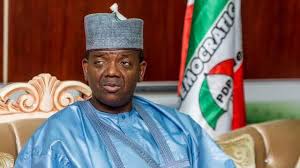
Cashless Policy: Zamfara governor supports 300 PoS merchants with N70m

THE Zamfara State government has supported 300 point-of-sale (PoS) operators with N70 million to fast-track implementation of the cashless policy of the Central Bank of Nigeria (CBN) in the state.

The Commissioner for Commerce and Industries in the state, Yazeed Danfulani, disclosed this on March 8 while distributing the PoS machines to 300 youths and women.

Danfulani said the gesture was part of Governor Bello Matawalle’s empowerment and wealth creation programmes, adding that the PoS business would boost the cashless policy and make beneficiaries self-reliant.

”Each of the beneficiaries will receive a PoS machine, mobile shop, a set of plastic chairs and tables to attend to customers.

”Each beneficiary will equally receive N50,000 seed capital to start the PoS transaction,” he said, adding that about N70 million had been earmarked for the programme.

According to him, the PoS business would boost the state economy and revenue base, as well as enhance wealth creation in the society.

He said the government had set up a monitoring mechanism to ensure prudent use of the machines and other items given to the beneficiaries.

The Commissioner urged the beneficiaries to ensure effective utilisation of the items and set up their businesses to enable them become self-reliant.

Businesses lament banking app glitches, as transactions suffer setbacks

NIGERIAN businesses have been hit by glitches occasioned by weak banking applications, as business transactions online suffer setbacks in the light of the currency redesign policy of the Central Bank of Nigeria (CBN).

The CBN had last October announced it would be redesigning the N200, N500 and N1,000 notes. The new notes were introduced into the system on December 15, 2022, with the CBN initially setting January 31, 2023 as the deadline, as legal tender, for the old notes being rested.

One of the reasons the CBN gave for its naira redesign decision was its resolve to strengthen Nigeria’s cashless economy.

But the policy has brought so much agony to individuals, families and businesses as the new notes have remained scarce. The CBN has not helped matters with its decision somersaults on the swap of the old with the new.

What is certain is that the CBN Governor, Godwin Emefiele, is bent on forcing the cashless policy down Nigerians’ throat, as the apex bank has ensured scarcity of cash. Even currently raging is the CBN snub of the Supreme Court judgment that  directed it to allow the spend of both the old and new notes till December 31, 2023. Emefiele has so far refrained from publicly issuing a statement effecting a compliance with the court’s order.

As the people compellingly engage in the cashless policy using alternative methods of payment, especially the point-of-sale transactions and online transfers, businesses have been lamenting the many hitches they pointed out are hindering progress in the process.

Some business operators our correspondent spoke with said fund transfers sometimes took a minimum of three days before hitting the backend of the other bank, thereby causing transaction difficulties and trust breaches between business owners and their clients.

“I sell foodstuffs of all kinds, ranging from crayfish, bitterleaf and ogbono to Maggi and dried fish. Most of my customers are restaurant managers. We have been having issues with transfers since the Central Bank of Nigeria’s enforcement of the currency redesign policy. Many of them are complaining seriously about this problem,” Memunat Ruqayat, a bulk foodstuff trader at Suleija market, told The ICIR. 

Ruqayat lamented that such transfer glitches had led to loss of her prominent business partners.

“Mama Ekene my grade one customer has not been coming to the market for sometime now. I spoke with her on phone and she complained of the stress of the cashless policy, worsened by weak banking app,” she added.

Another retailstore business owner at Dei-Dei, an outskirt of the Federal Capital Territory, Kaburi Mohammed, told The ICIR that the delay in business transfers had created problems for his businesses.

Transfer glitches drag businesses

Muhammed said, “Many of my customers would show you their debit alerts when they had sent transfers for their purchases. However, it could take, at least, four days for a transfer to hit your own bank’s backend.”

He stressed the importance of banks updating  their digital security backend to aid migration to the cashless policy as desired by the CBN.

A dealer in phone accessories at the Kubwa Central Market in Abuja, Afam Udechukwu, told The ICIR that no one was collecting the old notes in the market, which is forcing both traders and their customers to resort to online transactions.

“No, I don’t collect them (old naira notes). Businesses are still rejecting them. In the whole of the Central Market Kubwa here, no one transacts with the old notes,” Udechukwu said.

The ICIR confirmed his claim during an on-the-spot observation at the market.

A development economist, Kevin Emmanuel, did not, in an interview with The ICIR, see any sense in the naira redesign policy.

Emmanuel: Emefiele is punishing us for a crime of a few Nigerians

“For me, Governor Emefiele has resulted to punishing all of us for the crime of a few. We will not see the effects now till inflation and recession numbers begin to come out in the third quarter of the year,” Emmanuel said.

The Executive Director of the Centre for Promotion of Private Enterprise (CPPE), Muda Yusuf, told The ICIR that the claim by the CBN that the economy had too much cash outside the banking system had no basis in economic theory, neither can it be supported by empirical evidence. The reason Emefiele gave, Yusuf said, was not a good one for punishing businesses.

He said that by December 2022, total money supply was N52 trillion, with the cash component of the supply as N2.6 trillion, which was just five per cent. Similarly, the country’s gross domestic product (GDP) was N202 trillion, which gave a cash to GDP ratio of 1.3 per cent.

Yusuf stressed that the Nigerian cash to GDP ratios remains one of the lowest around the world, which he said shows that the Nigerian economy is not really a cash-dominant economy.

Yusuf says businesses suffering from the policy

“Cashless transactions in 2022 were about N400 trillion in 2022, according to the Nigeria Inter-Bank Settlement Systems (NIBSS). The truth is that nothing is broken. And we don’t fix what is not broken. Of course, we can do better, but not by crudely mopping up of cash in the economy,” he said.