PRESIDENT Muhammadu Buhari and the Central Bank of Nigeria (CBN) have yet to respond to the Supreme Court ruling making the old and new Naira notes legal tender until December 31, 2023.
The court gave the ruling, which nullified the Federal Government’s decision to make the old N500 and N1,000 notes cease to be legal tender, on Friday, March 3.
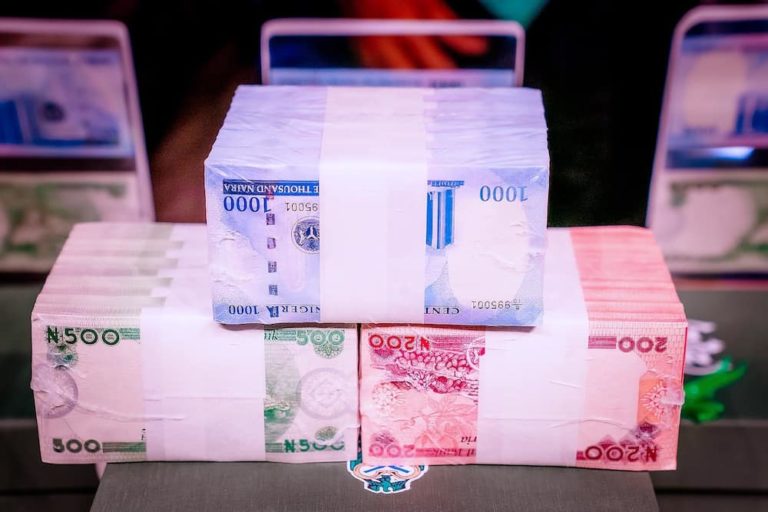
The ICIRreported how the CBN introduced the new N200, N500 and N1,000 notes on December 15, 2022, and made the old notes cease to be legal tender on February 10.
While Nigerians rushed to their banks to deposit the old notes with the hope that the new notes would be available, it has been a huge challenge for many organisations, homes and individuals to get the cash to sustain them nearly a month after the policy took effect.
In one of its many reports on the hardship the policy has brought to people in the country, The ICIRreportedhow Nigerians went nude, fought in banks and engaged in other habits that counted as offences when things were normal.
Following widespread condemnation of the process and its accompanying pains on Nigerians, Buhari addressed the citizens on February 16 and revealed he authorised the currency redesign.
He directed that the old N200 be returned into circulation to alleviate the hardship faced by people.
On Friday, March 3, a seven-member Supreme Court panel nullified the policy, faulting the government’s handling of the process and declaring its methodology and implementation unconstitutional.
The Supreme Court ruled that although the President had the authority to act as the federation’s executive, he was still required to give the federating units adequate notice before implementing the new monetary policy through the CBN.
The court said that before the old naira notes were withdrawn, the states had not received reasonable notice as required by section 20(3) of the CBN Act.
As a result, the Supreme Court ruled in its lead decision, read by Justice Emmanuel Agim, that Buhari’s authorisation for the CBN to withdraw the old banknotes was illegal.
The court’s ruling followed the litigation against the policy by some states, including Kogi, Kaduna and Zamfara. Over 10 others joined them.
The ICIR reports that as of 3:30 pm when filing this report on Sunday, March 5, the Presidency and the CBN had yet to react to the ruling, and the old notes are rarely seen in circulation.
ARMED bandits have killed a Divisional Police Officer (DPO) and two others during an attack on communities in the Maru Local Government Area of Zamfara State.
The incident reportedly occurred on Saturday, March 4.
It was gathered that on receiving news of the attack, the DPO, Kazeem Raheem, mobilised his men and some local vigilantes to protect the residents against the bandits.
However, the DPO, a sergeant named Rabiu Bagobiri, and one vigilante official identified as Shehu Chuka, lost their lives in the encounter with the bandits.
A statement released on Sunday, March 5, by the spokesperson of the Zamfara State Police Command, Mohammed Shehu, said the Police is investigating the incident.
The statement disclosed that two police officers lost their lives while repelling the attack.
“On 5th March, 2023 at about 0200hrs, bandits in large numbers, armed with sophisticated weapons, attacked Maru Division with intent to destabilise the security architecture of the town in order to easily abduct members of the community.
“However, the DPO and his team gallantly put up a strong resistance to repel the attackers. Unfortunately, himself and the above named Inspector lost their lives while protecting the public.”
The statement added that the Police Command has deployed reinforcements to pursue and apprehend the bandits.
“The Deputy Commissioner of Police Operations, DCP Iliyasu Kwarbai led another Police tactical team to the scene for on the spot assessment and confidence building patrol.”
The statement reassured residents of the area of their safety.
Efforts by The ICIR to get further update on the development were not successful.
Shehu, the police spokesperson, could not be reached on the phone by The ICIR’s reporter as of the time of filing this report.
THE people of Nigeria demonstrated their dedication to democracy on February 25, but there are many angry and frustrated Nigerians, as well as many who are celebrating victories they believe were hard-fought and well-earned.
In the coming days, it will be important for the future of this country that Nigerians not let their differences divide them, and that the legally established process for resolving challenges to the election be allowed to take its course.
We commend Peter Obi and Atiku Abubakar for their recent statements committing to take this path, and Tinubu, who INEC declared the president-elect under Nigeria’s electoral framework, for acknowledging their right to do so.
The United States is no stranger to election-related controversy and conflict. As much as it can be unsatisfying to end an electoral process in a courtroom, in a constitutional democracy bound by the rule of law, that is where electoral conflicts may appropriately conclude.
It is clear that the electoral process as a whole on February 25 failed to meet Nigerians’ expectations.
It is clear that the electoral process as a whole on February 25 failed to meet Nigerians’ expectations.
As I said numerous times prior to the elections, Nigeria has accomplished much in just the two-plus decades since the return to democracy, and a gradual improvement in the quality of its elections in that time constitutes one of those accomplishments.
We recognise that Nigerians want that positive trend to continue, including through the use of new technology intended to make the process of reporting results more transparent.
We thus reiterate our call on INEC to address promptly the challenges that can be resolved ahead of the March 11 gubernatorial elections, and to undertake a broader review of the problems that transpired during the last elections and what can be done to fix them.
In all cases, INEC should share with the Nigerian public information about the actions it is taking.
I also want to highlight some of the remarkable results from this past election that show how Nigeria’s political landscape is indisputably changing. In more than half of the states – 20 – the winning candidate represented a different party than that of the incumbent governor. Twelve of these states are led by APC governors. For the first time, four presidential candidates won at least one state, and the top three each won 12 states based on these initial results.
In the National Assembly elections, even with results still incomplete, we already know that changes are afoot: seven sitting governors lost in their attempts to win election to the Assembly; the Labor Party has won at least seven seats in the Senate; the NNPP has won at least 11 seats in the House of Representatives.
The Nigerian people have made clear their desire for responsive and inclusive governance, and we strongly support their ability to express that desire. The United States and Nigeria are the two largest presidential democracies in the world, and longtime partners. As Nigeria goes through these next weeks and months, we stand with you.
Mary Beth Leonard is the U.S. Ambassador to Nigeria
THE Labour Party (LP) said it has secured the support of at least 20 senior Advocates of Nigeria (SANs) to challenge the outcome of the February 25 Presidential Election on behalf of its candidate, Peter Obi.
National Secretary of the party Umar Farouk disclosed this while speaking on plans to challenge the result in court.
Following the declaration of the candidate of the All Progressives Congress (APC) Bola Tinubu as the winner of the election by the Independent National Electoral Commission (INEC) Obi had said he would head to court to challenge the result.
Also, the Peoples Democratic Party (PDP) candidate, Atiku Abubakar, in a post-election press conference, said he would challenge the result in court.
As announced by INEC, Tinubu polled 8,794,726 votes to defeat Atiku and Obi, who got 6,984,520 and 6,101,533 votes, respectively.
Both Obi and Atiku had already approached the court to seek permission for the inspection of election materials used during the polls, which were granted.
National Secretary of the Labour Party Farouk disclosed that some SANs had expressed their interest in joining the legal battle to prove Obi’s case.
Noting that INEC had lost its independence through its alleged collusion with the ruling party by giving victory to Tinubu, Farouk said the LP’s hope was vested in the judiciary to restore its mandate.
“We have more than 20 SANs that are willing to participate and offer their services for the renewal and emergence of a new Nigeria. As I am talking to you, our lawyers are working on it.
“But this is not something we can discuss on the pages of a newspaper. All I can tell you is that we have started ‘trekking’ to the court,” he said.
When prodded further on whether the party had been able to garner concrete evidence to challenge the alleged electoral malpractice, Farouk said, “The court is not a polling box that they can smash and put in what they want.
“If the APC thinks they can preempt the court, let them do it. They had earlier preempted the election that they were going to win by hook or crook and they had claimed they won. Let’s wait and see. Unlike INEC, the judiciary is a different thing.
“We have seen how independent the commission is. But we need to also examine how independent the judiciary also is in a matter of this magnitude. Let’s see the solace it can offer the masses. Let’s see if the judiciary has also shattered the hope of Nigerians just as INEC did.”
Farouk, however, couldn’t give a definite date when the case would be filed.
Reacting to Labour Party’s plan to head to court, the chief spokesman of the Tinubu-Shettima Presidential Campaign Council, Festus Keyamo, said the President-Elect and his camp were not intimidated by threats being made by the opposition.
He also confirmed that the legal directorate of the APC Presidential Campaign Council (PCC) was putting together more than 12 SANs to defend his principal in the legal battle.
Keyamo, who is also a SAN, said, “The number of our advocates is around that figure (12). But I can’t confirm the exact figures at the moment. However, it doesn’t matter the number of SANs the Labour Party is parading. It is not a competition.
“I am a lawyer and can tell you specifically that the numbers don’t matter. It is all about the quality of evidence. But I can tell you that we have enough to nullify more of their votes than theirs to nullify our own.”
THE governorship candidate of the Peoples Democratic Party (PDP) in Lagos, Abdul-Azeez Adediran, often addressed as Jandor, says his victory in the state gubernatorial election is assured.
Adeniran said this on Saturday February 4 while addressing a gathering of Igbo communities that endorsed him as their preferred candidate.
According to him, the events of the February 25 presidential election were inconsequential to his chances of winning in Lagos.
He said that after the election, Lagosians would “celebrate freedom from the ruling party, freedom from a government that looked aside as hoodlums attacked residents and traders in the state.”
Said the governorship candidate, “By next week, we will be out of that government that will not let us breathe on the road and at marketplaces. That government that releases hoodlums to attack its citizens without condemning it for one day, their days are numbered. Next week, we will end their existence in Lagos.
“Please, make no mistake, put out the votes; I am ready to protect them. They have been threatening. Jandor is prepared to deploy conventional and unconventional security for next Saturday’s elections.
“Whatever happened at the centre is inconsequential. This is Lagos, and we are taking our Lagos back.”
As the cash crunch bites harder and hardship deepens, Nigerians in border communities in some states in the North West are settling for currencies of other countries for transactions. In this investigation across Sokoto and Kebbi states, Elijah Akoji uncovers how residents of these border communities are doing this.
Ali Danliti, a resident of Tsolawa community in Illela Local Government Area, (LGA) and commercial motorcycle rider, knows the council area well and was willing to take the reporter to his destination through a safe route.
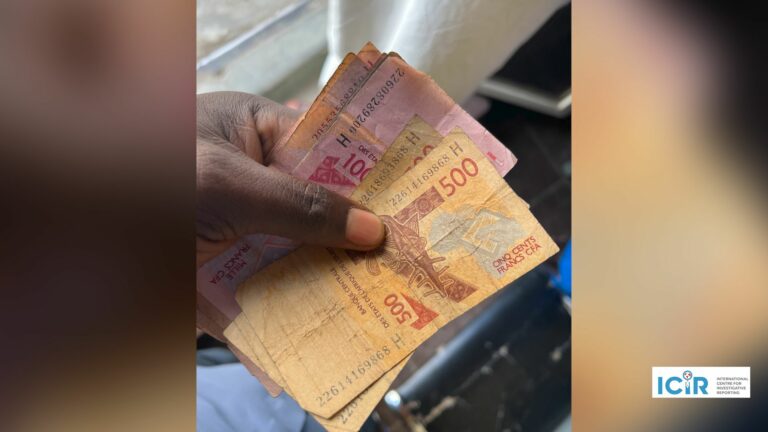
Travelling from Tozie community, a few kilometres from Sokoto’s main town, to Illela, Danliti was willing to take N7,000 as his charge. But he insisted that the reporter had to pay him cefa (CFA), the Nigerien currency. He declared that he would not take naira notes – old or new. The CFA franc is used in many countries in West Africa – Benin, Burkina Faso, Côte d’Ivoire, Guinea-Bissau, Mali, Niger, Senegal and Togo.
This was a clear pointer to what the reporter’s investigation was all about. The journalist’s assignment was to find out how residents of far-flung communities, particularly those along Nigeria’s border with Niger Republic, were faring in the face of the naira redesign policy of the Central Bank of Nigeria (CBN) and the attending cash crunch. The irony of his situation was not lost on the reporter who had struggled to get new naira notes for his journey but was now confronted with ⁴the possibility of being stranded as his newly acquired, mint fresh notes were rejected for the currency of another country.
Alarmed, the reporter blurted out that he only had naira. Asking if the reporter had cash in naira or if he intended to do a transfer, Danliti then suggested there was a PoS (point-of- sale) agent in Illela Market who could do the exchange for the reporter. The PoS operator would take my naira in whatever form and then exchange it for the CFA value after deducting all his charges, the motorcyclist said.
Inside Illela Grain Market
Arriving at Illela, Danliti walked straight to the PoS centre, managed by a man named Idris. The reporter offered Idris N11,000 and was given 9,000 CFA in return.
The reporter wondered what the exchange rate used could be. Could CFA be more than naira, and why was he given 9,000 CFA in exchange for N11,000?
However, at the parallel market, the CBN exchange rate for 1 CFA was 0.7408 naira, while at the black market rate, 1 CFA was sold at 1.4 naira.
With no answer forthcoming, the reporter gave Danliti 7,000 CFA and kept 2,000 CFA in 500 denominations for himself. But there was a need to ask some questions. So, the reporter asked Idris if he could speak with the owner of the POS shop.
Sadiq Ismail, at the Grain Section Sighted Counting CFA Currency
“You can come around by 5pm. That is when Alhaji Tijjani Usman will be in the shop to take account. Only then can you have the opportunity to speak with him,” Idris declared.
New naira policy
On October 26, 2022, the Central Bank of Nigeria (CBN) announced the introduction of the redesigned N200, N500 and N1,000 banknotes into the financial system. According to the apex bank, the redesigned notes and new limits on large cash withdrawals would help curb money laundering and make digital payments the norm, thus promoting the cashless policy in Africa’s biggest economy.
Also, the new cash policy was promoted as capable of preventing counterfeit banknotes, corruption, and terrorism financing, while stabilising and strengthening the Nigerian economy.
However, the Nigerian economy has a huge informal sector that is based on physical cash transactions. While the new Naira policy looks like a comprehensive approach to addressing the issues facing the economy, it is, however, posing challenges to the unbanked and the informal sector, one of which is the scarcity of the naira notes.
Illela discovery
Dehydrated by the hot weather after a long ride to Illela, there was need to take water, which was another opportunity to confirm if the naira note – old or new – will be accepted.
The reporter approached the shop and ordered for three bottles of table water and offered the seller a new N1,000 note. The young man refused to collect it and suggested that he should either do a transfer to his account or pay cash using CFA.
“For now, we no longer accept the naira note in cash,” he said.
Illela is a local government in Sokoto East Senatorial District that shares borders with Niger Republic. With a population of about 450,000, Illela is one of the security-challenged LGAs in Sokoto State, ravaged by banditry and kidnapping for ransom.
With no trace of a functional commercial bank, residents of Illela will have to travel about 60 kilometres to Sokoto to access any banking service or conduct their financial transactions.
Inside Illela Market where naira is shunned
In the grain section of the market, Sadiq Ismail, one of the major dealers of maize and groundnut was sighted counting some foreign-looking notes. On getting closer, it became clear that he was counting the 1,000 CFA and 500 CFA notes he had just received from a customer, Aisha Salami, as payment for the goods she bought.
Water and Soft Drink Seller in Possession of CFA Notes
Aisha was unaware that coming to the market with the old naira note would only be a wasted effort as all her regular customers declined to transact with the old notes. Her saving grace was the availability of the CFA notes in the market.
“I have been in this business for about seven years and, despite the insecurity and other challenges, we still travel with cash to buy our goods because these villagers won’t take a transfer from you.
“I have just exchanged over N500,000 to CFA and I have lost over N20,000 in the process of this exchange. I am not worried. The fact that they were able to provide an alternative plan for the business people is good. Imagine travelling from Lokoja to Illela and going back because of the naira note issue,” Aisha said.
It was the same situation at the Illella cattle market as most cattle sellers would only accept to be paid in CFA. Here they scoffed at any mention of transferring naira for any purchase.
Inside Bachaka Main Market
Ibrahim Muhammed, a cattle dealer, narrated how he stayed for about a week without a single sale until he began to take CFA.
“Buyers come from all over Nigeria to this cattle market to do business with us, and our business here is cash-based. When this whole cash issue started, I stayed for about a week without a single sale.
“Accepting payment in CFA made it so easy for me, and its availability made it even easier for my customers as there is a PoS agent who will take their charges, make some extra profit and provide the money to our customers,” Muhammed said.
The central chairman of Illela Market, Faruk Umar, said that the decision to begin to use CFA as an exchange currency was an agreement to sustain business as many dealers were already lamenting the poor patronage.
Umar said, “Considering our location, it is very easy to have access to CFA than even the naira. But being that most buyers come from across Nigeria, we had to consider that. But with this naira scarcity and fear of people losing their money, many had to travel to Sokoto to open a bank.
“While you see that CFA has become a transactional currency is because we have access to it and it’s a way of playing safe for both the interest of our members and their customers. We have ensured through the POS agents to see that there are enough CFA notes, so once you make the transfer to them in naira, they give u cash in the CFA equivalent.
“In the case where it’s over N500,000, we have directed the PoS to do some documentation. Once the money enters his account, he will notify the owner of the goods of the successful transaction and the goods will be released to the customer. After the close of business they will balance the account together and each will get what is due to him.”
Back to the POS agent
It was about 5pm and Tijjani Usman, Idris’ boss and the PoS owner, was already around, taking the account for the day when the reporter arrived at the outlet.
Usman was in a better position to explain how he was able to be getting such volumes of cash in CFA circulating well in the market even though he was not the only supplier.
Usman would not say much, and he declined to respond to some questions.
“I am a businessman and I am also affected by all of this misfortune. I saw an opportunity in the situation, so I decided to mobilise the different union heads in the market for a meeting. We discussed and they saw reasons with me on the urgent use of CFA instead of naira, which was almost sending us out of business,” Usman said.
Idris, POS Agent in Illela Market Who exchange Naira to CFA
“While they agreed, I immediately invested in bringing in CFA. So, I travelled to Niger and Benin where I got hooked up with my contacts and gradually, almost everyone now transacts in CFA.
He added, “I am not the only one in this business; there are others too, even down to Illela town, since CFA is mostly accepted by even shops owners. Your naira is only useful in Sokoto main town, not across the villages. What we do is take the naira transfer and give the CFA equivalent and then take out our charges as well.”
In Illela, church, fuel station not spared
A Reverend Father, Micah Josiah, head of St. Theresa Catholic Church in Tamaje community, Illela local government area, narrated how strange it was for him to count CFA in the offering box.
“My catechist brought the offering, and I was surprised to see that almost all the money was in CFA denomination. It was really strange, but we are now getting used to seeing it. That’s the change we have to adapt to.
“Since it’s gradually becoming legal tender and most people accept it, we now keep them for our use and then exchange the one we might spend outside this location or take to the bank,” Josiah said.
At Dodo fuel station in Illela, both naira and CFA notes were accepted but an extra charge of N300 was added for those paying with the old note, while for those paying in CFA, fuel was sold at the 400 per litre.
Bala Dahiru, the fuel attendant at the fuel station, explained how they had to adapt as a result of naira scarcity.
“Most bike men and commercial vehicle owners were all coming with CFA. Initially, we weren’t taking it but we had to adjust because there is no other option and, if I won’t lie, it’s better than hoping on the naira to be available,” stated Dahiru.
A businesswoman, Jamila Audu, who buys grains in large quantities from Illela market, had just finished loading her truck and was getting set to be transported to Lagos. Audu spoke of how frustrating the process of converting her money into CFA was before she could buy all her goods.
“There are guys who I never saw, but I was told they are into the supply of CFA. Once you transfer to them, they will confirm it and then they will send their boys to bring the CFA equivalent to you in the market. The community people know them but we don’t know them.
“I got about 2 million CFA, which I used to buy all of these goods, and over N100,000 was deducted. Nobody is willing to tell you the exchange rate used for me to even know if I will gain or lose in the exchange process. I gave them N2.1 million and they brought 2 million CFA,” Audu said.
Unlike Sokoto, the Kebbi way
Bachaka community is a community in Arewa LGA, in Kebbi state which borders Niger Republic. Due to the proximity, business has always thrived between the people of Bachaka community and residents of Dogon-Dutse in Niger Republic.
Interestingly, in Bachaka and Madanfara communities, while the naira is still legal tender used for buying and selling, at the Bachaka Market, most dealers and shop owners will either prefer you make a transfer into their account or pay cash in CFA.
Nababa Gwandu, the union chairman of Bachaka main market, said the major reason for such a decision was because most business people in the market and across the communities did not even have bank accounts.
1000 CFA Note Issued to me
“Rural people believe in cash for every transaction. Some of them are millionaires, but will still prefer you pay them in cash.
“While they have not stopped anyone from accepting the naira note but gave approval for the use of CFA for transaction, they are gradually becoming more comfortable with the availability and access to it,” Gwandu said.
Gasko Yunusa, a major grain dealer in Bachaka main market, still collects whatever currency is brought to him. He will only make some extra charges if payment is in the old naira note.
“I won’t chase my customers away. While I will prefer payment in CFA, if there is any transaction above N50,000 in cash, I will prefer such a customer pays in CFA, which must, be in cash. I have an account with one of the commercial banks, but my worries are should there be transaction failure, I will have to go to the bank, and I am not ready for such a problem,” Yunusa said.
In Dadin-Kowa Market, as the reporter approached Bala Ya’u, the man selling local rice in large quantities alongside other grains, his question was “da wani kudi za ku bia ni, kudi Nigaria ko da kudi Niger?” which means, “in what currency will you pay me, Nigerian currency or Niger money?”
Bala Ya’u narrated it was very easy for him to collect the naira note, but was worried about access to the bank, as he was scared of losing his money.
“We have always been doing our business with naira, but with this government policy, we are far from the bank, and at this point, we can’t trust even the banks, so I do tell my customers to pay in CFA since we have our way of exchanging naira to CFA,” Ya’u said.
Zakari Ali is one of the chief suppliers of CFA in Dadi-Kowa Market and its environ.
While the suppliers are keeping it a secret not to reveal their identity, they also have the backing of their traditional rulers.
“We are not doing anything illegal. The hardship was already setting in. There are no banks and most people don’t even have the money to save. They just sell their produce and feed from it. When we noticed that there is going to be withdrawal and access to the new note was becoming a big problem, we immediately swung into action and looked for an alternative means of doing business, and it was easy getting CFA from Niger and Benin,” Ali said.
Akilu Shuaibu, the district head of Dadin-Kowa, spoke of how the ward heads visited him and explained the hardship setting in across their communities.
“We all can’t lie about the hardship people are going through. The scarcity of money will make it even worse for them to cope. The people have decided to ease the hardship themselves and only the government can stop them from their decision,” Shuaibu told The ICIR.
The position of the law
The Central Bank of Nigeria Act forbids Nigerians from using other currencies aside from the one issued by the CBN itself as legal tender. Section 20 of the Central Bank of Nigeria (Establishment) Act (CBN Act), which provides in sub-sections (1) and (5) that – (1) says: The currency notes issued by the Bank shall be legal tender in Nigeria at their face value for the payment of any amount;
(5) A person who refuses to accept the naira as a means or (sic) payment is guilty of an offence and liable on conviction to a fine of N50,000.00 or six months’ imprisonment. Provided that the Bank shall have power to prescribe the circumstances and conditions under which other currencies may be used as a medium of exchange in Nigeria.
Revenue decline, high cost of living looms
As an economy majorly dependent on cash transactions, experts believe naira substitution will negatively impact the economy and further create macroeconomic instability, reductions in government revenues, and weak monetary policy.
The spokesperson of the Sokoto State Board of Internal Revenue, Nura Bulama, described the naira substitution practice as an automatic tax waiver with a huge negative implication on the economy.
“We have received several reports from our local government offices that traders have refused to pay tax even after several meetings with their unions, and when they offer to pay, they offer CFA as what they have since they can’t go to the bank. The usage of CFA, which we are aware of as a revenue body, is impacting on our remittances to the government negatively and we are working out modalities to get it resolved within the shortest possible time.
“Because of the undetermined exchange rate used to exchange naira for CFA, we fear that the cost of living might shoot up as everyone will want to gain, so the buyers suffer the consequences by paying more to get lesser CFA to purchase their needs,” Bulama said.
Poorly managed economy leading to depression – expert says
A professor, Abubakar Ibrahim, of the department of Banking and Finance, Bayero University Kano, described the Nigerian economy as a poorly managed one capable of creating loopholes.
Ibrahim said, “The usage of foreign currency in Nigeria when we have our currency is a sign of a poorly managed economy. No one ever thought that Nigerians will one day descend to using CFA as their source of exchange, not to talk of trading. But today, here we find ourselves in a system where Nigerians have to decide their means of exchange to survive.
“Those at the borderside are predominantly farmers, and people from the cities go to them to buy their harvest, so if CFA is used as a means of exchange, that means Nigerians are already growing the economy of Benin and the Niger Republic. It is that simple in economics.”
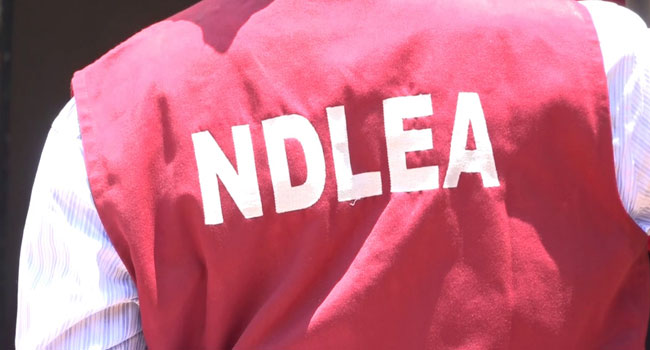
The National Drug Law Enforcement Agency (NDLEA) is seeking to partner with the Pakistani drug control agency, the Drug Regulatory Authority of Pakistan (DRAP), on restricting trafficking of illicit substances.
The NDLEA spokesperson, Femi Babafemi, disclosed this in Abuja on Saturday.
Babafemi said a strategic case meeting had been held with Pakistan to discuss individual and shared responsibility.
The meeting was held under the supervision of the International Narcotics Control Board (INCB).
According to Babafemi, both countries would be focusing on how they can jointly tackle the menace of illicit drug trafficking, especially pharmaceutical opioids like tramadol.
He said, “At the end of the talks, the two delegations adopted essential resolutions on how to improve their cooperation and tackle the menace of illicit drug trafficking between both countries, especially pharmaceutical opioids like Tramadol.
“The Pakistani delegation was composed of Directors in the Division of Controlled Drugs (DRAP), Mr Ahmad Din and Mr Arif Muhammad; Director (Anti-Narcotics Force), Regional Directorate, North, ANF, Mr Ammar Ali; and Section Officer, Controlled Substances Section, Ministry of Narcotics Control, Mr Syed Saadat Ali Bokhari.
“They expressed commitment to improving operational communication with the NDLEA through existing networks between both countries and by using more frequently the possibilities offered by IONICS, the INCB’s real-time communication tool.”
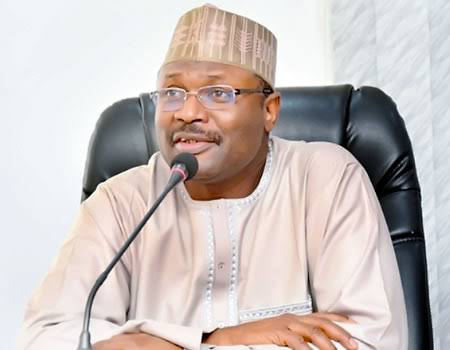
The chairman of the Independent National Electoral Commission (INEC), Mahmood Yakubu, has promised Nigerians that the Bimodal Voter Accreditation System (BVAS) would be used in the forthcoming governorship and state legislature elections.
Yakubu gave the assurance today at a meeting with all Resident Electoral Commissioners (RECs) at the INEC headquarters in Abuja.
Amid the huge outcry that greeted the manual collation of results and alleged alteration of figures in the Saturday, February 25 presidential and National Assembly elections, Mahmood assured Nigerians that the BVAS machines would be well used for the March 11 elections.
Already, the leading opposition parties at the presidential election, the Peoples Democratic Party (PDP) and the Labour Party (LP), had headed to court, citing infringement in the provisions of the Electoral Act 2022 on the use of electronic transmission of results.
Some political analysts had condemned the presidential and National Assembly elections as essentially flawed due to the inability of the national electoral body to follow its own electoral guidelines.
A professor of Law at Baze University and political analyst, Sam Amadi, said INEC violated its own law by not uploading results.
“Clause 38 of the guidelines issued by the Independent National Electoral Commission (INEC) says it is a crime not to do so. One of the things people cannot understand is why INEC has not done this. Why do we have long hours of delay that have now created all kinds of problems? My worry is that we have not improved since 2015,” Amadi said.
The official spokesperson of the PDP Presidential Campaign Council (PCC), Daniel Bwala, feared voter apathy could return if INEC failed to use BVAS and build confidence with the new Electoral Act, 2022.
Yakubu said INEC was working on the BVAS machines to avoid a repeat of the glitches recorded in the last Saturday’s elections.
The agenda of the meeting was not disclosed to the media, though journalists were invited to cover the opening.
This meeting held exactly one week after the presidential and National Assembly elections, and one week to the governorship and state assembly elections.
In his welcome remarks, the INEC chairman noted that the meeting was being held to review performances at the last week’s elections, adding there were lessons to be learnt from last week’s elections, especially as they relate to logistics management.
He urged the RECs to work harder to ensure that the governorship elections do not experience the same problems recorded in the last elections, while warning that staff who erred would be punished.
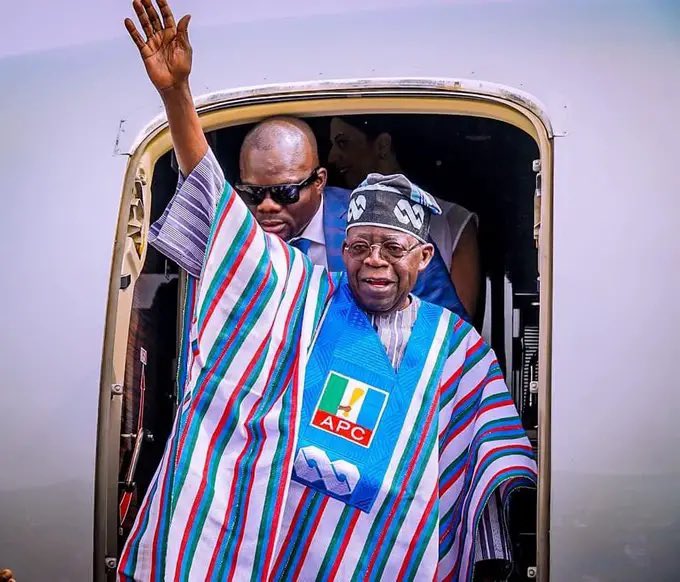
THE presidential candidate of the All Progressives Congress (APC), Bola Tinubu, became the fifth president-elect of Nigeria since the country’s transition to democracy in 1999.
The Independent National Electoral Commission (INEC) on Monday 1 declared Tinubu winner following his victory in the Saturday, February 25 presidential election.
His victory followed an election that held after the registration of more than 93 million Nigerians, and the creation of more than 176,000 polling units across the 36 states and the Federal Capital territory.
Tinubu was declared winner having polled 8,794,726 votes. He became the Nigerian president with the lowest total of votes cast and the lowest percentage of votes.
When Nigeria transited to democracy in 1999, former president Olusegun Obasanjo of the Peoples Democratic Party (PDP) polled a total of 18,738,154 million votes, which represented 62.8 per cent of the 29,848,441 million valid votes cast, while Oluyemi Falae of the Alliance for Democracy (AD) polled a total of 11,110,287 million votes, which represented 37.2 per cent of the votes cast.
Recontesting four years later in an election with 60,823,022 million registered voters, Obasanjo polled 24,109,157 million votes, which represented 61.8 per cent of 39,012,071 million valid votes. The candidate of the All Nigeria People’s Party (ANPP), Muhammadu Buhari, came a distant second with a total of 12,495,326 million, which represented 32 per cent of the total votes, while the All Progressives Grand Alliance’s (APGA) presidential candidate, Odumegwu Ojukwu, polled 1,295,655 million, which was 3.3 per cent of all the valid votes.
Although under Maurice Iwu’s watch as its chairman INEC recorded a total of 61,567,036 million registered voters towards the 2007 general elections, the number of voter turn-out decreased to 35,397,517 million.
With the PDP sustaining their winning ways, the late president Musa Yaradua defeated Buhari, a second-time contender on platform of the ANPP; and Atiku Abubakar, a former vice president of the Action Congress by gathering a total of 24,638,063 million voters, which represented 69.60 per cent of the votes cast, against Buhari’s 18.66 per cent and Atiku’s 7.45 per cent.
Also in 2011, the PDP presidential candidate, Goodluck Jonathan, won against Buhari, who was with the Congress for Progressive Change (CPC), and Nuhu Ribadu of the Action Congress of Nigeria (ACN) with 22,494,187 million votes, or 58.87 per cent of votes cast.
The 16-year dominance of PDP’s Presidency ended abruptly in 2015 when Buhari defeated Goodluck Jonathan with a total of 15,424,921 million votes, representing 53.96 per cent of the 28,587,564 million valid votes.
Buhari retained power in 2019 by polling 15,191,847 million votes, which represented 55.60 per cent of the total valid votes.
However, despite the surge in the number of registered voters for the 2023 general elections to 93,469,008 million, data from the just concluded presidential and National Assembly elections showed that 24.9 million eligible Nigerians voted, which means that only 26.6 per cent of registered voters participated in the elections.
That was less than the 55.60 per cent and 53.96 per cent figures recorded in the 2019 and 2015 presidential elections respectively.
Tinubu won the election with 8.794,726 millionvotes (35.2 per cent) to defeat closest rivals Atiku Abubakar of the PDP, who had 6,984,520 million votes; Peter Obi of the Labour Party, who had 6,101,533 million votes; and Rabiu Kwakwanso of the New Nigeria Peoples Party (NNPP), who polled 1,496,687 votes.
LABOUR Party (LP) has emerged as a major opposition in Nigeria’s mainstream politics, winning six Senate and 34 House of Representatives seats in the February 25 National Assembly (NASS) election.
This is the first time the party has covered impressive grounds in Nigeria’s mainstream politics since its formation in 2002, The ICIR findings have shown.
The party was originally known as the Party for Social Democracy (PSD) before changing to its current name the following year after its formation.
The milestone of LP in the just-concluded elections for the red and green chambers is no doubt credited to the fame and acceptance of the its presidential flag bearer, Peter Obi, by an overwhelming youth majority known as ‘Obidients’.
The chairman of the Independent National Electoral Commission (INEC), Mahmood Yakubu, at a meeting with Resident Electoral Commissioners (RECs) today in Abuja said, “In last Saturday’s elections, winners have also been declared for 423 national legislative seats, while supplementary elections will be held in 46 constituencies.
“In the Senate, 98 out of 109 seats have been declared. So far, seven political parties have won senatorial seats, while in the House of Representatives, 325 out of 360 seats have been won by eight political parties.”
In terms of party representation for the 10th Assembly, the INEC chief said the All Progressives Congress (APC) won 57 Senate seats, the Peoples Democratic Party (PDP) 29, the Labour Party 6, the Social Democratic Party (SDP) 2, the Young Peoples Party (YPP) 1, New Nigeria Peoples Party (NNPP) 2, and the All Progressive Grand Allance (APGA) 1.
For the lower chamber, Yakubu said the APC has 162 seats, PDP 102, LP 34, NNPP 18, APGA 4, Action Democratic Congress (ADC) 2, SDP 2, and YPP 1.
He also informed that certificates of return would be presented to senators-elect on Tuesday, March 7 at the National Collation Centre, Abuja, while members of the House of Representatives-elect would receive theirs the following day at the same venue.
When compared to its phenomenal stride in the 2023 elections, the LP did not get a single seat in the National Assembly in the 2019 elections.
Four years ago, out of the 360 seats in the house, the APC won the majority seats with a total of 211 members and the PDP got 111 members. The other seats were shared among the smaller parties.
For the Senate, the APC commanded the Senate majority with 64 senators, trailed by the PDP with 44, and YPP with a single seat. The figures have since changed with the series of defections in the National Assembly since the 2019 elections.
Obi, a trader and former governor of Anambra State, who has changed the game and is the new third force in the political arena, was able to galvanise the support of millions of youths, especially in southern Nigeria, in less than a year since he moved to the LP from the PDP.
Findings from Wikipedia showed that from May 27, 2022, the party’s membership and support increased drastically on joining the party shortly after he quit the PDP in a bid to run for the 2023 presidential election.