Home Blog Page 1045

Starlink: SpaceX’s new internet service could be a gamechanger in Africa

0

By Marian Selorm Sapah, University of Ghana

It’s hard for many of us to imagine a world without instant, limitless internet access. Some have even argued that it should, alongside access to clean water and electricity, be considered a basic human right.

But in fact only 64.4 per cent of the global population as of January 2023 are internet users. Asia and Europe are home to most of the people who are connected.

Africa comes in third. However, accessibility varies wildly across the continent. About 66% of people in southern Africa are internet users. In east Africa the figure is 26 per cent; it is just 24 per cent in central Africa. People in rural areas have far less access than those in the continent’s urban areas.

Internet access opens up the world in many ways. It can entertain, educate, enable payments and even bolster democracy.

That’s why advances in providing internet access to people in Africa are worth celebrating. In January 2023, the US company SpaceX, which manufactures and launches spacecraft and communication satellites, announced that its Starlink service was available in Nigeria. This was a first for the continent. It has also since become available in Rwanda.

Starlink is a satellite-based internet service. It is set to be rolled out elsewhere on the continent, including the Democratic Republic of Congo (DRC), Kenya and Tanzania, later this year. More coverage is to come in 2024.

This could be an important way to fill Africa’s connectivity gaps, which have arisen because of poor digital infrastructure and the high costs of investing in fibre optic cables or mobile phone masts, particularly in rural and remote areas. The United Nations has a strategy for reaching universal access across Africa by 2030, but this won’t be possible without innovative approaches.

Starlink is one such innovation. Since all its users are tapping into the same infrastructure, in space, there’s less need for erecting mobile phone masts or laying fibre optic cable on land.

What is Starlink?

Starlink is a network of thousands of satellites located close to the Earth – about 550km from the planet’s surface – that provide broadband internet access.

Of course, satellites are already used for internet connectivity. But a traditional internet satellite is a single geostationary object; its position in orbit is fixed in relation to the Earth. These satellites are also located more than 35,000km from Earth, so it takes a long time for the signal to reach the end user. As anyone who has tried to use the internet in a remote area knows, the further a signal travels, the worse it gets, so traditional internet satellites tend to be slow and can be unreliable. They aren’t able to adequately support activities like live streaming, online gaming and video calls.

Starlink’s Low-Earth Orbit satellites are able to interconnect and relay signals between each other, creating fast, stable internet service. There are also a lot of them: on 17 February 2023, SpaceX said it had launched 3,981 satellites in total, with 3,639 currently operational.

The company can launch its own satellites on demand and update them with the latest technology as required, which it says adds to their reliability.

Much of Africa’s internet access is currently being provided through mobile, wireless internet – signals are relayed from land-based towers. This has less coverage and is slower than satellite internet access.

One area of concern when it comes to Starlink is the cost. For example, at the beginning of February 2023, FiberOne, a broadband internet provider in Nigeria, was providing internet with speeds of up to 500Mbps, which is fast. The installation fee was N32,231 (about US$70) and the monthly subscription cost around N100,000 (US$220). Starlink in Nigeria, meanwhile, costs about N276,000 (US$599) once-off for the kit and installation, then charges a monthly subscription fee of about N198,000 (US$43).

Starlink is cheaper in the long term than both fibre optic and mobile internet providers. But can an average rural Nigerian household with a monthly income of less than N28,000 (US$60) afford it? Given that average incomes are similarly low in most rural and remote parts of Africa, there’s a risk that Starlink’s targeted users on the continent won’t be able to use the service.

Research uses

These concerns aside, there’s no doubt that faster internet can propel Africa forward. Despite the shortcomings of mobile, wireless internet, it has been credited with greatly advancing Africa technologically. Services like Starlink could fuel even greater growth in several areas. These include education, participation in democracy and governance, disaster risk reduction and mitigation, health, and agriculture.

As a researcher in planetary and space science whose work includes, among other things, the use of satellite data for monitoring and modelling in relation to geology, I am especially interested in the ways these satellites could be used beyond internet access, for tasks like remote sensing and Earth observations. I hope that Starlink’s arrival in Africa will help usher the continent into a new phase of technological development.

For example, satellite images can give information on crop yield, helping farmers to make better decisions on irrigation, fertilisation and harvesting. They also allow for widespread and effective monitoring of reservoir levels, as well as increasing transparency about how much water is available, thereby providing early warnings of shortages and uniform data among countries with common water sources.

Governments, researchers and industries can buy access to specialised Starlink satellites called Swarm for data they need for these kinds of projects. The sheer number and speed of Starlink’s satellites means they can gather a lot of data, quickly, and offer frequent updates. Starlink’s arrival in Africa is a great opportunity for the continent’s scientists, governments and industries to collaborate.The Conversation

Marian Selorm Sapah, Lecturer/Research Scientist, University of Ghana

This article is republished from The Conversation under a Creative Commons license. Read the original article.
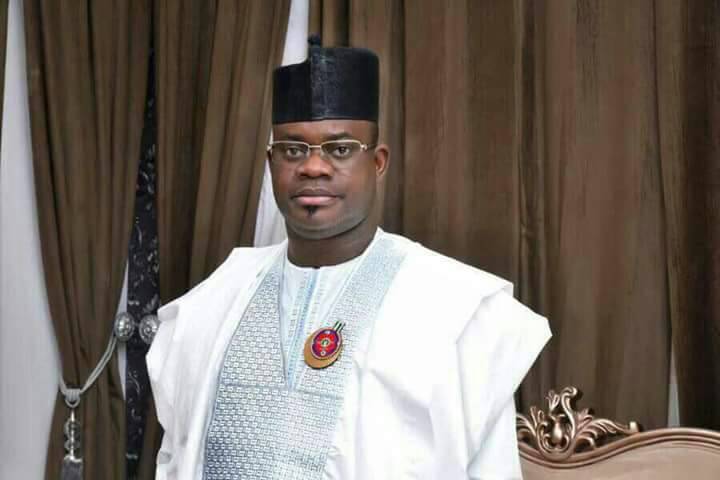
No, never again in Kogi East Senatorial District

0

By Theophilus Abbah, PhD

JUST three months after the third anniversary of the gruesome murder, the sacrifice, the burning alive of Salome Abu in Ochadamu, her ancestral home, in Kogi State, on the altar of politics to lubricate the undeserved victory of the All Progressives Congress (APC) in the November, 2019 Kogi governorship election, Kogi East Senatorial District  has emerged with a blood-soaked prize as the thuggery headquarters of Nigeria’s politics.

The late Salome was the women leader of the Peoples Democratic Party (PDP), a very vibrant political leader, whose crime was that she campaigned vigorously for the PDP and frustrated efforts by the APC thugs, recruited from the ranks of the state government’s ‘produce boys’, to falsify election results for their masters in Lokoja and Abuja.

In spite of  loud and nationwide outcry over her murder, as symbolic of the sham election that took place in 2019, and in spite of the multiple reports by election observers that the governorship election was anything but democratic, and that it should be cancelled, the Independent National Electoral Commission (INEC) allowed it to stand.

On its part, the Nigeria Police Force failed the people for rejecting calls for the security agency to thoroughly investigate the woman’s murder.  In the end the jaundiced justice system in Kogi state set free most of the young men fingered for the crime, such that only one person was sentenced to a laughable prison term. Shamefully, institutions of state failed to penalise those who brazenly committed murder and arson.

No doubt, the fact that Salome’s murder was treated with levity, the authorities’ failure has emboldened political thugs to repeat their demonic act in the 2023 elections. Video, audio, and visual images that flooded the world wide web from Kogi East during last Saturday’s Presidential and National Assembly polls, depicted a lawless enclave ruled by  armed thugs who were propped up by evil politicians bent on raping the people of their will to decide who should represent them for another four years.

Democracy is popularly defined as government of the people by the people and for the people. But in Kogi State, democracy has been redefined as government of thugs, by thugs and for the benefit criminal political elite.

It is very unfortunate that the democratic experience in the North-Central state in contemporary Nigeria has been dented by undue recruitment of thugs by competing and desperate politicians who use violence against their rivals.

Instead of selling ideas that address the needs of the people, and to prove how superior their plans were compared to those of their competitors, politicians find an easy, low-hanging resort to the use of force through thugs, to snatch from the people the political power to decide who should occupy leadership positions for their benefit.

In the process, criminal elements rose to become local government chairmen or administrators, special advisers to governors, members of Kogi State House of Assembly.

Worse still, it has become a common practice in Kogi East for traditional rulers to honour political thugs with undeserved traditional titles in return for blood money. Traditional institutions should be the custodians of the values of the society; they must not be complicit in criminal activities, binding their people with evil fetters, and so that they are not able to speak truth to thugs and corrupt politicians.

Twenty-four years of unbroken democracy, the people of Kogi East Senatorial District should have been accustomed to the fact that the people know what they want, and they must not be compelled to vote for any candidate who failed to deliver good governance when given the opportunity.

All over Nigeria, it has dawned on the people that thuggery is no longer fashionable, so reports about violence are no longer as widespread as they used to be in the past. Politicians have learned to endear themselves to the people in order to secure their votes every four years, they must produce credentials of positive impact on the lives of the people, through the provision of necessary infrastructure, an enabling environment for businesses to thrive, and by attracting federal government projects and incentives to their people.

In Kogi East all these are lacking, providing the clean slate for new entrants into politics to write promises like good rural roads, electricity, good rural healthcare facilities, rebuilding dilapidated primary schools, reconstruction of ancient markets, and the like in the campaign rhetoric.

In spite of the show of force by the police and other security agencies and multiple emphases by the INEC that no form of forgery could prevail in the elections as a result of the deployment of BVAS, goat-headed, misguided young men acquiesced to deceptive persuasions embarked on the senseless mission of snatching ballot boxes, threatening voters, disrupting the voting process, and even snatching result sheets from electoral officers in order to falsify election results.

The example of the stupidity of thugs was the timely gunning down by the police of one Ojochenemi Akayaba, a so-called fresh graduate of Kogi State University, Anyigba, who foolishly rode into a polling centre to disrupt the voting process last Saturday. We could blame Ojochenemi for being misguided, but the young man’s blood is on the head of candidates in the election who sent him on that suicide mission. They must be held to account for his death; they must not escape the wrath of the law. Our law enforcement agents must investigate Ojochenemi’s death and bring to book all politicians who recruited him into the political crime, brainwashed him, and gave him the weapons to terrorize the people. The youngman’s death must not be swept under the carpet as just the ugly end of another political thug in Kogi East.

The tragedy in  Kogi East Senatorial District is that this evil is occurring in a society full of men and women who are passionate about lifting the people from poverty. Not just passionate, but people who demonstrate commitment to Kogi East’s development through  individual interventions in the provision of social amenities in rural communities. Tired of failed promises by politicians who rape them at every election, many communities have had to resort to collecting widow’s mite from their people, in the process of executing projects to meet pressing needs of the people, mainly in rural areas.

This is a society under a state government that has, for almost eight years now, failed to pay civil servants salaries due to them; a society where political leaders steal the people’s resources to  live in revelry, building and buying up houses and luxury apartments in Abuja, Lagos, and Lokoja, investing in hotels and petrol stations,  by pinning the people down to penury. This is totally unacceptable. This time around, the people of Kogi East must elect leaders who are competent; leaders that are passionate about developing the senatorial district. The people of Kogi East must decide who should lead them into the future; thugs cannot decide the fate of the people; greedy, corrupt and blood-thirsty politicians cannot prevail this time around. No, never again.

The Independent National Electoral Commission (INEC) must cancel the elections conducted in Kogi East Senatorial District last Saturday; especially in those areas where thugs snatched ballot papers and Bimodal Voters Accreditation System (BVAS) machines in order to manipulate the results. There are a lot of evidences to point to the fact that the elections were not free and fair. The Chairman of INEC, Mahmood Yakubu, must not permit illegality to stand for the second time in a row in Kogi East Senatorial District. No, never again.

Indeed, change in Kogi East must begin with this election. The people must rise to the challenge, and resist the evil men who have set in motion the process of stealing the will of the people. The people, all civil society organisations in Kogi State, traditional rulers, leaders of thought, former ministers, former National Assembly members, governors, and the elite must come together to challenge the evil forces who have held Kogi East down for too long. This peace-loving people of Kogi East do not deserve the leadership foist on them by blood-sucking politicians, who are encouraged by the inaction of federal government institutions to get away with murder. Thugs should not determine the fate of the people. It is unacceptable. This evil must not stand. Never again.

*Dr Abbah, a fellow of the Chartered Institute of Forensic Investigation and Fraud Examiners of Nigeria, is based in Abuja.


Chrisland: More controversy as autopsy reveals student died from electrocution

THE mother of Whitney Adeniran, a 12-year-old student of Chrisland High School, Ikeja, Lagos, has revealed that an autopsy conducted on her daughter showed she died from electrocution while taking part in the school’s sporting events at the Agege Stadium in Lagos.

This revelation came two weeks after the Lagos State Government ordered the indefinite closure of the school in response to the controversies surrounding the death of the student.

The cause of her death was initially unclear, and the parents of the deceased accused the school of negligence. The lack of an ambulance or first aiders at the venue of the sporting events was cited as a contributing factor.

Before the autopsy was carried out, the parents of the deceased had insisted that the child was healthy before leaving home on the said day, but the school management denied any wrongdoing, claiming that the student “slumped” at the stadium.

However, the autopsy revealed that the cause of death was electrocution.

Adeniran’s mother, Blessing Adeniran, who made the announcement on her official Instagram business account in a live video on Thursday, March 3, also accused the school of contributing to the trauma she has been subjected to since her daughter’s death.

She claimed that the school management had been pushing false narratives to protect their reputation.

The older Adeniran said the school made her think she was crazy and started pushing the narrative that her daughter was sick.

She also revealed that the school refused to investigate the rumours of electrocution when her husband asked for their help. Instead, according to her, the school management sent the family a letter, assuring them they did everything possible to save the student’s life.

She further disclosed that the family would sue the school in a court of law.

In the same vein, according to the News Agency of Nigeria (NAN), the Lagos State Government also confirmed that the late Whitney Adeniran died from asphyxia and electrocution.

The state government reportedly disclosed this in a statement from the Office of the Attorney-General and Commissioner for Justice, Mr Moyosore Onigbanjo (SAN), on Thursday in Lagos.

The statement said that the post-mortem report issued by the Lagos State University Teaching Hospital on Wednesday, March 1, showed that the deceased’s cause of death revealed asphyxia and electrocution.

The statement added that the Directorate of Public Prosecutions (DPP) had been instructed to issue legal advice on the matter with immediate effect.

“The Lagos State Government commiserates with the deceased family while reassuring Lagosians that anybody found culpable would immediately be charged to court,” the statement added.

The ICIR observed through videos on social media that the girl was buried amid tears in Lagos on Thursday.

Following the unfortunate death of the student, the deceased’s parents initially accused the school management of negligence.

They took to social media to seek public intervention to unravel the circumstances that may have led to their daughter’s sudden death while participating in sporting events.

In response, the Chairman of the school’s Advisory Board, Ike Ofuokwu, noted in a statement that the 12-year-old deceased “slumped in public view and not under any hidden circumstances”.

He added that the school’s immediate response was to take advantage of proximity by identifying the nearest medical facility to take her to, where the doctor on duty administered oxygen and every aid possible on her.

The statement noted that the student opted not to participate in the inter-house sports march past “for reasons we were not very sure about”.

The lack of an ambulance or first aiders at the venue of the sporting events was also raised by the deceased’s parents, which they believe contributed to their daughter’s death.

The controversy surrounding the death of Whitney Adeniran had attracted widespread attention and calls for investigations into the circumstances surrounding her death.

Not new to controversy

Founded in 1977, Chrisland High School is not new to controversies. In 2020, Chrisland Schools was embroiled in a controversy involving allegations of sexual assault against a toddler by a school staff member. The incident reportedly occurred in November 2016 but was not reported to the authorities until 2018.

The case went to trial in 2019, and in February 2020, a Lagos State High Court found the staff member, Adegboyega Adenekan, guilty of sexually assaulting the child and sentenced him to 60 years in prison. The verdict was widely celebrated as a victory for child rights and protection in Nigeria.

However, the controversy did not end there. Some parents of students at the school accused the school of attempting to cover up the incident and failing to provide adequate support to the victim and her family. The school denied the allegations and stated that they had cooperated fully with the authorities during the investigation.

The controversy sparked a wider conversation in Nigeria about the prevalence of sexual abuse against children and the need for schools and other institutions to take a more proactive role in preventing and addressing such incidents.

Chrisland Schools has since taken steps to improve its child protection policies and procedures, including appointing a child protection officer and implementing training programs for staff on child protection and safeguarding.

Similarly, the school was abruptly shut down in 2022 following reports of sexual misconduct by five pupils of the school during an international trip.

The alleged scandal, seen in a viral video, happened when the school was in Dubai in March of that year to participate in the World School Games, a four-day annual competition with schools worldwide.

PDP rejects Tinubu’s victory, says Atiku won presidential poll

THE Peoples Democratic Party (PDP) has rejected the declaration of All Progressives Congress (APC) candidate, Bola Tinubu, as the winner of Saturday’s presidential election.

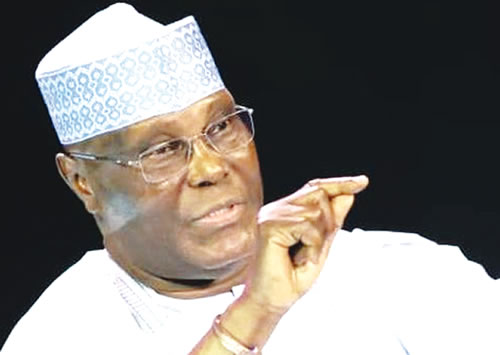
PDP National Publicity Secretary, Debo Ologunagba, who disclosed this in a statement on Thursday, March 3, insisted that that the party’s candidate, Atiku Abubakar, won the election.

The ICIR reported that the Independent National Electoral Commission (INEC) declared Tinubu President-Elect.

INEC Chairman, Mahmood Yakubu, who announced the results in the early hours of Wednesday, February 28, said that the former Lagos State governor polled 8,794,726 votes to win the presidential election.

Reacting to the development, the PDP asked the electoral umpire to immediately withdraws the Certificate of Return issued to Tinubu and cancel the presidential election

The party noted that the request was in line with INEC’s powers under Section 65 of the Electoral Act 2022.

According to the main opposition party, by declaring Tinubu as the winner, INEC acted contrary to the provisions of the Constitution of the Federal Republic of Nigeria 1999 (as amended), the Electoral Act 2022 and the INEC guidelines and regulations for the conduct of the 2023 presidential election.

The party lamented that the election was marred by deliberate malpractices, including the non-use of the Bimodal Voters Accreditation System (BVAS) and INEC’s refusal/failure to transmit directly the results from polling units to its Server/Website in flagrant violation of Section 60 (4)(b) of the Electoral Act 2022.

PDP noted that the violation of the Electoral Act by INEC, as attested to by political parties, voters, Nigerians of all walks of life as well as local and international observers, paved the way for the alteration, falsification, switching of results and allocation of figures in favour of the APC.

“By refusing therefore to transmit directly the results from the Polling Units, INEC violated the Electoral Act and its Rules and Regulation, compromised the process and marred the integrity and credibility of the election results,” it added.

The opposition party asserted that consequent upon the violation by INEC of Section 60 (4) of the Electoral Act, 2022 and its Rules and Guidelines on the election, the results announced by the INEC, having not been earlier transmitted directly from the polling units before the announcement, are ultra vires, of no consequence and cannot stand.

The party said it has commenced an action for legal redress to reclaim its victory in the 2023 presidential election.

It called on its supporters in Nigeria and across the world to remain calm, resilient, resolute and steadfast in the defence of democracy and the victory of the party.

Election: CODE, media partners say INEC presented results where voting did not hold

0

CONNECTED Development (CODE) and its media partners have released an interim report on the February 25 presidential and National Assembly elections.

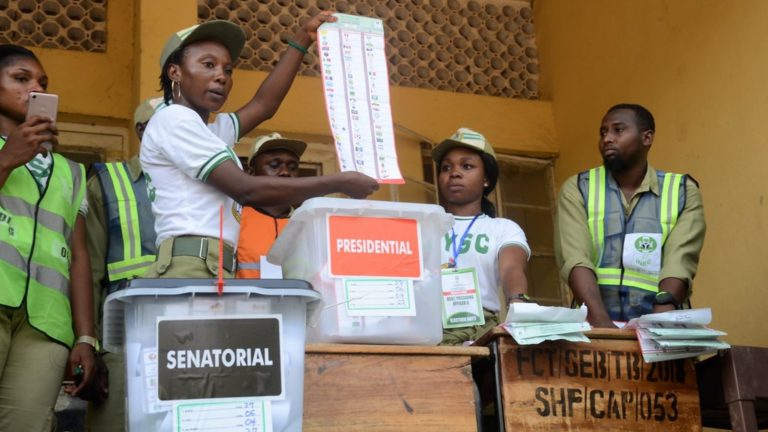
The group said the Independent National Electoral Commission (INEC) released results in some polling units where elections did not hold.

In the interim report released during a press briefing chaired by CODE Chief Executive Officer (CEO) Hamzat Lawal on Thursday, March 2, in Abuja, the group said it deployed 20,000 observers to monitor the elections in 80 per cent of polling units across the 36 States.

Lawal raised several concerns about the management of the presidential and National Assembly elections by INEC.

“We observed late deployment of INEC staff and election materials, which led to the late opening of polls in 64% of polling units we observed, which saw many polling units close before exhausting the 6 hours of voting time, citing nightfall as an excuse.

“In many other polling units across the country, citizens’ resilience saw voting conducted late into the night with no power supply or light bulbs, under very unsecured conditions.

“For this purpose, many Nigerians were disenfranchised, and the most affected demography were Persons with disability, pregnant women, and elderly people. Registration Area Centers (RACs) were introduced by INEC to decentralize the coordination of logistics and effective deployment to achieve early opening of polls, yet polls opened in some polling units across the country by 3 p.m. and above.

“We also observed that INEC in many polling units failed to adhere to her guidelines, stipulating that where election fails to hold because of the late opening of polls or failure of the Bi-Modal Voter Accreditation System (BVAS), INEC shall conduct elections in such polling units the next day, ” the group said.

CODE added that it observed that in some places where elections did not hold, the results of polls were returned.

“An example of this is in Oru East LGA, Imo State. This systematic disenfranchisement of voters can partly be blamed for the 26.7% voter turnout witnessed in this election, which was anticipated to be much higher.”

On security, CODE said it observed the presence of armed Security Personnel in 28% of Polling Units.

“We, however, observed that there were several cases of voter Intimidation and disruption of polls targeted at suppressing votes in favour of other political parties. Security personnel were seen to be in these polling units, yet thugs carried on with their criminal acts unhindered.

“We also observed that Nigerians approached and participated in this election in high spirits, trusting the process on the assurance of INEC’s promised innovations which will ensure transparency of result collation and result management,” CODE added.

CODE and its partners added that the deployment of BVAS and INEC Result Viewing Portal (IREV) were presented to Nigerians as game changers in this 2023 general election, but it observed that citizens found it difficult to log in to the IREV.

“The IREV failed to upload any result of the Presidential election as at 10 p.m. of election day, and even when the results started uploading, it was in trickles.

“At this moment, 4 days after the Saturday Presidential Election, only 85% of the results have been uploaded. This is in sharp contrast to all the promise and assurance given by INEC,” the group stated.

On the coming Governorship and State House of Assembly election, CODE said the election is another opportunity for INEC to redeem her image.

It urged INEC to ensure transparency of the result management and collation process and ensure that polling unit results are uploaded timely on the INEC Result Viewing Portal (IREV).

Why I haven’t congratulated Tinubu – Peter Obi

1

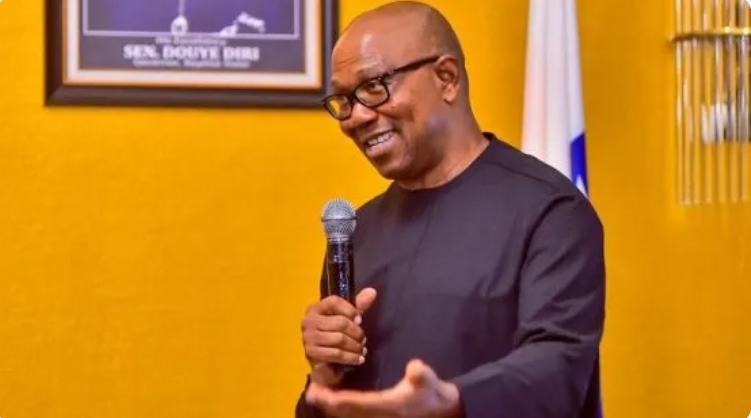
THE presidential candidate of the Labour Party (LP), Peter Obi, said he has not congratulated the President-Elect, Bola Tinubu, because the process through which he was elected lacked transparency.

The former Anambra State governor believes he won the February 25 poll and has vowed to explore all legal options to reclaim his mandate.

During a press conference in Abuja on Thursday, March 2, Obi declared he would be challenging the process because it did not meet the minimum standards expected of a free, fair and credible election.

He said, “We will explore all legal and peaceful options to reclaim our mandate. We won the election, and we will prove it to Nigerians.”

The election, according to Obi, “will go down as one of the most controversial elections ever conducted in Nigeria”.

“Please be assured that Datti and I will work, and this is not going to be the end but the beginning of the journey of the legal process. The people should remain, undoubtedly and deeply committed to the project of a new Nigeria,” he said.

At the briefing, Obi observed a one-minute silence for all injured and deceased victims of the February 25 poll.

Tinubu won the election with 8,794,726 votes, defeating Obi and the other 16 candidates to score the highest number of votes, according to figures released by the Independent National Electoral Commission (INEC).

He also had over 25 per cent of the votes cast in 30 states, more than the 24 states constitutionally required.

Atiku Abubakar of the Peoples Democratic Party (PDP) came second with 6,984,520 votes, while Peter Obi came a distant third with 6,101,533 votes.

Fondation Hirondelle seeks trainers

THE Fondation Hirondelle seeks trainers and consultants to complete its pool of experts to conduct coaching and training assignments in one or more of the following areas.

The areas of specialisation are journalistic ethics and deontology, radio journalism (including reporting, magazine, news, sound recording, editing), video journalism (including shooting, reporting, editing) and web/digital journalism.


READ ALSO:


The organiser says persons involved in social media, radio hosting, TV and video hosting, media management, fact-checking / rumor debunking, election coverage in fragile contexts, media revenue generation and media training are eligible to apply.

The deadline for the submission of applications is March 31, 2023. Interested applicants can apply here.

I won presidential election, Peter Obi says, vows to ‘reclaim mandate’

0

CANDIDATE of the Labour Party (LP) in the February 25 presidential election, Peter Obi, on Thursday, March 2 said he won the contest.

He also vowed to reclaim his ‘mandate’ through legal and peaceful means.

Obi came third in the election result released by the Independent National Electoral Commission (INEC).

Addressing journalists in Abuja on Thursday, the former Anambra State governor said he would prove he won the election.

“We will explore all legal and peaceful options to reclaim our mandate. We won the election, and we will prove it to Nigerians,” Obi said.

Obi restated his commitment to a new Nigeria. He promised to work with his vice presidential candidate Datti Baba-Ahmed to make a new Nigeria possible.

“A new Nigeria is possible, and we will work for that new Nigeria. Datti and I remain committed to that new Nigeria.”

Obi said the 2023 presidential poll will go down in history as the most controversial election conducted in Nigeria.

“This election, as you know, did not meet the minimum standards expected of a free, credible and fair election. It will go down as one of the most controversial elections ever conducted in Nigeria,” he said.

Obi addressed journalists in company with Julius Abure, the national chairman of the LP, and Akin Osuntokun, the director-general of the party’s presidential campaign council.

The press briefing is still ongoing as of the time of filing this report.

The Independent National Electoral Commission (INEC) on Wednesday, March 1, declared the candidate of the All Progressives Congress (APC), Bola Ahmed Tinubu, winner of Saturday’s presidential election.

According to figures released by INEC, Tinubu polled 8,794,726 votes to defeat the candidate of the Peoples Democratic Party (PDP), Atiku Abubakar, who came second with 6,984,520 votes.

Obi came third with 6,101,533 votes, according to INEC’s official result.

The PDP and LP candidates have expressed their intention to challenge the result in court.

Ekiti judge reinstated by NJC after 16 years suspension

0

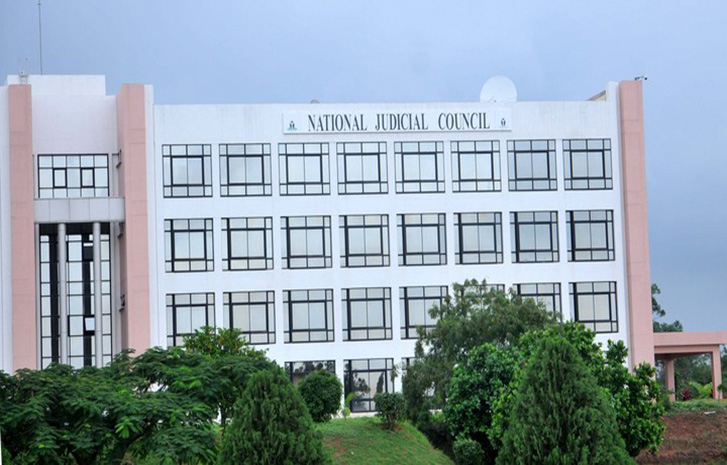
AFTER 16 years of suspension by the National Judicial Council (NJC), Justice Babajide Aladejana of Ekiti State High Court has been reinstated to office.

Justice Aladejana was suspended in 2006 along with the state’s former Chief Judge, Justice Kayode Bamisile, for their alleged roles in the political crisis that led to the impeachment of the former governor of the state, Ayodele Fayose.


READ ALSO:

NJC bars three judges from promotion for granting conflicting ex-parte orders

Three judges face sack as NJC investigates conflicting court orders

REPORT: Eight of 33 FCT judges nominated by NJC are children, relations of Justices

Activist petitions Delta gov over nomination of judge accused of child trafficking, but NJC says he has been cleared


The suspension came under the administration of the former Chief Justice of Nigeria (CJN) Justice Alfa Belgore.

The allegations against Aladejana and Bamisile included abuse of office, illegal operation of a foreign account, and involvement in an alleged N1.4 billion poultry scandal.

The suspension was lifted after a review by the NJC.

According to Daily Trust, Justice Aladejana has officially resumed work, and he has been allocated High Court Number Two, where he will be hearing cases and performing other judicial functions.

Goi Peace Foundation seeks entries for essay contest

THE Goi Peace Foundation is inviting entries for its 2023 International Essay Contest for Young People themed: ‘Youth Creating a Peaceful Future’.

This annual essay contest is organised in an effort to harness the energy, creativity, and initiative of the world’s youth in promoting a culture of peace and sustainable development. It also aims to inspire society to learn from young minds and to think about how each of us can make a difference in the world.

Essays must be 700 words or less, typed or printed in English or French, or 1,600 characters or less in Japanese. Essays in other languages must include a translation into one of the accepted languages.

The first and second-place winners will receive a certificate and prize of JPY100,000 (US$740) and JPY50,000 (US$370), respectively.

Children and young adults up to 25 years old can enter this essay contest endorsed by UNESCO.

The deadline for the submission of entries is June 15, 2023. Interested applicants can apply here.