RESIDENTS in Ekiti State are set for the Presidential and National Assembly elections scheduled for today, Saturday, February 25.
Compared to the governorship election held on June 20 of last year, there are no instances of security operatives mounting roadblocks in major highways in the state. The atmosphere appears calm and peaceful, with no visible signs of tension or unrest.
The ICIR visited several major towns in the Ekiti South Federal Constituency, including Oye, Ifaki, and Ido Ekiti, and observed a hive of commercial activities going even in the midst of naira scarcity in the state.
Residents are going about their daily routines, with no visible signs of election anxiety. The resident are confident in the security measures put in place to ensure a free, fair, and peaceful election.
However, election materials are still being distributed by the Independent National Electoral Commission (INEC) at its old office secretariat when The ICIR visited by 5:30 pm on Friday.
Prospective Ad-hoc staff were observed scrambling to check their names at the old INEC office located in the bank road area of the state.
Prospective Ad-hoc staff seen scrambling for their names
While some have found their names, others, including corps members, lamented that their names were not on the Ad-hoc lists released by INEC. It is crucial that INEC ensures that all necessary personnel are in place to conduct the elections successfully.
Meanwhile, the state police command has called on residents to be law-abiding as they go out to exercise their franchise tomorrow.
In view of the forthcoming 2023 general elections slated for 25th February, 2023, the Commissioner of Police, Ekiti State Command, CP MORONKEJI O. ADESINA psc., wishes to inform the law abiding citizens of Ekiti State that the Nigerian Police Force
The police have promised to ensure adequate security for every resident and have vowed to deal with anyone caught causing trouble during or after the polls.
RESIDENTS of the Federal Capital Territory (FCT) filed at fuel stations and stormed banks and other locations where they could get money on Friday as they prepared for the Presidential and National Assembly election coming up tomorrow across Nigeria.
Checks by The ICIR reporters across the city showed that human movement was at its lowest on Friday.
There were fewer vehicles on the Airport and Kubwa expressways than previously seen.
This was because schools had temporarily closed in the city for the election, and some organizations either closed early or allowed their staff to remain at home to prepare for the poll.
Some civil servants interviewed said they didn’t go to work because they needed to prepare for the poll. There were other workers too who had got permission from their offices to stay at home and prepare for the election.
“I didn’t go to work today because my office sent a memo from Lagos on Wednesday that we had to vote. So, we were given today (Friday) as a holiday, said Maryam Abdullahi, a resident of the city who works with a non-governmental organization headquartered in Lagos State.
Many motorists were seen queuing at fuel stations, attempting to fuel their vehicles.
The reporters noted more queues at fuel stations than had been since Monday.
Mojeed Adesola, who spoke with one of the reporters at a fuel station along the Airport Road, said he had to fill his car in case of any post-election crisis.
Another resident, Rabi Musa lamented she could get cash to buy essential needs and keep for any emergency. “I have moved to four different ATMs (Automated Teller Machines) since morning. I’m yet to get a dime. I need to buy some foodstuffs at home. Not everyone can receive a transfer. I need to hold some cash in case there is an emergency.
Who some residents expressed fear over the election, others were optimistic all would be well.
Emmanuel Moses, a pastor, said the election will be peaceful. “I do not nurse any fear. Everything is going to be fine. Let people do the needful. God will take absolute control. It’s time for God to prove to Nigerians that He is still on the throne. No cause for alarm.”
Similarly, a Muslim cleric, Ibrahim Magaji, called for calm. He expressed optimism that there was no need for panic. “We did this in 2015 when the atmosphere was more tense than this. Let Nigerians elect who they want. Allah will guide us rightly,” he stated.
Cash scarcity a great worry to residents
The ICIR reporters noted that though panic buying made motorists filed at fuel stations, many banks ceased to dispense cash both in banking halls and via ATM, following biting Naira scarcity across the country.
A notice of closure was placed at the Polaris bank in Life Camp, Abuja, and security men turned customers back at the gate.
Very few customers were found in the banking hall at the Guarantee Trust Bank (GTB) in Jabi. Only those who had complaints with previous transactions were being attended to, as staff announced that the branch was out of cash.
It was a similar situation at the GTB, Wuse. A customer was spotted by The ICIR complaining bitterly in front of the bank.
A crowd of angry customers who gathered in front of the Access bank in Wuse market were also denied entry.
In the Lugbe area of the FCT, the situation was no different. A resident of Federal Housing Authority (FHA) Amarachi Ugwuanyi shared her experience with The ICIR.
“I went to various POS points in Lugbe. The first woman did not have cash. The second place I checked, she asked for N400 per N1000. I could not pay that. I had to go to a trader around my area who was giving out cash.
“He was nice enough to charge just N100 per N1000. But by the time it got to my turn, all that was remaining was N500. I paid N50 for it. I had to beg people for the money I went out with today,” she said.
Acccording to INEC, there are 1,570,307 registered voters in the FCT. Number of PVC collected is 1476,451, giving 94.0 per cent of registered voters. The number of uncollected PVC is 93,868, being 6.0 per cent of registered voters.
A total of 93,469,008 were registered for the poll, out of which 87,209,007 have collected their PVC.
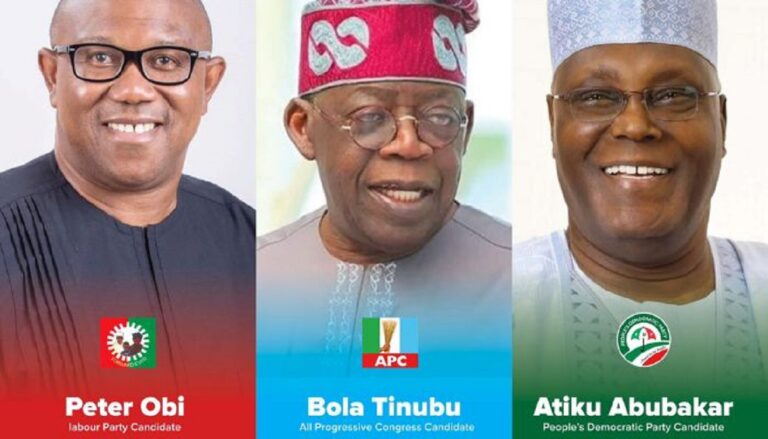
Four leading presidential candidates are Bola Tinubu of the All Progressives Congress (APC), Atiku Abubakar of the Peoples’ Democratic Party (PDP), Labour Party’s Peter Obi, and Rabiu Kwankwanso of the New Nigeria’s Peoples Party (NNPP).
As cash scarcity bites as a result of the naira redesign policy of the Central Bank of Nigeria (CBN), erf-of-sale (PoS) operators have resorted to sourcing their cash needs from all sorts of business people to sustain their operations, rather than rely on the hitherto normal channels of commercial banks and automated teller machines (ATMs).
Some traders, at least one viral video online showed, have also been engaging in trade by barter to sustain their trade.
Small scale traders like vegetable and tomato sellers, who hitherto did not have bank accounts, are now embracing the CBN cashless policy in order to sustain their businesses, The ICIR discovered.
A tomato seller now embraces cashless policy
Conversely, PoS merchants who are not innovative enough to source for cash elsewhere are exiting the business.
Nigerians have been going through harrowing experiences since the redesigned N200, N500 and N1,000 notes came into circulation on December 15, 2022 and the CBN retired the old notes as legal tender initially on January 31, 2023, but extended to February 10.
President Muhammadu Buhari, on February 16, gave the N200 note an extended circulation life till April 10, while affirming the February 10 expiration date of the old N500 and N1,000 notes.
Accessing the new notes has, however, been difficult, at the banks, ATMs and PoS centres. “There’s no cash anywhere. I had to strike a deal with some supermarket outlets to get cash from them, in order to sustain my business. Their charges are very high. For instance, I have to pay a mark-up sum of N15,000 on N150,000,” a PoS merchant, Mirabel Okonkwo, told The ICIR.
Customers resort to PoS payment in retail outlets as cash crunch bites
“If we don’t explore this option, we may be out of business. Some of our colleagues have to target who can waybill money to them among their contacts doing business in many cash-driven states,” Okonkwo added.
Another PoS merchant, Amaka Obunadike, told The ICIR that many PoS agents have been quitting the business because of their inability to get cash from commercial banks.
Amaka said, “Some of our colleagues who queued at banks from morning till night end up getting only N10,000 for their businesses. Now, the new money is not circulating again, and you can now get only the N200 old note. Many of us have stopped work. The money I’m looking for is to even buy food for my family.”
She added that many PoS merchants had to resort to transfers, while some are gradually being eased out of the business by the cash crunch.
“This is bringing hardship to the system. Many banking networks are poor with low bandwidth, causing problems for transactions,” she said.
Another operator complained of long queues at a bank, as it rationed notes issuance to their customers.
“I was at Access Bank today and all I could get is N2,000,” a PoS merchant, Yomi Odunayo, told The ICIR.
A viral video in circulation sighted by TheICIR confirmed barter at Anegbete in the Etsako Central area of Edo State.The video showed some traders swapping plantain for yams to sustain their respective businesses.
Checks at some markets in Abuja showed traders are currently prioritising transfer for their transactions.
“We accept transfers, but to the best of my knowledge, I’m yet to witness barter trading. I don’t rule out the possibility subsequently. The only thing I know is that many traders who don’t have bank accounts have now opened in order to keep their businesses alive,” a trader at the Kubwa market told The ICIR.
Available data from the Nigerian Inter-Bank Settlement Syatem (NIBSS) showed that the number of registered PoS terminals in Nigeria increased from 523,488 in 2020 to
976,898 in June 2022. Of the registered PoS terminals, about 638,983 have been deployed and are in use.
Economic watchers are worried about the disruption the naira design policy has caused to the economy.
The Executive Director, Centre for the Promotion of Private Enterprise (CPPE), Muda Yusuf, expressed
concern that the failure to extend the deadline for the currency swap could put N100 trillion component of the national gross domestic product (GDP) at risk.
Yusuf says businesses suffering from the policy
He identified two critical sectors of the economy – Trade &
Commerce and Agriculture – as particularly vulnerable, saying, “The crippling of business
transactions at the distributive trade end amid the currency swap
crisis would not only undermine the trade and agricultural sectors,
but would have a knock-on effect on the manufacturing value-chain
and the services sectors.The trading end of the chain has been greatly affected.
“For an economy that is tottering on the brink, the capacity to
absorb shocks and disruptions is severely constrained. With 133
million Nigerians in poverty, inflicting additional hardship on the citizens is unfair, insensitive and inconsiderate.”
To another economist, Kelvin Emmanuel, poor planning has created problems to the economy.
“We will see the effect of this policy much more in the third quater of the year. We may experience something worse than inflation,” he said.
THE International Monetary Fund (IMF) believes Nigeria’s National Bureau of Statistics (NBS) has not been using the right methodology in measuring the country’s consumer price index (CPI).
The NBS, in its latest report on the inflation rate for January 2023, stated that the figure rose to 21.82 per cent, from the December 2022 figure of 21.34 per cent.
But in a report titled, ‘Nigeria: 2022 Article IV Consultation’, the IMF said the NBS was using the 2003/2004 National Consumer Expenditure Survey (NCES) to measure the CPI or the inflation rate, instead of the 2018 National Household Livings Standards, which would have measured the rate appropriately.
The Fund regarded the 2003/2004 NCES as outdated and affecting the monthly NBS inflation rate measurement.
The NCES is an index basket that includes prices of household goods, foods and other items.
According to the IMF, the inflation rate released by the Bureau did not reflect the reality in the Nigerian market, saying the use of the 2018 National Household Livings Standards would make the rate more realistic.
In its report that covered the month of January 2023, IMF urged the NBS to update its price basket or methodology to capture market realities correctly.
The report read, “The official monthly consumer price index (CPI), a composite of urban and rural price data, is available on a timely basis. However, the index weights and baskets are based on expenditures derived from the 2003/04 National Consumer Expenditure Survey. The weights are severely outdated and are not representative of current expenditure patterns. Outdated weights can introduce a bias into the index.
“The update of the CPI — using new weights from the 2018 National Household Livings Standards Survey— is still ongoing. The compilation of an updated producer price index is ongoing, but funding for the survey is uncertain. IMF plans to provide additional technical assistance to support the CPI update and improvements to Nigeria’s price statistics.”
Some Nigerian economists, agreeing with the IMF, also faulted the NBS CPI inflation calculation methodology.
An economist and chief executive officer of Financial Derivatives, Bismarck Rewane, questioning the integrity of the current measurement basket of the NBS, described it as “outdated.”
Rewane said, “The fact that the inflation basket is supposed to be reviewed every five years and it has not been done is a major concern. Your behavioural patterns, demography, and life expectancy changes per time. All these are factored in.”
He stressed the importance of using the correct basket for measuring Nigeria’s inflation, noting that it was last reviewed in 2004.
“The last time we tweeked the basket was in 2004, quite frankly. Going by the five year cycle, we are in for a third review. What we seek to do in financial derivatives is to look at the baskets and try to rudimentarily alter it to reflect the right methodology.
“For instance, last year we used the basket of the NBS and it came out at 18.6 per cent. Our projection was that it was going to come out a little above 19 per cent, using the same NBS basket. When we used our own rudimentary basket, it came out at 45.6 per cent, a big difference,” he added.
A development economist, Kelvin Emmanuel, told The ICIR that the Nigerian inflation figure could be as high as over 40 per cent if the right methodology was utilised.
Emmanuel said, “I have always complained about the way the NBS calculates inflation and how it’s not accurate. The reality is that the NBS is using the National Economic Income Survey of 2004, despite the fact that the spending patterns of households have changed since then.”
He said that some other Statistics bureaux and global central banks are using the National Income Survey of 2018.
“This means that what the NBS is doing is wrong. There are other matrix to examine, if you look at the pending patterns of families, and it goes beyond food and transport. The National Living Standard Survey already provides the matrix they would use. It is just a matter of adopting the 2018 standard.
“This government wouldn’t want to do that because if they do, inflation would go above 40 per cent,” he said.
The spokesperson of the NBS, Sunday Icheidi, was, at the time this report was being published, yet to respond to messages sent to him to react to these criticisms against the Bureau.
A GROUP, the Nigerian Women Trust Fund (NWTF), has asked the Independent National Electoral Commission (INEC) to accord priority voting to pregnant women, nursing mothers, the elderly and persons living with disabilities (PLWDs).
The group said the Electoral Act 2022 made provisions for priority voting for those categories of voters.
Addressing journalists in Abuja on Friday, February 24, the NWTF said it will monitor the performance of voters, candidates and poll officials on the election day “from a gender perspective” through the Gender and Election Watch (GEW) Room, one of its initiatives.
The Chief Executive Officer of GEW, Mufuliat Fijabi, who disclosed this at a press conference ahead of the Presidential and National Assembly elections, said: “NWTF through its use of an electronic gender-based checklist will watch and harvest critical data on the participation of women and other vulnerable groups in this election and will carry out its analysis based on the Electoral Act 2022.”
Fijabi added that the Fund has deployed 400 accredited observers across the six geopolitical zones of Nigeria and the Federal Capital Territory (FCT) for the 2023 general elections “to observe and assess how all elements of the election process impact all stakeholders from a gender perspective”.
While calling on INEC poll officials to demonstrate fairness, maintain professionalism and due process in the discaharge of duties, NWTF said the electoral umpire has so far shown readiness to conduct the 2023 polls.
“We urge INEC to maintain its statutory level of preparedness and ensure early opening of polls.
“The GEW Room witnessed the functionality of the Bimodal Voter Accreditation System (BVAS) during the last mock accreditation exercise by INEC with remarkable success and expects that the functionality at the upcoming pols will be optimal”, parts of the statement read.
Fijabi called on all electorates, especially women to come out “in their numbers to vote for leaders who will drive an inclusive democratic practice”.
THE Economic and Financial Crimes Commission (EFCC) said its operatives have intercepted N32.4 million cash meant for vote buying in Lagos.
The anti-graft agency said a massive operation to deter vote trading and other financial misconduct ahead of tomorrow’s presidential and National Assembly elections has started paying dividends with the interception of the money.
This was disclosed by EFCC spokesperson, Wilson Uwujaren, in a statement on Friday, February 24.
“The recovery was made by operatives of the Lagos Zonal Command of the Commission.
“The suspect involved has been taken into custody for further questioning.
“Tactical team of operatives are currently on the ground in all the states of the federation and the FCT. Telephone hotlines have already been circulated through social media for members of the Public to share information regarding financial malpractices with agents of the Commission. Details of the number are available on EFCC’s social media platforms,” the anti-fraud commission said.
The EFCC encouraged the public to report anyone trying to buy or sell votes using its financial crimes reporting App, Eagle Eye, or by email, info@efcc.gov.ng.
The statement added that EFCC chairman Abdulrasheed Bawa implored all personnel of the Commission deployed for election monitoring duties to show courage and not give room for anyone to undermine the integrity of the elections through financial inducement.