Home Blog Page 160

Nigeria’s public debt hits ₦152.4trn in Q2 2025 — DMO

0

NIGERIA’S total public debt stock has climbed to ₦152.40 trillion as of June 30, 2025.

This is according to new data released by the Debt Management Office (DMO) on Friday.

The figure represents an increase of ₦3.01 trillion or 2.01 per cent from ₦149.39 trillion recorded at the end of March 2025. In dollar terms, the total debt rose from $97.24 billion to $99.66 billion, reflecting a 2.49 per cent increase within three months.

The latest figures underscore the Federal Government’s growing dependence on both domestic and external borrowing to finance fiscal shortfalls, even as ongoing revenue reforms and foreign exchange liberalisation continue to reshape Nigeria’s economic outlook.

DMO data show that Nigeria’s external debt rose to $46.98 billion (₦71.85 trillion) in June, up from $45.98 billion (₦70.63 trillion) in March.

The World Bank remained Nigeria’s single largest external creditor, with an outstanding $18.04 billion, mostly through the International Development Association (IDA) — representing about 38 per cent of the country’s total external obligations.

In total, multilateral lenders accounted for $23.19 billion, or 49.4 per cent of Nigeria’s external debt portfolio. Other key lenders include the African Development Bank, International Monetary Fund (IMF), and the Islamic Development Bank.

Bilateral loans made up $6.20 billion, led by the Export-Import Bank of China with $4.91 billion, while smaller exposures were owed to France, Japan, India, and Germany.
Commercial borrowings, mostly Eurobonds, stood at $17.32 billion, representing 36.9 per cent of external debt. Nigeria also owed $268.9 million under syndicated facilities and commercial bank loans.

Analysts warn that the country’s heavy exposure to Eurobonds increases its vulnerability to global market shocks, while its reliance on concessional multilateral loans reflects ongoing fiscal fragility and limited access to cheaper credit.

On the domestic front, total debt rose from ₦78.76 trillion in March to ₦80.55 trillion in June — a ₦1.79 trillion (2.27 per cent) increase.

The portfolio was dominated by Federal Government Bonds, which stood at ₦60.65 trillion, accounting for 79.2 per cent of total domestic debt. This figure includes ₦36.52 trillion in naira-denominated bonds, ₦22.72 trillion in securitised Ways and Means advances from the Central Bank of Nigeria (CBN), and ₦1.40 trillion in dollar bonds.

Other components included Treasury Bills valued at ₦12.76 trillion, Sukuk Bonds worth ₦1.29 trillion, Savings Bondstotalling ₦91.53 billion, Green Bonds amounting to ₦62.36 billion, and Promissory Notes of ₦1.73 trillion.

The securitisation of CBN’s Ways and Means lending — which converts short-term overdrafts into long-term debt — highlights the fiscal strain confronting the Tinubu administration as it works to restore monetary discipline and investor confidence.

According to the DMO, the Federal Government accounted for ₦141.08 trillion or 92.6 per cent of the total debt stock, comprising ₦64.49 trillion in external debt and ₦76.59 trillion in domestic obligations.

The 36 states and the Federal Capital Territory (FCT) owed a combined ₦11.32 trillion, representing 7.4 per cent of the total. Of this, $4.81 billion (₦7.36 trillion) was external, while ₦3.96 trillion was domestic.

Nigeria’s mounting debt profile comes amid ongoing efforts to boost non-oil revenues, rein in inflation, and stabilise the naira under its economic reform agenda. While the DMO maintains that the debt remains within sustainable limits, experts continue to raise concerns over rising borrowing costs and the impact of exchange rate volatility.

ARISE TV anchor, Maduagwu to be buried October 18

0

ARISE News has announced that its late anchor, correspondent, and producer, Somtochukwu Christelle Maduagwu, who was killed during a robbery attack in Abuja, will be buried on Saturday, October 18, 2025.

In a statement on Saturday, the station announced that an evening of tributes will be held on Sunday, October 12, at the THISDAY Dome, Central Business District, Abuja.

This will be followed by a service of songs on Wednesday, October 15, at the Corpus Christi Cathedral, Kaduna Street, Port Harcourt, before her funeral mass at St. Theresa Catholic Church, Agulu, Anambra State, preceding her interment on October 18.

Maduagwu, aged 29, was a lawyer, model, and journalist. She was killed during an armed robbery attack at her Katampe residence in Abuja. A security guard, Barnabas Danlami, also lost his life in the incident.

Meanwhile, The ICIR reported that the Federal Capital Territory Police Command had arrested 12 suspects in connection with the crime.

The Command’s spokesperson, SP Josephine Adeh, said on Friday that the suspects sourced their weapons from a supplier in the Niger Republic.

“Preliminary investigations revealed that the syndicate procured its firearms — including a locally fabricated AK-47 rifle, a pump-action gun, and a pistol — from an arms dealer operating across the Nigeria–Niger border,” Adeh stated.

She added that all the suspects, who are from Kaduna and Katsina States, confessed to obtaining their weapons from a yet-to-be-identified supplier in the Niger Republic.

Adeh said the Commissioner of Police, Ajao Adewale, deployed a special investigation team led by DCP Aliyu Abubakar and assisted by ACP Victor Godfrey to track and dismantle the criminal network.

Day Against Death Penalty: 3,500 Nigerians on death row – German Ambassador

0

AT least 3,500 Nigerians are currently on death row, according to the German Ambassador to Nigeria, Annett Günther, who reiterated her country’s firm opposition to capital punishment.

Günther stated this during an event marking the 2025 International Day Against the Death Penalty in Abuja, co-organised by the German Embassy, Avocats Sans Frontières France, and the Australian High Commission in Abuja on Friday, October 10.

According to Günther, the death penalty remains one of the world’s most pressing human rights concerns. She noted that despite a global shift toward abolition, Nigeria still retains the punishment in its legal system.

“It is estimated that globally over 20,000 individuals are currently on death row and awaiting execution through very gruesome methods. Among them are 3,500 Nigerians,” she stated.

The envoy emphasised that capital punishment goes beyond legal issues, touching the fundamental values of human dignity and the right to life.

“The irreversible nature of the death penalty means that mistakes and wrongful convictions are beyond any correction,” she stated.

Günther commended President Bola Tinubu for commuting the sentences of seven death row inmates to life imprisonment, describing it as a positive step. She also welcomed Nigeria’s continued moratorium on executions since 2016, urging the country to take further steps toward full abolition.

The ambassador noted that the global trend shows increasing rejection of the death penalty, with 144 countries abolishing it either in law or practice. She referenced a recent United Nations Human Rights Council resolution calling for a worldwide moratorium on executions, which was adopted with a strong majority vote.

Also speaking at the event, the Charge d’Affaires of the Australian High Commission to Nigeria, Neil Sanderson, called on Nigeria to take decisive steps toward abolishing the death penalty, describing it as “a cruel, inhumane and ineffective punishment that undermines human dignity and justice.”

Sanderson reaffirmed Australia’s unwavering opposition to capital punishment in all cases, stressing that the global tide has shifted firmly against it.

“Australia’s position is clear — we oppose the death penalty in all circumstances and continue to call for its global abolition,” he said.

He noted that more than 144 countries have abolished the death penalty either in law or practice, with recent progress recorded in parts of Africa and the Asia-Pacific region.

“In our region, Malaysia and Papua New Guinea have abolished the death penalty. Across Africa, Zimbabwe joined Ghana, Zambia, the Central African Republic and Sierra Leone in taking this historic step,” Sanderson stated.

He welcomed Nigeria’s ongoing constitutional review, which considers the possibility of abolition, adding that public opinion within the country is beginning to shift.

Speaking on behalf of the Executive Secretary, National Human Rights Commission (NHRC), Tony Ojukwu, a representative of the Commission, said this year’s theme — “The Death Penalty Protects No One: Abolish It Now” — is both timely and aligned with the NHRC’s core mandate to promote and protect the right to life.

The NHRC renewed its call for the abolition of the death penalty in Nigeria, saying it remains one of the most pressing human rights issues confronting the nation.

“The death penalty remains one of the most contentious human rights issues of our time, raising critical questions about justice, equity, dignity, and the sanctity of life.

“Every human being has the inherent right to life as guaranteed under our constitution and international human rights instruments to which Nigeria is a party.”

He described the irreversible nature of the death penalty as deeply troubling, particularly in cases where judicial errors may occur.

The NHRC urged Nigerians to use the occasion not only to reflect but also “to advocate, to educate, and to build momentum toward a Nigeria where justice does not come at the cost of life.”

In her opening remarks at the event, the Country Director of Avocats Sans Frontières France (ASF France) in Nigeria, Angela Uwandu, said the group has been working in Nigeria since 2011 to review the laws and the application of the death penalty.

According to her, one of the things they have learned representing persons facing the death penalty, providing free legal services and other support, is that the death penalty protects no one and has shown that it is used disproportionately against the most vulnerable in society.

“The stories are the same. Our clients are subjected to the worst form of torture, cruel, inhuman and degrading treatment. And this is always because we have the mandatory death penalty in Nigeria. That simply means that Nigeria is one of the countries where there are certain crimes that the law says must be punished by death,” she stated.

She also claims judges in Nigeria are not allowed to exercise their discretion to look at the facts of the case before them.

“Once execution is carried out, it’s irreversible. We do not have the opportunity to bring back anyone when evidence of this and it does happens several times to show that a person is innocent,” she said.

Nwandu said Nigeria is just one of the few 16 countries that continue to retain the death penalty and said she looks forward to a time when the country will be bold enough to have a conversation around the issue.

The International Day Against the Death Penalty, observed annually on October 10, promotes global efforts to end capital punishment and raise awareness about its irreversible and discriminatory nature.

The ASF (Lawyers Without Borders) marked the occasion in Nigeria with the screening of a movie titled ‘Just Mercy‘.

The movie is a true-life story that follows Bryan Stevenson, a young Black lawyer and Harvard graduate who moves to Alabama in the United States of America to defend people wrongly convicted or too poor to afford proper legal help.

One of his earliest and most significant cases is that of Walter “Johnny D.” McMillian, a Black man sentenced to death in 1987 for the murder of a white woman, Ronda Morrison, despite clear evidence of his innocence.

As Stevenson digs deeper, he uncovers a web of lies, racial prejudice, and corruption within the justice system that led to McMillian’s wrongful conviction.

Despite intimidation and legal hurdles, Stevenson persists and eventually succeeds in overturning the conviction, exposing deep-seated flaws in America’s criminal justice system—especially its bias against poor and Black defendants.

The film explores themes such as racial injustice, wrongful convictions, and the moral and legal failures surrounding the death penalty. It also celebrates courage, compassion, and the relentless pursuit of justice.

No Death Penalty Day promotes awareness about the injustices of capital punishment.

The movie Just Mercy aligns with this cause by illustrating how the death penalty often targets the vulnerable and amplifies systemic racism. Stevenson’s work highlights the risk of executing innocent people and calls for mercy, fairness, and the abolition of capital punishment. The story serves as a reminder that justice should be guided by humanity, not vengeance.

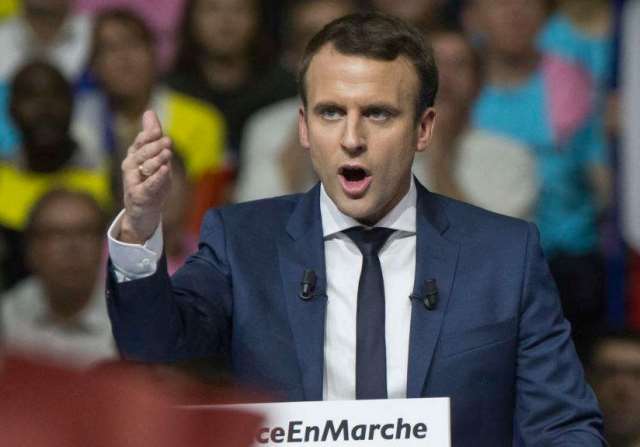
Macron reappoints Lecornu as PM as France political crisis deepens 

FRANCE President Emmanuel Macron has reappointed Sebastien Lecornu as  Prime Minister,  days after his resignation, a decision that sparked outrage among the president’s strongest political rivals, who vowed to vote down the new government.

The ICIR reported that Lecornu, and his cabinet resigned on Monday, October 6, after he unveiled his ministerial lineup, a dramatic escalation of the country’s political crisis that sent stocks and the euro tumbling.

Lecornu, Macron’s fifth prime minister in just two years, held the position for only 27 days, and his government lasted 14 hours, making it the shortest-lived in modern French history.

President Macron instructed Lecornu the next day to hold a two day final talks with members of different political parties to establish a plan for the country’s stability and direction which he agreed to.

The latest report by Reuters indicates that Macron, 47, will hope loyalist Lecornu can draw enough support from a deeply divided parliament to pass a 2026 budget while many of Macron’s rivals have demanded he either call fresh parliamentary elections or resign.

The immediate reaction to Lecornu’s appointment from the far right and hard left was harsh, indicating that his second term as prime minister may prove just as difficult as his first, which ended on Monday.

According to reports, Lecornu’s top priority will be to present a budget to parliament before the end of Monday and Macron’s team said Lecornu had been given “carte blanche,” signaling that the president is granting his prime minister significant freedom to negotiate both the cabinet and the budget.

“I accept – out of duty – the mission entrusted to me by the President of the Republic to do everything possible to provide France with a budget by the end of the year and to address the daily life issues of our fellow citizens.

“We must put an end to this political crisis that exasperates the French people and to this instability that is harmful to France’s image and its interests,” Lecornu wrote on X.

Lecornu stated that anyone joining his government must set aside personal ambitions to succeed Macron in 2027, a race that has fueled instability within France’s fragile minority governments and divided legislature, vowing that his cabinet would “reflect renewal and diversity.”

Earlier, Macron met with leaders of mainstream parties to rally support for his choice, but sparked outrage among leftist groups after learning that none of their members would be appointed prime minister.

France’s efforts to fix its finances which will require either spending cuts or tax increases that no party can agree on have only worsened the sense of discontent.

The ICIR reported that protesters took to the streets across France two weeks ago, blocking roads, setting fire to rubbish bins, and clashing with police in a campaign to “Block Everything” in anger against Macron and proposed budget cuts.

Reports indicate that if the National Assembly fails to reach an agreement on the budget within the deadline, emergency measures may be required to maintain government operations next year under a roll-over budget.

Central to the latest budget talks are the left’s demands to reverse Macron’s 2023 pension reforms, which raised the retirement age, and to increase taxes on the wealthy. 

These proposals have clashed with the conservatives, whose backing Macron also requires to approve the budget. 

During Friday’s meeting, Macron proposed postponing the retirement age increase to 64 by one year, until 2028, a move some said is inadequate.

Day of the Girl Child: Nigerian girls overcoming societal barriers to stand out

0

WHEN 17-year-old Nafisa Abdullah Aminu from Yobe State was named the World Best in English Language Skills at the 2025 TeenEagle Global Finals held in London, United Kingdom in August, her success showed the possibility and what still blocks millions of girls from the same chance.


Nafisa represented Nigeria through the Nigerian Tulip International College (NTIC), and outperformed over 20,000 participants from 69 countries, a historic feat that has thrust her into the global academic spotlight and brought honour to Nigeria.

The young girl outshone participants from native English-speaking countries, a remarkable achievement that reflects her intelligence and the possibility for millions of girls in the country to attain such feat if provided with relevant amenities.

Barriers against Nigerian girl child

Despite enacting the Nigerian Child’s Right Act in 2003, a federal law that domesticates international treaties and guarantees the rights and well-being of children under 18, the girl child in the country has continued to face challenges. 

The law, which provides for rights to health, education, protection, and sets the minimum age for marriage at 18, only takes effect in a Nigerian state after its  assembly enacts it. Some states have yet to adopt the Act, creating regional disparities in child protection, particularly in the northern parts of the country. 

On December 28 2023, the Bauchi State governor, Bala Mohammed signed the state’s 2024 budget into law and announced his assent to the child rights bill passed by  lawmakers making it the last of the 36 states in Nigeria to domesticate the child rights.

Despite celebrating the important milestone towards the protection of children and girls’ rights in the 36 states of the country, some states, in their domestication have redefined “child” in a way that applies only up to a lower age than 18, or used other criteria like puberty instead of 18 years. 

States like Kaduna, Katsina, Kebbi, Sokoto claim that the marriageable age for girls is 18 years, but with the exception that muslim children can marry from 14 years and above under Islamic law.This decision implies that the Child Rights Protection Bill defines a child as someone below eighteen. Muslim children below eighteen can still marry due to the supremacy accorded to Sharia law over the Child Rights Bill. 

Jigawa State signed the  bill into law on December 22, but did not adopt 18  as the age of maturity for marriage. Instead, it determined the childhood age of puberty because it is believed to be controversial to the predominant culture.

Zamfara State passed the Child Protection Bill into law on August 16, 2022, without mentioning the age of marriage. 

Meanwhile, Akwa Ibom defines a child as a person under 16 years old in its State Child Right Act. 

Despite these milestones, challenges persist. According to the United Nations Children’s Fund (UNICEF) in 2024, four out of every ten girls in Nigeria are married before the age of 18, totaling over 24 million child brides and ranking third globally.

The organisation explained that although recent data suggests a decline in national prevalence from 44 per cent to 30 per cent, progress has been slow and uneven, particularly affecting the poorest households, rural areas, and girls with little or no education.

This indicated that, stopping the girl-child marriage practice in Northern Nigeria will be difficult, especially in the Northwest, where the practice becomes naturally promulgated.

Similarly, a 2022 UNICEF report, shows that 7.6 million girls are out of school in Nigeria, with 3.9 million at the primary level and 3.7 million at the junior secondary level. 

In January 2025, the World Bank said its 2024 data shows that over two-third of girls drop out before junior secondary school.

The ICIR reported that an estimated 37 million women and girls in Nigeria experience period poverty, meaning they lack access to or cannot afford menstrual products, pain medication, and proper facilities. 

This crisis is exacerbated by the high cost of sanitary pads and limited awareness, forcing many to resort to unhygienic materials and causing them to miss school or work.  

Evidence-backed steps that help girls thrive

Experts have emphasised that investing in girls is an accelerator for national development because educated girls are more likely to delay marriage, enter the workforce, have fewer and healthier children, and build resilient communities. 

Countries that prioritise the girl child through initiatives in education, economic participation, and safety, have demonstrated evidence of stronger economic growth, reduced poverty rates, and more inclusive and equitable societies.

Sweden ranked first  in a United States news report, with women holding nearly half of parliamentary seats. While Denmark ranked second in the same report, Norway came third for having high female representation in parliament and secondary education rates for women. 

Finland ranked forth, Netherlands ranked fifth, Canada ranked sixth and Switzerland ranked seventh for high female parliamentary representation. Other countries are Iceland, Belgium, France, and New Zealand.

According to the report,  these countries have consistently rank at the top of the World Economic Forum’s Global Gender Gap Index because of strong social policies, high female educational attainment, generous parental leave, and labour-market supports that raise women economic participation.

Bangladesh major progress in girl enrolment and retention at primary and secondary levels stipend programmes, and targeted policies, which global studies link to improvements in women’s labour force entry and reductions in child marriage and child mortality.

Rwanda national policies and reforms have dramatically increased women political representation and economic inclusion with high share of women in parliament and targeted empowerment programmes, associated with inclusive governance and rapid post-conflict growth.

Namibia and Lithuania that are examples in top Global Gender Gap list have closed large portions of measured gender gaps in education, health, political empowerment, showing that diverse regions can achieve measurable gender parity gains. 

Nigeria did not make it to the top ten African countries that prioritises the economic empowerment of women through legislation, financial inclusion strategies, and access to education and skills development by Business Insider Africa.

Liberia, Botswana , Eswatini, Togo, Kenya, Zimbabwe, Burundi, Namibia, Madagascar, Ghana are the ten countries that made the list.

Young Nigerian girls making the world sit up

In 2018, a team of Nigerian teenage girls code named Team Save-A-Soul emerged as the overall winners of the Technovation World Pitch Summit in the United States, the world’s largest technology and entrepreneurship competition for girls.

The team, made up of secondary school students, Promise Nnalue, Jessica Osita, Nwabuaku Ossai, Adaeze Onuigbo, and Vivian Okoye, created a mobile application called ‘FD-Detector’ to combat the menace of counterfeit drugs in Nigeria.

Faith Odunsi At 15, who represented Nigeria at the global mathematics competition, beat China, United States of America, United Kingdom and others with an impresive 30 points margin to became the world best Mathematics student in 2021. The judges called her Calculator.

Faith made the Queen of Mathematics from JSS-3 to SS-2 when she was a part of the national Olympiad. She set a record in Cowbellpedia in 2019 by answering 19 questions in 60 seconds.

She was also in Kangourou Sans Frontieres, South African mathematics Olympiad, American mathematics competition and Pan-African mathematics Olympiad where she won medals and a silver medal in the Pan-African mathematics Olympiad in 2019. She was later made an ambassador of her school.

In 2022, Mmesoma Okonkwo received the British Council Outstanding Cambridge Learner’s Award “Cambridge International General Certificate of Secondary Education Top in the World 2022 after recording the highest score in English as a second language in the Cambridge IGCSE examination.

Cambridge International, a division of the University of Cambridge, explained that Mmesoma demonstrated exceptional command of written and spoken English, exhibiting the highest degree of comprehension, creativity, grammar, and interpretation among all 2023 candidates worldwide.

According to a representative of Cambridge Assessment International Education at the 2023 series, “Her excellence is a testament to her diligence, the quality of education she received, and the power of global academic competitiveness.”

The 17-year-old shared her dream of running her multinational enterprise that will focus on youth empowerment and education reform when receiving the award.

Oluwabukolami Adeyemi, an 18-year-old pupil also received the British Council Outstanding Cambridge Learner’s Award “Top in the World” in 2022 for her performance in Cambridge International AS Level Law.

Leyla Caybasi, a student of Nigerian Tulip International Colleges (NTIC), achieved the top spot for Nigeria at the Cambridge AS Level Mathematics competition in 2024.

The Managing Director of NTIC, Feyzullah Bilgin, said Leyla Caybasi “outstanding Cambridge Learner Award is a testament to her future success.”

Leyla wrote two papers in AS level mathematics one and three, scoring 112 out of 125.

Nigerian student Kenechukwu Oluwanifemi Uba was named the “Top in the World” candidate in the Cambridge IGCSE English as a Second Language examination held in November 2024.

Most recently is 17-year-old Nafisa Abdullah Aminu won the World Best in English Language Skills at the 2025 TeenEagle Global Finals held in London, United Kingdom in August 2025.

Nafisa represented Nigeria through the Nigerian Tulip International College (NTIC), and outperformed over 20,000 participants from 69 countries.

In 2025, Amara emerged as the Africa regional winner of The Earth Prize, a global environmental sustainability competition for teenagers for her innovative design of a playground made from recycled materials and her leadership in promoting climate resilience within Lagos communities.

17-year-old’ project turned a waste dump in Ikota, Lagos into a community playground built from recycled tyres, metal scraps, and reclaimed wood.

The International Day of the Girl Child is both a reminder and an opportunity to celebrate the trailblazers from Nigeria making global waves and to redouble efforts to remove the barriers standing between millions of girls and their future.

White house kicks as Trump misses Nobel Peace Prize 

THE White House has criticised the decision of the Nobel Peace Prize  committee for naming Venezuelan opposition leader Maria Corina Machado, the winner of the 2025 Nobel Peace Prize over United State President Donald Trump.

White House spokesperson Steven Cheung in a post on X said that President Trump will continue making peace deals, ending wars, and saving lives, and accusing the Nobel Committee of choosing politics over peace.

“President Trump will continue making peace deals, ending wars, and saving lives. He has the heart of a humanitarian, and there will never be anyone like him who can move mountains with the sheer force of his will. The Nobel Committee proved they place politics over peace,” Cheung said.

Machado, a 58-year-old industrial engineer, was announced winner on Friday for fighting dictatorship in the country when she was blocked in 2024 by Venezuela’s courts from running for president and thus challenging President Nicolas Maduro, who has been in power since 2013.

Maduro, whose 12 years in office have been marked by deep economic and social crisis, was sworn in for a third term in January this year, despite a six-month-long election dispute, international calls for him to stand aside and an increase in the U.S. reward offered for his capture.

“When authoritarians seize power, it is crucial to recognise courageous defenders of freedom who rise and resist,” the Norwegian Nobel Committee said in its citation.

Machado is the first Venezuelan to win the Nobel Peace Prize and the sixth from Latin America.

In the run-up to this year’s award, Trump repeatedly declared that he deserved to win but experts on the award said Trump was very unlikely to win as his policies were seen as dismantling the international world order the Nobel committee cherishes.

Trump, who claimed to have ended eight wars since beginning his second term in office on January 20, 2025, had earlier stated that it would be a “big insult” to the United States if he did not receive the Nobel Peace Prize.

The head of the Nobel Committee, Watne Frydnes, declined to specify what it would take for Trump or any other individual to win the prize in the future, or whether efforts to end the conflict in Gaza could result in an award in 2026.

The committee made its final decision before the announcement on Wednesday of a ceasefire and hostage exchange deal, which marked the first phase of Trump’s initiative to end the war in Gaza.

The Peace Prize is the fifth Nobel announced this week, following those for literature, chemistry, physics, and medicine. 

The Nobel Peace Prize, valued at 11 million Swedish crowns approximately $1.2 million, presented in Oslo on December 10, the anniversary of the death of Swedish industrialist Alfred Nobel, who established the awards in his 1895 will.

Sowore rallies Jonathan, Atiku in fresh push to free Nnamdi Kanu

0

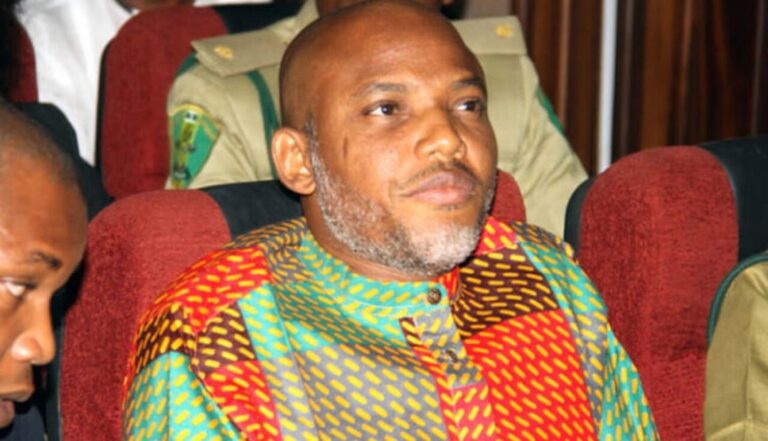
HUMAN rights activist and former presidential candidate of the African Action Congress (AAC), Omoyele Sowore, has met with former President Goodluck Jonathan in Abuja to discuss the continued detention of Mazi Nnamdi Kanu, leader of the proscribed Indigenous People of Biafra (IPOB).

In a statement posted on X (formerly Twitter) on Friday, October 10, Sowore said Jonathan “agreed that there is an urgent and compelling need to address this matter decisively and justly.”

“I thank him sincerely for recognising the importance of resolving Kanu’s case in the interest of peace, fairness, and national healing,” Sowore wrote.

He added that Jonathan had promised to meet with President Bola Tinubu to discuss the matter.

According to Sowore, the former president’s position aligns him with “a growing list of Nigerians who have called for justice in Nnamdi Kanu’s case,” which he said already includes former Vice President Atiku Abubakar, human rights lawyer Femi Falana, senior advocate, and former Kaduna Central senator Shehu Sani, among others.

Sowore maintained that Kanu remains in detention “because he took up the just cause of confronting the long-standing issue of marginalisation in Nigeria.”

“Like other ethnic and regional activists whose politically motivated cases have been withdrawn or dismissed, Nnamdi Kanu should also be released without further delay,” he stated.

The activist also called on political, traditional, and religious leaders across Nigeria, including Labour Party’s Peter Obi, Anambra State Governor Charles Soludo, Abia State Governor Alex Otti, and Ebonyi State Governor Francis Nwifuru, to join in demanding Kanu’s release.

Background

Nnamdi Kanu, leader of IPOB, was first arrested in 2015 on charges including treasonable felony and incitement. 

He fled the country after being granted bail in 2017, but was later re-arrested in Kenya and repatriated to Nigeria in June 2021 under controversial circumstances.

Since then, he has remained in the custody of the State Security Services (SSS), despite multiple court rulings ordering his release or the discontinuation of his trial.

In October 2022, the Court of Appeal discharged and acquitted Kanu of terrorism charges, ruling that his extraordinary rendition from Kenya violated international law. 

However, the federal government appealed the decision at the Supreme Court, which later ordered that his trial resume at the Federal High Court in 2023.

The ICIR reports that Kanu is facing a seven-count charge bordering on terrorism, treason, incitement, and defamation of Nigerian authorities. In a recent ruling, Justice Omotosho dismissed his no-case submission, holding that the prosecution had established a prima facie case warranting that he open his defence.

His trial has been marked by repeated adjournments, judicial recusals, and controversies surrounding his detention conditions and access to medical care.

The court is expected to decide on the next phase of proceedings after the submission of the Nigeria Medical Association’s (NMA) medical findings on October 16.

UN warns Madagascar to avoid unnecessary force against protesters

THE United Nations (UN) has urged authorities in Madagascar to refrain from using excessive force against protesters, following violent clashes with police during a Gen Z-led protest in the capital, amid two weeks of ongoing unrest that has turned deadly.

The United Nations’ human rights office made the call in a post on social media on Friday, October 10, having received troubling reports of continued violence against protesters by the gendarmerie. A gendarmerie is a military or paramilitary force with law enforcement duties among the civilian population.

“We’re receiving troubling reports of continued violence against protesters by the gendarmerie,” it said.

The ICIR reported that protesters in Madagascar have been protesting for the past few weeks on the streets despite President Andry Rajoelina dismissing his cabinet in an attempt to calm unrest that had already left 22 people dead and over 100 injured.

But a day earlier, police had fired tear gas and rubber bullets on thousands of demonstrators, part of the “Gen Z” movement against the government, ignited by anger against power and water shortages in the impoverished Indian Ocean island.

Media reports indicate that the latest UN appeal followed incidents in which at least six people were injured, and AFP reported seeing a man lying unconscious after being chased and brutally beaten by security forces, who deployed armoured vehicles to disperse the demonstrators.

Madagascar’s security forces announced on Friday that they had implemented “strict measures,” alleging that the protesters sought to “terrorise the population” and “encourage looting.”

According to the United Nations, on September 29, the demonstrations were met with a heavy police crackdown, leaving at least 22 people dead and over 100 injured, even though the government dismissed the figures as unverified and “based on rumours or misinformation”.

President Andry Rajoelina said on Wednesday that there were “12 confirmed deaths and all of these individuals were looters and vandals”.

Rajoelina has reinforced his stance by appointing a military officer as prime minister on October 6 and selecting the initial members of his new cabinet from the armed forces, public security, and police, declaring that the country “no longer needs disturbances.”

The ICIR reported that the police in Madagascar declared a dusk-to-dawn curfew after violent protests by Gen Z on Friday, September 26, sparked by recurring power outages and water shortages.

In Antananarivo, hundreds of mostly young protesters took to the streets, but the demonstration was forcefully broken up as police fired rubber bullets and tear gas to disperse the crowd.

Drawing inspiration from “Gen Z” protests in Indonesia and Nepal, the youth-driven movement is challenging entrenched misgovernance, driven by frustration over persistent water and power outages in the impoverished Indian Ocean nation.

The fight for whistleblowers and the law Nigeria urgently needs

0

By Crispin ODUOBUK

ON a bright morning in Abuja, Ntia Thompson walked into his office with a fragile hope. Weeks earlier, the courts had ruled in his favour, recognising the injustice he had endured. Yet the reality remained stark.

Once an Assistant Director in the Servicom Unit of the Directorate of Technical Cooperation in Africa (DTCA), an agency under the Ministry of Foreign Affairs, he had been reassigned to the library. As benign as that might sound, that reassignment was actually a professional exile for the patriotic act of exposing corruption.

Thompson’s ordeal is only one thread in a larger tapestry of Nigeria’s whistleblower persecution. These are rare citizens who dare to reveal wrongdoing but are too often repaid with punishment rather than protection.

Against this bleak backdrop stands the African Centre for Media and Information Literacy, AFRICMIL. Through its Corruption Anonymous project, AFRICMIL has waged a relentless battle to defend truth tellers for nearly a decade, while also pressing for a whistleblower protection law, which Nigeria urgently needs.

The limits of policy: insufficient for lasting change

Nigeria’s whistleblower policy, introduced in 2016, was launched with fanfare. It promised financial rewards and a channel to report corruption without fear. Yet its fatal flaw has always been its lack of legal teeth. A policy can be bent, ignored or subverted by those it seeks to restrain. A law, by contrast, binds institutions with the weight of the state.

In the absence of such legislation, the policy has too often been a trap. It lures honest Nigerians into exposing fraud, only to leave them vulnerable to reprisals ranging from harassment to dismissal to even death threats.

Profiles in courage

While anonymity is typically encouraged to protect whistleblowers, some of those who have chosen to go public with their experiences deserve to be acknowledged and celebrated.

For example, consider the case of Aaron Kaase, a principal administrative officer at the Police Service Commission when he blew the whistle on the misappropriation of over N275 million meant for staff training. Instead of action against those implicated, Kaase was suspended, charged to court and eventually dismissed. Though the National Industrial Court later ruled in his favour and ordered his reinstatement, the scars remain. His career stalled, his family life was deeply unsettled, and the victory felt hollow.

Murtala Aliyu Ibrahim, an internal auditor at the Federal Mortgage Bank of Nigeria, discovered fabricated financial reports and contract fraud. His reward for reporting these wrongs was a punitive transfer to a distant posting, followed swiftly by dismissal. For years he endured persecution before eventually receiving an integrity award, a bittersweet recognition that could not erase the personal and professional damage he had suffered.

Ntia U. Thompson, the Assistant Director who exposed the diversion of 229,000 dollars in the Ministry of Foreign Affairs, was charged with insubordination, forced into retirement and then reinstated. His reinstatement, however, came with demotion and professional marginalisation. Today he continues to live as a cautionary tale of how Nigeria treats those who dare to expose corruption.

Joseph Babatunde Akeju, a respected Chief Lecturer at Yaba College of Technology, exposed a scandal involving N1.6 billion. He was dismissed on the eve of his retirement, stripped of the dignity of closing a long career with honour. His case demonstrates the cruelty of a system that would rather crush integrity than confront corruption.

In each of these cases and several others not mentioned here, the pattern is unmistakable. Whistleblowers expose wrongdoing, institutions retaliate harshly, and AFRICMIL is left to pick up the pieces through legal action, petitions and public advocacy. Victories, when they come, are often partial and compromised, leaving the whistleblower bruised and marked as a troublemaker.

The law Nigeria needs

Recognising the limits of firefighting one whistleblowing case at a time, AFRICMIL has broadened its focus to the judiciary. Its National Interactive Forum for Federal High Court judges held in September 2025, alongside partners such as TAP iNitiative and the National Human Rights Commission, highlighted the role of the bench in filling the vacuum until a comprehensive law is enacted. Judges were urged to confer protection on whistleblowers, uphold their anonymity, and deter retaliation against those who speak the truth in the public interest.

To be clear, while these are vital interim measures, they are no substitute for a law. Other African countries, including Ghana, South Africa and most recently Senegal, already have dedicated whistleblower protection statutes. Nigeria’s continued reliance on a limited policy framework sends the wrong signal to both citizens and investors.

A robust law would change the calculus. It would establish clear procedures, protect those who make disclosures in the public interest, and guarantee remedies and damages for those targeted. Such a law would not only shield individuals but also strengthen Nigeria’s credibility in the global fight against corruption.

It is worth noting here that AFRICMIL’s leadership in this battle resonates beyond Nigeria’s borders. In partnership with the Platform to Protect Whistleblowers in Africa (PPLAAF) and other allies, it has been part of a regional push to secure whistleblower protection across West Africa, where thirteen countries still lack such laws. This was exemplified by the First Sub-regional Conference on Whistleblowing and Whistleblower Protection in West Africa, which AFRICMIL and partners held in Abuja in November 2024.

The highpoint of the conference was the inauguration of the Whistleblowing Advocacy Coalition of West Africa (WACOWA), a coalition of civil society organisations and other stakeholders dedicated to promoting whistleblowing and whistleblower protection in ECOWAS states. By building coalitions and sharing lessons, AFRICMIL has helped position whistleblowing as a legitimate pillar of governance reform across the region.

Protecting the truth tellers

The future of Nigeria’s war against corruption depends on its willingness to protect those who risk much to tell the truth in the public interest. AFRICMIL’s work reveals the human cost of silence and the power of advocacy in securing justice. The National Assembly has a duty to pass a robust whistleblower protection law, supported by vigilant judges and an informed public.

Such reform is not charity but a demand of justice, a necessary pillar of good governance. Until then, the stories of Kaase, Ibrahim, Thompson, Akeju and of course Joseph Ameh and Yisa Usman whose victimization are still a subject of litigation in the courts, remind us that for every fractured victory, many truths remain locked away, and corruption thrives in the shadows.

The call to action is clear: Nigeria cannot build a transparent and prosperous future while those who expose corruption are left to walk alone. Protecting whistleblowers is not a luxury, it is a necessity. If Nigeria truly wishes to extinguish corruption, it must first protect its truth tellers. Anything less is complicity.

Crispin Oduobuk is a Senior Programme Officer for Policy and Advocacy at the African Centre for Media and Information Literacy, AFRICMIL.

Makinde questions Umahi over secrecy in Lagos-Calabar coastal highway cost

0

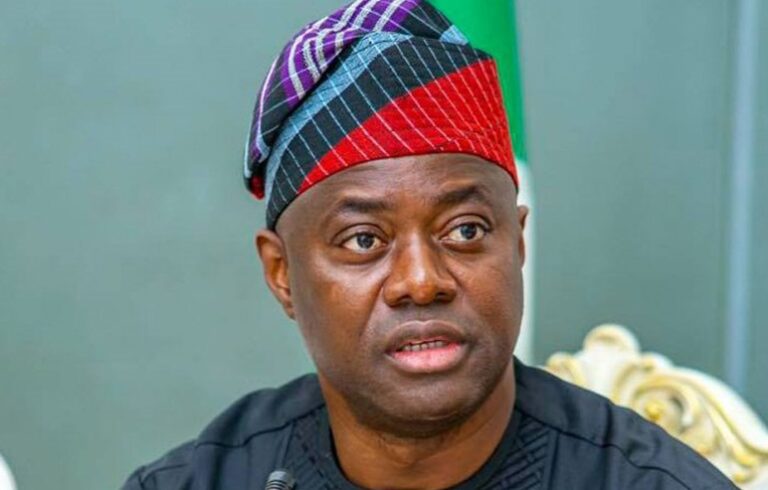
THE Oyo State Governor, Seyi Makinde, has criticised the Federal Government over its failure to provide clear details on the cost of the Lagos-Calabar Coastal Highway, a multi-trillion-naira project approved by President Bola Tinubu.

Speaking at a stakeholders’ engagement on the 2026 budget in Ibadan, on Friday, October 10, Makinde faulted the Minister of Works, David Umahi, for evading questions about the project’s kilometre-by-kilometre cost when asked during a live television interview with Arise TV, Rufai Oseni, earlier in the week.

Makinde said the refusal to disclose details of the project cost raised public concern over transparency and accountability.

“They asked the minister how much the coastal road costs, and he began to dance around the question.

“When we constructed the Oyo-Iseyin road, it was about ten billion naira for thirty-five kilometres — roughly two hundred and thirty-eight million per kilometre. The Iseyin-Ogbomoso road cost forty-three billion naira for seventy-six kilometres, about five hundred million per kilometre. It is simple arithmetic,” Makinde said.

Umahi had clashed with an Arise TV presenter, Oseni, on Tuesday, October 7, after refusing to provide a detailed cost analysis of the project. Umahi maintained that comparing costs per kilometre was misleading since terrain, materials, and engineering designs differ along sections of the route.

“This project has not been fully designed, and the soil report is not yet complete.Each kilometre varies in cost because of the terrain and structures involved, ” Umahi said during the interview.

He said construction was ongoing across five states — Lagos, Ogun, Ondo, Akwa Ibom, and Cross River — and insisted that the government was following proper procedures to ensure value for money.

Coastal Highway remains controversial

The 700-kilometre Lagos-Calabar Coastal Highway has generated intense public debate since its commencement. The ICIR had reported that the project began amid criticisms over the demolition of the Landmark Beach Resort and other businesses worth an estimated two hundred million dollars along the Lagos coastline.

Public pressure forced the government to suspend work along parts of the Lagos corridor after concerns about environmental impact, property rights, and compensation for affected communities. The Works Ministry later announced a redesign of the route to protect telecommunications infrastructure and historical settlements along the Okun-Ajah axis.

The government said the project approval passed through the Bureau of Public Procurement and the Federal Executive Council, but critics, including former vice president Atiku Abubakar and Labour Party presidential candidate Peter Obi, questioned the process and priority of the massive infrastructure project at a time of economic hardship.

Federal Government secures $747 million loan

Despite the controversies surrounding its procurement and bidding processes, the Federal Government on July 2025 announced that it had secured a seven hundred and forty-seven million-dollar syndicated loan to finance the first phase of the highway from Victoria Island to Eleko Village in Lagos.

According to the Ministry of Finance, Deutsche Bank led the financing, with participation from the African Export-Import Bank, ECOWAS Bank for Investment and Development, and other international lenders. The loan, structured under an Engineering, Procurement, Construction, and Financing contract, is being implemented by Hitech Construction Company Limited.

Minister of Finance Wale Edun described the funding as a sign of investor confidence in Nigeria’s economic reforms, while Umahi said it underscored the government’s commitment to completing the coastal highway as a strategic national asset.

The Lagos-Calabar Coastal Highway, estimated at N15 trillion, is expected to link the South-West with the Niger Delta through nine states. The project, being constructed in concrete, is part of the administration’s Renewed Hope Infrastructure Agenda.

However, The ICIR had reported that the project’s procurement process violated open competitive bidding requirements and lacked full disclosure on bidders at the Infrastructure Concession Regulatory Commission portal.

Several stakeholders, including business owners, environmental experts, and economists, have urged the government to balance its infrastructure ambitions with transparency, accountability, and due process to prevent waste and ensure the project’s long-term sustainability.