Home Blog Page 176

Marketers urge Dangote to allow healthy competition in oil sector

0

OIL marketers in Nigeria have called for healthier competition with Dangote Refinery.

They said the refinery’s newly launched CNG-powered trucks would not be enough for an effective distribution of petroleum products across Nigeria.

The marketers also noted that their depots across the country were recording losses since Dangote began to show market dominance in the petroleum distribution value chain.

The National President of the Petroleum Products Retail Outlets Owners Association of Nigeria (PETROAN), Billy Gillis-Harry, stated these while speaking on Channels Television’s The Morning Brief on Tuesday, September 23.

He said investments of oil marketers in the downstream sector should not be discarded.

“All we are asking for is inclusion because there is no way Dangote’s trucks will be enough to supply products to the nooks and crannies of the country. We are also investing in CNG trucks, so there is not so much innovation in saying Dangote is the only one with such trucks.

“All we want is to ensure seamless and effective supplies to even areas where Dangote’s trucks cannot reach. “We, the retail outlet owners, are the last men in the industry, and should be able to get products from almost all the depots in the country. We want Dangote Refinery to be successful”, he said.

His response was at the instance of billionaire and businessman, Femi Otedola, who asked members of the Depot and Petroleum Products Marketers Association of Nigeria and the Dangote Refinery (DAPPMAN) to sell their properties, restructure, and reinvest in government-owned refineries in the country to stay relevant in the sector.

Otedola argued that preserving a model built on fuel imports, subsidy exploitation, and the outdated infrastructure era was fast disappearing.

“The setting up of depots was mainly to collect PFIs. No depots, no PFIs from NNPC, which were the sole suppliers of gasoline at the time, and which thus led to the breeding of complacent importers whose sole agenda was on arbitrage and subsidy margins,” the business mogul said.

“The global picture is instructive. Depots in Amsterdam or Houston were designed to serve export markets, especially Africa. With Nigeria now refining locally, such infrastructure is increasingly unnecessary,” he stressed further.

He suggested to DAPPMAN to quickly adapt to the new era, citing the example of cement deregulation, which affected bulk carriers that used to dock at various ports across the country.

Responding, Gilly-Harris said Otedola’s advice to DAPPMAN to scrap their depots was insensitive to the plights of the businessmen.

“Otedola’s view on marketers innovating and restructuring is not a thoughtful statement. Is he saying all the investments that have happened in that sector should just go down the drain?

“Yes, new things come up in terms of innovation, and old things will go, but there are structures that will still serve even in this current reality. Dangote’s investment in the sector is very timely because it gives all of us peace of mind, he said, adding that, “Mr Otedola’s thoughts are up for debate because he himself was a DAPPMAN member, and he knows what it took for him to invest in that area.

“Today, he has diversified into other areas, but others have not been able to move.”

He noted that Otedola’s divestment to other areas was a fast business decision, while he expressed concern that his recommendation to scrap investment in the depot business was not a good advice.

The ICIR reports that marketers have facilities across Nigeria- Port Harcourt, Calabar, Ogara, Lagos, and even some of them on the mainland to help ease product distribution.
 

Senate unseals Natasha’s office after six-month suspension

0
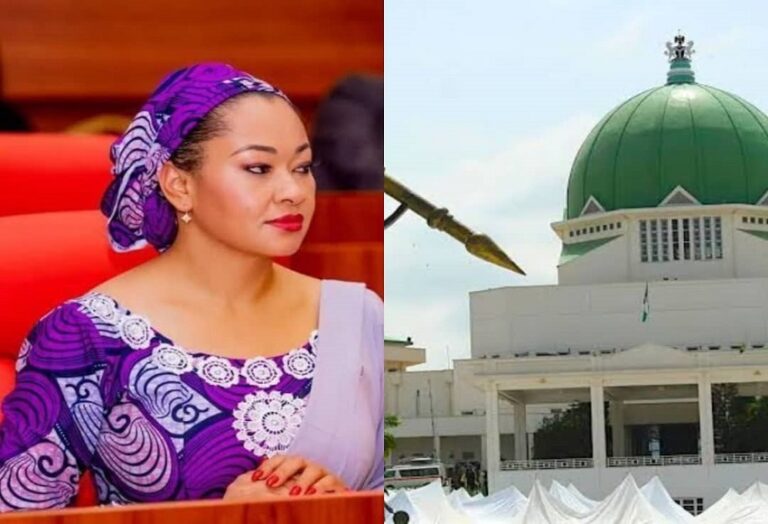
THE National Assembly has reopened the office of the senator representing Kogi Central, Natasha Akpoti Uduaghan, signaling her return to the Red Chamber when plenary resumes on October 7.

Her office at the Senate Wing was unlocked on Tuesday, September 23, by the Deputy Director of the Sergeant at Arms, Alabi Adedeji, after being sealed for six months.

Witnesses confirmed that security operatives and officials of the Sergeant at Arms supervised the unsealing.

Akpoti-Uduaghan was suspended on March 6, after the Senate Committee on Ethics, Privileges and Public Petitions accused her of breaching Senate rules during a protest over the reassignment of her seat by Senate President Godswill Akpabio.

She was barred from the National Assembly and stripped of salaries, aides’ emoluments, and other entitlements.

Her suspension drew legal and public scrutiny. In July, Binta Nyako of the Federal High Court (FHC) in Abuja ruled that the six-month sanction was unconstitutional and ordered her recall, noting that the measure denied constituents of Kogi Central representation. Despite the ruling, the Senate refused to comply and insisted Natasha serve her full suspension.

The Clerk to the National Assembly, Kamorudeen Ogunlana, later maintained that his office lacked authority to override the Senate decisions. Acting Clerk Yahaya Danzaria also told the lawmaker in writing that her suspension would stand until the Court of Appeal decides on her case.

On September 18, the Nigerian Bar Association (NBA) faulted the Senate’s decision to block Akpoti-Uduaghan from resuming after the expiration of her suspension. The NBA President Afam Osigwe, a senior advocate, stressed that a pending appeal could not prevent her from returning to her seat, adding that denying her entry would deprive her constituents of representation.

Prominent lawyer Femi Falana also accused the Senate leadership of disobeying court orders and undermining the rule of law.

The ICIR reported that the Senate leadership ignored the female lawmaker’s attempt to resume on September 4, the date she considered the end of her suspension. She was turned back by security personnel.

With Tuesday’s unsealing of her office, Akpoti-Uduaghan’s return appears more likely when lawmakers reconvene. Her counsel, Michael Jonathan Numa, had earlier threatened contempt proceedings against the Clerk of the National Assembly if she was not allowed to resume.

US reaffirms visa ban for corrupt Nigerians

0

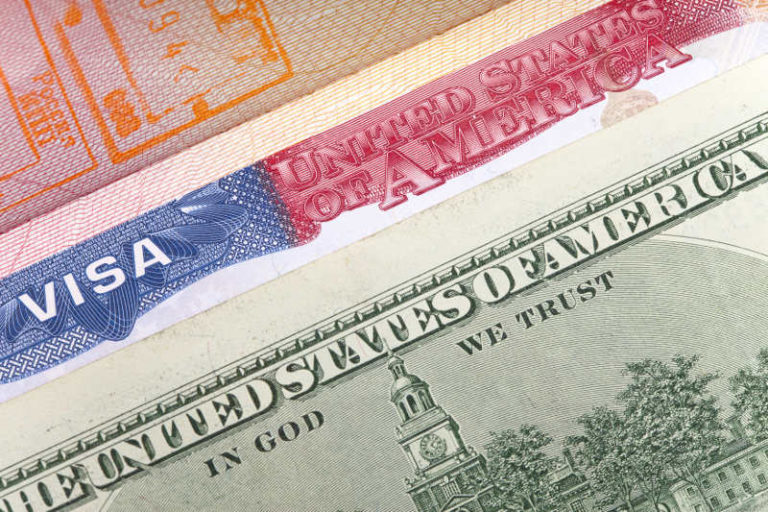
THE United States Mission in Nigeria has warned that anyone found guilty of corruption would be denied entry into the US, regardless of their wealth or social standing.

The Mission announced this on Monday through its official X (formerly Twitter) handle.

“Fighting corruption knows no borders or limits on accountability. Even when high-profile individuals engage in corruption, they can be barred from receiving US visas,” it said.

The statement reinforced the US commitment to global anti-corruption efforts, coming amid President Donald Trump’s tougher immigration policies.

The ICIR reports that the US has imposed multiple visa bans and restrictions on Nigerians in recent years.

In 2020, the United States imposed visa restrictions on Nigeria that applied solely for immigrant visas, leaving official, business, tourism, and student visas unaffected.

Similarly, in May 2023, the US announced visa bans on persons who disrupted the general elections in Nigeria.

The ICIR reported in January that Trump administration started a visa policy and illegal immigrants’ clampdown in the US.

Since he took over power on January 20, Trump has made good his vow to carry out mass deportations of immigrants among other sweeping reforms by his government.

On January 28, the Enforcement and Removal Operations division of the United States Immigration and Customs Enforcement reported that about 3,690 Nigerians in the US could be deported.

The Trump administration imposed a new fee of $100, 000 on H-1B visas for foreigners on September 19.

The White House clarified that the new $100,000 fee would not apply to existing visa holders re-entering the country.

It added that Trump’s action was intended to address risks to US national security.

“President Trump is imposing higher costs on companies seeking to use the H-1B programme in order to address the abuse of the programme, stop the undercutting of wages, and protect our national security,” it said.

Nigeria’s GDP growth records 4.23% in Q2, supported by oil sector

NIGERIA’s Gross Domestic Product (GDP) grew at its fastest pace in four years by 4.23 per cent in the second quarter of 2025, driven by a rise in crude oil production, according to a report by the National Bureau of Statistics (NBS).

The NBS stated on Monday, September 22, that the growth was at the highest level since 2020, as the average daily production of crude oil rose to 1.68 million barrels per day.

This means that Nigeria was able to meet its quota set by the Organisation of Petroleum Exporting Countries (OPEC) for the quarter.

The GDP expanded annually by 4.2 per cent in the three months through June, compared with 3.1 per cent in the previous quarter, the national statistics office said.

The report stated that the economy grew by the figure following the rebasing of the Gross Domestic Product using 2019 as the base year, as previous quarterly GDP estimates were benchmarked to the rebased annual estimates to align the old series with the new rebased estimates.

It said the procedure provided a new quarterly GDP series, which is compared to the 2025 second quarter estimates.

“Gross Domestic Product (GDP) grew by 4.23% (year-on-year) in real terms in the second quarter of 2025.

“During the quarter under review, agriculture grew by 2.82 per cent, an improvement from the 2.60 per cent recorded in the corresponding quarter of 2024. The growth of the industry sector stood at 7.45 per cent from 3.72 per cent recorded in the second quarter of 2024, while the services sector recorded a growth of 3.94 per cent from 3.83 per cent in the same quarter of 2024.

“In terms of share of the GDP, the Industry sector contributed more to the aggregate GDP in the second quarter of 2025 at 17.31 per cent compared to the corresponding quarter of 2024 at 16.79 per cent,” it added.

It disclosed further that aggregate GDP at basic price stood at N100.730 trillion in nominal terms, stressing that the performance was higher when compared to the second quarter of 2024, which recorded an aggregate GDP of N84.84 trillion, indicating a year-on-year nominal growth of 19.23 per cent.

“The nation in the second quarter of 2025 recorded an average daily oil production of 1.68 million barrels per day (mbpd), higher than the daily average production of 1.41 mbpd recorded in the same quarter of 2024 by 0.27 mbpd and higher than the first quarter of 2025 production volume of 1.62 mbpd by 0.06 mbpd,” the report noted.

It said the non-oil sector grew by 3.64 per cent in real terms during the reference quarter (Q2 2025).

Economic analysts say the anti-vandalism efforts of the Federal Government are paying off, as well as the enforcement of regulations in the oil sector, which has led to oil majors divesting from onshore and shallow-water fields.

“There are lots of divestments in the oil and gas sector currently ongoing as a result of reforms in the sector. Once sustained, the sector will keep impacting gross domestic product growth and the overall economy,” a development economist, Kingsley Obiakor, told The ICIR.

Economic activity may get a further boost from the sector in the coming quarters as daily oil output is expected to rise to more than two million barrels per day this year and be sustained through 2027, Bayo Ojulari, chief executive officer of Nigerian National Petroleum Company Limited(NNPCL), said in May.

He expressed optimism that daily production would reach three million barrels per day by 2030. The non-oil sector expanded by 3.6 per cent, compared with 3.2 per cent in the first quarter, led by the agriculture, information and communication, and real estate industries.

Dembele wins 2025 Ballon d’Or

0

OUSMANE Dembele of France and Paris Saint-Germain (PSG) has won the 2025 Ballon d’Or in the men’s category.

He finished ahead of Lamine Yamal and Raphinha of Barcelona, Mohammed Salah of Liverpool, and Vitinha of PSG.

Dembele’s 2024/2025 campaign was the most successful of his career. He was instrumental in PSG’s first-ever UEFA Champions League victory and also helped secure the Ligue 1 title, the French Cup, the UEFA Super Cup and the Trophée des Champions.

His contributions included 35 goals and 15 assists across all competitions.

Lamine Yamal was rewarded for his breakout season in the main category and retained the Kopa Trophy for the world’s best young male player.

Vitinha, also of PSG, competed for the top position after his influential role in midfield for both club and Portugal.

In the women’s category, Aitana Bonmati of Barcelona claimed the Ballon d’Or for the third consecutive year. She finished ahead of Mariona Caldentey of Arsenal and Spain, who came second, while Alessia Russo of Arsenal was placed third.

Bonmati’s season included decisive performances for both club and country, despite health setbacks before Euro 2025.

The Yashin Trophies for best goalkeepers went to Gianluigi Donnarumma in the men’s category and Hannah Hampton of Chelsea in the women’s category.

PSG was named the best men’s club of the season, while Arsenal claimed the women’s club award.

The ceremony took place at the Théâtre du Châtelet in Paris and honoured only performances from the 2024 and 2025 seasons.

The Ballon d’Or, which was first presented in 1956 by French magazine France Football, remains football’s most prestigious individual award.

It has historically been dominated by players like Lionel Messi and Cristiano Ronaldo, who shared the honour for over a decade.

Yet many legends, including Neymar, Thierry Henry, Robert Lewandowski, Andres Iniesta, and David Beckham, never won the prize despite outstanding careers.

Women protest in Abuja, demand passage of Special Seats Bill

0

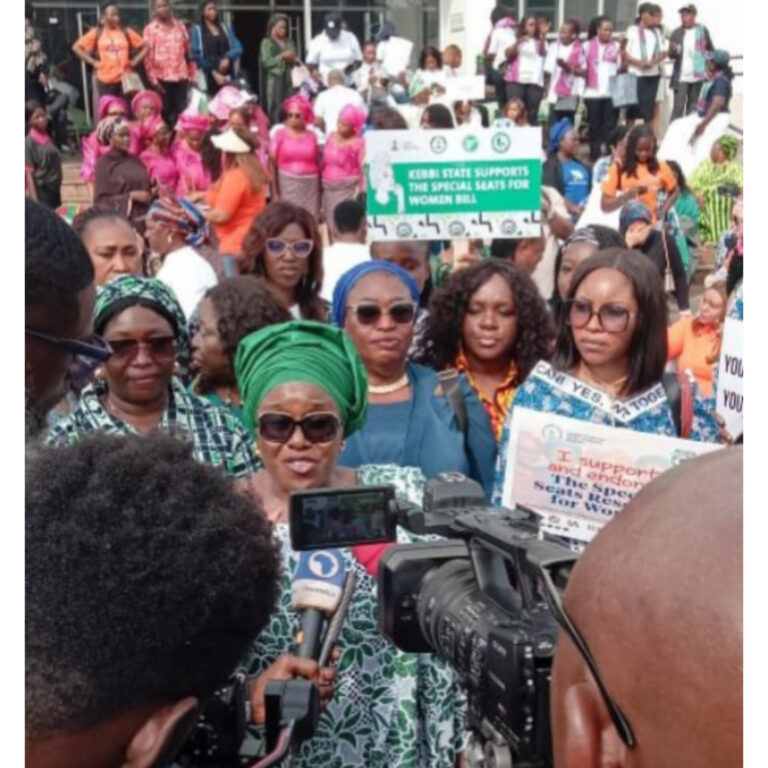
WOMEN turned out in large numbers in Abuja on Monday to protest and demand the passage of a bill that would create more seats for women in the Senate and House of Representatives.

One of the protest organisers, Dorothy Njemanze, said women’s groups across the country converged on Abuja with over 1,000 women making their demand in a peaceful protest.

“We want the legislature to work for women,” Njemanze said.

Nyiyam Ikyereve, who travelled from Benue State to join the protest said a National Assembly with more women might better focus on women’s health and economic inclusion.

While several African countries, from Senegal to Rwanda, have boosted women’s representation in parliament through quota systems, Nigeria without such a system has only four women in the 109-member Senate and 16 in the 360-member House of Representatives.

The “Special Seats Bill” aims to amend the Constitution to reserve 10 per cent of National Assembly seats for women and five per cent for persons with disabilities (PWDs) across Nigeria’s 36 states and the Federal Capital Territory.

However, in its legislative analysis, Policy and Legal Advocacy Centre (PLAC) cautioned that constitutional amendments are “no walk in the park,” requiring approval from two-thirds of the National Assembly as well as 24 state legislatures.

Protesters on Monday argued that reserved seats would help counter financial barriers, entrenched gender norms, and the dominance of male power brokers that have long excluded women from politics in Africa’s most populous nation.

The protest ended with the submission of signatures, including that of the Minister of Women’s Affairs, Hajiya Imaan Sulaiman-Ibrahim, in support of the legislation to a House committee reviewing constitutional reform.

The ICIR reported in July, that the House of Assembly Speaker, Tajudeen Abbas, said the proposal was part of the ongoing constitutional review process.

If passed, the proposal would add 82 seats to the National Assembly – 55 in the House of Representatives and 28 in the Senate.

The Senate currently has 109 constitutionally mandated seats, with three representatives from each of the 36 states and one from the Federal Capital Territory (FCT).

The House of Representatives has 360 seats allocated based on each state’s population size. 

In the current 10th National Assembly, which has 469 constitutionally mandated members, only 20 are women, four in the Senate and 16 in the House of Representatives making up just 4.2 per cent.

This reflects a drop from the 9th National Assembly, which had 21 women, eight in the Senate and 13 in the House. The figure is lower than in the 8th Assembly, which recorded eight women in the Senate and 15 in the House.

This decline persists despite women making up nearly half of Nigeria’s registered voters –  about 44.4 million out of the 96.2 million on the Independent National Electoral Commission (INEC) register.


Dembele, Salah, Raphinha in line as 2025 Ballon d’Or winner emerges today

0

THE Théâtre du Châtelet in Paris will host 2025 Ballon d’Or ceremony tonight.

The ceremony is where the world’s finest footballers in the men’s and women’s categories will be crowned for the 2024/25 season.

Unlike in previous editions, this year’s award will not factor in performances from the new campaign, meaning the accolade is based strictly on last season’s achievements.

Men’s category

Many football fans believe that any of Paris Saint-Germain forward Ousmane Dembele, Liverpool’s Mohamed Salah, and Raphinha of Barcelona will clinch the men’s award.

Dembele heads into the night as one of the frontrunners after inspiring the French champions to their maiden UEFA Champions League triumph and another Ligue 1 title.

Salah remains a strong contender following a record-breaking season that delivered a 20th English league crown for the Merseyside club. Salah scored 29 goals and created 18 assists, equaling the all-time Premier League record for goal involvements in a single campaign.

Raphinha has also emerged as one of the season’s standout performers. The Brazilian recorded 34 goals and 25 assists, powering the Catalans to a domestic double, although their Champions League heartbreak may weigh against him.

Another Barcelona prodigy, Lamine Yamal, also on the scorecard, enjoyed a breakout year, while PSG midfielder Vitinha has moved into the top bracket of candidates after key contributions to both his club’s treble and Portugal’s Nations League success.

Women’s category

England’s Euro 2025 triumph and Arsenal’s Women’s Champions League victory have heavily influenced the women’s shortlist.

Alessia Russo, who scored in both finals, is regarded as one of the favourites. The striker also claimed the Women’s Super League Golden Boot and was named the Football Writers’ Association Footballer of the Year.

Arsenal teammate Leah Williamson is also in contention, alongside Mariona Caldentey, whose switch from Barcelona to the Gunners proved decisive in Europe.

Caldentey was named WSL Player of the Year and scored in Spain’s Euro 2025 final, though her side fell short in the penalty shootout.

Two-time winner Alexia Putellas and reigning Ballon d’Or holder Aitana Bonmatí are in the running again.

Putellas registered 16 goals and 11 assists in Barcelona’s domestic treble, while Bonmatí played a vital role in Spain’s journey to the Euro final despite health setbacks before the tournament.

Chelsea’s Lucy Bronze is another high-profile nominee. The veteran defender was crucial in her club’s domestic treble and battled through injury to help England win the Euros, though her position as a defender may reduce her chances compared to attacking players.

Chelsea goalkeeper Hannah Hampton is also tipped for the Women’s Yashin Award after her heroics in the Euro final shootout, which could limit her prospects for the Ballon d’Or.

The Ballon d’Or, first presented in 1956 by French magazine France Football, remains football’s most prestigious individual honour. It has historically been dominated by legends such as Lionel Messi and Cristiano Ronaldo, who shared the award for over a decade.

However, some football legends never claimed the Ballon d’Or despite glittering careers. These include Neymar, Thierry Henry, Robert Lewandowski, Andrés Iniesta, and David Beckham. 

Lewandowski, for instance, could have won the award in 2020 had the award not been cancelled due to the COVID-19 pandemic.

Obi faults Remi Tinubu’s birthday donation appeal

0

THE Labour Party (LP) presidential candidate in the 2023 election, Peter Obi, has faulted First Lady Oluremi Tinubu’s birthday appeal toward completing the long-abandoned National Library in Abuja.

In a post on his X handle, Obi congratulated the First Lady on her birthday and praised her call for well-wishers to channel funds toward completing the National Library in Abuja, instead of spending on cakes or newspaper adverts.

Obi, however, remarked that while the appeal was well-meaning, it underscored a glaring failure in Nigeria’s governance.

“What kind of country must beg for charity to build the very temple of knowledge? What kind of leaders waste trillions on luxury and vanity, while the National Library, our intellectual furnace, remains abandoned in the capital?” he queried.

Obi explained that although he often urged well-wishers to redirect advert funds toward school infrastructure, such efforts were only meant to supplement, not substitute, the government’s duty.

“Such gestures were never meant to replace the government’s duty but to complement it,” he said, adding that “The state still bore the responsibility of providing those essentials.”

The former governor of Anambra State pointed out the irony of a country rich in resources, regularly spending on private jets, lavish official residences, and foreign trips yet relying on private donations to complete a vital national institution.

“Serious nations treat libraries as sacred. But here we reduce them to afterthoughts, begging bowls, or birthday tokens,” he added.

He also emphasised that Nigeria’s future rests not in luxury or political showmanship, but in education and the empowerment of its citizens.

“If Nigeria will rise, it will not be on the wings of jets or the splendour of mansions, but on the strength of minds formed in classrooms and nourished in libraries. Until then, the lament remains true – we are finished,” he said.

The ICIR reports that the First Lady, who marked her birthday on September 21, publicly urged friends and supporters to channel their birthday gifts toward the National Library project.

Despite receiving several budgetary allocations, the National Library remains incomplete close to two decades after construction began in 2006, under the administration of President Olusegun Obasanjo, with a planned completion period of 22 months. The project was suspended in 2012 due to funding issues.

However, President Tinubu’s administration announced the resumption of the construction, with a focus on completing the first phase of the project, which includes basements, ground, and two upper floors, plus exterior fencing.  

The Minister of Education, Tunji Alausa made the announcement in March that the construction of the first phase of the National Library would commence by June this year.

Nigeria’s health financing: Lessons from Canada’s $32.5bn tobacco settlement

0

By Robert Egbe

NIGERIA’s decision to earmark SIN taxes – levies on alcohol, tobacco, and sugary drinks – for health financing, signals a firm commitment to prioritising citizens’ health. It also aligns with long-standing calls from Nigerian public health advocates and the World Health Organisation (WHO).

The move could not be timelier. Earlier this year, a major investigation revealed that Nigerians spend about N1.92 trillion (roughly $1.26 billion) annually seeking treatment for non-communicable diseases (NCDs). Almost 30 percent of deaths in the country are linked to NCDs, with tobacco, alcohol, and sugary drinks among the biggest culprits.

Tobacco use alone fuels a raft of debilitating diseases: cancers of the lung, mouth, bladder, and colon; heart disease and stroke; chronic respiratory illness like COPD; type 2 diabetes; ectopic pregnancy; and premature, low birthweight babies. Globally, tobacco kills more than seven million people annually – 300,000 in Africa alone. Eight in ten smokers live in low- and middle-income countries like Nigeria, feeding Big Tobacco’s multi-billion-dollar profits. In 2015, the six largest cigarette firms raked in $62 billion in profits – more than the annual budgets of several small nations. 

These resources bankroll relentless marketing campaigns, youth-targeted advertising, lobbying against regulations, and deceptive promotion of so-called “reduced risk” products such as vapes, heated tobacco, snus, and nicotine pouches. Far from solving the problem, these new products hook a new generation on nicotine while undermining tobacco control efforts.

Yet Nigeria’s funding for tobacco control remains pitifully low. In 2024, following persistent advocacy, the government allocated N13 million to the Tobacco Control Fund (TCF) – but this falls far short of the about N300 million minimum required to operationalise it.

If Nigeria is serious about reducing tobacco’s deadly toll, it must explore innovative financing tools – including holding the industry itself to account.

In 2024, the Canadian government reached a landmark C$32.5 billion settlement with three tobacco giants – JTI-Macdonald Corp., Rothmans, Benson & Hedges, and Imperial Tobacco Canada. The payout compensates provinces, territories, and former smokers for decades of healthcare, social, and economic costs caused by tobacco. The deal, finalised in August 2025, capped a 27-year legal battle that proved the industry can be held liable for its deception and harm.

The Canadian settlement echoes the United States’ historic 1998 Master Settlement Agreement, where four leading tobacco firms agreed to pay $206 billion over 25 years (with payments continuing indefinitely).

For Nigeria, these precedents offer a roadmap. As WHO’s tobacco control chief Adriana Blanco Marquizo put it, the Canadian deal has “far-reaching” global implications—demonstrating that Big Tobacco can be forced to pay for its destruction.

Nigeria already has some experience. In 2023, the Federal Competition and Consumer Protection Commission (FCCPC) fined British American Tobacco parties $110 million for breaching public health regulations – the largest fine ever issued by the regulator. This shows legal action is possible on home soil.

But to scale up, Nigeria needs legal groundwork, such as building airtight cases around healthcare costs, drawing on Canada and U.S. litigation. Civil society mobilisation is also key. Groups like Corporate Accountability and Public Participation Africa (CAPPA) and the Nigerian Tobacco Control Alliance (NTCA) are necessary to sustain advocacy pressure. Robust data is also critical to document the true cost of tobacco – hospitalisations, lost productivity, premature deaths. Furthermore, international collaboration with global networks that have taken on Big Tobacco before will smoothen the process and help to counter Big Tobacco’s legal tactics.

Nigeria should also emulate Canada’s Tobacco Claims process, which allows individuals who developed illnesses because of smoking, or from second-hand smoke (SHS), or family members of those who died from tobacco-related diseases to seek compensation directly, with no upfront legal fees. This is separate from the recent settlement funds. Such an approach would bring justice to victims while amplifying public support.

Perhaps the toughest fight is not against cigarettes but against the new wave of smokeless products and vapes, which Big Tobacco falsely markets as safer. Any Nigerian settlement must explicitly fund counter-marketing campaigns, research, and enforcement to dismantle this harmful narrative. Canada was careful to exclude industry-backed “harm reduction” foundations from its deal. Nigeria must follow suit.

Nigeria’s young population is already a prime target for flavoured vapes and e-cigarettes. Failure to act risks a generation addicted to nicotine, burdened by disease, and robbed of potential. But success could deliver a turning point – funding healthcare, empowering advocacy, and saving millions of lives.

The question is whether Nigerian leaders will put lives above the lobbying power of Big Tobacco. Canada has shown it can be done. If Nigeria follows through – with political will, legal rigour, and strong civil society support – it can not only transform its health financing but also send a powerful message across Africa that the era of tobacco impunity is over.

Egbe is a tobacco control advocate at Corporate Accountability and Public Participation Africa (CAPPA).

What Nigeria can learn from Ghana payment model to gas companies – Energy expert

0

THE Managing Director of Power Generating Companies of Nigeria (APGC), Joy Ogaji, has advised Nigeria to learn from Ghana’s structured payment for its gas-generating companies.

She said the model would help Nigeria’s Electricity Supply Industry (NESI) to prioritise payment to gas general companies, which would lead to improvement of power supply.

Ogaji advised in an exclusive interview with The ICIR.

The ICIR reports that gas generation companies in Nigeria are currently owed by the Federal Government, which has worsened liquidity problems in Nigeria’s electricity sector.

The Association of Power Generation Companies (APGC), the umbrella body for the gas companies, had occasionally declared “force majeure” to press home their payment demands.

The Generation Companies (GENCO)’s leadership confirmed to The ICIR that the government owed them N5.6 trillion in debt, a situation that has widened the debt crisis in Nigeria’s power sector.

“In Ghana, there is a cash waterfall mechanism, where monetary revenue from power sales is supposed to be lodged. In 2024, Independent Power Producer (IPPs) and West African Gas Pipeline Company Limited (WAPCo) protested, and the government decided to prioritise payment to IPPs/WAPCo-gas transporter. The result of this decision is that power is stable in their country, “the Managing Director of Power Generating Companies of Nigeria (APGC), Joy Ogaji, told The ICIR.

Commenting further on the sustainable financial model for Nigeria’s power sector problems, Ogaji stressed the importance of oversight among the Distribution Companies (DisCos), noting that the Federal Government’s substantial shareholding in all the DisCos should facilitate effective oversight.

“The Federal Government has a substantial shareholding in all the DisCos. Hence, it is expected to have a significant level of oversight on the activities of the DisCos. The regulator is, by status, required to monitor the performance of all participants in the electricity market, including the DisCos,” she added.

She noted that the Central Bank of Nigeria (CBN) was exposed to the market through the funding facility it recently extended to the DisCos.

“It is a no-brainer that the CBN will be interested in making sure that this facility is managed efficiently, especially ensuring that the repayment mechanisms remain sacrosanct, “she stated.

She further argued that the underpayment by the DisCos led to mounting debts owed to the GenCos and, by extension, the gas producers.

“Every month, the GENCOs’ invoice ends up in an average of N280 billion of power that is taken, not what they can generate. It is a huge problem. As of December 2024, the debt owed to us was N4 trillion, and that was the subject of our meeting with Mr President. This is why we appeal for this payment, and this is not a subsidy; it’s for power consumed,” she added.

The ICIR reported that the Federal Government promised to sort out the outstanding N4 trillion debt payment in two ways: part of it in cash, and the rest through promissory notes, which are legal documents that act as a promise to pay money at a later date.

Findings have also shown that Nigeria’s power sector has relied on interventionist funds from the World Bank and the African Development Bank (AfDB) to pull itself out of various liquidity crises, since the sector’s privatisation in 2013.

There are several instances of World Bank support for the sector, including a $500 million loan in 2021 for the Nigeria Distribution Sector Recovery Program (DISREP), a $750 million facility approved in 2023 for the Power Sector Recovery Operation (PSRO) and Distributed Access through a Renewable Energy Scale-Up (DARES), and pledged support with 1.2 million meters in 2023 to address the metering gap.