THE United Kingdom’s Intellectual Property Office (IPO) has said that the validity of a registered trademark can be challenged by any member of the public.
The IPO has come under fire for approving the application of an outdoor clothing brand Timbuktu Global, owned by two White Britons, to trademark the term ‘Yoruba’ and by so doing prevent anyone else from registering a company using the name.
“Trademarks and intellectual property touch every part of modern life, and we know that our decisions are important not just for those submitting the application, but for the wider public and communities they affect,” the office tweeted on Monday via its recognised handle @The_IPO.
It explained that its role when examining trademarks was to interpret existing laws and be as transparent as possible in its decision-making processes, while reflecting the society.
Records from the IPO office showed that Timbuktu Global filed to trademark the word ‘Yoruba’ on November 17, 2015, and secured an approval, even though it did not offer services or products that had anything to do with Yoruba.
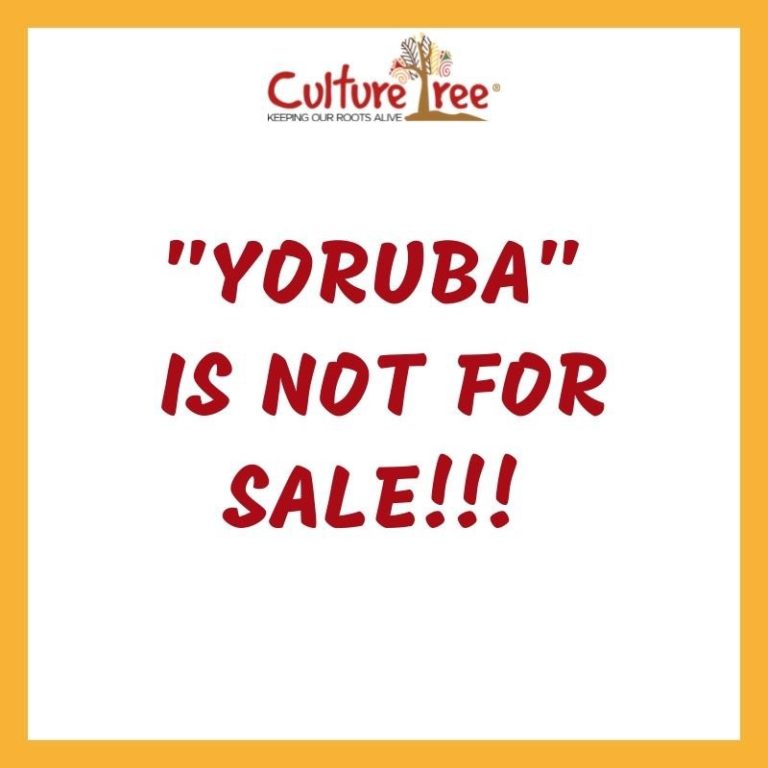
Last year, the founder of Culture Tree (an African cultural center in London) Gbemisola Isimi, who is from the Western part of Nigeria, filed to trademark the term ‘Yoruba Stars’ for a programme that taught children Yoruba language but allegedly received a message from the IPO months later that the word ‘Yoruba’ had been trademarked and could not be used.
She reached out to Timbuktu Global, which opposed her attempts to register her own phrase, and instead offered to sell the trademark to Culture Tree.
“I refused the offer and told them they won’t be getting any free money from me,” Isimi said, adding, “I feel this is the height of cultural appropriation.”
The Culture Tree founder went public with the case on Sunday and many Africans saw an undertone of colonialism in the move by the company and called them out for it, insisting that ‘Yoruba’ and ‘Timbuktu’ (the name of a city in Mali) should not be used by Timbuktu Global.
“This is cultural appropriation at its finest. The violence of trademarking the word Yoruba (a language and a people), and then taking action to prevent an actual Yoruba woman from using the word that is her heritage and her language. How disgusting. Colonisers stay colonizing,” Sonya Onwu tweeted.
Naira Banks also wrote on Twitter: “Yoruba is an ethnic group, religion, a rich culture, a language and so much more. How was it legal to do this?”
Isimi’s post calling attention to the action by Timbuktu had gathered 8,851 retweets and 5,659 likes as at Tuesday evening. The growing attention the post garnered in two days pressured Timbuktu Global into hiding its Twitter account.
The company has also written Isimi to inform her of its decision to transfer ownership of the trademark for Yoruba to Culture Tree ‘for free,’ saying it had spent thousands of British Pounds to ‘protect’ the trademark and had not benefited from it in anyway.
“We are in the process of releasing/transferring Yoruba over to Culture Tree. We protected this name for five or more years at great expense to us (thousands of GBP) and we are handing it over for free,” the company’s mail said in part.
According to UK laws, once a trade mark has been registered, there are four different forms of legal action that can be taken to challenge it and these include: invalidation, revocation, rectification and intervention.
THE National Primary Health Care Development Agency (NPHCDA) has said that 96 per cent of its targeted population for the first phase of COVID-19 vaccination have received their first shot.
Executive Director of NPHCDA Faisal Shuaib said this during a press briefing in Abuja on Tuesday concerning the vaccination campaign in Nigeria.
Shuaib said that as at May 24, a total number of 1.929 million Nigerians had received the first doses of the vaccine, noting that the commission had almost completed administering same.
He noted that the agency had also commenced the administration of the second doses of the vaccine and 4,683 Nigerians had been fully vaccinated from the virus.
Shuaib also said that those individuals currently eligible for the second doses must have received their first doses six to 12 weeks ago.
The director further stated that the date for the next shipment of COVID-19 vaccine into Nigeria was unclear due to global challenges on vaccine supply.
He noted that Nigeria could get its next consignment of vaccine by end of July or August, but the date had not been officially confirmed.
However, he said Pfizer and BioNTech had pledged on Friday to provide one billion doses of their COVID-19 vaccine to low-and-middle-income countries by the end of 2021, and another one billion doses in 2022.
He further stated that another manufacturer Johnson & Johnson had also signed a deal to provide 200 million doses of its vaccine to the Covax facility, which Nigeria is part of.
On other variants of the COVID-19 virus, Shuaib said the Federal Government was taking significant precautions to protect Nigerians against B.1.617.2, known as the Indian variant, which informed the decision to ban flights from India and other high-risk countries such as Turkey and Brazil from entering Nigeria.
“We are ramping up our test and trace measures, and we are accelerating the national project to establish production of oxygen supplies across all states of Nigeria,” Shuaib said.
He enjoined Nigerians to continue to observe the public health or non-pharmaceutical measures in place to curb the transmission of Covid-19.
Less than five per cent of Nigerians are vaccinated
According to the data provided by the NPHCDA, less than five per cent of the estimated 200 million Nigerian population have received a shot of COVID-19 vaccine.
Earlier in March, Nigeria had received 3.9 million doses of AstraZeneca vaccine in the nation’s effort to safeguard its citizens from COVID-19.
The NPHCDA had said the first phase of vaccine administration would be focused on frontline workers and strategic leaders before persons 50 years and above- with priority for people with co-morbidities.
Other phases included persons within the age of 18-49 years with co-morbidities and then the rest of the eligible population (i.e. 18-49 years without co-morbidities).
A retired group captain from the Nigerian Air Force Sadeeq Shehu has raised questions regarding the age of the pilot who flew the late Chief of Army Staff Ibrahim Attahiru.
Shehu, who graduated alongside Attahiru from the Nigerian Defense Academy (NDA), made this remark when he featured on Channels TV’s breakfast show, Sunrise Daily, on Tuesday, to speak about preventing further military air accidents in Nigeria.
Last Friday, Attahiru and 10 other military officers died in an air crash around the Kaduna International Airport.
According to Shehu, before one could be rated as a pilot, the person must have flown a minimum of 1500 hours and done practicals.
He said the late pilot of the crashed aircraft Flight Lieutenant Taiwo Olufemi Asaniyi was 29 years old and had flown 2450 hours of the Beechcraft. He was qualified, but the other issue worthy of the debate was his experience, Shehu said.
He noted that the issue about the age of the pilots could be questioned because, in civil aviation, the average age of the pilot was between 45 and 50 years.
He further argued that pilots, during the course of their years of experience, had been caught in situations where they made close calls.
“It is the misses and near misses that cumulate their experience and judgement in times of urgency like that. We might debate the age of the pilots, at 29, especially in the military environment. In aviation, the pilot is the commander in chief, irrespective of the personality he is flying.
“This is a lieutenant general and flight lieutenant. With that lack of rank, there would be a tendency to force it, but an older pilot, the gap of rank not that too much, probably he would have more confidence to tell the chief of staff that he couldn’t fly the aircraft.”
When asked about the recorded 11 aircraft accidents in six years and the critique of the Beechcraft aircraft, Shehu said the Beechcraft had a good safety record.
He noted that since its establishment in 1962 to date, it had sold about 3100 aircraft across the world, while there had been 523 accidents involving it till date.
“What you should know is till date, most of the accidents had nothing to do with the engine, propeller but it had to do with pilot error and weather,” Shehu said.
In the last five months, there have been three military air crashes that killed about 20 personnel of the Air Force and the Nigerian Army.
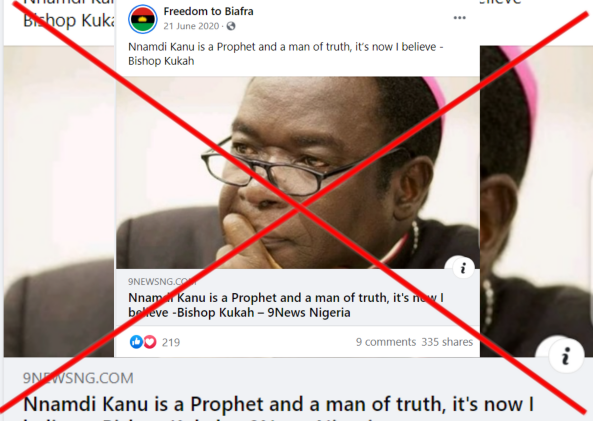
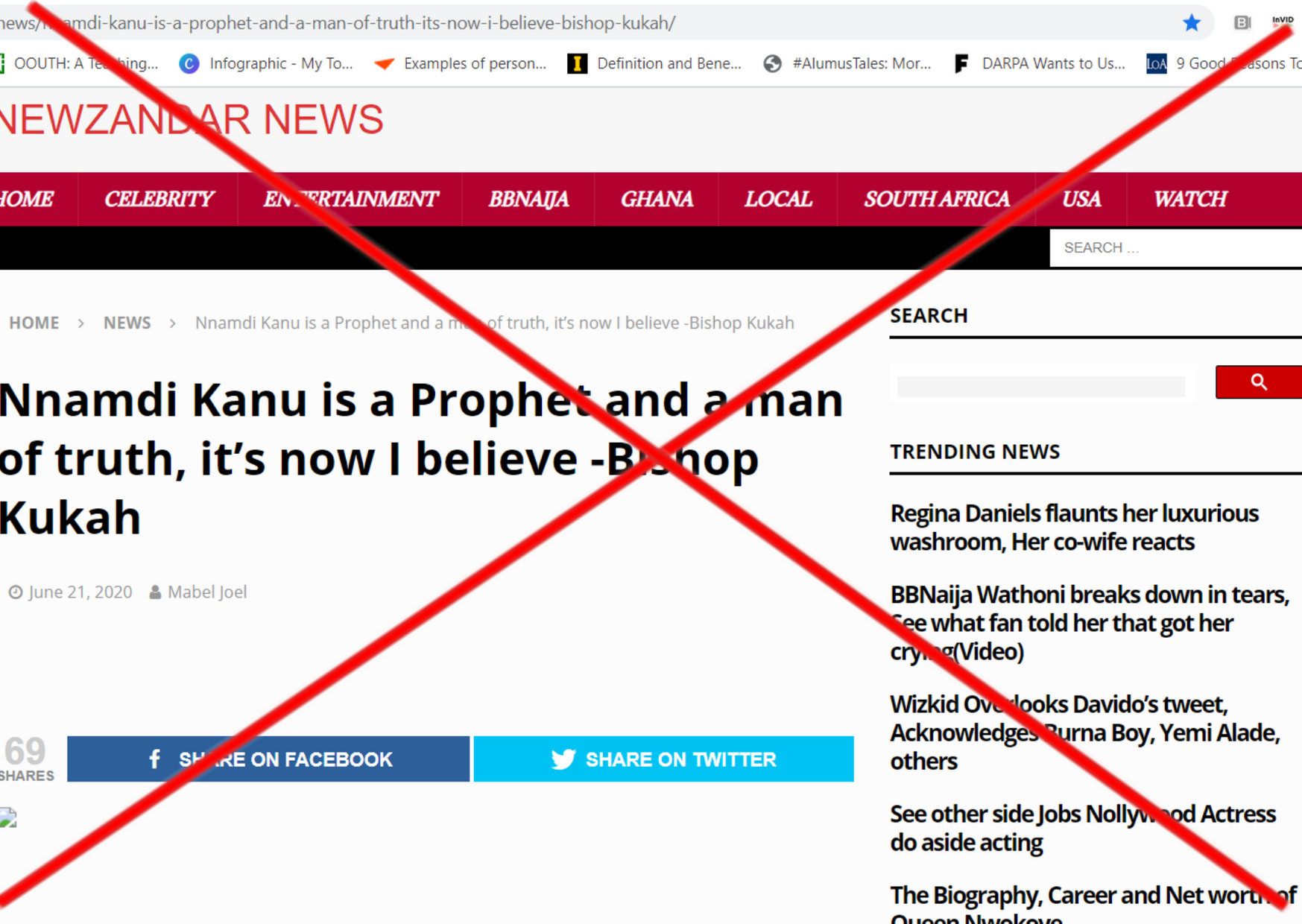
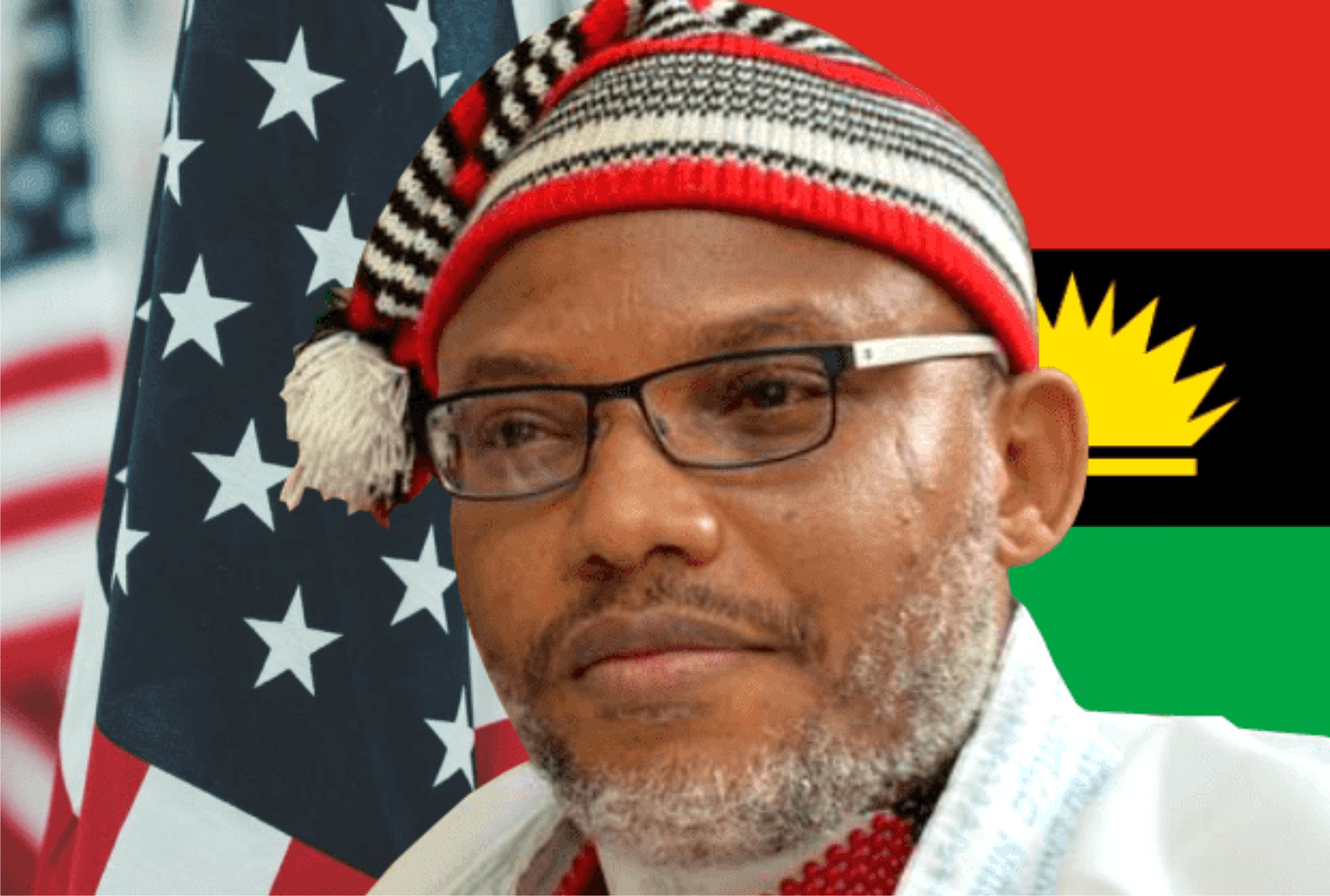
A story shared online claims that the current Bishop of the Roman Catholic Diocese of Sokoto Matthew Hassan Kukah recently described the leader of the Indigenous People of Biafra (IPOB) Nnamdi Kanu as a prophet and a man of truth.
The ICIR sighted the story after it was shared in response to a tweet by Kanu on May 15, 2021. The story claims that Kukah referred to the separatist leader as a “prophet and a man of truth, and he now believes him.”
The story also quotes the bishop as saying, “Until the narrative changes, I will support anything coming from Nnamdi Kanu. I have said it before, let the Igbo man lead Nigeria for four years, am sure the different will be very clear.”
Who is Nnamdi Kanu?
Nnamdi Kanu is a British-based Nigerian who is fighting for Biafra secession. He is the leader of IPOB.
Kanu seeks to create an independent state for the people of the South-Eastern Region of Nigeria using IPOB.
Kanu is also the director of United Kingdom-based radio station named Radio Biafra.
He was arrested on treason charges in Lagos, Nigeria, on 14 October 2015 and detained for more than a year, despite various court orders that ruled for his release.
Kanu was released on bail from prison on April 28, 2017, after a public outcry that greeted the Buhari-led government which had ignored court orders over his release.
He relocated from Nigeria after soldiers of the Nigerian Army, in 2017, attacked his home.
He has been attacking the Nigerian government using various social media platforms.
Findings
The ICIR found the claim to be false.
The story was published in an online blog, NewZander.com and 9newsng.com, on June 21, 2020.
It was also found on Youtube, Facebook, Nairaland and Twitter.
The ICIR’s checks on the website of the Catholic Diocese of Sokoto that publishes all statements credited to Bishop Kukah about Kanu found no traces of the claim being shared online.
Director of Communication of the Sokoto diocese Chris Omotosho, a priest, told The ICIR that Bishop Kukah never made the claim being credited to him on Kanu.
Verdict:
The claim that Bishop Hassan Kukah referred to IPOB leader Nnamdi Kanu as a prophet and a man of truth and he now believes him s false as the bishop denied making the claim.
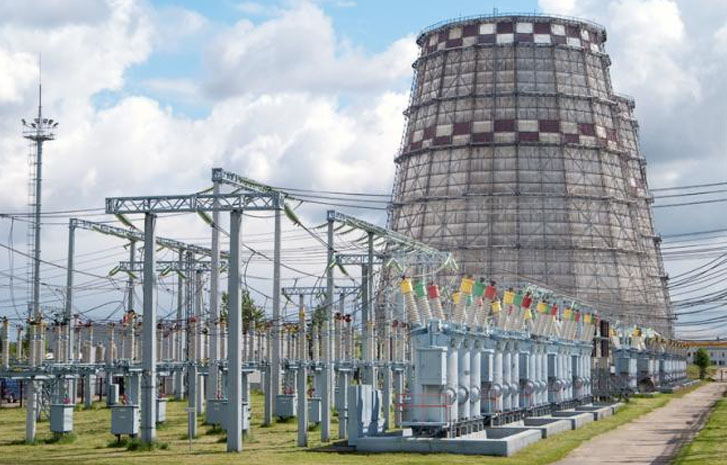
The Niger Delta Power Holding Company (NDPHC), a strategic interventionist agency in the power sector, has contributed over 3,400 megawatts (MW) to the national grid in the past six years, The ICIR findings have shown.
The agency has also expanded its intervention in the power sector with the delivery of 22 substations since 2015.
Through six National Integrated Power Projects (NIPP), thermal power plants and scores of power substations, the company has contributed 45 per cent to the power grid, which currently generates 7,600MW of energy.
The NIPP programme is currently in its second phase and incorporates transmission and distribution projects as well as renewable energy.
According to the Managing Director of NDPHC Chiedu Ugbo, the company has also increased its distribution capabilities with the installation of 25,900 Completely Self-Protected (CSP) transformers across the country.
Ugbo said that the company had done over 1,000 intervention projects nationwide that included fixing vandalised or damaged power infrastructure and increasing the coverage area of power facilities.
Despite the strides, the company has expressed concern that although there is progress in project delivery, there are challenges affecting some of these projects in the electricity market.
The major challenges are: theft of equipment and infrastructure, vandalism, lack of cooperation from power distribution companies (DisCos).
The others include: community issues regarding land and Right of Way (ROIs), vehicular accidents that have damaged some power infrastructure and the rising insecurity across facility areas, Ugbo said.
Commenting on the NDPHC report, a power sector advocate and President of Nigeria Consumer Protection Network (NCPN) Kunle Kola Olubiyo said, “In spite of all the tremendous milestone achievements by NIPP/NDPHC, there are major areas of impediments on the full realisation of the lofty ideals of NIPP as championed by the management of NDPHC.”
Olubiyo said another big challenge was the delay in taking over projects by the DisCos who would want to evade the burden of capital expenditure (CAPEX).
He also said that the delay in ‘Eligible Customers’ implementation should be cleared so that more heavy power users could benefit from the new NIPP assets.
Another challenge for the NDPHC was funding which, according to Olubiyo, should be raised by the equity stakeholders (federal, state and local governments) for more power sector projects.
He also offered other quick-win solutions. “As a part of the low-hanging fruits and quick fixed solutions, there should be an upward review of NIPP GenCos’ tariff to bring it at par with other thermal plants in the country. At the moment, NIPP tariff is currently N20 per Kilowatts Hour (KWH) while other non-NIPP/NDPHC thermal GenCos’ tariff is N27KWH.”
He also called on the Nigerian Electricity Regulatory Commission (NERC) to fast-track the valuation of NIPPs investment in transmission, distribution and gas infrastructure. That will enable NIPP/ NDPHC to recover over $3.5 billion in investments in the power sector, he said.
“The recovered sum will be reinvested in the power sector and that will again improve or close the infrastructural gap,” he noted.
Olubiyo, who was a member of the National Technical Investigative Panel on Power Systems Collapses, Grid Stability And Reliability in June 2013, and a member of Presidential Adhoc Committee on Review of Electricity Tariff in Nigeria in August 2020, also said: “While NERC is working on the valuations, some amounts could be set aside from TCN as payments on account of the revenue derivable by TCN from investments by NDPHC/NIPP. This modality for cost recovery by NDPHC in the interim should be worked out as on-account payment or deposit on account pending conclusion of the valuation.”
Meanwhile, a further dig into the project revealed that in the first phase, NDPHC, which is owned by the three tiers of government, kick-started with the construction of 10 gas-fired power plants which were called, ‘The Big Ten,’ especially in the Niger Delta.
These projects, findings have shown, are key to fast-tracking the development of the Nigerian power sector and meeting the NDPHC’s mandate of lighting the nation. From 2015 to 2021, several projects have been completed or ongoing.
Six NIPP power plants will now generate 3,400MW electricity for the national grid while the four other plants are still under construction even as some of their turbines operate partially, findings show.
NDPHC also said from 2015 to 2019, it completed 2,194 kilometres of 330 kilovolt (kV) and 887km 132kV transmission lines respectively. Also, the country now has 10 new 330/132kV substations and eight 132/33kV substations connected to the national grid. These have added 5590MVA/330kV and 3493MVA/132kV capacity levels, respectively.
From June 2019 to January 2021, NDPHC’s Transmission Department completed four new substations, boosting the national grid’s capacity further by 180MVA (Awka and Nkalagu substations). While the Ihiala and Orlu GIS substations have been completed with a total of 120MVA capacity, the NDPHC has to wait for other associated projects to be completed before the substations can be connected to the national grid. In terms of transmission, the NDPHC has made progress, with all projects at an average of 80 per cent completion.
Analysis of the report shows that the benefits of these projects are enormous as they have up-scaled the nation’s reduction of Aggregate of Technical, Collection and Commercial Losses (ATC& C losses).
NIPP has completed over 360 injection substations with a combined capacity of about 3,540MW. It has also built about 2,600km of 11kV power distribution lines and 4,600km of 33kV distribution lines which directly supply electricity to transformers in residential areas.
However, in 2018, the Independent Corrupt Practices and Other Related Offences Commission (ICPC) grilled officials of the NDPHC over allegations of fraud.
The Cable linked the ICPC onslaught to questionable award of contracts at the government agency.
Earlier in 2021, youths from Gbarain kingdom in Yenagoa Local Government Area of Bayelsa State had threatened a showdown with the NDPHC after it failed to restore electricity power to the area since late last year when public power was cut off by the company.
Energy lawyer and power sector governance expert Chuks Nwani told The ICIR that despite recorded feats by the NDPHC, it needed to have a commercial strategy for possible evacuation of stranded power in its power plants across the country.
“The NDPHC must find a commercial module to evacuate most of its stranded powers, amid concerns about peculiar problems in the power sector. They are interested in evacuating their power,but not interested in a commercial module that could enable that,” he further said.
He noted that everybody must be ready to do the hard work by moving power where they were needed.
“There is a need for the regulator -NERC- and Nigerian Electricity Management Services Agency (NEMSA) to consider a higher voltage that would enable a regulatory exercise that would enhance off-take of the power.
“This is the kind of lobby the NDPHC should be doing to NERC and NEMSA to enable, legally, a higher distribution code that would facilitate movement of power to areas that the TCN has constraints.”
“In Benin Republic, it is already being done efficiently and I don’t see why we cannot have enabling laws to drive that strategy,” Nwani further said.
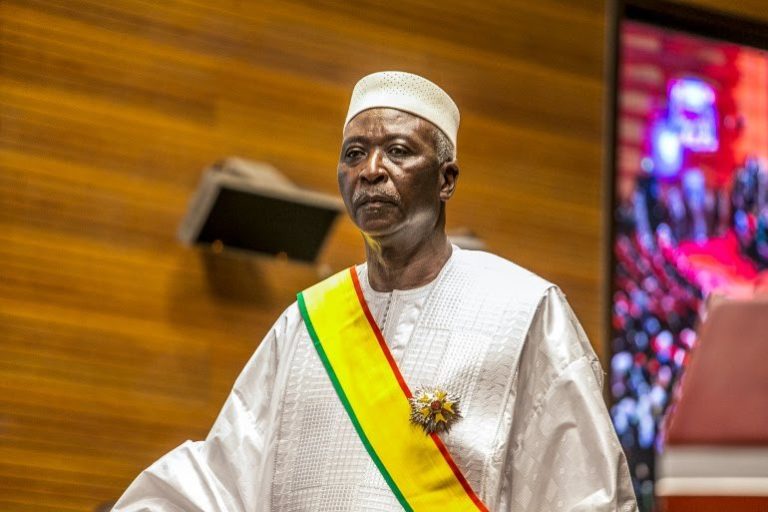
The Nigerian government has kicked against a military coup that reportedly took place in Mali.
The interim President Bah Ndaw and Prime Minister Moctar Ouane of the country have been reportedly detained by soldiers at the Kati Military Camp near the Capital, Bamako, since Monday.
Their detentions followed a government reshuffle earlier on Monday that was designed to respond to growing criticisms against the interim government.
Spokesperson of the Ministry of Foreign Affairs Ferdinand Nwonye expressed the position of the government in a statement on Tuesday.
The statement demanded an ‘unconditional release’ of the of the detained officials.
“The action is totally unacceptable and might derail the peace-building efforts and timetable for the return of democratic governance in Mali,” the statement read in part.
Nwonye explained that the key actors and perpetrators of the condemnable act should be aware of the fact that stakeholders in the region and friends of Mali rejected any act of coercion of the detained officials, including forced resignations.
The military’s action has also triggered condemnation by many, including the United Nations Secretary-General Antonio Guterres, who is calling for calm and their unconditional release.
“I am deeply concerned by news of detention of civilian leaders of the Malian transition. I call for calm & their unconditional release,” Guterres said on Twitter.
The European Union has condemned what it described as ‘kidnapping’ and also demanded for their unconditional release.
The Council’s President Charles Michel said that what happened was grave and serious, and the union was ready to consider necessary measures.
Earlier, a joint statement by the United Nations, African Union, Economic Community of West African States, the European Union, and the United States had condemned the arrests and called for their ‘immediate and unconditional liberty.’
In August last year, the military toppled the democratically elected government of President Ibrahim Boubacar Keita after months of anti-government protests in the country.
An interim and a transitional government was constituted following the intervention of the Economic Community of West African States (ECOWAS) led by the former Nigeria’s President Goodluck Jonathan.
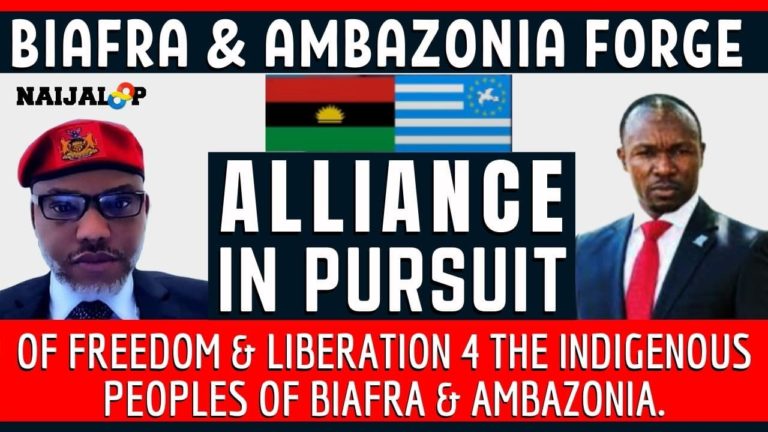
TWO separatist movements pushing for secession in Nigeria and Cameroon have formed an alliance towards actualising their plan to force the breakup of the two countries.
The Indigenous People of Biafra (IPOB), which is agitating for the creation of an independent Biafran nation out of Nigeria, has joined forces with Ambazonia Governing Council, an armed separatist group fighting for the secession of Cameroon’s English-speaking North-West and South-West regions.
IPOB spokesman Emma Powerful confirmed the development on May 25 in an interview with The ICIR.
Powerful disclosed that a memorandum of understanding (MOU) was signed between IPOB leader Nnamdi Kanu and leader of the Ambazonia Governing Council Cho Ayaba in 2020.
The alliance will push IPOB to another level, Powerful told The ICIR.
The IPOB spokesman noted that the alliance had already gone far in so many things, but he did not provide details.
“Yes, it is true. The alliance will push us to another level, IPOB and Ambazonia signed MOU in October last year and this year, our leader Mazi Nnamdi Kanu and Ambazonia leader Dr Cho Ayaba had a joint press briefing and since then, the alliance has gone far in so many things,” he said in response to inquiries by The ICIR.
Further checks showed that the alliance was announced at a press conference by Kanu and Ayaba in April, 2021. The press briefing was livestreamed on the social media.
Cho Ayaba leads the Ambazonia Governing Council, a separatist movement seeking independence for English-speaking regions of Cameroon
“We have assembled here today in front of our two peoples to declare our intentions to walk together to ensure collective survival from the brutal annexation that have occurred in our home nations.
“The Ambazonia and Biafra alliance is critical in an area where Nigeria and Cameroon have established two autocracies that have used violence as political tools to suppress our own peoples,” Ayaba said at the event, according to a report by Foreign Policy.
In recent years, IPOB has emerged at the forefront of groups seeking the actualisation of the defunct Biafra, which seceded from Nigeria in 1967, leading to a bloody civil war.
IPOB leader Nnamdi Kanu is pushing for the creation of an independent Biafra nation
The Nigerian federal forces emerged victorious after three years of warfare and Biafra – comprising the South-East and parts of the South-South – remained part of Nigeria, but pro-Biafra agitation has continued over the years and appears to have turned violent in recent times.
The Eastern Security Network (ESN) – a military wing of IPOB which was set up to protect South-East communities from attacks by suspected armed Fulani herdsmen – is being blamed for attacks on federal security formations and establishments in the South-East.
In Cameroon, the Ambazonia Governing Council is one of the prominent armed separatist groups that are seeking to carve out Cameroon’s English-speaking North-West and South-West regions into a breakaway country known as Ambazonia.
The English-speaking part of Cameroon has nursed longstanding grievances over perceived domination and marginalisation by the French-speaking regions of the country.
The Ambazonia movement turned violent in 2016 when government’s security forces cracked down on teachers and lawyers protesting the marginalisation of Anglophone Cameroonians.
In response to the crackdown, armed separatist groups, which were largely funded by English-speaking Cameroonians living abroad, rapidly mobilised against government troops.
The Ambazonia struggle has since led to the displacement of over 700,000 people, and at least 4,000 civilian deaths, according to the United Nations and the International Crisis Group.
IPOB, Ambazonia alliance involves weapon and personnel sharing, joint operations and training bases
The report by Foreign Policy quoted Deputy Defense Chief of the Ambazonia Defense Forces, the military wing of the Ambazonia Governing Council, Capo Daniel, as saying that the scope of the alliance would include joint operations and training bases.
The two separatist groups would also work together to secure their shared border and ensure an open exchange of weapons and personnel.
Armed alliance between IPOB, Ambazonia could destabilise West and Central Africa
Daniel admitted in an interview with Foreign Policy that the alliance could destabilise West and Central Africa, with Nigeria being the largest economy in West Africa, and Cameroon, one of the major countries in Central Africa.
But he insisted that ‘Biafrans’ and ‘Ambazonians’ were cornered and had no choice than to fight to defend themselves.
Daniel said, “We have been very careful in our association with the Biafra movement, because we didn’t want to destabilise the region, but we have been cornered.
“The Nigerians have failed to act, the international community has failed to act, so we have no other choice but to get into an alliance that can better our chances to defend ourselves.”
Foreign Policy also reported that the Ambazonia Governing Council had promised to share lessons with IPOB on how the group was able to make the North-West and South-West regions of Cameroon ‘ungovernable.’
The Foreign Policy report further observed that the alliance between the ‘two increasingly violent groups’ was likely to trigger a heightened response from both Cameroonian and Nigerian armed forces, which already worked together to counter the Boko Haram insurgency in the northern regions of both countries.
Interestingly, Nigeria has, in the past, aided the Cameroonian government in attempts to suppress the Ambazonia secession movement.
IPOB, Ambazonia have common foe in Fulani herdsmen
Foreign Policy noted that just like IPOB, which considered the Fulani as foes, the ‘Ambazonians’ of the North-West region of Cameroon saw the Fulani as enemy.
Tensions between the Fulani and the ‘Biafrans’ and English-speaking Cameroonians date back decades.
Clashes between nomadic cattle-grazing Fulanis, known locally as Mbororos, and local sedentary farmers over land use, is commom in Cameroon’s North-West region.
According to the Centre for Human Rights and Democracy in Africa (CHRDA), since 2019, various Ambazonian separatist groups had stolen hundreds of cattle, abducted at least 20 Mbororos and extorted an estimated 10 million Central African Francs ($18,600) in ransom payments, killing an estimated 50 herdsmen, and displacing more than 2,500 more Fulani civilians.
CHRDA also reported that Cameroonian security forces had funneled weapons to the Mbororo communities that had gone on to attack English-speaking farmers.
It was further reported that Fulani fighters, including some who had crossed the border from Nigeria to Cameroon, had been implicated in some of the conflict’s deadliest incidents.
In February 2020, armed Fulani men alongside Cameroonian military personnel attacked Ngarbuh village in the North-West region and killed 21 civilians, including 13 children. In February, armed Fulani raided 18 villages in Nwa subdivision, killing at least 17 people and displacing 4,200 local residents.
Attacks by suspected armed Fulani herdsmen on agrarian communities in Nigeria’s South-East have escalated in recent years, beginning with the ‘Nimbo massacre’ in which about 20 persons were killed by suspected Fulani herdsmen at Ukpabi Nimbo, an agrarian community in Uzo-Uwani Local Government Area of Enugu State, in April 2016.
On March 29, about 25 persons were reportedly killed during an attack by suspected herdsmen at Obegu, a community in Ishielu Local Government Area of Ebonyi State.
In recent times, Fulani communities in the South-East have also come under reprisal attacks from suspected members of the ESN – the IPOB military wing.
Foreign Policy noted that there was a big risk that the alliance between IPOB and Ambazonia would ignite cross-border ethnic violence that might have regional consequences.
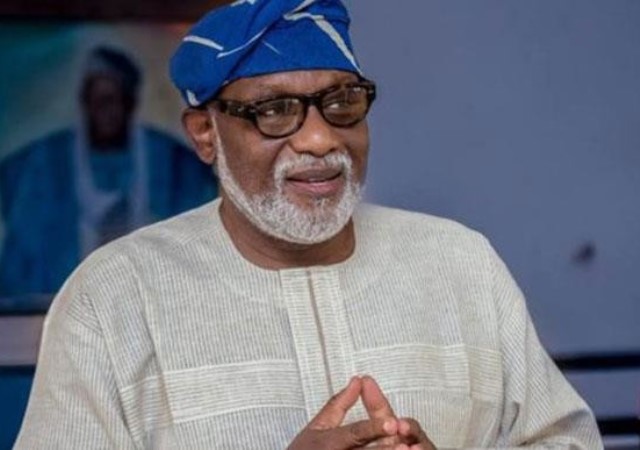
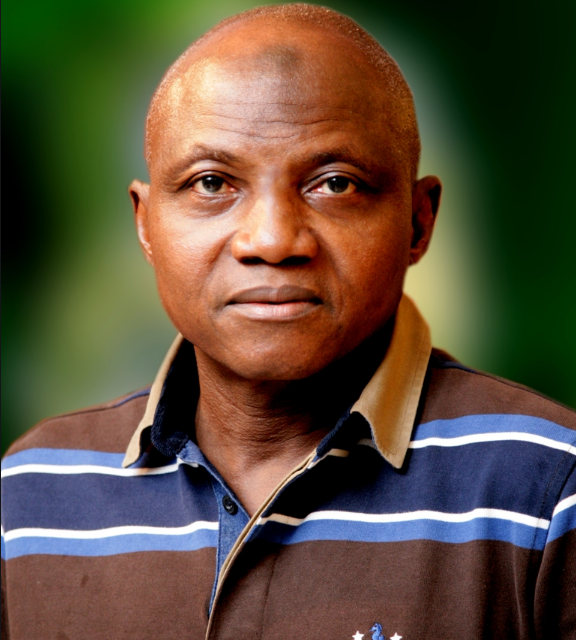
CHAIRMAN of Southern Governors Forum Rotimi Akeredolu has berated Senior Special Assistant to the President on Media and Publicity Garba Shehu for questioning the legality of ban on open grazing.
In a statement released on Tuesday, Akeredolu accused Shehu of working for extraneous interests that were opposed to peaceful co-existence in Nigeria.
“Anyone who has been following the utterances of this man, as well as his fellow travellers on the self-deluding, mendacious but potentially dangerous itinerary to anarchy cannot but conclude that he works assiduously, for extraneous interests whose game plan stands at variance with the expectations of genuine lovers of peaceful coexistence among all the peoples whose ethnic extractions are indigenous to Nigeria.
“There has never been any contention on this provision. It is clear that Mr Garba seems to have issues understanding the difference between licentious criminality and qualified rights under our law.
“It is our duty to continually nudge him off his current state of cognitive dissonance. His pronouncement betrays dubiety and mischief,” he said.
Akeredolu further issued a warning to Shehu and his ‘cohorts’ to desist from insulting elected representatives of the people, adding that the South would not be ceded to invaders masquerading as herdsmen.
Recall that Shehu had released a statement on Monday, condemning the banning of open grazing by the southern governors and describing it as “acts of politicking intended by its signatories to demonstrate their power.”
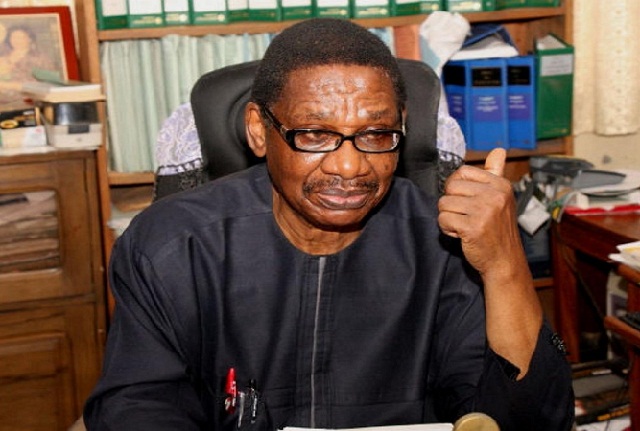
SENIOR Advocate of Nigeria (SAN) Itse Sagay has said that going back to the 1963 Republican Constitution will address all the ongoing agitations in Nigeria.
Sagay, who is also Chairman of Presidential Advisory Committee Against Corruption (PACAC), stated this when he featured on Channels Television’s ‘Politics Today’ on Monday.
He said though the erstwhile Nigeran constitution recognised regions, a little amendment would make it accommodating for the yearnings of states.
“My own personal preference is that we should scrap this constitution and adopt the 1963 Republican Constitution,” he said.
“If we had that, with amendments here and there to make it accommodate states rather than regions, which we used to have, I think all these agitations will die down and everybody will be happy.”
Sagay noted that the country was happy and peaceful when it was governed by the principles of the 1963 Constitution.
While commending the ongoing constitutional amendment by the National Assembly, he lamented the crisis that the current constitution had created for the country, noting that the 1999 Constitution focused more on a unitary system of government than federalism.
Sagay also expressed his disappointment and faulted the unwillingness of the ruling All Progressives Congress (APC) to adopt the recommendations of the Nasir El-Rufai-led committee on restructuring.
He stated that the committee came up with an excellent report, stressing the need to look at the content of the documents and implement them.
However, he said the recommendations of the report would be better implemented in a totally new constitution, rather than the existing one which would involve lots of amendments.
He explained that the move by the APC to set up such a committee in the first instance was indicative that President Muhammadu Buhari was in favour of federalism and devolution of powers.
“I am personally disappointed that that excellent document is being allowed to gather dust and I think the leaders of the party should now bring it out and go to the president and say, ‘we should now make a move to implement what we ourselves commissioned and have approved because that is what the whole country wants now,’” he said.
The 1963 Constitution recognised the parliamentary system with head of state and head of government or prime minister . It also acknowledged regions, rather than states. Regions had autonomies and the Senate president would act as president in president’s absence.
On the other hand, the 1999 Constitution, mirrored after the 1979 Constitution, is a presidential constitution. It recognises states, but does not give them full autonomy. The president has enormous powers and can do so much.
THE Presidency has condemned the resolution by the Southern Governors Forum to ban open grazing.
In a statement, Senior Special Assistant to the President on Media and Publicity Garba Shehu said on Monday that the president had taken steps aimed at finding a lasting solution to farmer-herder conflicts in the country long before the ban on open grazing.
He described the ban as “acts of politicking intended by its signatories to demonstrate their power.”
“It is very clear that there was no solution offered by their resolution to the herder-farmer clashes that have been continuing in our country for generations.
“It is equally true that their announcement is of questionable legality, given the Constitutional right of all Nigerians to enjoy the same rights and freedoms within every one of our 36 states (and FCT) –regardless of the state of their birth or residence,” he noted.
The statement announced that the Federal Government was making practical changes to provide for safe and peaceful co-existence between farmers and herders in communities across Nigeria, attributing the delay in action to the strain on public finances, brought about by the COVID-19 pandemic.
The ICIR had reported the resolution by the southern governors in Nigeria to ban open grazing, which was reached in a meeting held at Asaba, Delta State, a few weeks ago.
The decision was made as an attempt to end banditry and insecurity in the region.