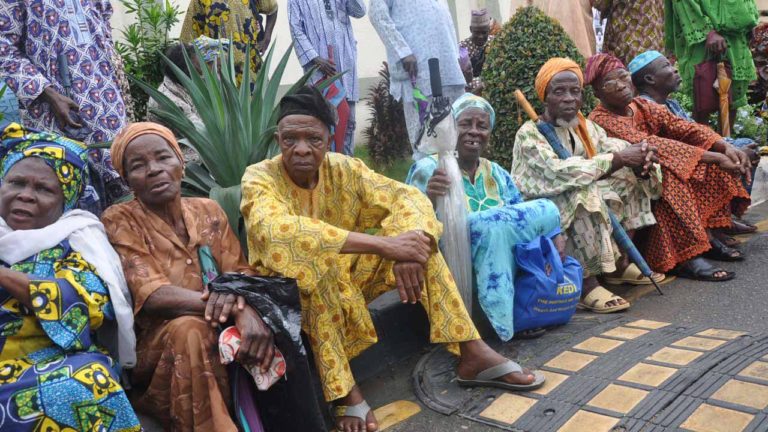
MANY elderly persons in rural communities are not fully informed about the pandemic or how to protect themselves from it.
“I thought it was a curse from God to destroy everybody” – says one of the elderly rights holders of the project on curtailing elder abuse in 11 communities in Enugu State, being implemented by Dewdrop Foundation and Centre for Gender Economics Africa.
Considering the importance of mental health to the wellbeing of older persons, prior to the nationwide lockdown occasioned by the COVID 19 pandemic, we were engaging not less than 900 elders from 11 communities in Enugu State, whom we fondly call Seenagers (i.e. Senior Teenagers or persons aged 60 years and above), in social activities through safe spaces (Seenagers Associations) where they speak to issues of concern to them. The meetings also helped reintegrate the elders into their communities as valued members. This gave them dignity, hope, and confidence.
Among these elders are men and women who had survived various forms of abuse – physical, sexual, psychological and financial abuse in the hands of their family members, domestic workers, their caregivers, neighbours, strangers or friends to the family. Their monthly Seenagers’ meetings were opportunities for them to mingle with their mates and receive other health-related attention. Unfortunately, these meetings can no longer continue and many of the elders have expressed their sadness about this.
Suzanna, one of the Seenagers aged 75 years, who can no longer go out to socialize with her peers said, “I am not happy that the meetings cannot continue for the time being. I always looked forward to them because they gave us so much joy and we felt like human beings again – our voices were being heard and it gave us dignity because many young people of these days have no respect for the elders.”
Although social activities are among the best ways to stimulate the mental health of the elderly, doctors advise that contact with elderly persons be reduced during this COVID-19 pandemic period, as a way of preventing them from getting infected. Some geriatric doctors have advised that the best way to maintain contact with the elderly is through technology. While this suggestion may suit a few educated populations of elders with internet access, the greater questions are ‘How can the health messages be passed on to illiterate or semi-literate aged men and women in the hard-to-reach communities and villages? How do they receive adequate care in these uncertain times?’ The villages are where we find the largest numbers of elderly persons. About 64 per cent of Nigeria’s population live in rural communities, and the people who have died from COVID-19 so far are mostly older people from 55 years and over (The Cable Nigeria).
By the 2nd week of May 2020, data from the National Centre for Disease Control (NACA) on the ‘Current Breakdown on COVID-19 in Nigeria by Age and Gender and Deaths’, showed that at least 44 deaths were recorded across the country for persons aged 0-50 years whereas not less than 90 people had died among those aged 51 and above. The coronavirus is the worst public health crisis to have hit the world in a century and older persons are more susceptible to the virus than any other age group. Medical experts have maintained that older adults are at significant risk because of many ailments commonly associated with ageing. WHO statistics show that 95 per cent of Covid19 deaths are among persons from 60 years and above and more than 50 per cent of deaths globally occur in persons 80 years and above.
Indeed, the older generation is an endangered species facing a threat to their existence if thorough measures are not taken to ensure their health and wellbeing are catered to in the foreseeable future. Elderly persons are among the most marginalized groups in Nigeria; yet, there is no law on comprehensive social welfare and security for them. Across the world and in Nigeria, there has been a significant increase in domestic abuse while under lockdown. The elderly currently face the intersecting threat of domestic abuse and neglect as a result of the lockdown where they stay at home with their abusers.
The coronavirus is the silent killer that we cannot see. We are currently utilising innovative ways to sensitise elderly persons, and their caregivers, in Enugu State on safety and preventive measures.
However, we cannot achieve this alone. It is therefore important that all aid and assistance being provided in the rural and urban areas by development workers, caregivers, family members and the State or Federal Governments, should take into account the various needs of the elderly, who in most cases, are left out of development plans when crises erupt.
Nneka Acholonu Egbuna is the Assistant Programme Coordinator at Dewdrop Foundation
In August 2019, the Nigerian Government led by President Muhammadu Buhari declared a partial land border closure in order to halt the importation of food among other goods. The smuggling of rice – Nigeria’s staple food – remains business as usual despite the restriction order by the president. Investigative journalist Gabriel Ogunjobi went undercover between March 12 and 17 to expose the schemes of smugglers operating across the border between Nigeria and Benin Republic.
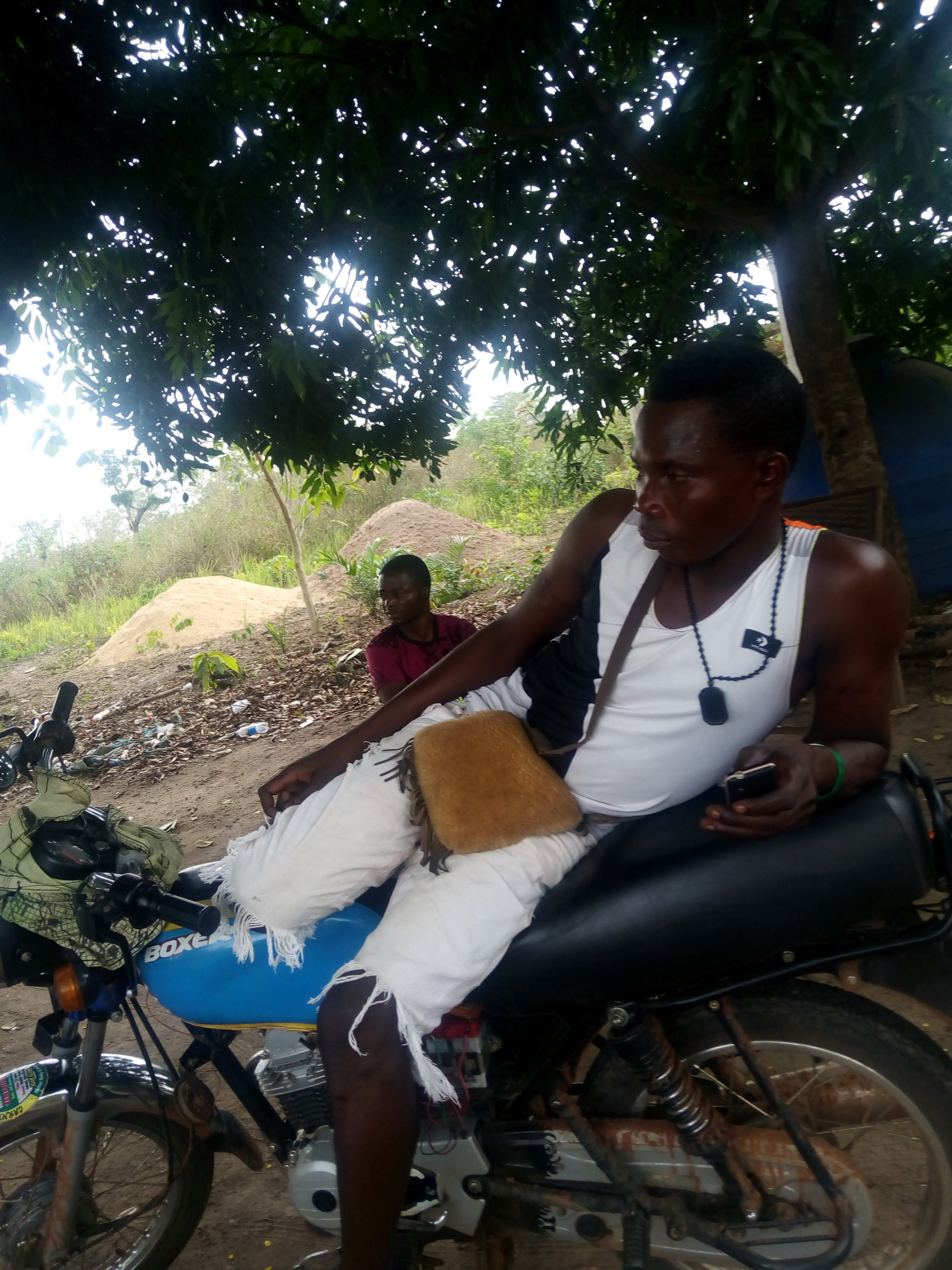
It was midday on March 12, Monday, popularly nicknamed ‘J-Boy’, a swift, street-smart motorcyclist flapped his cow-skinned, portable bag at the front of his motorcycle, ready to fire on.
J-Boy was not just a good rider, but also a great accomplice with the Kogi-born Mohammed Muktar, who is adept in the business of smuggling foreign rice from Benin Republic to Nigeria.
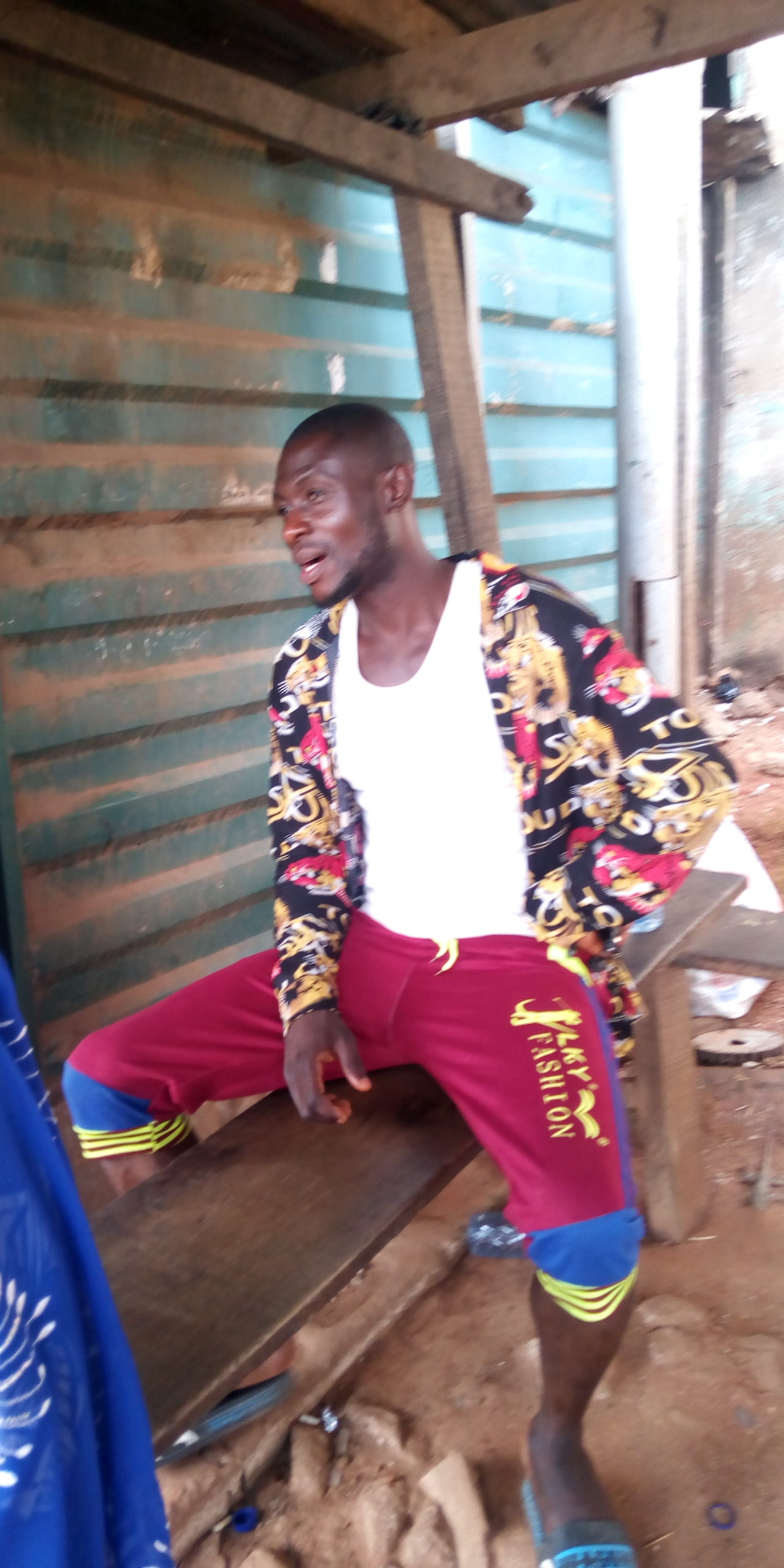
Street-smart Monday a.ka. ‘J-Boy’, a bike rider who makes a living as foreign rice carrier
It should ordinarily be a difficult task to dare travel out of the country with no valid proof of identity but it is more herculean to smuggle bags of foreign rice under the nose of men of the Nigeria Police Force, the Nigerian Army, the Nigeria Customs Service and the Nigeria Security and Civil Defense Corps (NSCDC) – especially at this time when the borders are shut. But none of these security agents could stop Mohammed, a notorious smuggler, and his accomplices.
So, when Mohammed gave J-Boy a nod to ride on, the latter took the cue at once. “No qualms,” he said, bravely and gravely.
On his Bajaj motorcycle, he carried Mohammed and the reporter – and zoomed off, travelling the terrible roads that connect Towe de l’arrondissement (meaning ‘town’) in Benin Republic, from Nigeria – starting from Igan Alade road – Yewa North, Ogun State.
An undercover expedition into the world of smugglers
As we sped off on the crude terrain, I quickly expressed my anxiety about the dangerous journey we had just commenced. But my co-travellers, who knew how the system works told me to calm down, assuring me of safety and success in the journey.
However, the smugglers had no idea that I was a journalist working under cover. I had earlier presented myself to Mohammed as a newbie, who would love to invest in the smuggling of foreign rice from Benin Republic to Nigeria. However, before putting my money on the line, I told him I needed to experience how smugglers outsmart Nigeria’s security agents. I needed to gauge the risk involved in the business into which I was venturing.
Before finally crossing the Nigerian border to Benin Republic, we travelled through Igan Alade, one of the communities on the borderline of Ogun State and Towe, a neighbouring town at the French-speaking Republic of Benin – bypassing a police station at Igan Alade, an NSCDC Divisional Headquarters at Tata community, a Nigeria Customs Area Command at the Ijoun community, and at least seven checkpoints manned by different security agents.
Throughout my round trip to observe the smuggling expedition, I noticed that none of the officers at any of these checkpoints – usually barricaded with bamboo across two sides of the roads – was particularly interested in stopping any smuggling activity.
Instead, the officers greeted us with flashes of smiles and sometimes, hand-waves.
To clear foreign rice out of Benin Republic only costs N200, Rice retailer claims
As at 4:15 p.m., when we arrived at Towe, Coronavirus, the most ravaging pandemic of the century, was just beginning to take a toll on rice prices in Benin Republic.
Before then, a dollar was exchanged for N360/366 at Bureau De Change market, but it suddenly rose to between N405 and N420 that morning. The naira crash immediately influenced the price of foreign rice.
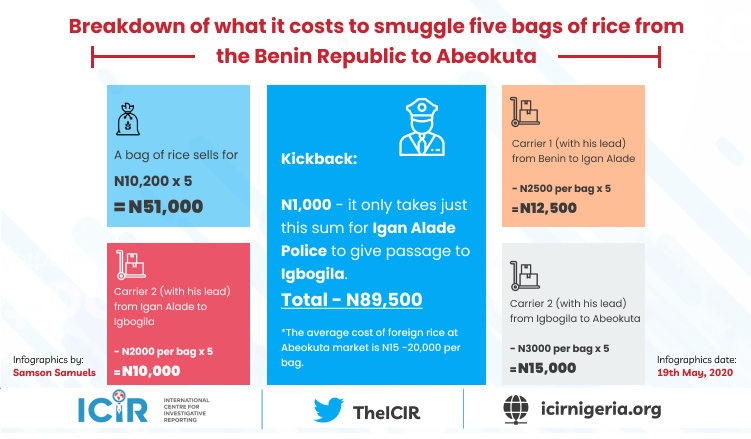
Twenty-four hours ago, a bag of rice was sold at N9,000 at any retailer’s outlet in Benin. It was already N10,200 on the morning of March 12.
“Your currency has no market value in our country yet you have too many greedy officers on the road,” said Mme (Ms.) Ramantou Akiyemi, a rice retailer, to spite Nigeria’s currency value.
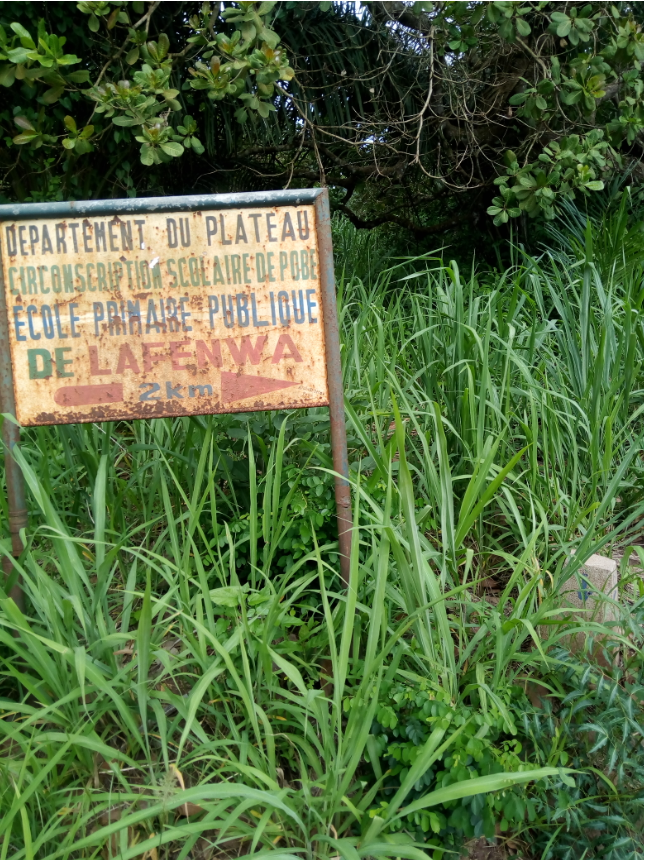
A signpost in Benin Republic, near Towe
“When you are going back, our officers will clear you with just N200 – and that’s all! – no matter the numbers of bags of rice you carry on a bike. But, on your land, the taxes are overbearing.”
In a sudden plot-twist, Mohammed came up with a masterplan as this time around he was able to buy just about five bags.
Smugglers’ mafia tactics
“It isn’t worth it to waste any money on the road since it is just five bags I am now buying. Let’s make a booking today and come back to carry them,” Mohammed said, gradually unfolding how he intended to evade all securities without paying a dime.
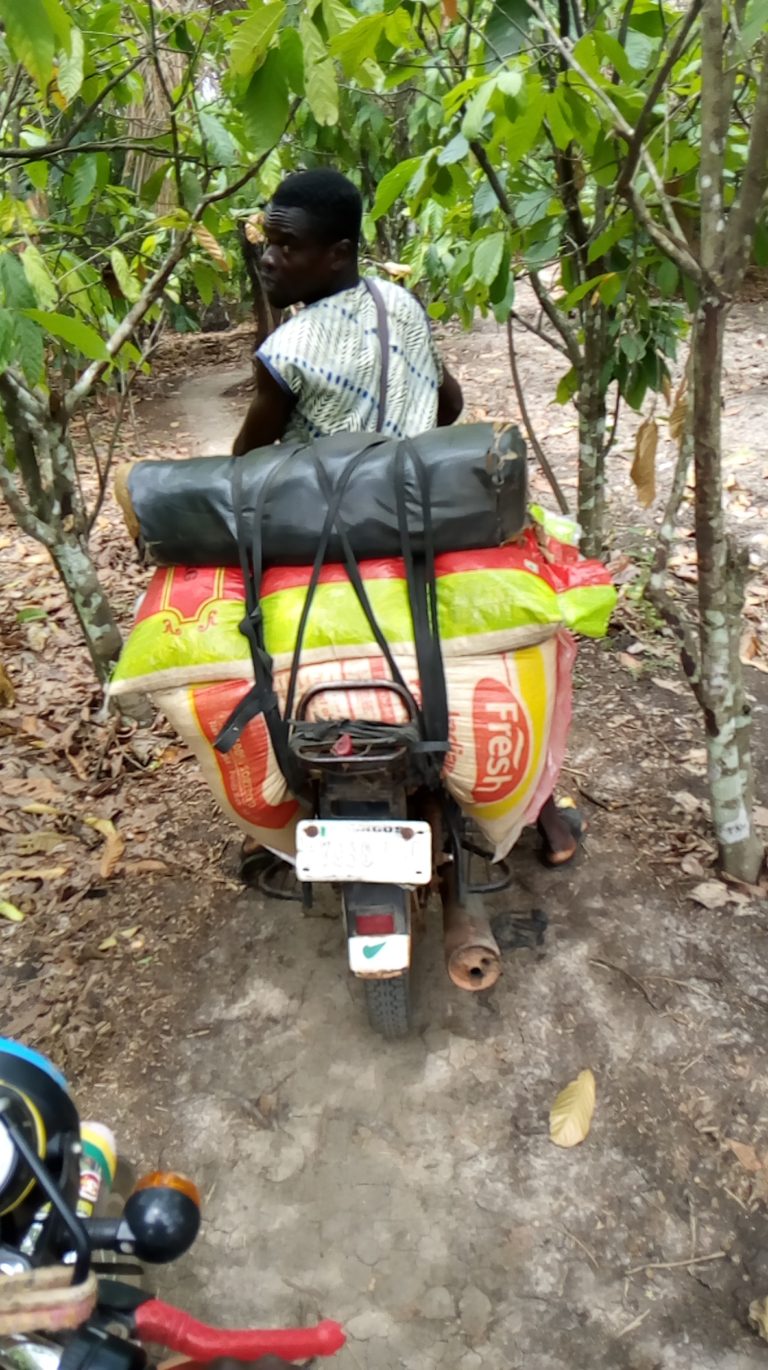
He would later reveal that his usual scale of rice smuggling ranges from five to ten bikes, noting that each bike would carry around 10 to 15 bags at once – depending on how strong the rider is to control the wheel. Paying bribes on the road doesn’t bug him, but, for just five bags, there is a smarter way to cut the cost.
In the world of smugglers, four codified words are employed for communication – ‘settlement’, ‘booking’, ‘lead’ and ‘informant’. They typify how conveniently smugglers operate day in and out – before and after the federal government invoked a restrictive policy on borders.
Rice smuggler on the run
‘Settlement’ is the bribe of N1,000 at every checkpoint minus the police’s. This is so because the policemen at Igan Alade junction are ‘booked’ before any trip. Customs officers and soldiers will only collect bribe when they catch traders with illegal goods. With the police, the rule is different. Smugglers must disclose their mission ahead of their journey. That’s why theirs is called ‘booking’.
Four codes in rice smuggling
Apart from the bribe-taking security agents, it is usually a lucky day for the likes of J-Boy who risk their lives to smuggle rice. So, their charge is not open for negotiation: it’s a flat rate of N2,500 per bag to anywhere in Igan Alade.
Talk of the backbone machinery in smuggling, you think of the ‘Lead’. Through a hell-hole smuggling, the Lead runs ahead – like two miles – on his bike, looking unsuspecting but vigilant to a fault. He makes the settlements that will be required at each of the checkpoints. Also intermittently, he calls the actual carrier to keep track of their adventure or warn once he sights anyone parading suspiciously. The smugglers know their gangs and can easily spot one who does not belong to the clique. That enemy the Lead is looking out for is called ‘informant’.
The fear of informants…
As fearless as Mohammed appeared in countenance, he admitted that informants were his nightmare in the business.
He cursed them anytime he mentioned them. They just parade bushes on the border, and make a call to the Customs patrol squad the moment a smuggler is sighted, he told the reporter.
‘They may see you mapping plans and just keep trailing you without raising suspicion. They are the unfortunate people in this work. They don’t want us to prosper and for that they will never prosper too. I fear them,” he quipped, dropping a missile of rebuke for his anonymous foes.
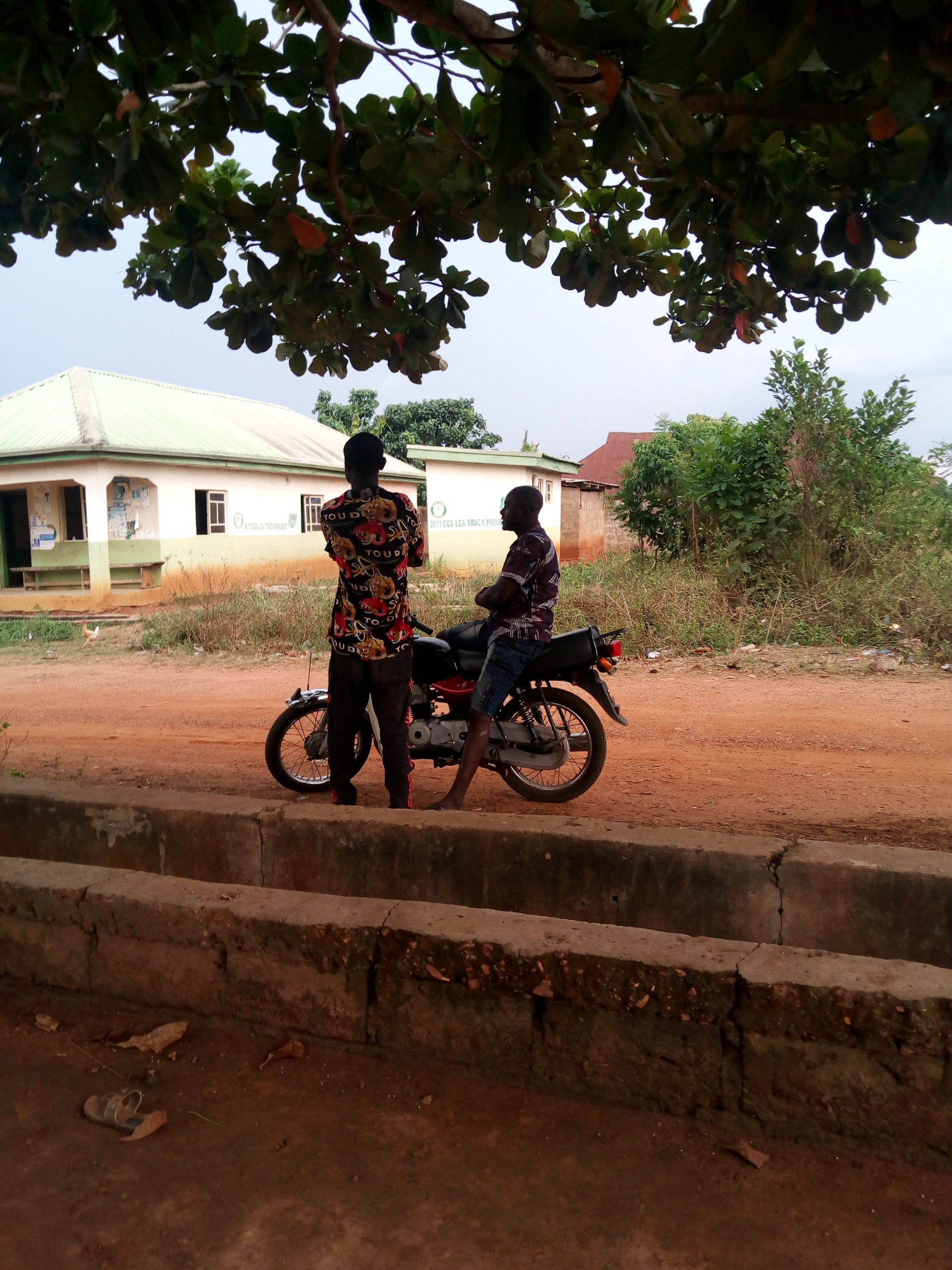
FUN FACTS- Mohammed Muktar wore this very shirt for over three days. He is evasive to the securities but informant is his nightmare
It can be a bad day for the informants because sometimes they risk being hacked down, as I heard from J-Boy in one of my interactions with the smugglers.
“Sometimes, if we notice the same unfamiliar person keeps us on a bike, we can challenge him. On some tough days, we use charm and cutlass on them.”
From that point onward, I made up my mind never to be mistaken for an informant. Such misfortune will certainly jeopardise my assignment, or endanger my life.
How smugglers boycott security agents from Benin Republic to Igan Alade
N1,000 bribe to smuggle in five bags of foreign rice
At dusk of Friday, March 13, in Igan Alade, the reporter retired to Mohammed’s makeshift home. Interestingly, the shelter was less than a mile from the police station around the old post office in the border community.
After finalising arrangements with a police officer usually identified as Officer Sunday (also from Kogi, like Mohammed), we agreed that Saturday would be the day to witness how to evade all security agents manning the porous borders with five bags of rice.
(Picture 7: ‘It’s time for strategic planning between Mohammed and Officer Sunday, ahead of Saturday’s rice smuggling)
Mohammed made a bid for a new team of smugglers’ bike riders – J-Boy was no longer in the team. What made their resume more convincing was beyond just being brothers; they spoke French and they were vastly acquainted with all short-cuts.
That was Mohammed’s masterplan from day one.
The only activity this second time in Towe, which is rice mounting on a bike, was as swift as it can be.
The two brothers rode fearlessly into the thick bushes, darting into all possible corners. A few times, we were trapped in the mud and at another time, it was the hurdles of crossing a bridge anchored by planks that broke the sweats for us. In total, our perilous crisscrossing lasted almost three hours within Igbo nla village known as Ile Komi.
Afterwards, we arrived in Idi Ori in Tata, a residential settlement in between Igan Alade and Ijoun communities.
The fetish fortification of rice smugglers
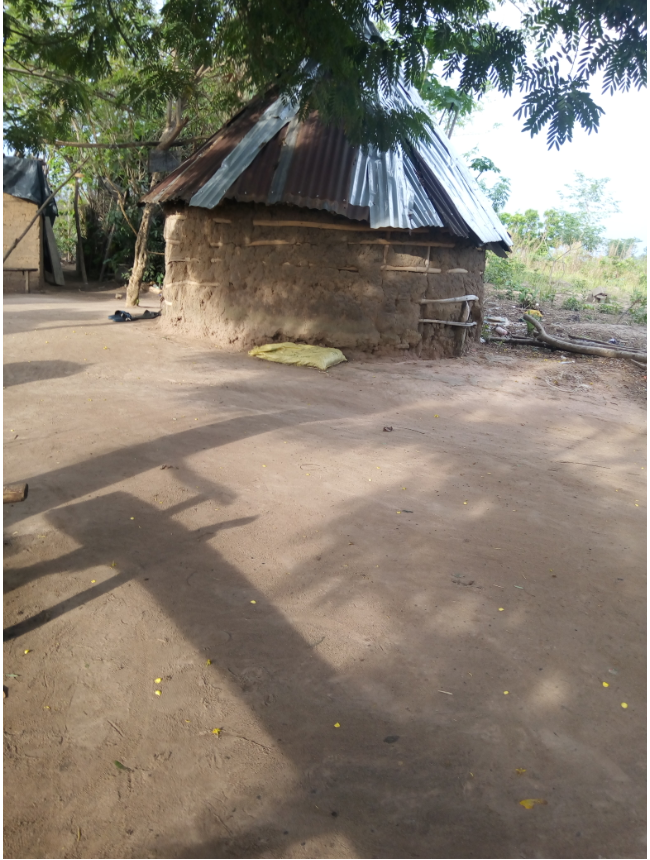
Baba Seun’s hut at Idi Ori in Tata This is where Ogun Smuggler’s Power Lives
Palpable fear enveloped me after bursting into Baba Seun’s hut at Idi Ori from Ile Komi bushes. That was Mohammed’s hideout and storehouse upon return from every Benin trip. Interestingly, the storehouse is just at the backyard of NSCDC Ketu Headquarters – a stone’s throw away.
Baba Seun, a herbalist, had no comely face to behold and so was his dreadful vicinity. By one side of his house was hung skull of a dog and on the ground was clotted-blood, with a littering bird’s feathers.
Next to this was an isolated hut, his power-room for consultations. I was not allowed in. I only peeped to see plain-white garments, small pods suspended to the roof, calabash flattened to the wall and the kinds of costumes I only see in Yoruba movies. It was a frightful sight.
After the long trip on Saturday, I briefly opted out of the field. With the five bags of rice in the hideout, Mohammed could not venture on another expedition.
By Tuesday, March 17, Baba Seun had fortified the region where he kept the smuggled rice before our return.
“You should have told me earlier before coming here. They are not yet ready for carriage. Anyone who steps into that place or speaks a word while carrying will slump and die,” he said.
A double-check on my confidence level flashed zero at this point. His enchantment on the surrounding was intended for enemies in case they burst in on them. They would die!
Now that we were there, it would take the herbalist around one hour to remove the spells.
Near the hidden bags of rice was a pot of herbs, with puffing smoke beneath. As long as the smoke remains alive there, no one dared talk, except to carry the rice to the open and pack for transport.
After the exercise, I was soon prepared for the final-leg of my covert operation. Next expedition would be from Idi Ori to Igbogila, another community ahead and then to Abeokuta, the capital of Ogun State.
But, there was just one unavoidable huddle to beat, and that is the police security checkpoint.
The checkpoint was at the market front of Igan Alade and by the very left was a bush-path leading to Igbogila.
Mohammed is seen giving Police officer bribe to transport smuggled foreign rice
With the quick call ‘go! go!’ like a parade commandant, we followed the cue of Officer Sunday to forge ahead. This time, Mohammed had hopped down from the bike and was already by the side of the police officer, enclosing one thousand naira to his left hand. With the five bags of rice, we were now off to Igbogila
N1,000 was all it costs!
At around 4:30 p.m on Tuesday, March 17, I alongside two rice transporters, were already on the way from Igan Alade to Igbogila – two Ogun communities tucked in-between the border of Nigeria and Benin Republic.
Thanks to Officer Sunday of the Police station branch at Igan Alade.
It’s time for strategic planning between Mohammed and Officer Sunday, ahead of Saturday’s rice smuggling
The reporter was no longer apprehensive of any difficulty on the way. After all, N1,000 was all it took to buy the protection of a corrupt Nigerian Police officer who allowed us to drive past border communities with smuggled rice worth N51,000.
At Igbogila, Kazeem Olakolade, a rice transporter in his 50s had been recommended to us. Popular for his shrewdness, he hoards smuggled rice in his house.
His mantra read like these:
“There are places I do not cross to carry ‘Oja’ (the local parlance for foreign rice) no matter the money you offer to pay me – like Igan Alade, Ijoun. That’s the region for some boys’ business and I can’t trespass. But, from here to Abeokuta, they know me.”
“And, for your information, I don’t tell customers about my itinerary. You can’t follow me too. When I get to Abeokuta, I will be the one to call you. Just get my money ready,” he declared.
A few minutes after 6pm on Tuesday, we are at his place with the five bags of rice. The reporter would no longer be able to track how it gets to the final destination. Olakolade’s charge for the transportation from Igbogila to Abeokuta is N3,000 per bag which means he will make a total of N15,000 from the trip.
Mohammed was reluctant to pay that much but he made an effort to justify it.
‘It’s that much because I also settle too many operatives on the road. In this business, one cannot afford to be frugal otherwise you are doomed.’
So far, one or two things are now established: that high-level smuggling still thrives in Ogun State through borders and also that the efforts of some serious-minded Customs officers are sabotaged by a few greedy lots. The reporter can only testify to that of the Police (Officer Sunday in particular) which he witnessed.
Incidentally, on Saturday, May 14, the Customs operatives of the National Border drill intercepted some smugglers at Imasayi town in Yewa North Local Government during an anti-smuggling operation.
A Customs officer eventually died during the operation that turned violent between officers and smugglers and the neighboring towns experienced a few days of unrest over the bloody clash.
The spokesman for the Ogun State Command of NCS, Abdullahi Maiwada told this reporter that investigation has been initiated after one of the suspects was arrested.
Against all odds, foreign rice landed in Abeokuta
Because of the recent crisis, one did not expect Olakolade to successfully transport the ‘exhibit’ from Igbogila, less than five kilometers away from Imasayi, down to Abeokuta in spite of a recent bloody clash on that route.
But at around 12:30 pm on Thursday, March 19, he called us to say five bags of foreign rice are now in Abeokuta.
All it costs to smuggle five bags of rice
Between Igbogila and Ita-Oshin at Abeokuta, there are at least five checkpoints usually manned by officers of the Nigerian Customs, Importers Association of Nigeria (IMAN), Army and Police, but he does not pay a dime by himself.
His mode of operation is similar to that of other smugglers I had interacted with during the course of this undercover assignment.
His Lead, according to the foreign rice transporter, drove ahead to settle all security men at the checkpoints and monitored his distance through intermittent phone calls.
‘This is why I insisted that you shouldn’t call me during the trip to help my own concentration on the road’, he said.
Mohammed is about to make it big?
Throughout days spent with him, Mohammed was high-spirited about how fortune will soon smile on him.
As soon he got through with my deal, he revealed his travel agenda to Akwa Ibom for a crucial deal with an ex-customs boss and the current Commissioner of Works in Akwa Ibom, Mr. Ephraim Inyang-Eyen.
“The current commissioner of works in Akwa Ibom, Ephraim Inyang, has fixed me up for an appointment. He wants to give me a letter personally signed by him that will ease my passage across any border in Nigeria”, says Mohammed.
“He was a top Customs officer before he joined politics. Once I get that signed letter, I am getting a huge loan for this job. That is my target and not all these petty smuggling anymore.”
The letter, according to him, will detail a request for 30 truckloads of foreign rice for the purpose of the politician’s constituency relief project.
Mr. Ephraim Inyang-Eyen was in the 1990s the Assistant Superintendent of Customs. He rose to become the Special Assistant to the Operations Commander, Apapa before his retirement.
However, when confronted with Mohammed’s claims, Inyang-Eyen denied them, saying he had never met the smuggler. Upon showing him Mohammed’s picture for identification, he denied knowing him.
“What will be my gain to issue a letter to a criminal to smuggle rice especially when I am no longer in Customs Service?” he first queried before saying “it is fraud! I don’t know that man from anywhere. I have never met him before, not even during the governor’s burial as he claimed.”
Mohammed, in a telephone conversation on May 4, however continued to express high hopes about his meeting with the former Custom boss, saying he missed the previous appointment because of the lockdown in the country.
But his allegation could not be confirmed since he is yet to obtain the letter he spoke about.
“Border complexity, limited resources are our biggest problems” – Customs PRO
Despite federal government’s lockdown imposed on the nation’ capital, Abuja, Lagos and Ogun states, Abdullahi Maiwada, the Public Relations Officer for the Ogun State Command of NCS, in an interview with the reporter, stated that about 2,ooo bags of 50kg rice were confiscated from cross-border smugglers in Ogun State alone in April.
He, however, admitted to the challenges of border porosity, partly blaming it on limited resources.
‘Despite working in the most complex terrain in terms of the geography and porosity of the border, we are among the best NCS Commands in the country. We can not bring a total end to smuggling but our responsibility is to suppress the activities’, the NCS’ spokesman said.
‘Aside from the seven approved routes of movement of goods and persons in Ogun state, there are over a 100 unapproved routes these smugglers navigate to carry out their illicit business.
‘We just have to manage our limited resources to achieve the desired aim’, he added.
Maiwada briefly established that there are internal mechanisms to discipline erring operatives caught conniving with smugglers while smugglers apprehended with accomplices are left to the judiciary to prosecute.
This, sometimes, does not happen as the latest arrest made is a chief smuggler within Ogun borders who has a past record of arrest by NCS Ogun Command, Maiwada revealed.
Unequivocally, Maiwada’s assertions confirmed two clogs in the wheels for Ogun State Command of NCS. The first is that ‘Ile Komi’ where Mohammed’s team had taken me through from Benin Republic and Igbokofi town in Yewa North LGA may continue to be strongholds of smuggling except security operatives are deployed to man the routes.
Another is that, until NCS is legally empowered to prosecute any accomplice in smuggling, including security operatives and the local residents in border communities, smuggling would continue to thrive.
**This investigation was done with the support of International Centre for Investigative Reporting, ICIR.
OF the 33 newly recommended Federal Capital Territory (FCT) judges by the National Judicial Council (NJC), at least eight of them are either children or relations of current or retired justices of Supreme and Appeal courts, The ICIR findings have revealed.
The 33 individuals are among the 64 judicial officials for states including the FCT High Courts recommended for appointment by the NJC in a document dated April 22, 2020, and released on April 26.
The appointment of the nominees has been characterised by controversy especially by those who believe their selection is not based on merit but on the strength of the influence of their fathers, mothers, or relations who, at one time or another, have been senior judicial officers.
One of the critics who have condemned the FCTA judicial authorities on its nominees is Silas Joseph Onu, a former Publicity Secretary of Nigeria Bar Association (NBA), Abuja chapter.
Onu argued that the nominated candidates lack the requisite qualities needed for the job.
“Some of these privileged children are magistrates with questionable qualities for the job, yet they got elevated ahead of known magistrates who have served for a longer period with years of experience and dedication to duty,” Onu said in a report.
His position is not different from that expressed by Open Bar Initiative, OBI, a platform run by a group of legal practitioners, who in three separate petitions called for the cancellation in what is believed to be “judicial insider dealing”.
The co-conveners of the group are Silas Onu and Chidi Odinkalu, former chairman of the National Human Rights Commission (NHRC).
Another point of concern raised by OBI is why the FCT High Court Chief Judge, Justice I.U. Bello, had earlier announced that they were in the process of appointing 15 new judges, only for NJC to release a list containing 33 names, representing a 45 percent increase.
The petition also alleged that some of the nominations were in clear “violation of applicable NJC rules for selection and appointment of superior court judges,” adding that one particular name, Olufola Olufolashade Oshin, who was not on the list of shortlisted candidates was added at the 11th hour.
In addition, it was also found that at least eight out of the 33 nominated persons are directly related either by blood or marriage to current or retired justices.
Nominees and their family ties
Njideka Nwosu-Iheme
Njideka Nwosu-Iheme CREDIT: FCThighcourt.gov
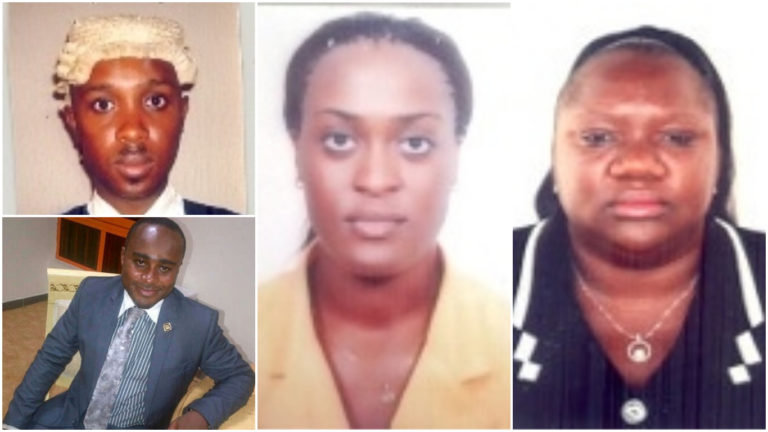
Njideka Nwosu-Iheme, 36, who is the daughter of Justice Mary Odili of the Supreme Court, is one of the names on the list. Nwosu-Iheme was appointed into the FCT Judiciary in March 2015 and currently serves as Magistrate I at the Wuse, Zone 6 Magistrate court.
Fatima Abubakar Aliyu
Another name on the heavily criticised list is Fatima Abubakar Aliyu, 35, a judicial worker, who is the daughter of the immediate past president of the Court of Appeal, Justice Zainab Bulkachuwa.
While little is known of Aliyu’s service in the judiciary, her mother on the other hand retired after 45 years in the judiciary.
She was the first woman to be appointed President of the Nigeria Courts of Appeal. As president, Bulkachuwa wielded enormous constitutional power, appointing judges and presiding over election petition tribunals across the country.
Hafsat Abba-Aliyu
Forty two-year-old Hafsat Abba-Aliyu was sworn in as a Magistrate I for the FCT judiciary in March 2015. She is the daughter of Justice Uwani Abba-Aji of the Nigerian Supreme Court.
While Abba-Aliyu’s service in the FCT judiciary is still in the early stages, her mother, Justice Abba-Aji has quite a high profile resume.
Prior to her elevation as a Supreme Court Justice in January 2019, Abba-Aji served as acting Senior State Counsel in 1984, Senior Magistrate II in 1986, Senior Magistrate I in 1987, Chief Magistrate II in 1989, Chief Magistrate I in 1991 and Chief Registrar in November 1991.
She was appointed judge of Higher Court in Yobe State Judiciary in December 1991, making her the first Lady Judge at Yobe State Judiciary, a position she held until July 2004 when she was elevated to the Court of Appeal.
Mimi Anne Katsina Alu-Apena
Mimi Anne Katsina Alu-Apena, 46, is the daughter of late Justice Aloysius Katsina-Alu, a former Chief Justice of Nigeria who died on July 18, 2018.
Ibrahim Mohammed
Ibrahim Mohammed CREDIT: FCThighcourt.gov
Ibrahim Mohammed, 40, is the son of a former grand-khadi of the FCT.
He hails from Buji LGA of Jigawa State and was appointed into the FCT Judiciary in May 2005. He currently serves as Senior Magistrate II at the Wuse Zone 6 magistrate court.
Kanyip Rosemary Indinya
Kanyip Rosemary Indinya CREDIT: FCThighcourt.gov
Kanyip Rosemary Indinya is the wife of the President of the National Industrial Court, Justice Kanyip. She is also sister of a member of the National Judicial Council.
Hails from Donga LGA of Taraba State. She was appointed into the FCT Judiciary in 2004 and currently serves as a Chief Magistrate II in Bwari.
Nwabulu Chineze
Currently serving as a Deputy Director at the FCTA, 57-year-old Nwabulu is said to be a sister to the presiding Justice of the Court of Appeal, Akure, Ondo State. She is ranked an ACR under the department of Return of Cases.
Enenche Eleojo
Enenche Eleojo CREDIT: Linkedin
46-year-old Eleojo serves as an Assistant Director at FCT High Court and also a personal assistant to the Chief Judge of the FCT High Court.
NJC’s policy
In Rule four of the NJC procedural rules,it is indicated that certain classes of lawyers are qualified to apply and be recommended as judges of a high court.
The rule states that they must be either legal practitioners in private practice, legal practitioners in public service, chief registrar of a court, or chief magistrates.
Curiously, in Section 255 of the constitution of the Federal Republic of Nigeria, 1999 (as amended), to qualify to becoming a judge in the High Court of the FCT, one must obtain a minimum of 10 years qualification as a legal practitioner.
Out of 33 listed candidates, only 11 meet the criteria set out in the employment guideline of the council, and 22, representing 66 percent, are yet to meet some of the specified requirements.
OUR ERROR We misidentified one of the nominees, Mohammed Idris Sani Kutigi as son of the late Justice Idris Legbo Kutigi, former Chief Justice of Nigeria. The nominee is not the son of the late CJN. The error is regretted.
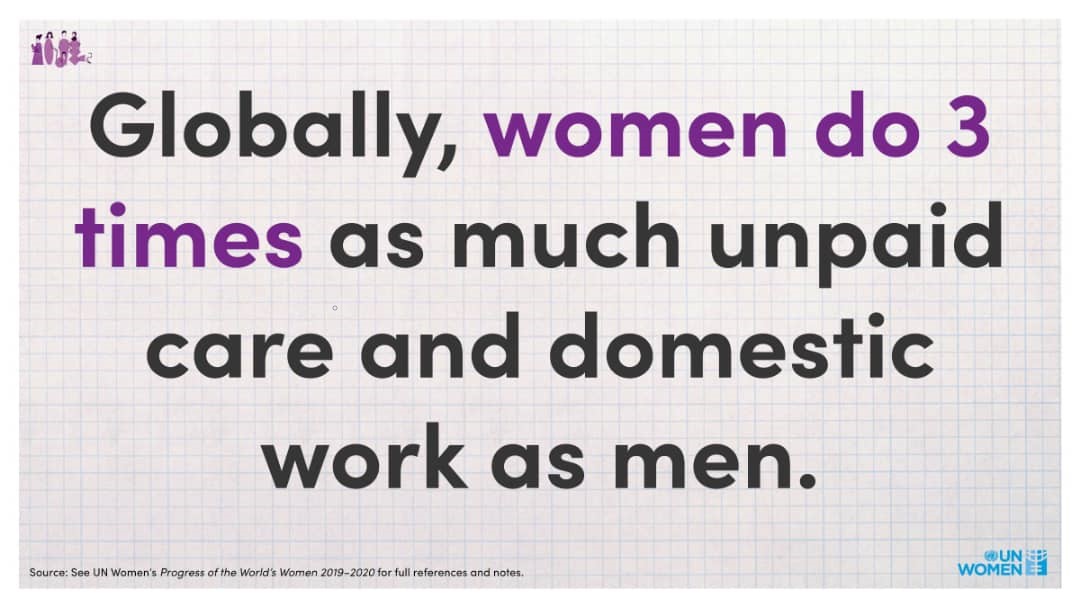
IN response to the COVID-19 pandemic, governments around the world adopted lockdowns and social distancing as parts of measures to reduce the spread of the coronavirus. One of the after-effects of this is a rise in the need for unpaid care work – a service largely provided by women and one of the factors that fuel inequality between genders.
Encompassing works like cooking, laundry, fetching water, child-care (homeschooling inclusive), care for the sick, care for the elderly and more; care work is the oil that greases the engine of society. It ensures the smooth functioning of human societies, preventing them from descending into chaos. The designation of care work as belonging to women and girls stems from gender stereotypes and is erroneous. To be clear, beyond the biological aspects of reproduction, the notion that care work is an obligation to be fulfilled by women and girls is nowhere indicated on their anatomies.
According to Oxfam International, the monetary value of care works contributed daily by women and girls is put at $10.8trillion annually. This triples the sum generated by the tech industry and shows how central the contribution is to economic development. Women and girls put in 12.5 billion hours every day to get the work done. But despite its efficiency and essential nature, care work remains invisible, undervalued, and are unremunerated in Nigeria.
Although at the slow progress, efforts committed to empowering women and girls towards the attainment of gender equality have yielded continuous progress. More women have emerged beyond the traditional roles of housewives/mothers to outstanding professionals in various fields. With this major shift, women are armed with equal skills and capabilities as men, and they contribute in equal measures to the workforce, leadership, and social development. They are also co-providers or breadwinners in homes.
Unfortunately, the burden of paid work has not in any significant way reduced the burden of care borne by women. Care works aren’t going anywhere. They would exist as long as we have human societies. The ideal response would be to have them distributed among individuals living in a household — men, women, boys and girls.
The reality, however, is that women, whether they work in the informal or formal sectors bear a double burden of working in private spaces as much as they work in public spaces. Affluent and middle-class women get the work done in proxy by hiring domestic help. Even in these instances, they are responsible for giving directives.
Research has shown that abandoning care work in women’s terrain undermines their fundamental rights, limit their opportunities, capabilities, and their choices. It inhibits their empowerment as the large amounts of time they spend doing these invisible work prevent them from fully participating in the political, civil, and socio-economic spheres. In that sense, we see how care work accounts for the exclusion of women in public and social spheres. The impacts must be worse for women in poverty.
There are also health challenges associated with bearing the burdens of care.
For instance, women who become overwhelmed with such work do not get leisure or self-care time. They are physically stressed and suffer exhaustion. In addition, combining unpaid care work with paid work has been known to trigger mental health issues resulting from the pressure on them to succeed ‘all-round’ – what is generally referred to as work-life balance rather than work-life management. In trying to strive for a balance, several women admit to experiencing severe burnouts.
What is worse? COVID-19 pandemic, the UN says will impact women in more severe ways! The disruption of the education sector means parents will be unable to outsource child care. As a result, a good number of women will be forced to choose between earning money and staying back home to take care of their children. Again, the “heightened care needs for older persons and overwhelmed health services all mean more unpaid and/or underpaid work for women!
Bear in mind, that until now the massive efforts put in day-in-day-out into care work are without financial rewards. Given the patterns consistently experienced in crisis and pandemics, an increase in demand for care work will have even higher effects on women’s lives and their lifetime earnings. This economic dynamic will further widen the gap of income inequality – making poverty more feminine. An unintended consequence of this will be a spike in cases of violence against women. Lack of financial independence has always made women more susceptible to abuse. Other likely consequences are discrimination and exclusion. And all of these could accumulate to a greater threat – a rollback in the gains that have been made over the years in the area of gender equality.
Rethinking Gender Response to Covid-19
Responses to Covid-19 in Nigeria must acknowledge the significance of care work engaged in by women, before now, and especially at this time. Our responses must include an evaluation of the specific contribution of care work to societal development. To achieve this, there is a need to accumulate data on various dynamics of care work. The media and civil society groups can help in this regard by generally mainstreaming gender into their works, and more importantly, perspectives on how Covid-19 has aggravated care work and how this is affecting women and girls at various intersections of their identities – social class, economic status, physical abilities and so on.
Availability and access to such gender statistics will help inform and guide policies that will address the attending challenges of unpaid care work, and domestication of women. By the way, is Nigeria still too underdeveloped to begin to consider the option of paid-care especially in the form of child support benefit? At least for up to two children?
The time to ramp up advocacy on caregiving as a gender-neutral work that must at all times be distributed is now. The advocacy should focus on reorienting men, boys and other members of the family to take up fair shares of care work. Testimonies of such interventions designed by Action Aid are proof of how women’s and men’s perception of care work can change and how this can transform human lives and societies altogether.
Since care work has been found to be the missing link in the analysis of gender gaps in workforce participation, wages, and the quality of job delivery. For example, motherhood penalty, is a term used to describe the sporadic decline in earning powers that women experience when they have children. And according to research, women confront this penalty for up to twenty years after the birth of their first child.
Unfortunately, the lockdown period will likely see us recording a hike in unplanned pregnancies and childbirth. We know this because according to Women Deliver sexual and reproductive health and rights of women which include modern contraception, safe abortion, maternal health services and safe childbirth, telemedicine are less prioritized during crisis and pandemics. In the process of providing emergency responses, the essential health and social services for girls and women are defunded, causing their health and sexual rights to become threatened. We envisage an impact of these on the experiences of women in the workforce during and post COVID-19.
For these reasons, COVID-19 interventions on labor must be gender-responsive. Policies in workplaces should include supports like paid maternity, parental leave (although varied, but for men and women), and remote work options for nursing mothers. If anything, the COVID-19 pandemic has proven that lots of work can be done remotely with the aid of several technological tools. Where remote work options are unavailable, organisation and corporate bodies should commit to providing crèches to improve mother and child proximities.
There is a need to confront the subtle exclusion that women experience in the workforce because they are pregnant or because they are nursing. The discrimination they battle at job entry levels as consequences of their reproductive functions and not because they lack the skills and capacities for such openings must be addressed. Such barriers should be replaced by gender transformative policies that are designed to support and equip women with the skills they need for professional development and leadership. Here, the approach to achieving gender equality must incorporate equity.
We must also ensure that young girls are not held back in homes as care providers. The possibility of this is very high with schools and daycares remaining closed as parents resume work and earn their living. In the long-term, such girls may be denied access to education, especially the skill set and capacities they need to effectively participate in the future where work will mostly be artificial and digital.
Busola Ajibola is an advocate of women’s and girls’ rights on issues of equality, social justice, elimination of violence, and inclusion. She writes from Abuja.
THE escalation of violence in Nigeria has been attributed to injustice meted out to some individuals or groups in Nigeria, according to a group discussion on human rights.
During the meeting organised by Global Rights, a civil society organisation based in the United States of America ahead of the National Mourning Day in Nigeria.
The digital conference themed Not Yet at War: A quick examination of the threshold of violence in Nigeria held on Wednesday had several human rights organisations in attendance discussing the level of violence in the country.
Chris Kwaja, United Nations Human Rights Council rapporteur said that every violence either large or small scale has an agenda behind them.
He said although not all violence are revenge-driven but most times, individuals or groups who felt injustice has been meted out to them come back as militant groups.
Kwaja said the individuals feel they do not have access to justice and since they’ve seen people get away with crime, they also can do the same.
“The way victimhood is addressed in Nigeria is the cause of the level of Violence we now have in Nigeria,” Kwaja said.
He likened violence in Nigeria to a Chinese or Indian movie when a teacher is killed and 30 years later the student comes back to hunt the killer of his teacher.
Kwaja added that violence has been democratised in Nigeria as each region has its own form of violence.
‘In the North East you have insurgency, North central you have kidnapping and Farmers-Herdsmen clashes, in the Southeast you have Independent People of Biafra (IPOB) and so on,” he said.
Cheta Nwanze, a lead partner with SBM intelligence who is one of the panelists lamented the level of military engagement with perpetrators of violence in the country.
He said the military are taking over policing from the Nigeria Police Force hence the constant news of killing of soldiers.
“Military are taking over policing and when perpetrators are having constant engagement with the military it helps them build their confidence,” Nwanze said.
He noted that ungoverned spaces are also part of reasons for escalated violence in the country.
He said in many states in Nigeria, there are concentrated development and governance as mostly governance doesnt spread beyond capital of states.
The Executive Director of Global Watch, Abiodun Baiyewu in her remarks said the country’s threshold of violence is abnormal when conpared to countries that are at war.
She faulted the government for not doing well enough to protect lives and properties which is their primary objective.
According to Baiyewu, Nigeria has been so far ruled by mafia and not leaders.
“We have been governed by mafia and not leaders, there has been a succession of mafia to mafia,” she said.
Baiyewu noted that the country has continued to lose soldiers and police officers who are supposed to protect the citizens because even the security officers are not protected.
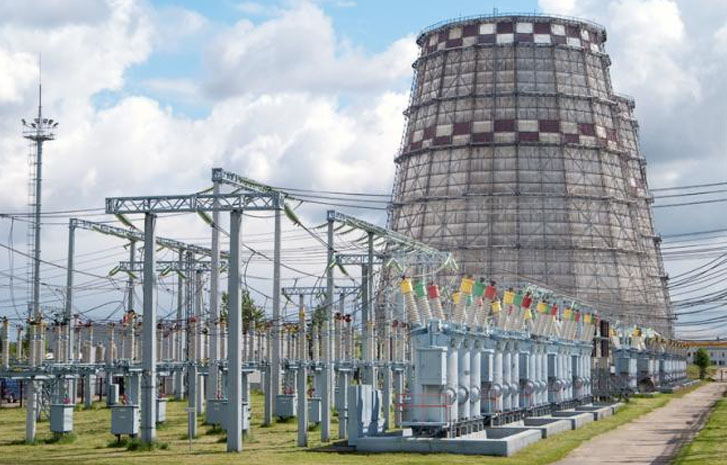
ELECTRICITY workers under the aegis of the National Union of Electricity Employees (NUEE) on Wednesday, protested the presence of security operatives in their office premises across the country, threatening to suspend work activities nationwide.
The union, during a protest at the Ministry of Power, Abuja, held placards that stated their demands.
Comrade Wisdom Nwachukwu, who spoke on behalf of the demonstrators, disclosed that members of the union spread across the country got to their respective offices to meet security operatives waiting at the work premises.
Describing the action as militarisation of civil space, the electricity workers criticised the decision of Mamman Saleh, Minister of Power which led to the sack of Usman Muhammed, former Managing Director of the Transmission Company of Nigeria (TCN).
Mamman had on Tuesday 19th April, announced the removal of Muhammad as MD TCN, and replaced him, with Suleiman Abdulazeez. The new MD was appointed in Acting capacity, alongside four new Directors.
“While we commend our members for their response to the sad action of the minister, we urge them to remain on their work bits but should not fail to pull out should the work stations be militarised as witnessed in some locations today,” Comrade Ayodele Kolade, NUEE Zonal Organising Secretary stated in a document signed by Joe Ajaero, the General Secretary.
The union queried the rationale behind Muhammed’s removal amidst the Coronavirus Disease (COVID-19) pandemic, stressing that the purported feats so far achieved in the sector were courtesy of the outgone MD.
Recently appointed Acting Managing Director of the Transmission Company of Nigeria @TCN_NIGERIA, Engr. Sule Ahmed Abdulaziz and his management team have today resumed duty at the TCN HQ, Power House, Abuja. pic.twitter.com/RUoVlcVoJ3
— Office of the Minister of Power (@PowerMinNigeria) May 20, 2020
According to the labour union, the group had repeatedly expressed concerns on the idea of handling what it described as the ‘very sensitive,’ part of the nation’s power sector to Siemens, which had reportedly failed thrice in delivering the SCADA/EMS contract awarded to it.
“The Minister’s action which may have taken the power sector 30 years backward may not be unconnected with the impending Siemens contract racketeering which the Union has raised alarm to Nigerians but he is bent on reaping-off the people,” Kolade said.
They, however, challenged the minister to a public debate on national television, while questioning his capacity to really transform the sector.
Minister: Labour lacks right to cause blackout
In his reaction, Aaron Arithmas, Media Aide to the Minister told The ICIR that the Minister is at liberty to work with any person he deems fit to improve efficiency, stressing that the workers lack the right to suspend work.
Aaron said there was a protest, but it did not last for 30 minutes. According to him, the labour actions could not amount to a nationwide blackout as the power system involves a process from the Generation Companies to Transmission and Distribution Companies.
“…the DISCOS are the tactical end of where services are provided to consumers all over the country. You won’t tell me the protesters would report to DisCos and protest against the removal of TCN director,” he said.
“TCN is in charge of infrastructure and all transmission lines all over. Are they going to shut down the Gencos or Discos. Where are they going to shut down?” he queried.
Aaron who described the demonstration as insignificant, added that only the senior employees were against the MD’s appointment, adding that the junior workers were in support.
“As I speak to you, only the senior staffs are at work from level 14 or so. But there was no tension. The Police were there to quell tension to take precautionary measures. They didn’t attack anybody and nobody was attacked.”
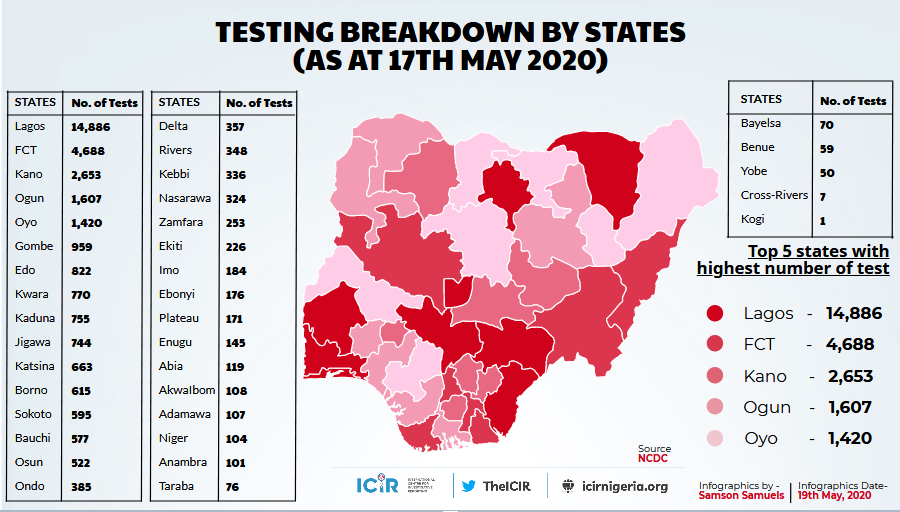
LAGOS state has conducted 14,886 Coronavirus disease (COVID-19) tests, representing 41.37 per cent of the entire tests done in the country, according to data from Nigeria Centre for Disease Control (NCDC).
The data, as of May 17, shows that a total of 35,983 tests have been carried across the country.
The top five states with the highest number of tests conducted are Lagos, Federal Capital Territory (FCT)-4,688, Kano-2,553, Ogun-1,607, and Oyo-1,420.
A breakdown of the data by the number of confirmed cases showed that while Kano (2,553) had conducted fewer tests than the FCT (4,688), the number of confirmed cases in Kano (825) is almost double of the FCT (418).
On May 13, the Kogi state government had said 111 residents were tested for COVID-19 but that the tests returned negative, this is contrary to the NCDC data that revealed that after three months when Nigeria recorded its index case, just only one test has been carried out in Kogi state with no confirmed case yet.
Kingsley Fanwo, Kogi state’s commissioner for information and communication strategy said “Kogi state got testing kits independently but followed NCDC guidelines. One hundred and eleven COID-19 rapid tests were conducted in Kogi state yesterday and all results came out negative.”
Lagos state government, on April 19 had set up sampling stations in the 20 local government areas of the state for citizens who fit the case definition of COVID-19 to visit and drop their samples for testing.
This aggressive testing strategy has helped the state in identifying cases, making it the state with the highest number of confirmed cases in the country with 2,624 cases.
Nigeria is still lagging behind in terms of testing across the continent.
However, the NCDC has as at May 16 activated another molecular laboratory at the Accunalysis Diagnostic Centre, Anambra bringing the number of laboratories for COVID-19 testing in the country to 26.
In terms of tests per million, Nigeria continues to dip down as it ranks 39th in Africa.
While testing remains critical, public health officials across the world, including the World Health Organisation (WHO) have linked the importance of testing of the pandemic to quick identification of cases, quick treatment for those people, immediate isolation to prevent spread, and identification of persons who came into contact with infected people so they too can be quickly treated, two months after the first case was confirmed, Nigeria is not still testing enough.
“We have a simple message for all countries: test, test, test. Test every suspected case. If they test positive, isolate them and find out who they have been in close contact with up to 2 days before they developed symptoms, and test those people too,” he said.
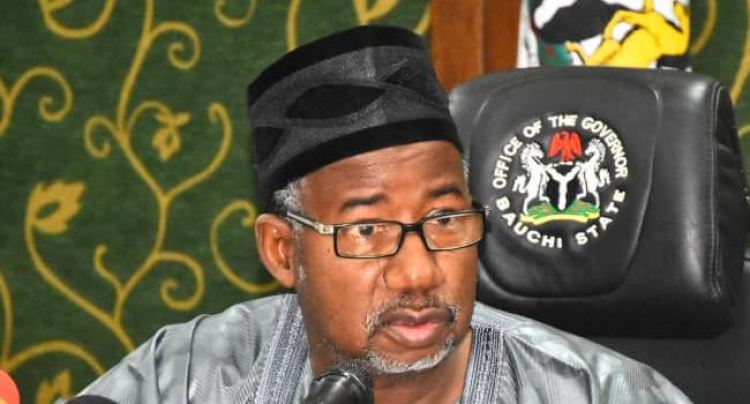
Bauchi State Governor says the State has resolved to suspend the partial lockdown initially put in place to tame the spread of the dreaded Coronavirus.
The governor stated this during a stakeholders’ meeting housing religious and traditional leaders which took place at Command Guest Palace, Bauchi.
He said the suspension of the partial and total lockdown of some parts of the state will take effect from May 21, 2020.
According to him, markets and places of worships are allowed to open, while the ban on commercial motorcycle operators remains.
Bala who said Sallah festivities will hold in a low key, without horse riding noted that the curfew from 8am to 6pm recently imposed across the country by the federal government is still in force.
He said that the restrictions in the number of passengers to be taken by commercial drivers and Keke NAPEP operators, closure of schools remained intact, while physical distancing and other measures is to be sustained.
“Allah in his infinite mercy has made this thing to nosedive and today we have the least number of those in hospitals compared to those that have been discharged. From all indications, Allah has answered our prayers.
“We were not doing the lock down because we want to punish anybody but we wanted this thing to come down, and it has come down,” he explained.
The governor who recalled that WHO has warned that the disease may not go completely and people have to live with it, added that Bauchi has successfully managed the disease with its array of technocrats, health workers that have sacrificed so much.
“We have always come here as stakeholders and discuss issues relating to COVID-19 committee that is headed by my brother, the deputy governor, Senator Baba Tela and he has briefed me on some of the discussions we have had here.
“There was a spike in the rising pandemic in the northern part of the state and we took responsibility to lock down completely, the three local governments of Katagum, Giade and Zaki,” he added.
Bala explained that Zaki was locked down because of its proximity with Hadeja of Jigawa state where the incident of coronavirus was prevalent while Katagum was locked down because there were more infections than Bauchi town whereas, 8 cases were recorded in Giade local government.
“So, we have to send experts after the total lockdown, headed by the chairman of the committee in those areas, and they were there for three, four days, while we established a mini rapid response team with the other committees that we have, the committee sat down in Katagum and make sure that the spike has been flattened, not only flattened but it has nosedived,” he said.
The governor who expressed delight that the lockdown has work very well said government has commenced the distribution of palliative in Katagum, Zaki and Giade local government areas of the state where the total lockdown is in force.
He said that the state will soon have its own testing center, adding that the work on the center has reached 80 percent completion.
The governor who said one positive case of the virus have been reported today, Wednesday in the state added that the state has a total confirmed cases of 225, total number of discharged stood at 127 and 93 cases are currently active.
The stakeholders that include traditional leaders, religious leaders, union leaders, government officials, amongst others unanimously took part in the decision to lift the lockdown.
All those who spoke at the meeting commended the governor for the measures taken to contain the spread of the virus, pledging continued support to the government.
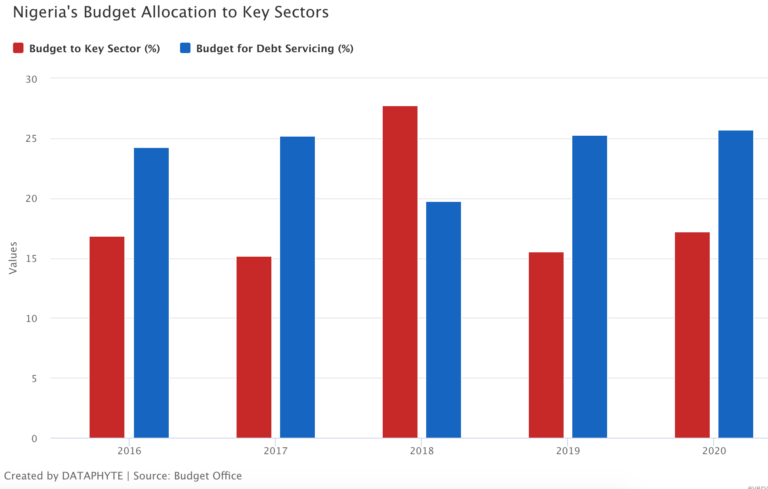
A recent DATAPHYTE occasional paper revealed that budgetary provision to some of the top five most critical sector’s of Nigeria’s economy accounted for only 17 percent of the initial 2020 budget. While these five key sectors (Agriculture, education, health, infrastructure [power, works and housing], and security) compete for less than a fifth of the total budget size, allocation to debt servicing was over 25 percent of the total budget size for the same year.
In the last five years, budgetary allocations to these key sectors average at 18.5 percent of the total budget. Except for 2018 where the allocation to these sectors exceeded a fourth of the total budget size, these sectors have not enjoyed as much as 20 percent of the annual budget share since 2016.
Comparatively, budgetary provision for debt servicing averaged at 24.02 percent between 2016 and 2020. Except for 2018 when only 19.73 percent of the budget was earmarked for debt servicing and 2016 that had 24.25 budget share for the same, the budget share for debt servicing has persistently occupied over a fourth of the total budget size since 2016.
But this background appears to be elusive of the reality that Nigeria’s debt-to-gross Domestic Product (GDP) ratio is not so critical and the huge investment in debt servicing may be mismatched. Not too long ago, the International Monetary Fund revealed that despite Nigeria’s rising debt level, its debt-to-GDP ratio, which stands at about 28 percent, is still below the average in Africa.
Unimpressive development indicators
On the other hand, Nigeria’s Human Development Index (HDI) measures considerably low. Also, the country’s performance by Quality of Life (QoL) measurement is staggering. The 2018 Nigeria Demographic and Health Survey report, revealed that as much as 42 percent of Nigeria’s rural population lacked access to safe drinking water. In urban areas, about 26 percent of the population lacked access to an improved source of drinking water. Also, about 44 percent Nigerian households did not use improved sanitation facilities. Electricity reach to Nigerian households was only about 59 percent. As much as 69 percent and 17 percent of rural and urban households respectively lacked access to electricity.
In addition to these, 36 percent of females and 27 percent of males in Nigeria have no education. The net school attendance ratio (NAR) was 61 percent at the primary level and 49 percent at the secondary level. Other HDI and QoL measurements do not indicate a much better outlook for the country. With 95.9 million Nigerians living in extreme poverty and the country’s unemployment rate of 33.5 percent, Nigeria has a gloomy outlook in its overall development performance.
The Role of the Nigerian Legislative Arm
Despite this gloomy outlook, Nigeria invests less in its critical sectors. This raises questions on the country’s budget process and its commitment to the course of development. Moreover, this low investment calls to questions the budget oversight role of the Nigerian legislature. This also generates a question on the items the National Assembly looks out for when ratifying the budget. It all appears the National Assembly has failed in delivering the best of life to the citizens.
Nevertheless, beyond the ‘failure’ is the urgent necessity of repositioning Nigeria’s revenue within citizen’s real needs. Already, the coronavirus pandemic continues to expose the failures of leadership in Nigeria as well as some of the limitations of Nigeria’s current operational framework. Yet, the National Assembly has said little in response to the crisis
What has to be done
Amidst the current global crises that have continued to show Nigeria many of its deepest sores is a calm appeal for the country to retrace its steps and redefine its realities. For instance, the recent oil market fluctuations have resulted in a more common consensus on the need for economic diversification. Similarly, the current pandemic has improved the government’s perception of the crises in its health sector.
To make the most of the time, Nigeria must make a deliberate effort to redefine its realities. This should involve prioritizing citizen’s critical needs. Budgetary provision for infrastructure, education, health, security, and the employment generating sectors should be increased.
In addition, the legislative arm of government should ensure diligence in the process of budget approval to guarantee maximum satisfaction of citizen’s critical needs. International conventions such as the Abuja Declaration of 2001 that recommends a 15 per cent budgetary allocation to the health sector, as well as UNESCO’s Education For All recommendation, should also be adopted in the budget process within practicable limits.
ISHAQ Akintola, founder of Muslim Rights Concern (MURIC) several times has been in the eye of the storm, especially because of many press statements he issues on behalf of his organisation which according to him are in defence of the Nigerian Muslims.
Often, the professor of Islamic Eschatology has made spurious allegations as well as unguarded statements capable of causing disharmony and creating tension among people of different religious beliefs in the country.
In this report, The ICIR compiles some of such statements made at different occasions by Professor Ishaq Akintola
Deaths in Kano meant to reduce Muslim population
In April, Akintola alleged in a statement that went viral that the rising deaths in Kano State, which has now been confirmed to be from Coronavirus disease (COVID-19) by the Presidential Task Force, was a deliberate attempt to reduce the Muslim population in the state.
In the statement, Akintola asked “Is this a deliberate attempt at debilitating the Northern population with its attendant impact on Muslim majority population in the country?
This comment made without evidence attracted condemnations from members of the public who described it as a ridiculous one coming from a professor who should understand better.
Despite the backlash that trailed his statement which many considered unguarded, Akintola again, in another press statement issued on May 5, said the death toll in Kano from COVID-19 ought to be higher than that of Lagos, despite his previous attempt to downplay the number of death in Kano.
In the new statement he disagreed with the Nigeria Centre for Disease Control ( NCDC) and rejected the number of new cases of COVID-19 confirmed in Kano state. He questioned why cases in Lagos were higher than that of Kano after concluding that the deaths in Kano were tactics by the Federal Government to reduce the number of Muslim populace in northern Nigeria.
“We beg to disagree. If all other figures are correct, that of Kano is unacceptable. Kano is presently known to be Nigeria’s epicenter of the pandemic. So how can Lagos be 62 and Kano is just 2? How can the figure for COVID-19 cases be 2 in a city where people are dropping dead? How can Kano’s figure be the same as those of Ebonyi, Nasarawa, Osun, Kwara and Plateau? We charge stakeholders to put their heads together on this simple logic.”
MURIC says Amotekun is ‘anti-Islam’
On January 17, 2020, Akintola was reported to have asked Southwest governors to change the name of the new regional security outfit recently set up to fight kidnapping and other crimes in the region on the ground that it was anti-Islam.
Operation Amotekun was launched on Thursday, January 9, by the South-West governors in Ibadan, Oyo State. The South Security Network nicknamed Amotekun, a Yoruba word for leopard was an initiative of the Osun, Ogun, Oyo, Lagos, Ondo and Ekiti states government after countless cases of kidnapping and banditry in the states.
Akintola’s MURIC argued that the name of the outfit as well as recruitment of its personnel was skewed against Muslims. He hinged his argument on the Bible’s Jeremiah 5:6 which says, ‘A leopard shall guard over their city’. He alleged that the name was chosen from the Bible verse thereby making it more of a Christian initiative.
Christians enjoy more holidays In Nigeria than Muslims
Earlier in the same month, the founder of MURIC argued again that Christians in Nigeria enjoy more holidays than their Muslim counterparts.
“MURIC asserts clearly, categorically and unequivocally that Muslims are in bondage in this country. Why should one group get all the honey in the land while the other is ignored? We demand equal rights and justice,” Akintola had written in a press statement.
This came after the Christian Association of Nigeria (CAN) claimed that Christians were being persecuted in the country.
However, The ICIR found out that while Christians enjoy four public holidays in the calendar year, Muslims have three out of the12 public holidays in Nigeria. Also, states like Osun and some northern states have declared Islamic first day of the lunar month as a public holiday, thereby making MURIC’s claim totally misleading.
US working with CAN to create religious tension in Nigeria
While condemning the United States’ designation of Nigeria as a country that has engaged in or tolerated severe violations of religious freedom in December 2019, it was reported that Akintola through MURIC claimed that the United States was working with the CAN to create religious tension in the country.
MURIC also said CAN has swallowed the bait of “religious persecution” which the US uses in international politics.
“CAN has only manifested its naivety in modern international politics. The US has thrown religious persecution as a bait. Unfortunately CAN has swallowed it, hook, line and sinker,” Akintola said.
“Our message to CAN is this, allow America to set fire to your country and we can assure you that it is not the Muslims alone who will face turmoil. Whether to avoid foreign interference in your country and live in peace with your Muslim neighbours while you watch your children and grandchildren play peacefully in the garden or to open the doors wide for an army of occupation which will bring general pandemonium, the choice is yours,” he added.
The MURIC founder then likened CAN to a “mischievous housewife who beats up the husband but screams for help.”
MURIC threatens WAEC, warns against deliberate exclusion of female Muslims from exams
In February this year, MURIC accused West African Examinations Council (WAEC) of being used by certain forces to retard the educational progress of Nigerian Muslims.
He made this strong assertion without naming the “forces,” adding that the group has received inundated reports from Muslim students, their teachers, and parents about a face recognition software used during WAEC registration which refuses to capture hijab clad girls.
He claimed that WAEC’s registration software was deliberately designed to automatically reject hijab but he did not give any technological backing to prove his point.
Nigerians hate Fulani herdsmen because they are Muslims
In one of his several controversial statements, Akintola in 2017 claimed in a statement that Fulani herdsmen were being attacked by Nigerians because they were Muslims.
He warned in the statement against “anti-Fulani sentiments” that were capable of inciting further ethnic violence across the country. His outburst was in reaction to the killing of 60 Fulani herdsmen in Shaforon, Kikem and Kodemti villages in Numan, Adamawa State.
He added that MURIC was “deeply disturbed by the rate at which ethnic violence was erupting in Nigeria.
“We are equally constrained to blame the recent attack on authors of hate speech, particularly those motivated by anti-Fulani, anti-North and anti-Muslim sentiments.”
However, none of the reports of the notable civil society organisations checked by The ICIR aligns in any way with Akintola’s religious claim.
In a report published by Amnesty International in December 2018, almost 4,000 people have been killed and thousands displaced in fighting between herders and farmers in Nigeria’s middle belt in the past three years.
Amnesty, who started documenting clashes in January 2016, said the violence was increasing with more than half (57 percent) of the 3,641 recorded deaths in the past three years occurring in 2018, and that the government’s failure to curb the violence and prosecute the perpetrators, was exacerbating the situation.
Another report by the International Crisis Group (ICG) in July noted that the conflict had evolved “from spontaneous reactions to provocations to become premeditated scorched-earth campaigns in which marauders often take villages by surprise at night”, claiming six times more lives than the Boko Haram insurgency.
Many Nigerians, including Muslims, have repeatedly denounced Akintola’s MURIC public and religious statement.
“There is difference between agitation and rhetorical question” – MURIC
In response to some misleading claims made by MURIC in the past, Akintola expressed in a response mail to The ICIR that his statement about the death in Kano is just a rhetorical question posed to NCDC questioning if there is an agenda to reduce Muslim population and not an assertion.
“ I am surprised that we claim to be educated in this country but all we can parade are educated illiterates. How come we don’t know the difference between an allegation and a rhetorical question? We asked NCDC if there is an agenda to reduce the Muslim population. That is the language of action everywhere in the world. You use it when you want to create an awareness or compel action. NCDC ignored the high death toll in Kano. Instead of doing something, it locked up its office in the state and left. Perhaps what many do not know is that we do not just speak without receiving some information, sometimes from very high places. So that question should be thrown at NCDC. Let the agency tell Nigerians what efforts it is making to stop the unending chain of deaths,” Akintola said
He added that “ An asymmetrical section of the Nigerian media used a totally unprofessional caption for the Kano story. They forgot that such action exposes them as parochial. They even ignored the part in the same press statement where MURIC blamed the people of Kano for ignoring official instructions on COVID-19 pandemic”
On the contrasting statements on Amotekun, Akintola maintained that MURIC’s statements were not contradictory and blamed the twist on the “enemies of peace”.
“We did not make contradictory statements. Our position has always been one. It is the enemies of peace who always deliberately twisted our statements. Our advice is that people should always endeavour to get our original statements. They can always get it on our website: www.muricnigeria.com”.
Akintola said his group objected to Amotekun and suggested ‘‘Oduduwa Guards’ as an alternative, and also rejected the idea of using churches to register for the outfit, likewise the idea of collecting reference letters from pastors.
“We also opposed the use of the initiative if it is for witch-hunting any particular tribal group. We remain adamant on our stand. We have not withdrawn this statement,” he added.
However, a group known as Coalition of Progressive Yoruba Islamic Groups (COPYIG) has described Ishaq Akintola as a big threat to southern Nigeria over his comment on Amotekun with an agenda to tear the country apart.
Mukthar Okunade, the national coordinator of the coalition, said Akintola is promoting rebellion against Yoruba people.
“It is unfortunate that one Akintola who leads MURIC has consistently fanned embers of disunity in Yorubaland hiding under the guise of Islam to set brothers against brothers, communities against communities and men against women,” he said.
“Akintola has no followers. He is an extremist and a sadist. He appears to have a suicide instinct. We urge him not to attempt to drag the entire Yoruba along on his pathway of mischief and treachery against the Yoruba people.
“In his riotous mind, blind rage and in a show of complete lack of wisdom, he claimed Amotekun is a Christian outfit. This shows how shallow and irresponsible Akintola is,” he said.