Home Blog Page 2105

Lagos denies spike in infection rate in Amuwo Odofin, to deal with official who made claim in viral WhatsApp audio

By Bankole Shakirudeen Adeshina


FAITH Anyanwu, medical practitioner and official of the Lagos State University Teaching Hospital, who blew the whistle on the alleged alarming cases of COVID -19 infections in Amuwo Odofin, Lagos, in an audio recording that has gone viral, has landed in trouble as the state government might be planning disciplinary action against her,

Investigations by The ICIR indicate that apart from losing her job, her practice license may also be suspended or withdrawn.

Mrs Fausat Bankole, Secretary, Agboju Market Executive.

“I am sure if she is not sacked already, she is going to be sacked very soon,” a senior government official who sought anonymity told The ICIR.

“Not only that, we would also make sure that her practice license is suspended too, for breaching the ethical code of her profession,” the source added.

Three weeks ago, in an audio message which trended on the social media, Anyanwu called attention to the alleged widespread of COVID 19 cases in Festac and Amuwo-Odofin environ of Lagos State.

She said that “there is high rate of community transmission of the deadly virus in Festac and the entire Amuwo-Odofin”, adding that “out of 40 samples collected, in a particular day, for example, 10 to 15 people came out positive.

In Agboju Market, the central market servicing the entire Festac and adjoining communities like Maza-Maza, Ojo Road and Mile 2), the situation is worse, she said.

“You must not approach Festac or Amuwo-Odofin at this time. If at all you must do so, you must protect yourself with face mask and hand sanitiser,” Anyanwu counseled in the audio message, which has been widely circulated on WhatsApp.

However, the Lagos State government has dismissed Anyanwu’s message, describing it as “hoax,” “fake news,” and “breach of ethical code,” adding that it was “false, misleading, and lacked credibility”.

“The number of cases quoted also was unbelievably exaggerated,” the government insisted.

The government official quoted earlier said the state government felt embarrassed and betrayed by one of its health workers and deemed her action irresponsible.

The official said that the attitude of the government is that “even if what she said in the audio is true and that staggering infection rates were being recorded, it was irresponsible of her to have made it public in the manner she did.

“What she did could have led to serious health crisis in the state as people could have panicked”.

The government, however, has not been able to give the actual number of the existing cases in the Amuwo-Odofin LGA.

The officials only confirmed that Amuwo-Odofin Testing Center serves five local government areas and the numbers were for those council areas.

But neither the Chairman of the LGA, Valentine Brahimon, nor the NCDC Surveillance Lead assigned to the area, Oyelakun Okunromade, could provide accurate figure of the people infected by the Coronavirus.

The press conference jointly held by the local government and NCDC, on April 24, also did not offer much information other than to discountenance Anyanwu’s claims and allay the peoples’ fears.

But the LGA boss confirmed that “it is true that there were 23 positive cases reported in Amuwo-Odofin, but that number does not belong to Amuwo-Odofin alone.”

He said the LGA is serving as a Zonal Testing Center for four other local government –Apapa, Ojo, Ajeromi-Ifelodun, and Badagry,

The NCDC senior official who spoke after him  also did not provide clarity, rather she attacked the personality of Anyanwu.

According to Okunromade, “she (Anyanwu) is a medical doctor. And you understand that this period is a stressful period for everybody. It could be one of the reasons why she made that non-evidence-based statement.”
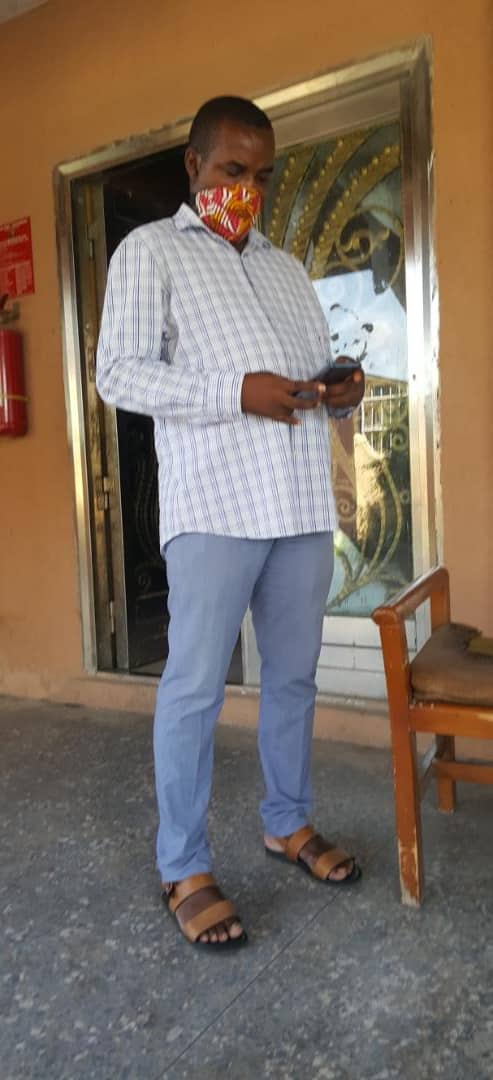
Amuwo Idofin Covid-19
Yomi Adejumo, CPS to Chairman Amuwo Odofin

Continuing, Okunromade said the authorities have taken charge of the situation.

“As the EOS, we have spoken to her. We’ve taken her in for counseling, and we are on top of the situation.”

The ICIR learnt that some government officials are also aggrieved because of her audio message, and are calling for her head.

To them, her offence is too grievous to be overlooked. They believe her action almost triggered widespread panic and public incitement against the government.

And “relieving her of her volunteering job, instigating her sack from her primary place of work, and suspending her practicing license” will not be too much a punishment”, an aggrieved official told The ICIR.

In an exclusive interview with The ICIR at the LGA Secretariat, Brahimon, who spoke through his Chief Press Secretary, Yomi Adejumo, he described Anyawun’s message as a “hoax”.

“The lady has apologised that it (the audio message) wasn’t meant for public consumption, that she was just trying to tell her people to beware about the virus and take safety precautions, ” he said.

Brahimo didn’t provide additional information.

Former Chairman of the local government, Ayodele Adewale, and the Chief Medical Doctor, Amuwo-Odofin Maternal and Child Center, Dapo Shoyinka, also expressed their displeasures on the matter.

Adewale, in a telephone interview with The ICIR, described Anyanwu as a purveyor of fake news, saying in a matter of science, “empirical facts are sacrosanct.”

He said the incontrovertible reputation of science lies solely on verifiable and consistent fact, “which the young lady’s broadcast lacked in its entirety.

“Therefore, for me, her message should rather be seen as nothing but fake news,” he added.

For Shoyinka, the Medical Director of the only government – owned hospital in Amuwo-Odofin area, Anyanwu’s voice note threw him off balance.

Dismissing the claims in its entirety, Shoyinka said, as the Medical Director of AOMCC, he would have known of any emergency if such exists.

And in that situation, he said measures already have been put in place to effectively manage patients until they are safer to be handed over to NCDC without spreading the virus.

“I must confess, I was taken aback on listening to the audio. I had to make several calls to all the colleagues in the private hospitals within the local government to verify the fact.

“When it was established they were unfounded, I finally called the local government chairman, who allayed my fears that they are already attending to the matter.”

Shoyinka said he has been dealing with lots maternal and pediatric cases but is yet to record any COVID case in his hospital.

“I have been treating patients, more than the usual number, particularly because of the free healthcare services that Mr. Governor generously granted the people of Lagos State.

“And as a matter of programming, I get an update on a daily basis of any patient that comes to our emergency, their diagnosis, treatment procedures and everything of such would come directly to my phone.”

Also, Oladehinde Ebenezer, the Medical Officer Health, who doubles as the Head of the COVID 19 Team for Amuwo-Odofin, and worked directly with Anyanwu, acknowledged that though she was a diligent officer, who demonstrated high level of competence on the job, “but she shouldn’t have abused the opportunity and broken the ethics of her job.”

Ebenezer did not distinguish between professional ethics and moral courage to call for safety, especially during health crisis such as COVID 19.

Several text messages and calls put through to Akin Abayomi, a Professor of Internal Medicine, Haematology, Oncology, Environmental Health and Biosecurity and Lagos State Commissioner for Health, and his counterpart in the Ministry of Information, Gbenga Omotosho, were not responded to.

Abayomi also did not respond to messages sent to his Twitter handle and Facebook Messenger.

The Lagos State monthly COVID 19 Update for the month of April, as released by the Ministry of Health, did not list Amuwo-Odofin among the LGAs with positive cases.

The ICIR checks Anyanwu’s claim.

Investigations by The ICIR shows that in the last one month, NCDC officials have visited about half a dozen of buildings within Festac alone, to evacuate persons who have manifested the symptoms of Coronavirus.

Out of these cases, one person was evacuated from 24 Road, two patients on 7th avenue and another one on 5th avenue.

There were viral video proofs of these cases, as recorded by residents, who later posted them on the social media.

After each of these evacuations, it was learnt, another team of NCDC would return to the addresses, to disinfect the affected homes, thereby preventing further outbreak within the area.

Repeated visits by this reporter to three residences among the places where patients were evacuated did not yield much information, as the families and neighbors appear to have deserted the area.

While those that were around, would not open their doors to attend to the reporter, those outside maintained sealed lips over the matter.

“Oga, what are you looking for? You better go home and keep safe. The virus is everywhere, and somebody was picked from that block just last week”, a young man, who identified himself as Pastor Emmanuel, warned this reporter to leave the area immediately.

When the reporter visited last week, Festac and the entire Amuwo-Odofin were empty. People barely summoned the courage to leave their home. It was an uneasy calmness in the entire area.

The COVID 19 cases allegedly reported at Frontline Hospital, a private clinic on First Avenue, Festac, also fueled the apprehension.

<

div class=”mceTemp”>
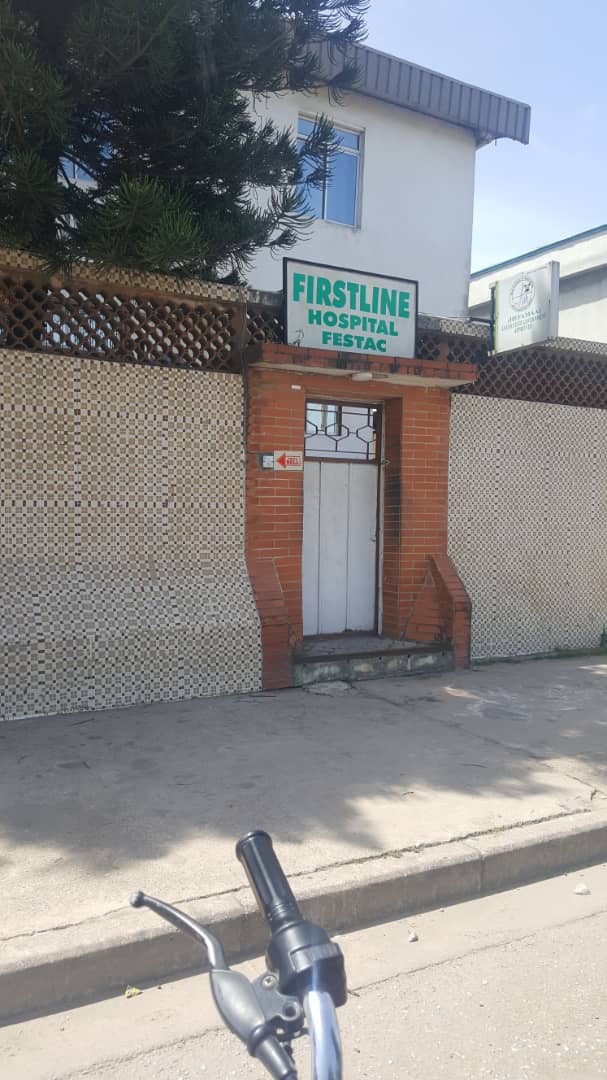
Shutdown Firstline Hospital, FestacAt the hospital, there were two contradicting stories, with one claiming three non-medical officials of the hospital came down with the deadly virus and the place was immediately shut down upon their evacuation.

The other story, according to eyewitness, was that patients, who refused to divulge the symptoms of their illnesses, walked into the hospital, infected the hospital staffs, before they were all evacuated to the isolation and treatment center by NCDC. This also led to the closure of the medical facility, some residents said.

Efforts to reach the owner and Medical Director of the Hospital, Giwa, proved abortive, as several calls put through to him on his personal telephone number were not responded to. He also did not reply to the Whatsapp and SMS messages sent to him, requesting for comment

Who really is Faith Anyanwu

Anyanwu is one of the frontline officials, dealing with Active Case Search, Contact Tracing, and later Sample Collection for onward Testing of the virus, for the NCDC and Lagos State Government Response Team, and so her message was weighty.

Her LinkedIn account shows that she is a specialist in Infectious Disease Protocol, Patient Resuscitation, Emergency Management, Health Education and Clinical and Mortality Reviews, and she currently works with the Lagos State University Teaching Hospital

She had her M.B.B.S from the Abia State University, M.Sc in Global Health (Health Metrics) from the University of Ibadan; had advance training in Leadership and Management in Health at the University of Washington and Emotional and Social Intelligence at the Lagos State Ministry of Establishments and Training.

With this resume, little wonder her warning quickly went viral, piercing through eardrums and sending chill down the spines of hundreds of thousands of residents of the community and beyond.

The 2006 census puts the total population of Amuwo-Odofin at 453,000.

For the inhabitants of this middle-income community of Lagos State, the message was loud and clear; there was trouble in the land!

Apprehension enveloped everywhere, as concerned individuals started putting calls through to their families, friends and loved ones, to warn them or out-rightly ask them to leave the area immediately.

According to the World Health organization, community transmission is the last and most uncontrollable stage a novel virus such as COVID 19 can get.

At this stage, positive cases would spiral out of control, as they would keep mounting daily, with heartbreaking fatalities.

Inside  Agboju Market

Opeoluwa Second Gate Market, also known as Agboju Market, is reputed for its resilience over the years, serving hundreds of thousands of residents of Alakija, Festac, Amuwo, Agboju, Mile 2, and Maza-Maza environs.
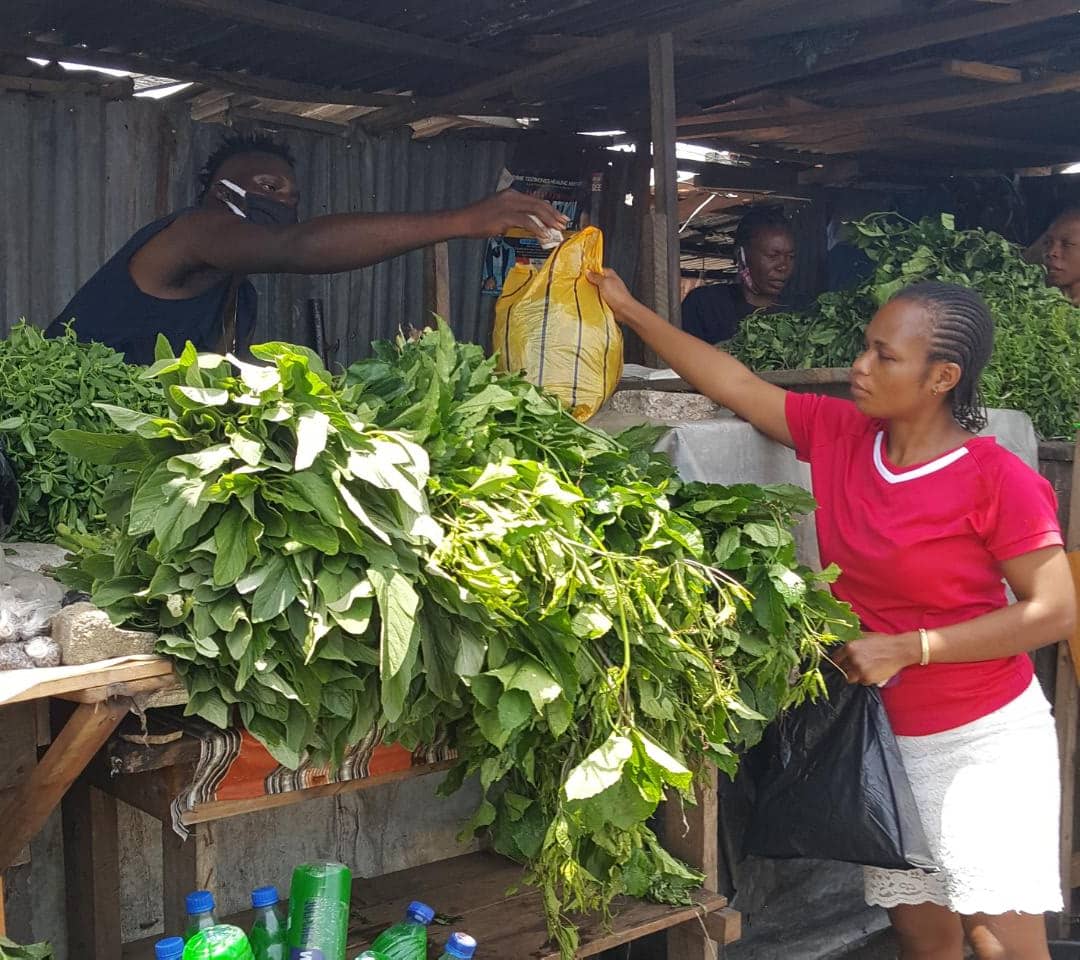
Seller and buyer at the Agboju Market during The ICIR visit.

On both sides of the highway, the market landscape is barely occupying up to one hectare of land, but makeshift shades and woodened counters, scattered across the roadsides, sometimes occupying the walkways.

There was a conspicuous physical planning deficit in the structural layout of the market, just as it exists in many areas across the state.

The standard measurements for spacing in-between shops, at the market are not observed. Literarily speaking, the end of one table is the beginning of another.

Movement for customers sometimes is a Herculean task because pathways are too narrow to accommodate human traffic. Yet, the Agboju Market is the only around, catering to probably over 65% of the entire population in Festac and Amuwo.

Therefore, when the viral audio message surfaced, identifying it as a breeding ground for the deadly coronavirus, people panicked.

Anyanwu was not the only one concerned about the status of the market. In fact all the stakeholders who spoke to our reporter agreed that “the market needs urgent attention.”

At one of the daily briefings by the Presidential Taskforce on COVID 19, the Director General of NCDC, Chikwe Ihekweazu while responding to a question from journalists, admitted that, “our markets are not perfectly built to control COVID 19.”

He admitted, “In fact, they are perfect grounds to spread the virus.”

The NCDC boss’ explanation was that given the porous nature of the entry points into our markets, it is practically impossible to screen all customers coming in and out.

“But it behooves of you (market dwellers and executives) to insist that your customers do the right things, wear face masks, maintain social distance and probably wear gloves. You should know that compliance would most definitely safe your live,” he admonished.

The ICIR visited Agboju market for three days, observing activities and later joined women leaders on the tour. The inspection ended with interaction with some of the customers, sellers and the executives of the market.

The Secretary to the market executives, Fausat Bankole, in the absence of the Iyaloja, who guided this reporter on the tour of the market, spoke of safety precautions being enforced at the market.

“In this Agboju market, we are law-abiding and very responsible,” she said, adding that the executives have since been enforcing all the recommended safety precautions, including the compulsory wearing of face mask, improved hygiene, alternating roaster for all the traders, among others.

As the inspection progress, Bankole pointed at the stalls and the compliance to the spacing directives.

“As you can see, the owner of this table is absent today, the next, who sells Vegetable, is there shading; next to her, an onion seller, did not come today; the next, who sells pepper is selling and on and on like that.

“On the opposite side, the shoes and clothe sellers are not supposed to sell today, but they have come to plead with us to allow them so they can make some money to feed themselves and their families. We had to grant them the request,” Alhaja Bankole explained to this reporter.

Also speaking, Iya Biliki, a pepper seller who appears to be in her early 30s, said in Yoruba language that they were all scared when they heard about the audio message.

“We are scared o. we don’t want to die. Help us beg them to come to our rescue o,” she told The ICIR.

Admitting that they had to take advantage of the window of opportunity given by government to open and trade in the market, because of the survival challenge, but she and her contemporaries, as instructed by the market officials, are taking extraordinary safety precautions.

“As you can see me, I am covering my nose with face mask,” she pointed at her face, adding that any customers that comes without using it, would not be attended to.

“Yes, there is hunger in the land, but for me, life is worth much more than any amount,” she added.

On the part of the government, Abosede Finnin, the Health Educator for Amuwo-Odofin and head of the LGA Public Sensitisation Team on the virus, told our reporter that she has equally been patrolling the market, sensitising them on the virus and the need to take safety precaution.

“Unfortunately however, the traders are very aggressive. On two different occasions, they almost beat us and even seize our public address system. Their anger is that we have collected palliative stimulus and refused to hand it over to them,” Finnin explained her frustration.

Reaction from residents

Omotunde Lawson, Founder and Director, ChristHill College, Apple Junction, Amuwo-Odofin, was convinced that there is some truth in the viral audio.

According to her, especially with regards to how careless people have been, and the mad rush to go out before the directive on compulsory wearing of face mask was pronounced, “it is most likely that the COVID 19 Cases would eventually increase in Amuwo-Odofin LGA.“

Lawson, a retired director with the Lagos State Ministry of Education, recalled that “when I heard about the viral audio, I was singularly upset and scared to the bone marrow.

She added that she had had to turn back on several occasions upon seeing outrageous crowd at one of the supermarkets where she had wanted to go and shop.

“So, the possibility of it (COVID 19) being more than what is being reported is possible,” she insisted.

Fatimah Hassan, a resident of Festac Town, she was not initially scared when she heard the message until when her friends and loved ones, who know where she resides, started calling to check up on her and warning her to keep safe, an act she claimed further inflamed her anxiety.

The situation became so panicky that she started developing imaginary symptoms of the coronavirus.

“I became very scared. In fact, I began to have an imaginary symptom of the virus and I became worried. I started feeling Migraine, coughing and having weakness of the body. I became so worried

“During this time, as bad as my situation was, I was not actually scared for myself, I was more scared about the places I might have been to, persons I might have come in contact with, what would be their fates if it is found that I have the virus, and that I have infected them all. The thought was troubling,” she disclosed.

Speaking with The ICIR, Pastor B.D.N Olalowo, founder and Minister of Christ Apostolic Church (CAC), Wonder-Land, located in Maza-Maza, is worried that the area, which is an extension of Festac has not been adequately attended to.

His concerns stemmed from the fact that throughout the lockdown, people still moved freely and unprotected, with many disregarding the existence of Coronavirus.

“Maza-Maza is an extension of Ajegunle. Though not the typical squalor you find in Ajegunle, but it is equally densely populated here also. You can find family of six, seven, eight and as much as 10 in a room apartment.

“God forbid a spread of the disease to such a family, the spillover effect is best imagined. That is why I want to use this medium to plead to the government to come to our aid in Maza-Maza. Even after the lockdown, they should not take their eyes off the people here,” Olalowo pleaded.

A resident of Amuwo Odofin Phase II Estate, Mrs. Emetonjor Joy Iheoma, said her family had fled their home to take refuge in her mother in-law’s house at Ije, Ijegun, a place she considered safer.

According to her, “we have fled our home in Amuwo Phase II, partly because of the fear of contracting the virus.

Staying close to family during the lockdown is even healthier for one, she said.

“In this place we are now, we have my mother in-law, who I am also taking good care of, including my husband and my little angel daughter, Jane.

“I feel very safe here and so scared of returning home, especially with the news of the spreading of the virus there,” she added.

Inside Amuwo-Odofin COVID-19 Testing Centre

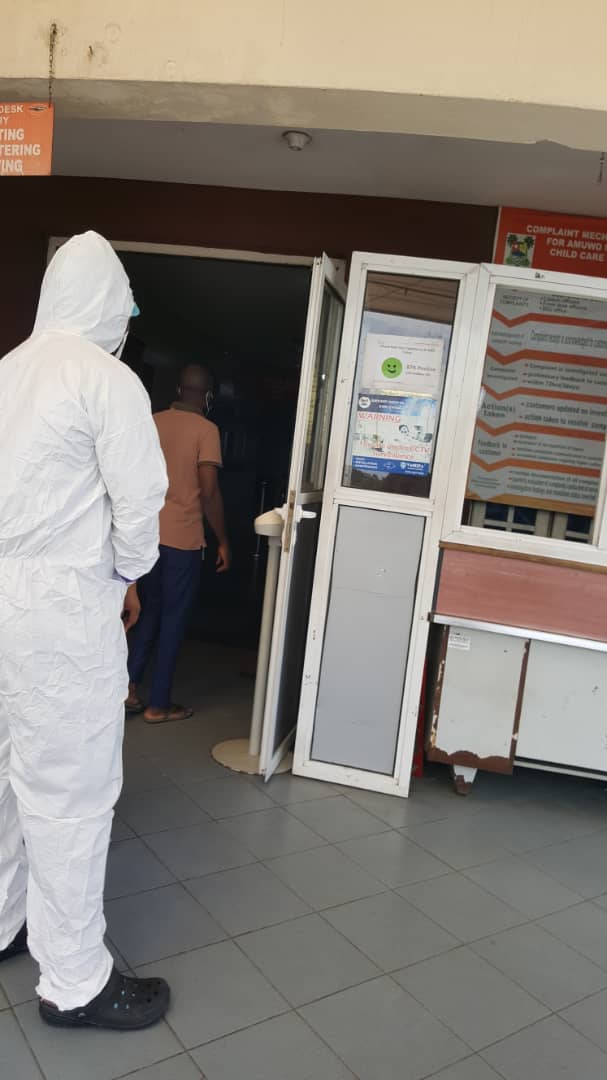
At about 2:31pm on Tuesday April 28, a young man walked into the Henry Ajomale Hall, a special facility set-aside for the COVID -19 testing inside the Amuwo-Odofin council Secretariat.

He identified himself as David (surname withheld). Of average height and suspected to be in his mid-30s, the young man, who was clad in blue jean and red shirt, with an Ankara facemask, wasted no time in seeking the attention of the officials of the center.

Please, I need to see the doctor here,” he stammered, as he struggled to form his sentence.

Oladehinde Ebenezer, head of the COVID 19 testing team for the LGA, attended to the young man. This reporter stood still, as he overheard every single word in the conversation between David and the doctor.

David declared himself a COVID 19 patient as he claimed to have been battling the symptoms of the deadly disease for days.

As he expressed himself, he would turn his head aside to let out some hard coughs.

According to the World Health Organisation, dry cough is one of the early symptoms of the Coronavirus infection.

“I, I, I, can’t breadth well,” he started, explaining that he had been “having severe headache, body pains and serious cough” for some days now.

“My cough has been dry and painful too. My chest has been inflamed by this painful cough, and I can hardly breadth well also,” he complained to the doctor.

With the calmness of an experienced professional, Ebenezer tried to calm David’s frayed nerves, dispelling his fear of contracting the deadly virus.

“Young man, these symptoms look similar to that of the trigger signs of COVID 19 truly, but they don’t necessarily mean you are already a carrier of the virus, only a test would confirm that,” he told David, who interjected, insisting he is almost sure of what he was saying and needs urgent attention.

“In that case, I would please ask you to come back tomorrow (Wednesday, April 29, 2020) morning for your test,” Dr. Ebenezer ended the conversation, bidding him farewell.

Unsurprisingly, David’s complaint typical of daily experience at the Amuwo-Odofin Local Government Secretariat, since April 12, 2020, when the NCDC, in partnership with Lagos State government, approved the location of the COVID 19 Central Testing Center within the premises.

There is also a Mobile Testing Center assembled to reinforce the capability of the center, but with a different mandate to comb the nooks and crannies of streets and inner suburbs of the adjoining communities.

In taking advantage of these facilities, residents of the local government and others like Apapa and Ajeromi/Ifelodun, Ojo, and Badagry, especially those with suspicious symptoms synonymous with Coronavirus, throng the centers on a daily basis to confirm their status.

As they filed in every morning, they are seated under a canopy carefully set up for them. Most of the visitors are visibly scared, trying as much as possible to conceal their face with caps and facemasks.

“I am so scared, my Lord. I don’t want to die now. Please save me. I will continue to be grateful to you my Lord,” one of the waiting ‘patients’ burst into tears, provoking a teary emotion in other fear-stricken visitors waiting for their turn to be tested.

It was observed that once samples are collected and test conducted, the results are often communicated to the affected individuals privately.

This is done by NCDC through direct SMS sent to the mobile number of the individual concerned. There is high level confidentiality in the way the messages are conveyed to the concerned individuals.

According to investigation, the average test or sample collected on a daily basis at the center hovers between 12 and 15, plus additional 20 or 25 from the door-to-door campaign from the mobile team.

“Not all 15 are doctors, they are not really our guests,” says Health Minister on whereabout of Chinese doctors

THE Minister of health on Thursday during the  Presidential Task Force (PTF) daily briefing on COVID-19 has said he is unaware of the whereabouts of the Chinese doctors and health professionals who were brought to Nigeria last month to help the country in its fight against the COVID-19 pandemic.

Speaking at the daily briefing in Abuja, the Minister of Health, Osagie Ehanire, wondered why Nigerians were so much interested in knowing the whereabouts of the Chinese health professionals and advised journalists not to ask him the question again.

Controversy has earlier trailed the choice of the Federal Government to invite the Chinese doctors to Nigeria, as many groups and associations, including the Nigeria Medical Association (NMA) and the National Association of Nigeria Nurses and Midwives (NANNM), kicked against it.

The Nigerian Medical Association (NMA) then described the move of inviting the Chinese as “a thing of embarrassment to the membership of the Association and other health workers who are giving their best in the fight against COVID-19 pandemic under deplorable working conditions.”

The federal government then defended the invitation and appealed to Nigerians to accept the decision.

But in what seems to be a total reversal of  argument,  the Minister of Health, on Thursday, said that the ministry was not their host and does not know their whereabouts, adding that the ministry cannot explain “because they are not really our guests.”

He said the visitors were staff of the CCECC  as many of them are technicians.

“There seems to be a lot of interest in these doctors, but they are staff of a company and I think they are on the company visa. So, I will be very happy if you don’t ask me about where they are because they are not really our guests in that sense.”

However, the minister said, “We have been able to learn some things from them by interacting with them from their experience in their country. They did tell us, and we shared ideas about what they did in their country, how they are managing COVID-19.”

The team of Chinese medical experts arrived in Abuja on April 8, with medical equipment and supplies valued at US$1.5 million, donated by the Chinese government. 

During a press briefing of the Presidential Task Force on Coronavirus after their arrival at the Nnamdi Azikiwe International Airport, Ehanire said that Chinese public health experts, not doctors, were being sent to help Nigeria. Their purpose was to strengthen the public health capacity and advise on processes and procedures.


COVID-19: Nigeria might not expose Madagascan herbal drug to clinical trials. Here is why


PRESIDENT Muhammadu Buhari has directed the Presidential task force on COVID-19 to order Madagascars COVID-Organics, CVO, a herbal tonic touted as a cure for COVID-19 but the odds stands against the country to carry out proper verification tests on the drug.

Boss Mustapha, Secretary to the Government of the Federation, SGF, who confirmed this during the daily presidential briefing stated that the herbal remedy would be subjected to checks before it is considered fit for consumption.

“The President has given instructions for the airlifting of Nigeria’s allocation of the Madagascar COVID-19 syrup from Guinea Bissau. And he has also given clear instructions that it must be subjected to the standard validation process for pharmaceuticals and there will be no exceptions for this,” he said.

Andry Rajoelina, Madagascar’s President who started promoting the tonic in April, said it is a preventive and curative remedy against COVID-19“,  attributing the recovery of 105 people in his country to the drug.

CVO is produced from the artemisia plant, the source of the ingredient used in a malaria treatment which was developed by the state-run Malagasy Institute of Applied Research.

The World Health Organisation, WHO in a tweet warns against the use of untested remedies in a virtual meeting with 70 traditional medicine experts from countries across Africa on the role of traditional medicine to the COVID-19 response.

Despite the reservations of the global health body, several African countries, namely Nigeria, Guinea-Bissau, Equatorial Guinea and Liberia have ordered for doses of the herbal remedy from Madagascar.

Available data suggest that Nigeria’s research organisations currently do not have the resources to conduct “in vitro” laboratory tests on the herbal remedy before it can be used for clinical trials in line with WHO guidelines.

“In vitro” laboratory tests mean cell cultures are isolated with the coronavirus and is tested with drugs to show an effect against the virus without harming the cells.

Stalled on the tracks

Nigeria is ranked 114 of 118 countries on the 2019 Global Innovation Index which measured each country’s contribution to global research and international patent applications, including mobile-phone application creation and high-tech exports.

The Nigeria Institute for Medical Research, NIMR, is saddled with the responsibility of leading the country’s medical research into finding possible solutions to several outbreaks including the current COVID-19.

Between 2015 and 2019, NIMR had received N160 million ( $410,256 using the official exchange rate of N305 to a dollar) as funding for research purposes from the Federal Government which pales into insignificance when compared to South Africa which spent R38.7 billion ($2.09 billion) on research and development in 2018 according to a National Research and Experimental Development Survey.

South Africa launched the first known biosafety laboratory isolate of SARS-Coronavirus 2, SARS-CoV-2, in Africa on April 1, through a joint effort of the University of the Western Cape and Stellenbosch University.

This means the scientists in South Africa would be able to grow the virus outside the human body and perform research on the drugs to be used for treating COVID-19 directly before proceeding to the clinical trials stage.

Currently, there are no level 3 and 4 biosafety laboratories in Nigeria which are designed to handle respiratory viruses, though the country boasts of level 4 laboratories that can culture non-respiratory viruses.

In an interview, Director General of NIMR, Prof. Babatunde Salako, admitted that to set up a national clinical trial that is wholistic would cost about N200 million which is more than its budget for research in four years.

“Initially, we wanted a national clinical trial that would factor in the six geo-political zones. But that may gulp about N200 million and we don’t have such money. As it stands, we may have to start small. As I mentioned earlier, the major challenge is funding,” he said.

The Federal Ministry of Science and Technology under which NIMR is domiciled was allocated N35 billion by the Federal Government in 2019 for research indicating a notable decline from its 2017 allocation of N65 billion.

Mateon Therapeutics, a US pharmaceutical firm announced that its COVID-19 directed antiviral screening program discovered that artemisinin is highly potent at inhibiting the ability of the COVID-19 causing virus, SARS-CoV-2, to multiply while also having an excellent safety index.

Unrecognised by regulatory agencies

Herbal medicine registration by the National Agency for Food and Drug Administration Control, NAFDAC, is placed on a listing status that is effective for a one year period while other scientific pharmaceutical drugs have the full registration period that lasts for five years.

Johnson Idowu, Director of Research Institute of Traditional and Alternative Medicine, RITAM, speaking to The ICIR said it was worrisome that Nigeria is importing herbal medicine from Madagascar but fails to recognise herbal remedies made in the country.

“It is a shame that we are importing herbal medicine from Madagascar because we have several research institutions, universities and private companies that the country has invested billions of naira annually and they are not asking them questions?

“Does it mean there is nothing to show for all these investments in researches in the country that we have to go outside to import untested herbal medicine we have failed to recognise in the country?” he queried.

He stated that clinical trials had not been conducted on herbal drugs in the country for over twenty years because of the aversion of the regulatory agencies to herbal medicine.

“They are saying we would carry out clinical trials on the Madagascan tonic in six months but for more than 20 years they have stonewalled herbal medicine research in the country. For example, NAFDAC refers to herbal medicine as an unevaluated drug by the agency and that means no doctor in his right mind will recommend alternative medicine for his patients,” he said.

In April, Max Planck Institute of Colloids and Interfaces, based in Germany collaborated with ArtemiLife Inc, a US-based company to test Artemisia annua plant extract and artemisinin derivatives in laboratory cell studies against the novel coronavirus Sars-CoV-2.

Technical Assistant at the Nigeria Natural Medicine Development Agency, NNMDA, Bibinu Daniels told The ICIR that the agency has an Artemisia annua plant in their farm in Delta State with several teams working on its research since 2006.

“We have had teams working on different research studies on artemisia since 2006 and the agency currently has a farm in Delta State where the plant is cultivated but lack of funding has not allowed the development of drugs as clinical trials take time,” he said.

The successful development of a drug from herbal remedy in Nigeria is Niprisan which is used for the treatment of sickle cell anaemia.

The effort by Nigerian scientists was widely regarded as a very significant breakthrough in medicine in 1998 before the conclusion of clinical trials in 2002.

However, commercial production of the drug was bogged down because of lack of financial support to mass-produce the drug.

COVID-19: Nigeria launches solidarity support fund

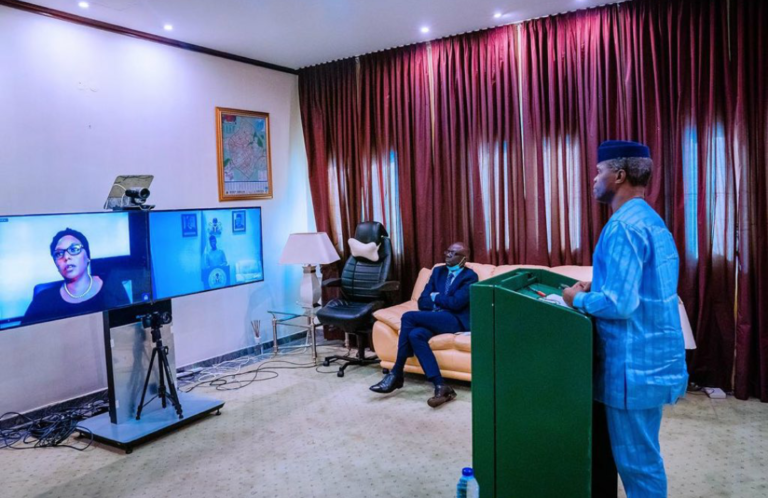
VICE President Yemi Osinbajo on Thursday participated in the virtual launch of the Nigeria Solidarity Support Fund, NSSF, an initiative of the Nigeria Sovereign Investment, Authority.

The NSSF is designed to provide additional support for Nigeria’s response to COVID-19.

The Fund will enable Nigerian citizens resident at home or abroad as well as international donors to come together and directly contribute to Nigeria’s fight against the pandemic.

According to the vice president, although the Coronavirus pandemic has affected the lives and livelihoods of Nigerians in different ways, it also offers an opportunity for the Nigerian people and government to have a reset in critical sectors of the economy and social services.

Osinbajo said the establishment of the Nigeria Solidarity Support Fund would support “the creation of a stronger, more resilient, more inclusive political economy and healthcare system.”

“This is a creative, forward-looking and thoughtful response to what is perhaps the most profound global and domestic challenge to health and the economy in human history.

“We need not belabour the point that the COVID-19 challenge is also an unprecedented opportunity for us as a nation and people to reset in critical sectors of the economy and social services,” Osinbajo said.


Revenue from VAT increases by N30bn in first quarter – NBS

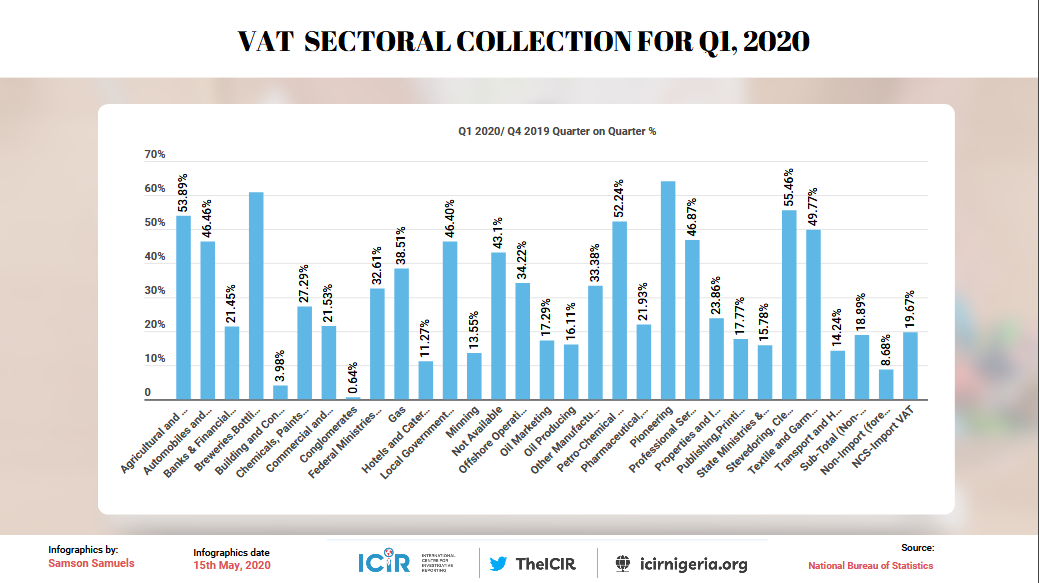
VALUE Added Tax (VAT) data for the first quarter (Q1) of  2020 has shown that the sum of N338.94 billion was generated against N308.48 billion generated in the fourth quarter (Q4) of 2019, the National Bureau of Statistics (NBS) has reported.

This figure represents an increase of N30.46 billion compared to Q4 2019 before the tax amendment from 5 per cent to 7 per cent.

According to the report, N293.04 billion generated in Q1 2019 representing 9.87 per cent increase Quarter-on-Quarter and 15.66 per cent increase Year-on-Year.

Professional Services generated the highest amount of VAT with N38.30 billion generated and closely
followed by manufacturing generating N37.37 billion and commercial and trading generating N17.19 billion.

Mining generated the least (N61.83 million) and closely followed by textile and garment industry (N306.05 million) and local government councils (N319.04 million), the report stated.

Out of the total amount generated in Q1 2020, N172.67bn was generated as Non-Import VAT locally while N93.67bn was generated as Non-Import VAT for foreign.

The balance of N72.59bn was generated as NCS-Import VAT.

Aboderin Martins a financial consultant who spoke to The ICIR said “Nigerians should expect increased revenue from taxes because of the recent increase in VAT, but the question is, would it be channelled into the right place.”

It will be recalled that on the 13th of January, 2020, President Muhammadu Buhari signed the Finance Bill (now Finance Act 2019 (the “Finance Act”)) into law.

The finance act was gazetted on 14th January 2020 with a commencement date of 13th January 2020.

The Finance Act amends the major tax statutes in Nigeria to align with the Federal Government of Nigeria’s monetary and fiscal reform policies.

Of particular concern to businesses and consumers with regard to the Finance Act is perhaps, the introduction of a new VAT system, and an increase in the VAT rate from 5 per cent to 7.5 per cent.

Besides the increment of the VAT rate, there are other notable amendments to the VAT Act which will significantly impact the business landscape in Nigeria.

Group urges NAFDAC to fast track process of Trans-fat regulations

A CIVIL Society Organisation, Environmental Rights Action/Friends of the Earth Nigeria (ERA/FoEN) has urged the National Agency for Food Drugs Administration and Control (NAFDAC) to hasten the process of trans-fat regulations.

The group in a statement signed by its head of media and campaign, Philip Jakpor said NAFDAC should take actions to ensure speedy approval of the ‘’Pre-packaged Food, Water and Ice Labelling Regulation, 2019’’ and ‘’Fats & Oils Regulation, 2019’’

Marking the two years anniversary of the Replace Package of the World Health Organisation (WHO) the group said the two guidelines are aimed at regulating the amount of trans fatty acids in the nation’s food chain.

The statement futher read that the regulation is a step-by-step guide for the elimination of industrially-produced trans-fatty acids from the global food supply.

The WHO had on May 14, 2018, released the replace package, advising governments across the world that eliminating trans fat is key to protecting health and saving lives.

According to the group, WHO estimates that every year, trans fat intake leads to more than 500,000 deaths of people from cardiovascular disease.

ERA/FOEN wrote that the world is currently battling the covid-19 pandemic and scientific evidences have shown that people with existing CVD conditions are prone to complications if they contract COVID-19.

“More than ever before the nation needs to work fast on laws and policies that will promote healthy lifestyles and approval of the regulations speedily will go a long way in that direction’’, Akinbode Oluwafemi, ERA/FoEN Deputy Executive Director said.

“Industrially produced trans fats are contained in hardened vegetable fats, such as margarine and ghee, and are often present in snack food, baked foods, and fried foods,” the statement read.

The group also urged Nigerians to abstain from all foods laced with industrial trans fat.

Atiku tells FG to cut 2020 budget by at least 25 per cent

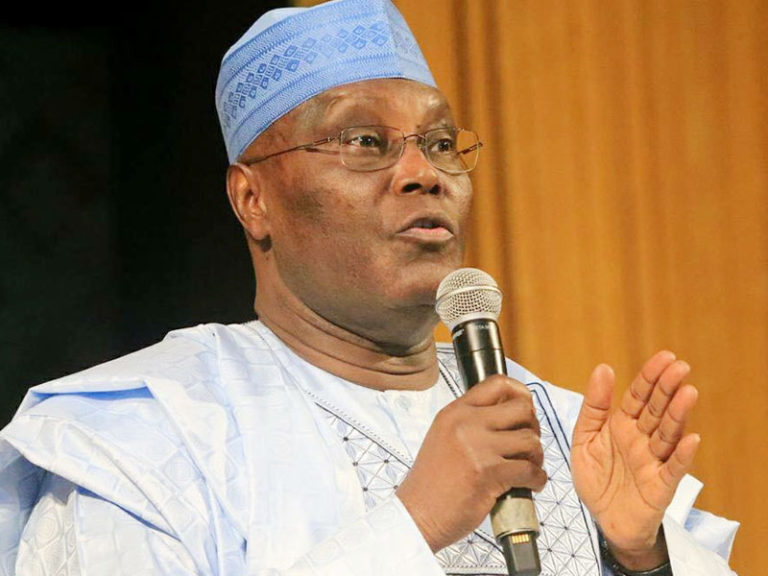
THE former PDP presidential candidate, Atiku Abubakar on Thursday criticised the Nigerian government’s decision to cut down the 2020 budget by only o.6 per cent which he describes as “grossly insufficient”.

Nigeria cannot afford luxuries during austerity, Atiku has said.

In a series of tweets, the former vice president expressed his dismay that despite the crash in the price of oil, and the inability of Nigeria to expand her revenue base through the non-oil sector, the FG has only considered slashing its budget by a mere 0.6 per cent, which represents a reduction of only ₦71 billion.

He added that the decision by the FG is grossly insufficient and betrays the fact that the nation has lost touch with the current realities in the global political economy.

For the avoidance of doubt, Atiku referenced when the budget was presented to the National Assembly on Tuesday, October 8, 2019, which he stated was predicated on a projection that the nation would generate crude oil production of 2.18 million barrels a day, at an expected oil price of $57 per barrel.

This he said is no longer the case today, adding that both the country’s production and the price of oil have been severely affected by the coronavirus pandemic, to the extent that Nigeria has unsold vessels, and its income has tanked by more than 50 per cent.

He stressed that Nigeria cannot be the only nation by bucking the trend as it not justifiable for a reduction in expenditure of just 0.6 per cent.

Atiku cited example of a country like Saudi Arabia with a much stronger production capacity than Nigeria and with a larger global market share, as well as a foreign reserve that is 12 times of Nigeria but has slashed her budget by almost 30 per cent.

“Nigeria cannot make up for the loss of expected revenue by taking out more loans and issuing out more bonds. Debt will be the death of our economy, and bonds will put our people in bondage,” Atiku tweeted.

The best way out of this economic quagmire is to reduce our expenditure, and a 0.6 per cent reduction is no reduction, it is only window dressing, Atiku said.

He, therefore, urged the federal government to put Nigerians first in its decisions.

“My counsel to @NigeriaGov is this: put Nigerians first and cut your coat, not according to your size, but according to your cloth,” Atiku added.

He recommended that the federal government should realistically slash the budget.

Atiku also added that billions budgeted for the travels and feeding of the president and vice president should be reduced. The ₦27 billion budget for the renovation of the National Assembly should also go.

The massive budgets to run both the Presidency and the Legislature should be downsized. The budget for purchasing luxury cars for the president, his vice, and other political office holders must be abandoned, he tweeted.

However, he added that the salaries of civil servants should be left alone, while the salaries of political appointees must be reduced.

He further advised that 8 or 9 of the jets in the Presidential Air Fleet should be sold.

In his opinion, any budget slash that is less than 25  per cent will not be in the interest of Nigeria.

Adding that beyond a budget slash, Nigeria needs a budget realignment, to redirect expenditure away from running a massive bureaucracy, into social development sectors like education, infrastructure, and above all, healthcare.

“We must invest in the goose that lays the golden egg – the Nigerian people.”

The former vice president said these are the types of sacrifices that Nigeria needs in a time of crisis and “not empty gestures that will lead to empty treasuries.”


All African countries now with coronavirus as Lesotho confirms first case

LESOTHO, the last African country to be affected by coronavirus, on Wednesday announced it has detected its first case of COVID-19.

The virus was detected on an individual among 81 people who were tested after arriving last week from Saudi Arabia and neighboring South Africa, the health ministry said in a statement.

“The Ministry of Health informed the Basotho nation and the entire community living in Lesotho, that the country now has the first confirmed case of COVID-19,” Director-General  Nyane Letsie said.

The patient is a Lesotho national studying in Saudi Arabia.

Lesotho went into lockdown on March 29 to protect itself from a potential spread of the virus from South Africa, which entirely surrounds the kingdom and has the highest number of confirmed cases on the continent.

Prime Minister Thomas Thabane loosened the restrictions on May 6 allowing “all non-essential services and enterprises to temporarily open shop”.

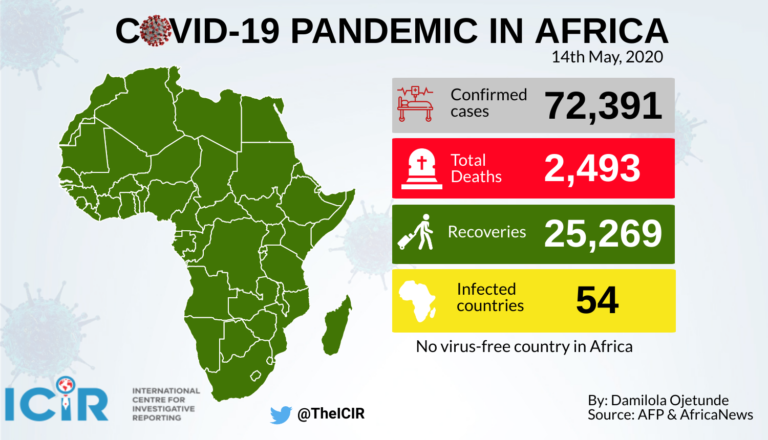
There are now more than over 70,000 confirmed cases of coronavirus across the continent, with a number of African countries imposing a range of prevention and containment measures against the spread of the pandemic.

African COVID-19 data

  • Confirmed cases = 72,391
  • Number of deaths = 2,493
  • Recoveries = 25,269
  • Infected countries = 54
  • Virus-free countries = 0

Source AFP and AfricaNews

FG approves revised budget based on $25 per barrel oil price

THE federal government on Wednesday, approved the revised 2020 budget, adopting a benchmark of $25 per barrel after months of reviewing.

As of the third week of March, the country was contemplating revising the benchmark downward from $57 per barrel to $30 based on an estimated daily crude oil production of 2.18 million barrels.

Fiscal authorities have been grappling with deep fall in income as the government suggested last week that an 80 per cent in the projected net oil and gas revenue could trigger a slash of the fund available.

These funds are to be distributed among government tiers through the Federation Account Allocation Committee from the N5.5 trillion earlier proposed to N1.1 trillion.

Minister for finance Zainab Ahmed said the government is in the “process of an amendment that is bringing down the revenue indicator to $20 per barrel.”

“The council has approved our recommendations and the approval has these key parameters; the crude oil price is approved at $25 per barrel,” Ahmed added.

According to the minister, crude oil production is at 1.94 million barrels per day and then an exchange rate of N360 to $1.

The revised budget is now in the total sum of N10.523 trillion, a difference of about N71.5 billion when compared to the approved budget.

So the borrowing, the drawdown of the multilateral loan coming from special accounts, and coming from the privatisation will fund the fiscal deficit of N5.365 trillion that we have in the proposed amendment of the 2020 budget, the minister revealed.

COVID-19: Bauchi lawmakers insist churches, mosques be reopened, lament rights violation by security agents

By Haruna Mohammed SALISU


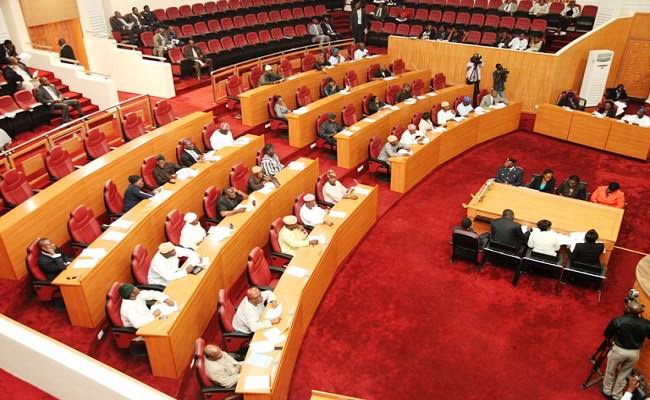
SOME members of the Bauchi State House of Assembly have insisted that the state government has to open churches and mosques to enable people worship since markets are also open from time to time.

A member representing Giade local government area in the state assembly, Hon. Dan’umma Bello during the house plenary on Wednesday argued that there is a need to go spiritual to end COVID-19, hence the need to allow people observe Juma’at prayers and church services.

A summary of the House proceedings dispatched to newsmen by the spokesperson of the Speaker, Abdul Burra quoted the lawmaker saying; “since people are allowed to go to market for three days per week, people should equally be allowed to go and pray Juma’at prayers on Fridays and church service on Sunday.”

Hon. Dan’umma also said the government should reduce the number of mosques and churches by selecting a few that the prayers will be allowed.
In addition, Hon Yusuf Inuwa Dadiye, member representing Ganjuwa West in the state assembly reminded the members that they will account for all their deeds and actions on the day of judgement.

He described as unfortunate the banning of Juma’at prayers and church services in Bauchi State.

“Every day, our constituents are calling us to inquire whether they can go to Juma’at prayers and church services or not”, he said.

Hon. Dadiye who quoted some verses of the Holy Qur’an on the necessity and sanctity of Juma’at prayers to all Muslims, called on the members of the assembly to call for the opening of Juma’at mosques on Fridays and churches on Sunday ‘because the solution to COVID-19 is prayers.’

The member, therefore, calls on the government to increase the number of mosques for Juma’at prayers so that people will not congest the existing mosques.

He said “when that is done, government should order for strict compliance to the guidelines of fighting the disease in all Juma’at mosques and churches,” he said.
The lawmakers also described as unacceptable, the high-handedness of security agencies on unarmed civilians while enforcing the partial lockdown imposed by the state government.

A member of the assembly, Jamilu Umaru Dahiru has lamented that the behavior of the security agents trying to enforce the lockdown is highly unacceptable.

Jamilu who observed during House plenary on Wednesday said many citizens of the state receive bashings from ‘overzealous security personnel’ in the name of enforcement of the lockdown order.

“There is the need for government to call the attention of the security agents to be professional and respect the dignity of human beings while enforcing government’s directives on COVID-19 lockdown,” the lawmaker said.