Home Blog Page 211

UPDATED: KWAM 1 apologises to Nigerians for blocking aircraft from flying at Abuja Airport

0

WASIU Ayinde Marshal, the popular fuji musician, widely known as KWAM 1 and K1 De Ultimate, has apologised to Nigerians and the Federal Government for his unruly conduct, in which he attempted to block a Valuejet aircraft set for take-off at the Nnamdi Azikiwe International Airport, Abuja.

He tendered the apology in a statement he personally signed and posted by his spokesperson, Kunle Rasheed, on Facebook on Friday, August 8,  hours after Nigeria’s Minister of Aviation and Aerospace Development, Festus Keyamo, directed the Nigeria Nigeria Civil Aviation Authority (NCAA) to place him on a no-fly list for six months.

The minister had described KWAM1’s action and that of the aircraft’s pilot, who left the airport with the aeroplane without clearance by lawful authorities, as an act of insanity.

He imposed a six-month ban on the globetrotting musician, vowing that any aircraft that allows him to travel within and outside Nigeria in the next six months would be penalised.

However, following his widespread condemnation by Nigerians and the government, including the NCAA, the musician described the incident as ‘unfortunate’ and gave the reason for holding a flask believed to have contained alcohol, which was the cause of the crisis.

The ICIR reported that he was not allowed to board the aircraft after he refused to hand over the flask to the airline officials at the point of boarding.

He was blocked from boarding, and he did all he could to stop the aircraft from taking off until he was almost severed by one of the flight’s wings, as the pilot angrily taxied off.

In his apology on Friday, KWAM 1 said he often suffered from chronic dehydration, necessitating constant hydration as advised by his doctor.

“The incident that occurred at the local wing of the Nnamdi Azikiwe International Airport on August 5, 2025, involving my humble self and ValueJet Airline, was to say the least, unfortunate.

“Unknown to many, I suffer from chronic dehydration, and my doctor strongly advised that I remain constantly hydrated. This is why I always carry a water flask with me. And contrary to the negative narrative being circulated in some quarters, the flask I carried on that particular day contained only water — not alcohol, as wrongly alleged,” the musician said.

He said he passed through two security checks before getting to the tarmac where he was blocked from boarding.

He further noted that his claims could be verified from the airport’ CCTV, adding that he only had water in his flask.

He expressed gratitude to his fans for standing by him. 

“However, I acknowledge and deeply regret the concerns that arose from the incident. It was never my intention to cause any disruption or violate aviation protocols in any way…

“The incident is sincerely regretted. I remain committed to upholding the values and responsibilities that come with being a global ambassador of Nigerian music and culture.”

He specifically apologised to the Presidency, Ministry of Aviation, Federal Airport Authority of Nigeria (FAAN), NCAA, ValueJet, all Nigerians, and his fans worldwide.

He said his “unwavering patriotism and unshaken loyalty” to Nigeria had never been in doubt.

“Over the years, I have consistently used my God-given talent and platform to promote the Nigerian brand across the globe.

“I would never do anything to tarnish the image I’ve built over the past five decades, nor would I knowingly act in a way that could diminish the reputation of the country I love so dearly.,’ he stated.

The ICIR reported that the saga began on August 5 when the FAAN announced that the 68-year-old musician had tried to board a ValueJet Airlines flight to Lagos carrying an “unidentified liquid substance.”

Airport authorities claimed that the singer ignored warnings from both Aviation Security (AVSEC) personnel and the flight captain.

They further alleged that the singer spilled alcohol on aviation personnel while they tried to inspect the contents of a flask he intended to travel with.

The singer argued that the substance was “plain drinking water” given to him at the airport lounge while awaiting boarding and not alcohol.

NOTE: This report has been updated to reflect KWAM1’s apology as shared by his spokesperson, Kunle Rasheed on Facebook, and not the copy shared by Bolaji Basia, said to be the musician’s longtime friend.
WAEC revised results show 62.96% pass in five subjects, including English, Maths

0

THE West African Examinations Council (WAEC), Nigeria, has released the reviewed results of the 2025 West African Senior School Certificate Examination (WASSCE) for school candidates, following a 24-hour shutdown of its results portal to fix what it called “technical bugs” linked to a new anti-malpractice feature.

The WAEC had temporarily denied access to the results on August 7, citing anomalies caused by its recently introduced “paper serialisation” system. 

The system, designed to reduce collusion in exam halls, was deployed in core subjects including Mathematics, English Language, Biology, and Economics, according to the council.

The ICIR reported that initial results released on August 4 showed a drastic decline in performance, with only 38.32 per cent of candidates obtaining at least five credits, including English and Mathematics.

This triggered public outrage and allegations of operational lapses, which would later lead to the council announcing a review of the results.

On Friday, August 8, at a press conference in Yaba, Lagos State, WAEC Nigeria’s Head, Amos Dangut, admitted that a major grading error in serialised papers had misrepresented candidates’ performance.

“With deep sorrow and regret, I, on behalf of the Registrar to Council, Management and Staff of WAEC Nigeria, apologise for the discrepancies discovered in the grading of serialised papers.

“This is very difficult for us to say, but we have to admit that it is very embarrassing,” Dangut said.

According to him, the review showed that the English Language Objective Test (Paper 3) was graded with incorrect answer keys due to a wrongly assigned serialised code file. 

He noted that other affected papers included Mathematics, Biology, and Economics, adding that candidates who wrote the exams on the Computer-Based Testing (CBT) platform were not affected.

“We investigated and discovered that a serialised code file was wrongly used in the printing of the English Language Objective paper.

“This resulted in them being marked with incorrect answer keys. It is important to note that candidates who wrote the exams using the computer-based mode were not affected,” Dangut explained.

Following the corrections, WAEC announced that 1,239,884 candidates, representing 62.9 per cent, now obtained credit passes in at least five subjects, including English and Mathematics.

He stressed that 657,819 females (53.05 per cent) and 582,065 males (46.95 per cent) achieved this benchmark.

This is a sharp improvement from the initial 38.32 per cent, but still below the 72.12 per cent recorded in 2024.

Dabgut noted that in total, 1,794,821 candidates (91.14 per cent) obtained credit and above in a minimum of five subjects (with or without English and Mathematics).

He also confirmed that the results of 191,053 candidates (9.7 per cent) remain withheld over alleged examination malpractice.

“WAEC will continue to sanction all cases of examination malpractice. All hands must be on deck to sanitise the system,” Dangut emphasised.

The organisation has advised candidates to re-check their results via www.waecdirect.org and noted that digital certificates would be available within 48 hours, with printed copies ready in 90 days. 

It, however, added that candidates sponsored by indebted state governments would not be able to access their results until outstanding payments are cleared.

“We appeal to the concerned authorities to do the needful to enable affected schools and candidates to access their results,” it urged.

Why we detain Sowore – Police

0

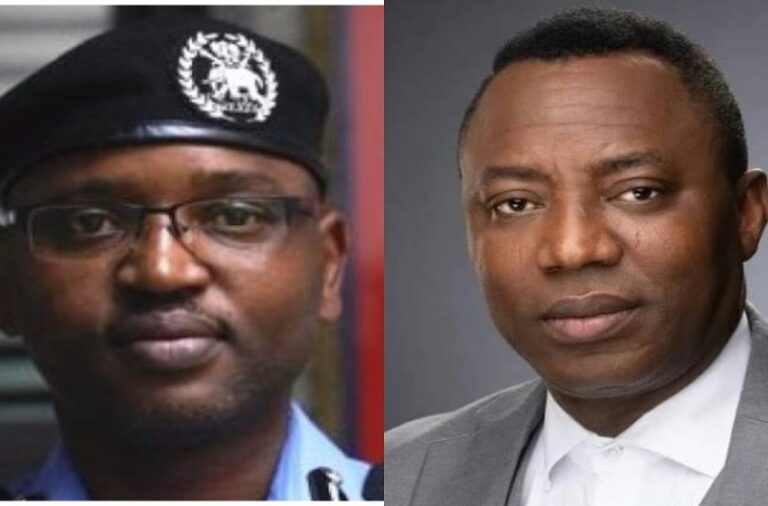
THE Commissioner of Police (CP) for the Special Intervention Squad, Abayomi Shogunle, has clarified why the 2023 presidential candidate of the African Action Congress (AAC), Omoyele Sowore, is being held by the Nigeria Police Force (NPF).

Shogunle said the human rights activist’s arrest and detention were ordered after he allegedly refused to make a statement upon interrogation.

The CP stated this while addressing Sowore’s supporters who staged a protest in Abuja on Friday. Journalists were also present during the briefing.

The ICIR reported that Sowore was arrested after honouring an invitation from the Inspector General of Police Monitoring Unit, at the Force Headquarters, in Abuja, on Wednesday, and was subsequently detained.

Speaking on Friday, Shogunle said there were two petitions against Sowore.

He said the petitions against Sowore were presented to him before his lawyers. One of the petition was about alleged forgery of a police document that Sowore had published online, and the other had to do with accusations of cyberbullying.

The two petitions were shown to him in the presence of his lawyers. The issue now is that he refused to make a statement in the presence of his lawyers. It is in the record.

“And the procedure under the Nigerian law is very clear. When an allegation is made against you, you are called upon; you have a duty to put down your own position,Shogunle said.

The police commissioner explained that the law granted a suspect the right to remain silent, while also outlining specific duties for the police to follow when a suspect refused to talk.

He emphasised that the police were professionals and were adhering to the procedures laid down by the law.

Additionally, he clarified that Sowore was not coerced into making a statement despite his refusal to talk.

“He has the right to remain silent, and the police also have the duties and responsibilities under the law to follow certain procedures once a suspect decides to keep mute. We won’t say, “Because you have decided to keep mute, you can go,” no,the CP stated.

When questioned about the police exceeding the 24-hour constitutional limit for detaining an accused, he assured that all legal procedures were being followed.

The CP offered to let some of the protesters visit Sowore’s detention facility to prove he’s not being mistreated.

The ICIR reported that Sowore was kept in police custody nearly a day after honouring an invitation by the Nigeria Police Force’s IGP Monitoring Unit in Abuja.

He had, on Wednesday, August 6, disclosed that he would appear before the unit at 11:00 a.m. on the same day, following a letter of invitation from the police dated August 5 and signed by DCP Akin Fakorede, the Head of the IGP Monitoring Unit. 

The invitation, which followed a request from Sowore’s legal team to reschedule a prior appointment, did not include a copy of the petition against him, a move the activist described as an attempt by the police to conceal a sinister plot.

Sowore had questioned the legality of the initial summons and requested that a fresh invitation be issued, adding that the police must clearly state the legal grounds and include prior access to the petition against him.

While the Force rescheduled the appointment, it failed to detail the content of the petition against the activist. 

Meanwhile, former Vice President Atiku Abubakar and the presidential candidate for the Labour Party (LP) in the 2023 general elections, Peter Obi, are among prominent Nigerians who have condemned the activist’s detention.

They demanded his  immediate release.

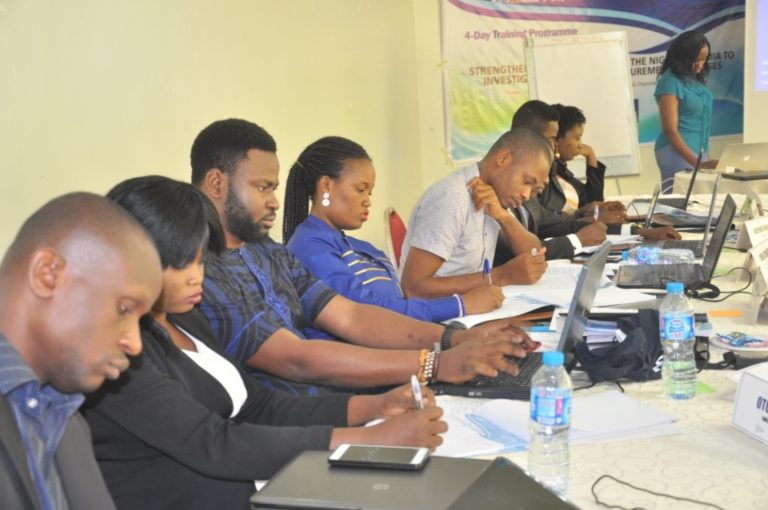
ICIR opens applications for SPARK reporting fellowship

THE International Centre for Investigative Reporting (ICIR) has announced the opening of applications for its Strengthening Public Accountability for Results and Knowledge (SPARK 2.2) Project, calling on journalists from seven Nigerian states to participate in the investigative reporting fellowship.

The SPARK initiative, which began with SPARK 1 and later advanced to SPARK 2, is now in its second phase of implementation under SPARK 2.2, expanding its focus and deepening its impact on governance and accountability reporting in Nigeria.

Read about SPARK 1 HERE and SPARK 2 HERE.

The project, which runs in Anambra, Oyo, Ogun, Niger, Kano, Jigawa, and Nasarawa, seeks to highlight pressing governance and development challenges, with a focus on maternal healthcare and agricultural productivity.

Under the maternal healthcare component, participating journalists will investigate systemic barriers limiting access to services, as well as gaps in the implementation of the Basic Health Care Provision Fund (BHCPF) despite continued government investment.

In agriculture, the fellowship will examine the struggles of smallholder women farmers (SHWFs), including limited access to credit and farming inputs, income constraints, and gender-based challenges that affect their productivity and economic empowerment.

 The project will adopt a systems-level, gender-sensitive approach to uncover the root causes of these challenges and produce data-driven reports that drive accountability.

Applications open August 8

The application process will open on Friday, August 8, 2025, and close on Thursday, August 14, 2025. To be eligible, applicants must have:

  • at least three years of journalism experience in print, electronic, or online media,
  • show a track record in investigative reporting,
  • reside in one of the seven focus states,
  • they must also own a laptop, a smartphone,
  • and have active social media accounts.

The ICIR encouraged female journalists and persons with disabilities who meet the requirements to apply, noting that disability is not a barrier to participation.

Applications are to be submitted online via HERE

Zambian government entitled to repatriate Lungu’s body for burial, Pretoria court rules

THE Gauteng High Court in South Africa has ruled in favour of the Zambian government to repatriate the body of former President Edgar Lungu and accord him a state funeral, despite objections from his family.

The ICIR reported that the Zambia government had previously applied to block the family’s plans to bury the former leader privately in South Africa, where he died of undisclosed illness at the age of 68, on June 5, while receiving treatment at a medical centre. 

The government and his family had agreed he would have a state funeral before the agreement failed, prompting the family to eventually resolve not to fly the body to Zambia for burial but chose to bury him in South Africa.

The dispute followed a long-standing feud between Lungu and his successor, President Hakainde Hichilema, with Lungu’s family saying he had indicated that Hichilema should not attend his funeral.

Peeved by the family’s decision, the Zambian government filed a suit in South Africa to halt the burial plans just as it was about to start on June 26.

At the time, Zambian state lawyers argued that personal wishes should not override the greater public interest.

Delivering the judgment on Friday, the judge, Aubrey Ledwaba, stated that the Zambian government was “entitled to repatriate the body of the late president” and ordered his family to “immediately surrender” it to authorities.

Lungu’s relatives reacted with visible distress to the ruling, wailing loudly in the courtroom as Zambian attorney, Mulilo Kabesha, addressed the media, stating that the ruling was not a win for the government but rather “what makes good sense”.

“When you are the father of the nation, you can’t restrict yourself to your immediate family… The man belongs to the nation,” he said.

Kabesha praised the court for making a “sound judgment” and said that while the family had a right to appeal, this was a “learning curve” for those aspiring to the highest office.

The ICIR reports that Lungu was the sixth leader of the Southern African country. He led Zambia between 2015 and 2021, when he lost an election to long-time opposition leader and incumbent president.  

Lungu assumed the presidency in 2015 following the death of then-president Michael Sata.

He was subsequently elected in a presidential poll, serving from August 2016 to August 2021. 

A trained lawyer, Lungu previously served as Minister of Justice and Minister of Defence.

Following his defeat in the 2021 election, he retired from politics but returned in 2023 and was eventually confirmed as the leader and presidential candidate of the alliance that included the Patriotic Front.

However, in December 2024, Zambia’s Constitutional Court ruled that he was not eligible to contest another term in office.

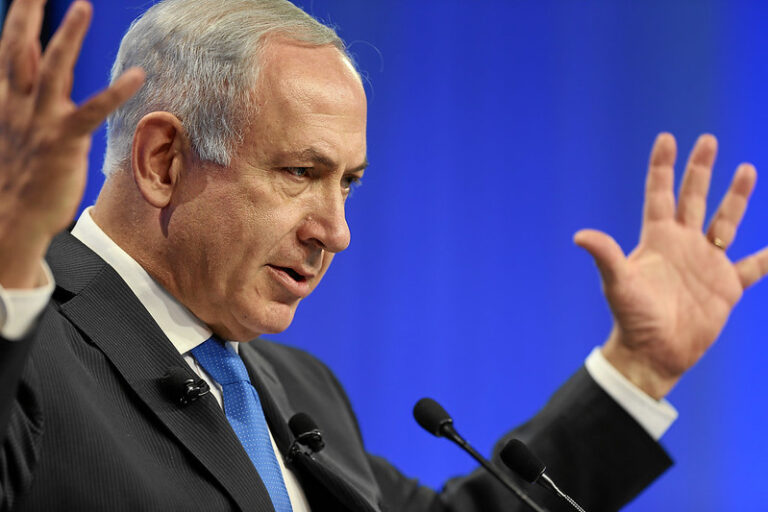
Netanyahu secures security cabinet’s nod to take over Gaza

ISRAEL’S security cabinet has approved a plan to seize control of Gaza City, just hours after Prime Minister Benjamin Netanyahu declared his intention for Israel to assume military control over the entire strip.

Netanyahu’s office revealed this in a statement issued in the early hours of Friday, August 8.

“The IDF will prepare to take control of Gaza City while providing humanitarian aid to the civilian population outside the combat zones. Gaza City, in the north of the strip, is the largest city in the enclave,” the statement read. 

Netanyahu said on Thursday evening, when asked on Fox News Channel whether Israel planned to take control of the entire coastal territory, “We intend to. We don’t want to keep it. We want to have a security perimeter. We don’t want to govern it. We don’t want to be there as a governing body.”

He noted that Israel intended to hand the territory over to Arab forces to administer, but offered no details on the governance framework or which Arab nations might take part.

However, on Thursday evening, hundreds of demonstrators gathered outside the Prime Minister’s Office in Jerusalem to protest the expansion of the war, calling for an immediate end to the military campaign in exchange for the release of all hostages.

In its Friday statement, Netanyahu’s office said the vast majority of security cabinet members shared that “the alternative plan presented in the cabinet would not achieve the defeat of Hamas nor the return of the hostages.”

According to Reuters, two government sources said any decision by the security cabinet would require approval from the full cabinet, which might not convene until Sunday.

One of the sources added that evacuation warnings could be issued to Palestinians in certain areas of Gaza, potentially giving them several weeks before the military advances.

It remained unclear whether Netanyahu envisioned a long-term takeover or a short-term operation. Israel has consistently stated that its goals are to dismantle Hamas and secure the release of Israeli hostages.

President Donald Trump has refused to state whether he supports or opposes a possible full military takeover of Gaza by Israel.

The ICIR reports that full control of the territory would roll back Israel’s 2005 decision to withdraw its citizens and soldiers from Gaza, while maintaining control over its borders, airspace, and utilities.

Reacting to Netanyahu’s latest position, Hamas in a statement said his comments were “a blatant coup” against the negotiation process.

“Netanyahu’s plans to expand the aggression confirm beyond any doubt that he seeks to get rid of his captives and sacrifice them.”

Hamas official Osama Hamdan told Al Jazeera the group would treat any force formed to govern Gaza as an ‘occupying’ force linked to Israel.

Earlier this year, Israel and the United States rejected an Egyptian proposal, backed by Arab leaders, calling for establishing an administrative committee of independent, professional Palestinian technocrats to govern Gaza after the war.

Opinion polls indicate that most Israelis want the war to conclude with a deal securing the release of the remaining hostages.

Netanyahu’s government has maintained its demand for total victory over Hamas, which sparked the war with a deadly attack on Israel from Gaza in October 2023.

Atiku, Obi condemn Sowore’s detention, demand his immediate release

0

FORMER Vice President Atiku Abubakar and the presidential candidate for the Labour Party (LP) in the 2023 general elections, Peter Obi, have condemned the detention of human rights activist Omoyele Sowore by the Nigeria Police Force and demanded his immediate release.

Atiku, the presidential candidate of the Peoples Democratic Party (PDP) in the 2023 poll, made his call for Sowore’s release on Thursday through his verified X handle.

He described the detention of the former presidential candidate of the African Action Congress (AAC) asshameful, unlawful, and a personal vendetta.”

Abubakar maintained that Sowore’s only offence was speaking out against injustice, corruption, and bad leadership.

He added that it was wrong for the Inspector-General of Police (IGP), Kayode Egbetokun, to act as both the complainant and the one using police to settle personal scores.

Abubakar said no police officer had the right to institute any legal proceeding in his interest or on matters arising out of his public duties.

“This is not just about Sowore. It is an attack on every Nigerian who speaks the truth. It must stop,” he stated.

Also commenting on Sowore’s arrest and detention, Obi, in a tweet on Friday, called for the immediate release of the activist.

The former Anambra State governor said he wondered why the police would arrest a citizen who voluntarily honoured an invitation.

Obi, who stated that he was deeply troubled by the actions of the Nigerian law enforcement agencies, also pointed out that the police had not made public any clear or credible charges against Sowore.

He stressed that the police action had further cast a troubling shadow over the nature and motivation behind Sowore’s detention.

“To detain a citizen who came of his own accord, without the public disclosure of clear, lawful charges, is not only a miscarriage of justice but also an abuse of state power,Obi said.

He cautioned that anything short of releasing the activist would further weaken the public trust in the nation’s law enforcement institutions.

Sowore, a publisher of Sahara Reporters, an online news platform, was arrested on Thursday after he voluntarily honoured an invitation at the headquarters of the Nigeria Police Force, Abuja.

This is not the first time the Nigerian security operatives have arrested Sowore.

In 2019, he was illegally abducted and detained by operatives of the State Security Service (SSS) for planning to stage the RevolutionNow protest, which sought an end to bad governance in Nigeria.

After much pressure from within and from some members of the international community, the late former President Muhammadu Buhari-led Federal government released him from detention.


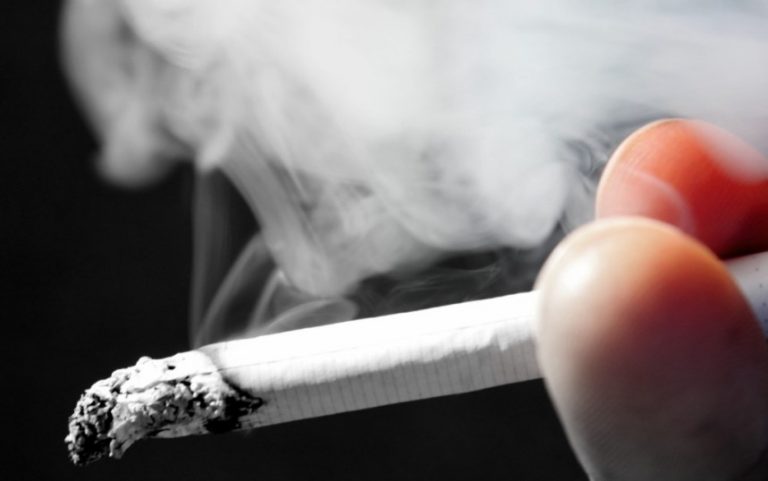
Why we seek 100% tobacco tax increase-CAPPA

THE Corporate Accountability and Public Participation Africa (CAPPA) has called on the Federal Government to immediately increase the excise tax on tobacco products to 100 per cent to save thousands of lives.

It said the government could save at least N526 billion annually from healthcare costs and productivity losses if it yielded to the call.

CAPPA raised the concern in a statement on Thursday, August 7, by its media and communication officer, Robert Egbe.

It said the tobacco industry has continued to aggressively target Nigerians with traditional and novel smokeless tobacco products like vapes and other e-cigarettes, despite tobacco use being a major risk factor for costly, debilitating diseases.

“The World Health Organisation (WHO) links tobacco use to premature death from lung cancer, chronic obstructive pulmonary disease, dementia, sudden infant death syndrome (SIDS), birth defects, vision loss, gastrointestinal diseases, skin damage, weak bones and cardiovascular disease, among other NCDs,” CAPPA cited.

It further cited data from the Nigerian Tobacco Control Data Initiative as stating that  90 per cent of tobacco production happens in developing countries like Nigeria, which mostly bear the environmental costs of tobacco production, while rich countries make most of the profits from tobacco production.

“According to the federal government, Nigerians consumed over 20 billion sticks of cigarettes annually as of 2018, while almost 30,000 people die each year in the country from tobacco-related diseases,” it stated.

It stressed the Centre for the Study of the Economies of Africa (CSEA), analysis indicated that Nigeria spent N526.4 billion treating tobacco-related diseases in 2019.

CAPPA pointed out that Nigeria employs a mixed excise tax system on tobacco products, comprising an ad valorem tax of 30 per cent on the unit-cost-of-production or manufacture price, a specific excise tax of N84 per pack of 20 cigarettes which became effective on June 1, 2022.

It also involves a shisha/tobacco tax of N3,000 per litre or N1,000 per kg, rising by N500 annually.

Although the federal government proposed increasing the tax to 50 per cent in April 2023, this increase has not yet been implemented, and the current regime remains unchanged, CAPPA expressed concern.

It urged the government to align with global best practices and emulate African countries like Senegal, Kenya and South Africa that are taking tough measures against tobacco use to protect their youths from addiction, disease and financial ruin.

“In Nigeria, the tobacco industry is having a field day aggressively targeting young Nigerians with their novel products such as vapes and other e-cigarettes, which they know are not only addictive, but also harmful. Using their so-called ‘tobacco harm reduction strategy’, the tobacco industry continues to hoodwink the public that vapes, and other e-cigarettes, are harmful to human health, but good for consumption,” CAPPA Executive Director, Akinbode Oluwafemi, lamented.

He warned that tobacco-related diseases strain Nigeria’s health systems, drain health budgets, reduce workforce productivity, and exacerbate poverty.

“What the tobacco industry is doing is grooming the next set of addicts to replace the thousands of Nigerians who die from tobacco-related diseases and the many others whose lives are destroyed. They must be stopped.

“We urge the government to act fast and raise the taxes on tobacco and related products to 100 per cent. This is a proven way to not only discourage tobacco and e-cigarette use, but also save billions in healthcare costs,” Oluwafemi added.

Similarly, the organisation urged the federal government to ring-fence part of the revenue for health promotion, non-communicable diseases (NCDs) prevention, and full implementation of the National Tobacco Control Act.

It also advised governments at all levels to resist tobacco industry interference, which continues to undermine life-saving policies for profit.

CAPPA had recently raised concern on how the food and beverage industry uses a sophisticated web of marketing strategies to get Nigerians, especially children and young adults, hooked on ultra-processed, high-sugar, and high-sodium foods that cause noncommunicable diseases (NCDs), including hypertension, obesity and diabetes, The ICIR reported.

Tinubu appoints Abdullahi Ramat as new NERC CEO

PRESIDENT Bola Tinubu has nominated Abdullahi Garba Ramat as the new chairman/chief executive officer of the Nigerian Electricity Regulatory Commission (NERC).

He also nominated two commissioners for the commission.

They are Abubakar Yusuf to serve as the commissioner of consumer affairs and Fouad Olayinka Animashun for the commissioner of finance and management services.

The special adviser to the President on information and strategy, Bayo Onanuga, hinted at this in a statement on Thursday, August 7.

“All nominations are subject to Senate confirmation,” he noted.

Onanuga, however, stated that to avoid a leadership vacuum in the critical regulatory agency, the President directed that Ramat assume office in acting capacity pending his screening by the Senate, as stipulated by the law.

“President Tinubu urged the new appointees to use their knowledge and experience to discharge their functions and work assiduously to advance the administration’s power sector vision,” he said.

Ramat, 39, is an electrical engineer and administrator, with a PhD in Strategic Management.

He served as chairman of Ungogo local government area (LGA) in Kano state from 2021 to 2024.

The ICIR reports that NERC is the independent body responsible for regulating the electricity supply industry in Nigeria and has lately been transferring regulatory oversight of the electricity market to some states, including Lagos, Ogun, Enugu and Nasarawa.

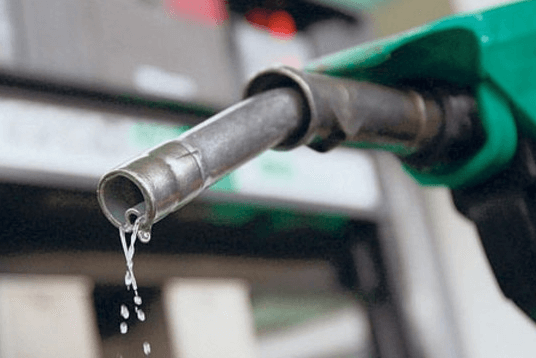
Fuel nears N1,000/litre as NNPCL, others increase pump prices

PETROL prices are currently near N1,000 per litre as the Nigerian National Petroleum Company Limited (NNPCL) stations and other filling station outlets across the country are raising prices.

Checks by The ICIR showed some price fluctuations, with the current price ranging from N900-N1,000 per litre.

Further checks by The ICIR showed that the NNPCL sold N950+/litre on Monday, August 4, in most of its retail outlets in Abuja.

Consequently, barely 48 hours later, the NNPCL reduced it to N900 per litre.

The new pricing has been implemented at several outlets in Abuja, including those located in Gwarimpa, Kubwa Expressway, Wuse Zone 6, and Wuse Zone 4.

The development marks a N50+ per litre reduction following Monday’s sharp increase to N950+ per litre.

The pump price of petrol has witnessed a significant upward adjustment to near N1,000 per litre from about N865 per litre sold at the beginning of the week, The ICIR have observed.

In some of the filling stations visited on Thursday, August 7, the reporter observed that NNPCL and other oil markets have adjusted their pump prices.

NNPCL filling station retail outlet

The pump prices were adjusted mostly yesterday, in the early hours of today, the reporter gathered.

In some of the filing stations visited in Lagos and Ogun states, pump prices vary.

At the two NNPCL filling stations at Ojudu Berger in Lagos state, the petrol pump price is being sold at N870 per litre.

At a Petrocam filling station at Mowe, Ogun state, the pump price has been adjusted to N990, from N885 yesterday.

“We are selling fuel at N990 now. It was N885 yesterday,” a petrol attendant, Lukeman, told The ICIR.

At the Ardova (AP) opposite the Redemption City, in Mowe, the filling station is selling at N910.

Asked when the recent pump price adjustment took effect and how much the filling station was selling before, Janet, a petrol attendant, said, “We increased our pump price yesterday; it was N865 before.”

Also at a Conoil filling station beside the Redemption City, the price has been adjusted to N950 per litre.

There was no queue in all the filling stations visited, the reporter observed.

Meanwhile, independent marketers have also made downward adjustments. Ranoil and Empire Energy stations in Gwarimpa now sell petrol at N955 and N950 per litre, respectively, down from N971 and N970.

The ICIR reports that changes in international crude oil, Rockies, and refinery operations can impact pump prices.

“In a deregulated market, prices can change twice a day. Supply equation, how much available products, prevailing market fundamentals, international price, logistics, and competition inform price adjustments,” former Chairman of the Major Marketers Association of Nigeria (MOMAN), Adetunji Oyebanji, said.

The upward and downward movement of crude oil prices in the international market are other key factors affecting the price of crude oil, The ICIR findings showed further.