Home Blog Page 218

Nurses suspend nationwide strike after agreement with federal government

0

THE National Association of Nigerian Nurses and Midwives (NANNM), on Saturday, August 2, suspended its nationwide warning strike after reaching a formal agreement with the federal government on the union’s key demands.

This was contained in a circular issued by NANNM’s National President, Haruna Mamman, and General Secretary, T.A. Shettima, titled ‘Suspension of the Ongoing Nationwide Nurses’ Strike.’

The union said its National Executive Council (NEC) decided to end the strike following an extensive review of the Memorandum of Understanding (MoU) and a clear, time-bound implementation framework agreed upon with the government.

“NEC acknowledges the positive steps taken by the Federal Government in responding to the nine core demands of NANNM, particularly the commitment to clear timelines for implementation,” the circular stated.

“Given the formal agreement reached, and in line with the principle of dialogue and good faith, NEC hereby suspends the ongoing nationwide strike action with immediate effect,” it added.

The NEC also directed the national leadership to monitor the government’s compliance with the agreed timelines while calling on state councils to mobilise nurses and midwives to resume duties immediately. 

It further warned that no member, including interns and locum staff, should face reprisals for participating in the strike.

“State councils are directed to mobilize members for the immediate resumption of duty. NEC resolved that no member of NANNM, including interns and locum nurses, should be victimized for participating in the nationwide strike.

“NEC appreciates the commitment and solidarity of all members throughout this action and reiterates that NANNM remains steadfast in defending the welfare, dignity, and professional rights of all nurses and midwives in Nigeria,” the statement added.

The development followed a closed-door meeting held in Abuja on Friday, August 1, between the union’s leadership and the Minister of Health, Professor Ali Pate, who had earlier announced the suspension of the strike before the union officially confirmed it.

At the time, a branch chairman who attended the meeting told The ICIR that the strike had not been suspended, noting that union protocol required consultations with members before any decision could be finalised.

Despite initial scepticism, the NEC later resolved to suspend the strike following confirmation of the government’s written commitments to meet the nurses’ demands. 

The ICIR reported that the union’s demands include gazetting the scheme of service for nurses, upward review of allowances, introduction of speciality allowances for specialist nurses, improved remuneration, recruitment of more nurses, and the establishment of a dedicated department for nursing within the Federal Ministry of Health.
Trump deploys nuclear submarines after Medvedev’s comments

0

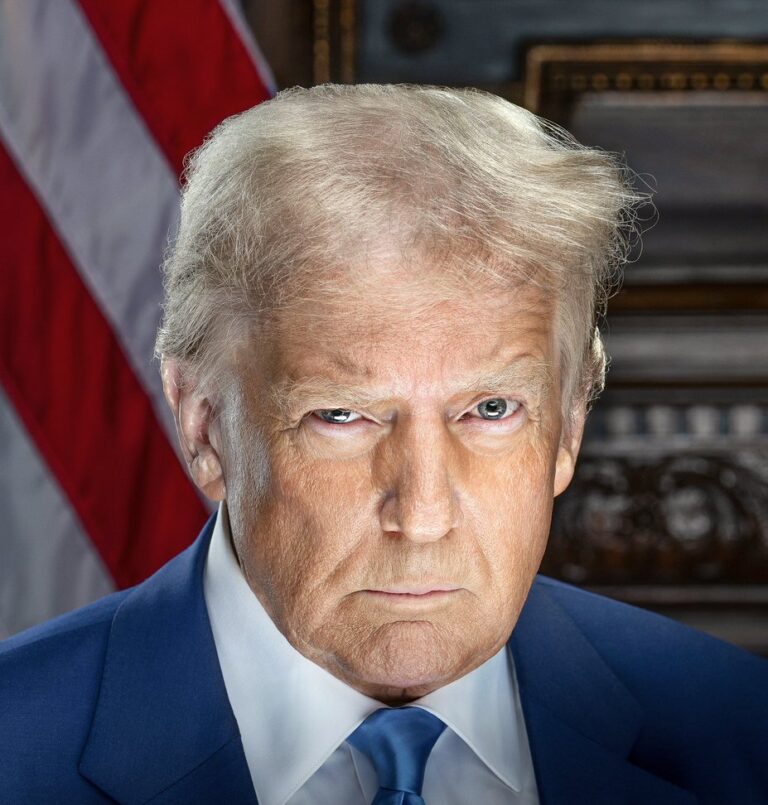
UNITED States President Donald Trump has ordered two nuclear submarines to be deployed ‘in the appropriate regions’ following what he called ‘highly provocative’ remarks by former Russian President Dmitry Medvedev.

The move, announced on Trump’s Truth Social account on Friday, August 1, was a direct response to Medvedev’s latest comment amid escalating tensions over the ongoing war in Ukraine and the U.S’s pressure on Moscow to reach a ceasefire.

“Based on the highly provocative statements of the Former President of Russia, Dmitry Medvedev…I have ordered two Nuclear Submarines to be positioned in the appropriate regions,” he said.

Trump said he acted “just in case these foolish and inflammatory statements are more than just that.”

While the U.S. president did not disclose where the submarines were sent, his message has stirred global concern, especially given the strategic significance of such assets. 

He also did not clarify whether the submarines were nuclear-powered or nuclear-armed.

On Thursday, Medvedev said Trump should remember that Moscow still retains Soviet-era last-resort nuclear strike capabilities, after Trump told Medvedev to “watch his words”.

The US president had taken to his Truth Social platform, earlier Thursday, to attack Medvedev, after he dismissed Trump’s tariff threats against Russia and its oil buyers as ‘a game of ultimatums’ that edged the U.S. and Russia closer to war.

However, Medvedev noted that the US president’s statement showed that Russia should continue on its current policy course.

“If some words from the former president of Russia trigger such a nervous reaction from the high-and-mighty president of the United States, then Russia is doing everything right and will continue to proceed along its path,” Medvedev reportedly said in a post on Telegram on Thursday.

However, reacting further while speaking to reporters later on Friday, August 1, Trump said, “A threat was made, and we didn’t think it was appropriate. So I have to be very careful. 

“I do that based on safety for our people. A threat was made by a former president of Russia. And we’re going to protect our people.”

The latest development followed an intensification of personal and diplomatic hostilities between Trump and Medvedev, both of whom have traded words across social media platforms in recent weeks.

On July 28, Trump gave Russia a 10-day ultimatum to agree to a ceasefire in Ukraine or face tariffs alongside its oil buyers. 

Trump had, on July 14, warned that he would impose ‘severe tariffs’ on Russia if a peace agreement wasn’t reached by early September. 

However, by Monday, July 28, he shortened the timeline, saying he would now give President Putin 10 to 12 days.

The US sanctions on Russia include possible secondary tariffs targeting Russia’s trading partners. 

Kemi Badenoch drops Nigerian identity

0

CONSERVATIVE Party leader Kemi Badenoch has stated that she no longer identifies as Nigerian and has not possessed a Nigerian passport for over twenty years.

Speaking on the Rosebud podcast, Badenoch acknowledged her Nigerian roots but explained that her sense of identity and belonging is now tied to a different place.

“I’m Nigerian through ancestry, by birth, despite not being born there because of my parents, but by identity, I’m not really.

“I know the country very well, I have a lot of family there, and I’m very interested in what happens there. But home is where my now family is,” she said.

The Conservative Party minister, who was born in Wimbledon, London, in 1980, spent most of her childhood in Nigeria and the United States before returning to the United Kingdom (UK) at age 16.

Reflecting on her return to Britain, the political leader said her parents had considered the move necessary, telling her there was no future for her in the country. She added that her decision to return had been prompted by a rather sad reason.

Badenoch explained that although she was born in the UK, her British citizenship was granted just before Margaret Thatcher’s government ended birthright citizenship in 1981.

“Discovering I had British citizenship was surprising to many of my peers,” she recalled.

She also shared that when her father, Femi Adegoke, died in Nigeria in 2022, she had to go through the process of getting a visa to travel down to Nigeria, a situation she described as a “big fandango.”

Badenoch said her sense of identity was firmly rooted in her immediate and extended family, including her husband, children, and relatives. She added that the Conservative Party has also become like an extended family to her.

The ICIR reported that the Conservative Party leader has stirred  controversies with her recent notable remarks on Nigeria’s Police high bribery tendencies and proposal of 15 years waiting period for British citizenship.

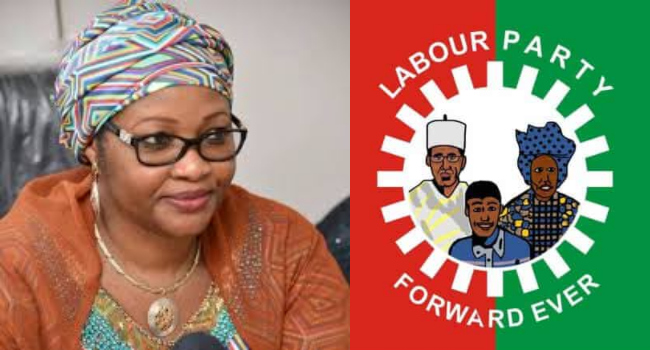
False claim circulates that INEC confirms Nenadi Usman as LP chairperson

A claim that the Independent National Electoral Commission (INEC) has confirmed Nenadi Usman as the chairperson of the Labour Party has gone viral online.

An X user, @TheoAbuAgada, posted the claim with the caption:

“Peter Gregory Obi’s ally, Nenadi Usman, has been confirmed as the authentic Chairperson of the Labour Party by INEC.  “All of a sudden”. Peter, until this moment, has refused to resign from the Labour Party. If this does not tell you anything, I don’t know what else will. I repeat, Peter is not with the coalition and he is working to bring Tinubu back.”

The post had generated over 150 reposts and more than 500 likes as of August 1, 2025.

Another X account, @ADCNews_, also posted the claim with the caption:

Just In. INEC has confirmed Sen Nenadi Usman as Acting Chairman of Labour Party. At this rate. Tinubu is confused on where to set his trap. ADC or LP

The post had generated over 500 reposts and more than 2,000 likes as of August 1, 2025.

CLAIM

INEC confirms Nenadi Usman as Labour Party chairperson.

Screenshot of the viral post

THE FINDINGS

Findings by The FactCheckHub show that the claim is FALSE.

Since the conclusion of Nigeria’s 2023 presidential election, the Labour Party (LP) has been mired in a prolonged leadership crisis, largely revolving around competing claims to the chairmanship of the party.

Julius Abure, who led the party through the 2023 general elections, has faced opposition from various internal factions, especially the Nigeria Labour Congress (NLC), which accused him of financial impropriety and high-handedness. These disputes culminated in the controversial national convention held in Anambra in March 2024, where Abure wasre-elected as chairman, a move rejected by several party organs.

To stabilise the party and restore credibility, a coalition of LP stakeholders, including the NLC and some state chapters, appointed Nenadi Usman as chairperson of a caretaker committee in late 2024.

Usman was seen as a neutral figure capable of uniting the fractured party. Her emergence received a significant boost in April 2025 when the Supreme Court ruled that Nigerian courts lacked jurisdiction to decide internal party leadership matters, a verdict that effectively voided Abure’s standing and empowered the coalition-backed caretaker leadership.

Despite the judicial ruling, the Independent National Electoral Commission (INEC) has not publicly confirmed or published Nenadi Usman’s name as the authentic chairperson of the Labour Party, as required by law.

INEC’s role in party leadership matters is administrative and reactive. It can only recognise and publish names submitted to it in line with party constitutions and after the proper legal and procedural processes.

As of August 1, 2025, the commission’s official records still reflect Julius Abure as the National Chairman, and no official bulletin or document affirms Nenadi Usman as the recognised national chairperson of the LP.

When contacted by The FactCheckHub, Rotimi Oyekanmi, the Chief Press Secretary to the INEC Chairman, Mahmoud Yakubu, debunked the claim and confirmed that Abure remains the chairman of the party.

“The news [that Nenadi Usman has been confirmed as LP chairman] is not true. There’s nothing like that. There’s no confirmation. The situation remains the same. To be sure, go to our website, click on political parties — the names of the chairmen and secretaries are all there. What you find there is what the situation is at the moment,” he said.

VERDICT

The claim that the Independent National Electoral Commission (INEC) has confirmed Nenadi Usman as the chairperson of the Labour Party is FALSE, as findings showed that Julius Abure still remains the recognised chairperson of the party as of August 1, 2025.

This report is republished from the FactCheckHub.

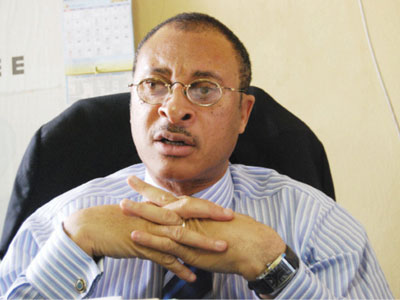
Utomi criticises FG’s revenue focus, says economic approach hurts ordinary Nigerians

0

PROFESSOR of political economy, Pat Utomi, has criticised the federal government’s economic direction, accusing it of prioritising revenue generation at the expense of real economic growth and the well-being of ordinary Nigerians.

Appearing on Channels Television’s Politics Today on Friday, August 1, Utomi said the government’s aggressive pursuit of revenue is having negative consequences on the broader economy, particularly for small businesses and consumers.

He argued that government spending is heavily skewed in favour of the political elite rather than the productive sectors that could boost growth and improve living conditions.

“Most non-productive sectors, the political class, for example, and we need to get the resources that are available to go directly into ramping up food first of all, and then the value chain from those factor endowments around agriculture,” he said.

Utomi warned that the current revenue strategy, especially import taxes and port charges, is making it increasingly difficult for traders and importers to survive.

“Ask any trader today how much they can bring through the ports. The desperation for rising revenue means that every container is being sold at about N18 million or some similar amount,” he said.

“Many pharmaceutical importers have very thin margins on their anti-malarials and related drugs.

“When they come through the ports in this desperation for revenue and get hit with tax on each container, it means they can’t import a new set of containers of anti-malarials,” he added.

Utomi argued that while official revenue figures may be rising, the benefits are not reaching the common people.

He added, “It means that while government revenues are going up — and are being squandered by politicians — the Nigerian people have no possibility of a better life.

He also dismissed claims that the economy is recovering, arguing that a temporary stabilisation of the naira means little if inflation continues to erode people’s incomes. 

He likened the current situation to moving from ‘hell to purgatory,’ suggesting that it was far from real salvation.

“If you are from hell to purgatory, have you been saved from damnation?” he asked while dismissing suggestions that the economy is on the mend,” he added.

Utomi maintained that real economic progress must be assessed through metrics like job creation, access to essential goods, and improved living standards. 

He warned that widespread hunger could lead to unrest and instability.

“Food is the ultimate. When people can’t eat, anything can happen,” he added.

Utomi urged the government to invest more in agriculture, healthcare, and education to build a resilient and inclusive economy.


Floods kill 165,over 119,000 persons affected in 2025 – NEMA

0

The National Emergency Management Agency (NEMA) has officially stated that at least 165 people have died and 82 are missing due to flooding in 2025.

In a data dashboard released on Friday, August 1, the agency said a total of 119,791 people have been affected so far, with 138 injured and 43,936 displaced across 43 Local Government Areas in 19 states.

“138 persons sustained various degrees of injuries, 43,936 displaced, 8,594 houses affected, and 8,278 farmlands destroyed across 43 Local Government Areas (LGAs) in 19 States,” part of the report read.

NEMA also noted that 8,594 houses and 8,278 farmlands have been damaged, with women and children being the most affected.

The agency stated further that 53,314 children, 36,573 women, 24,600 men, 5,304 elderly, and 1,863 disabled persons have so far been affected by this year’s flood.

According to the agency, the states with the highest number of affected individuals include Imo, Rivers, Abia, Borno, and Kaduna.

In total, 19 states were impacted by the floods: Abia, the FCT, Adamawa, Akwa Ibom, Anambra, Bayelsa, Borno, Edo, Gombe, Imo, Jigawa, Kaduna, Kano, Kogi, Kwara, Niger, Ondo, Rivers, and Sokoto.

The latest figures from NEMA highlight the growing impact of climate-related disasters across Nigeria, underscoring the urgent need for stronger flood preparedness, early warning systems, and coordinated relief efforts to protect vulnerable populations, especially women, children, the elderly, and persons with disabilities.

Immigration cautions Nigerians on US visa misuse

0

THE Nigeria Immigration Service (NIS) has advised Nigerians to strictly use their United States of America (U.S) visas for the purposes stated in their applications.

The warning was issued in response to concerns from the U.S. government regarding visa misuse by some Nigerian citizens.

In a statement issued on Saturday, August 2, in Abuja, NIS spokesperson Akinsola Akinlabi stated that holders of U.S. visas must comply with all terms and conditions attached to their visas.

“The Nigeria Immigration Service wishes to inform the general public of concerns raised by the United States Government regarding the misuse of U.S. visas by Nigerians. All visa holders are advised to strictly adhere to the purpose stated in their visa applications.

“U.S. authorities conduct security screening beyond the initial point of entry into the country. Any breach of immigration or other laws can lead to visa revocation or deportation,” Akinlabi noted in the statement.

He stated that a breach of visa conditions, including overstaying, may attract severe penalties, including removal from the U.S. and permanent ineligibility for future travel.

He stated further that the United States remains committed to a secure and transparent visa process and expects all visa holders to fully adhere to its immigration regulations.

He also urged Nigerian students currently studying in the U.S. to stay enrolled in active academic programmes and avoid unauthorised withdrawals or prolonged absences, warning that such behaviour could lead to visa cancellation and affect future chances of travelling to the U.S.

Akinlabi also stated that U.S. consular officers have the discretion to deny tourist visas to applicants suspected of intending to give birth in the U.S. to secure American citizenship for their children.

He added that the NIS is working closely with the U.S. Mission in Abuja to prevent Nigeria from being included in any expanded visa restrictions.

He also appealed to all Nigerian citizens to comply with U.S. visa rules, emphasising that doing so is vital to protecting access to legitimate travel opportunities.

In July, The ICIR reported that the United States Department of State announced that non-immigrant visas issued to Nigerian citizens will now be limited to single entry and will be valid for only three months.

Amnesty International slams Niger governor over closure of Badeggi 90.1 FM

0

AMNESTY International has condemned the directive by Niger State Governor Umar Bago to shut down Badeggi 90.1 FM, an independent radio station based in Minna.

The international rights organisation described the move as “lawless and repressive.’

In a statement on Saturday, August 2, Amnesty said the governor’s order, which also called for the station’s licence to be revoked over allegations of “inciting violence,” was an abuse of power and a blatant act of intolerance toward critical journalism.

Recall that the governor had on Friday, August,  ordered the state Commissioner of Police and the Commissioner for Homeland Security to seal the private radio station, accusing it of inciting ‘violence’ and promoting content that is ‘unethical.’

He also called for the revocation of its broadcasting licence.

The order was issued during a meeting of the All Progressives Congress (APC) stakeholders held at the government house in Minna. 

According to a statement by Bologi Ibrahim, the governor’s Chief Press Secretary, Bago alleged that the station was inciting the public against the government and should be profiled by security agencies.

But Amnesty International criticised the governor for targeting the media at a time when the state is facing severe security challenges. 

It noted that bandit attacks and insurgency have continued to displace and endanger rural communities, while both the federal and state governments have struggled to provide adequate protection.

“The governor’s allegation against the radio station of ‘inciting violence’ and his order that ‘the licence of the radio station be revoked’ clearly show abuse of power and unacceptable intolerance of critical voices. The order for the closure of the radio station is misguided and unjustifiable,” the statement read.

The rights body said the clampdown on Badeggi FM fits into a disturbing trend of media repression in Nigeria and warned that such attacks are designed to instill fear and undermine press freedom.

“While bandits and insurgents are ravaging the Niger state through killings and massive displacements of rural communities, with both the Federal Government and Niger State failing to protect lives, pointing accusing fingers at a radio station clearly shows a failure of leadership.

“Attacking Badeggi 90.1 FM is part of a wider pattern of attempts to create a climate of fear across newsrooms in Nigeria and to make it harder for journalists to do their job.

“Governor Bago must immediately withdraw his unlawful order,” it stated.

Amnesty demanded an immediate reversal of the shutdown order, emphasising that under Nigerian law, Governor Bago lacks the legal authority to close down a radio station.

Under Nigerian laws, the governor has no power to order the closure of a radio station. Choosing to bizarrely blame a radio station for the inexcusable security failures of the government is an open attack on media freedom.

“Targeting independent media is solely aimed at depriving the people of the opportunity to receive fair and objective reporting of issues affecting their lives.”

Business activity picks up in July as inflation eases-Report

BUSINESS activity in Nigeria began the third quarter with growth momentum as inflation continued to slow, leading private sector businesses to perform better in July.

This is according to Stanbic IBTC Bank in its latest Purchasing Managers’ Index (PMI) report released on Friday, August 1.

The rise in business activity after a consecutive drop in the past three months indicated that the headline PMI rose to a three-month high of 54.0 in July, up from 51.6 in June.

The reading signalled a solid monthly improvement in the health of the private sector, extending the current sequence of expansion to eight months.

Notably, a PMI above 50.0 points signals growth in business activity, while a PMI below 50.0 points signals contraction, an unhealthy condition for businesses.

The reading is used to measure the health and direction of the manufacturing and services sectors’ businesses.

It’s a key economic indicator that provides insights into business activity, including new orders, production (output), inventory (raw materials and finished goods), and employment.

According to Stanbic IBTC, firms were helped to some degree in their efforts to secure new business by a further softening of inflationary pressures.

Output prices increased at the slowest pace in more than two years.

“Rates of expansion in output and new orders accelerated, leading to a sharp rise in purchasing activity and the fastest increase in employment since October 2023,” the bank stated.

It noted that there was improved customer demand, in some cases due to softening inflationary pressures.

The ICIR reported that Nigeria’s headline inflation slowed to 22.22 per cent in June, from 22.97 per cent in May, marking the third consecutive month of decline.

But as the easing of headline inflation helped business activity to pick up in July, Stanbic IBTC indicated that the naira weakness caused firms’ costs of purchases to rise sharply.

“The pace of purchase price inflation eased for the third consecutive month in July and was the weakest since April 2020.

“Costs for purchases continued to rise sharply, however, linked to currency weakness and higher raw material prices,” Stanbic IBTC stated.

The report noted that companies remained optimistic that output will rise over the coming year, linking it to plans to raise capital for business expansions and advertising.

The ICIR had, in a report in March, highlighted the risks private-sector businesses will face in 2025.

The report indicated that, among other macroeconomic headwinds, inflationary pressures, high exchange rates, and borrowing costs would influence business performance and investment decisions.

Oando returns to negative growth, posts N49.74bn loss in second-quarter

0

OANDO Plc reported a N49.74 billion loss in its second-quarter (Q2) financial performance, compared to a N3.30 billion profit in the same quarter in 2024, resulting in a return to negative growth during the review period.

The disclosure is contained in Oando’s half-year financial statement released on Thursday, July 31.

An analysis of the report revealed the indigenous oil firm posted negative performances across its profit lines.

It reported a gross loss of N26.22 billion in the second quarter of 2025, compared to a gross profit of N50.89 billion in the same quarter of 2024.

Oando reported an operating loss of N38.37 billion from an operating profit of N4.73 billion. Its net finance cost widened to a N54.81 billion loss from a N29.56 billion loss.

Oando's half-year 2025 profit and loss financial statement
Oando’s half-year 2025 profit and loss financial statement

Loss before tax also widened to N93.18 billion from N24.83 billion. Its loss after tax, which represents loss for the period, rose to N49.74 billion from a profit after tax of N3.30 billion.

Not only did the Group – Oando Trading, Oando Energy Resources, and Oando Clean Energy – report losses across all its profit lines, but it also posted a negative financial position.

A negative financial position is a situation where total liabilities exceed total assets, resulting in negative equity.

According to the unaudited financial statements, Oando’s total assets stood at N6.76 trillion and total liabilities at N7.07 trillion as at June 30, 2025, representing a negative equity (indebtedness) of N305.88 billion.

Oando's financial position as at June 30, 2025
Oando’s financial position as of June 30, 2025

A report by The ICIR in January this year spotlighted that Oando had increasingly sunk deeper into debt in the past five years, raising concerns over its growing liabilities.

The company has, since 2020, steeped into debt and has been unable to crawl out of the obligation as its total liabilities continue to exceed its total assets, thereby widening its indebtedness.

The ICIR can report that assets are resources that a company owns, while liabilities are obligations it has. The difference is its equity, and a negative equity means that a company’s liabilities are greater than its assets.

It is a situation where a company has more debt than it can cover with its assets, thereby wiping out shareholders’ funds, analysts say.

Oando’s independent auditor, BDO Professional Services Chartered Accountants, had in September 2023 expressed concern over the company’s indebtedness, The ICIR reported.

“As stated in the notes, these conditions, together with other matters, indicate the existence of a material uncertainty that may cast significant doubt on the company’s and the group’s ability to continue as a going concern and, therefore, may be unable to realise its assets and settle its liabilities in the ordinary course of business,” the independent auditor, specifically stated.