Home Blog Page 220

Obi, not Atiku can easily defeat Tinubu in 2027 – El-Rufai’s son

BASHIR El-Rufai, son of former Kaduna State Governor Nasir El-Rufai, has predicted that if Labour Party presidential candidate in the 2023 poll, Peter Obi, contests again with a strong running mate from the North, he could easily defeat President Bola Tinubu in 2027.

He stated this on his X handle on Thursday, July 31.

He wrote, “Atiku is a force to be reckoned with. He also feels the stars have finally aligned in his favour. And although 2019 is thought to have been his best shot, this may be one of those ‘moment meets the man’.

“However, the sheer force of Obi’s numbers and cult like follower-ship brings a challenge. His appeal across the youth & this younger generation is one profound aspect of his leverage. Obi, as a flag bearer with a strong Northern candidate, would defeat Pablo on election day before our dear mother of the nation — Aunty Remi finishes his breakfast around noon.”

Recall that as part of its strategies to dislodge the ruling All Progressives Congress (APC) in the 2027 elections, leading opposition figures, including former Vice President Atiku Abubakar, Obi, former Rivers State governor Rotimi Amaechi, and Nasir El-Rufai, respectively, launched a coalition in Abuja on March 20.

The younger El-Rufai, in his remarks on X, said that Obi posed a significant challenge for Abubakar, highlighting the former Anambra State governor’s strong appeal among the youth as a key factor behind his growing support base.

The ICIR reports that El-Rufai’s comments are coming ahead of the 2027 elections, with a major coalition involving Abubakar, Obi and Ameachi seeking to grab power through the African Democratic Congress (ADC).

While Abubakar recently quit the Peoples’ Democratic Party (PDP), Obi has yet to quit the Labour Party. However, the senior El-Rufai abandoned the APC for the Social Democratic Party (SDP). The party eventually banned him for 30 years for engaging in anti-party activities.

There are permutations that Abubakar will pick the ADC presidential ticket, which he has asked party leaders to throw open.

There are, however, fears in Obi’s camp that he might end up not picking the party’s ticket.

Obi has declared interest in running for the presidency in 2027 on the ADC platform and rule the nation for only four years, thereby completing the South’s eight-year presidency rotation, after Tinubu’s four years.

There are also strong indications that he would not accept being a running mate to Abubakar in the ADC, which could have fueled Bashir El-Rufai’s position.

Media reports have suggested that the PDP, which he quit preparatory to the 2023 poll, is seeking his return to enable him to pursue his ambition on the platform.

Obi was a running mate to Abubakar in 2019 on the PDP platform before the two leaders went their separate ways in 2023.

Had they parleyed in 2023 as they did in 2019, they could have defeated Tinubu, given that Tinubu polled  8,794,726 million votes, Abubakar got 6,984,520 million, and Obi garnered 6,10,533 votes in the election.

The ICIR reports that Obi is seeking the presidency for the second time. Should Abubakar contest, he will be doing so for the seventh time.

Like Buhari, Tinubu extends Comptroller-General of Customs’ tenure

0

PRESIDENT Bola Tinubu has extended the tenure of the Comptroller-General (CG) of Customs, Adewale Adeniyi.

Adeniyi’s tenure, which is due to expire on August 31, 2025, has been extended by one year.

According to a statement by the Special Adviser to the President on Information & Strategy, Bayo Onanuga, on Thursday, July 31, the extension, approved by Tinubu, will enable Adeniyi to consolidate ongoing reforms and complete critical initiatives of the administration.

He listed the reforms to include the modernisation of the Nigeria Customs Service, the implementation of the National Single Window Project, and the execution of Nigeria’s obligations under the African Continental Free Trade Area (AfCFTA) protocol.

He said Tinubu recognised the CG’s “steadfast leadership” and commitment to service.

He added that the president was confident that Adeniyi’s tenure extension would further strengthen the Nigeria Customs Service to achieve its strategic mandate of trade facilitation, revenue generation, and border security.

Tinubu appointed Adeniyi as the CG of the Nigeria Customs Service in October 2023.

He took over from former CG, Hameed Ali. Adeniyi had led the organisation in an acting capacity before his confirmation in October of the same year.

He recently became the chairman of the World Customs Organisation, a group of over 180 countries. Sources told The ICIR on Thursday that the appointment could have fueled Tinubu’s decision to extend his tenure.

Recall that Tinubu also approved the appointment of Deputy Controller-General Olumode Adeyemi as the new Controller-General of the Federal Fire Service on Wednesday, July 30.

Adeyemi’s tenure will be effective from August 14, 2025.

The Civil Defence, Correctional, Fire and Immigration Services Board announced the appointment in a statement signed by its Secretary, A.M. Jibril, on behalf of Tinubu, on Wednesday.

The Board noted that Olumode “brings a wealth of experience” to the role, having transferred from the FCT Fire Service to the Federal Fire Service and rising to the position of Deputy Controller-General in charge of Human Resources at the Service headquarters.

The appointment is part of Tinubu’s wider decisions, which place critical government portfolios in the hands of people from the South-West, where he hails from.

Tinubu’s actions followed those of his late predecessor, Muhammadu Buhari, who handed sensitive federal institutions to his kinsmen and cronies in the North.

Currently, officials from the South-West are in charge of key federal agencies, including the Central Bank of Nigeria, Federal Inland Revenue Service, the Nigerian National Petroleum Corporation Limited, the Ministry of Finance, Office of the Accountant-General of the Federation, the Nigerian Army, the State Security Services (otherwise known as the Directorate of State Services), Federal Fire Service, Nigerian Immigration Service, the Nigeria Police Force, among others.

The ICIR reports that Tinubu’s predecessor, the late Buhari, unconstitutionally extended the tenures of the former CG, Hameed Ali, the former Inspector-General of Police, Mohammed Adamu, and those of his service chiefs, namely the Chief of Army Staff (COAS),  Tukur Buratai, Chief of the Naval Staff (CNS), Ibok-Ete Ibas, and Chief of Air Staff (CAS)  Sadiq Abubakar.

Despite backlashes caused by the decision, which many Nigerians described as unprecedented and an affront to democracy, the late president stood by his decision.

The ICIR further reports that despite claims of reforms being carried out by the current Customs CG, the Nigerian borders have remained porous, with smuggling uncurbed under his watch.


How renaming Nigerian universities is robbing alumni of opportunities

WHEN Akyal Ishaku applied for his Ph.D. in Medical Microbiology at Erasmus University Rotterdam, he didn’t expect an eight-month delay, not because of his credentials, but because his alma mater had changed its name.

“I graduated from the Federal University of Agriculture, Makurdi,” he said. “But by the time I applied abroad, the university had been renamed Joseph Sarwuan Tarka University. It took months to reconcile my transcript. That delay cost me time and nearly derailed my plans.”

Ishaku is just one of many Nigerians feeling the ripple effects of a growing trend of renaming of longstanding universities in honour of political figures. While government officials defend the practice as a tribute to national heroes, alumni say the move is often poorly thought out and carries lasting consequences, especially for those seeking opportunities abroad.

Controversy over UNIMAID renaming

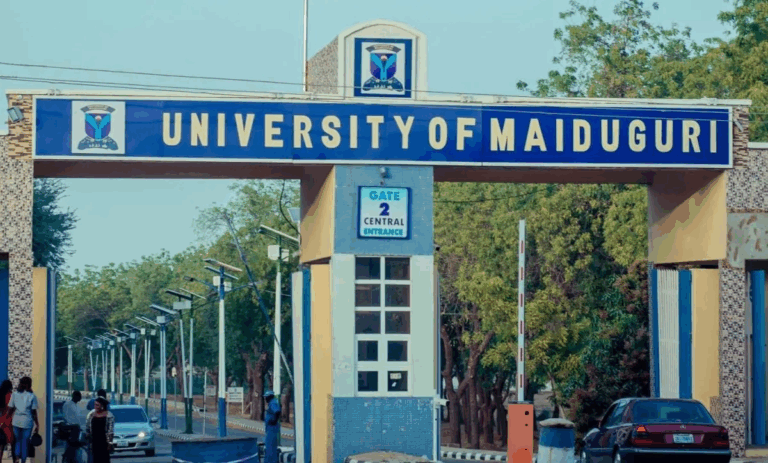
Ishaku shared his story following the recent renaming of the University of Maiduguri (UNIMAID) by President Bola Tinubu to Muhammadu Buhari University, Maiduguri. The Federal Government described it as a symbolic gesture to honour the former president’s contributions to national development, especially in the insurgency-hit North-East.

But the announcement triggered swift backlash from students, staff, and alumni of the university. For many, the name “University of Maiduguri” carries emotional and historical weight, representing resilience, growth, and academic excellence through decades of insecurity in the region

For instance, an online petition titled “Preserve the Identity of the University of Maiduguri” which garnered thousands of signatures demanded the reversal of the move.

The petition argues that the decision fails to reflect the views of the university’s stakeholders and disregards its longstanding identity.

The petition read in part: “With the deepest respect to the memory and legacy of the late President Muhammadu Buhari — a man whose contributions to Nigeria remain indelible — we believe that renaming the University of Maiduguri does not align with the sentiments of its core stakeholders and the enduring identity the institution has built over the decades.

Similarly, the Academic Staff Union of Universities (ASUU), University of Maiduguri (UNIMAID) branch, kicked against the renaming of the institution following a special congress held on Thursday, July 24, 2025. The union described the move as “arbitrary, ill-conceived, and lacking in meaningful consultation.”

They vowed to resist the change, insisting that the name “University of Maiduguri” carried historical, cultural, and regional significance that must be preserved.

The union warned that it would explore all legal avenues to challenge the decision and ensure the original name of the university is retained.

It also called on the national leadership of ASUU, other branches of the union, civil society groups, students, and the National Assembly to reject any attempt to give legislative backing to the renaming.

Not only Maiduguri

The University of Maiduguri is not the first Nigerian institution to undergo a name change in honour of a public figure. In 2019, the then president, Muhammadu Buhari approved the renaming of the Federal University of Agriculture, Makurdi to Joseph Sarwuan Tarka University, Makurdi. This was done to honour the legacy of Joseph Tarka, a prominent politician and nationalist from the Middle Belt. The renaming came through a bill passed by the National Assembly and signed into law by the president as part of efforts to immortalise notable figures from Nigeria’s political history.

In 2022, King David Nweze Umahi University of Medical Sciences, located in Uburu, Ebonyi State, was renamed to David Nweze Umahi Federal University of Medical Sciences following a federal takeover of the previously state-owned institution. Buhari announced the change after the institution was handed over by the Ebonyi State Government, and the National Universities Commission (NUC) formalised the transition from state to federal control.

In Oyo State, the First Technical University, Ibadan, established in 2017 by the administration of Governor Abiola Ajimobi, was renamed in 2023 to Abiola Ajimobi Technical University, Ibadan. The Oyo State House of Assembly passed a bill to approve the name change as a way of preserving the legacy of the late governor. The move was backed by the current administration of Governor Seyi Makinde.

Most recently, Pen Resource University in Gombe State, a private institution licensed in 2022, officially changed its name to North-Eastern University, Gombe in March 2024. 

The decision was made by the university’s Board of Trustees and Governing Council to reflect its broader regional focus beyond its founding organisation, Pen Resource Academy. The change was approved by the National Universities Commission, making it one of the few private institutions to adopt a regional identity through renaming.

Alumni caught in the middle

Alumni have particularly raised concerns over how renaming affects documentation, professional recognition, and institutional credibility.

“Renaming institutions really have a negative impact on the alumni of that institution, most especially those who wish to further their studies abroad because their results and transcripts will bear different names. Why not just build a new university and name it after him?” Ishaku stated.

His sentiments are echoed by Jairus Awo Otakom, an alumnus of Benue State University, which was renamed Rev. Fr. Moses Orshio Adasu University. He described the move as “insensitive and uncalculated.”

Jairus said it often undermines the legacy of the institution’s founder and disconnects generations of graduates from the identity they built their academic lives around. 

He also warned that the rebranding would impose financial strain on the underfunded university and create documentation issues for alumni in professional and academic spaces, both locally and abroad.

“For the university itself, which is already underfunded, this rebranding will require significant financial investment: redesigning letterheads, academic documents, faculty and departmental information systems, signage, and more. Where will this money come from?

“Have we thought about the emotional stress this could cause current students? There are other ways to honour our heroes without disrupting the identity of thousands.”

“Benue State University is currently listed across multiple national and international educational portals as a recognised institution. How do you explain to a job portal or institution that your certificate says “Rev. Fr. Moses Orshio Adasu University” when their system only recognises “Benue State University?”, he asked  “You won’t always be there to explain.” 

These discrepancies could lead to lost opportunities.  In a post on X, Hamisu Dandaje, an academic, shared how a graduate of the popular University of Makurdi faced challenges in applying for international scholarships after the school was renamed to Joseph Sarwuan Tarka University, Makurdi.

“Because he can’t find his renamed school – JOSTUM – from the global list of universities,” he stated, adding that “The list is yet to be updated, and he can’t obviously use the previous name because his certificate currently bears the name of the new one. This is one of the consequences of renaming a  famous University unnecessarily – confusion.”

“If there are a few things politics should spare, the name of a well-known university should be one of them. Inconsistency in the names of our universities would continue to generate global shame. If we can’t be consistent with a common name, what else can we successfully maintain?” he asked. 

What do you think of the culture of renaming universities?

Amnesty International condemns SSS’ continuous detention of Ghali Isma’il

0

AMNESTY International (AI) has condemned the continuous detention of social media personality Ghali Isma’il and demanded his immediate release.

Ismail, also known as Sultan, was arrested over a video he posted discussing President Bola Tinubu’s health.

Amnesty International described Isma’il’s arrest and detention by the SSS as an outright abuse of power and a violation of civil liberties.

In a post shared on its official X handle, AI called for Ghali’s freedom, stating: “Free Ghali Isma’il Now!”

The group described the security operatives’ actions as “illegal and oppressive.”

Isma’il is in custody at the Keffi Correctional Centre, facing a trial that Amnesty International called a ‘sham’ with “bogus charges.”

The group opined that the detention and trial violated Isma’il’s fundamental rights and demanded his unconditional release.

Amnesty said SSS agents invaded the prison on July 29, 2025, and forced Ghali to give them access to his digital accounts without a lawyer present.

It said the detention had had a devastating impact on Ghali’s right to privacy and had also profoundly affected his rights to freedom of expression and association.

The group expressed concern over the increasing trend of censorship and intimidation targeting online voices in Nigeria.

“Persistent state repression by the DSS (otherwise known as SSS)… creates an environment of self-censorship and fear — depriving people of the right to freedom of expression,” Amnesty warned.

The organisation condemned efforts to suppress online discourse, saying that using repressive tactics to control Nigerians’ social media activities violated human rights and must stop.

Isma’il was arrested by the SSS operatives after posting a video on his verified TikTok account @bola_asiwaju claiming President Bola Tinubu had died due to poisoning complications.

He was subsequently arraigned before a Chief Magistrate Court in Abuja on a two-count charge bordering on the publication of false information and incitement of public disaffection.

However, after hearing arguments from both the SSS and the defence counsel — whose application for bail was denied — Chief Magistrate Ekpeyong Iyang ordered that Isma’il be remanded at the Keffi Correctional Centre.

The case was adjourned until August 19.

Nurses won’t suspend strike until demands are met – Union chairman

0

THE National Chairman of the National Association of Nigeria Nurses and Midwives – Federal Health Institutions Sector (NANNM-FHI), Morakinyo-Olajide Rilwan, has vowed that the union’s ongoing strike would not be suspended unless the government addressed critical parts of the group’s demands.

This followed a meeting between the union and the Minister of Labour, Muhammadu Dingyadi, on Tuesday, July 29,  the day the association’s 15-day ultimatum expired. 

Despite the discussion, nurses across federal health institutions proceeded with the strike on Wednesday.

Speaking on Channels TV’s Sunrise Daily on Thursday, July 31, Rilwan said the nurses would not heed government appeals to return to work without tangible actions taken to meet their demands.

Responding to a question on what the union’s response would be if the government urged it to resume work while its demands are considered, Rilwan said that the strike would not be halted simply on the promise of further discussions.

“That is what the government will definitely ask for – that we should suspend the strike so they can look at our demands.

“We are not comfortable with that. We have to make sure that parts of the demand are attended to before we can suspend the strike at all,” he said.

Rilwan explained that the association had been patient and given sufficient notice, but the government failed to act.

The ICIR reports that the Minister of Labour had on Wednesday, July 30, urged the nurses and midwives to reconsider their stance. 

While appealing for the suspension of the strike, he encouraged the union to continue dialogue, describing industrial action as an unproductive solution. 

He said discussions would resume on Friday at the Ministry of Health.

However, the chairman of the striking nurses, on Channels Television, stressed that industrial action was not a default path for nurses, adding that the strike was a last resort following years of unaddressed grievances.  

“It’s not actually in the nurses’ attitude to embark on a strike, and we have been patient enough because we are compassionate. 

Nurses are empathetic with their patients; we love our patients and don’t want anything to happen to them. But we waited for a long time for all these demands to be met. So, this strike happens to be the last option we have to get the government’s attention.

“Based on the insincerity and insensitivity on the part of the government, I believe some parts of these demands must be met before we can suspend the strike. We have to see a serious commitment from the government before taking that step,” he stated. 

The union’s demands include gazetting the scheme of service for nurses, upward review of allowances, introduction of speciality allowances for specialist nurses, improved remuneration, recruitment of more nurses, and the establishment of a dedicated department for nursing within the Federal Ministry of Health.

The warning strike is expected to last for seven days, but the association had also warned that it would issue a fresh 21-day ultimatum if the government fails to act, potentially leading to a total and indefinite strike.

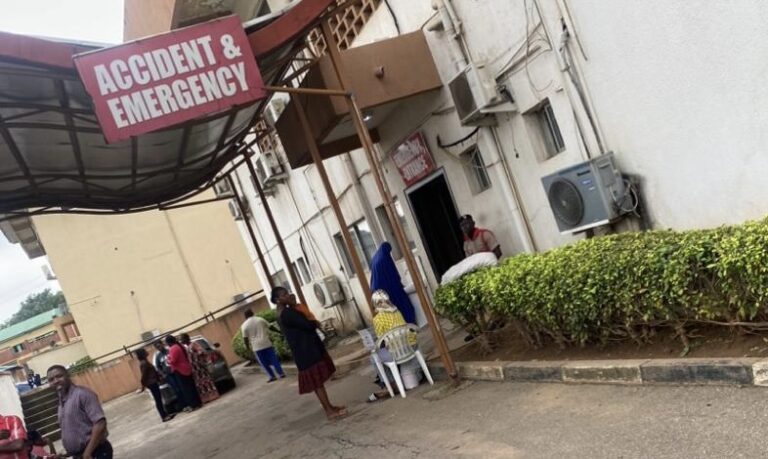
Media reports show how patients have been abandoned at federal hospitals in the country because of the strike.

The ICIR reporter saw a patient in Kuje, Abuja, who was intending to move to the University of Abuja Teaching Hospital in Gwagwalada. Doctors at the hospital advised her family to take her to a private hospital because of the strike.

They said the nurses’ strike would not allow the patient to receive the maximum care she needed.

Africa CDC launches Health Journalism Fellowship

The Africa Centre for Disease Control and Prevention (Africa CDC), in collaboration with the World Bank, is launching a fellowship programme for African journalists who specialise in health issues.

The fellowship will focus on African journalists reporting on health.

It is aimed at empowering African journalists to produce compelling, evidence-based public health stories that inform, engage, and drive policy dialogue.

Africa CDC is launching the health journalism track with support from the World Bank, continuing a targeted partnership focused on building media capacity and strengthening Africa’s voice on health security.

The fellowship will support five journalists, one from each of Africa CDC’s Regional Coordinating Centres, through a dynamic programme of mentorship, collaborative learning, and field engagement.

The inaugural 2025 cohort of fellows will work closely with Africa CDC to explore urgent public health topics, including how lessons learned from COVID-19, mpox, Ebola, Marburg, and other health emergencies are shaping current strategies and preparedness plans.

The fellowship is supported by the Deutsche Gesellschaft für Internationale Zusammenarbeit (GIZ) and the European Union Delegation to the African Union, alongside a broad coalition of African and international media, academic, and policy institutions.

For more information and to apply, visit: https://aumf.au.int/application 

The call for applications is now open and will close on August 14 2025.


.

NEMA repatriates 139 Nigerians from Niger Republic

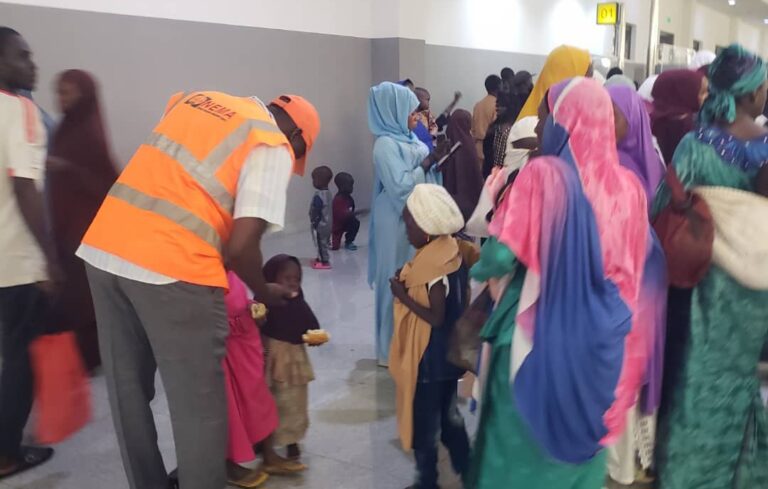
THE National Emergency Management Agency (NEMA) has received 139 Nigerians who were repatriated from Agadez, Niger Republic.

The agency revealed this on its official X handle on Thursday, July 31, as part of its efforts to ensure the safe and dignified return of Nigerian migrants.

“Kano Operations Office, participated in the reception of 139 Nigerian returnees from Agadez, Niger Republic. The returnees were transported via Sky Mali flights from Agadez, Niger Republic, and arrived at the Malam Aminu Kano International Airport (MAKIA) on Tuesday, 29th July, 2025,” NEMA said.

The agency explained that the returnees comprised 22 male and 52 female adults, as well as 33 male and 32 female children.

The ICIR reports that for years, Nigeria’s northern borders with the Niger Republic have remained notoriously porous, making cross-border movement both frequent and largely unregulated. 

From Lagos, Ogun, Oyo, Niger, Kwara, Kebbi, and Sokoto states bordering Benin Republic, to Cross River, Benue, Taraba, Adamawa Borno states bordering Cameroon, and Katsina, Jigawa, Yobe, Zamfara, Sokoto, Kebbi, and Borno which share border with Niger, as well as Borno bordering Chad, Nigeria has hundreds of porous borders, making illegal migration easy for residents of the neighbouring countries.

In 2022, the former Chief of Defence Staff (CDS), Lucky Irabor, said northern Nigeria alone had 137 unprotected borders out of the 261 approved by the Federal Government. 

“There are about 364 approved international border points in Nigeria, with about 261 in the North-East and North-West regions. Out of this, only 124 are manned, leaving the remaining 137 unmanned by security agencies,” Irabor said.

In June 2025, during a media briefing at the Defence Headquarters in Abuja, the current CDS, Christopher Musa, called for the fencing of the nation’s borders to curb insecurity and other crimes. Many Nigerians believe fencing the borders is a white elephant project for a nation battling revenue deficits, high debts, and ballooning corruption.

But Musa disagrees.

“Those thinking that building a border fence to protect our country from these crisis-infested countries and end porosity would be too expensive should learn from countries like Pakistan, which built a border wall separating the country from Afghanistan, a double border wall in a square size that is bigger than Nigeria,” he said.

Recall that The ICIR reported in 2024 that citizens of Niger and Nigeria travel with little to no documentation between the two nations. 

Coca-Cola sells Hollandia, Chivita brands

THE Coca-Cola Company has agreed to sell its Hollandia/Chivita (CHI Limited) brands to UAC of Nigeria Plc as the company weighs the Nigerian business environment.

UAC announced this in a regulatory disclosure to the Nigerian Exchange Limited (NGX) on Wednesday, July 30, noting that the transaction would be subject to regulatory approval.

According to UAC, the agreement supports the Coca-Cola company’s strategy to operate a flexible and asset-light model, focusing on brands that have the greatest potential for scaling.

“The Coca-Cola system recently announced it will invest $1 billion in Nigeria over five years and remains committed to these investments, provided a predictable and enabling environment is in place.

“This investment underscores the importance of Africa as a long-term growth opportunity for the Coca-Cola system,” it stated.

The Group Managing Director of UAC, Fola Aiyesimoju, while she announced the acquisition of Chivita/Hollandia brands, a leading dairy and juice business in the region, said the company remains strongly and deeply committed to Africa and the continent’s growth.

“This acquisition presents significant potential to build on ChivitaHollandia’s (CHI Limited’s) legacy of excellence and innovation. I would like to thank the management and staff of Chivita/Hollandia (CHI Limited) and look forward to working with the team to support the next phase of growth,” she said.

The Managing Director of CHI Limited, Eelco Weber, in his remarks, said the business has made significant progress over the past few years, with the Chivita and Hollandia brands becoming clear leaders in their categories.

“I would like to thank our over 5,000 employees for their hard work and dedication in bringing our business forward and earning us recognition as a Gold-rated Great Place to Work.

“We see a bright future for Chivita/Hollandia (CHI Limited),” Weber said.

Commenting on the company’s growth prospects, he added, “With the strength of our team, coupled with the dedication of UAC, there will be exciting opportunities for further growth.”

The ICIR reported in September 2024 that the Nigerian government explained the reason why the renewed $1 billion investment by the Coca-Cola Hellenic Bottling Company and its local partner, Nigeria Bottling Company (NBC),  faced a setback.

The presidency gave the reason in a statement titled ‘Explainer: Understanding Coca-Cola’s $1 billion investment’ issued by the special adviser to the President on Information and Strategy, Bayo Onanuga, on Thursday evening, September 19.

Meanwhile, the Coca-Cola Company had in 2021 pledged the $1 billion investment but later withdrew from executing the project, blaming its failure on Nigeria’s macroeconomic environment.

NNPCL rules out plan to sell Port Harcourt refinery

0

THE Nigerian National Petroleum Company Limited (NNPCL) has ruled out the possibility of selling the Port Harcourt Refining Company, raising hope of high-grade rehabilitation and retention of the plant.

The state-owned oil company made this known in a statement on Wednesday, July 30.

According to the statement, the NNPCL Group Chief Executive Officer (GCEO), Bayo Ojulari, dismissed the earlier plan to sell the refinery alongside other refineries at a town hall meeting held on Tuesday, July 29, at the NNPC Towers, Abuja.

According to Ojulari, the change of plan was not a shift but was informed by ongoing detailed technical and financial reviews of the Port Harcourt, Kaduna and Warri refineries.

“The ongoing review indicates that the earlier decision to operate the Port Harcourt refinery prior to full completion of its rehabilitation was ill-informed and sub-commercial.

“Although progress is being made on all three, the emerging outlook calls for more advanced technical partnerships to complete and high-grade the rehabilitation of the Port Harcourt refinery. Thus, selling is highly unlikely as it would lead to further value erosion,” he said.

The slight change of position comes following Ojulari’s earlier remarks at the 2025 Organisation of Petroleum Exporting Countries (OPEC) Seminar in Vienna, Austria earlier this month.

The NNPCL GCEO, in an interview with Bloomberg, had remarked on the possible sale of the refineries, hinting that “all options are on the table.”

His comment then sparked reactions following that the refineries have allegedly gulped about $18 billion in turnaround maintenance with noticeable operational failures, The ICIR reported.

Ojulari noted that his comment sparked speculation and headlines about the future of the nation’s refining assets.

“The declaration was received with applause from hundreds of staff attendees, who described the position as a renewed sense of business-focused direction across the organisation.

“The town hall served as more than a performance update—it was an opportunity for candid and constructive engagement. The Executive Vice Presidents presented progress reports from the Upstream, Downstream, Finance, Business Services, Gas, Power, and New Energy businesses, highlighting operational achievements, ongoing reforms, and areas requiring attention,” he said.

Reversing himself, the NNPCL boss said the challenges and earlier missteps were acknowledged, and a clear roadmap was outlined for the journey ahead.

“The announcement reinforces NNPC’s mandate as a strategic custodian of national energy infrastructure and reflects a firm resolve to deliver on the complete rehabilitation and long-term viability of Nigeria’s refineries. It also signals continuity in the Federal Government’s broader energy security objectives and a commitment to retaining critical assets under national control.

“Feedback during and after the session revealed a workforce energised and aligned with the leadership’s vision. Described as “reassuring,” “transformational,” and “sustainable,” the atmosphere reflected an optimistic outlook among employees and hopefulness about the company’s evolving strategic direction,” Ojulari maintained.

He added that the NNPCL would continue to reposition itself as a commercially driven, professionally managed national energy company, grounded in transparency, focused on performance, and unwavering in its responsibility to its number one stakeholder group, Nigerians, Ojulari concluded.

The company has, however, yet to clear the air on the probe of N210 trillion unaccounted funds spotted on its financial reports by the National Assembly.

African Union opens media fellowship

THE Information and Communication Directorate (ICD) of the African Union (AU) is accepting applications for the African Union (AU) Media Fellowship.

The fellowship is for African media professionals.

The programme is a transformative platform to shape the African story and create a more accurate representation of Africa’s progress and opportunities using emerging digital technologies as a key tool for communication.

Selected fellows will receive training, grants, support from experienced mentors, international and continental study tours, and more.

The ICD of the AU launched the African Union Media Fellowship as a transformative platform designed to reshape how Africa is portrayed.

The fellowship is to ensure Africa is at the forefront of defining and telling its own narrative, both on the continent and globally.

The fellowship begins in September 2025.

The deadline to apply is August 14.

Click here to apply