THE Nigerian Senate on Thursday says there is a need to resolve issues surrounding the housing sector in Nigeria to ensure affordable housing for the teaming poor population in the country.
The motion was moved by Akpan Bassey, senator representing Akwa Ibom North-East District, who said there was an urgent need to reform the housing policy and mortgage financing in the country to meet the escalating housing demand.
Yisa Ashiru, senator representing Kwara South district seconded the motion. He said the Federal Mortgage Bank should ensure that the interest rates are brought to a minimum and the housing issue should not be neglected.
Also speaking was Binos Yaroe, representing Adamawa South Senatorial District, he said it was imperative for the housing sector to reform so people could have houses because it was a fundamental need of man
The senate further resolved that the committee on Housing urgently works out modalities with the various National Housing Development sector to ensure the implementation of affordable housing across the country to cater for the ever-increasing population.
Since 2015, there have been programmes enacted in the housing sector; like the Federal Integrated Staff Housing (FISH) Programme (2016); and My Own Home scheme (2017).
While the FISH programme geared towards providing affordable housing for Federal Civil Servants through an integrated strategy involving group land allocation, site services, infrastructure development, etc, My Own Home Scheme, focused on the construction of about 100,000 housing units across the country for N610 billion.
However, the sector has witnessed no great change to date, as it is faced with delayed licensing requirements and a high cost of building materials due to the high import dependence of the sector among other factors.
Four workers responding to the Ebola outbreak at the Democratic Republic of the Congo (DRC) have been killed in two attacks at the eastern part of the country, and five others were left injured.
The World Health Organisation that disclosed the deaths on Thursday said the attacked occurred overnight on a shared living camp in Biakato Mines and an Ebola response coordination office in Mangina of DR Congo.
“We are heartbroken that people have died in the line of duty as they worked to save others,” said Tedros Adhanom Ghebreyesus, Director-General of the WHO.
“The world has lost brave professionals.”
A member of the vaccination team that provides Ebola vaccine for communities was killed, two drivers and a police officer totalled the four that died.
WHO said none of its staff was killed but one was injured, while others injured were the staff of Congo Ministry of Health.
“My heart goes out to the family and friends of the first responders killed in these attacks,” Matshidiso Moeti, WHO Regional Director for Africa, consoled the bereaved.
As the attacks continue, she said the agency would bring all the affected front-line workers to safety. She added that WHO would with the DRC Government, partners and The United Nations Organization Stabilization Mission in the Democratic Republic of the Congo (MONUSCO) to ensure the security of its staff and other health workers.
Leila Zerrougui, head of the MONUSCO had described the attacks a “very-disturbing” situation. She reported that so far in November, there have been around 14 attacks, with some 80 people killed in the region that is heavily hit with Ebola outbreak.
More than 2000 people have died from the disease since the outbreak was declared in August 2018.
There have been more than 3,298 cases of Ebola with 2,197 deaths as of 21 November.
“Ebola was retreating. These attacks will give it force again, and more people will die as a consequence,” said Dr Tedros.
“It will be tragic to see more unnecessary suffering in communities that have already suffered so much. We call on everyone who has a role to play to end this cycle of violence,” he said.
THE Socio-Economic Rights and Accountability Project (SERAP) on Thursday described the anti-social media bill as ‘illegal’ geared at increasing the level of oppression faced by Nigerians.
The civic group noted that the country, prior to the bill, has encountered cases of dictatorship by leaders of the country and as such, the enactment of the bill would escalate the existing situation.
In a series of tweetson Thursday, the group listed individuals whose freedom of expression has been violated, after they had indicted the government on social media platforms.
SERAP recalled that six students of Madonna university were detained for a post on Facebook alleging poor management in their institution; a FUNAAB student was expelled for writing an open letter to the Vice-Chancellor on Facebook, and a Taraba University student was similarly expelled over Facebook post criticising Darius Ishaku, governor of the state.
Also, the group noted that a journalist Danjuma Katsina was jailed over alleged ‘injurious comments’ on a House of Representatives member, Mansur Mashi. Likewise, a journalist, Agba Jalingo is facing ‘terrorism’ charges for criticising Cross River Ben Ayade, the state governor.
The on-going trial of Sowore facing bogus charges for calling a national protest is not far fetched, even as a lawyer Joseph Odok was charged with ‘terrorism’ also for criticising Ayade.
The Protection from Internet Falsehood and Manipulations Bill also called the Social Media Bill was introduced to the Senate on November 5 and was sponsored by Mohammed Sani Musa, a member of the ruling All Progressives Congress (APC) representing Niger East Senatorial District.
The bill which had passed its second reading aims at regulating the use of social media in Nigeria and curbing fake news on the internet.
The bill has been condemned by civil society groups and media practitioners as one capable of limiting the rights of Nigerians to the freedom of expression.
ALI NDUME, the lawmaker representing the Borno South senatorial district, has vowed to sponsor a bill at the National Assembly that will lead to the creation of a missing persons’ register in Nigeria, with help from the International Centre for Investigative Reporting, ICIR, and other stakeholders.
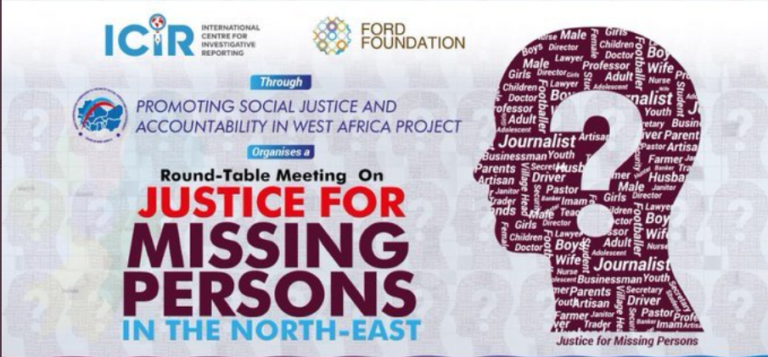
He made this declaration on Wednesday at the round-table meeting on Justice for Missing Persons in the North-East held by The ICIR in Abuja and added that this is one of the steps that must be taken in getting social justice for the victims of forced disappearances in the region.
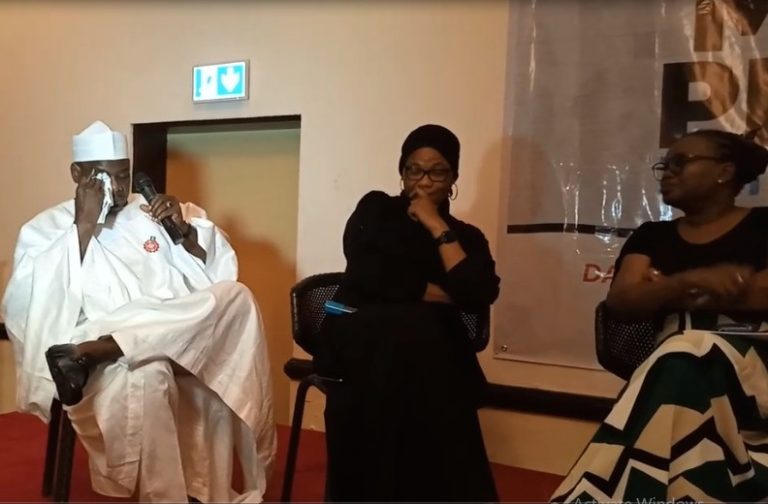
In his reaction to a question from Abdul Mahmud, a lawyer and human rights activist, alongside a comment from Hamsatu Allamin, executive director of Jire Dole, a misty-eyed Ndume agreed it is important to establish a desk to account for missing persons.
“As we leave here, we will do a motion. I’ll take a look at it and raise it on the floor of the House. I will talk to the Speaker if there is a need for that to make sure that the resolution is passed on the floor of the House of Representatives for government to initiate it,” he said.
“Right now, there are about 4000 or 6000 people in detention in Giwa Barracks. Some of them have been there for nearly 10 years, from the beginning of the crisis in 2009 to the height of the crisis in 2014. These people are under detention; we can’t say they are missing. But to their families, they have not been accounted for. Now, here we are, let us start from there.”
He said the desk to be created will work with the Nigerian Army to identify and document persons who are kept at Giwa Barracks and other detention centres. Those who are cleared as innocent will be released while others found suspicious will be further interrogated and possibly prosecuted.
The senator cautioned against antagonising the government and insisting that it should be held responsible as that will result in “spoiling the case”.
“So let us join hands with the government to solve this problem,” he said.
“Let us join the government and then do what we want to achieve. From there, if an innocent man is detained for 10 years and is released and asked to go home; then he has a right to go to court and say you detained me for 10 years and I want damages, N10 million, N5 million. That way you are right.
“But if you say, if you release me from here, I’m taking you to court, I assure you you’ll be there in that detention, and the government will be looking for something to hang on your neck so by the time you go out you’ll be thinking of how to keep yourself safe.”
Ndume noted that it is impossible to quantify exactly how many people are missing in the northeast partly because the population of the various communities is not known. He urged Nigerians to put pressure on the government to do more.
“For now, I don’t think anything is being done about missing persons,” he added.
“This kind of roundtable meeting will now serve as a triggering point for the government to do something about the missing persons, to even know where they are. Then we talk about justice for them… But let me conclude that what you see is just a tip of what we are going through in Borno in terms of the humanitarian crisis, but we are happy and we appreciate your concern.”
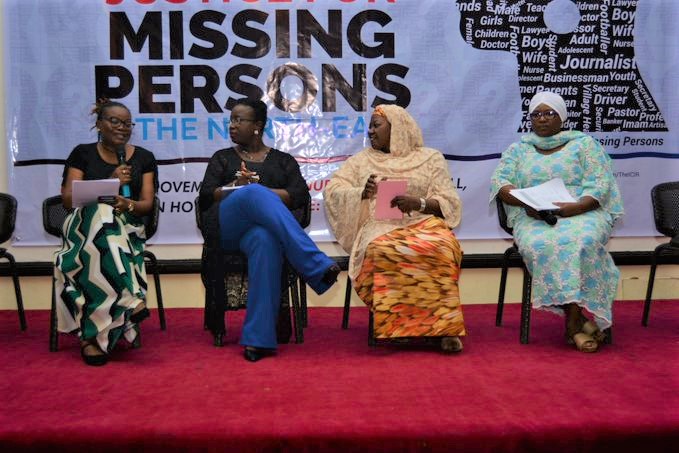
Panelists at the round-table meeting. Credit: The ICIR
The round-table meeting was also attended by Abiodun Baiyewu, executive director of Global Rights; Idayat Hassan, director of the Centre for Democracy and Development; and Bukky Shonibare, founder of Girl Child Africa and coordinator of Adopt-A-Camp.
In a communique released after the event, participants recommended that “there should be a database with the government covering people who are being incarcerated to match against allegations of persons going missing or being extrajudicially killed.”
Among other things, they also urged that more awareness is created around the problems, investigative journalism is strengthened, women in the northeastern region are empowered, and the government implements the International Convention for the Protection of All Persons from Enforced Disappearance, which Nigeria has signed and ratified.
HERE we go again! I have not seen the final presentation of a BBC feature programme on Health Awareness in which my 2014 experience with cancer was featured, but have been bombarded by narratives of the most disquieting nature, distortions through either misreporting or media misconceptions of what the BBC feature actually conveyed.
The first – and most urgent – correction, of course, is to re-state that this is an ancient tale that is firmly situated in the past tense. In other words, I have not been under any cancer-related condition for over five years. Indeed, it was in order to avoid creating any such anxieties that I refrained from even revealing my own ordeal until I had fully and successfully concluded treatment. I made the original revelation in 2015, in support of the late Professor Femi Williams’ drive to set up an Africa Cancer Centre in Nigeria. It did not fail to strike an instructive chord that I had been a founding participant in that health initiative, little suspecting at the time that I was already a carrier of the enemy virus!
Next, and more worrisome, is that some of the reportage suggests that I criticized Nigerians for seeking treatment outside the country. This is outright nonsense! Those who are able must seek health from wherever, including the outer planets, as long as a nation fails to provide even the most rudimentary but effective and sustainable health facilities for her own citizens. Indeed, I called it a shame that a nation as resource endowed as Nigeria has failed in that fundamental aspect, since it privileges just a few as against the totality. I lamented a situation where a nation’s president leaves his station again and again for weeks on end to seek treatment outside his nation, while the health system over which he presides steadily collapses around him.
I repeat: I have yet to see the programme, but perhaps I should start thinking of my next collaboration with the BBC or any other public awareness outreach, this time, around the urgent theme of a different form of cancerous affliction: the cancer of illiteracy!
AT first, it will seem rather strange and even wrong to call on a happy people to stop being happy and instead be angry, particularly in a country like Nigeria, where religion and faith are often substitutes for self-help and can be seen by some to offer excuses for inaction. What is the point of happiness though if it is steeped in increasing levels of poverty and unfulfilled human rights and dignity?
The 2019 World Happiness Report, a landmark survey of the state of global happiness, produced by the United Nations’ Sustainable Development Solutions Network, with analytics from Gallup, ranked 156 countries by how happy their citizens perceive themselves to be. The report placed Nigeria second in Africa and 85 in world happiness ranking. Normally, this would be a good development. In the case of Nigeria, and relating to the point of this article, this isn’t necessarily so. It could be considered as evidence of a citizenry that has become rather desensitized to good governance and foregone their right to political, social and economic justice. If it is so, then it is a disheartening sign of complacency, because at the same time as people are apparently getting happier in Nigeria, according to statistics from Action Aid, 68 per cent of the population now live below the poverty line, with some 44.2 per cent of Nigerians living in extreme poverty and, shockingly, the poor in Nigeria pay more in taxes than multinational oil and energy companies. Nigeria’s domestic investment in health currently stands at just 0.9 per cent of GDP.
In practical terms, this means that there are chronic shortages of medical supplies and many hospitals are very poorly equipped; there is widespread misdiagnosis and late diagnosis; hygiene conditions in many hospitals are rather problematic, especially outside the large cities; it is estimated that there are four doctors for every 10,000 people in Nigeria. Lack of standard medical infrastructure, facilities and general investment in healthcare in the country has seen the medical sector experience one of – if not the most severe case of –‘brain drain’ from the country, as highly-trained experts regularly depart the country to pursue their profession in countries with better infrastructure or higher wages.
All over the world, we are witnessing political discontent and social unrest because citizens demand better from their leaders. In Nigeria, this hasn’t been the case at all. It is understandable that over the years, Nigerians will have learned to mask their pain by telling jokes and making light of the very source of their pain. In Nigeria, we were fortunate that we didn’t have to experience the long and hard struggles for independence like many countries did, perhaps most notably seen in the anti-apartheid struggles of the 1970s and 1980s in South Africa. As much of a blessing as this was, perhaps if we had to struggle for it, we will have imbibed the culture of people-power as a major agent for change. These days however, even with the unprecedented global interconnectivity and the several cases around the world of people achieving progressive change when they come together as one to demand for it, it is increasingly hard to tell if this light-hearted response to their avoidable pain continues to be a case of Nigerians perceiving themselves to be powerless, masking their pain, or just a case of becoming numb or even oblivious to the causes of such pain and their ability to tackle them.
While denial of rights has caused anger and reaction in many parts of the world and continues to do so, in Nigeria many people would rather joke about the denial of our rights. There is nothing funny about police extra-judicial killings that saw officers of the Nigerian police randomly shoot at innocent protesting students in Ekiti state and no one faced any consequences for it. There is nothing funny about the lack of action against past and present corrupt public office holders who have siphoned billions of Naira from the country and continue to seek to rule it. There’s nothing funny about successive governments’ failure to ensure the security of lives and properties and the ongoing kidnapping rampage in major cities in Nigeria. There’s nothing funny about the highly questionably claim that over N5 trillion ($31.45 billion) has been invested in the power sector since 1999, while the country continues to experience what many have called epileptic power supply, severely stunting the country’s capacity for sustained development. There is nothing funny about a murderous terrorist organisation carrying out terrorist attacks while public officer holders, pretending to tackle the menace, divert millions of Naira of public funds for themselves and their cronies. There is nothing funny about university graduates who can’t speak English coherently when it indicates a broken education system that needs urgent fixing. These things have all been subject of joke-telling in Nigeria when they should have resulted in widespread anger and reaction to demand better. We laugh them off when these jokes pop into our social media feeds and then we swiftly move on, but there are people on the receiving end of the subject of every such joke, who must then try, often unsuccessfully, to deal with their real-life consequences.
Laughter is good – very good for the heart, but in situations like the above, it only inadvertently leads to complacency and piling up of misery on the poorest Nigerians. While a call to anger and collective reaction may at first seem like a depressing and ‘faithless’ thing to do, it is what can accelerate the realisation of fundamental economic and social rights for all Nigerians. Many people across the globe are coming quickly to the realisation that there is great power in numbers. The only thing more powerful than a politician wielding power unsympathetically and/or unempathetically, is a citizenry standing up against them, together as one. As Nigerians, we will only begin to see real change when we begin to demand it at all levels of government. We will however only be able to take a collective stand and demand for positive change if enough of us would come quickly to the realisation that some things have too much negative impact on people’s lives to become the focus of viral jokes. Such things should lead us to anger and counter (but focused and lawful) reaction, not laughter and continued complacency. Enough really is enough!
Michael Buraimoh is the Founder of Diaspora Initiative for Nigeria’s Development (DiND) info@dind-global.org
(DiND is a global diaspora movement to work for progressive change in Nigeria in collaboration with civil society in-country)
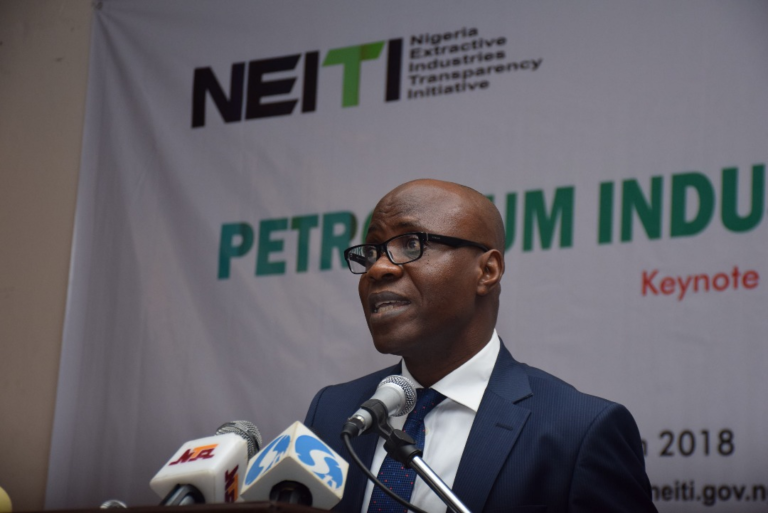
A CIVIL society organisation, OrderPaper Advocacy Initiative in partnership with the Civil Society Steering Committee (CSSC) department of Nigeria Extractives Industries Transparency Initiative (NEITI) are set to launch RemTrack Mobile application to foster transparency and audit in the extractive industry.
In a statement obtained by The ICIR, OrderPaper and NEITI, it read that the RemTrack application will be effective in tracking the remediation issues contained in the annual audit reports of the NEITI.
The press statement read that the RemTrack app will be presented by the Executive Secretary of NEITI, Waziri Adio and other stakeholders to the public on Tuesday, December 3, in Lagos to mark the formal commencement of public engagement of the tool.
The RemTrack application was said to follow over a year-long period of consultations and co-creation driven by OrderPaper and the CSSC.
It added that RemTrack app was designed as a technology-for-development intervention built to organize the audit reports into user-friendly data on remediation issues, progress and outcomes of reconciliation, and the covered entities
The app is said to be designed for android and apple devices to be used in mobile phones and other hand-held devices while there is also provision for a website (www.remtrack.ng).
According to the statement, ‘RemTrack is a global innovation being the first of its kind throughout the world conceived to foster the implementation of the Extractives Industries Transparency Initiative (EITI) process in Nigeria. The app clearly aligns with the drive of the global body to encourage the use of data and technology to promote the key objectives of transparency and accountability in the extractives sector of all implementing countries’.
Highlighting the benefits of the mobile application, the app is to be used as a tool to stimulate informed and healthy public engagement in the extractives sector, enhance evidence-based advocacy by civil society.
“The unveiling of the RemTrack app broadens the opportunities of the civil society and the citizens to track key findings and recommended in NEITI reports, the process of implementation and how the impact feeds into the on-going overall reform agenda of the extractive industries. This is a major civil society contribution to deepen NEITI process in Nigeria,” the statement added.
The statement further read that the ultimate objective of the RemTrack intervention is to stimulate the resolution of pending remedial issues for the sake of ensuring that the benefits of Nigeria’s huge extractives resources impact positively on the lives and living conditions of citizens.
The Chairman of the Civil Society Steering Committee (CSSC), NEITI, Kolawole Banwo said the CSSC Board serves as the interface between the civil society constituency and other stakeholders within the NEITI implementation process.
He added that the CSSC is made up of 15 members as provided for in the NEITI Act 2007 to serves as the voice of civil society and citizens, mobilizes participation, disseminates information and promotes debates on issues within the extractive sector.
THE International Centre for Investigative Reporting, ICIR on Wednesday in Abuja premiered a documentary on missing persons in the Northeastern Nigeria since the beginning of Boko Haram insurgency in the region.
The roundtable discussion tagged “Justice for Missing Persons in the Northeast” which took place at Sheraton Hotel, was sponsored by the Ford Foundation.
The ICIR said the event was part of its own effort to bring stakeholders together to discuss and proffer solutions to the problem of missing persons in the Northeast.
The International Committees of Red Cross put the number of missing persons in the northeast alone at nearly 20,000.
Ali Ndume, a senator from Borno State and Chairman, Senate Committee on the Army, said the figure represents only those cases reported to the ICRC.
“Only God knows the number of persons missing since the insecurity problems in Borno State, he said.
According to him, there is no existing database of the number of persons incarcerated in military facilities, especially Giwa military base, that is available to the public.
Although insurgency in the region is a major factor that has led to loss of lives, Comrade Hajja Gana Sulieman, woman leader of the Jire Dole (Trust is a must), a group of women in the north-east fighting the injustice meted out to their men, told The ICIR that soldiers were largely responsible for the anguish suffered by people of Borno.
“My son like numerous others were taken away by the army and till today I have not seen him. I have spent more than two million naira and sold my properties including my daughters’ to secure his release.
“Initially, I was told that he would be released if I paid the money. They said he would be smuggled out with the dead in the ambulance when they are going to deposit the bodies at the morgue.
“I was to pick my son at Damaturu and told to warn him never to return to Maiduguri,” she said.
Till date, Sulieman told The ICIR that she never saw her son. Nevertheless, she said she would continue to fight for justice on behalf of her son and children of other women in society.
She said the army killed some children in Maiduguri and forced their parents to sign documents that say they were Boko haram before their bodies could be released
Thomas Ateda, member of the National Technical Committee on the establishment of Database on Missing Persons in Nigeria based told The ICIR that complaints of Sulieman was just one amongst many others but said the committee was committed to flushing out the corrupt persons in the Nigerian Army and ensuring they are put on trial and punished when found guilty.
“We have always been open to investigating issues of rights violations especially when it has to do with missing persons. This is the first time I am getting to know about Colonel Ofurumazi obviously known as ‘Yellow’ in Maiduguri that has terrorised families and we are going to look into it,” she said.
At the end of the programme, recommendations were made based on the challenges identified during the panel discussion which include a comprehensive compilation of details of missing persons across communities, drafting a parliamentary motion which is to be introduced at the National Assembly to motivate the government towards getting social justice.
Part of the recommendation includes setting up a Truth and Reconciliation, and Reparation Committee that will facilitate the hearing of grievances, acknowledgment of atrocities, and compensation of victims amongst others.
The event was attended by women group from Borno states, human rights activists, politicians, members of the Department of State Security, journalists, and participants from both local and international non-governmental organizations.
SOME unidentified gunmen ranging about 30 have reportedly invaded two villages killing five residents and kidnapped five children of two communities in Taraba State on Monday midnight.
According to reports, the village heads of Bailango 1, Garba Dangari and Sarki Ali, head of Bailango 2 in Karim Lamido Local Government of the state were murdered by the unknown gunmen during the attack.
The Chairman of the Vigilante group of the communities and two other yet to be identified residents also lost their lives during the attack.
The attack was said to be a retaliation of the recent killings of suspected kidnappers by hunters and vigilante groups of Bailango 1 and 2.
After the attack, the gunmen were reported to have fled into neighbouring Pleateu State along with the five kidnapped children.
Security personnel have been deployed to the involved communities from Karim Lado town, where the Karim Lado Local Government is situated.
The ICIR made efforts to contact the spokesperson of the Nigeria Police in Plateau state, David Misal to confirm the incident but has been unable to reach him.
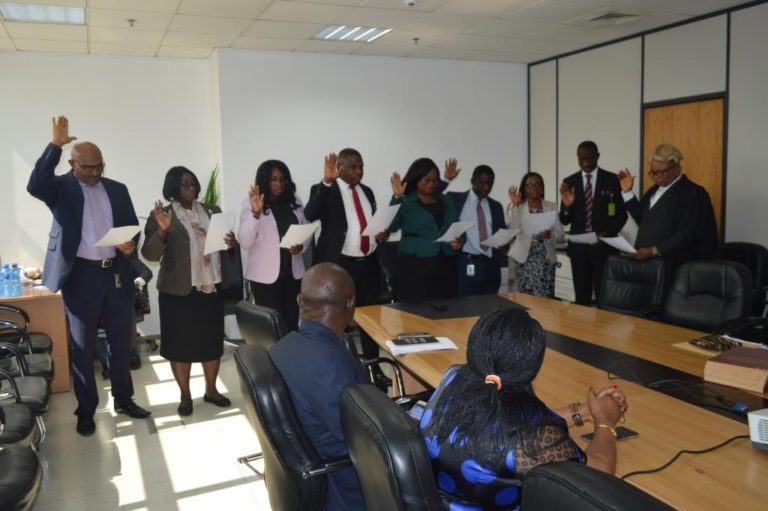
THE Independent Corrupt Practices and Other Related Offences Commission (ICPC), has inaugurated the Anti-Corruption and Transparency Unit (ACTU) set up by the Central Bank of Nigeria (CBN) since 2001 when the circular was sent.
The Apex Bank set up an eight-man committee for the new Anti-Corruption and Transparency Unit as one of ICPC’s mechanisms for prohibition and prevention of corruption especially in the Public Service established in 2001.
The new ACTU Chairman, Chukwuemeka Ohadiagha, in his acceptance speech, expressed gratitude for being appointed and pledged to put in his best in order to ensure that the apex bank performs its duties with transparency.
Along with Ohadiagha, Salawa Zainab was appointed as the secretary; Joy Nduka, Abdullahi B. IOdah E. G and Ekaete Akpan among others are members of the unit.
During the inauguration in Abuja on Wednesday, the ICPC Chairman, Bolaji Owasanoye, represented by Ifeanyi Obialor of the Corruption Monitoring and Evaluation Department of the ICPC, commended the leadership of CBN for taking a bold step in the anti-corruption drive of President Muhammadu Buhari administration by subscribing into the ACTU initiative of the commission.
Owasanoye commended the CBN Governor, Godwin Emefiele, for facilitating the inauguration of an anti-corruption unit in the apex bank.
He said the Commission is aware that CBN has a mission to be proactive in providing a stable framework for managing the financial sector.
“You may agree with me that this lofty goal cannot be achieved under an opaque or corrupt environment. ACTU would assist both ICPC and CBN to combat corrupt practices through in-house corruption prevention activities such as system study; preliminary investigation and enlightenment campaigns”, he added.
The CBN Governor, Godwin Emefiele, represented by Abdullahi Bappa Ahmed, Director, Governor’s Department, during his opening remarks said that the Apex bank is always ready to key into the federal government’s policies and programmes at all times.
He said as a monitoring institution that helps the economy to grow, CBN is always willing and capable of handling all federal government policies and programmes, especially where corruption is involved.