THE Federal High Court, on Friday, says it will take the bail application of Faisal Maina, son of Abdulrasheed Maina, the former Chairman, Pension Reform Task Team (PRTT) on November 29.
Justice Okon Abang gave the ruling after taking the objections of the Economic and Financial Crimes Commission (EFCC) and the defence counsel, after which he adjourned the case until November 26 for the continuation of trial
Also, Justice Abang, ordered the prosecution counsel, Mohammed Abubakar, to submit copies of judicial authorities reported in law pavilion, electronic law report, on or before the close of work on November 25.
Recalled that Faisal was arrested alongside his dad, at the Pennsylvania Avenue Hotel, Utako, Abuja by the operatives of the Department of State Services (DSS). The EFCC had requested the DSS for their arrest.
The ICIR had reported that Faisal, a final year student at the Canadian University of Dubai attempted to evade arrest and in the process pulled out a gun and shot at an operative before he was demobilised.
Items recovered from him include a pistol with live ammunition, a bulletproof Range Rover SUV, a BMW Saloon car, foreign currencies, a Phantom 7 drone and sensitive documents.
A security operative had disclosed to The ICIR, Faisal was prosecuted for illegal possession of firearm and corruption, however, on October 25 the court said he had fresh charges yet unread, but a report by Channels TV said Faisal was been charged for allegedly shooting at security operatives in a bid to evade arrest.
A RECENT bank robbery attack in Ekiti State that claimed two lives is speculated to have resulted from connivance between bankers and the robbers.
The Commissioner of Police in Ekiti State, Asoquo Amba made this known on Friday after a CCTV footage showed staff taking money from the vault a few minutes before the attack.
On Thursday, there was a reported case of bank robbery in Oye-Ekiti by gunmen numbering 10 shooting sporadically.
The robbery attack reportedly took the lives of a policeman and a girl, even as community residents scampered for safety and bankers also.
The bankers had admitted hearing the gunshot 10 minutes before the security door at the entrance of the bank was destroyed.
In a report by the Commissioner of Police after an investigation, the CCTV had captured bankers moving in and out of the vaults, stating that the vault was opened before the robbers arrived.
“What baffles me is that there was nexus between the robbers and insiders in the banking premises. The Oye Police Division is about one or two poles from here. It was the first point of attack. The bankers confirmed that they heard the shots and it took about 10 minutes before the robbers arrived at the bank from there.
“Between the time the robbers attacked our men and the time the robbery took place, the staff had enough time to escape through the exit door. They were captured by CCTV moving in and out of the vault. The vault was even opened before the robbers came.”
“Within the period, there were some activities that went on inside the bank. It is either there was strict connivance, or that the bank officials took advantage to carry out their own intention which an investigation would prove.
“Despite the opportunity, none of them made efforts to escape, they were stuffing money and there is evidence to prove this. The staff opened the vault by 3.05 p.m. and the robbers blew up the security door at 3.12 p.m., this gave a strong suspicion that there was internal collaboration in this matter,” Amba said.
The CP also said the robbers carted away over N25 million after the attack, but the sum of N2 million contained in a carton was recovered.
“The carton was hidden under the table within the banking hall. This should be part of the loots from the strong room,” he said.
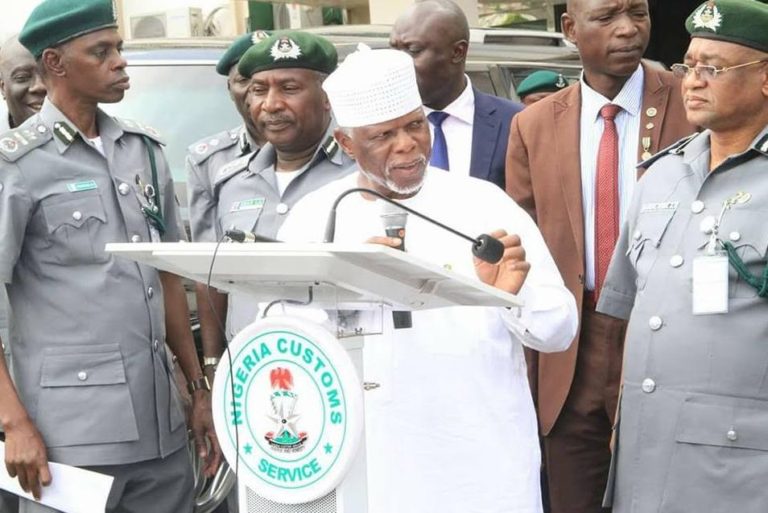
IN DEFENDING Nigeria’s decision to close its land borders, the Comptroller-General of Nigeria Customs Service, Hameed Ali, has repeatedly claimed that China similarly shut its borders to international trading for decades and this somehow improved its economic fortunes. But this is not true.
Following a partial closure exercise two months earlier, the Customs Service announced in October that it had banned the importation and exportation of goods through the country’s land borders to ensure “total control over what comes in”.
Despite widespread criticism from many quarters, including from the Economic Community of West African States, President Muhammadu Buhari earlier this month approved the extension of the closure till the end of January 2020.
To justify the closure weeks ago while addressing the press, Ali said in a widely shared video that China also closed its borders “for 40 years to the whole world and today they are great China”.
“Don’t you want to be great Nigeria?” he then asked.
Last Friday, the Customs boss insisted the federal government will not bow to pressure from neighbouring countries to reopen the borders, again citing the Chinese example—only now halving the number of years.
“The Chinese closed their doors for over 20 years and now they are on top,” he said.
“We need to close our own. There is nothing that is being produced today that we cannot consume in Nigeria. Our industrialists do not have to look out to find the market; we have it right here. And we need to grow that market.”
No evidence this ever happened
The ICIR has found no recordproving that China, on its way to becoming a global economic powerhouse, ever shut its frontiers totally to international trade. The contrary appears, in fact, to be the case.
Fatima-Zohra Er-Rafia, an independent researcher and PhD in Business Administration with a focus on China and Japan noted in a 2018 publication that the first of four major factors that made China become the World’s second economic power is “Deng Xiaoping’s opening-up-to-the-world policies and the 1979 Equity Joint Venture Law”. (Xiaoping was China’s paramount leader between 1978 and 1992.)
“Together they have allowed (among other things) foreign capital and Western companies to enter China, transforming the domestic economic landscape entirely from one that is traditional and obsolete to one that is dynamic and modern,” she wrote.
The Chinese, however, did put in place some measure of border closure in the 15th century in reaction to an influx of foreign merchants and settlers and in order to protect local traditions. The isolation of the empire started during the Ming dynasty and continued into Qing dynasty.
Through a series of isolationist policies known as the haijin (or sea ban), the empire ordered the restriction of private maritime trading. Trading still occurred during this period though through piracy and smuggling, and local authorities even disregarded the law by engaging in illicit trading. Nevertheless, the restrictions led to a loss of revenue from taxation, funding difficulties, and a rise in poverty levels.
‘Not in recent times,’ says expert
Hans van de Ven (FBA), a professor of Modern Chinese History at the University of Cambridge, told The ICIR that China has not closed its borders “in recent times” as suggested by Ali.
“If your official is referring to the People’s Republic, China was subject to a US embargo until the 1970s, and hence couldn’t trade with US-allied countries, but that is rather different than China closing its door,” said Hans, who is also a Guest Professor at Nanjing University’s Department of History.
“In this period, China did trade with and exchange personnel with Communist countries. During the Qing dynasty, China did close its doors to foreign trade for a couple of decades, but it needed foreign trade and so opened them again.”
He further emphasised that the link between China closing its country and hence having a vibrant economy, as implied by the Customs boss, “seems very difficult to defend”.
The total trade embargo imposed by the United States followed China’s intervention in the Korean War in the late 1950s and was ended by US President Richard Nixon.
Also writing in response to enquiries from The ICIR, Michael Szonyi, a professor of Chinese History at Harvard University and Director of the Fairbank Center for Chinese Studies, described the claim as “factually inaccurate”.
“At no point in the twentieth-century did China (or any political regime governing China) close its borders to international trade,” he said.
“While China’s international trade did vary considerably over the Maoist period, the increase of China’s international trade in the late 1970s coincides with the rapid growth in the Chinese economy (though the causal relationship between these phenomena continues to be debated).”
World Bank statistics negate claim
A look through data from the World Bank shows that there was no time in China’s history, from 1960 till date, when either imports or exports of goods and services seized completely.
In 1960, imports into the country were worth $2.6 billion and have risen over the years to an all-time high of $2.5 trillion in 2018. The lowest point was in 1962 when imports were worth $1.4 billion. The steep in imports noticeably started in the 1990s.
The data on exports show a similar trend. All exports were worth $2.6 billion in 1960 and have risen to $2.7 trillion in 2018. The lowest value was $1.9 billion in 1962.
Interestingly, statistics from the World Bank also reveal that the ascending curve in China’s Gross Domestic Product (GDP) corresponds sharply and proportionally to the curves representing the weight of its imports and exports. This means the country’s GDP increased at the same time and rate as transactions with other countries received a boost.
The trend of China’s GDP, import, and export growths. Source: World Bank National Accounts Data
“Through the 1990s, China began to clock rapid growth rates and joining the World Trade Organisation in 2001 gave it another jolt. Trade barriers and tariffs with other countries were lowered and soon Chinese goods were everywhere,” the BBC reported in October, citing David Mann, global chief economist at Standard Chartered Bank.
‘It is a fallacy’
Former BudgIT head of research and Senior Project Officer at the International Budget Partnership, Atiku Samuel, also described the claim that China closed its borders to the whole world as “actually a fallacy”.
“China has never and will never close its borders to the whole world,” he emphatically told The ICIR.
“What they had was more of a stringent, regimented trade agreement … The second thing is that there is no nation, even North Korea that in quote people believe now that they have a closed border, they still do trade with their neighbours. They still do trade with China. They still do some level of trade with other people in the world. And that’s about the most closed economy you can think about now. In clear terms, a country cannot exist without doing trade with its neighbouring countries.”
Samuel said the situation in (West) Africa is a complex one since the communities in various countries were already trading among themselves before modern borders were introduced.
“My own conclusion is that nothing like that exists in the world. I am yet to see it. What you can have is some level of restriction around trade. And then even the modalities for ensuring you have a closed system can never happen in Nigeria, except we have money to fence all the 4000 kilometres (of the border).”
The policy analyst also said, in 2015, Nigeria exported goods worth about N1.04 trillion to West African countries and imported about only N74 billion worth of goods.
Indeed, according to data from the Observatory of Economic Complexity (OEC), between 2010 and 2017, Nigeria exported goods worth up to $25.04 billion to other West African countries while it imported only goods worth $9.09 billion. And, in 2017 alone, its export value to the region was $2.6 billion, far outweighing its import value of $309.1 million.
The implication of this, Samuel explained, is that “Nigeria has more advantage in terms of trade with West Africa … We sell more to them than we actually take from there. That is given. That is a statistic of government”.
He said, with the border closure, Nigeria is not only breaching the ECOWAS free-trading policy but is also encouraging smuggling and black market transactions.
The solution, he concluded, is to address why goods produced locally cannot compete with cheaper ones from other countries and to make legitimate importation hassle-free by improving the ports.
“We need to look at why the cost of production in Nigeria is high and we need to begin to address those issues. That is the only practical way to stop unnecessary importation.”
Verdict
The claim made by the Customs boss that China, towards becoming a global superpower, closed its borders to the whole world is false. China made that move in the 15th and 16th century, but not only were the protectionist policies unsuccessful and widely disobeyed, they also led to increased poverty levels and reduced government revenue.
The rise of China’s GDP, The ICIR likewise observed, in fact, corresponds over the years with an increase in trading with other countries.
The country did not close its borders in the 20th century when its economic indices sharply improved but rather was on the receiving end of a 21-year trade embargo imposed by the United States and its allies.
The African Union ordered Britain on Friday to withdraw from the Chagos Islands and end its “continued colonial administration” after a United Nations deadline for it to do so expired.
The Chagos Islands belong to the Indian Ocean island nation of Mauritius, according to the advisory opinion the top U.N. court issued in February. The U.N. General Assembly in May voted in favour of Britain returning the islands to Mauritius and set a deadline for Nov. 22.
In a statement, the African Union called on Britain to comply with the U.N. resolution.
Britain does not recognize Mauritius’ sovereignty claim.
“The UK has no doubt as to our sovereignty over the British Indian Ocean Territory (BIOT), which has been under continuous British sovereignty since 1814,” the Foreign Office said in a statement on Nov. 5.
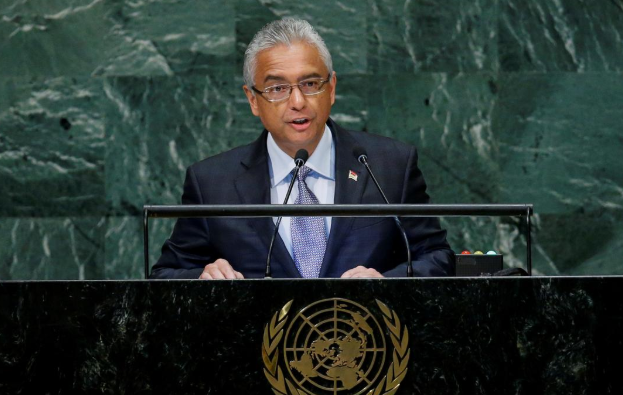
Mauritius Prime Minister Pravind Kumar Jugnauth called Britain’s refusal to give up control of the islands a violation of international law.
“The United Kingdom cannot profess to be a champion of the rule of law and human rights whilst maintaining an illegal colonial administration,” he told parliament on Thursday.
The only inhabited island of the Indian Ocean archipelago is home to the Diego Garcia U.S. military base, rented out by Britain and a bomber base for the Air Force.
MORE than 80 per cent of adolescents worldwide are not physically active enough thereby compromising their current and future health, a World Health Organisation study reveals.
It means that four in every five adolescents do not experience the enjoyment and social, physical, and mental health benefits of regular physical activity.
The report which was conducted by researchers from WHO, Imperial College London, and the University of Western Australia was published on The Lancet Child and Adolescent Health Journal on Friday.
It stated that the majority of adolescents aged between 11 and 17 years do not meet recommendations of at least one hour of physical activity every day, while girls were found less active than boys.
Based on data received from 1.6 million students in 298 schools across 146 countries, the study found out that 85 per cent of girls were not active enough, while boys were set at 78 per cent.
“The trend of girls being less active than boys is concerning,” said study co-author Leanne Riley, WHO.
“More opportunities to meet the needs and interests of girls are needed to attract and sustain their participation in physical activity through adolescence and into adulthood.”
There are health benefits of a physically active lifestyle during adolescence, WHO said.
“Improved cardiorespiratory and muscular fitness, bone and cardiometabolic health, and positive effects on weight. There is also growing evidence that physical activity has a positive impact on cognitive development and socializing. Current evidence suggests that many of these benefits continue into adulthood,” the report outlined.
To improve levels of physical activity among adolescents, the study recommended multisectoral action to offer opportunities for young people to be active, involving education, urban planning, road safety and others.
It added that the highest levels of society, including national, city and local leaders, should promote the importance of physical activity for the health and well-being of all people, including adolescents.
WHO said the situation is serious and countries must act now for the health of the future young generations.
“Urgent policy action … is needed now, particularly to promote and retain girls’ participation in physical activity,” said study author Regina Guthold of WHO.
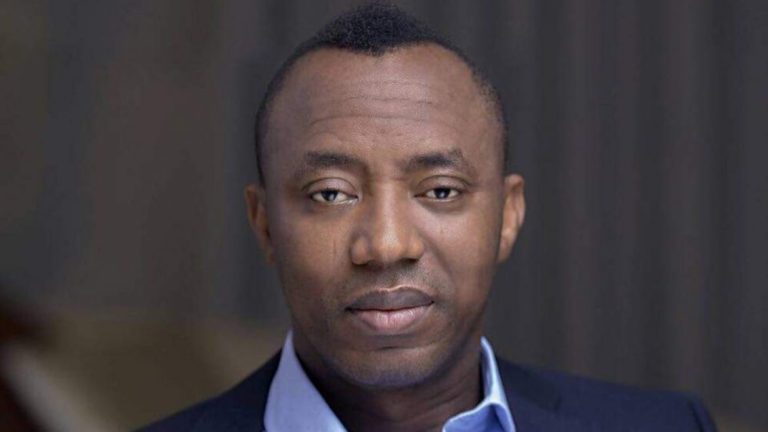
OMOYELE Sowore, the Publisher of Sahara Reporters has filed a legal suit against the Department of State Service over his arrest and continuous detention since August 3, demanding payment of N500 million from the DSS for illegal violation of fundamental rights.
The suit marked FHC/ABJ /C51409/2019 and dated November 20 was supported by a 21-paragraph affidavit with respondents named as DSS and Abubakar Malami (SAN),Attorney-General of the Federation and Minister of Justice, according to SaharaReporters.
“A declaration that the detention of the applicant from November 7, 2019 till date in violation of the order for his release made on November 6, 2019 is illegal as it violates his fundamental right to liberty guaranteed by Section 35 of the constitution of the Federal Republic of Nigeria 1999 (as amended) and Article 6 of African Charter on Human and Peoples’ Rights (Ratification and Enforcement Act (CAP A10) Laws of the Federation of Nigeria 2004,” it read partly.
As aggravated damages for the illegal violation of Sowore’s fundamental right to life, the dignity of his person, fair hearing, health, freedom of movement and freedom of association; the suit included a request from the court compelling the respondents to pay N500 million
Sowore also asked the court to restrain DSS from further violation of his rights.
“An order of perpetual injunction restraining the respondents from further violating the applicant’s fundamental rights in any manner whatsoever and however without lawful justification.”
Today makes it 112 days Sowore has spent in DSS detention since the arrest on August 3 for convening a Revolution Now campaign. The Federal High Court had granted him bail. Sowore after fulfilling the bail conditions was yet to be released from DSS detention.
NIGERIA’S Gross Domestic Product (GDP) grew by 2.28 per cent in real terms, in the third quarter (Q3) of 2019, up from 1.81 per cent growth recorded in the third quarter of 2018, an indication of growth by 0.47 per cent points (year-on-year).
GDP represents the monetary value of all finished goods and services made within a country during a specific period.
According to the report released by the National Bureau of Statistics (NBS), the Nigerian economy grew by 2.28 per cent in Q3 2019, up from 2.12% growth recorded in Q2 2019. This indicates an increase of 0.17 per cent points between Q2 and Q3 2019 (Quarter on Quarter).
The GDP data released on Friday showed that the average daily oil production in the quarter was 2.04 million barrels per day (mbpd).
The non-oil sector grew by 1.85 per cent during the third quarter, while the non-oil sector contributed 90.23 per cent to the nation’s GDP in real terms.
GDP by sector shows that the industrial sector recorded the highest growth of 3.12 per cent when compared with other sectors. This is followed by the agricultural sector which grew to 2.28 per cent, while the service sector slowed down with a growth of 1.87 per cent.
Despite the increment in the GDP, the NBS data indicated that trading sector was not one of the main contributors to the growth.
In the third quarter of 2019, the nominal year-on-year growth rate for Trade stood at 1.13 per cent, indicating a decrease of –2.65 per cent points when compared to the third quarter of 2018, and –1.89 per cent points compared to the preceding quarter.
“Trade’s contribution to nominal GDP in the third quarter of 2019 was 14.69p per cent, lower than the contribution in the same quarter of the previous year of (16.45 per cent), and the preceding quarter (15.33 per cent),” said the bureau.
These changes could be an off-set of the country’s land border closure within the quarter.
According to the NBS, the growth rate in Q3 of 2019 represents the second-highest quarterly rate recorded since 2016.
However, the growth in the GDP rate might not be felt by the citizens just yet as inflation rate continues to rise.
Nigeria recorded 11.61 increase in the third quarter from 11.24 recorded in the second quarter report – showing depletion in the purchasing power of the Naira.
ON Friday, a Nigerian Economist, Benjamin Enwegbara was announced to have been elected into the parliament in Austria, a country in Central Europe, making it the first of its kind.
This information was disclosed by his delighted brother, Odilim Enwegbara, a development economist and a digital technology management analyst who lives in the capital city of Austria, Vienna.
“My immediate younger brother, Benjamin Enwegbara, who has lived in Austria and the UK since the 1980s and a cerebral economist with a master’s degrees in business administration and public security has just been elected a member of the Austrian Parliament.
“The biggest news of my life. This is truly the biggest news ever happened to my family. He is the first African to be elected a member of the Austrian Parliament,” he said.
The parliament in Austria has two chambers namely; the national council and federal council. The national council of 183 members are elected by all citizens entitled to vote, every year or sometimes sooner.
Benjamin, 57, has worked as a management consultant and a director of Meriben Limited, a London-based company, with years of experience in the management sub-sector.
Nigerians have proven viable outside the country, getting elected as lawmakers in foreign parliaments.
The likes of Uzoma Asagwara, a nurse, broke a 150-year record in Canadian Parliament after emerging as the first black to be elected to the Manitoba legislature representing Union station constituency.
Also, Zulfat Suara, a Nigerian-American, emerged as the first Muslim lawmaker in Tennessee in the United States, after making it into the runoff of a Nashville council at-large election.
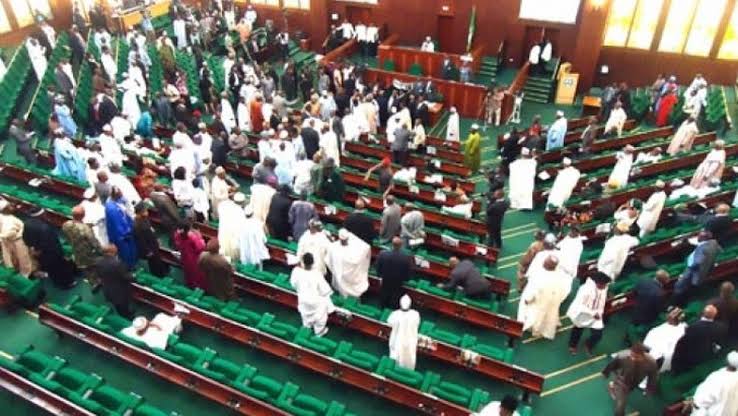
THE House of Representative has begun investigation into the financial allocations set aside for ‘Turn-Around Maintenance’ of the petroleum refineries in Port Harcourt, Warri and Kaduna, estimated to have cost $396.33 million in four years, according to a report.
The inquiry was initiated following the motion titled “Call for investigation of the $396.33 million allegedly spent in four years on turn around maintenance of the nation’s three refineries.”
At the plenary session, Ifeanyi Momah, representing Ihiala federal constituency of Anambra State called for the inquiry, alleging that the amount spent on maintenance of the facilities had not yielded the desired results.
The House also called on the Federal Government to consider “divesting a certain percentage of its shareholding in the Port Harcourt, Warri and Kaduna refineries to competent investors under a transparent and fair bidding process.”
Also, the House mandated the Committee on Petroleum Resources (Downstream) to conduct an investigative hearing into the maintenance expenses made from 2015 to date while the committee was to submit its findings within eight weeks.
Momah stated that Nigeria had been living with the “derogatory appellation” of being a major oil-producing nation that is heavily reliant on importation of refined petroleum products for its domestic consumption as a result of its low local refining capacity.
In a Twitter post, he stated the Nigerian people need an explanation of how the money was spent in refurbishing the refineries.
396.33million dollars was spent between 2013-2017 on maintenance of our 3 National refineries, yet they yielded very low product.
I moved a motion on the floor of @HouseNGR to investigate what happened to the money spent so far. The good people of Nigeria need to know. pic.twitter.com/aoIldQB7oz
He also said this was in spite of the fact that the country has three major refineries with an installed capacity to refine 445,000 barrels per day, enough for domestic consumption and export.
“This objective has not been realised owing to a combination of factors, including corruption and inefficiency in the running of the refineries.
“The House observes the assertion by the Nigeria National Resource Charter in the report that the NNPC spent a whopping $396.33m between 2013 and 2017 to carry out repair works.
“We also observed the claim that the Nigerian National Petroleum Corporation, NNPC, spent N276.872 billion on operating expenses of the refineries between 2015 and 2018, as well as $36 billion on the importation of petroleum products between 2013 and 2017,” he said.
According to the lawmaker, the goal of establishing local refining facilities as a socio-economic game-changer has continued to elude the country’s oil and gas industry.
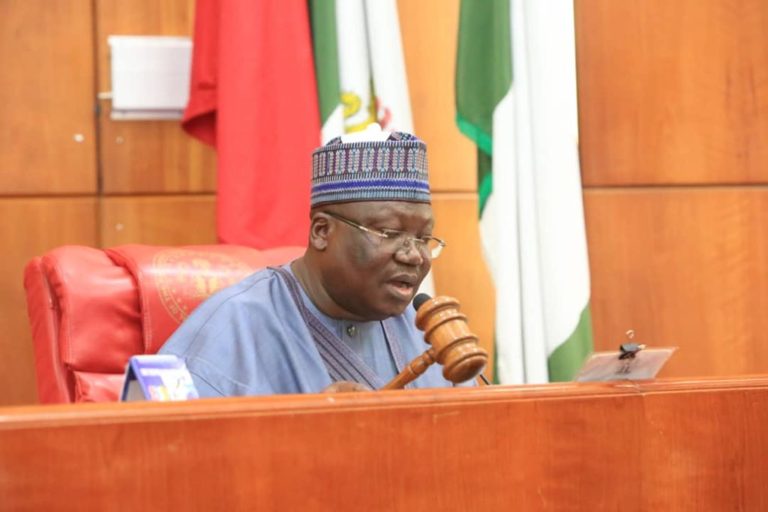
THE Senate on Thursday approved the request by President Muhammadu Buhari to increase value-added tax (VAT) from five per cent to 7.5 per cent.
In September, the federal executive council (FEC) approved an increase in VAT and subsequently sent a bill to the National Assembly for consent.
During the clause-by-clause consideration of the bill, Enyinnaya Abaribe, the Senate minority leader, protested the increase of VAT to 7.5 per cent from 5 per cent. The minority leader prayed the House to maintain the status quo, “Nigerians have suffered enough,” he said.
However, the Senate approved the request after Solomon Olamilekan, chairman of the finance committee, presented a report on a bill entitled ‘Nigeria tax and fiscal law’.
After the consideration of the clauses, Ahmad Lawan, Senate President, did not give room for amendment on the position of Abaribe but said the federal government will have resources to bridge the infrastructural gap in the country.
“Let me thank you for passing these seven amendments, largely to ensure that they streamline the tax system in Nigeria to ensure that we get revenue for the government to provide services and infrastructure to the citizens of this country,” he said.
“This is not only to ensure that we have credible sources of funding but ensure we have funding for other things of government. What we will do is engage revenue agency on a quarterly basis.”
However, a coalition of Civil Society Organisations has called for reforms on the Federal Government’s new fiscal policies which it says does not take into account the economic position of Nigerians and would only increase the inequality gap.
“At the state level, there is no definite framework to tax the informal sector, these citizens of Nigeria who do their business at this economic level are only left at the discretion of the “man in power” at the state level as they are subject to any form of discretionary changes in the counts and rates of the taxes paid,” said Auwal Ibrahim Musa, Executive Director, CIVIL Society Legislative Advocacy Centre ( CISLAC).
The amendments which will become law when they are signed by the president seeks to amend company tax CAP C21 Laws of the Federation of Nigeria 2004, VAT CAP 4 2007, customs and excise tariff act CAP C49 Laws of the federation, personal income tax E8 laws of the federation, capital gains tax act CAP C1 laws of the federation, stock duty act 58 laws of the federation and petroleum profit tax law.