Nigeria has acquired new loan of $3bilion dollars from the World Bank to address transmission and distribution challenge in the power sector.
Zainab Ahmed, minister of finance made this known to journalists on Sunday during a side event at the annual meetings of the International Monetary Fund (IMF) and the World Bank Group held in Washington DC.
Ahmed said that inclusive of the request made to the IMF for technical assistance in Nigeria Electricity Regulation Commission (NERC), assistance on business continuity regulation the country asked especially for financing the power sector with loan in the range of $1.5 billion to $4 billion.
The request the minister said is expected to mitigate the huge gap between the current tariff and the actual cost of generating electricity while providing resource needed to settle accrued debts in the sector to ensure continuity of operations within the sector.
The loan is to be released in four tranches of $750 million each, with possible room for loan expansion up to $ 4 billion dollars.
“At the end of the day, it is like we would be looking at the funding size of $3 billion that will be provided in four tranches of $750 million each.
“Our plan is that the team will be able to go to the World Bank for the approval of the first tranche in April 2020,” she said.
Ahmed also revealed that if the government is able to grab a loan of $4 billion, the added $1 billion will be allocated to the distribution privately run Distribution Companies.
Based on the World Bank 2019 economic analysis in sub- Saharan Africa, 24 countries within the region will enjoy increase in their per capita income, however, Nigeria will see weak performance in its economic outlook.
In 2018, Nigeria had approached the IMF for fund in the power sector and a loan of $486 billion dollars was awarded to increase transmission. Currently, the country’s total external debt as at March 2019, stood at N7.8 trillion ($25.6 billion) while internal debt was N17 trillion ($55.6 billion).
NIGERIAN woke up on Wednesday, May 8, to a nationwide power outage that cut off power from many homes and factories leading to reduced load allocations to the distribution companies (DisCos).
At about 5:29 am the following day (Thursday, May 9, 2019), the grid collapsed again, compounding the nation’s energy challenge. Checks revealed that the country’s power grid had collapsed no fewer than nine times in 2019. In January alone, the country’s power grid collapsed twice while at least two major collapses were recorded in April.
Investigation shows that the nine power grid collapses witnessed this year were among at least 206 of such incidents that have been recorded since 2010. Scores of the ‘Total Grid System Collapse’ have occurred after the entire electricity grid goes off for several hours. There were also cases of ‘Partial Grid System’ Collapse’ when a section of the country was thrown into darkness for hours due to major transmission line trips.
Officials of the Transmission Company of Nigeria (TCN) who probe such incidents, traced the cause to high voltage level resulting from multiple tripping on the Alaoji-Onitsha transmission line, a power plant that shut down abruptly and a huge energy load rejected by the 11 Distribution Companies (DisCos).
206 collapse in 9 years
Between 2010 and 2019, Nigerian electricity consumers have had to contend with 206 power grid collapse, nine of which occurred in 2019, records obtained from the System Operator (SO), a section of TCN, indicate.
A breakdown of the 206 grid collapse which often led to a power cut for a whole region or even the entire country shows that 109 of the incidents occurred from 2010 to 2013; while 97 others were recorded from 2014 to 2019.
System collapse between 2010 and 2019
The country went into total darkness 22 times and recorded 20 partial outages in 2010. The grid had 13 incidents of total collapse and six partial incidents in 2011. By 2012, there were 16 total collapses and eight partial ones. In 2013 when preparations for the privatization were topmost, there were 22 total power grid collapses while partial trappings occurred twice.
The post-privatization era also had its fair share of system collapse. Although the situation improved in 2014 as records show, there were nine total collapses and four partial ones. By 2015, the trouble persisted with a record of six total and four partial collapses. It became worst by 2016 when the grid tripped for 22 times and went off partially six times.
Investigations further reveal that in 2017, there were 15 total, and nine partial collapses while last year, 12 total collapses were recorded with one partial collapse.
At least nine total collapses have been recorded this year; four of which occurred in January. The five others were spread across February, April, May, June, and August.
The total collapse on June 30, which dropped grid power to 127MW, was traced to a fire outbreak at the Benin transmission substation in Edo state. On August 30, the national electricity grid recorded another total collapse, throwing the country into darkness for about 10 hours. It was a total collapse as power generation on the grid dropped to 20MW.
Benin-TCN-substation
Grid outages highest during rainy season
Trend analyses of these collapses further indicate that national grid outages were worst during some months in the rainy season. The highest of such was in May, which had 30 collapses since 2010. June is next with 29 occurrences.
Another trend is the occurrence of more collapses in January. At least 19 incidents were recorded in the nine-year analysis. The negative trend of 17 occurrences per month was recorded in April, September, and October. It slid to 16 occurrences in November, 15 collapses in July, and 14 incidents in March and December. The least occurrences were in August (7 collapses) and February (10 collapses).
TCN on various occasions this year blamed the DisCos’ load rejection for the high frequency of grid collapses in the rainy season. It said once it rains, the DisCos due to their poor networks, shutdown many power feeders which denies customers of supply, and that when the grid voltages became too high for lack of consumption, a collapse or frequency disturbance became inevitable.
Grid limitations cut 17,500MW in 76 months
Records of power generation since the privatization in 2013 to December 2018 indicate that the GenCos have more capacity to deliver power than they had before the privatization.
Analysis of the historical generation data from the Association of Power Generation Companies (APGC) indicates that the GenCos had made available about 38,546 megawatts (MW) generation capability from November 2013 to December 2018.
While the national grid took only 20,960MW, a huge quantum of 17,582MW representing 45 percent of the total GenCos’ capability was stranded. They were not allowed to generate that quantum into the grid. APGC claimed the existing transmission network is inadequate, fragile and not reliable.
The System Operator (SO) is a department of TCN that controls the national power grid. The GenCos said while they made effort to increase their generating capacity, the SO has the right according to the Grid Code, to instruct them to reduce or cut down their nominated capacity, with which they must have made gas commitments.
Daily Trust found that the major constraints of transmission system disturbances, distribution, load rejection and the absence of spinning reserve to quickly stabilize the national grid when a collapse is being sensed are the factors against uninterrupted power supply in the country.
Current data from the TCN-SO show that at present, the country has 12,910MW installed power generation capacity. But 7,652MW is the highest generation capacity that can be called into operation from the 24 active GenCos.
Benin substation fire June 30, 2019
Onitsha, others hotspots for grid collapses
The Alaoji to Onitsha and Calabar transmission lines have been observed to be among the major lines where frequency disturbances have been recorded since 2010.
Daily Trust visited some of these hotspots to observe the lines and speak to residents around the areas. At the TCN 330/132 kilovolts (kV) Awada substation in Onitsha in Anambra state, our reporter observed that the huge facility connects the 330KV transmission line from Alaoji substation in Abia through parts of Imo to Onitsha.
Alaoji harbours a 500MW GenCo under the National Integrated Power Plant (NIPP). Nearby is the 140MW Ariaria power GenCo that is yet to be put on the grid.
Another 330kV line leaves the Onitsha substation through Asaba to Benin City substation. The 330kV Warri to Sapele line (Delta axis) joins the Asaba line at Benin substation. These are hubs for about five large power GenCos with over 2,00MW capacity. There is Transcorp Ughelli, Okpai , Sapele GenCo, Sapele NIPP, and the Ihovbor (Benin) NIPP.
The Benin line further moves to Ondo state to connect Omotosho gas and NIPP plants and extends to Olorunsogo Gas and NIPP plants in Ogun state.
Parts of the networks of Enugu, Benin, Ibadan and Port Harcourt DisCos are directly from fed from these trunk lines by TCN through its transmission substations to the injection substations of the DisCos.
Electricity customers are then fed from the DisCos’ substations through 33kV lines, and stepped down to 11kV and 415V that enters into household connections across the various communities and connected to the DisCos’ networks.
Infograph Timeline of burn transformer
When contacted, the Assistant General Manager (AGM) at the Onitsha substation, Engr. Mike Anigbo said he was not permitted by the Enugu transmission region to speak but after much pressure, he tersely said: “We have enough energy to serve our customers for 24 hours a day”, without explaining what that meant.
A senior official, however, said the Enugu and Benin DisCos reject load in the axis the substation covers across Anambra and part of Delta state. “DisCos just take only two megawatts of the energy when they are supposed to take 10MW,” said the official who wouldn’t want to be named.
Another official confirmed system disturbance on the Alaoji transmission, which he said, was not built by TCN but by the Niger Delta Power Holding Company (NDPHC) under the NIPP after they constructed the Alaoji NIPP plant.
“Most times because the line was not well built, there are occasional disturbances which affect a part of the national grid. The new management of TCN is making procurement to rehabilitate that line to stop that,” he said in confidence.
At Onitsha, it was observed that Tower No. 5 of the Onitsha-Asaba transmission line, which had gone down in 2017, causing system disturbance, has been fixed. The base of the tower was affected by fire from a nearby waste dumpsite.
The place has been partly cleaned up but residents are concerned that such an incident could recur if the TCN line patrol team does not monitor it often. Mr. Uche Okonkwo, a tricycle driver in Onitsha, said apart from common dumpsites around power lines, flood in the swampy terrain of the Niger River could pose a threat.
Burnt tower in Asaba in October 2018
Stretch of 132kV transmission lines in Edo, Zamfara, others
Experts in the electricity industry say the long stretches of the 132KV line could cause transmission losses and low voltage if more load points are connected to that line without a transmission substation or an injection substation.
Daily Trust observed that Benin City to Okpella in Edo State, stretching to Okene in Kogi state is on a 132kV line. TCN has four substations in Benin, Irrua, Auchi, and Okpella before the 132/33kV line stretches to Okene.
An expert in the electricity industry, Engr. Ibrahim Ganiyu, an ex-PHCN staff of the transmission section, who commented on the implication of this, says the long stretch of 132KV line could cause transmission losses and low voltage if more load points are connected to that line without a transmission substation or an injection substation.
Irrua TCN substation
Benin has a 330/132/33kV substation; Irrua substation has a 60-mega volt-ampere (MVA) and 30MVA transformer while there is a 40MVA transformer at Auchi. Okpella has a 15MVA transformer upgraded to 60MVA in September 2018, officials said. It was to compliment the rising demand for Bua and Dangote Cement companies in the area.
At Auchi, Okpella and its environs the situation is not different as residents and customers of Benin DisCo say they face epileptic power supply and high electricity bills. Muhammed Momoh in Auchi noted that electricity is unpredictable in the area as they hardly see the power supply a day. Mr. Felix Eze, who operates a drinking joint, said business operators in the area rely on generators to power their business.
Joseph Ovie in Okpella said, “The light situation is not completely different from other places with incessant power outage. At times, we get it beyond three hours in the day time and also three hours at night but it is not always regular.” Isaac Jimoh, a resident of Avielle town near Auchi said they are already frustrated with high bills and low voltage levels in the area.
The lack of mega 330kV transmission substation and a line is also affecting Ekiti state, as a long line of 132kV line stretches through it from Kogi state.
Vandalised tower in Katsina in May 2018
Surveys on the route from Sokoto state up to Gusau in Zamfara state and to Funtua in Katsina state, reveal long winding 132kV line that stretches through. A tower in that line collapsed in November 2018, threatening power supply in the axis. The situation is the same for Lafia to Akwanga, and from Keffi to Mararaba in Nasarawa state.
It was the same case of the north-eastern states until TCN commissioned two 330kV transmission substations in Yobe and Maiduguri early 2019. Officials of Yola DisCo said there is more bulk power to supply to customers.
Daily Trust reports severally that residents have been amazed at the improved power supply in Borno, Adamawa and Yobe states with some of them fearing they would be overbilled over the ‘abnormal’ supply.
Record of grid allocation in the current ‘Multi Year Tariff Order (MYTO) 2015’ shows that Yola DisCo which covers a major section of the Northeast region gets 3.5% daily allocation from the national grid.
However, the DisCo’s MD, Mustapha Baba Umara at the commissioning of the 330kV Damaturu substation in January 2019 said the previous line inadequacy had hindered enough bulk power distribution beyond the state capital of Yobe, which is similar in other states within its franchise area.
Official records also show that voltage instability occurs at another NIPP transmission line built by the NDPHC. The Ikot Ekpene (Akwa Ibom) to Ugwuaji (Enugu) to Apir (Benue) to Jos line has frequent disturbance, a TCN report shows. To arrest this, the TCN MD, UG Mohammed said three reactors are being installed in Ikot Ekpene and Jos to stabilize the line.
GenCos: Grid limitations deny consumers 17,500MW in 76 months
FG borrows N715bn to expand grid
Analysis of external funding for TCN alone according to its records, indicates that the federal government would have spent N715 billion by 2021 on electricity transmission projects that will raise the transmission capacity from present 8,100MW to 20,000MW. This excludes capital releases in the annual budgetary appropriations.
TCN got a $300 million dollar (N108.6bn) loan from the World Bank in 2010 to execute the Nigeria Electricity and Gas Improvement Project (NEGIP) by its project management Unit (PMU). The eight year programme ended in December 2018.
In April 2018, the Japanese Agency for International Cooperation (JICA) gave a grant assistance of 1.317bn Japanese Yen equivalent to $12.4m (about N4.5bn) for the installation of power capacitors and switchgears at the Apo (Abuja) and Keffi (Nasarawa State) transmission substations. The projects have since been concluded and commissioned.
TCN in September 2019 said it has obtained $1.661bn (N601.3bn) multilateral loans from five agencies which it said, it is using for the procurement and installation of projects under its Transmission Rehabilitation and Expansion Programme (TREP).
The breakdown of the fund obtained by this paper indicates that the World Bank is the highest donor with $486 million for a fresh Nigeria Electricity Transmission Project (NETAP), and $27m for transmission project tagged, North Core.
The African Development Bank (AfDB) has $410m for transmission expansion projects; the French Development Agency -AFD and European Union (EU) gave $330m for the northern corridor transmission project.
While JICA pegged 238m for Lagos/Ogun transmission project, AFD gave another N170m for the Abuja transmission ring scheme.
NERC fails to approve TCN spinning reserve in 13 months
In May 2019, TCN lamented that despite writing to the Nigerian Electricity Regulatory Commission (NERC) to quickly approve a 250MW spinning reserve procurement to tackle grid system collapse, NERC did not respond for 13 months.
Daily Trust gathered that TCN got initial bidding approval from NERC in July and called for bidders in August 2018. However, after bid evaluation, NERC only called for public comments on September 30, 2019, to consider the spinning reserve in an on-going extraordinary tariff review for TCN and the DisCos.
For over four years, the national grid has been left zero and at times 40MW of the spinning reserve to cushion system frequency disturbance before a collapse.
Explaining the essence of spinning reserve in the Transmission Rehabilitation and Expansion Plan (TREP), TCN said the power grid was still vulnerable to collapses without spinning reserve because of overvoltage when energy loads are rejected.
“We don’t have a spinning reserve to grapple with this, so we often use the manual control method when the frequency becomes high,” an official of TCN-SO told Daily Trust. The official said the spinning reserve would ensure fluctuations on the national grid are managed to prevent future system collapse.
TCN, DisCos bicker over load rejection
Recurring system collapse has been a source of conflict for TCN and the DisCos, our investigations reveal. After the June 30, 2019 system collapse, Bar. Sunday Oduntan, the spokesman for the Association of Nigerian Electricity Distributors (ANED) blamed the TCN.
“The DisCos remain available to offer their technical assistance to TCN, to ensure that our valued customers do not remain in darkness,” said ANED, adding that DisCos have invested over $1.4bn in their system.
The TCN on its part has canvased for the recapitalization of DisCos saying they need $4.3bn dollars to match the transmission network.
The TCN’s SO records in April 2017 say the DisCos rejected 10,200MW allocation in justone month. In the SO’s daily operational reports and document analyzed for over six months of 2019, Daily Trust reports that over 1,500MW energy is rejected by DisCos daily.
DisCos inhabit poor interface, obsolete networks
The DisCos’ association told this paper that the TCN analog system had caused 5,311 interface disruptions in a DisCo within 18 days of September 2019.
However, we found that DisCos’ networks are rife with obsolete and inadequate equipment. Documents accessed at the NDPHC reveal this inadequacy in many places including Kabba (Kogi), Lafia (Nasarawa) where DisCos fail to operate such networks that could boost power supply to Nigerians.
Checks show that in Abuja, it took over one year for Abuja DisCo to connect to the added 60MVA TCN Katampe transformer. Connecting to the additional 120MVA transformer at TCN Suleja substation was also delayed by Abuja DisCo; Ibadan DisCo also delayed connecting to the upgraded Abeokuta Substation.
A memo addressed to the erstwhile Minister of Power, Works and Housing, Mr. Babatunde Fashola on May 22, 2019, shortly before he left office indicted the DisCos’ network inefficiency.
TCN in the letter seen by our reporters said out of the 737 total interfaces where transmission facilities deliver power to distribution facilities, 421 have adequate protection but 316 others have not. “The DisCos should build new feeders and injection substations to take more supply from existing and new transmission substations,” the letter, which was also sent to, the Presidency, read in part.
Plan on course to remedy constraints-TCN
The Managing Director of TCN, Mr. Usman Gur Mohammed spoke to Daily Trust about efforts to improve the system. He said TCN has delivered 67 power transformers that added 3,100MW capacity to the transmission grid since 2017 after the new management reformed the company and positioned it for better performance.
Of the 67 transformers TCN said it installed, the Daily Trust tracked the locations for 59 of them which have a combined energy capacity of 3,399MVA, according to documentary records. TCN installed 14 transformers in the Southwest with total of 1,280MVA energy transmission capacity. In the South-south, it installed seven units with 490MVA capacity; another five units of 289MVA capacity were installed in the Southeast.
In the Northwest, TCN installed 14 transformers that could deliver 750MVA energy to the DisCos; it installed seven transformers with 590MVA capacity in Northeast and then added 12 units with 800MVA energy wheeling capacity in the Northcentral region.
The Transmission Company of Nigeria (TCN) said it has improved the power system stability, it hopes the efficiency will increase as its $1.6 billion donor-funded projects nationwide begin to materialize.
“We need to have a critical investment in lines and substations so that we put N-1 across the country, that will ensure that any equipment that goes out at any point in time will not affect supply on that area,” Mohammed added.
However, the General Manager, Public Affairs at TCN, Mrs. Ndidi Mbah, promised to get back to us over inquiries on curbing system collapse but failed to do so despite several reminders.
The DisCos under its Association – ANED have denied any wrongdoing. Its spokesman, Chief Sunday Oduntan said load rejection in some cases was a business decision, accusing the TCN of dumping load where the DisCos do not have much electricity customers to pay for energy.
The DisCos said TCN has never wheeled sufficient energy to meet the DisCos’ energy off-take assumptions specified under the Multi-Year Tariff Order (MYTO) 2015.
ANED referred to the Siemens “Electrification Roadmap for Nigeria” report of May 7, 2019, stating that, “Today, power distribution by the DisCos’ to end-customers is limited by power infeed from TCN.”
The General Manager, Public Affairs, Mr. Usman Abba-Arabi did not respond to the Daily Trust inquiries over NERC delay to approve for TCN to procure the needed 250MW to stabilize the power grid.
Arabi who promised to get back to our reporter never did so in spite of repeated calls thereafter.
Power system, network still fragile – Amadi
A former Chairman of NERC, Dr. Sam Amadi, Dr. Amadi said the frequency of outage in the electricity sector is evidence of the fact that the power system and its network are still very fragile, adding that it was the true test of the quantity and the problem of quantity in power.
He said, “Obviously, we don’t have enough reserve because we are jetting at a margin, meaning if we take off 400, 300 or 200MW regularly from available generation it will deplete the amount of power that is supplied to the grid. Ideally, we should have that reserve to be able to build a buffer against the system collapse.”
He also said some of the GenCos ought to be providing ancillary services like black start. “But this is applied and paid for, so there is little incentive among the generators.”
He said during his tenure at NERC, from 2010 to 2015, “We had a pricing mechanism that was part of the MYTO framework. The ancillary service market is still underdeveloped in the sector. That is the other contributor to the system collapse.”
He confirmed cases of energy rejection. “The DisCos often can’t take power and the system recognizes that when there is a disturbance in the DisCos it affects transmission.
“When we were there we set up a TASK FORCE to design a commercial regulatory solution to rejection of load by DisCos. The report came in a week before we left so we didn’t take action on that and I don’t know the current status on it.
“But essentially what we tried to do in that Task Force committee was to track those problems like issues around DisCos saying they (TCN) were dropping load where they could not easily pick them. Also, TCN saying they should drop the load in the network for system stability and that DisCos should improve their network,” Amadi explained
The energy expert advised that the situation requires close monitoring by NERC. “This requires close regulatory monitoring, incentive or forcing DisCos to make an investment in those regards. In the short term, this sector needs a Task Force for proper tracking,” he submitted.
This report is part of a collaborative investigative series by Daily Trust, the International Centre for Investigative Reporting (ICIR), Premium Times and TheCable, facilitated by the Wole Soyinka Centre for Investigative Journalism (WSCIJ) under its Regulators Monitoring Programme (REMOP) for the Electricity Sector, with support from the John D. and Catherine T. MacArthur Foundation.
THE Global Initiative Against Transnational Organized Crime is calling for applications from interested and eligible candidates for a landmark edition of its Resilience Fellowship that offers support and opportunities to a cohort of individuals from around the world.
The Resilience Fellowship was launched in May at the United Nations Commission on Crime Prevention and Criminal Justice (CCPCJ) in Vienna to build a platform for cross-sectoral, global, and interdisciplinary collaboration between civil society actors, journalists, human-rights activists and others working to counter the effects of organized crime.
Thus, it welcomes applications from individuals of any gender, ethnicity, age, religion, or any other defining factor, who work in communities affected by organised crime.
With the theme “Disappearances Related to Organized Crime”, the fellows are expected to combine their various perspectives in the development of collaborative outputs for one year in areas including killings by organised crime groups, missing migrants, human trafficking, harvesting of human organs and unaccountable detentions
Explaining the theme, the Resilience Fund said that disappearances have been used to politically or criminally repress those who speak and act against human rights abuses.
“This global issue is prevalent around the world, making it a relevant and extremely important theme to many potential Fellows.
“Each fellow will receive $15,000 to be executed with no other limitation than the principles of professionalism, integrity and transparency, the proposal presented in the application form, the terms and conditions of the Fellowship agreement, and the implementation of collaborative actions with other fellows,” it stated.
The Fellowship that will run between January 15 and December 31, 2020, outlined the selection criteria to include participants should be from developing countries or countries disproportionately affected by organized crime and
“Participants should ideally work closely within communities severely affected by disappearances related to organized crime, or have strong ties within them, and should have ongoing or established projects or engagement,” it added as a criterion.
Deadline for application is November 15, 2019. For more information on how to apply, click here.
THE Kaduna State police command has rescued 147 people from an illegal religious rehabilitation centre in Rigasa of Igabi Local Government Area, Kaduna.
This is the third case, in a month, of exposing facilities regarded as “reformation centres” where enrollees were subjected to several humanitarian issues that include sexual assaults and serious tortures.
In September, the police raided what it called a “house of torture” in Kaduna and freed over 500 victims including children. On Monday, the government rescued about 300 people at a centre in Katsina State where the victims aged between 7 and 40 years old were held captive.
And on Saturday in Kaduna, around 147 victims were rescued after the security operatives, along with Nasir El-Rufai, the state governor stormed an illegal facility popularly known as Malam Niga’s Rehabilitation Centre, according to ChannelsTv.
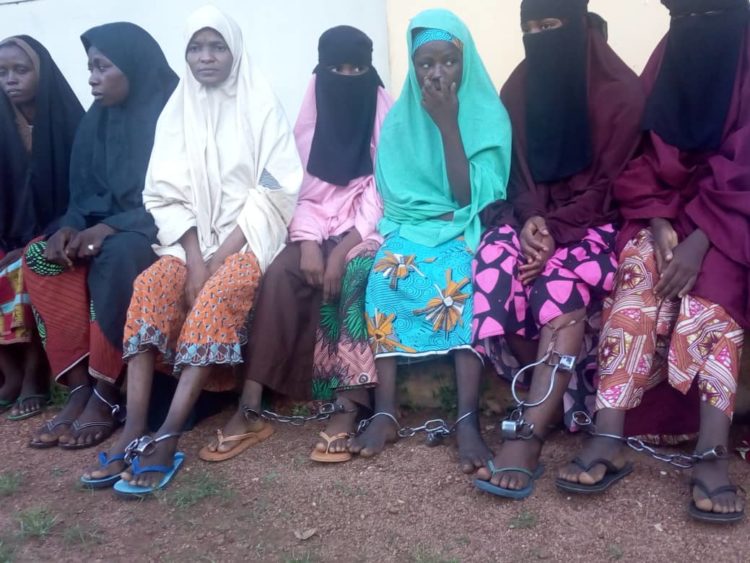
Some of the victims were found chained in their legs. 22 females were among the rescued people with four foreigners. While the owner of the centre was arrested for interrogation, the victims were all transported to the Hajj Camp in Mando area of the state capital for profiling and other humanitarian aid.
The Kaduna government also said the victims would be reunited with their families.
Some of the rescued victims on Saturday in Kaduna, Photo credit: Punch
A similar facility was raided by the police on Monday where over 300 people were put in a small mud house. An investigation by the police showed that the place had been in existence for 40 years.
Gambo Isa, Katsina Police spokesperson, had toldThe ICIR that the idea of religious reformation centre is a tradition in the Northern part of Nigeria. He said some parents often hand-over their wards,when they engaged in any kind of mis-behaviours which include drug addiction and stealing, to religious housing centre for reformation.
However, the police claimed it had been receiving several reports concerning some centres violating the humanity of the enrolees that include sexual harassment, lack of social amenities and some were chained on their legs and hands.
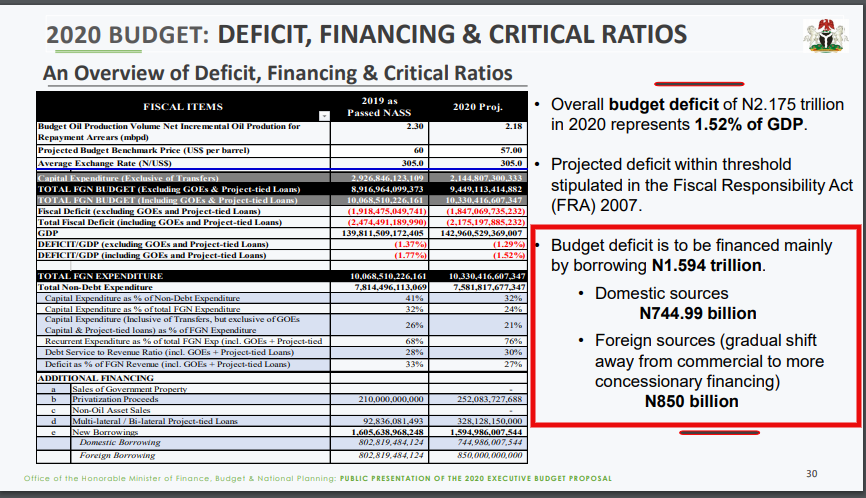
THE federal government is to service its debt with N2.7 trillion, an equivalent of 13 percent of its debt in spite of its plan to borrow another N1.6 trillion in the 2020 fiscal year.
Data from the Debt Management Office show that Nigeria’s public debt portfolio stands at N25.7 trillion naira as of June 30, 2019. The Federal Government owed N20.42 trillion, while the 36 states and the Federal Capital Territory owes about N5.28 trillion.
For the Federal government debt of N20.42 trillion, external debt has a share of $27.16 billion (N8.32 trillion), while N17.38 trillion is borrowed domestically.
As at June 2018, Nigeria’s public debt stood at N22.38 trillion, which increased to N24.39 trillion in December 2018 and N24.95 trillion in March 2019 indicates that the debt profile has increased by N2.57 trillion in nine months.
A categorical breakdown of the federal government external debt shows that debt under commercial (Euro bonds and diaspora bond) has the highest of $11 billion. Debt from multilateral has $8.68 billion, Bilateral (China Exim Bank, JICA, India, and KFW) has $3 billion.
For the domestic profile, federal government debt by instrument stood as FGN Bonds- N9.69 trillion; Nigerian Treasury Bills- N2.65 trillion, Nigerian Treasury Bonds- N123 billion; FGN Savings Bond- N10.43 billion; FGN Sukuk- N200 billion; Green Bond- N25.7 billion and Promissory Notes- N707.75 billion.
Despite the increasing debt profile of the country, the federal government has planned to make another borrowing of about N1.6 trillion to finance mainly the 2020 budget deficit of about N2.18 trillion. The highlights/breakdown of the 2020 executive budget proposal presented by the Zainab Ahmed, Minister of Finance, Budget and National Planning shows that the federal government will borrow N744.99 billion from domestic sources and N850 billion ($2.78 billion) from foreign sources.
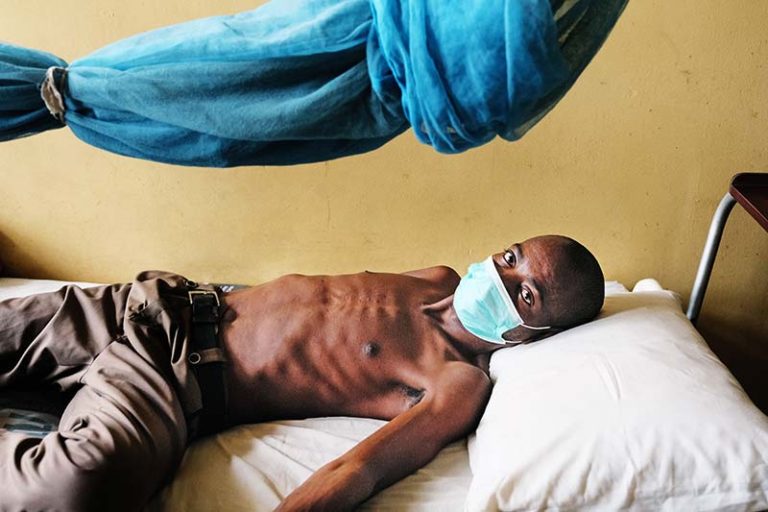
NIGERIA has the second-highest estimated deaths caused by tuberculosis in 2018, where a total of 157,000 citizens lost their lives to the disease.
The deaths burden is revealed in the 2019 Global Tuberculosis Report published by the World Health Organisation on Thursday.
The 297-page-report indicated that 1.5 million people died from TB in 2018. Breaking it down to regional levels, the South East Asia region had the highest number of deaths with 659,000, followed by the African region of 608,000 deaths. The Western Pacific, Eastern Mediterranean and European regions recorded 97,000, 79,000 and 27,000 deaths respectively.
India had the highest number of deaths from tuberculosis estimated at 440,000 people; Nigeria followed India with about 157,000 of deaths; Indonesia, 98,000.
With 157,000 deaths, it means, not less than 430 Nigerians die every day from tuberculosis in 2018.
Infographics credit: Rebecca Akinremi/ICIR
The report also showed that Nigeria had a total of 429,000 tuberculosis cases in 2018, a figure that indicated there was an increase in the disease’s burden when compared to the 2017 figure. In 2017, the total TB estimate for the country was 412,000.
So, Nigeria still secures the sixth position among countries with a high burden of the disease. It is the first in Africa. The five countries leading Nigeria are India with 2.6 million, China with 866,000, Indonesia with 845,000, Philippines with 591,000 and Pakistan with 526,000 cases.
South Africa and Bangladesh had recorded tuberculosis cases of 357,000 and 301,000 respectively, thereby following Nigeria as the seventh and eighth countries with a high burden of the disease.
The report stated that faster reductions in TB incidence and deaths “require improvements in access to diagnosis and care”.
It also indicated that action on broader determinants of the tuberculosis incidence could also address the disease. The factors associated with risk of TB include levels of undernutrition, poverty, smoking, HIV prevalence, diabetes and alcohol consumption.
“TB disease is much higher among people infected with HIV; it is also higher among people affected by risk factors such as undernutrition, diabetes, smoking and alcohol consumption,” report noted.
“A recent modelling study also shows how poverty is an important underlying driver of national TB epidemics, and that eliminating extreme poverty and providing social protection (both targets under SDG 1) could substantially reduce TB incidence,” it added.
Infographics credit: Rebecca Akinremi/ICIR
Another problem the report identified to be affecting Nigeria is under-reporting of cases.
It stated that 12 per cent of three million missing cases of tuberculosis globally is from Nigeria. This means that 360,000 people that developed tuberculosis in 2018 in the country missed out of lifesaving treatment.
“Despite increases in TB notifications, there is still a large gap between the number of new cases reported
(7.0 million) and the estimated 10.0 million (range, 9.0– 11.1 million) incident cases in 2018.
“The Ten countries accounted for about 80 per cent of the gap, with India (25%), Nigeria (12%), Indonesia (10%) and the Philippines (8%) accounting for more than half of the total,” it revealed.
Referring to the four countries- Nigeria, Indonesia, India and Philippines-, the reports noted that intensified efforts are required to improve reporting of detected TB cases and access to diagnosis and treatment.
The National Tuberculosis and Leprosy Control Programme (NTBLCP) during the 2019 World Tuberculosis Day, stated that the low number of people being treated in Nigeria was partly due to poor knowledge about TB and the low treatment coverage.
Between 2014 and 2017, Nigeria secured a total of $330 million (about N119.5 billion at $362 rate) to finance the fight against the disease.
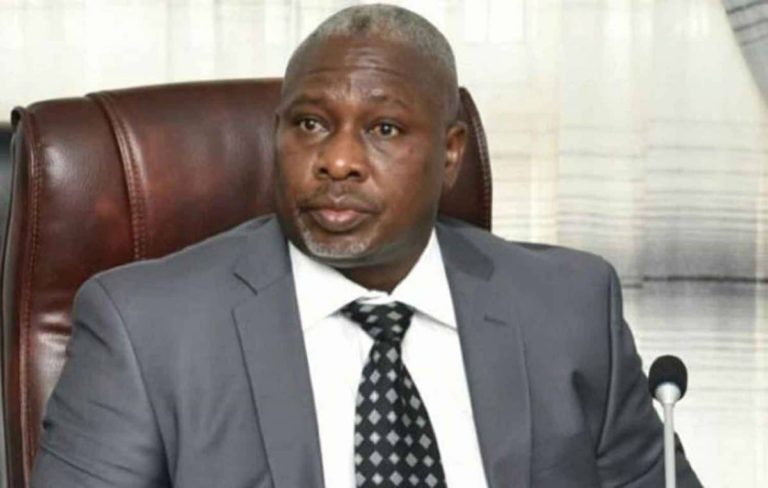
THE deputy governor of Kogi State Simon Achuba has on Friday been impeached by the Kogi State House of the Assembly after a long rift with the state governor, Yahaya Bello.
Achuba was removed after a closed-door session with the speaker of the Kogi Assembly, Mathew Kolawole and a seven-man committee set up to investigate an allegation against the deputy governor.
The committee had submitted their report to Kolawole after an inquiry into an allegation of misconduct levelled against him, which was deliberated upon before a verdict on his removal was reached.
However, the former deputy governor had been in a rift with his principal, which followed a series of allegation and criticism on the state governance by the former deputy governor.
Achuba alleged the state government had not paid him for about 22 months while also, criticizing the administration for non-performance.
He also raised an alarm of an alleged threat to his life, which in turn incited a statement from the government, saying the government do not train assassins or get involved in sending killers after another.
The disagreement and open blame from both Achuba and the state government had worsened, leading to the state assembly’s announcement to commence impeachment proceedings against the Achuba for disparaging the governor.
The former deputy governor unsatisfied by the actions of lawmakers filed an application before the Kogi State High Court, challenging the impeachment notice issued to him.
Consequently, Achuba was suspended by the leadership on the All Progressive Congress (APC) for allegedly taking actions, embarrassing the APC body in the state.
THE African Centre for Media and Information Literacy (AFRICMIL) has called on the Federal government to guarantee the protection of whistleblowers in Nigeria and, as a matter of urgency ensure the passage of the whistleblowing policy into law.
The call was made by the coordinator of African Centre for Media and Information Literacy (AFRICMIL), Chido Onumah at a public presentation of the second year report of Corruption Anonymous (CORA) held on October 17 at the Shehu Yar’ Adua Centre, Abuja.
The second-year report was themed, “Protecting Whistleblowers in Nigeria”.
Onumah during his presentation said AFRICMIL through CORA, a pro-whistleblowing project, supported by the John D and Catherine T MacArthur Foundation, has encountered whistle-blowers who are victimised every day.
He said although whistle-blowers are the first line of defence against crime, corruption and cover-ups, they are still afraid to come forward for fear of retaliation.
“In the last two years of our engagement with the whistleblowing policy as well as with whistleblowers, the major issue has been the lack of a legal framework to protect whistleblowers who face intimidation or threats.
“In addition to the need for whistleblower law and robust protection for whistleblowers, it is also important for service providers (government ministries, departments and agencies, MDAs) to be at the driving seat of instituting whistleblower policies and infrastructure to ease the process of reporting in the agencies,” he said.
The event which was chaired by Abdullahi Shehu of the National Open University of Nigeria (NOUN) also featured a three-member panel of discussion including Johnson Oludare of PICA, Ezenwa Nwagwu of SAY No Campaign and Andrew Mamedu of Action Aid.
In his remark, Africa Director, MacArthur Foundation, Kole Shettima, said exposing corrupt practices in the country is a non-negotiable venture as only the poor pay dearly for the challenges posed by corruption.
He said MacArthur was basically concerned about the standard of living of Nigerians and the need for good governance and accountability.
Speaking on the integrity of the Federal Government in implementing the whistleblowing policy, Abdullahi of NOUN, called on the government to be transparent in the process of recovering stolen funds and assets.
He urged the government to keep to their bargain, by paying whistle-blowers the percentage it promised them when they submit tips.
He said the body language of the federal government would tell if whistleblowers and/or Nigerians will continue to submit tips or support the fight against corruption.
On his part, Nwagwu the convener of Say No Campaign said unless the federal government provides a legal framework with which whistleblowers could function well, Nigerians may not possibly support the policy or the anti-corruption fight with positive actions.
He called on Nigerians to collectively lend their voices to the campaign for the passage of the whistleblower policy into law as it will benefit them more.
Oludare, Assistant Director at the Federal Ministry of Finance and head of the whistleblowing unit at the Presidential Initiative on Continuous Audit (PICA), commended AFRICMIL for working hard to promote the whistleblowing policy and for supporting PICA to realise its aim.
Embattled whistleblowers, Murtala Mohammed who was an auditor at the Federal Mortgage Bank of Nigeria and Sambo Abdullahi, a former auditor at the Nigerian Bulk Electricity Trade PLC (NBET), also called on the federal government to intervene in their ordeal as they have been faced with series of intimidation and harassment, including sack from work and denial of salaries because they exposed fraudulent practices at their places of work.
THE Oyo State Government has revealed plan to achieve a monthly N20 billion Internally Generated Revenue (IGR), representing 900 per cent increase from N2 billion IGR currently generated by the state.
The commissioner for information, Culture and Tourism, Wasiu Olatunbosun disclosed this at a one-day workshop for the State media officers.
Olatunbosun said all efforts were concentrated at plugging tax holes to increase the State’s revenue.
He said the state has its concentration on four key areas: education, primary healthcare, agro-business and security, urging the media officers to key into the agenda of the present administration to achieve the set target.
“It is the belief of Governor Seyi Makinde that Oyo State can be taken from a Civil Service-propelled economy to an agro-business-driven economy and before the first term of this administration runs out, we will be looking towards achieving about N20 billion IGR target,”
However, data on IGR by states from the Nation Bureau of Statistics (NBS) show on a monthly basis, the State generated an average IGR of N2 billion monthly in 2018, 10 per cent of its new target.
In 2017, the state generated an average of N1.8 billion. In 2016, about N1.5 billion was generated, while in 2015, an average of N1.3 was generated.
So far in 2019, the half-year report on IGR by states revealed that Oyo generated about N2.3 billion monthly.
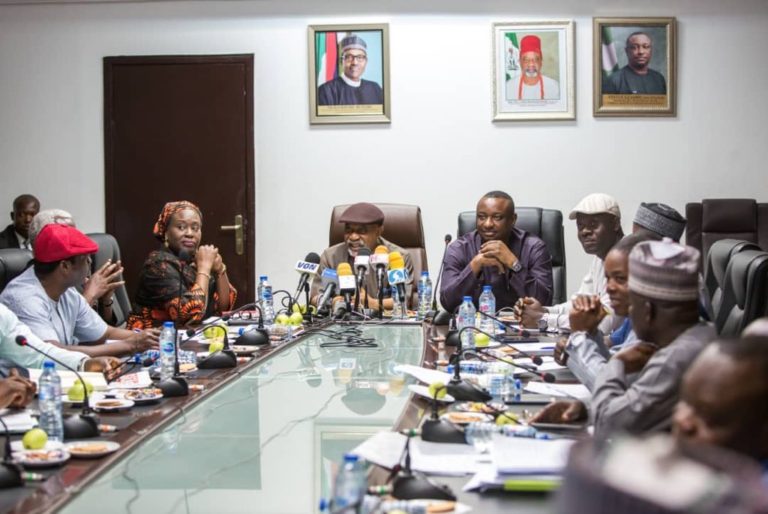
AGREEMENT has been reached by the National Labour Congress (NLC) and the Federal Government on the consequential adjustments to the new 30,000 minimum wage after several failed attempts.
NLC had earlier threatened industrial action if an agreement is not reached between both parties by Wednesday 16th October.
The Joint National Public Service Negotiating Council (JNPSNC), the ministry of labour and employment and ministry of state, labour and employment as Conciliators held meetings on 16th, 17th and 18th October which resulted into a resolution that the new minimum wage shall capture increment in Federal government ministries, Departments and agencies.
Federal government has agreed a 23.2 per cent increase for grade level 07 workers, 20per cent increase for grade level 08, 19 per cent for grade level 09, 16 per cent for grade level 10 – 14 and 14 per cent increase for grade level 15 – 17 workers.
In the other group of the agreement consisting of the Consolidated Health Salary Structure (CONHESS), Consolidated Research and Allied Institutions Salary Structure (CONRAISS), Consolidated University Academic Salary Structure, (CONUASS II), Consolidated Tertiary Institution Salary Structure (CONTISS II), Consolidated Medical Salary Structure (CONMESS).
Also are Consolidated Tertiary Institutions Salary Structure (CONTEDISS) and Consolidated Polytechnics and Colleges of Education Salary structure (COMPCASS) all got a 23.2 per cent increase for grade level 07 and its equivalent, 16% increase for grade level 8 – 14 and its equivalent and 10.5 per cent increase for grade level 15 – 17 and its equivalent.
Speaking before the agreement was signed, he Minister of labour and employment, Chris Ngige said, “this is a national law and it must be obeyed by all; state government, local government and all persons concerned that employ more than 25 persons in their organization”
Present at the meeting is the acting Head of Civil service of the federation, Folashade Yemi-Esan also the Minister of State, Labour and Employment, Festus Keyamo who revealed that at about 3 am, the parties signed terms of settlement.
Keyamo revealed that although the memorandum did not capture those of the law enforcement agencies but it has been done.
As contained in the communiqué made available by Keyamo, the agreement was signed by the Acting Head of Service of the Federation, Folashade Yemi-Esan, Director IPPS,OAGF of the Ministry of finance, budgeting, national planning Olusegun Olufeyinti and others from the government side.
While from the Labour side, the JNPSNC acting chairman, Simeon Anchaver and the JNPSNC Secretary General Lawal Bashir appended their signature to the agreement.
Chairman of the National Labour Congress (NLC) Ayuba Wabba and the President of the Trade Union Congress (TUC) Quadri Olaleye signed as witnesses.
Ayuba Wabba, NLC president said the organised labour would continue to be open – minded and would keep up with the principles of collective bargaining.
He mentioned that in the practice of bargaining issues have to be looked at from both sides, and stressed on the importance of making the workers happy and very productive.