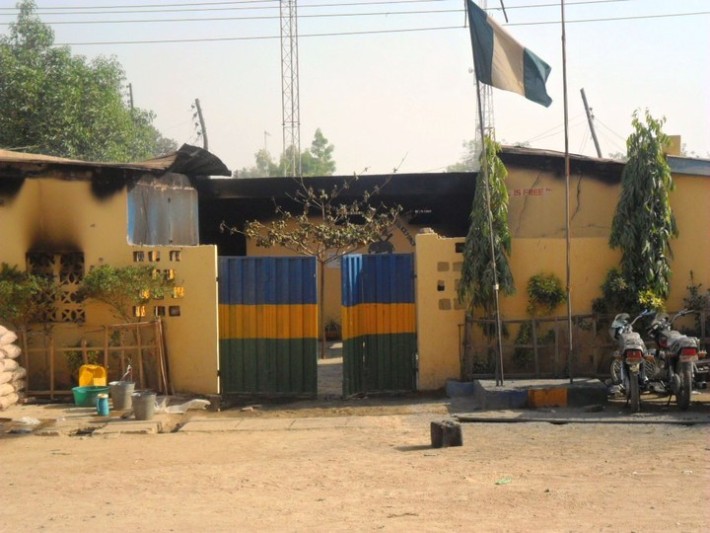
FOLLOWING the undercover investigation carried out by Fisayo Soyombo sponsored by The ICIR and Cable, the Nigerian Police Force has confirmed an investigation into the alleged #PoliceBailForSale which occurred at Pedro Police station in Shomolu, Lagos state.
This was disclosed on “Your View”, a breakfast tv show on TVC, on Wednesday by Police spokesperson, Frank Mba, during a live phone interview on the programme.
He said a team had been set up to investigate the matter assuring the public that officers involved in the shady practices at the police station would be brought to book if indicted.
In a tweet, TVC also confirmed the statement of the police spokesperson.
Frank Mba @frankmbablog has stated that once investigation is complete and the officers at that station are found guilty, Nigerians can be well assured that necessary disciplinary action would be taken. @fisayosoyombo: Awesome Sir. More than words, we await actions! #YourViewTVCpic.twitter.com/9Ptdq3iETS
Frank Mba, however, did not answer phone calls and a text message sent to him ahead of this publication.
The undercover reporting into the extortion ring at the police station has been generating ripples on social media prompting the police authorities to intervene in the matter.
THE Federal Capital Territory Administration, FCTA, on Tuesday, announced the temporary closure of the famous Unity Fountain in Maitama, Abuja, stating the facility would be rehabilitated before it will be opened to the public.
Minister of the Federal Capital Territory Administration, FCTA, Muhammad Bello said the park would be closed for three months for an upgrade of its recreational facilities, including the provision of the car park and perimeter fencing.
In a statement by the Chief Press Secretary to the FCT Minister, Anthony Ogunleye, he said the decrepit state of the park necessitated the action which he described as “expedient”.
“The FCT Administration has viewed with concern the state of several parks and gardens including the Unity Fountain along Shehu Shagari Way, Maitama.
“It is against this background and the symbolic nature of the unity fountain as a location symbolizing the oneness of the Nigerian people, that the FCT Administration has deemed it expedient to upgrade this facility,” he said.
He also specified the construction work billed to take place for the stipulated period the park would be closed.
“As a result, the unity fountain will be closed for this upgrade for between 60-90 days to allow for construction work which will include the provision of a car park, landscaping, and perimeter fencing.”
The Administration also solicited the support and cooperation of members of the public and assured them that the park would be opened to the public on completion of the upgrade.
Unity Fountain has been the preferred location for civil protests and rallies in the Abuja, it has been hosting the daily sit-out by the #BringBackOurGirls movement for the past five years since over 200 Chibok schoolgirls were abducted in April 2014.
But following various rallies criticising the government’s handling of the abductions and other socio-economic issues in the country, security personnel were deployed to the park to prevent citizens from holding anti-government protests there.
Jibia, a border community in the North West of Nigeria, sits precariously on the road cutting through Katsina town into Niger Republic. The fierce desert wind frequently blazes through, triggering a storm of dusty earth over the market stalls and farmsteads. Traveling on the road from Katsina, capital of Katsina State, the presence of the ubiquitous checkpoints mounted by security personnel is unmistakable. Sadly, the securitymen at the various checkpoints along the road are devoted to transactions having little to do with actual security. Little surveillance or scrutiny of human and cargo traffic was going on. Rather, commercial vehicle drivers are seen routinely stretching out hands at each checkpoint to drop naira notes.
There are several rural Nigerians fleeing from villages in Katsina State and going towards Jibia, the border town with Niger Republic. These include families comprising women, a few men and children. These are families fleeing from villages that had been razed by bandits, left bare of livestock, farm produce and housewares. The bandits are ruthless, and no village had any provisions of defense capable of withstanding their assault and giving shield to villagers. The villagers are the life of trauma of rape and open humiliation they have suffered in the hands of the armed bandits for months. Moving into an uncertain future, but happy to be leaving behind a hostile, brutal existence, the families are taking any means of transport, including riding a donkey. The border post is marked by some buildings and simple shades, some of which are marked out for the official duties of the Immigration and Customs services. Beyond these and the roadblocks, there are only occasional community clusters across the vast expanse of bushland and fields.
On the road
There were seven check points manned by different services of the Nigerian security within the 30 miles stretch between Katsina and Jibia local government area that sits along the border with Niger Republic. The highway was active in the hours of the day and considered safe. However, the road from Zurmi in Zamfara state that connects to Jibia is classified as the most dangerous, most unsafe and most treacherous highway in the North-West region of Nigeria. The security personnel at the check points on the highway evidently are not equipped to address the magnitude of violence associated with that highway. Strutting across the road with their AK47 rifles strapped across the shoulders, the security officials, without exception, appear overly driven to receive ‘contributions’ from commercial vehicle drivers, rather than securing anybody or anything.
A tenuous peace
Natives in the territories around this dangerous highway confided that the road is relatively safer now because the bandits, rustlers and militia groups operating in the northwest rarely ventured out during the raining season. The terrain in the raining season hampers movements, making swift attacks and escapes impossible. They additionally attribute the relative lull in violent campaigns to the on-going exploration of grounds of peace between the government (Katsina and Zamfara states) and the bandits. As evidence of returning peace, the residents pointed to the Fulani settlers in the territory who have returned to their regular business of selling livestock, milk and fat (mai-n shanu). They are basking in the livestock boom as the women and children hawk the milk and fat across the communities while the men sell the rams for the season.
Nevertheless, tension is still palpable in the air and it is obvious that the peace is tentative. Also, it appears that some people are unsatisfied with the peace negotiations by the state government, positing that one side of the divide has been favoured. For instance, some of the livestock being sold at the Gidan Bore market, going by our investigations are rustled cows. These are cows rustled from surrounding villages now brought back to the community to be sold.
Bala Dauran, a resident of Gidan Jaja in Zurmi told The ICIR:
“My neighbour brought my attention to over ten of my rustled cows being sold in the market in Gidan Bore. Before I could make it to the scene, most of the cows were already sold, there was nothing I could do because the Fulani men that sold them had left. But with the help of some vigilante men we put up a chase. As we made progress in a bid to apprehend them, they sensed that they were being tracked and they abandoned the few remaining livestock in their possession and fled. I was only able to retrieve two of my cows, the frailest of them all.”
Going by the terms of the amnesty granted the rustlers and the bandits by state governments, it is assumed that the rustlers retain what they had rustled. So, in these communities, the villagers keep seeing an influx of their livestock that had been rustled being presented for sale in the markets with little resistance. As an opening for tension among the communities, the governments that initiated the amnesty have not fully addressed these pockets of disenchantment among the villagers.
To underline the shaky nature of the peace process, some commercial vehicle drivers that risk plying the Zurmi-Jibia road told our reporters that they would not use the road again once it is end of the raining season. Nigerian refugees in Niger Republic express the same fears.
“I am not fully convinced that the relative peace has everything to do with the ongoing peace process because over the years there has been a reduction of attacks at the height of the raining season. For me, I will wait until December before I can celebrate or contemplate returning home,” said Maryam Hamso, from one of the Nigerian border communities, called Hamso.
There’s a price
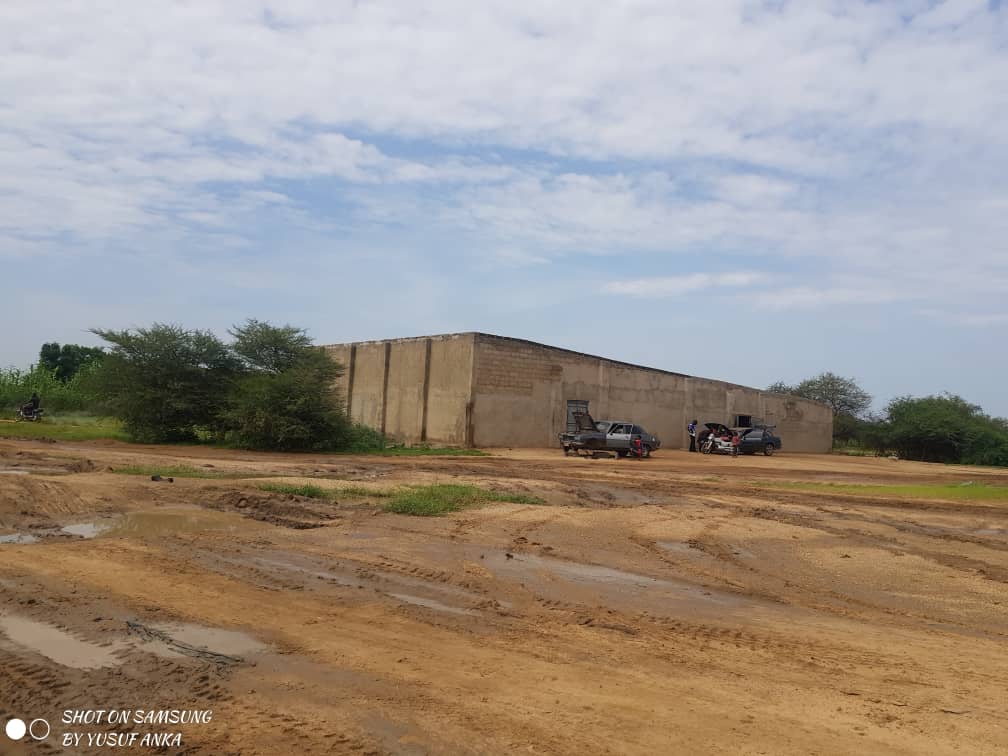
Smugglers retro – fitting their vehicles
While many in Zamfara and other states of the Northwest under the dreadful hold of banditry and insecurity genuinely want a return of peace, there are others who actually thrive or even benefit from chaos and confusion.
For example smuggling, particularly of banned items, continues to thrive unhindered, while security men, including soldiers, policemen, customs and immigration officials, also continue to laugh all the way to the bank.
One of the commercial transport drivers involved in smuggling activities, who cannot be named, said those of them engaged in the business understand the risks and dangers involved but added that there really is no problem unless “you have refused to pay the bribe for each category of items or when it is time for the officials to sacrifice you as an indication that they are working.”
He added that every month there are a few of them that get unlucky. For instance: “I was arrested last year by the Customs because there were visiting officials when I was crossing with large quantities of petrol loaded in jerry cans in a truck. I paid huge sum before I was released at the headquarters in Katsina.”
A lot of criminal activities also go on in this region, with security men either aiding and abetting them or turning a blind eye. There is free passage for all persons, no matter where they come from and no matter what they carry. And there is some order and structure to the illegal activities. There is also language that is used and understood by all.
For instance, a pass is the waiver for passengers without official documentation to proceed to their desired destination across the border. For each passenger, there’s a fee of between N500 and N1, 000 paid to Immigration officials. A regular police checkpoint on the highway collects N100 from each commercial passenger driver.
The investigative team of three, two reporters and a fixer paid 500 Naira each to cross the border. They were not asked to pay more because they dressed up like distressed villagers from the Katsina or Zamfara communities. As the reporters prepared for the reporting trip to the Northwest, the local fixer had warned that they must never put on an appearance that will give them out as visitors.
According to him, dressed as poor and distressed locals, the ransom would be low if they were kidnapped. Most likely, they would not even attract the kidnappers’ attention.
At the border, passengers with official documentation pay N200 each to the customs desk. As long as the passenger has fulfilled the pass requirement, nothing else is probed concerning the passenger’s mission and luggage.
There are others, either because they are not documented or because they carry banned items, who chose to cross the border through bush parts. The bike riders at Jibia border post are part of the entrenched system. With N200 or N300, an undocumented passenger can choose to avoid the Immigration and custom desks altogether, electing to be ferried through the bush paths by the bikers.
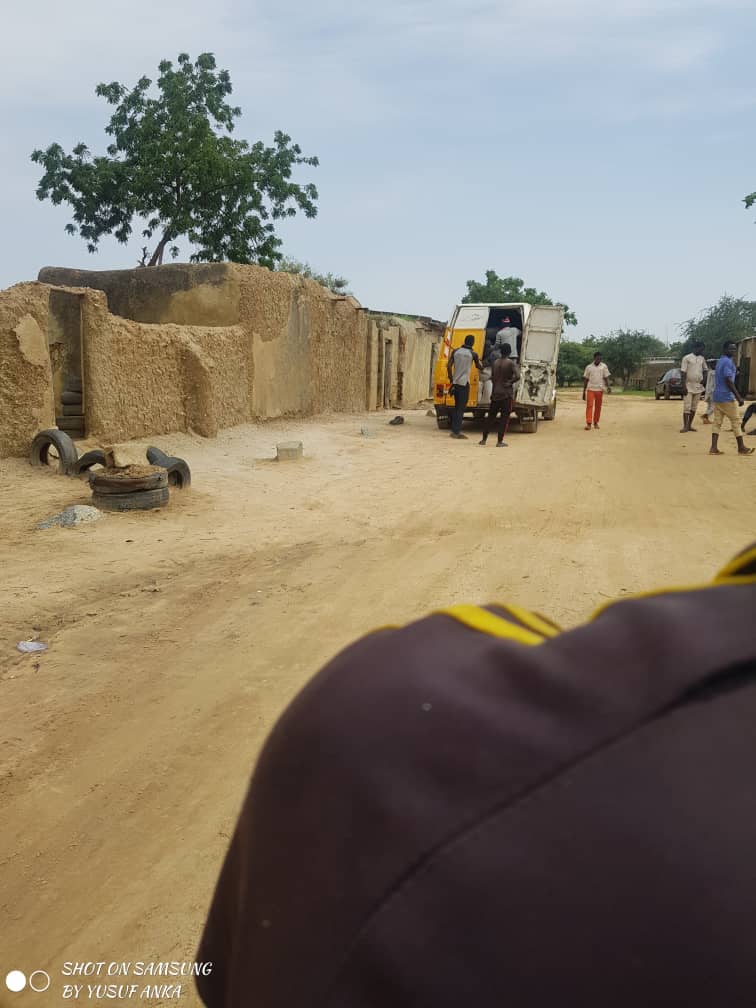
It was very risky to take a smart phone for the purpose of taking pictures as too many curious or wary eyes would be on them, but the reporters discretely put their smart phones to use.
One of the most shocking scenes, witnessed by the reporters is that at a few of the check points, the security officials engage children of between 13 and 15 years of age to collect the stipulated bribes from the drivers.
Rice merchants and gunrunners, we are informed, regularly take advantage of the lax security to bring their wares into the country in a steady flow. Several people who spoke to the reporters said that most of the merchants work closely with the security officials, cutting deals, agreeing to terms and pushing their deliveries across targeted destinations.
The rice merchants barely hide their operations. Rather than drive trucks to across the border with their merchandise, they go through the more laborious route of offloading the goods a few hundred meters away from the border security post and use smaller carriers like motor cycles, horses or cattle to ferry from them from hideouts in Niger Republic into Katsina for onward transportation to other parts of Nigeria.
According to Aminu Jibia, a shop owner and resident of Jibia who transported arms in the region for over three years before he stopped early in 2018 following the surge in banditry in the region, smuggling of arms is rampant in the area.
Smugglers at work
“Arms are fitted inside customized seats in vehicles. We meet panel beaters who reconstruct the seats of commercial vehicles into mini containers for us. In the night, we fit in at least five to six dismantled AK47 in each of the front seats and the back seat can take as much as 25 rifles. The boots of the cars are only loaded with normal luggage of passengers who are unaware of the contraband in the car,” said Jibia.
When asked if he has ever been caught, he answered “No, security officials are more interested in the passengers and the boot of the car, we either pay bribes to go unchecked or when they insisted on a search, it doesn’t go as far as where the contraband is concealed.”
What type of vehicle have you used for arms trafficking? He was asked. “I used Peugeot 406 more, but I have also used Toyota Hilux,” Jibia stated.
The Fleeing Displaced Nigerian Villagers
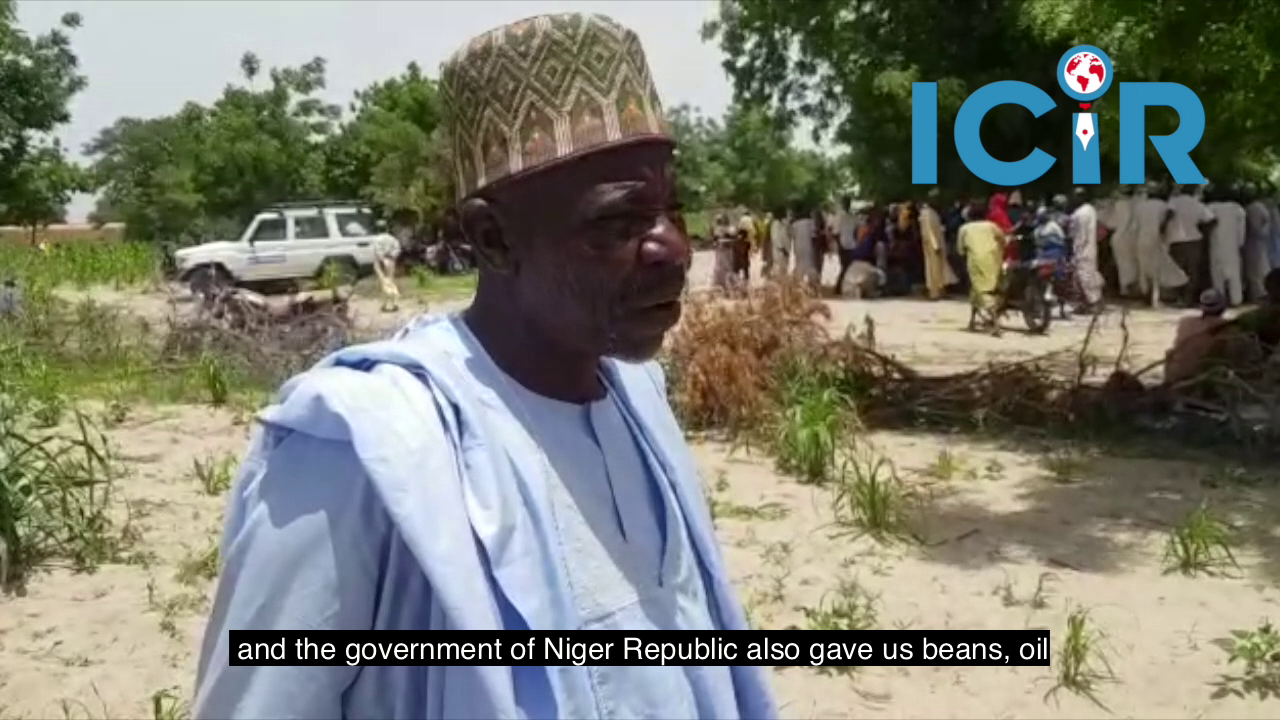
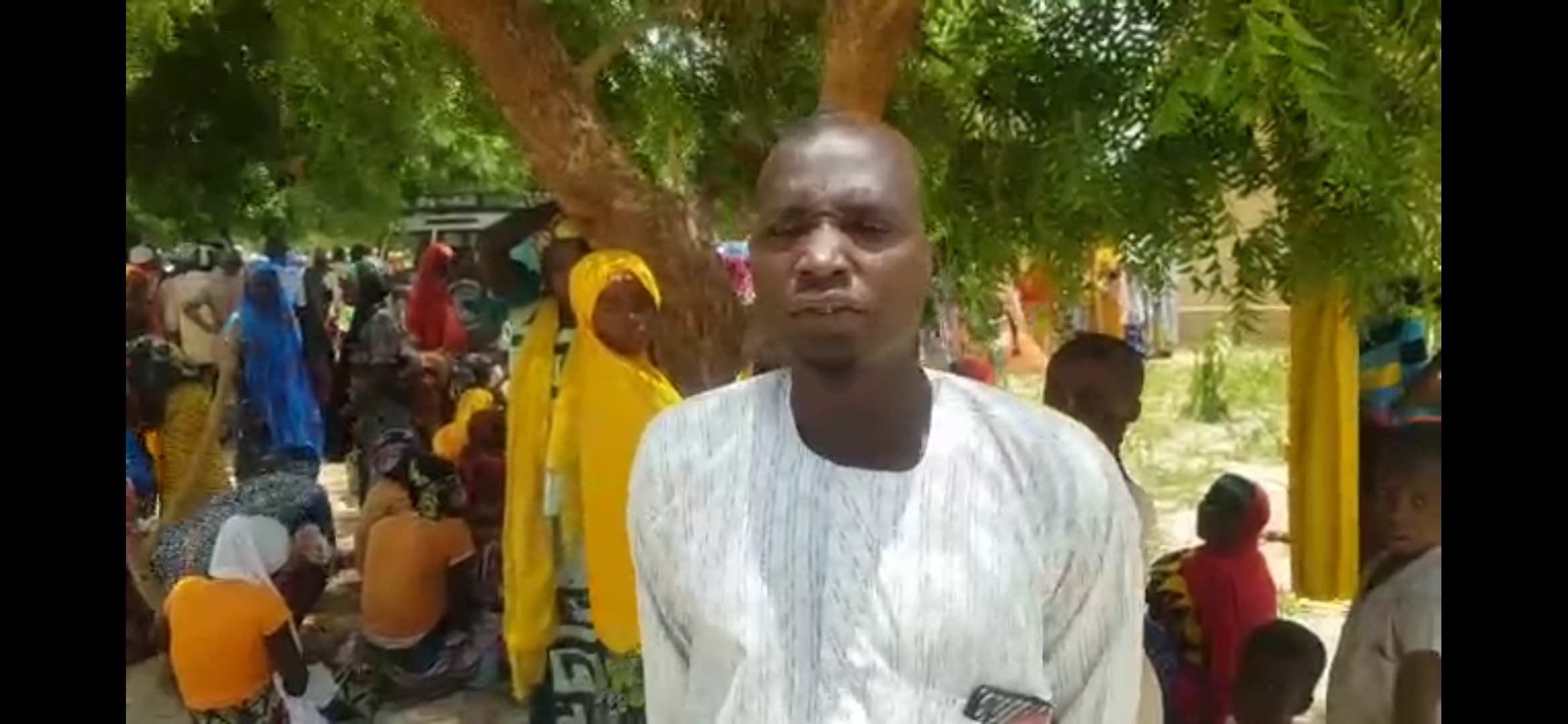
Thousands of persons have been displaced by the insecurity occasioned by kidnapping and attacks by bandits, with most of them fleeing into communities in Niger Republic. Our reporters tracked several hundreds of them who fled villages such as Sabon Birni, Isah, Rabah and Goronyo, as well as Gidan Roumdji in Sokoto State to camps where they are being accommodated in Dan Kano, Basira and the rural communities of Chadi in Niger Republic.
About 500 displaced Nigerians are being accommodated in Basira, a community with just a single public school. Another 500 fleeing Nigerians are quartered in Chadi where there is no medical facility in the community.
“They have rustled our animals, they have killed our people and we have not seen any security to help us. We have to run to Niger Republic, we are now in a village called Chadi in the past 5 months,” said Adamu Galube, a refugee.
In terms of basic health amenities, these Nigerian refugees do not have access to water and only depend on rainwater for drinking and domestic use. In most of the communities, there are no health facilities, and irregular supply of basic medicines and other consumables.
It has not been possible for the refugees to enroll their children in public schools. A mother of six who does not know the whereabouts of her husband said that school is a luxury that they could not afford even when they lived in Nigeria. Another mother, Maimuna, said since they fled Zamfara school for children has stopped. “It is only here in Niger Republic that we were able to sleep with our two eyes closed,” but schooling for her children is out of the question because they are all displaced. She then called on the Nigerian government to send maize flour for them to be able to survive. “We are starving.”
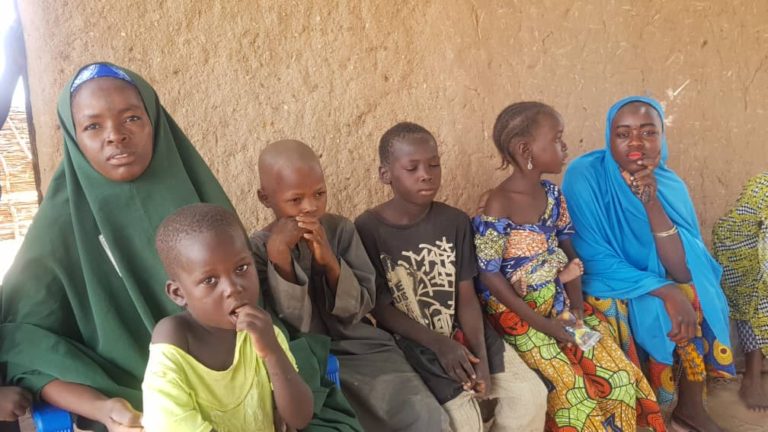
Refugee woman and children, labourers on a farm
According to Hauwa, mother of six and several dependents, “as a refugee and mother not knowing where my husband is, school for my children is the last thing on my mind. I only think of three things more often now, the safety of my family, what to eat with my children and shelter to protect ourselves from the rain and cold.” The refugees said that the government of the host country has promised to ensure that their children are enrolled in schools but we could not get any official of the government in the country to confirm this.
Most of the displaced persons who spoke to the reporters are more occupied with the task of surviving from day to day. They offer themselves and children as daily paid laborers to their hosts in their farmsteads and use what they get each day to fend for their families.
A refugee mother and her children
Another mother said that she and her kids go out every day to work for what they can eat and, according to her, a day’s work can only provide money for feeding that last two days. So, they have to go out and work again and again.
“There are days when we are not paid money, we are given grains and food as payment for a full day’s work with my children because those that employed us don’t have the money to pay for our services,” said a mother of four.
Living a life of subsistence, they hardly pay attention to more tangible needs like school enrolment. There are no designated refugee camps where these people live. Some of them actually rent where they stay, others stay in any open and public place while some move from one location to another in search of acceptable abode.
Their situation is dire and horrifying for the reporters to witness. Sarkin Hwawa Shago, the traditional ruler of Burkusuma, Sabon Birni in Sokoto State narrates a gripping tale of misery.
We are now in Basira in Niger Republic after we fled Sokoto. Our locality has 77 communities but no community has a single person at home. Children are not going to school. Pleas on the Federal Government as well as the Sokoto State government to help with security fell on deaf ears. We have nothing to feed our families since insecurity has stopped us from farming,” said the traditional ruler.
Choosing between the “Ingilishi” and the “Hwaranshi” territories.
Among the fleeing Nigerian refugees there is none who has anything reassuring to say about Nigeria. They describe as disappointing the total lack of interest in their condition by the Nigerian authorities. No word or indeed any humanitarian intervention has come from any government in Nigeria to them and neither from the Sarkin Musulmi to encourage them.
“We have been informing our local chiefs since that is the only thing we can do, but aside the rice they once gave us from Nigeria, they have done or said nothing,” Sarkin Hwawa Shagosaid.
Nigeria is referred to as the “Inglishi” territory which we understand to be the native corruption of “English” while the Niger Republic is referred to as the “Hwaranshi” territory, clearly a corrupt reference to the French speaking territory such as Niger Republic. The refugees express comfort and relief at staying in the “Hwaranshi” territory given the sense of safety they feel as well as their belief that the bandits are more afraid of the French security agencies than they are of the Nigerian forces. Asked if they were willing to go back to Nigeria any time soon, none among them is contemplating that in the near future.
“We survive first and seek out schools for the children thereafter,” declared Shago.
Sarkin Hwawa Shago the traditional ruler of Burkusuma
Who else is concerned about the plights of these refugees?
The reporters met with officials of the United Nations High Commission for Refugees, (UNHRC) in Basira community while they were taking records of new arrivals. The officials confirmed that they normally start with taking records followed by delivering critical supplies. They stated that they had already supplied food items to the refugees on two different occasions. This was confirmed by the refugees, who, in spite of the rains, find themselves sleeping in the open. They mostly arrived bare having been impoverished by bandits who destroyed their farms and rustled their livestock. Some, before they escaped North West Nigeria had sold their livestock to pay for ransom to free their loved ones who had been kidnapped by bandits.
In Niger Republic, living as refugees, they are left with nothing. A local official with the UNHRC who does not want to be named said, “there is no interest and commitment to address the problems here. Maybe the media will need to step in to generate the kind of attention that will begin to address the problems.”
Many of the refugees place the guarantee of security as top priority for them to consider returning home to pick up pieces of their lives back. They observed that if they were assured of security they could go back and resume their farming. Security, for them, is the assurance that they could live where they have a shelter without fear of losing it unexpectedly, work in the farms without the fear that bandits would come and raze the farms, and earn income from proceeds of the farms they cultivate without the fear that they would be kidnapped for ransom. They desire amenities like shelter, water, healthcare and education opportunity for their children but none of these, they aver, compares to the assurance of security. Basiru Ibrahim,a civil servant who abandoned his work in Sokoto and now lives as a refugee said, “I fled because of incessant attacks. They forced us to vote them now they have failed to protect us.”
Basiru Ibrahim
Typically, the Nigerian officials are unperturbed.
According to the UNHCR, the UN Refugee Agency, which is working with local authorities and other humanitarian partners to assist the refugees, more than 40,000 people have now been forced to cross from North West Nigeria into Niger as a result of an upsurge in violent attacks on civilians over the last ten months. The UNHCR spokesperson Babar Baloch said, “the escalating violence in the Nigerian states of Sokoto, Zamfara and Katsina has led to a new humanitarian emergency in Niger’s border regions.”
There is no exaggeration in this as our reporters witnessed healthcare issue, shortage of food and portable drinking water, while there are already cases of starvation and malnutrition amongst the refugee population. From observation, over 50% of the refugees are still without any form of shelter. In their search for shelter they move from community to community with some of them crossing territories outside of the Maradi areas in Niger Republic.
“Nigerian refugees continue to arrive in more than 50 villages in the departments of Guidan Roumji, Guidan Sori and Tibiri. On September 11 alone, more than 2,500 people fled when civilians were targeted by armed groups on the Nigerian side. As the security situation continues to deteriorate in Sokoto State, we are expecting more refugees to arrive in Niger,” the UNHCR spokesperson stated.
“People are seeking safety from indiscriminate attacks unleashed by organized armed groups on men, women and children alike. There have been frequent reports of kidnappings, torture, extortion, murder, sexual violence and destruction of houses and property,” he lamented.
Another official of the UNHR stated that the Sokoto State governor, Aminu Tambuwal, promised to visit the refugees, but despite detailed arrangements, he did not show up. Since then, no government agency or official from Nigeria or has as much as inquired about the welfare and status of these refugees, as at the time of filing this report. There is also no demonstration of any intention to reschedule the earlier planned visit by the Sokoto State governor. Nor is there any official acknowledgment of the spill over of refugees to the neighbouring country.
The official further revealed that “a 747 Cargo plane carrying 98 metric tonnes of relief items from UNHCR landed in Niamey on Monday (September 23). But more resources are urgently needed to support refugees and their hosts. An inter-agency refugee response plan launched this week (a week ago) seeks US$ 35.5 million until the end of this year. So far, we have 6 per cent of the required funding.”
The cat and mouse game called peace initiative in the North West?
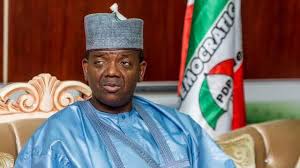
Zamfara State governor, Bello Matawalle
Initiating peace deals in this period has become a yearly routine. It is important to note that armed groups started calling for peace talks towards the demise of Governor Abdul’aziz Abubakar Yari’s tenure. It usually becomes a steady chorus in the crisis territories two to three months before the rainy seasons. A major feature in the banditry that has consumed Zamfara state in the past couple of years is the Buharin Daji splinter group of the Fulani bandits. Daji’s group was the most ruthless of the groups. The group’s leader, Buharin Daji, was killed sometime in March 2018 by Dogo Gyedi, who leads another group, and according to multiple accounts, the latter has very strong links with local and foreign Jihadist groups.
Gyedi’s group is known to maintain a formidable force and a colossal arsenal while building a steady liaison with the Ansaru terror group. Neither of these two formidable groups is party to the on-going peace process initiated by the new Zamfara State governor, Bello Matawalle. There is a feeling among stakeholders in the conflict that the peace process is a public show standing on shaky ground with its boycott by armed groups like Haliru Mairakumi, Gajere, Dogo Gyedi, yan bakwai-bakwai, some of the major Fulani bandit groups. What this means, in the reckoning of informed watchers of the crisis, is that a significant population of the armed Fulani groups are not surrendering and therefore not taking the peace process seriously.
The ethnic coloration in the banditry is not being acknowledged or addressed by government. For instance, many of the people that spoke to our reporters believe that the dominant victims in the relentless onslaught of the Fulani bandits in Zamfara are mostly the Hausas who have been the principal victims of kidnappings and payments of ransoms. The Hausas are also believed to have been the major victims of rustling too. Given that the state government has offered amnesty to the Fulani bandits without creating any basis to give succour to Hausas who have lost farm stock, leaves ground for discontent even in the midst of the on-going peace initiative.
This is compounded by the boastful tone of the Fulani groups at the peace meetings at both the governors offices in Gusau and Katsina. The commanders who were brought into the sessions with government officials rather than table any grievance and make demands preferred to boast that nobody can do them anything, declaring how unconquerable they were. Given that the raining season is mostly an off season for the militias and the terror groups, it remains to be seen whether these groups of the bandits are not taking advantage of the naivety and desperation of government officials to get some unmerited concessions and await the end of the raining season for them to unleash further mayhem. Those who have surrendered include Sabo, Yusuf Kachalla, Yusuf Kwachabawa, Dan Shehulle, Alhaji Garki, Nashawari.
However, there are indications that many of the bandts that surrenders in Zamfara State have since moved to other places to continue their criminal activities.
Our reporters have tracked the movements of some bandits, who embraced the peace initiative in Zamfara and it was confirmed that they have moved to neighbouring Katsina or Niger states to continue with banditry.
A video has surfaced online, verified by our reporter and shows it was recorded on October 2, 2019 at Mayanchi-Anka junction, in which more than 300 armed bandits stopped at a gas station, robbing and forcing the fuel attendant to fill up their motor bikes. They did not harm or attack bystanders, but chanted that they are on their way to Birnin Gwari in Kaduna state.
A Fulani source said, “most of the bandits are not happy with the Kaduna Sate government for not participating in the peace process. You know the process comes with the unconditional release of our brothers and cash rewards,” said the repentant bandit.
Gains and Gaps of Ongoing Peace Initiatives by Governor Matawalle
Even though Matawalle has publicly expressed no interest in payment of ransom, a member of the state reconciliation committee, Alhaji Abdullahi Shinkafi said the body has designed a process to award monetary compensation to armed groups consistent with the strength and type of riffles surrendered. Locals who have been keeping a close eye on the process said that there is almost a stampede among the bandit groups to source unimportant weapons to surrender to the government since that is an opportunity to receive vital cash for their operations.
Also, some of the bandit groups which have not featured in the negotiations are believed to be currently releasing their captives ostensibly as a fallout of government ongoing buyout. Quite critical also, is the suspicion that members who have received the buyout and have ostensibly put down their arms and surrendered are being targeted by opposing bandit groups that are determined to continue their violent campaigns.
“And because the number of violent armed groups determined to fight on outweigh the ones interested in the peace process, we have seen fighters returning to violence, especially the ones whose leaders were assassinated,” said a top security source.Also, some of the bandits that claimed to have repented are not back to normal communities. They still maintain and occupy their camps in the vast forests,”Shinkafi said.
Even now that the borders are officially closed, the lax security at Nigeria-Niger border, has made arms shipment and delivery into the country a normal daily routine for the bandits and terror groups. Specifically, the Sububu forest in Shinkafi, in neighbouring Niger Republic, is believed to be a shipment ground for arms in the areas.
What is not being reported about the ongoing peace process?
The terrorism component of the crisis in the North West is either being missed or deliberately overlooked. However, last week the Zamfara State government confirmed the presence of Boko Haram in the state. Competent sources in the region say that Ansaru terror group has been present in the region for years but have grown in alarming numbers lately following insurrection that begets more insurrections in the Lake Chad, where some of ISWAP’s most daring Ka’id and Munzirs deserted the group and found a new home in parts of Katsina, Niger and Zamfara states.
It was reliably gathered that hundreds of Jihadists have moved from the North east to Zamfara and other forests areas in the North West, pledging allegiance and forging partnerships with local Amirs. Thus, the criminal bandit gangs operating in the North west, rustling cattle, kidnapping and attacking people, are a mix of Boko Haram jihadists and local bandits.
Multiple knowledgeable sources believe that these Jihadists from different backgrounds are mainly using the area as a refuge, for evangelization and forging partnerships with other groups before they engage in an all-out war with the state and what to them are criminal armed groups.
Sani, a former Boko Haram member who now works with Ansaru, was asked if there were plans to stage attacks at the end of September 2019 with the connivance of politicians. His answer was “it may take time before we begin attacks, the unruly Fulani armed groups outnumber us, but we are working on a strategy, and we have no business with politicians.”
All the bandit and militia groups in the peace process with the state government have insisted that vigilante groups must be disbanded. This might be an indication that much more than the police and the military, the factor that truly presents a major resistance to the marauding bandits is the vigilante groups. The vigilante groups, much like the Civilian Joint Task Force, CJTF, in the North east, have been the major force holding the bandits back and sometimes showing more determination than the military against a ruthless foe. However, like their North east counterparts, there are documented complaints of vigilantes carrying out reprisal attacks that further complicates the problem.
What is the effect of raining season to be conflict?
Since the start of the crisis and its escalation into major violence over a decade ago, the rainy season has always been a season of lull in hostilities. With or without negotiations, hostilities cannot be sustained at this time of the year. The season has always been a period when some of the armed groups are susceptible to peace talks. It is a period of incubation and healing for their wounded. The terrains become impassable. In most cases, this is the period for them to move out of forest areas which become unstable during the rainy season due to flooding. During this period, they stay under trees and open places, roads are blocked by water ways and the grasses have grown tall, making them to easily fall into the waiting traps of security forces and vigilantes.
Because the rainy season brings a lull to hostilities, farmers freely plant their seeds but the greatest nightmares of farmers are the harvesting season when hostilities are intensified at all levels. “After the raining season people who are deceived that the peace process involves the majority of the bandits will be shocked,” said one of the bandits in an audio recording that our reporters were able to listen to.
What are the ethnic and religious motivations of this conflict?
The crisis started as a misunderstanding between herders and vigilante groups, who tend to protect farmers and farmlands from invasion by pastoralist herders, who are principally Fulani. This can be traced back to Dansadau with the attacks carried out by Dangwannawa and later Buharin Daji, the Fulani militia leader in 2012/2013. It later became a conflict between herders and farmers, and later, cattle rustlers against any livestock owner. About 90% of the pastoralist herders are Fulani while the farmers are mainly Hausa
However, it later became an ethnic conflict between Hausa and Fulani with both ethnicities holding people captive over actions of the other.
Other factors that contributed to the ethnic transformation of the crisis, according to Shehu Lili, a member of the banned vigilante group, include non-inclusion of Fulanis in the vigilante groups, victimization of many Fulani youths who latter embraced banditry as self-defense. Escalating encroachment of grazing areas and forest reserves as a result of over population and demand for crop farming are also remote factors.
Our reporters witnessed cases of displaced Hausas not allowing displaced Fulani to settle with them at the refugee camps in areas like Anka.
There is an the impression that in every Fulani household in the region there must be one person who is a rustler and that in cases where they are not directly involved they do not resist harbouring other criminal elements including militia members.
“These claims a bit extreme,” said a top Miyetti-Allah official in Gusau who does not want to be quoted. At the refugee camps within and outside the country the displaced accuse the government of not showing interest in protecting them but sending polio staff to the borders to inject their children. “Officials seem to be more concerned in eradicating polio than eradicating armed bandits that killed, maimed and sent hundreds of thousands out of their ancestral settlement,” said a resident of Zamfara who threatened to deal with the health workers the next time they come.
Two of the refugees currently in Niger Republic said it is shameful to say they are Nigerian citizens because Nigeria has failed them but Niger Republic is protecting them. ‘Shame on Nigeria. They have chased us away, killed us, chased our families and properties. We have disintegrated but the only thing you bring to us is polio?’ Peace deal with Buharin Daji and former Governor Yari’s government in the past only lasted for nine months. The current process is following the same doomed trajectory, they argued.
Refugee women and children in a camp in Niger republic
Nigerians from about 76 communities are displaced and living in Niger Republic. One angry and frustrated displaced villagers declared: “The Nigerian government should be ashamed. Whoever is a Nigerian leader should feel shameful including the Sultan of Sokoto because he has failed to do anything as a Muslim leader. Muslims are being killed and chased away and Niger government has put them in shame for protecting us. It is a shame on Nigeria.
Basiru says “as a civil servant I had to flee from Nigeria to come here in Niger for safety. Our people feel safe here in Niger since we have peace. Nobody has come to support us from Nigeria but Nigerien authorities are always coming
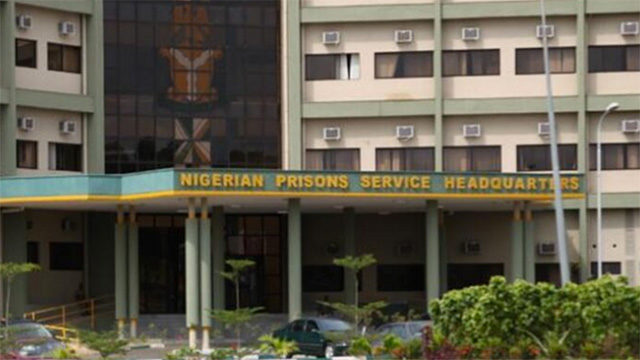
LESS than a day after The ICIR reported its failure to update information on its website, the Nigerian Correctional Service has corrected places where it wrongly referred to itself as the Prisons Service.
In a report published on Monday, The ICIRobserved that two months after President Muhammadu Buhari signed the Nigerian Correctional Service Act which repealed the old law and gave the institution a new name, this change had not been effected on its site.
However, another visit to the platform on Wednesday revealed that name has been updated in the various sections. The old logo has also been removed and replaced with text.
A screenshot of the Nigerian Correctional Services’ home page before the update.A screenshot of the Nigerian Correctional Services’ home page after the update.
It remains unclear if this update will be extended to the offices of the Service alongside other materials, as there is no provision in the 2020 federal budget for this purpose.
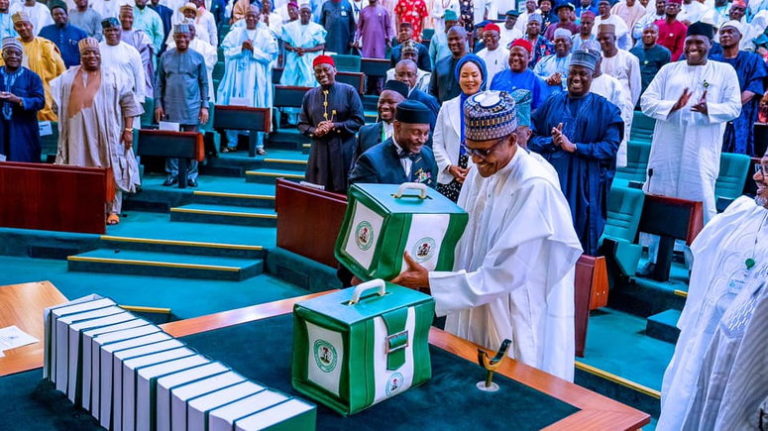
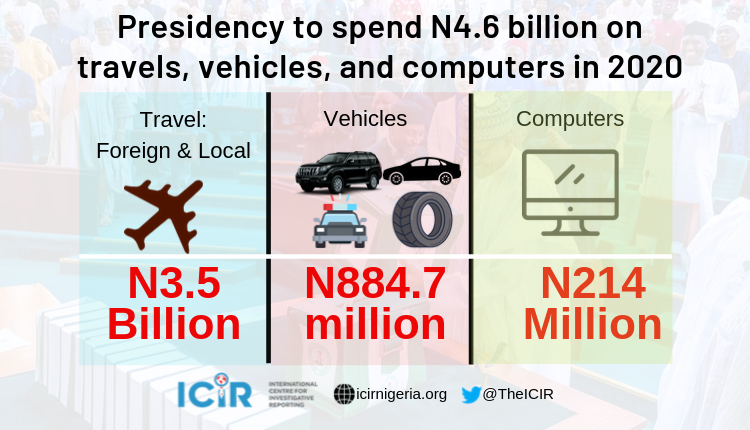
THE PRESIDENCY has planned to spend the sum of N4.6 billion on travels, computers and vehicles in 2020, detail of the proposed budget reveals.
The breakdown of the State House budget shows that President Buhari and Vice President Osinbajo will spend N3.32 billion on foreign and local trips, tagged Travel and Transport (General) under the State House (President) and State House (Vice-President). For the President, N775.6 million will be expended on local travel and transport, while N1.75 billion will be spent on international travel and transport, totalling N2.5 billion to be spent by the president only.
Under the office of the Vice President, N283.9 million was earmarked for local transport and travel, while N517 million is planned to be spent on international travel and transport- a total of N801 million to be spent on local and foreign trips by the vice president.
The N3.32 billion for travels by the president and his vice is different from the N182 million allocation on travels (both local and international) for the State House headquarters.
In the 2019 Budget, a total of N1.3bn was allocated for the foreign and local trips of the president and the vice-president. While N1bn was allocated to the president, N301.03m was allocated to the vice-president.
Still, under the State House budget, the State House Medical Centre, State House Lagos Liaison Office, and the Office of the Senior Special Assistant to the President – MDGs (OSSAP-MDGS) will all spend N32.4 million on both local and foreign travels in 2020.
On motor vehicles, the State House has earmarked over N800 million for spendings on motor vehicles. Specifically, the State House headquarters will spend N526.2 million on phased replacement of vehicles, spares and tyres in the presidential, CVU, security/police escort and State House operational fleets. This same item had allocation both in 2018 (907.1 million) and 2019 (N576.7 million) budgets.
Also in the State House headquarters budget, the sum of N91.68 million is allocated to be spent on the purchase of tyres for bulletproof vehicles, plain Toyota cars, CCU vehicles, platform trucks, land cruiser and Prado jeeps, Hilux, Peugeot 607, ambulances and other utility and operational vehicles. 2017, 2018, and 2019 budgets had allocations for this item also. In 2017, 94.57 million was allocated; 2018-N83.77 million was allocated, while N51.08 million was allocated in the 2019 budgets.
Another N266.8 million will be spent on the purchase of security and operational vehicles under the office of the Chief Security Officer to the President. In 2018, the same office had allocated the sum of N653.6 million for this purpose, which is tagged “NEW”. The same item was repeated and tagged “ONGOING” in the 2019 budget when N433.45 million was allocated to cater for the item.
A further breakdown also shows that the State House will spend about N214 million on computers. The line item for computers were tagged as “office stationeries/ computer consumables”, “computer software acquisition”, and “purchase of computers”.
The state headquarters will spend N112.5 million on office stationeries/ computer consumables and acquisition of computer software. For the office of the Vice President, about N78 million is earmarked to be spent also on office stationeries/ computer consumables and acquisition of computer software.
Away from office stationeries/ computer consumables, which will gulp over N500,000, the Office of the Chief of Staff to the president will also spend N1.3 million on the purchase of computers-specifically, “HP touch smart 310 PC”.
Offices of the chief security officer to the president, senior special assistant to the president on MDGs and the State House Lagos Liaison Office will all expend N21.45 million on purchase of computers and computer consumables.
Documents on capital performance for ministries, departments and agencies (MDAs) obtained from the Office of the Accountant General of the Federation reveals that of the N27.77 billion capital allocation to the presidency in 2018, N28.6 billion was released, N24.4 billion was utilised, representing about 85.35 per cent utilization. In 2017, N6.5 billion was allocated to the presidency as the aggregate capital allocation. A total of N4.08 billion was released and utilised.
It is to be noted that the proposed total capital allocation to the presidency in 2017 (6.5 billion) was approved by the national assembly. In 2018, N21.96 billion was proposed for capital expenditure, however, the amount was raised to N27.77 billion a difference of about N5.81 billion in the final budget approved by the national assembly. N16.25 billion was allocated for capital expenditure in the proposed 2019 budget, the national assembly approved N18.15 billion, raising it up by N1.9 billion.
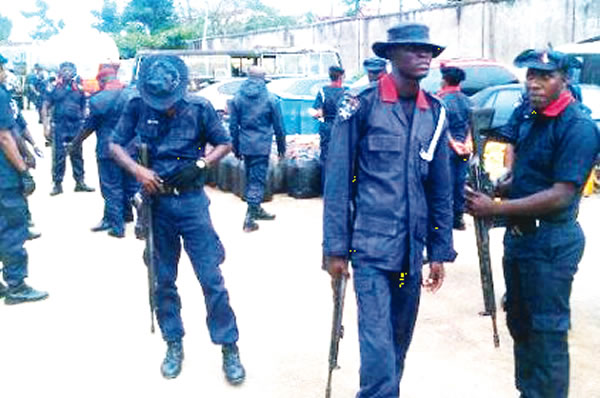
OFFICERS of the Nigerian Security Defence Corps (NSCDC) who were kidnapped along with five other people, including a 12-year-old boy in Kuje area council of Abuja, the nation’s capital, have been freed after making payment of N5million ransom.
The nine were abducted last Monday by gunmen that dressed in military camouflage during nightfall at Pegi Community of Kuje Area Council, Federal Capital Territory.
The gunmen had earlier demanded 10 million from the relatives of the abductees, however, eight were released on Sunday evening after the payment of N5 million, according to Daily Trust.
A relative of one of the victims had noted the nine that includes members of the defence corps were manhandled for the six days spent in the kidnappers’ den. The source added that one of the victims was not released over failure to meet up with the ransom the kidnappers demanded.
Meanwhile, some report stated that six of the victims were released.
Calls placed by The ICIR to the FCT police spokesperson, Anjuguri Manza, for the police comment were not picked up while the message sent was yet to receive any response.
Taiwo Adebirigbe, Chairman, Pegi Community Development Association (PECDA) confirmed their release stating that he had seen some of them in the neighbourhood including the boy.
Adebirigbe said lack of infrastructure combined with the absence of social and economic development in the community was responsible for security degradation in the area.
“We hope the FCT administration would fulfil their promise to rehabilitate the road as soon as possible,” he said.
The cases of kidnapping among the small communities in the Nation’s capital had happened in three different communities between last week and this week.
Apart from kidnapping nine people in Pegi community last Monday, two days later, another three people at Dafara community of Kuje were abducted, while one was shot dead. The kidnappers’ target at Dafara Community was a family of an NSCDC officer. The man, his wife and son were abducted by the gunmen.
This week, on Monday, gunmen also killed a man called Ayuba Chashe, and abducted his two children at the Yebu community in Kwali Area Council of FCT.
The Chairman of Kwali Area Council, Danladi Chiya, confirmed the development to newsmen in Kwali on Tuesday.
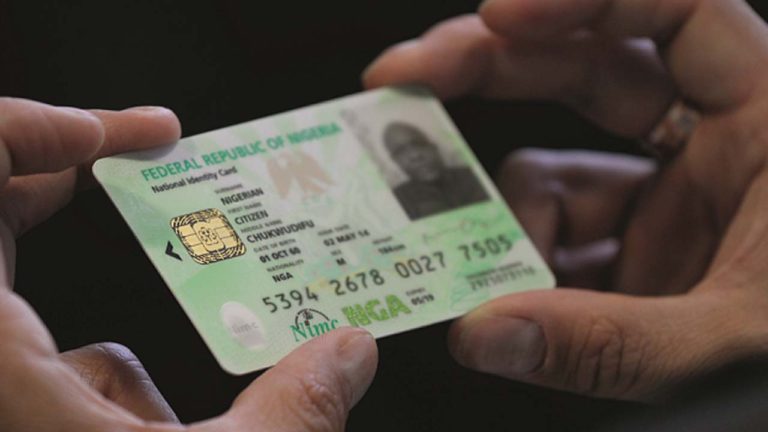
NIGERIA’s National Identity Management Commission, NIMC, is set to generate revenue of up to N328 billion every five years only from the renewal of the national electronic identity card, and Nigerians have taken to social media to protest this.
The agency released a reminder on Tuesday stating that when the e-ID card expires, it will cost N3000 to have it renewed. It likewise costs N5000 to replace a missing or damaged card.
Launched in 2014 by former President Goodluck Jonathan, the smart card isn’t only meant to identify the owner, it can also be used to make payments, access social services, and as a “personal database repository”.
It is issued to persons who have obtained the National Identification Number (NIN), but the applicant must have attained the age of 16 years to be eligible. The card has a validity period of five years after which it will have to be renewed. Upon application, a new card will be ready, according to NIMC, within one to three months—depending on the availability of power and network.
A 2017 estimate of Nigeria’s population broken down according to age brackets states that there 110 million Nigerians aged 15 and above.
This means if every Nigerian eligible for an e-ID card had one, the commission is capable of generating as much as N328.6 billion from renewal applications alone. This can shoot up depending on how many requests there are for replacement, which costs almost twice the amount.
Nigerians take exception
Many Nigerians have expressed their objection to the revenue-generating policy on Twitter, following NIMC’s statement.
Edward Onoriodie (@edward_onoriode) complained that he is yet to receive his permanent identity card though he applied as far back as 2014.
“In fact, I stopped going to NIMC office to ask if my National ID is ready,” he added. “Now, NIMC is asking I pay N5000 for a renewal of an ID I never got. NIMC is a SCAM!”
Convener of Lagos SME Bootcamp, Ayo Bankole, argued that paying for a national identity card is “another form of tax on an already impoverished people”.
“This time, we are taxing those that may have no jobs for being unfortunate enough to be Nigerians. You now have to pay the govt to be a citizen of a country that doesn’t give a shit about its citizens,” he tweeted.
Another Twitter user, Mayowa Olagunju (iam_doctormayor) wrote sarcastically: “POS charge VAT increment Renewal of national ID card APC! Change!”
Issuance itself to cost money three years from now
Presently, the issuance of smart cards to first-time users are free of charge, but NIMC’s Director-General, Aliyu Aziz, has said this will no longer be the case as from 2022.
Secretary to the Federal Government, Boss Mustapha, said in September that NIMC has registered 37 million Nigerians. The ICIR was, however, unable to get information from the commission on how many e-ID cards have been issued so far.
Calls placed to three of its helplines on Tuesday were not answered and a fourth number, belonging to Customer Care manager Samuel Umukoro, was not available. An enquiry sent to its active Twitter account is also yet to be replied.
Here are other reactions from Twitter on the charge:
N5000 to renenw National ID card??? That means your citizenship as a nigerian expires after a certain period of time so you have to renew your citizenship with N5000 or else you are no longer nigerian? Who brought up this foolishness???
THE National Identity Management Commission (NIMC), says the renewal of the National Identity Card will cost three thousand naira (N3,000) payable through remita, The ICIR can confirm.
NIMC disclosed this through its official twitter handle on Monday, as well as charging the sum of N5,000 for card replacement.
According to the tweet by the Commission, applicants who wish to renew their card can visit any NIMC office with the required documents to obtain their card.
” The requirements include a written application with attached proof of payment receipt made through remita, bank teller, NIN slip and submit it at our office.
” Card renewal is N3000 when your card expires and card replacement is N5000 for lost or stolen cards.” NIMC tweeted.
Explaining the recent development in the tweet, NIMC said the focus was to ensure that all Nigerians are enrolled.
“Our main focus is ensuring that all Nigerians are enrolled and issued their NIN. Your NIN is the most important token of your enrollment.”
Similarly, Nigerians can authenticate their National Identity Number through the NIMC verification portal.”
“Your NIN can be authenticated through our verification portal without your card” NIMC tweeted alongside the portal link .
“You will be issued your cards when funds permit, Please bear with us and Your NIN is generated immediately for you upon successful completion of your enrollment.”
However, the tweet generated negative reactions as Nigerians ruled out the positivity in the recent development from the commission labeling it as a fraudulent act saying the ID card is of no value, majority claiming the process it takes in acquiring it is too long and that the government doesn’t value its people.
It will be recalled that in one of The Guardian’s report few days ago, The National Identity Management Commission advised all 2020 Unified Tertiary Matriculation Examination (UTME) candidates not yet enrolled for the National Identification Number (NIN) to visit any NIMC office nationwide and enrol as failure to do so will amount to disqualification.
ARENI Aishat left Nigeria for the “United States” with a lovely aspiration of getting a nice catering job at the New York City of the US.
But her dream was shattered when she ended up in Libya a stranded irregular migrant. Then, it dawned on her that her aunt who aided her migration and promised a successful trip to the US had other plans.
It’s either Aishat works as a prostitute or a housegirl in Libya.
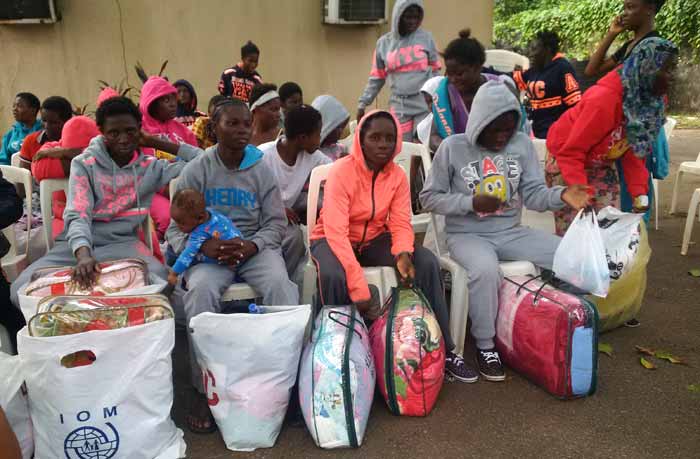
The 23-year-old lady, from Ogun State, is among the latest batch of Nigerian migrants returning to their fatherland. A total of 173 of them arrived at the Muhammed International Airport, Lagos in two different flights on Tuesday morning, according to Idris Abubakar Muhammed, Coordinator of the Lagos Territorial Office of the National Emergency Management Agency (NEMA).
While 162 of the returnees boarded the aircraft from Misrata of Libya which landed about 04:52 am, 11 others returned from Bengazil of Libya on aircraft which landed about 5:15 a.m.
Narrating her ordeal to journalists on Tuesday, Aishat said she was happy to be back in Nigeria after a year of uncertainty in Libya.
“I just graduated as a catering apprentice and the Aunt told me that she can help me to travel to United States where I could do better work. She told me that she would pay for my transportation and that I would refund the money when I start working there,” Aisha told The Nation.
She did not know her aunt had deceived her until she left the country. “It was my mates that revealed to me that it was Libya we were heading to,” said Aisha.
As she was denied a catering job, her option was either to work as a house girl or to be sold out to “Connection House” which means prostitution network.
Aisha said she worked for one year.
“Nigeria is far better than Libya, Libya is dangerous, it is either you are kidnapped, killed, raped, robbed or bombing here and there. Nigerians are not safe there.
“I decided to return home because the nature of the work is not ideal for a human being,” she said.
Aisha said she was helped back to the country when her mother laid complaints at the NAPTIP office.
The recent batch of Nigerian returnees from Libya consist of 52 adult females and 106 adult males. There were also children including eight females and seven males, and 21 of them had medical challenges.
More than one thousand Nigerians have returned from Libya in 2019. As of April 2019, Nigeria has received close to 1000 stranded citizens from Libya. In March, NEMA Lagos boss, Idris Abubakar Muhammed, said that more than 12,000 Nigerians had so far returned from Libya since April 2017.
THE Nigerian Library and Information Science Students Association (N-LISSA) has condemned the sorry state of public libraries in Nigeria.
Azeez Elijah Olawale, the association’s national president, on Tuesday through a statement obtained by The ICIR, faulted leaders at both federal and state levels for misappropriating funds meant for the building and development of public libraries in the country.
“The Association faults the past leadership of the federal and state government for neglecting and embezzling funds that are budgeted for the library development in Nigeria over the years, hence denying millions of Nigerians access to useful information and research materials,” the statement read.
While commending African nations such as Rwanda and South Africa for investing heavily in public libraries, Olawale said the Nigerian government is destroying her’s. If the trend is not discontinued, he warned, public libraries will go into extinction, thereby destroying the knowledge base of the nation.
Most libraries in the country, according to the student association, “are in a devastating, pathetic, critical, emergency, and worrisome condition”.
“Most Nigeria’s public libraries are characterised by dilapidated structures, falling roofs, bushy environment, absence of electricity supply, lack of staff, abandonment of Library building, lack of library materials, use as a market place among others,” the president lamented.
“The poor attention to public libraries can be said to have contributed to the increase in crime rates, illiterate population, the spread of rumours, etc.”
Olawale called on government at all levels, non-governmental organisations, schools, as well as well-meaning Nigerians to work together in resuscitating and restoring the glory of public libraries. Various stakeholders, he suggested, can contribute through the renovation of structures, and donation of books, computers and other materials.
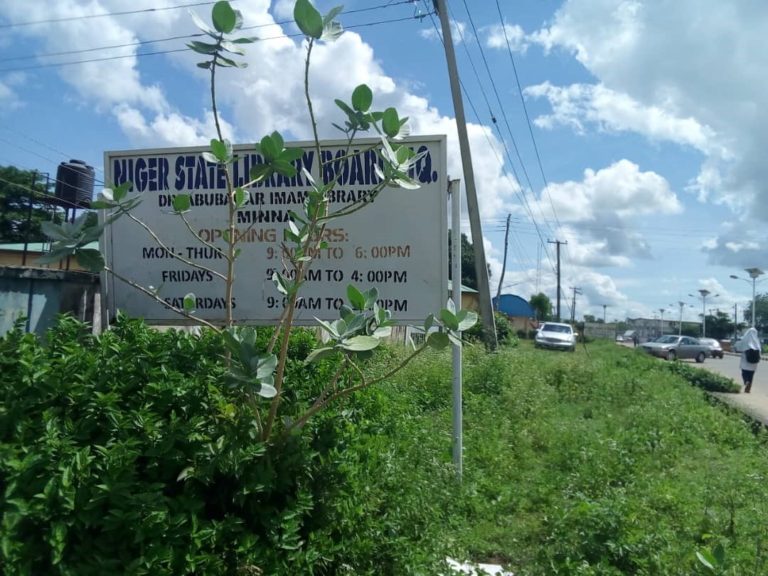
Pictures of dilapidated public library in Minna, Niger State. Credit: N-LISSA
Pictures of dilapidated public library in Minna, Niger State. Credit: N-LISSA
Pictures of dilapidated public library in Minna, Niger State. Credit: N-LISSA
The statement said: “We equally call on President of the Federal Republic of Nigeria, Muhammadu Buhari, the leadership of the National Assembly, the Chairman of the Governor’s forum, H.E. Kayode Fayemi, all state governors and politicians to intervene, rescue, and resuscitate public libraries in Nigeria and as well come up with sustainable policies that will ensure Nigeria’s libraries favourably fit in to the demands of 21st century libraries to serve the information need of all and sundry irrespective of one’s status, level of education, position, occupation, age, sex and information needs.”