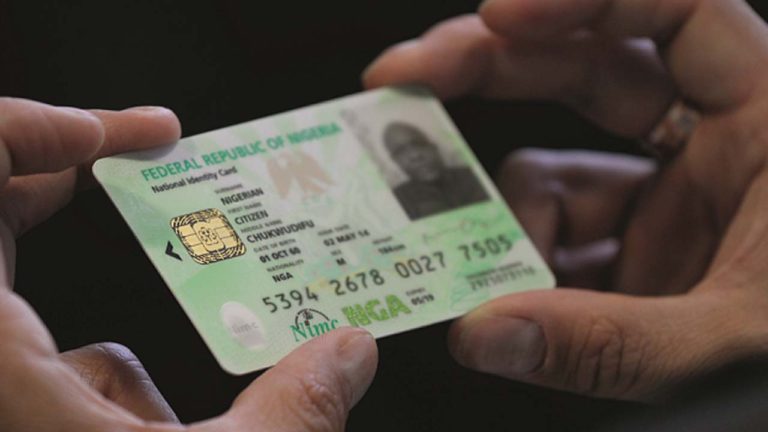
NIGERIA’s National Identity Management Commission, NIMC, is set to generate revenue of up to N328 billion every five years only from the renewal of the national electronic identity card, and Nigerians have taken to social media to protest this.
The agency released a reminder on Tuesday stating that when the e-ID card expires, it will cost N3000 to have it renewed. It likewise costs N5000 to replace a missing or damaged card.
Launched in 2014 by former President Goodluck Jonathan, the smart card isn’t only meant to identify the owner, it can also be used to make payments, access social services, and as a “personal database repository”.
It is issued to persons who have obtained the National Identification Number (NIN), but the applicant must have attained the age of 16 years to be eligible. The card has a validity period of five years after which it will have to be renewed. Upon application, a new card will be ready, according to NIMC, within one to three months—depending on the availability of power and network.
A 2017 estimate of Nigeria’s population broken down according to age brackets states that there 110 million Nigerians aged 15 and above.
This means if every Nigerian eligible for an e-ID card had one, the commission is capable of generating as much as N328.6 billion from renewal applications alone. This can shoot up depending on how many requests there are for replacement, which costs almost twice the amount.
Nigerians take exception
Many Nigerians have expressed their objection to the revenue-generating policy on Twitter, following NIMC’s statement.
Edward Onoriodie (@edward_onoriode) complained that he is yet to receive his permanent identity card though he applied as far back as 2014.
“In fact, I stopped going to NIMC office to ask if my National ID is ready,” he added. “Now, NIMC is asking I pay N5000 for a renewal of an ID I never got. NIMC is a SCAM!”
Convener of Lagos SME Bootcamp, Ayo Bankole, argued that paying for a national identity card is “another form of tax on an already impoverished people”.
“This time, we are taxing those that may have no jobs for being unfortunate enough to be Nigerians. You now have to pay the govt to be a citizen of a country that doesn’t give a shit about its citizens,” he tweeted.
Another Twitter user, Mayowa Olagunju (iam_doctormayor) wrote sarcastically: “POS charge VAT increment Renewal of national ID card APC! Change!”
Issuance itself to cost money three years from now
Presently, the issuance of smart cards to first-time users are free of charge, but NIMC’s Director-General, Aliyu Aziz, has said this will no longer be the case as from 2022.
Secretary to the Federal Government, Boss Mustapha, said in September that NIMC has registered 37 million Nigerians. The ICIR was, however, unable to get information from the commission on how many e-ID cards have been issued so far.
Calls placed to three of its helplines on Tuesday were not answered and a fourth number, belonging to Customer Care manager Samuel Umukoro, was not available. An enquiry sent to its active Twitter account is also yet to be replied.
Here are other reactions from Twitter on the charge:
N5000 to renenw National ID card??? That means your citizenship as a nigerian expires after a certain period of time so you have to renew your citizenship with N5000 or else you are no longer nigerian? Who brought up this foolishness???
THE National Identity Management Commission (NIMC), says the renewal of the National Identity Card will cost three thousand naira (N3,000) payable through remita, The ICIR can confirm.
NIMC disclosed this through its official twitter handle on Monday, as well as charging the sum of N5,000 for card replacement.
According to the tweet by the Commission, applicants who wish to renew their card can visit any NIMC office with the required documents to obtain their card.
” The requirements include a written application with attached proof of payment receipt made through remita, bank teller, NIN slip and submit it at our office.
” Card renewal is N3000 when your card expires and card replacement is N5000 for lost or stolen cards.” NIMC tweeted.
Explaining the recent development in the tweet, NIMC said the focus was to ensure that all Nigerians are enrolled.
“Our main focus is ensuring that all Nigerians are enrolled and issued their NIN. Your NIN is the most important token of your enrollment.”
Similarly, Nigerians can authenticate their National Identity Number through the NIMC verification portal.”
“Your NIN can be authenticated through our verification portal without your card” NIMC tweeted alongside the portal link .
“You will be issued your cards when funds permit, Please bear with us and Your NIN is generated immediately for you upon successful completion of your enrollment.”
However, the tweet generated negative reactions as Nigerians ruled out the positivity in the recent development from the commission labeling it as a fraudulent act saying the ID card is of no value, majority claiming the process it takes in acquiring it is too long and that the government doesn’t value its people.
It will be recalled that in one of The Guardian’s report few days ago, The National Identity Management Commission advised all 2020 Unified Tertiary Matriculation Examination (UTME) candidates not yet enrolled for the National Identification Number (NIN) to visit any NIMC office nationwide and enrol as failure to do so will amount to disqualification.
ARENI Aishat left Nigeria for the “United States” with a lovely aspiration of getting a nice catering job at the New York City of the US.
But her dream was shattered when she ended up in Libya a stranded irregular migrant. Then, it dawned on her that her aunt who aided her migration and promised a successful trip to the US had other plans.
It’s either Aishat works as a prostitute or a housegirl in Libya.
The 23-year-old lady, from Ogun State, is among the latest batch of Nigerian migrants returning to their fatherland. A total of 173 of them arrived at the Muhammed International Airport, Lagos in two different flights on Tuesday morning, according to Idris Abubakar Muhammed, Coordinator of the Lagos Territorial Office of the National Emergency Management Agency (NEMA).
While 162 of the returnees boarded the aircraft from Misrata of Libya which landed about 04:52 am, 11 others returned from Bengazil of Libya on aircraft which landed about 5:15 a.m.
Narrating her ordeal to journalists on Tuesday, Aishat said she was happy to be back in Nigeria after a year of uncertainty in Libya.
“I just graduated as a catering apprentice and the Aunt told me that she can help me to travel to United States where I could do better work. She told me that she would pay for my transportation and that I would refund the money when I start working there,” Aisha told The Nation.
She did not know her aunt had deceived her until she left the country. “It was my mates that revealed to me that it was Libya we were heading to,” said Aisha.
As she was denied a catering job, her option was either to work as a house girl or to be sold out to “Connection House” which means prostitution network.
Aisha said she worked for one year.
“Nigeria is far better than Libya, Libya is dangerous, it is either you are kidnapped, killed, raped, robbed or bombing here and there. Nigerians are not safe there.
“I decided to return home because the nature of the work is not ideal for a human being,” she said.
Aisha said she was helped back to the country when her mother laid complaints at the NAPTIP office.
The recent batch of Nigerian returnees from Libya consist of 52 adult females and 106 adult males. There were also children including eight females and seven males, and 21 of them had medical challenges.
More than one thousand Nigerians have returned from Libya in 2019. As of April 2019, Nigeria has received close to 1000 stranded citizens from Libya. In March, NEMA Lagos boss, Idris Abubakar Muhammed, said that more than 12,000 Nigerians had so far returned from Libya since April 2017.
THE Nigerian Library and Information Science Students Association (N-LISSA) has condemned the sorry state of public libraries in Nigeria.
Azeez Elijah Olawale, the association’s national president, on Tuesday through a statement obtained by The ICIR, faulted leaders at both federal and state levels for misappropriating funds meant for the building and development of public libraries in the country.
“The Association faults the past leadership of the federal and state government for neglecting and embezzling funds that are budgeted for the library development in Nigeria over the years, hence denying millions of Nigerians access to useful information and research materials,” the statement read.
While commending African nations such as Rwanda and South Africa for investing heavily in public libraries, Olawale said the Nigerian government is destroying her’s. If the trend is not discontinued, he warned, public libraries will go into extinction, thereby destroying the knowledge base of the nation.
Most libraries in the country, according to the student association, “are in a devastating, pathetic, critical, emergency, and worrisome condition”.
“Most Nigeria’s public libraries are characterised by dilapidated structures, falling roofs, bushy environment, absence of electricity supply, lack of staff, abandonment of Library building, lack of library materials, use as a market place among others,” the president lamented.
“The poor attention to public libraries can be said to have contributed to the increase in crime rates, illiterate population, the spread of rumours, etc.”
Olawale called on government at all levels, non-governmental organisations, schools, as well as well-meaning Nigerians to work together in resuscitating and restoring the glory of public libraries. Various stakeholders, he suggested, can contribute through the renovation of structures, and donation of books, computers and other materials.
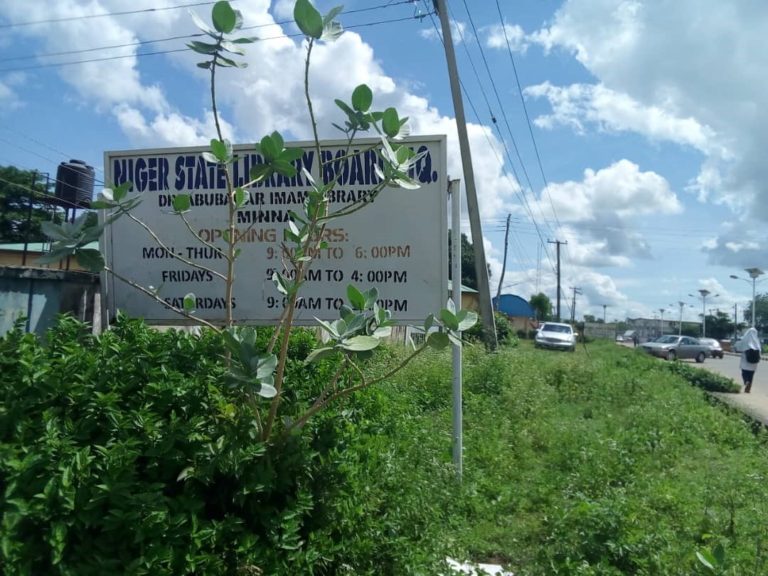
Pictures of dilapidated public library in Minna, Niger State. Credit: N-LISSA
Pictures of dilapidated public library in Minna, Niger State. Credit: N-LISSA
Pictures of dilapidated public library in Minna, Niger State. Credit: N-LISSA
The statement said: “We equally call on President of the Federal Republic of Nigeria, Muhammadu Buhari, the leadership of the National Assembly, the Chairman of the Governor’s forum, H.E. Kayode Fayemi, all state governors and politicians to intervene, rescue, and resuscitate public libraries in Nigeria and as well come up with sustainable policies that will ensure Nigeria’s libraries favourably fit in to the demands of 21st century libraries to serve the information need of all and sundry irrespective of one’s status, level of education, position, occupation, age, sex and information needs.”
IN response to the increasing incidents of suicide among Nigerians, a trend associated with consumption of poisonous substance such as Sniper, an agrochemical formulation, the National Agency for Food and Drug Administration and Control (NAFDAC) prohibited the sale of the product and other agricultural formulations’ brands in open market with effect from September 1.
This was part of the regulatory measures the NAFDAC put in place in July to arrest the abuse and misuse of the crop-protection chemicals by Nigerians who have committed suicide recently.
The news made headlines across the country and was welcomed by many.
NAFDAC with “immediate effect” prohibited the importation and manufacturing of 100ml park size of the agricultural formulations, and banned the sale of the product.
“NAFDAC is giving a two-month (up to 31st August 2019) notice to brand owners/distributors to recall and withdraw their products from open markets and supermarkets that do not have garden corner/shelves to the agro dealer outlets.
“The sales of Sniper insecticide and other Dichlorvos brands in open markets and supermarkets nationwide are prohibited with effect from 1 September 2019,” NAFDAC noted on item 3.
The agency also announced a mop-up exercise from September 1 of 100ml of the sniper products in open markets and supermarkets across Nigeria.
But when The ICIR visited some markets in Abuja between October 4 and 7, a month after the deadline, it observed that sniper products could still be bought in the market with no restriction. And the traders selling the products do not specialise in selling agricultural products.
This reporter visited five markets in different locations in the nation’s capital that include Wuse, Karimo, Dutse, Kuje and Garki, and sale of the poisonous product continues as usual.
Experience in the markets
On a Friday evening, September 4, exactly 34 days after NAFDAC banned the sale of snipers in the open markets, this reporter visited the Karimo market, a popular market in the city that is reputable for the sale of second-hand goods, ranging from shoes to clothes and bags.
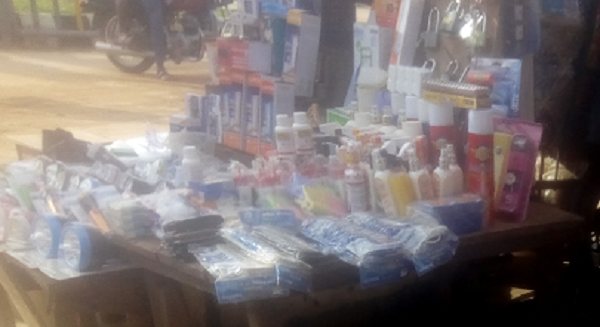
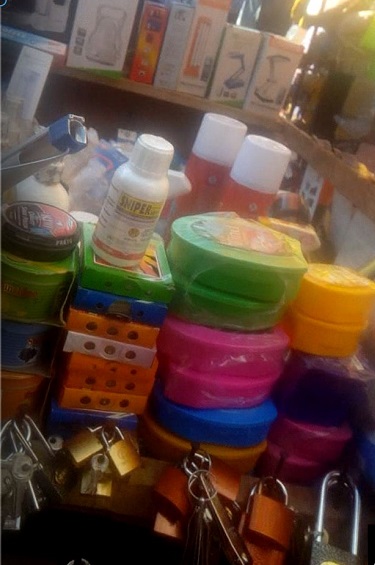
Sniper on display at Karimo market, Abuja on October 4.
The reporter did not even search for long before she saw 100ml Sniper product on display.
The shop owner had some other home-use products on display such as torch-lights, shoe polishes, air fresheners and toiletries.
The trader approached the seller and bought a bottle of snipper at N500.
‘It would work well, well,” the man boasted.
When told that the product has been banned, he seemed lost as he kept repeating the word “ban”.
Then, he quickly added “We dey sell nao” (We still sell).
The reporter approached another stall and bought another bottle of Sniper.
On October 6, the reporter visited the market in Kuje.
Roadside to the market is lined by petty traders who openly display Sniper products. The reporter bought a bottle from a man who did not see any reason to explain how to use the dangerous product.
A roadside petty trader displayed his goods, including two 100 ml of snipers, around A.A Rano Filling Station, Kuje on October 6.
The situation is the same at Dutse, Garki and Wuse markets
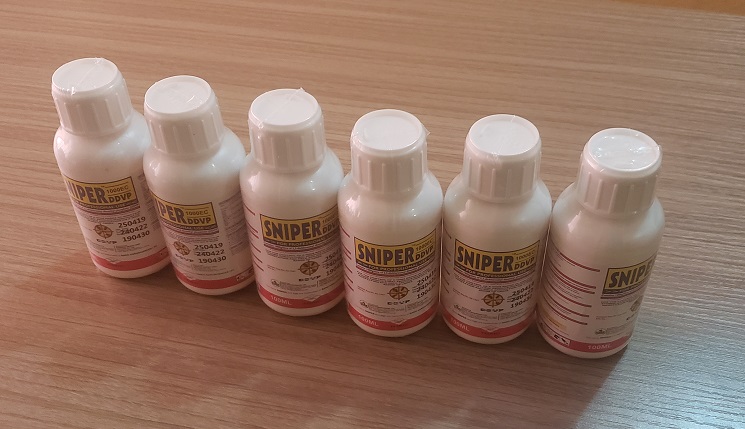
The reporter who visited the markets between October 5 and 7 October purchased a total of six Sniper products of the 100ml in five different markets where the prices ranged between N400 and N500.
Each of the bottles is inscribed with NAFDAC registration number and the same manufacturing date of April 25.
The warning “For professional use” was written clearly on the containers just below the brand name “Sniper”.
“For the control of a wide range of insects in stored agricultural produce. Warehouse de-infestation and field application on a wide range of crops” the containers clearly stated the use for professional fumigation in agricultural settings.
News of Sniper-related deaths traveled around the Nigerian community in 2019 as many who committed suicide chose the product to terminate their lives.
Though there was no official data about the number of people who abused the product, several stories have been published showing Sniper as a preferred poison for those who committed suicide.
Nigerians affected with the use of Sniper products
In May, Nigerians were disturbed with the death of ChukwuemekaAkachi, a budding poet and final year student of English and Literary Studies at the University of Nigeria, Nsukka. It was reported that he took his life after taking two bottles of 100ml sniper products.
100ml sniper product for sale at Dutse market on October 5.
Earlier in April, a 100-level student of the University of Port Harcourt, Rivers State, HikmatGbadamosi, allegedly committed suicide after taking two bottles of the sniper insecticide.
A month after, another final year student of UNN, Samuel Elias also died after ingesting sniper.
“As I looked around, I saw an empty sniper bottle; at this point, I raised the alarm and my other children rushed to the room and we tried to give him palm oil, but his tightened teeth did not allow the oil to enter his mouth,” Samuel’s mother narrated the account of her last moment with him.
Still, in June, Nigerians received the sad news of the death of a 21–year-old girl Christabel Omoremime Buoro who was a 300-level student of the Department of Medical Laboratory Science, University of Benin (UNIBEN).
Christabel had mixed the sniper insecticide with sprite drink to terminate her life, according to media reports.
A youth corps member serving in House of Assembly, Osun State, Ayomikun Juliana, died after allegedly applying the Sniper insecticide to her hair to kill the lice troubling her in July ahead of her birthday, which was in 10 days’ time.
“So, on Sunday afternoon, she just applied Sniper to her hair to eliminate the lice. Shortly after she did that, Ayomikun lost consciousness and was immediately rushed to a private hospital in Osogbo. But she died before she could get to the hospital, sources could confirm,” a close source had narrated.
In July, two students of the Obafemi Awolowo University, Ile-Ife, attacked each other with sniper products. they had poured the contents at each other’s face. Though they had not died but landed at the school health centre having developed poor health.
But OAU recorded the death of a student in August. Opeyemi Grace Dara, a final year student of the Departement of English who committed suicide after consumption of the common lethal substance.
A similar story occurred in September when a 25-year-old man, Kehinde Muse, committed suicide using Sniper as the means. “On Wednesday (September 18), at about 6:30 p.m., Surulere Police Station received information that one Kehinde Muse locked himself in his room and drank poisonous substance known as a sniper. He was rushed to a hospital, but died on arrival,” Police had confirmed.
Also, Adenike Fatai who was an apprentice tailor in Lagos committed suicide in September and the mother found her body saw a bottle of sniper lying by her side. Reports stated she had killed herself barely three months after her boyfriend, Bayo Atanda also committed suicide. What made both suicides a success was the consumption of the agrochemical formulation- sniper.
So, based on the media reports, between May and September, there were multiple reported cases of the abuse of sniper insecticide, resulting in death.
Because of the situation, the government decided to prohibit the sale of the products in the open markets. But the goods are still on the display in various markets, making the NAFDAC pronouncement ineffective.
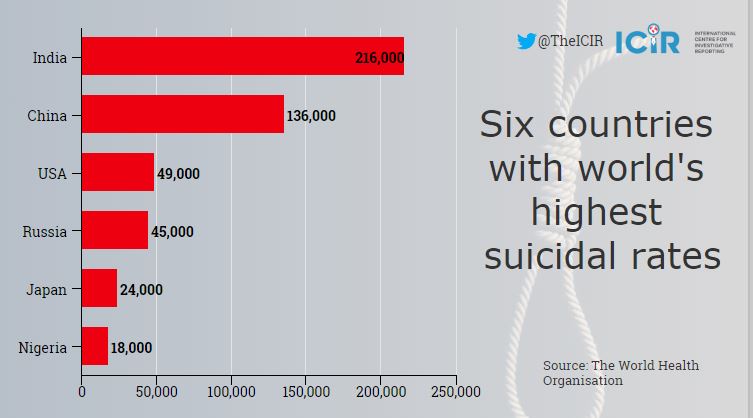
The World Health Organisation (WHO) report of Suicide in the World noted that Nigeria had the highest suicidal rate among African countries in 2016 with over 17,000 lives lost to suicide.
The report published in September named pesticide self-poisoning, which includes the use of Nigerian Sniper, hanging and shooting the three commonest methods by which people commit suicide.
Sniper damages the body when inhaled or consumed- pharmacist
A clinical pharmacist at the National Hospital Abuja, Joshua Eromosele, confirmed the high toxicity of the contents. He said sniper products contain a chemical called “an organo-phosphate”. The chemical, he said, brings about pesticidal action or the death of a pest.
It noted that if a human being is exposed to the liquid content, either through inhalation or consumption, it damages the body that could also lead to death.
“The damage of this particular chemical will result immediately,” noted Eromosele.
“When people inhale it, it affects the body,” he said criticising its use for residential purposes.
“When we talk about toxicology, we are talking about the route of exposure. Now the route of exposure can determine the extent of damage to anticipate. If ingested orally it is a different approach. If inhaled, it is a different approach. Some poisons are more effective when they are inhaled and they are not as effective when they are ingested.
“Unfortunately for a sniper, it is effective both ways,” he noted.
Some Nigerians use the products to control insects and reptiles residing in their houses though it was meant to be solely for agricultural purpose.
Outlining the side effects of inhaling the sniper, Eromosele said it causes drowsiness, unconsciousness, and could shut down the central nervous system.
An individual exposed to sniper when spray could have an inflammatory process occurring within the lungs where fluid begins to gather. And when fluid begins to gather in the lung area, it impairs oxygen transport, he added.
“And the antidote is not what we get in the first aid box. The person will have to require help in the clinical setting. That’s part of what makes it critical that it should not be used unsupervised,” he said.
If at all it is to be used in a residential house, it should be with extra care by a professional,” he noted.
We have started mopping up “persuasively”- NAFDAC spokesperson, Jimoh Abubakar
Dr Abubakar Jimoh, the Director of the Public Affairs, NAFDAC, claimed that the agency had started implementing all the measures when he spoke with The ICIR on Thursday in his office.
But he said the large population was a constraint for a 100 per cent compliance.
He added that the aspect of consequence or punishment against the sale would not be put in place until April 2020. This is because he said the measures were still in the “moratorium period”. Explaining the “moratorium”, he said NAFDAC will not prosecute individuals acting against the given measures until April 2020.
According to the Cambridge online dictionary, the word “moratorium” is a noun that means a stopping of activity for an agreed period of time.
Infographics credit: Rebecca Akinremi/ICIR
It should be noted that NAFDAC in the regulatory measures also promised to “mop-up of 100ml agrochemical formulation of Dichlorvos from open markets and supermarkets by importers, manufacturers and distributors and to be monitored by NAFDAC nationwide from 1st September 2019”.
When Abubakar’s attention was drawn to the above, he said the “mop-up” was a conciliatory one. “We are mopping up persuasively, conciliatory,” said Abubakar.
“We are combining this period of (the) moratorium with sensitisation activity. So by the time we start clamping down on people and start enforcing, nobody will claim ignorance,” he said.
Abubakar also supported the long-term enforcement of the measures by giving consideration to the livelihood of the traders involved in the sniper business.
“…it’s a source of livelihood for these persons (petty traders in markets). And the people who are even committing suicide, these people are not selling it for them to go and commit suicide. Don’t you understand!” he noted.
“They are doing their businesses to eat and feed. Much as we are regulatory agencies, we are also a product of the Nigerian society. When NAFDAC brings out regulatory measures, we look at the social consequences or cost.
We have a standard operating procedure. They would not just start impounding people goods. The agricultural purpose is still there.” he added to show how the agency still finds it difficult to enforce the restriction policy in preventing sniper-related deaths.
“Do you know that people jump into Lagoon? Would you rather put sand inside the lagoon so that people will not jump in it again? Even if they do that, … do you know people can use water to kill yourself (themselves).?”. Abubakar had narrated, implying that NAFDAC might not see the necessity in enforcing restrictions on the sale and availability of sniper and other agricultural formulations in the markets.
Later he added that the Agency would still “enforce but there is a period of moratorium”.
“Nigerians are very compliant people by the time they see consequences. As a regulatory agency, we have studied the pattern, And I am very confident that the distributors and the stakeholders are going to comply (by 2020).
“They would have understood why NAFDAC is bringing up those measures. Because by then, they would have understood it is saving lives and protecting the public,” Abubakar concluded.
During the World Suicide Prevention Day in September, the WHO had revealed that pesticide regulation would be a “highly effective strategy” in curbing the suicidal actions. It added that such restricting access to pesticides that are used for self-poisoning would bring down the number of suicides.
“There is now a growing body of international evidence indicating that regulations to prohibit the use of highly hazardous pesticides can lead to reductions in national suicide rates,” WHO stated.
The ICIR poured away all the six bottles of the sniper products bought in the course of doing this story. The 100 ml bottles containing liquids that looked almost like water safe for its offensive odour and toxicity were all emptied in a sink.
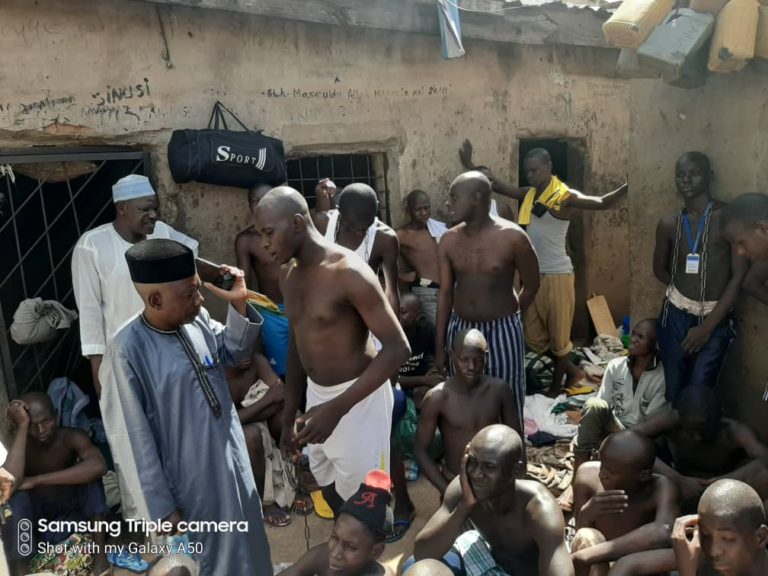
MORE than 300 children and youths have been rescued by the Nigerian Police from a small building called “reformation centre” at Sabon Gari area of Daura, Katsina State, where the victims were subjected to abuse, sexual assaults and serious tortures.
This is coming less than three weeks the Police rescued about 500 boys and men from a building in Kaduna where victims were exposed to similar inhuman treatments.
Gambo Isa, Katsina Police spokesperson, who confirmed the discovery to The ICIR on Monday said the small mud house was meant to be a reformation centre for individuals with character deformation. But it had to raid the place after children who “miraculously” fled the centre raised an alarm for excessive abuses.
Isa said some of the rescued people, aged between 7 and 40 years old, were found in chains, some were handcuffed.
The victims had suffered health complications having being subjected to poor sanitation. The children, said Police, were taken to the hospitals immediately to receive prompt medical attention for malnutrition and rashes, among other treatments.
He explained such reformation centres are often seen in the North. Some parents do take their children to religious centres when they engaged in any kind of misbehaviours which include drug addiction and stealing.
“This is something that has been the tradition in this side of the North,” said Isa.
However, the Police were prompted to raid and shut down the 40-year-old “reformation centre” after it received reports on several human rights violation.
“In a small room, you put over 300 people, and you say you are rehabilitating them,” Isa told The ICIR. “This is nothing like rehabilitation,” he added.
The Katsina Police said there were so many complications including sexual harassment among the inmates, lack of social amenities and some children were chained on their legs and hands.
Eight people were arrested having been suspected to be coordinators of the centre.
Isa said the police have started tracing the victims’ families to reunite them.
Faruk Faruk, the emir of Daura who was shocked at the discovery charged the police to carry out a thorough investigation on the matter.
He said it was a surprise for such a thing to happen in his domain. The Emir asked for “fair and just investigation” so that culprits can face appropriate sanctions.
THE African Development Bank, (AfDB) in partnership with the Climate Investment Funds (CIF), has commissioned the Coalition for Green Capital (CGC) to prepare a study on the creation of national climate change funds and green banks in Africa.
CGC will identify and work with six African countries to conduct feasibility studies for the project, which was initiated at the Green Bank Design Summit held in Paris March 2019. The Summit tasked 23 developing countries to craft a new model to mobilise and accelerate investment in clean energy.
Andrea Colnes, Director of Global Green Bank Development at the CGC noted: “For countries to better access climate finance and fully engage the private sector, the climate finance system must reorient toward national financial capacity that is able to channel capital to projects and markets where it is needed most.”
When paired with effective grant programs through National Climate Change Funds and strong enabling environments and policies, locally-based Green Banks are powerful tools to address market needs, understand local risk and drive private investment.
Dr. Anthony Nyong, the Bank’s Director for Climate Change and Green Growth welcomed the collaboration.
“Green financing vehicles are increasingly recognized as a powerful instrument to mobilize private sector capital for low carbon and climate resilient development. Their ability to access even limited amounts of local currency finance presents significant opportunities to manage risk, attract concessional finance from climate funds and crowd in private sector finance,” Nyong said.
“We are excited to work with the team from CGC and look forward to presenting progress reports at the Green Bank Summit in 2020 and COP26,” he added.
Green Banks and National Climate Change Funds can play an important role in mobilizing finance to support low-carbon, climate-resilient development, using methods such as blended finance to drive increased private investment.
Countries can mobilize funds from diaspora, national financial institutions, private investors, asset managers, sovereign wealth funds, and more. These instruments and funds can support the implementation of Nationally Determined Contributions (NDCs), CIF Investment Plans, CIF Strategic Plans for Climate Resilience and NDCs, and progress towards Sustainable Development Goals (SDGs).
TWO months after President Muhammadu Buhari passed a law that changed the name of the Nigerian Prisons Service to the Nigerian Correctional Services, The ICIR observes that the agency’s website does not reflect the name change.
On August 14, Buhari signed the Nigerian Correctional Service Act, which repealed the Prisons Act, addresses new issues, and provides for non-custodial measures in the country.
According to Ita Enang, Senior Special Assistant to the President on National Assembly Matters, one of the effects of the new law is to change the name of the agency in charge of prison operations to Nigerian Correctional Service.
Two Kuje: Kidnapped civil defence officers, others freed after N5 million ransom paymentmonths after the president’s assent, however, the agency has still not updated information on its website in line with the government’s plan “to reflect the current thinking on rehabilitation and treatment of inmates”.
The new name is not available anywhere on the website despite the fact that it was last updated on October 2, according to Whois Lookup.
A screenshot of the Nigerian Correctional Services’ Admin. Structure home page taken on Monday
The phone of the site registrant, Agi Edegi, was not available for calls and a text sent to her phone on Monday has not been replied as at the time of this report.
Meanwhile, the exterior of the Service’s headquarters now wears a new look as sanctioned by the law. The name of its Twitter account has also been updated but the information on its logo is out-of-date. A minibus donated to it by the Anambra State Government in October though branded “Nigeria Correctional Service” is also imprinted with the old logo.
A look through the proposed 2020 federal budget presented to the National Assembly last Tuesday shows that the name of the agency has been updated.
There is, however, no provision in the 2020 budget for the rebranding of offices, properties, and other materials.
KINGSLEY Moghalu, former Deputy Governor of the Central Bank of Nigeria (CBN) and the Presidential Candidate of the Youth Progressive Party during the 2019 presidential election has resigned from his political party, calling for electoral reformation that would strengthen the country’s democracy.
The professor of International Business and Public Policy at the Fletcher School of Law and Diplomacy, Tufts University in Massachusetts of USA, made this known on his Twitter handle on Monday.
He said Nigeria should embark on electoral reform, voter education for an informed electorate and constitutional restructuring to fix the loopholes in the electoral processes.
“If we can agree on these, all else can follow.
“Nigeria today is approaching its moment of reckoning. We need to focus on solving our problems at their root causes,” said the former United Nations staff.
Also, he noted that electronic voting should be considered in Nigeria to make subsequent elections strong.
Without electoral reform, our democracy will remain weak- Moghalu.
If the democracy were given real meaning, according to him, Nigerian youth would have no excuse not to vote.
Young people should lead the charge for electoral reform, he added. “With nearly 70 per cent of Nigeria’s population, Nigeria’s future is young.”
Moghalu urged people to join a non-partisan movement tagged “To Build A Nation” as he said partisan politics would not fix Nigerian’s problem.
Moghalu during the recently concluded election had a total vote of 21,866 of the more than 27 million votes. He had not secured up to 0.1 per cent of the votes in the election.
AFTER the Federal Government’s decision to partially close the western border, and the Nigeria -Niger entry point, the Nigeria Customs Service (NCS) on Monday disclosed that the nation has so far saved N1.4 billion as a result of the policy.
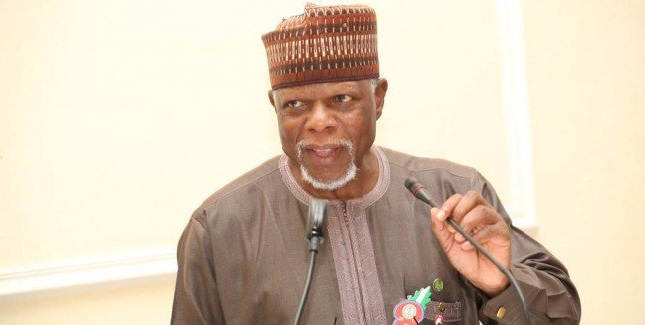
Colonel Hameed Ali (rtd), the Controller General of Customs, disclosed this at a briefing in Abuja. He also announced that 317 suspected smugglers and 146 illegal migrants have been arrested within the period.
In a report by Channels, Ali had insisted on the partial border closure adding that the federal government decision has so far yielded anticipated outcomes, despite its effect on the price of imported rice which had significantly increased from N15, 000 to N21, 000 within two months.
He noted that the nation’s consumption of petroleum products has also dropped by 10.2 million litres.
The border was suddenly shut on 19th August after several reported cases of smuggling of agricultural commodities such as rice, tomatoes and livestock.
As a result, the Beninois as well as the regional body, Economic Community of West African States (ECOWAS) has continued to lament effect of the border closure.
Patrice Talon, the President of Benin had in August, during the side-line of the Seventh Tokyo International Conference for African Development (TICAD7), in Yokohama, Japan, pleaded with President Muhammadu Buhari over the border closure.
But Buhari has remained resolute in his decision. Rather, he explained that the nation has already invested so much in reviving its agriculture sector, yet arbitrary importation continued.
“Now that our people in the rural areas are going back to their farms, and the country has saved huge sums of money which would otherwise have been expended on importing rice using our scarce foreign reserves.
“We cannot allow smuggling of the product at such alarming proportions to continue,” Buhari stated.