Home Blog Page 2295

We must act responsibly and stop disseminating fake videos….— Ramaphosa warns countrymen

0

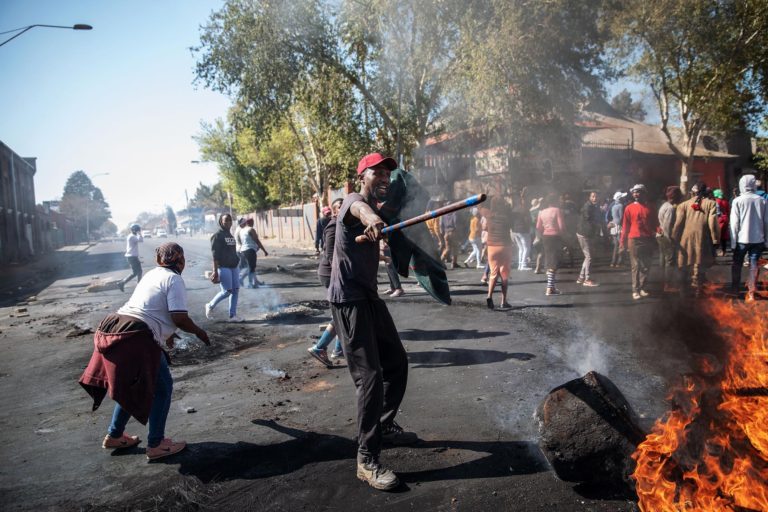
The South African government has issued a strict warning regarding the spreading of misleading information on social media about the recent xenophobic attacks

South Africa President, Cyril Ramaphosa in a tweet warned against spreading old and misleading videos on social media, stating that fake news about the protests could see social media users prosecuted.

Ramaphosa said the misinformation was sowing further conflict and called on people to stop fuelling a climate of fear and confusion.

“We must act responsibly and stop disseminating fake videos, photographs and messages, especially on social media, with an intention of negatively portraying our country and its people,” he said.


READ ALSO:

The South Africa president further warned that creation or distribution of false videos, pictures or messages could open users up to prosecution.

“Government urges vigilance about social media messages that contain alleged warnings of planned violence against foreign nationals. Creation and distribution of such messages potentially open social media users to prosecution, as fake messaging intends to instill panic and cause disorder.”

“Recycling old video material on social media, as well as ‘war talk’ by certain individuals, only seeks to fuel tensions between South Africans and other Africans. The police will continue their work to restore order and government urges all law-abiding citizens to work alongside SAPS (South Africa Police Services) to isolate these criminals,” he added.

Meanwhile, the number of Nigerians willing to leave South Africa has risen to 640.

In a report by The PUNCH, the Chairman, Nigerians in the Diaspora Commission, Abike Dabiri-Erewa, who confirmed the number in Whatsapp chat said the intending returnees would be evacuated from South Africa by Air Peace in two flight operations.

“Six hundred and forty Nigerians have registered to come back home from South Africa and Air Peace will transport them home in two operations,” she stated.

South Africa in recent days has seen a spread of xenophobic attacks across the country, killing at least 10 and destroying the livelihoods of foreign nationals, especially Nigerians.

Attacks in South Africa against foreign nationals are not new.

Datas from Xenowatch, the website, which tracks such incidents, state that more than 500 attacks occurred between 1994 and 2018.

Nigeria has highest suicide rate in Africa, sixth globally

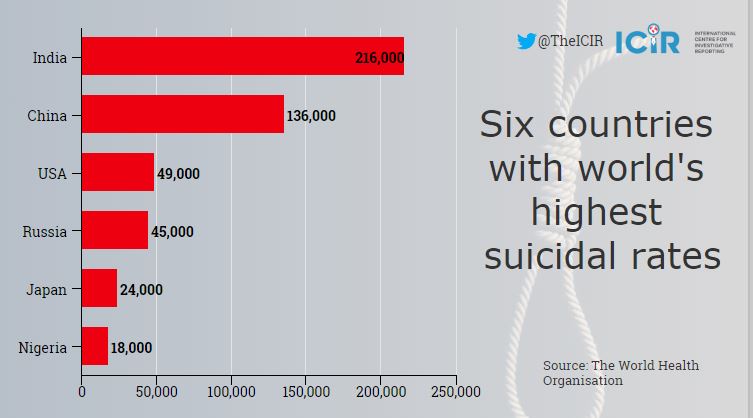
THE World Health Organisation (WHO) has revealed that Nigeria has the highest suicidal rate among African countries in 2016 with over 17,000 lives lost to suicide.

In a new  report that estimated the cases of suicide globally, WHO noted that, across the world one person takes their life every 40 seconds.

The report was titled, “Suicide in the World: Global Health Estimates.” It was released on Monday ahead of the World Suicide Prevention day coming up on Tuesday.

Hanging, pesticide self-poisoning and shooting were the three commonest methods by which people commit suicide, the report reveals.

Giving the global estimates, it noted that about 800,000 people die every year by the act. 

For Nigeria, WHO said 17,710 cases of suicide were recorded in 2016 at all ages. 

Of these number of cases, 8,410 were females while 9,300 were males.  The percentage ratio of men to women was 53:47.

The figure puts Nigeria as the leading country in the African region. It was followed by Ethiopia and South Africa with 7,323 and 6,476 cases respectively.

However, there are other countries that reported very high cases of suicide. 

In the world,  the top five countries were being led by India with more 2,15 000 cases in 2016, followed by China that had a total of 136,267 cases. 

The other three countries are America, the Russian Federation and Japan. Nigeria followed Japan being the sixth highest globally.

“Suicide is a serious global public health issue. All ages, sexes and regions of the world are affected (and) each loss is one too many,” the WHO’s report said.

Suicide rate highest in high-income countries was the second leading cause of death among young people aged between 15 and 29 years, after road injury. 

And among teenage girls aged 15 to 19, it was the second biggest killer after maternal conditions. In teenage boys, suicide ranked third behind road injury and interpersonal violence.

“Every death is a tragedy for family, friends and colleagues. Yet suicides are preventable. We call on all countries to incorporate proven suicide prevention strategies into national health and education programmes in a sustainable way,” said WHO Director-General, Tedros Adhanom Ghebreyesus.

“Progress in suicide prevention activities in some countries, but much more is needed.”

Outlining some strategies to adopt, WHO cited pesticide regulation as a “highly effective strategy” to be used in curbing the rate. It added that such restricting access to pesticides that are used for self-poisoning would bring down the number of suicides.

Key interventions that have shown success in reducing suicides are restricting access to means and educating the media on responsible reporting of suicide.

“There is now a growing body of international evidence indicating that regulations to prohibit the use of highly hazardous pesticides can lead to reductions in national suicide rates,” the report stated.

Other interventions the globally health body proposed were to implement programmes among young people to build life skills that enable them to cope with life stresses and to identify early, manage and follow-up people at risk of suicide.

The rate of suicide is by no means ceasing in Nigeria as the country has recorded not less than 42 cases as of June 2019, according to media reports.

The major method used in the self-killing was the intake of snipers, a local insecticide used to mortalise rodents such as rats and for agricultural purpose.

In reaction to the suicide spree among the youths in Nigeria early this year, the National Agency for Food and Drug Administration and Control (NAFDAC) banned the hawking of agro-chemical formulations which include sniper in open markets and supermarkets nationwide. It stated that their sales in those markets were prohibited from September 1.

But, it is yet to be proven if snipers and other pesticides are out of the Nigerian open markets and supermarkets.

Nigerians willing to return home from SA should be immediately evacuated—Buhari

0

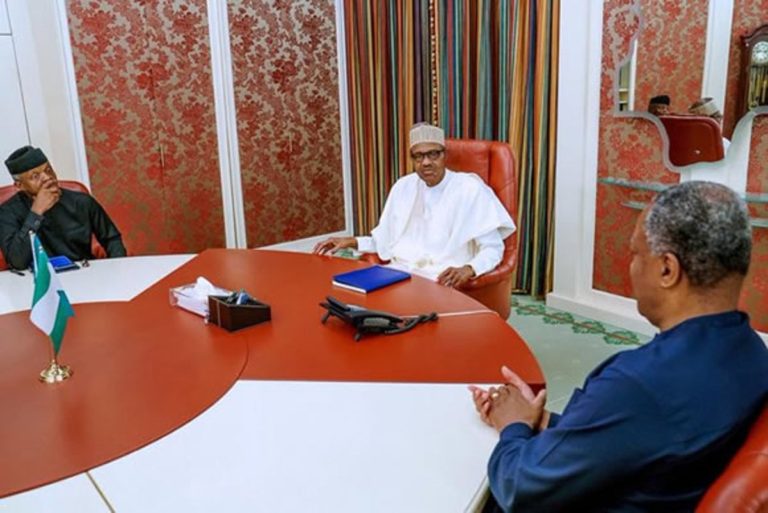
PRESIDENT Muhammadu Buhari has directed that Nigerians who opt to return home from South Africa due to the prevalence of xenophobic attacks should be evacuated “immediately”.

According to the presidential Special Adviser on Media and Publicity, Femi Adesina, president Buhari gave this instruction on Monday after receiving a report from the special envoy sent to the Southern African country in the wake of xenophobic attacks.

The press release did not, however, mention how the evacuation is to be done or whether the federal government will bear the costs.

Buhari also instructed the Minister of Foreign Affairs, Geoffrey Onyeama, to keep engaging with the right authorities “on the concrete measures the South African Government is expected to take”.


READ ALSO:

Ahmed Rufai Abubakar, Director-General of the National Intelligence Agency, was the president’s special envoy. He was in Pretoria between Thursday, September 5, and Saturday, September 7, to convey Buhari’s message to South African President Cyril Ramaphosa.

Abubakar stated in his report that he conveyed Buhari’s and Nigerians’ deep concern about endless violent attacks against Nigerians and their properties.

“President Buhari stressed the need for South African Government to take visible measures to stop violence against citizens of brotherly African nations,” the report also stated.

“President Buhari is worried that the recurring issue of xenophobia could negatively affect the image and standing of South Africa as one of the leading countries on the continent, if nothing is done to stop it.”

Abubakar said he delivered Buhari’s message assuring the South African government of Nigeria’s readiness to partner in finding a solution to “the involvement of few Nigerians in criminal activities, and to protect the lives and property of the larger groups of other law-abiding Nigerians … against all forms of attacks including xenophobia”.

“President Buhari further assured that the Nigerian Government will guarantee the safety of lives, property and business interests of South Africans in Nigeria,” the release said.

“On his part, President Ramaphosa agreed that the violence was most disconcerting and embarrassing, adding that his government completely rejects such acts, which undermine not only the country’s image but also its relations with brotherly African countries.

“President Ramaphosa reaffirmed his stand against criminality and committed to do everything possible to protect the rights of every Nigerian and other foreign nationals in the country.”

FACT CHECK: Solar panel factory in Borno State not Africa’s ‘biggest’ for production capacity

POPULAR Twitter account Africa Facts Zone repeated a widespread claim in August 2019 that Nigeria’s Borno State has the “biggest” solar panel factory in Africa.

In April 2019, the state’s former governor, Kashim Shettima, unveiled an automated solar panel manufacturing plant in the state. Shettima left office in May 2019.

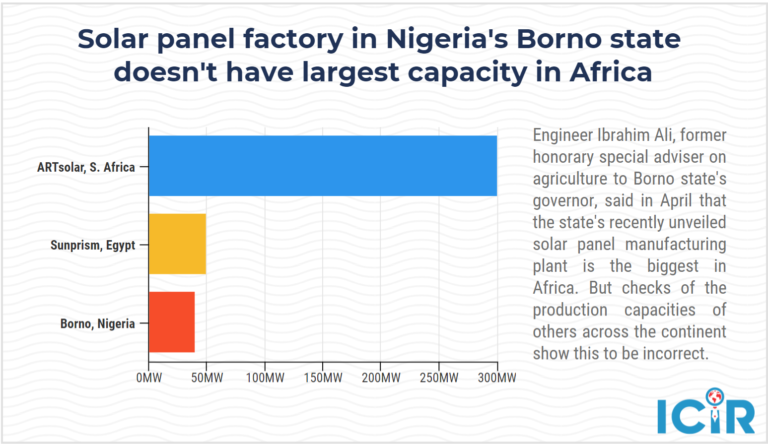
“It is Africa’s biggest and is fully automated,” Ibrahim Ali, the official in charge of executing Shettima’s industrialisation policy, reportedly told newspaper Daily Trust at the time. “Each year, we would have an aggregate of 40 megawatts.”

The claim by Ali, a former minister for petroleum, was then repeated on other major news platforms, including Nigeria’s GuardianLegit NG, and PM News. It was also shared on Twitter by the federal ministry of environment and the personal assistant to the president on social media, Lauretta Onochie, among others. 

Two plants able to produce more

Africa Check asked special assistant to the state governor on new media, AbdulRahman Ahmed Bundi, to clarify what Ali meant by “biggest”, but the email address Bundi gave bounced.

Spokesperson for the South African Photovoltaic Industry Association, Vuyo Ntoi, told Africa Check there are different metrics by which to judge the size of a solar panel factory.

“It could be about revenue, the number of employees, floor space or the size of the machines,” Ntoi said, adding that the capacity of solar panels sold – in kilowatt or megawatt – is most commonly used. “There are probably lots of places on the continent that make photovoltaic panels but those that do at industrial levels are few and far between.”

Ntoi referred us to South African factory ARTsolar that was set up in 2010 in Durban. Zubair Ali, a project engineer at ARTsolar, told Africa Check the factory is able to produce up to 300 megawatts per year.

Sunprism Energy Technology, a solar panel manufacturer in Cairo, Egypt, says on its website it has a “production capacity of 50 megawatts per annum”. The company’s financial manager, Amr Abu Ali, confirmed this figure to Africa Check.

Both these African factories therefore have a larger production capacity per year than Borno State’s new plant is reported to have.


This fact-check was produced as part of an Africa Check fellowship completed by ‘Kunle Adebajo, a journalist at Nigeria’s International Centre for Investigative Reporting.

Xenophobia: One killed, five injured in new South Africa violence

0

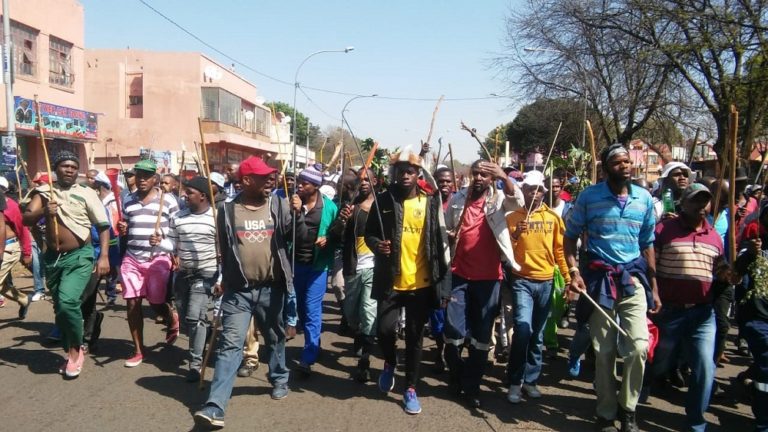
At least one person was killed on Sunday in a fresh Xenophobic attacks in Johannesburg, South Africa Police said.

According to News 24, the victim was stabbed with a sharp object at a corner of Bree and Plein streets in Johannesburg.

Police could not immediately confirmed the identity of the man killed in the fresh attack.

Gauteng police spokesperson, Captain Kay Makhubele, also confirmed that five people had been injured.

A group of men, some of them wielding sticks, pangas and tree branches, marched through the city centre after disrupting a meeting in which IFP President Emeritus Mangosuthu Buthelezi spoke to hostel residents following a week of deadly xenophobic violence.

Makhubele said 16 people were arrested for public violence and possession of stolen property.

Several shops were forced to close their doors as the protesters damaged property and looted several businesses.

Brigadier Mathapelo Peters has confirmed that the situation in the CBD, Jeppestown and Hillbrow was “under control”.

“Police have heightened visibility since this afternoon and will continue to monitor the area to ensure that no further incidents of violence erupt,” Peters said.

Shops and properties of foreign nationals, especially Nigerians were last week looted and destroyed.

This made Nigeria, Rwanda and Malawi to pull out of the World Economic Forum, held in South Africa.

Zambia and Madagascar cancelled an international friendly match with South Africa over the violence.

Eleven people had been reported killed in the violence over the last week.

U.S court discharges NNPC of $2.7b debt to Shell, ESSO

0

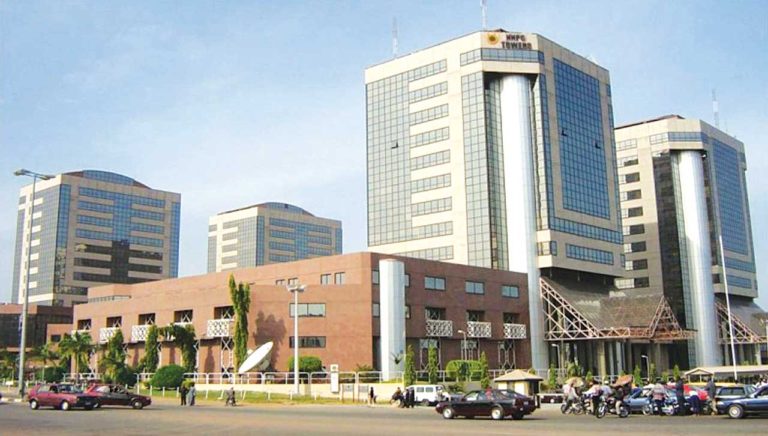
U.S. Southern District Court of New York has delivered judgment in favour of the Nigerian National Petroleum Corporation (NNPC) against ESSO Exploration and Production Nigeria Limited and Shell Nigerian Exploration and Production Company Limited (collectively ESSO).

Ndu Ughamadu, the Spokesman for the corporation, made this know in a statement issued on Sunday in Abuja.

Ughamadu in the statement recalled that a court hearing was held on February 1, in the protracted litigation arising from the disputes between NNPC and ESSO regarding the implementation of the Production Sharing Contract dated  May22, 1993, covering OPL 209/OML 133.

He explained that ESSO referred its claims to arbitration in Nigeria and obtained an Arbitral Award of 1.799 billion dollars on  October 24, 2011, with annual interest running at LIBOR plus 4 per cent.


READ ALSO:

NNPC challenged the award at the Federal High Court, Abuja, which in May 2012, ordered that the Arbitral award be set aside.

Notwithstanding the decision of the Nigerian Court, ESSO applied to the United States District Court, Southern District of New York for recognition and enforcement of the Arbitral Award.

NNPC challenged ESSO’s application on the ground that there was no Award, which the US Court could enforce as a competent Court in Nigeria had since set aside the Award.

NNPC also contended that there was no legal basis for the US Court to exercise jurisdiction over it as it had no presence in the United States, owned no property and does not conduct its businesses therein.

ESSO contended that NNPC is the alter ego of the Federal Government of Nigeria, owned assets in the USA including bank accounts and also conducts businesses in the USA.

ESSO obtained the leave of Court to Conduct Jurisdictional Discovery to ascertain if the US court could assert personal jurisdiction over NNPC.

At the close of the Discovery Procedure, the Court ordered NNPC and ESSO to appear for an oral hearing, which was held before Honourable Judge W. H. Pauley on February 1, for parties to canvass their respective positions.

On September 4, the US Court delivered its Judgment by which it upheld the Corporation’s Application to Dismiss ESSO’s Enforcement Application on the ground that a competent Nigerian Court had set aside the underlying Award.

It also directed the Clerk of the Court to terminate and discontinue all motions and processes filed by ESSO in the matter.

“By this development, NNPC has successfully secured the dismissal of ESSO’s application to secure recognition and enforcement of its Arbitral Award valued in excess of US$2,699,405,616 plus interest.

“The effect is that ESSO, who had sought the Order of the US Court to enforce the said Award, has lost the right.

“While ESSO is at liberty to appeal this decision, NNPC is optimistic that its case on appeal is very strong.

“This is a significant decision in the history of this case as the US Court has not only discharged NNPC from any indebtedness to ESSO but also set the stage for NNPC’s pursuit of the challenge of three other outstanding Enforcement Applications filed in the US Court by other PSC Contractors,’’ Ugahmadu said

He also said that the decision of the US Court would lend weight to the effort of NNPC and the PSC Contractors to explore amicable resolution of underlying PSC disputes.

NNPC was represented by the US law firm of Messrs. Chaffetz Lindsey LLP and the Nigerian law firm of Messrs. Streamsowers & Kohn.

(NAN)

Xenopobia: Attacks against criminals not Nigerians – Thabo Mbeki

0

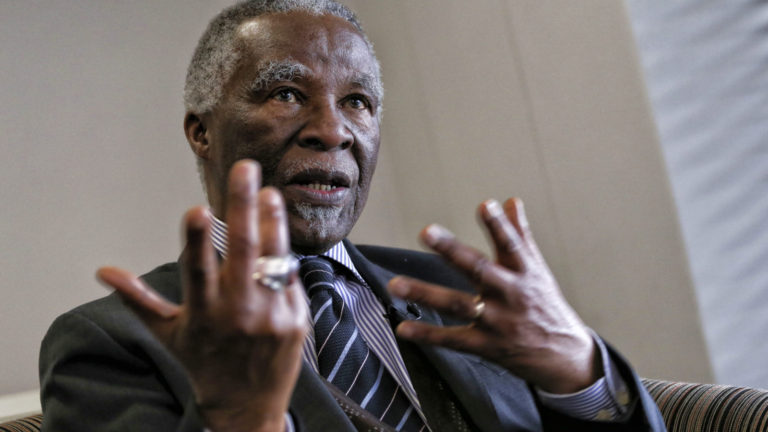
Former President of South Africa, Thabo Mbeki has said that the recent xenophobic attacks against foreign nationals in the country were targeted at criminals and not Nigerians.

Nigerians and other foreign (African) nationals early this month had been the targets of xenophobic attacks in South Africa, after a taxi driver was killed by an alleged drug dealer in Pretoria.

Businesses of foreign nationals in suburbs of Johannesburg and surrounding areas were looted and burnt.

Mbeki reacting to the incident in a now viral two minute video published on social media by Africa Facts Zone on  September 7, 2019 said the recent violent demonstration was targeted at criminals.

He also said no South Africans will go looking for Nigerians to attack in the former apartheid country.

“The truth of the matter is that there are Nigerian criminals, who are involved in drug dealing, and that’s true. There are Nigerian criminals who are involved in prostitution and that’s true, ” Mbeki said.

“And you will find, like in this incident now in this area of Johannesburg, it was against criminals not Nigerians.

“There is no South African that goes around chasing Nigerians because they are Nigerians, it doesn’t exist.”

“They act against any person our children with drugs and destroying lives whether South Africans or Nigerians. When they report to the police and the police don’t act, the community take the law into it hands.”

“It is incorrect to read that there’s been an offensive against Nigerians in South Africa,  that is not true. So, I am saying when you talk about xenophobia and afrophobia we need to be very careful about it.”

Naledi Pandor, South African International Relations and Corporate Minister had earlier said “many Nigerians in South Africa are into drug peddling, human trafficking and other vices that hurt her nation.”

Pandor while granting an interview to a South African news platform, eNCA, said needed the help of the Federal Government of Nigeria to curb crimes in their country.

The Minister said, “Help us address the belief and the reality that our people have that there are many persons from Nigeria, who are dealing in drugs in our country, who are harming our young people by making drugs easily available to them.

“There is a belief that Nigerian nationals are involved in human trafficking and other abusive practices. This kind of assistance in ensuring that such people don’t come to our country would be of great assistance to our nation.”


OPINION: Gov. Makinde’s 100 Days score-card….

0


By Bolanle BOLAWOLE

I religiously read Gov. (Engr.) Seyi Makinde’s “100 Days: Restoring glory to Oyo state” published to mark his first 100 days in office, a rite that came with the introduction into Nigeria of the America-styled presidential system of government.

Tell the youthful and energetic governor to pardon me if I did not include his other titles; he must be a Chief; so, Gov. Engr. Chief Seyi Makinde and whatever else! Our people, especially so, our leaders, love titles, big, big titles, except Makinde is the different kettle of fish he claims to be. I also read his Chief Press Secretary, my brother and professional colleague, Taiwo Adisa, on the same 100 days.

It is not all the time that a governor writes. Most governors feel too big to write. That is a job for the “press boys” – and they have them aplenty. Virtually all governors are damn too busy to find the time to put pen to paper. The truth, however, is that only a few of them are qualified to write. There is high illiteracy level in the ranks of our leaders, the pomp, colour and razzmatazz around them notwithstanding.

So, it is always with pleasure that we see one big man who writes, especially when it is noted that the writing is original and not one of those drab “press statements” or commissioned write-ups by consultants and speech writers. Reading Makinde’s “100 Days”, it appears to me to have been personally scribbled by Makinde, even if anyone else crossed the t’s and dotted the i’s afterwards.

Makinde said he chose to “celebrate” his first 100 days in office not as others do but to see how far he has matched action with words. He made campaign promises and wanted himself and us to see how far he has kept faith with “we the people.”

In this, he differs dramatically from President Muhammadu Buhari and his All Progressives Congress(APC) who made campaign promises which they later denied.

Recently, social media was awash with campaign statements and promises made by Buhari, which has been honoured in their breach – all of them without an exception! It is noteworthy that Makinde is a PDP governor, the only one in the South-west.

Politicians who make promises but spurn them after winning elections are the ones who give politicians a bad name and politics an ignoble reputation. You must have heard the saying “politics is a dirty game” That Makinde chose to be different is salutary. That Makinde is bold enough to ask us to hold his feet to the fire; that he is holding himself accountable to his campaign promises and is not saying “that was politics”, like the unconscionable others do, is an achievement. I agree with him. Achievement number one!

I remember reading when Makinde publicly declared his assets. I think it was a whopping N48 billion and some shameless APC politicians started asking him to explain how he came into his riches rather than burying their head in shame and shutting up their stinking mouth.

Buhari made the promise of public declaration of assets in 2015; he failed to keep the promise. They said all their appointees would declare their assets publicly but they recanted. As they say, if gold rusts, what will silver do? If Buhari will not publicly declare his assets; if his VP, “Man-of-God” Yemi Osinbajo, will not, why should we expect others to do so? A good start by Makinde, no doubt, but he should now take the next step of compelling all his appointees to also publicly declare their own assets.

In saner societies, public declaration of assets or unrestrained access to the assets declared by public office holders will be routine but this is Nigeria, a country of the blind leading the blind and where the one-eyed is king! As witnessed in the case of ex-CJN Walter Onnoghen, assets declaration is a vicious weapon in the hands of the powers-that-be against perceived opponents.

Makinde touted the appointments he made as outstanding. We are yet to see that! As they say, the taste of the pudding is in the eating. People may look good on paper, with all the requisite (paper) qualifications and cognate experience but performing on the job is something else.

Has the governor put square pegs in square holes? Performance on the job and delivering the deliverables will show! Action, as they say, speaks louder than words. I am, however, particularly interested in Makinde’s promise that his youthful Commissioner for Youth and Sports would turn around the fortunes of Shooting Stars Sports Club. I was a fan of Shooting Stars, supporting it all the way against the likes of Rangers International. Up Shooting! Sadly, no more! If Shooting Stars can be returned to its glory days, I will lionise Makinde, regardless of the uproar that greeted his nomination of the youthful Commissioner. So, achievements claimed by Gov. Makinde in this category still hang in the balance like an unripe fruit which cannot yet be plucked and eaten – unless Makinde wants to eat unripe bananas! Verdict: Work in progress!

Another achievement claimed by Makinde is in the area of education. All the fees he has cancelled and their salutary effects on the lives of the people were mentioned here; not forgetting to mention his renovation of Adeoyo Hospital, Yemetu; pensions paid; bursary awards, and committees set up to look into this or that.

Nigeria is one country where setting up of committees is counted as an achievement. We have seen this, ad nauseam, with the past PDP/Goodluck Jonathan and the sitting Buhari/APC administration where a committee is set up to review the findings of another committee, which then has a committee to review its own findings, ad infinitum! In the end, all the committees’ reports are left on the shelf to gather dust.

Was that not the tardiness that got the country having a 9.6billion US dollar judgment-debt hanging around its neck right now? Makinde will be well advised not to fall into same pit. Committees are nothing until their reports – good, excellent reports addressed to issues and solving identified problems – are scrupulously implemented. It is salutary, however, that he has increased education budgetary allocation from a measly three percent to 10 percent. Yet, it is still way below the 26 % (?) threshold recommended by UNICEF. Work in progress!

With corruption a bane and federal EFCC a ruse, I commend Makinde for plans to set up the Oyo State “EFCC” to promote openness, transparency and accountability in government. Ex-Gov. Ayo Fayose of Ekiti State acted similarly while in office. With corruption running riot and impunity rife all over the place, we go nowhere as a nation or people. No meaningful development will take place in an atmosphere of unbridled corruption and shameless lawlessness.

However, having the law is one thing, its implementation is another. Makinde must lead by examples. The good thing about corruption is that it cannot be perpetrated alone. Governors don’t sign the cheque books of their State; how come they are able to steal billions? They are aided by thieving civil servants, contractors and a coterie of aides and appointees. Those who help our leaders to launder money usually are not government appointees.

Therefore, once a governor is caught in the web of corruption, that fact is known and this knowledge soon spreads. It cannot be covered or hidden. And, as they say, a fish gets rotten from the head. He who comes to equity must come with clean hands. Unless Makinde eschews corruption, he should forget about Oyo EFCC. Mark my words: If Makinde puts his hands into corruption, before his first term ends, it will be public knowledge. And that will ruin whatever good name, reputation, and integrity he has built over the years and which he has now brought to the table. Work in progress!

In the South-west of today, security or, better still, insecurity is a vexed issue. It had not been so in times past. The tardiness of past governments in the zone and the deliberate policies of destabilization propounded, expounded, encouraged, supported and executed outside of the zone have brought insecurity to the region.

Therefore, no South-west governor can close his eyes to the insecurity issues that today bedevil the zone. But people want to see results; not endless and fruitless meetings, important and indispensable as these may seem. So, Makinde and the others will have to move real fast and bring the volatile security situation in the zone under control.

We have heard again and again of the Development Agenda for Western Nigeria (DAWN). They wine and dine with South-west governors. It would appear that’s all there is to DAWN! So far, at least to the best of my knowledge! I also do not think States should fund the police, a federal agency. Let the FG fund its agency or fold it up and allow the States have their own police.

The lie from the pit of hell that States cannot maintain State police is sustained by States who are blackmailed into funding the police. Makinde and other governors who fund the police are shooting themselves in the foot. That way, they help the FG to cover up its inadequacies while yet maintaining that States are not ripe for State police. Bunkum!

The foundation Makinde is erecting for Oyo to become investment destination of choice gladdens my heart. Whereas I live and work in Lagos and am from Ondo state, Oyo also has been home to me. I moved there in 1976, two years after secondary school (when it was still old Oyo state), and lived at Ede, worked at Osogbo, schooled at Ilesa and Ife; did NYSC as well as attended Graduate School at Ibadan, and also worked there briefly before transferring to Lagos.

I will never forget that I cut my journalistic teeth at Sketch Press Limited, Ibadan. As they say, the river that forgets its source will dry up! I hope to settle down in the serene atmosphere of Ibadan one day soon. Ibadan as the political capital of the South-west deserves better attention than it had received; since after Awolowo, its fortunes appeared to have dipped. It must be developed into an industrial centre, which, I think, is Makinde’s vision. May he succeed with the vision!

I salute Makinde for making prompt payment of salaries a priority. According to scriptures, not only does a labourer deserve his wages, the employer is also enjoined to pay before the sweat on the labourer’s brow dries. If Makinde keeps his pledge of making salary payments on the 25th of every month, it is an achievement, again, in a country where payment of salaries as and when due has become a serious issue. In saner climes, it is taken as given.

Finally, I am thrilled that Makinde sees his position as a “job” to serve Oyo people. I hope others around him will see theirs as such. People in position often see and use their position as opportunities to enrich themselves, oppress others, and be accountable to no one.

Should Makinde keep to his vision and mission and make others do likewise, I dare to say that will be his greatest achievement ever. But writing on the same “100 Days”, Chief Press Secretary, Taiwo Adisa, described his boss, Makinde, as “hitting peak achievements on all fronts” of education, health, economy and security in just 100 days in office! With that frenetic speed, Makinde will surely break the roof over our head before his second 100 days in office! Dogs don’t eat dogs; so, let me say no more!

LAST WORD: Shall we also expect the report card of the Oyo State First Lady’s first 100 days in office? I fell in love with her name (her name please; I have never met her or her husband!) – even though I can’t pronounce the name!


BOLAWOLE can be reached through turnpot@gmail.com and 0705 263 1058

South African crisis Afrophobia, not Xenophobia – Ezekwesili

0

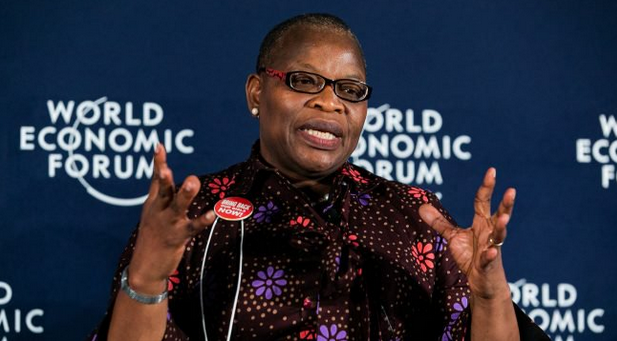
Former Minister of Education, Oby Ezekwesili has said the crisis in South Africa is Afrophobia and not Xenophobic as only Africans especially Nigerians have been target of attacks from South Africans.

Ezekwesili said this at a special session to address Xenophobia at the World Economic Forum, held in South Africa.

Afrophobia is a perceived fear of the cultures and peoples of Africa, as well as the African diaspora.

She also said the South African Government needs to offer a sincere apology to the whole continent.

South Africa in the last couple of days has seen a series of attacks against foreign nationals.

Ezekwesili said: “I believe that there are some important steps that South Africa government should be able to take immediately in order to send a signal of what I call Afrophobia, it is Xenophobia.

“I haven’t seen any Italian, or any Europeans. I haven’t seen Chinese or Indians being harmed, maimed, losing properties. I haven’t seen any of that, but I have seen a targeting, especially of my country Nigeria and I have seen a lot of single story where people were saying that Nigerians engage in criminal activities in South Africa, I know that is a single story,” she added.

“Well, I also know that 18% of those that teach in South Africa are Nigerians academic. Many Nigerian doctors are the ones who serve, provide health services in the rural areas of South Africa and they have leaved peacefully here. This danger of a single story must be taken on by the government immediately to deescalate further degeneration of relationship.”

“I think that the President of South Africa and the government needs to have a speedy and conclusive process for those that have been arrested for the latest violence. The government must also go out and engage with the victim of the violent.”

The Former Minister had faced criticism from Nigerian government and some Nigerians on social media for attending the conference after Nigerian government boycotted it.

Vice-President Yemi Osinbajo was billed to speak at the summit, but pulled out on the day the forum started.

The President Muhammadu Buhari New Media aide, Bashir Ahmad, had disclosed on his official and verified twitter handle that some Nigerians went ahead to attend the forum after the country pulled out.

Bashir later said Ezekwesili was at the summit on her own.

He said, “We all thought you had sympathise with them and boycott the WEF to properly protest the attack”

Ezekwesili in response said, “let your boss know that I am actually leading an effort here in South Africa that will help safeguard our citizens not the childish silly politics his government , aides and praise singers constantly play with the lives of our citizens.”

When asked about the criticism during the Special Session on Xenophobia, she said “when there is a failure from the government, the citizen needs to act. It was very important for me to put out my voice out here so that South Africa must do the right thing, same as Nigeria. The two country must immediately and deescalate this and the Nigerian government must be open to overture from the South African govt for deescalate this.”

India loses contact with spacecraft on moon mission

INDIA on Saturday said it has lost contact with a spacecraft it was trying to land on the moon, the first of its kind to confirm the presence of water near the lunar south pole.

The Indian Space Research Organisation (ISRO) confirmed that the lander of the Chandrayaan-2 moon mission was attempting a “soft,” or controlled when communication was lost at the point of touch down.

“There are ups and downs in life … What you have accomplished is no small achievement,”Narendra Modi, India Prime Minister said in a national broadcast.

“If historians someday write about today’s incident, they will certainly say that inspired by our romantic description of the moon throughout life, Chandrayaan, in the last leg of the journey, rushed to embrace the moon,”

“I can proudly say that the effort was worth it and so was the journey.

“We are full of confidence that when it comes to our space program, the best is yet to come.”

Modi, who was at ISRO’s Bangalore space center to watch the landing, said after Sivan’s announcement that what the scientists had already accomplished was “not a small achievement.”

“Ups and downs keep coming in life. Your hard work has taught us a lot and the entire country is proud of you,” said Modi. “If the communication starts again … hope for the best … Our journey will carry on.”

The Prime Minister noted that “As important as the final result is the journey and the effort, there will be a new dawn and a brighter tomorrow soon!”

“Our effort and journey to the moon was worth it.”


Sivan. K, chairman of the Indian Space Research Organisation described the last minutes before the loss of contact as “15 minutes of terror” but he also said that data is being analysed to detect what factors led to the mishap.

Mukund Rao, a 24 years former ISRO scientist and chief executive of the Centre for Spatial Analytics and Advanced GIS, however, was of the opinion that there may have been gaps in planning the moon landing.

“They have to go back to the drawing board and try it once again.”

Only the United States, Russia and China have landed on the moon. Beijing’s Chang’e-4 probe touched down on the far side this year, while Israel made an unsuccessful attempt to land its Beresheet spacecraft on the moon in April.