Home Blog Page 2297

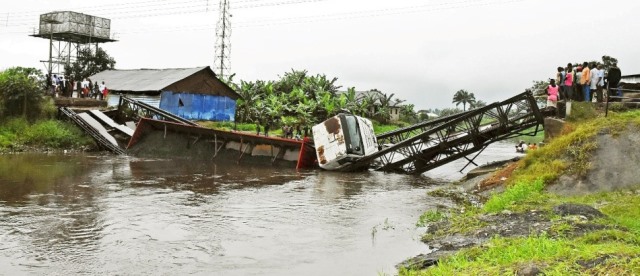
ELEBELE: Residents of Bayelsa’s oil community cry out over collapsed bridge

0


RESIDENTS of Elebele community in Ogbia Local Government Area of Bayelsa State on Friday appealed for the speedy repair of Elebele bridge which collapsed on Thursday.

JOHN Jacobs, a Community leader  in the oil producing community who spoke on behalf of his people disclosed that the bridge which connects the state capital, Yenagoa to Ogbia, Nembe and Brass caved in when a truck laden with crushed granite stone was crossing to a construction site.

The development left scores of vehicles on both sides of the bridge stranded while residents gathered to watch the truck which fell into the river.

“This bridge is very important to us because this is the only road to and out of our community and it leads to the oilfields across Ogbia land and it is here that oil was first discovered in the whole West African region.

“Our people rely on the bridge to convey our agricultural produce to the state capital as well as other economic activities so you can see that the bridge is strategic to us all.

“We appeal to the state and federal government and Shell to swing to action immediately because we have not alternative.” Jacobs said

It was also gathered that the bridge was constructed in 1986 by Shell Petroleum Development Company to gain access to its oilfields in the area. (NAN)

Your stigmatisation of people fuels xenophobic attacks, Onyeama replies S’ African Foreign Affairs Minister

0

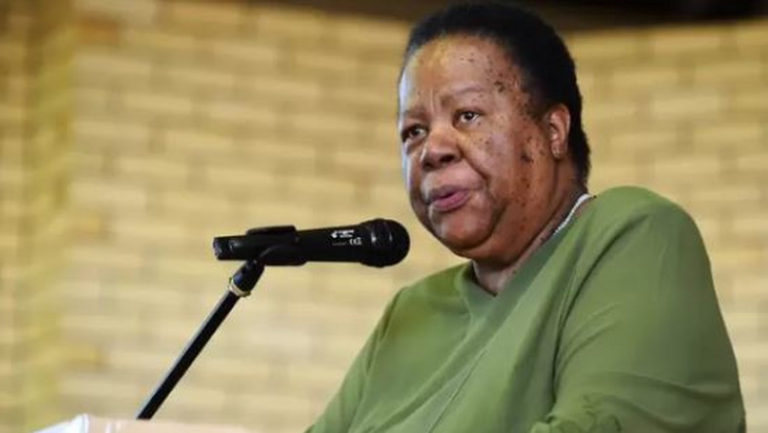
THE Federal Government has condemned comments made by the South African Foreign Affairs Minister, Naledi Pandor, that “many Nigerians in South Africa are into drug peddling, human trafficking and other vices that hurt her nation.”

Pandor, in a video aired by eNCA, a South African television station particularly called on Nigerian government  to keep its citizens who are into drug peddling, human trafficking and other vices from coming into her country.

But while reacting to these comments, Nigeria’s Minister of  Foreign Affairs, Geoffrey Onyeama, lamented what he described as “outrageous stigmatisation of a people from senior government officials like Pandor, which according to him, fuels xenophobia and embolden criminals.”

Onyeama bared his mind on Friday on his verified Twitter account @Geoffrey Onyeama.

In the interview, Pandor said, “Help us address the belief and the reality that our people have that there are many persons from Nigeria, who are dealing in drugs in our country, who are harming our young people by making drugs easily available to them.

“The belief that Nigerian nationals are involved in human trafficking and other abusive practices. This kind of assistance in ensuring that such people don’t come to our country would be of great assistance to our nation.”

She also said, South Africa needed the help of the Federal Government of Nigeria to curb crimes in their country.

“It is precisely this kind of outrageous stigmatisation of a people from senior government officials that fuel xenophobia and embolden criminals,”Nigeria’s Onyeama said in reply to the comments.

Nigerians and other foreign (Africa) nationals have been the target of xenophobic attacks in South Africa, since last week after a taxi driver was killed by an alleged drug dealer in Pretoria.

President Muhammadu Buhari had dispatched a special envoy to convey his concerns over the attacks to President Cyril Ramaphosa.

The xenophobic attacks forced Nigeria to pull out of the ongoing World Economic Forum in South Africa.

Nigeria demanded full compensation for its citizens affected in the latest attacks, but Pandor had earlier said the country has no provision for compensation.

In an interview with Reuters, the Minister said her country’s laws do not have provision for such.

Another suspect on FBI list now in EFCC net

THE Economic and Financial Crime Commission (EFCC) has revealed that its collaboration with the US Federal Bureau of Investigation (FBI) has led to a major breakthrough with the arrest of one Emmanuel Adedeji Oluwatosin, who is on the wanted list of the FBI.

Sokoto Zonal Head of EFCC, Abdullahi Lawal while parading the suspect in Sokoto explained that the suspect was arrested in Kaduna on August 29.

A statement by Wilson Uwujaren, Head of Media and Publicity at the Commission   revealed that two cars: Mercedes Benz E550 and Mercedes Benz C450, an  IPhone, laptops, modem and SIM cards were recovered from the suspect’s residence.

Quoting Lawal, the EFCC spokesperson added that the suspect and his accomplices both in Nigeria and overseas, acquired retirement account information (RAI) and personally identifiable information (PII) of multiple persons which they fraudulently used to wire funds into newly created business bank accounts tied to the fraudulently created business.

“The proceeds were then converted into crypto currency,” he said.

He said preliminary investigation had so far revealed that about  N  1,  437,  889,  157.15  passed  through  the suspect’s accounts noting that the Commission has also traced the sum  of  N  70,  000,000.00  he  invested  somewhere.

“Efforts are on to recover the money,” Lawal was quoted as said.

The arrest of a Nigerian entrepreneur, Obinwanne Okeke popularly known as Invictus Obi in August by the FBI over a $12M fraud committed in the US has led to a manhunt of all involved in the internet fraud.

Barely a week after his arrest, Federal Prosecutors of the United States Department of Justice on  said 80 persons in the US and Nigeria, were believed to have stolen about $1.1 billion through several various fraudulent schemes in seven months.

They were indicted in a 252-count charge by the prosecutors reported by nearly 14,000 petitioners.

The Commission had on Monday disclosed it had arrested a suspected female cyber fraudster who was declared wanted by the FBI, in Benin City, Edo State.

That was after the anti-graft agency said it arrested three others — Joseph Oyediran, Ogbonnah Atoukaritou and Alpha Chidi Egbeonu, all on August 30 at different parts of the country.

In a related development, Lawal said the Commission has arrested a wanted suspect, Muzakkir Muhammad, through a sister agency, in connection with an alleged case of obtaining money under false pretenses and production of fake currencies.

He said the suspect was reported by one of his victims, Abdullahi Ibrahim after he had defrauded another victim, Samaila Sani, a Bureau de Change operator to the tune of $33,850.

“Meanwhile, the first complainant, Ibrahim alleged that Muzakkri Muhammad collected the sum of N2, 350,000 from him on the pretext of producing the $100,000 for him, which he has neither produced nor refunded the naira equivalent given to him.

“However, a search was conducted at his house and several incriminating items which the suspect used in luring and defrauding his victims were recovered.

“His method is to make his victims believe that he possesses some form of supernatural abilities of communicating with ‘spirits’, while in the actual sense, they were mere tricks which he used to deprive them of their hard earnings.”

Also paraded were four Sokoto Local Government officials who defrauded civil servants on the payroll of State Universal Basic Education Board (SUBEB) by deducting irregular amount of monies from their salaries since 2013.

The Suspects were Ishaka Abdullahi (Education Secretary), Abdullahi Idris (Deputy Education Secretary), Abdullahi Dadi (Cashier), and Idris Wamabai (Accountant).

Uwujaren disclosed that the suspects would soon be charged to court.

Commended and condemned … understandably mixed reactions trail Mugabe’s death

0

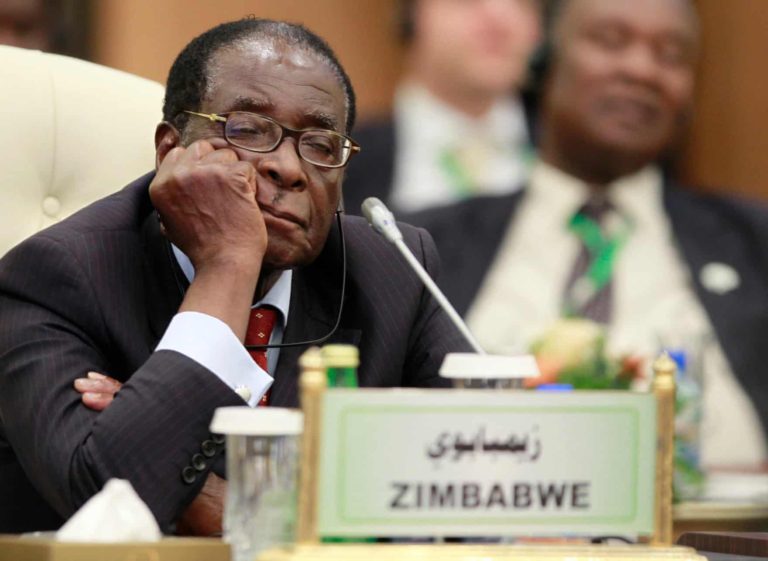
ZIMBABWE’s former President, Robert Mugabe, is dead. His successor, Emmerson Mnangagwa, announced this “with utmost sadness” in the early hours of Friday morning. 

It is believed that Mugabe died in a Singaporean hospital where he received treatment for an undisclosed illness earlier in the year.

“Cde Mugabe was an icon of liberation, a pan-Africanist who dedicated his life to the emancipation and empowerment of his people. His contribution to the history of our nation and continent will never be forgotten. May his soul rest in eternal peace,” President Mnangagwa wrote.

But while many agree Mugabe was an icon of liberation, they also consider him to have been much more. And while the Zimbabwean president is likely right to say Mugabe’s contribution to the nation’s history will never be forgotten, this may not all be for the right reasons.

Angry replies

Right under Mnangagwa’s tweet, Zimbabweans and other nationals have shown their displeasure over the glorious terms the country’s president used in describing the former ruler.

“Utmost sadness!” replied Kevin (@area51kevin). “He was a murdering racist. He took the bread bin of Africa to ruin when he persecuted and murdered white farmers!! Good riddance to him.”

Mcebisi Velabehleke Ndebele (@McebisiNdebele), who describes himself as a member of Zimbabwe’s Mthwakazi Republic Party, said the passing of the former leader is rather good news and blamed him for causing the “slaughter of 100,000 Ndebele people during Gukurahundi”.

“Unfortunately, he died without even apologising,” he added.

The Gukurahundi massacres, during which over 20,000 civilians were killed by Mugabe’s Fifth Brigade in the 80s,  are said to be “the darkest period in the country’s post-independence history”. No one has accepted blame for the incident, but recently unearthed documents suggest Mugabe ordered the killings as prime minister.

Also responding to Mnangagwa’s announcement, Thandekile Moyo (@Mamoxn) wrote: “Be sincere. You of all people know about #Gukurahundi. Mugabe was a ruthless mass murderer who ruled for as long as he did because of his killer instinct. He dedicated his life not to emancipation but to his quest for a one-party state whose benefits you are reaping.”

“Respect us,” Moyo demanded.

“It’s very confusing for me that a dictator who ruined the country responsible for thousands of deaths receives such kind words!! Quite encouraging for following dictators. Go figure?” yet another Twitter user commented.

Nasir El-Rufai, governor of Kaduna State, also took to Twitter on Friday to share his thoughts on Mugabe’s death.

“May Robert Mugabe’s soul Rest in Peace,” he wrote. “He started very well, stayed too long and ended tragically. An African hero all the same and a leader that honestly meant well. His life is a lesson for all in public leadership roles – groom successors and leave when ovation is still loud!”

It is not uncommon to find politicians rain praises on former dictators. Nigeria’s President Muhammadu Buhari was criticised when in 2008 he defended Sani Abacha against allegations of looting the country’s treasury.

Buhari and others also hailed Ibrahim Babangida, in August, as the latter celebrated his 78th birthday.

“On this special day of your life, the reminiscences of your courage and invaluable service to the army in protecting the sovereignty of the country come to the fore. Thank you for the role of statesman you are playing in the affairs the nation,” he had said. “As you age gracefully, the country will continue to look up to you for guidance and wisdom.”

Complicated legacy

Mugabe, a former revolutionary who fought passionately against British imperialism, was Zimbabwe’s prime minister between 1980 and 1987, and thereafter became president. He held onto this position until late last year.

He was regarded as a highly controversial political figure, described in different terms: dictator, tyrant, threat, hero, and so on. According to The Black Scholar journal, “Depending on who you listen to … Mugabe is either one of the world’s great tyrants or a fearless nationalist who has incurred the wrath of the West.”

Mugabe’s “final years in power were characterised by financial collapse, surges of violent intimidation and a vicious internal power struggle pitting his wife Grace, 41 years younger than him, against Mnangagwa, his former right-hand man”, notes The Guardian.

In November 2018, after spending 37 years in power, Mugabe resigned amid wild jubilation in the country’s parliament and on the streets. This was in the wake of a military takeover that led to the sealing of access to the legislative chamber, government offices, and courts in the capital.

Before his resignation, many had expected the late leader, who once bragged about planning to rule till he’s 100, to die in office.

Below are some other reactions from Twitter:

https://twitter.com/SkillxMedia/status/1169868323707731968

https://twitter.com/Coco_thando_/status/1169847045185667072

’60-yr-old professor’, 11 others arraigned for alleged fraud

A 60-year-old man, Charles Jide-Oni, who claimed to be a professor and lecturer at the Obafemi Awolowo University, Ile Ife, Osun State, has been arraigned before a Federal High Court sitting in Ikoyi, Lagos State for allegedly obtaining money under false pretence and engaging in advance fee fraud.

The Economic and Financial Crimes Commission (EFCC), Ibadan zonal office, arraigned the ‘professor’ and 12 other internet fraud suspects before Justice Nicholas Oweibo, the Federal High Court vacation judge for the Southwest zone, on Wednesday.

A statement by Wilson Uwujaren, Head, Media and Publicity at EFCC, explained that Jide-Oni’s arraignment was a sequel to the Commission’s damning findings about the activities of an illegal financial outfit he floated through which he allegedly swindled his victims of several millions of naira.


READ ALSO:

Uwujaren in the statement said some of the victims had earlier written a petition to the EFCC which led to the investigations that indicted him in the alleged fraudulent act.

In a Facebook account belonging to Jideoni Charles, the timeline of the page included a series of advertisements for a Ponzi scheme called “JC WEALTHY GENERATION CONCEPTS – PROMO PLATFORM II”.

Charles who also claims on the page that he is an employee of the University of Ife usually share how people could earn millions after investing in his concept for as low as N1000.

His account is linked to two public pages on Facebook that dwell extensively on the scheme. In one of his posts, he had shared 12 bank accounts with different commercial banks in Nigeria. All he claimed linked to Jideoni Charles.

The ICIR checked up for two of the 12 accounts, and it belonged to him.

Meanwhile, the other 12 suspects equally arraigned by the EFCC on Wednesday were Olaleye Kolapo, Madukife Ifeanyi Azuka, Fatanmi Yinka Sunday, Adebayo Bolaji Adeyinka, Adeleke Peter and Adebowale Fadairo.

Others were Oyewunmi Toulope Michael, Bello Ayoade Jalal Arikalam, Owolabi Toheeb Toluope, Abdullahi Abdulazeez  Oluwatobi, Temitope Fatolu and Adesina Adewale.

 Fatolu (aka Gold Crumb), however, opted for a plea bargain and pleaded guilty to a one-count amended charge of fraudulent impersonation when he was presented before the court on Wednesday.

 He was subsequently sentenced to one-year imprisonment with effect from June 20, 2019 when he was arrested.

 ‘Gold Crumb’ was also to return the sum of $500 (Five Hundred United States Dollars), through the Federal Republic of Nigeria, to his victim, and to equally forfeit his iPhone 6, Nokia 103 and Hp Laptop to the Federal government of Nigeria, being part of the benefit he derived from his fraudulent act.

 Due to the bail application filed and argued by his lawyer on his behalf, Justice Oweibo granted Jide-Oni bail to the tune of N10 million and two sureties in like sum, Uwujaren said.

The sureties, the court held, must be of Grade Level 10 in the civil service and must be resident in Osogbo, the Osun State capital.

 The judge also ordered that the accused person be remanded in Ilesha prison pending the time he is able to fulfil his bail conditions as he adjourned the substantive hearing to October 14.

 Unlike Fatolu, other 11 suspects, who were charged with sundry internet-related offences including obtaining money by false pretence, impersonation, being in possession of forged and fraudulent documents to defraud people, pleaded not guilty to the respective charges preferred against them.

 Consequent upon their not-guilty plea, EFCC counsel, Ben Ubi, crave the court for an order to remand them in prison and fix dates for the hearing of their cases.

 The court granted the remand prayer, and also fixed different dates for the hearings.

 He fixed October 7 for the hearing of Fatami’s, Adeleke’s, and Fadairo’s cases as he ordered that they were remanded in the Ilesha prison.

Olaleye and Azkuka were to be remanded in Ado-Ekiti prison till October 9 when their cases will be opened for hearing.

For Abdullahi, Oyewunmi and Bello, the hearings would hold on October 14. They were ordered to take shelter in Ilesha prison till then.

The judge equally fixed October 15 and 21 for hearing of Adesina’s and Owolabi’s respective cases while both will be housed in Ilesha prison pending the adjourned date.

Adebayo was, however, returned to the EFCC’s custody

FG confirms ICIR’s Fact Check on xenophobic viral videos, cautions celebrities, others

0

THE Federal Government on Thursday reacted to fake videos circulating in the social media purported to be footage of Nigerians being attacked in South Africa, saying “Those who are circulating these videos should immediately desist from doing so.”

Minister  of Information and Culture, Lai Mohammed at a press conference in Abuja urged Nigerians to be wary of such videos which have led to series of reprisal attacks by Nigerians on businesses believed to be owned by South Africans in Nigeria.

During the press conference, Mohammed cited three of such videos said to be footage of different attacks on Nigerians in South Africa.

The minister lamented that “apart from inflaming passion, the videos are also complicating the efforts of the government to calm frayed nerves at home in the wake of the xenophobic attacks in South Africa.”

He recalled that the Federal Government had  alerted Nigerians to the dangers posed by fake news and disinformation when it launched  National Campaign Against Fake News on July 11 2019.

This is coming about 48 hours after The ICIR published a Fact Check on videos trending in the social media and reported that they were not from the recent xenophobic attacks.

Explaining in details the three videos,  Mohammed said, “one of the videos shows a man who has been set ablaze trying to escape, and those circulating the video identified the man as Nigerian which is not true as the video was about one Mozambican Ernesto Alfabeto Nhamuave, a victim of xenophobic violence in South Africa in 2008, and it is not that of a Nigerian being attacked in 2019.

“The second video shows those said to be Nigerians jumping down from a multi-storey building that was purportedly set on fire by xenophobic attackers in South Africa. This is fake news as the video is that of a Suraj Coaching Centre in Gujarat State, India, that was gutted by fire on May 24, 2019, leaving about 18 people dead.

“Similarly, the third video purportedly showing the bodies of Nigerians who were burnt in xenophobic attacks, is the raw footage of those who were killed in a Tanzanian fuel tanker explosion in Morogoro that left at least 60 dead on Aug. 10 2019.”

He urged those circulating the wrong videos to desist from such acts as it is capable of causing more havoc.

The minister appealed to opinion leaders and celebrities to watch their words as well as Nigerians who he said were ‘justifiably angry’ to stop carrying out a reprisal attacks.

He however, assured all Nigerians and foreigners that the government has put in place proper security measures to ensure the safety of lives and property in the country.

“Those who looted properties under the guise of protests would be arrested and prosecuted,” he concluded.


Nigerians insist South African govt must openly condemn xenophobia

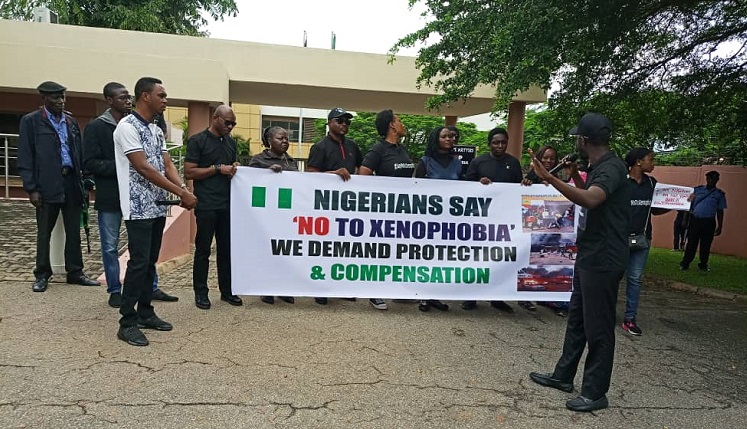
A group of Nigerians under the aegis of Active Citizens of Nigeria, on Thursday marched to the Embassy of South Africa in Abuja, Nigeria’s capital, asking the government of the former apartheid country to openly condemn xenophobic attacks against Nigerians in the country.

The protest march that took off at the popular Unity Fountain was led by  Edith Yassin and Jeff Okoraofor, both human rights activists.

The group urged the South African government to openly condemn the previous and current xenophobic attacks, adding that there should be no ambiguity as to the government’s official stance.

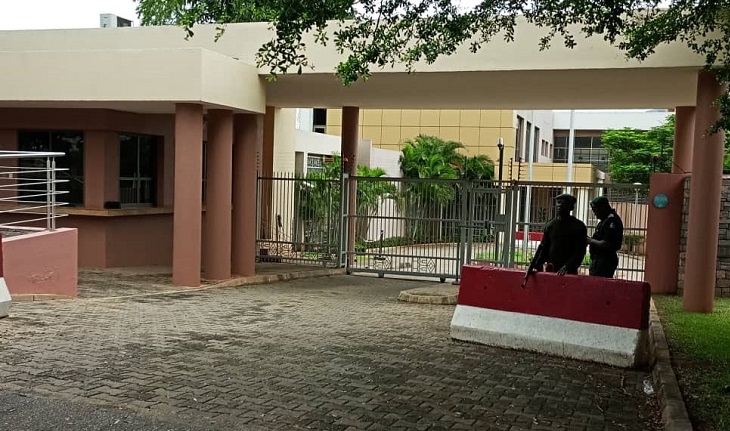
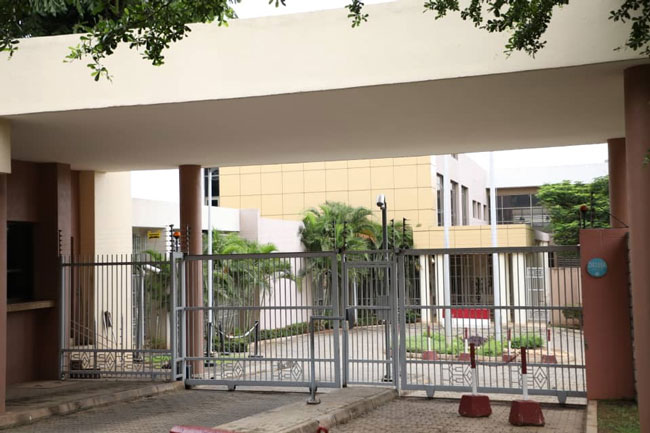
On reaching the South African Embassy which is directly opposite the European Union Commission’s building in Maitama area of Abuja, the group was however, prevented from getting closer to the building by armed policemen guarding the place.

The protest march took place a day the South African government announced that it has temporarily shut down its embassies in Lagos and Abuja

The ICIR observed that no activity was ongoing at the Abuja High Commission’s office as the gate was under locks, while armed policemen monitored the area.

https://www.facebook.com/TheICIR/videos/2336468353336416/

Naledi Pandor, the South African Foreign Affairs Minister, said the decision to shut the mission was based on concerns for the safety of the staff following received threats.


South African High Commission temporarily shut down. Nigerian Security officers guild the complex in Abuja on Thursday. Photo credit: Rebecca Akinremi/ICIR.

Meanwhile, the protesters were chanting at the entrance of the embassy demanding an end to xenophobia in South Africa.

“We do not need xenophobia. They have been doing this over and over again,” said Edith.

“These attacks have targeted Africans from other countries, residing in South Africa, especially Nigerians and their business,” she added.

The country’s high commissioner, Bobby Monroe, had earlier stated on Tuesday that the recent attacks that occurred between Sunday and Monday were “Sporadic act of violence” in his country and not Xenophobic attacks on Nigerians.

The protesters, thereafter, demanded justice and compensation to the victims of xenophobic attacks, calling on the government to prosecute those engaging in the activities.

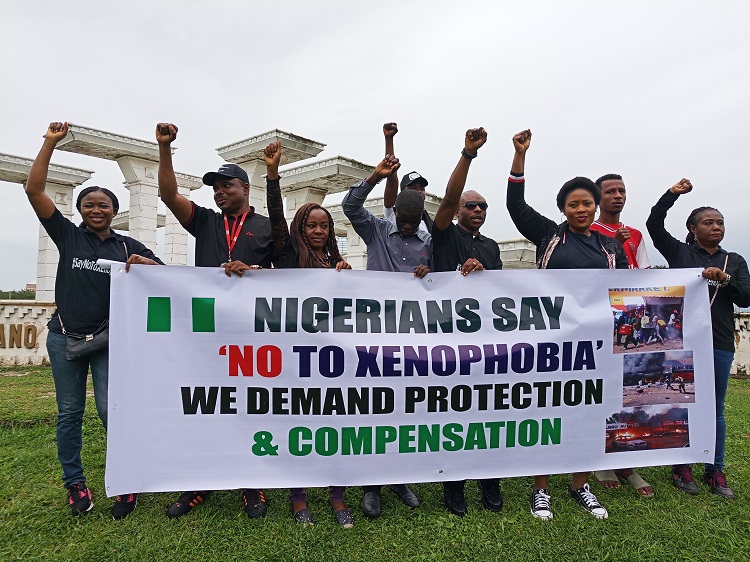
The protesters at the Unity Fountain in Abuja on Thursday morning. Photo credit: Rebecca Akinremi/ICIR

On the placards carried by some of them inscriptions such as : “I am Nigerian. I am not your hate!!!”

“No to Xenophobia.

Nigerians say no to xenophobia.

We demand protection and compensation,” a placard read.

Nigerians across some states of the Federation had been engaging in a series of protest since the recent cases of xenophobic attacks  happened between Sunday and Monday.

Some of the protests had turned violent leading to a young man’s death on Tuesday in Lagos.

The group, however, asked the fellow Nigerians to show restraint when channelling their grievances, urging them to follow lawful means.

No society can develop without peace and tolerance, CAN president appeals to Tiv, Jukum leaders

0

THE President of Christian Association of Nigeria (CAN), Samson Ayokunle has appealed to the leadership of both Jukum and Tiv in Taraba and Benue states to sheathe their swords and embrace peace as no society can develop without peace, tolerance and harmony.

Ayokunle made the appeal on Thursday in a statement issued by his Media Assistant, Adebayo Oladeji.

He noted that hostilities between the two tribes have led to the death of hundreds of people, expressing concerns that the two warring parties were still agitated and reluctant to give peace a chance.

The CAN president further urged the leaders of Tiv and Jukum to, as a matter of urgency, convene peace meetings among all relevant stakeholders with a view to finding lasting solution to the feud.

“From the information available to us, majority of Tiv and Jukum are Christians and ordinarily, one would have expected them to come together in unison and resolve their differences, no matter how bitter they are, as commanded us by Jesus Christ who is the Prince of Peace.

“Apart from this, we are aware that the two tribes are inter-twined because they exist side by side and have for long time inter-married,”he said.

According to him, such mutual hostility between the two ethnic groups led to the gruesome murder of a Catholic Priest, Rev Fr David Tanko, recently while making a reconciliation effort.

He said, “This evil wind has, sadly, claimed several innocent lives”.

Ayokunle lamented, traveling on Wukari and Katsina-Ala highways has become dangerous and suicidal as travelers who belong to either of the tribes are arrested, killed or set ablaze, just exactly the way the Catholic priest was killed.

The Christian body, he disclosed, has been making  efforts behind the scene with both the Federal Government and the two-state governments on how to reconcile the two factions at a peace meeting to be hosted as soon as practicable.

The clergyman appealed to the two tiers of government to accelerate the process of an enduring peace process in which CAN is ready to be involved.

“We need to remember that violence and bloodletting will not benefit any of the warring parties; rather, it is the people, states, entire country and humanity that are at loss.

“May peace reign not only between the Tivs and Jukuns but in our nation Nigeria in the name of Jesus Christ our Lord and Saviour,” Ayokunle said.

Recall that President Muhammadu Buhari on Wednesday promised to end the communal conflict between the Tiv and the Jukum people of Benue and Taraba states.

Represented by the Secretary to the Government of the Federation, Boss Mustapha in a stakeholder’s meeting with the governors of both states on Wednesday, Buhari assured, that peace would be facilitated among the warring parties.

“We will ensure we facilitate peace. We will not trivialize issues that have to do with emotion because we can’t allow this conflict to continue.”

Buhari urged leaders to promote peace in their actions and utterances, saying the Federal Government would not fold its hands and allow miscreants to take over the country.

At the event, both governors of Taraba State, Darius Ishaku and Benue State, Samuel Ortom disagreed over the causes of communal clashes.

Ortom said the crisis was strictly between the Tiv and Jukum people in Taraba, stating that the traditional institutions in Wukari – a city in Taraba and predominantly Jukun – had failed to protect the interest of the Tiv, who are settlers from Benue State.

“The history or tradition cannot supersede the constitution; we are all Nigerians. People have come from different places to settle in Nigeria.

“The constitution remains sacrosanct and we must obey it. The issue of describing some people as settlers is where we get it wrong,” he said.

Ortom called on the Federal Government to set up a commission of inquiry on the lingering crisis since it was a matter between two states.

However, Ishaku said there was a plot of silence among the Tiv, spreading lies against his government, even after gaining immensely from his government.

Ishaku, said the people could not sacrifice their history for a constitution copied from a foreign country without regards to the ethnic composition and peculiar nature of the country.

He said, “I can’t disregard history because of the constitution. I’m a Jukun and my wife is a Tiv. You said I should drop my history because of constitution? No! No! No!

“I employed 3000 teachers and over 400 were Tivs. Do you want me to carry the whole state and give it to one tribe?” he said.

The Tiv and Jukum  have a long history of a communal clash, alleged to have resulted from the fear of domination; land resources and ownership; unequal representation in political positions.


S’ Africa temporarily shuts Nigerian embassy after ‘receiving threats’, admits there’s ‘Afrophobia’

0

COMING after attacks were recorded on businesses believed to be owned by South Africans in Nigeria, the country has announced a temporary closure of its embassy in Abuja and Lagos.

Naledi Pandor, the South African Foreign Affairs Minister, said the decision to shut the mission was based on concerns for the safety of the staff following received threats.

Speaking to Reuters on the sidelines of the ongoing World Economic Forum (WEF), the minister acknowledged the existence of “Afrophobia”, which she described as a complex phenomenon.

“There is Afrophobia we are sensing that exists, there is resentment and we need to address that,” she said.

“There is a targeting of Africans from other parts of Africa, we can’t deny that. But, there is also criminality … because a lot of this is accompanied by theft.”

Lunga Ngqengelele, South African Foreign Ministry Spokesperson, confirmed that the closure of the diplomatic missions took effect on Wednesday, and said they will be re-opened when “necessary”.

“After receiving reports and threats from some of the Nigerians, we decided to temporarily close while we are assessing the situation,” Ngqengelele said.

“A group of people… came and tried to force themselves in” at the consulate in Lagos, he explained. “It was on those basis that we felt we need to protect the employees and shut it down”.

Oby Ezekwesili, Nigeria’s former education minister, who is attending the World Economic Forum, described the wave of xenophobic attacks in South Africa as “sordid”.

“I think there has to be a very distinct session for us to discuss the issues of our collaboration as Africans,” she said during a panel discussion on Wednesday.

“This is the issue. We cannot have Africa Continental Free Trade Agreement and, yet, we have a situation where there is black-on-black violence in this country. So, I do hope that we are going to go beyond the marginal conversations of it and get to the heart of the matter of what kind of integrated Africa we want to drive forward.”

Vice President Yemi Osinbajo who was scheduled to address a Thursday panel at the forum was withdrawn, in protest, by the Nigerian government from participating.

Zenith Bank Chairman Jim Ovia who was at the forum on Wednesday has also announced his withdrawal from further activities “following the hypersensitivity of the issues surrounding the lives and well-being of Nigerian citizens living in South Africa”.

XENOPHOBIA: Jim Ovia pulls out of World Economic Forum in South Africa

0

The Chairman of Zenith Bank Plc, Jim Ovia,on Thursday, pulled out of the World Economic Forum (WEF) holding in South Africa as part of protest against xenophobic attacks on Nigerians and other foreign nationals in the country.

Both Ovia and Oby Ezekwezili, former Minister of Education and a presidential candidate in the last general elections were attending the Forum which the Nigerian government pulled out of on Wednesday to register its protest in solidarity against xenophobic attacks on its citizens in South Africa.

Their continued participation at the Forum as panelists came under criticisms from Nigerians on social media on Wednesday.

President Muhammadu Buhari’s Personal Assistant on New Media, Bashir Ahmad, had tweeted that Vice-President Yemi Osinbajo was to represent Nigeria at the WEF, but “he had called it off in reaction to these gruesome attacks on Nigerians.

However, the Cable reported that the Zenith Bank Chairman said he was withdrawing from the summit  to lend voice to calls for the safeguard of foreigners in South Africa in a statement issued on Thursday.

‘’Following the hypersensitivity of the issues surrounding the lives and well-being of Nigerian citizens living in South Africa and to contribute his voice against the poor state of security regarding foreign nationals living in Africa, the Founder/Chairman of Zenith Bank Plc, Mr. Jim Ovia has withdrawn from further activities at the World Economic Forum Africa 2019, taking place in Cape Town, South Africa,’’ the statement read.

Before his exit from the Forum, Ovia also made a case for youth empowerment and better government policies as a strategy to curb incessant attacks on persons living within and outside Africa, to foster positive change in the continent.

In the growing list of persons that have exited from the summit is Felix Tshisekedi, President of the Democratic Republic of Congo, Paul Kagame, President of Rwanda and their Malawian counterpart, Peter Mutharika, had also pulled out of the event arising from the acts of violence against foreigners in South Africa.

Though, the World Economic Forum (WEF) Africa said it did not know why Rwandan President Paul Kagame and his Malawian counterpart Peter Mutharika were  attending the conference.

Reports said the leaders, including Democratic Republic of Congo President Félix Tshisekedi, have snubbed the conference because of the ongoing xenophobic attacks.

WEF head of communications Oliver Cann was quoted as saying the presidents’ schedules change all the time.

“We were made aware on Saturday that President Kagame wasn’t going to join us and the president of Malawi notified us the previous week,” Cann said.

“If you have noticed we were not promoting their names or mentioning them in our press release from Monday.”

In the wake of the xenophobic attacks on Nigerians living in South Africa, retaliatory steps have been taken by members of the public which have led to the indefinite closure of some South African owned businesses in Nigeria.

However, Ezekwesili,  is still a partaker  at the Forum holding in Cape Town.