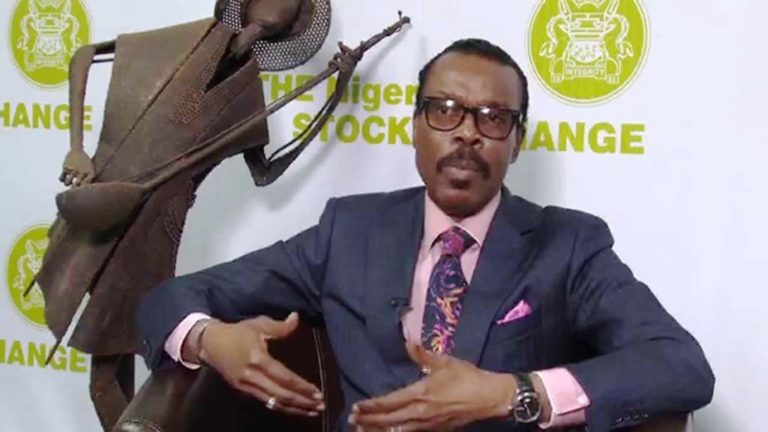
ECONOMIST and financial analyst, Bismarck Rewane says Nigerians can’t wait for the 10-years plan of President Muhammadu Buhari.
Rewane said this on Thursday during a programme on Channels Television while reacting to President Buhari declaration that he would lift 100 million Nigerians out of poverty over the course of the next 10 years.
The World Bank says a person can be said to be living in extreme poverty, if they live below the poverty line of $1.90 which translates to N693.5 per day.
President Muhammadu Buhari during a two-day retreat for minister-designates in Abuja on Monday said:
“We must work as a team. Working as a team demands that we know what the next person is doing. You must open communication with your colleagues. Lack of communication leads to a lack of cooperation and sub-optimal performance.
“We are working to lift Nigerians out of poverty and set them on the path to prosperity. We intend to lift 100 million Nigerians out of poverty over the next 10 years”, Buhari said during the retreat.
But Rewane, the chief executive officer of Financial Derivatives Company, said Nigerians can’t wait for 10 years, they want results now.
“How are they going to achieve this? The President has laid out his vision but the thing is that 10 years is a long time. Nigerians can’t wait for 10 years, they can’t even wait for 10 months, they want results now.
“Mr President, yes we like this (10-year plan) but we want some immediate deliverables.
“To get the immediate deliverables, first and foremost there has to be fiscal and monetary coordination to be able to unlock and deliver results.
“We have to manage our expectations and go back to total factor productivity or labour productivity,” he said.
FEDERAL Prosecutors of the United States Department of Justice on Thursday said 80 persons in the US and Nigeria,were believed to have stolen about $1.1 billion through several various fraudulent schemes in seven months.
They were indicted in a 252-count charge by the prosecutors reported by nearly 14,000 petitioners.
“I’ll like to give you some numbers. In the first seven months of this year, the Federal Bureau of Investigation (FBI) internet crime complaint centres received nearly 14, 000 complaints from victims reported Business Email Compromise (BEC) incidents with a total loss of $1.1 billion,” says Paul Delacourt, the FBI Assistant Director in charge of the case.
Most of the defendants according to the prosecutors live outside the US. But in the report cited by The ICIR, the Nigerians among the suspects include Valentine Iro (31) of Carson and Chukwudi Christogunus Igbokwe (38), of Gardena, both based in the US.
A 145-page document filed to the US District Court for the Central District of California detailed scores of Nigerians indicted in the fraud.
Another document, Financial Recipient Loss by Month shared by the prosecutors in a 31:48 seconds footage, revealed that in 2019, almost $40 million was lost in January this year, followed by other unclear sums in April and May, then January, July, February and March respectively.
According to the FBI Los Angeles Technology Enabled Crime (TEC) Task Force, shared by the prosecutors, from the accused 23 local defendants, 15 are based in Loss Angeles. From the 15, only one has not been arrested.
Seven others were detailed among those residing outside Loss Angeles but only three have been apprehended.
“That is the chart of the 23 domestic defendants. We have 80 defendants. Most of them are internationals. We will talk about that, but these are the 23 that we are looking for within the US. Six of them are fugitives, so if their faces are uncovered, it means we are looking for them. So if anyone has information we would like you to call us,” one of the prosecutors stated.
Reports say the defendants allegedly laundered the money through a Los Angeles based money laundering network.
“Eleven of them were arrested Thursday in Southern California, while three others were taken into custody elsewhere in the U.S., according to the U.S. Attorney’s Office for the Central District of California,” the report stated.
The ICIR earlier reported on 17th August, how the FBI arrested Obiwanne Okeke, popular Nigerian businessman for committing internet fraud.
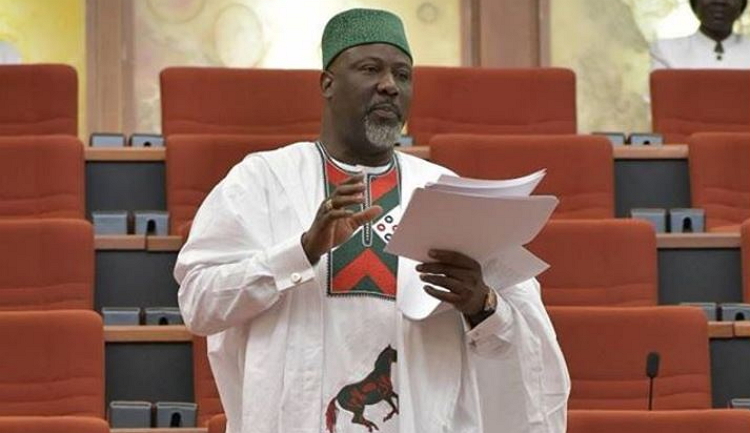
THE Election Petition Tribunal in Kogi State on Friday sacked Sen. Dino Melaye as Senate-elect representing Kogi West Senatorial District.
The Independent National Electoral Commission (INEC) declared Dino as winner of his constituency after the February 23 election.
Melaye polled 85,395 votes to win Sen. Smart Adeyemi of the All Progressives Congress (APC) who got 66, 901 votes.
The Tribunal, however, made the verdict based two factors – over-voting and non-compliance with the electoral act, thus called for a fresh poll.
Adeyemi, his main challenger from the APC had shortly after the poll petitioned the tribunal to complain over irregularities in the National Assembly election. He also cited non-compliance with the Electoral Act.
Meanwhile, Dino is already contesting for the governorship position in the state and has commenced campaign.
Report by Vanguard says that the three-man panel chaired by Justice A.O Chijioke, unanimously accepted Adeyemi’s argument, thus ordered for re-election.
On Tribunal judgement. No cause 4 alarm at all. Even if it went my way they will still go to the Appeal Court. Our mandate can not be taken. We will get judgment at the Appeal Court. There will be fresh election in Kogi West bc I will be Governor. For my Senate mandate no shaking
But, Melaye, reacting via his social media handle, discarded the judgement on the election, stressing that he would emerge next governor of the state.
“On Tribunal judgement. No cause for alarm at all. Even if it went my way they will still go to the Appeal Court. Our mandate cannot be taken. We will get judgment at the Appeal Court.
“There will be a fresh election in Kogi West because I will be governor. For my Senate mandate, no shaking,” he stated.
SINCE the increase in the new minimum wage signed into law by President Muhammadu Buhari, the Nigeria Labour Congress (NLC) and the federal government have remained at loggerheads.
Although the government through the Chairman, National Salaries, Income and Wages Commission (NSIWC), Richard Egbule, approved the immediate implementation of the N30,000 new minimum wage, the implementation is yet to commence.
While the federal government alleged that the Labour Union is to blame for the delay of the new minimum wage, the NLC says government’s proposal is insignificant.
So, NLC after a two-day meeting held in Kano on August 20th decided to hurry the implementation of the new minimum wage by expanding the boards of negotiation.
The negotiation board hitherto consist of the representatives of the NLC, which are the Joint Negotiating Council (JNC) and representatives of the government.
In a phone conversation with THE ICIR on Thursday, the General Secretary of the NLC, Peter Ozo-Eson, said the expansion would include the integration of the NLC, Trade Union Congress (TUC) as well as major unions in the public sector.
“…Everything would be done to expedite the process and work quickly so that within two weeks this matter on the adjustment of salary can be reached,” he said.
When asked about the position of the NLC on the government’s proposal of the new minimum wage in percentage, Ozo-Eson said the percentage increase as proposed by the government has been rejected by the JNC.
“Whatever the government talks in terms of percentages, those have been rejected by the JNC that were negotiating.
“If the government decides to throw its figures into the public, instead of coming to negotiate on the table that is their own unfortunate choice,” Ozo-Eson said.
He noted that the essence of negotiation is for two parties to bargain and reach an agreement, and called on the government “to come in good faith to the table”.
However, in an interview with the News Agency of Nigeria (NAN) the NSIWC chairman, Egbule said the current demand of the labour union would raise the total wage too high, so government disapproved their proposal.
Egbule said, since Labour demanded a consequential adjustment, the government made a budgetary provision for an adjustment of N10, 000 across the board for those already earning above N30, 000 per month.
He noted the adjustment gave rise to the additional cost implication of N158.8 billion per annum, which had already been captured in the 2019 budget.
Ozo-Eson countered this position, saying approval of a budget holds no ground in the absence of no negotiation.
“That is the wrong way to proceed. There is no difficulty. In the past, we have had a situation not even provided in the budget, and after negotiation and agreement, supplementary budget is presented.
“So once an agreement is reached, if what is in the budget is not workable, then a supplementary budget can be envisaged to redress that,” he said.
The NLC general secretary added that if the congress finds out there is no compromise on the new minimum wage, “what we usually do through the democratic process is to invite our members, and our members will take a decision on what will be.”
AFRICAN countries have adopted a strategic plan that aims at reducing the double burden of malnutrition in the region, outlining “urgent and accelerated” actions to take in ending hunger and all forms of malnutrition by 2030.
The plan was adopted during the ongoing 69th regional committee meeting of the World Health Organisation (WHO) for the African Region. The committee that meets once in a year to review health issues consists of the health ministers of the 47 member states of the region.
The WHO African director, Matshidiso Moeti said the double burden of malnutrition has been prevalent, particularly in countries where undernutrition and overweight or obesity coexist.
The diets listed to be causing the malnutrition to include the increasing consumption of cheap, processed foods that are high in energy, fat and salt content but low in nutrient quality.
Moeti said the diet, common in Africa, failed to address chronic undernutrition and micronutrient deficiencies. It contributed to increased obesity and diet-related non-communicable diseases such as diabetes.
Matshidiso Moeti, WHO African region director addressing the committee at the meeting on Tuesday. Photo credit: Twitter/ @WHOAfro
“The WHO Secretariat will be developing and implementing a resource mobilisation plan, supporting research collaborations and mounting high-level advocacy for increased investment to reach 90 per cent coverage of the ten highest-impact nutrition interventions that must be taken to meet the malnutrition challenges in our region,” she said.
According to the health agency, the number of undernourished people in sub-Saharan Africa rose from 181 million in 2010 to almost 222 million in 2016.
Among children, although the prevalence of stunting decreased from 38.3 per cent in 2000 to 30.3 per cent in 2017, the numbers affected increased from 50.6 million to 58.7 million. WHO said the growth was due to population growth
It noted that that undernutrition in the early years of life increases the risk of noncommunicable diseases in later life.
Overweight rates are also increasing.
The number of children younger than five years who are overweight increased from 6.6 million in 2000 to 9.7 million in 2017.
For children aged 5–19 years, obesity rates doubled between 2006 and 2016, while for adults, overweight and obesity increased from 28.4 per cent in 2000 to 41.7 per cent in 2016.
According to UNICEF, malnutrition is a direct or underlying cause of 45 per cent of all deaths of under-five children in Nigeria. The country has the second-highest burden of stunted children in the world, with a national prevalence rate of 32 per cent of children under five.
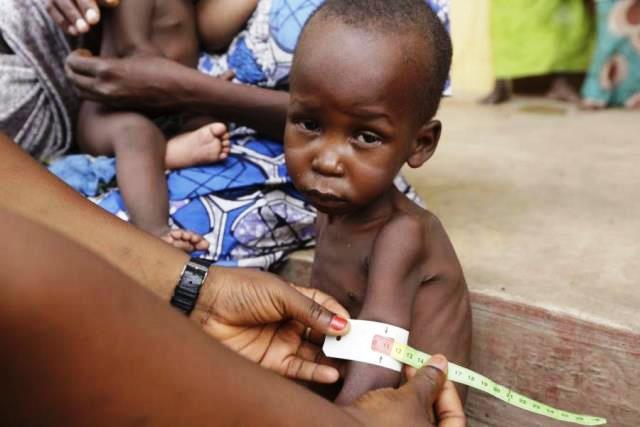
UNICEF estimated that about 2 million Nigerian children suffer from severe acute malnutrition. And seven per cent of women of childbearing age also suffers from acute malnutrition.
Thus, the strategic plan adopted by all the 47 countries, including Nigeria, would give priority to the reinforcement of legislation and food safety standards, using fiscal measures to incentivize healthy food choices and integrating essential nutrition actions in health service delivery platforms.
Containing clear targets to be achieved by 2025, all the African countries were encouraged to establish financing targets and increase sustainable domestic funding for nutrition. They were also urged to integrate actions to strengthen nutrition-sensitive agriculture and trade policies.
WHO also asked the countries to develop and strengthen national policies, legislation or regulations, monitoring their implementation and applying incentives to promote and protect healthy diets.
THE Nigerian Police Force, Lagos Command on Thursday announced the dismissal of four officers who illegally killed two suspected robbers in Igando area of Lagos State.
The dismissed officers are Inspector Fabiyi Omomayara, Sergeant Olaniyi Solomon, Sergeant Solomon Sunday and Corporal Aliyu Mukaila.
They have been charged to Ebute-Meta Magistrate Court five for conspiracy and murder and later remanded at the Ikoyi prison.
The officers were arrested on Wednesday by the Lagos Police command for extra-judicial killing.
After being subjected to an internal investigation upon directive from Zubairu Muazu, the State Commissioner for Police, the dismissed cops were accused of three count charges bothering on ‘discreditable conduct; unlawful and unnecessary exercise of authority and damage to article’.
In a statement issued Bala Elkana, a Deputy Superintendent of Police (DSP) and the Command spokesman, the policemen were remanded in prison custody pending legal advice from the Directorate of Public Prosecution (DPP).
Elkana said they were subsequently remanded in prison custody pending legal advice from the Directorate of Public Prosecution (DPP).
The statement reads: “The policemen were subjected to internal disciplinary proceedings at the Provost Department. They were tried on three count charges bothering on discreditable conduct; unlawful and unnecessary exercise of authority and damage to article.
“The four policemen were found guilty and awarded the punishment of dismissal from service and prosecution. They were subsequently handed over to the Homicide Section of the State Criminal Investigation and Intelligence Department (SCIID) Yaba for prosecution in conventional court.
“The four suspects ex-Inspector Fabiyi Omomayara, ex-Sergeant Olaniyi Solomon, ex-Sergeant Solomon Sunday and ex-Corporal Aliyu Mukaila were on August 22 arraigned in Magistrate Court 5 Ebute Meta for conspiracy and murder and were remanded in Ikoyi prison. The case is adjourned to September 29 for DPP advice. This will serve as deterrence to others.”
The ICIR had earlier reported how the accused policemen arrested the suspects who snatched a phone worth N450, 000 from one Anugu Valentine.
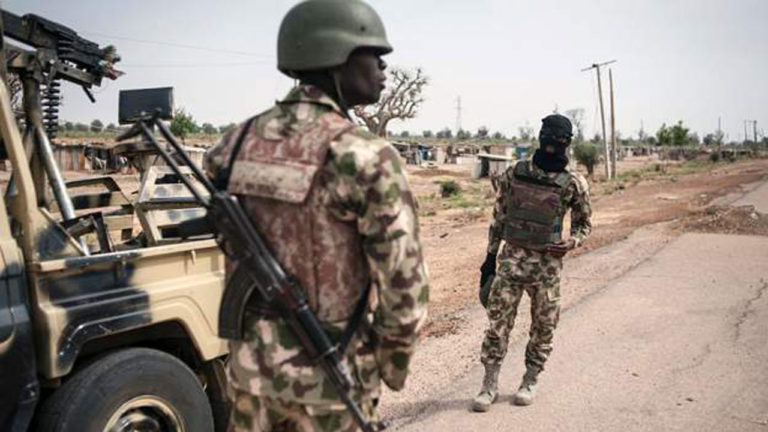
MEMBERS of the Boko Haram sect on Wednesday attacked two local government areas namely Gubio and Magumeri in Borno State after an alleged withdrawal of the military from bases in those areas, according to a report.
The insurgents invaded the towns and operated for several hours, carting away drugs, food items, fuel, and other valuables as residents abandoned their homes in fear.
In Magumeri, the local government headquarters, the insurgents burnt the local council secretariat building to the ground, including a public health clinic, the community leaders’ houses, vehicles used by NGOs and telecommunication masts.
Borno state Police spokesperson, Usman Sadiq, declined to comment when The ICIR called.
“Well, I can’t give any details into the state of things in those local governments you mentioned until the commissioner of police gives me clearance to talk to you about it. I’ll call you when I have the go-ahead,” he said.
At the time of filing this report, he was yet to reach The ICIR with updates on the state of security in the affected local governments.
The insurgents operating near Gubio also moved from their base to Magumeri, about 50 kilometres south, raiding the local government area and traumatising its population.
However, the Civilian Joint Task Force members were the only security personnel present in the towns when the attack occurred but they retreated into the forest along with villagers due to the number of the insurgents and weapons in their possession, according to the eyewitness.
The attack comes days after members of the Boko Haram sect attacked the Nigerian Army 5 Brigade in Gubio, killing four soldiers. The military relocated the entire brigade from Gubio following the attack, without a contingency plan in place to protect its residents.
In a report, sources said that from Maiduguri to Damasak, a distance of 200 kilometres, the military no longer has a base in place. Rather the Nigerian Army will introduce a mobile operation, instead of establishing a super camp.
The army authorities is yet to formally issue a statement on the attack as at the time of this report.
NEWLY diagnosed Nigerian women with Her-2 type of breast cancer has been selected to receive free treatments of Herceptin SC that cost millions of naira through a study called the ARETTA.
The ARETTA study, Assessing Response to neoadjuvant Taxotere and Trastuzumab in Nigeria women with HER 2-positive breast cancer is majorly supported by Roche Pharmaceuticals and the University of Chicago.
The leader of the study, Olufunmilayo Olapade, Nigerian oncologist and professor at the University of Chicago said the free treatment was important to encourage early diagnoses and treatment of breast cancer. Thus she said it was opened to women who had been newly diagnosed with breast cancer and had not spread beyond the breast.
“This is the first time a study like this is happening in Nigeria, and we are delighted to provide this relatively expensive drug – Herceptin SC free of charge to eligible Nigerian women,” said Olopade.
The WHO’s International Agency for Research on Cancer (IARC) stated that the disease is the second leading cause of death globally.
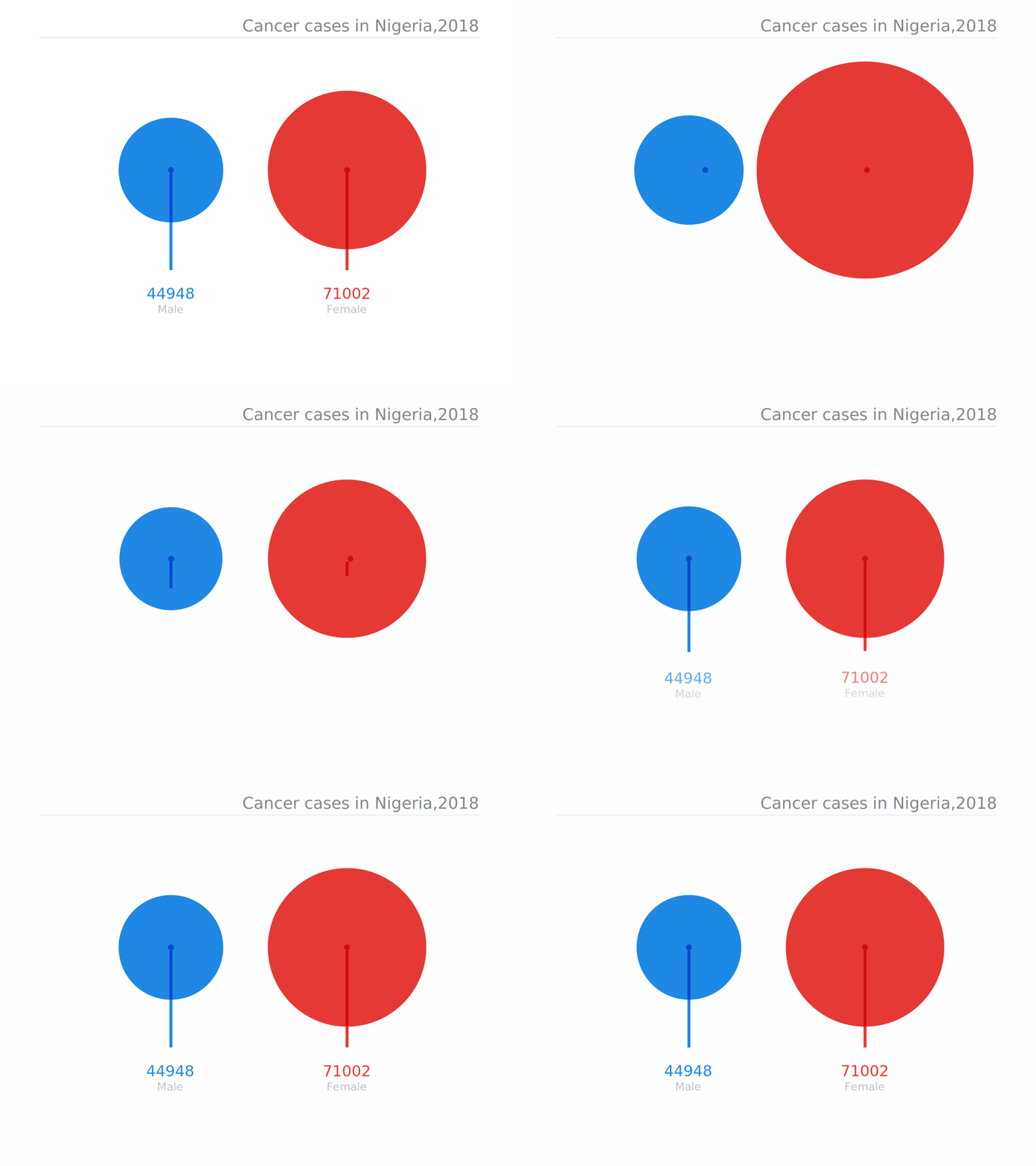
New cases of cancer in Nigeria in 2018. Source: WHO’s IARC.
In Nigeria, IARC estimated that there were 115,950 new cases of cancer in 2018 among all ages, where more than half of the people newly diagnosed were females.
Nigerian Women that developed different kind of cancer diseases last year was put at 71,002.
Not less than 70,000 Nigerians died of cancer, where 41,913 of the cancer deaths were women.
Meanwhile, breast cancer is the most common type of cancer among Nigerian women with an estimated 26,310 new cases and 11,564 deaths last year.
The different types of breast cancer include hormone receptor-positive, human epidermal growth factor receptor 2 (HER2), and triple-negative breast cancer.
Among these types, the ARETTA study group said HER2 positive-type was the most expensive to treat in Nigeria. To treat breast cancer, oncologists usually recommend to patients “modern targeted therapy known as Herceptin”.
“One course of Herceptin costs about N309, 000 and in most cases a woman is expected to take 18 courses. In total, it could cost over N5,562,000 for a woman to get treated from HER2 positive breast cancer,” the group said in a press statement.
The leader of the ARETTA study, Olufunmilayo Olopade, Nigerian oncologist, 2005 MacArthur Fellow, and professor at The University of Chicago Medicine.Photo Credit: University of Chicago Medicine.
Olapade said the government should act in the interest of Nigerians to reduce costs and provide affordable quality care to cancer patients.
“Without universal health insurance and coverage for a catastrophic illness that is treatable and preventable like cancer, the average Nigerian cannot afford health care,” she said.
Olapade noted that Nigerian doctors could save more lives but the government needed to develop a health system that would work for all Nigerians; “not only the rich who can leave the country to get care”.
She added that the country needed to build the capacity of cancer specialists to treat cancer so that patients did not need to travel out of the country to secure treatment.
“The study is open only to women who have newly diagnosed breast cancer that has not spread beyond the breast.
“Very important that women do not delay getting diagnosed and treated,” she gave more explanation on the free treatment.
The national principal investigator for ARETTA, Atara Ntekim, who is also an oncologist at the Department of Radiation Oncology, University College Hospital Ibadan, said the free medications would be provided at the UCH Ibadan, Lagos University Teaching Hospital (LUTH), Lagos State University Teaching Hospital (LASUTH) and Obafemi Awolowo University Teaching Hospital (OAUTHC) Ile Ife.
“We will be willing to extend this study to other facilities across Nigeria for the benefit of Nigerian women,” he added.
While commending the efforts of ARETTA study, Runcie Chidebe, the head of Project Pink Blue, a cancer-fighting organisation, encouraged Nigerian women to take the opportunity of the free treatment.
“In 2015, it took us over 1year to raise N9million needed to purchase Herceptin for one 35year old indigent breast cancer patient who approached us for funding for her treatment.
“Nigerian women will get this same cancer medicine free. This is commendable. I encourage women across the country to key-in and benefit from this,” he said.
Runcie said there were more breast cancer deaths in Nigeria due to some factors ranging from absence of organised screenings, poverty, poor treatment and poor access to cancer medicine.
“There is a need for intentional action to increase better cancer treatment in Nigeria and African countries,” he noted.
A group of Non-Governmental Organisations (NGOs) in Nigeria on Thursday called on President Muhammadu Buhari to respect the rule of law and ensure the security forces under his command do same.
The coalition which includes Socio-Economic Right and Accountability Project (SERAP), Falana Falana Chambers, Public Interest Lawyers League (PILL) among 43 others told the President to check comments capable of promoting extrajudicial killings in the country.
The group stated that despite his title as Commander-In-Chief of the Armed Forces, President Buhari is constitutionally bound to obey, and ensure that the apparatus of the state under his command comply with, and uphold the rule of law.
Buhari had directed, last Saturday 17th August, 175 officers of the 17th Army Brigade and Nigerian Air Force 213 Operational Base in Katsina State to identify, pursue and ‘eliminate any bandit’ terrorising the country.
The president was condemned to have also made a similar comment in February, prior to the 2019 poll when he asked the military and Police to be ruthless against ‘ballot box snatchers’. Though, supported by the Federal Executive Council (FEC), the comment attracted public criticism and was perceived as a form of anarchism.
The coalition, however, noted that “No person is above the law and no one is below it; nor do we ask any person’s permission when we require them to obey it. Obedience to the law is demanded as a right; not asked as a favour.”
The group stressed that the security operatives including the military could exercise their functions against criminals and still respects the rule of law, especially the fundamental human rights.
The statement reads: “This week, Nigerians received the bewildering news of President Buhari’s order to the 175 officers of the 17th Army Brigade and Nigerian Air Force 213 Operational Base in Katsina state to identify and ‘eliminate any bandit’. This strongly suggests the extrajudicial elimination of suspects. Also contained in the official press statement about the occasion at which the President had made this statement, he was further quoted as telling them. ‘We will give you all the right equipment so that you can deal with them with dispatch. I appreciate all your efforts, but you can do more. I don’t want any bandit spared”.
“Unfortunately, this is not the first time President Buhari would order the extrajudicial killing of suspects of crime by security forces. It will be recalled that he had issued a similar directive at the cusp of the 2019 elections, ordering the summary execution of “ballot box snatchers” and that his comments most, unfortunately, contributed to the inordinate recourse to violence by some security agents in the discharge of their duties.”
Citing the recent Taraba incident where persons were murdered, the coalition emphasised on the increasing trend of extrajudicial killings and violations of human rights.
“For quite some times, there have been many allegations of rogue security officers working with criminal elements – terrorists, bandits, kidnappers and cult gangs, to perpetuate their reign of terror. This brings into question the recruitment process for security forces and the need for a more meticulous check of their background and past records to ensure criminals are not recruited into our security agencies.
“Finally, we wish to place on record that not all our security agents are rogue elements. We salute the courage and gallantry of the core of our security agents who have continued to uphold our peace and unity in extremely difficult circumstances, and sometimes under extreme provocation.” It stated.
Here is a complete list of the coalitions.
SIGNED BY:
Centre for Democracy and Development (CDD)
Centre for Democratic Research and Training (CRDDERT)
Civil Society Network Against Corruption (CSNAC)
Human and Environmental Development Agenda (HEDA Resource Centre)
Public Interest Lawyers League (PILL)
Civil Society Legislative Advocacy Centre (CISLAC)
Partners for West Africa – Nigeria
Centre for Information Technology and Development (CITAD)
Socio-Economic Right and Accountability Project (SERAP)
Falana Falana Chambers
International Refugee Rights Initiative (IRRI)
Zero-Corruption Coalition (ZCC)
Accountability Maternal New-born and Child Health in Nigeria (AMHiN)
Partners on Electoral Reform
State of the Union (SOTU)
African Centre for Media and Information Literacy (AFRICMIL)
National Procurement Watch Platform
Say NO Campaign—Nigeria
Resource Centre for Human Rights and Civil Education (CHRICED)
Social Action
International Press Centre
WANGONET
Community Action for Popular Participation
Borno Coalition for Democracy and Progress (BOCODEP)
Global Rights
Project Alert
Institute of Human Rights and Humanitarian Law
Alliance for Credible Elections (ACE)
Youth Initiative for Advocacy, Growth & Advancement (YIAGA)
Tax Justice Nigeria
Environmental Rights Action/Friends of the Earth, Nigeria
Women In Nigeria
African Centre for Leadership, Strategy & Development (Centre LSD)
Centre for Social Justice
HURIDAC
Protest to Power
Network on Police Reform in Nigeria (NOPRIN Foundation)
Rule of Law and Accountability Advocacy Centre (RULAAC)
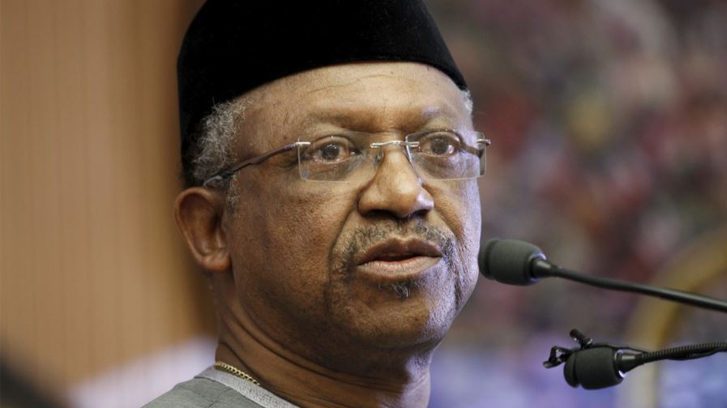
THE Federal Ministry of Health (FMoH) on Thursday denied a Twitter account @osagieehanire registered in the name of the newly inaugurated Minister of Health, Dr. Osagie Ehanire.
The ministry advised the public to disregard the unverified Twitter handle.
Ehanire was among the cabinet members sworn in by President Muhammadu Buhari Wednesday at the Presidential Villa, Abuja. He was the minister of state for health during Buhari’s first tenure in office.
He is to be assisted by Sen. Adeleke Mamora as junior minister attached to the ministry.
The Health Ministry, via its verified handle @Fmohnigeria, however, tagged Mrs. Akinola Boade, the Director of Media and Public Relations for the ministry @akinolaboade, Chikwe Ihekweazu, the Director-General of the National Centre for Disease Control (NCDC) @Chikwe_I, Dr. Faisal Shuaib, Chief Executive Officer of the National Primary Health Care Development Agency (NPHCDA) @drfaisalshuaib and Dr. Ngozi Azodoh, Director Special projects and National Coordinator Health Response to Humanitarian Crisis in Nigeria @Dr_NRC_Azodoh.
Osagie, a surgeon attended the College of Medicine, Ludwig, Maximillians University, Munich. He also holds postgraduate Diplomas from the Teaching Hospital of the University of Düsseldorf and Essen, Germany in the areas of Anesthesiology, General Surgery, and Orthopaedic Trauma Surgery.