Home Blog Page 2315

Over 190 phone calls were exchanged between Army Captain and kidnap kingpin prior to the killing of police officers – Report

1

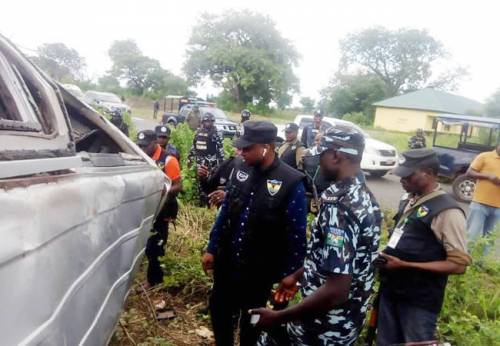
FOLLOWING, the arrest of the Nigerian Army Captain who allegedly ordered soldiers in Taraba State, to open fire on police personnel leading to the death of three police officers, investigations revealed that the escaped kidnap kingpin, Hamisu Wadume had exchanged over 190 phone calls with him according to a report

The army captain who was arrested alongside five other military personnel, who allegedly took part in the dastardly act, are currently being interrogated at the Defence Headquarters, Abuja.

Police investigations showed that conversation via phone had existed between the army captain and the notorious kidnapper,  Wadume which the records indicated that over 190 phone calls were exchanged between the duo from July 9, 2019, and August 6, 2019.

Efforts made by The ICIR to speak to Police Public Relations Officer, PPRO, Frank Mba, to confirm the veracity of the story proved abortive as calls on his line were not answered and a text message sent to him was not replied at the time of filing this report.

A source quoted in the report stated that “top police hierarchy believes that the army captain might have been providing cover for the kidnapper, who is alleged to have received hundreds of millions as ransom from his kidnap victims.”

The arrested soldiers had admitted they received orders to attack the policemen from the captain, whom they said informed them that Wadume had been kidnapped and was being transported in a silver-coloured Toyota Hiace Bus.

The soldiers also claimed that they acted on the orders of the captain, being their superior officer, but police sources at Force Headquarters Abuja disclosed that the police authorities have established strong links between the army captain and the notorious kidnapper, alleging that the army captain was on the kidnapper’s payroll.

In another development, elder brother of one of the slain police officers, Andrew Ediale in a press conference on Wednesday in Abuja, demanding that justice be meted on the soldiers who participated in the killings

“Justice should be done, we want justice. The same army that is charged with protecting the citizens of this country are the perpetrators of this barbaric act,” he said.

He questioned the role of the army’s involvement in the alleged killings and their sponsors.

“Our question is who are these soldiers working for? Whose side are they on and whose payroll is this military personnel on? These are the many questions we demand answers?

“We demand to know why? And why the kidnapper was released, and the effort of the gallant police officers was not only compromised, their life was equally cut short, we demand justice,” he concluded.

Nigeria Prisons Service now Nigerian Correctional Services

PRESIDENT Muhammadu Buhari on Wednesday approved a change of name, for the  Nigeria Prisons Service to be called the Nigerian Correctional Service.

This was disclosed by the presidency in a statement, made available to The Premium times.

The law according to the Nigerian Correctional Service Bill, 2019, read:

“This Act repeals the Prisons Acts and changes the name from Nigeria Prisons Service to Nigerian Correctional Service, otherwise known as the Correctional Service.”

The statement also revealed the president had changed the name of a Nigerian institution: The Federal University of Agriculture Markudi in Benue State.

The university’s name was changed to Joseph Sarwuan Tarka University, Markudi.

The development was a sequel to President Muhammadu Buhari’s decision to sign a bill to amend the law that backed up the decision that set up the university.

The university of agriculture was established in 1988, following the recommendations of a 1987 federal government White Paper on Higher Education curriculum and development in Nigeria.

The Nigerian Prisons Service is a government agency of Nigeria which operates prisons, and it’s under the supervision of the Ministry of the Interior and the Civil Defence Immigration and Prisons Board.

Armed men abduct another Kaduna Pastor, demand N20m ransom

LESS than two weeks a clergy in Kaduna was kidnapped and later killed, the pastor in charge of Nagarta Baptist Church in the state had also been abducted on Wednesday.

The pastor identified as Elisha Numan was reportedly kidnapped in the early hours of Wednesday by heavily armed men totalling more than 20, according to Punch.

His abduction was confirmed by Chairman of the Kaduna State Christian Association of Nigeria (CAN), Joseph Hayab.

“One of our pastors has been kidnapped early this morning. Pastor Elisha S. Numan of Nagarta Baptist Church Ungwan Makere near Udawa. Udawa is in Chikun Local Government of Kaduna State. We are yet to hear from him,” he said.

The armed bandits, numbering about 20, reportedly invaded the clergyman’s residence on Wednesday violently, abducted him and his son,  Emmanuel Elisha.

But the son who was later released was informed to provide some ransom in terms of money within five days to secure the release of his dad.

“They forced their way into our houses and vandalised properties. They carted away from some valuables including mobile phones and clothing in my mother’s box,” Elisha narrated their ordeal.

“They picked me together with my father. But after a while into the bush, I was released and they went away with my father. One of them was dressed in military camouflage,” he added.

However, the kidnappers later made contact with the family, demanding N20m ransom before the pastor could gain his freedom.

The Nigerian Army in late July discovered a group of bandits dressed in military camouflage along Abuja-Kaduna highway that mounted an illegal roadblock. Army said they would have been ordinarily perceived by “unsuspecting members of the public as military personnel”.

The clergy that was abducted today was pastoring a church at the same local government area – Chikun Local Government- the late Jeremiah Omolewa church was situated.

Omolewa, before he was killed, was the resident pastor of the Living Faith Chruch in Romi New Extension, a suburb of Kaduna.

He was shot dead on the Abuja-Kaduna road on Sunday, August 4 by the armed abductors who also kidnapped his wife. The armed men later demanded a ransom of N50 million.

After spending five days with the abductors and some money was paid, she regained her freedom. The chairman of Kaduna State Christian Association of Nigeria, Joseph Hayab, who disclosed her release to newsmen said the late pastor’s wife was picked along Kaduna-Abuja highway after some undisclosed money was paid.

There have been several reports about kidnapping, bandits killing, and attacks across Nigeria, particularly, in the Northern region.

According to Inspector General of Police Mohammed Adamu in June, Kaduna recorded the highest number of arrested kidnap suspects followed by Katsina.

Earlier in May, the IGP removed the then Kaduna State Commissioner of Police, Ahmed Abdulrahman over persistent insecurity in the state.

Though it was “part of efforts aimed at rejigging the fight against armed banditry, kidnapping and other sundry crimes across the nation, particularly in Kaduna and other contiguous States”, the police is yet to curb the crime as a pastor was reported to be kidnapped, less than two weeks after Omolewa was killed and his wife was released four days after being abducted.

Dozens of child sex abuse victims sue Catholic Church in New York after change in law

OVER 70 persons in New York State who were victims of sexual abuse as children have sued the Roman Catholic Church on Wednesday under a new law.

The Child Victim Act which came into effect today temporarily enabled victims to file lawsuits over decades-old crime.

According to the New York County Supreme Court records, most of them accusing priests of sexually abusing them as children and church leaders of covering up the priests’ crimes.

The Act will scrap for one year a statute of limitations that had barred older complaints. The change in the law means people of any age have a year to file a retroactive sexual abuse lawsuit against an alleged offender.

The change has been applauded by human right activists who said the new development is an enthronement of justice.

The bill amends “New York’s antiquated laws to ensure that perpetrators are held accountable for their actions, regardless of when the crime occurred,” Andrew Cuomo’s, Governor, New York State said in a statement after he signed the measure into law in February.

The law is expected to lead to hundreds of lawsuits against churches, schools and youth groups.

A lawsuit was has been filed already against Boy Scouts of America, accusing the national organization of knowingly employing thousands of leaders who were suspected of molesting children.

More cases are expected to be filed in the coming weeks against churches, schools, hospitals and other institutions across New York City, with defendants ranging from the plaintiffs’ relatives and neighbours to members of the clergy.

Weitz & Luxenberg, a law firm in New York said it would file 400 lawsuits under the Child Victims Act just in New York City, with plaintiffs ranging from teenagers to people in their 90s.

The firm claimed it was representing more than 1,200 people who were victims of sexual abuse as children.

A separate group of law firms, including Seeger Weiss, said it would be representing at least 170 plaintiffs across the state, many with complaints against the Roman Catholic Church.

After the one-year period expires, victims will have until the age of 55 to sue alleged abusers.


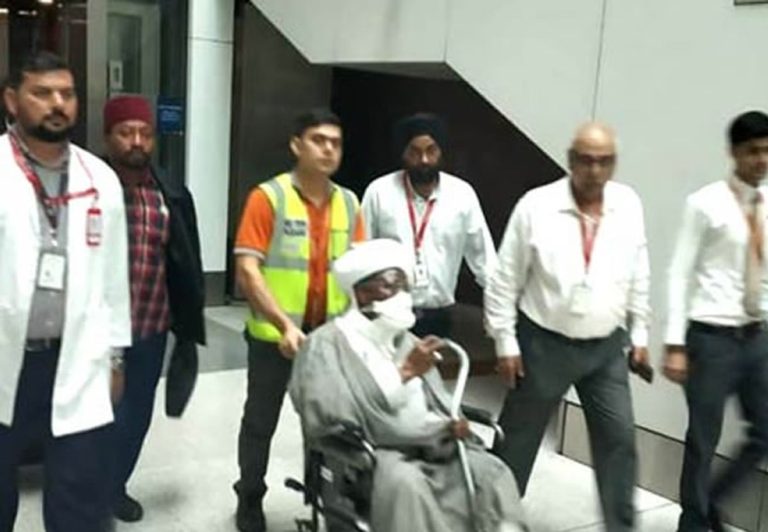
El-Zakzaky describes situation in India hospital as pathetic

THE leader of the Islamic Movement in Nigeria (IMN) Ibrahim EL-Zakzaky has described the condition of his stay at the Medanta Hospital in New Delhi, India as pathetic and worrisome.

El-zakzaky in audio, on Wednesday, alleged that the Nigerian government was frustrating his medical treatment with stringent security measures, worst than his stay in Nigeria.

“On getting to the hospital, we were placed under a tighter security situation worse than what we have been witnessed in Nigeria. We are currently more confined than when we were in Nigeria, worse than a prison setting,” the cleric said.

He accused the federal government of failing to meet their own end of the bargain by interfering with the medical treatment been administered to him.

“The hospital officials received us well they told us that they parked two ambulance vehicles, deceiving the crowd while taking us out through another way, saying that it was for our own safety.

“…Back home in Nigeria, they agreed that nobody should take us to any other hospital aside the hospital of our choice but we got to realize that the doctors they brought to us were there just to give advice,” he said.

He lamented that the government had programmed them for another detention in India after a prolonged one in Nigeria.

“All what we have seen here, have shown us that there is no trust, they just brought us here for another detention,” He said.

He added that they lacked the freedom they barely had in Nigeria, as security agencies were locked on every angle of his hospital apartment.

“I have been in detention for about thirteen years but I’ve never seen this kind of security that I’m seeing here, even at the door of my hospital room, there are many security personnel waiting, heavily armed.

They didn’t even allow me to go to the next room, I started asking myself, all these while I’ve been in detention, I’ve never seen this type. Even if I’m in the cell, they usually lock us up around 9pm and open the cell around 7 am and they allow us to go anywhere we want in the area we are,” he said.

Reacting to this, Abdullahi Musa,  secretary of the academic forum of IMN, confirmed the authenticity of the audio as true, The Cable report.

Musa alleged that the federal government had conspired with the India government “to scuttle the treatment”.

“They brought a new set of doctors instead of the ones the Sheikh (El-Zakzaky) made prior arrangements with,” he said.

“So, the Sheikh smelled a rat and refused to submit himself to the doctors to treat him. He asked them why they prevented him from seeing the doctors he had earlier made arrangements with? So he said he will not allow them to treat him,” Musa noted.

El-Zakzaky was a Monday flown out of the country to India for medical treatment, following a court order by the Kaduna High court.

The cleric had reportedly been battling ill-health, due to lack of care.

El-zakzaky was arrested and detained since December 2015, alongside his wife, Zeenat.

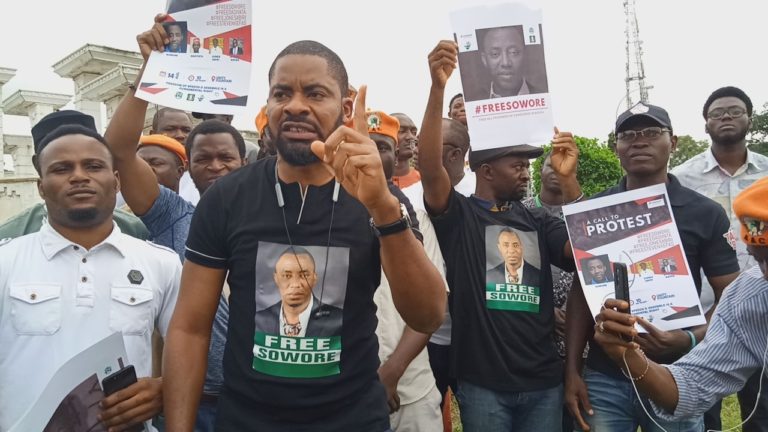
#RevolutionNow: Nigerians protest arrest of Sowore, others in Abuja amid heavy security presence

NIGERIANS gathered at the Unity Fountain, Abuja, on Wednesday morning to protest the continued detention of Omoyele Sowore, publisher of Sahara Reporters, and others who have been recently arrested.

The protest took place in the presence of security personnel. During one of his speeches, human rights activist Deji Adeyanju said the people need to know the level of intimidation the protesters are dealing with.

“When it’s time to go to Sambisa forest now, they will start crying,” he teased. “They will say the ammunition is not enough. They will go to their religious leaders to pray that they don’t want the transfer. But when it is time to intimidate comrades, you will see their big chests. They will start changing their voice.”

Our reporter noted the presence of 15 patrol vans parked close to the protesters, including ones from the Nigeria Prisons Service, Nigerian Army, Nigeria Security and Civil Defence Corps, and Rapid Response Squad. Also present were a bus from the FCT Fire Service and an Armoured Personnel Carrier (APC).

About 500 metres south of the park, opposite the Federal High Court, two vans and one APC were also stationed.

Towards the end of the gathering, six additional police patrol motorcycles arrived.

“Greatest of the greatest Nigerian people, please can we put our hands together,” Adeyanju said sarcastically once he noticed the overwhelming presence of the security paraphernalia.

“We just received six new bikes. They just joined us from the force headquarters. Please, can we put our hands together and celebrate them? We celebrate the police. We celebrate our security people. Oh, they are working. They are fighting crime all over Nigeria. There is no longer insecurity in the country.”

Adebayo Raphael, an Abuja-based human rights activist and development consultant, while addressing journalists described the system of government Nigeria currently practises as a democratic dictatorship.

“Nigeria has now turned into a festooned scar. In this country, we are no longer safe. In this country, we are no longer free. And in any country which practises democracy, where one of us is not free, then all of us are not free. If the freedom of one of us is taken, the freedom of all of us has been taken away,” he said.

“And so we must make it very clear to tyrant Buhari and all his cronies that we the people of Nigeria will not be cowed, that the voices of dissent in this country will not be subjugated, that our clamour for freedom will not wane, that it wouldn’t matter whether they mobilise one hundred people against us or they mobilise thousands of people against us, we will stand regardless of our numbers to say enough is enough. We will stand regardless of our numbers to condemn tyranny in every way possible.

“Stephen Kefas has been arrested. Sowore has been abducted. Jones Abiri has been abducted. So many others that we don’t even have their names. But you can see that despite these state-sponsored abductions, some of us are still here today. This is to show you the resilience of those they call Nigerians.”

He added that the activists and protesters will not give up until “the country is free” and all the arrested citizens are released, while the crowd repeatedly chanted “yes!” in agreement.

The Middle Belt Forum’s Deputy National Organising Secretary, Ndi Kato, also assured that the protest will be sustained in spite of the “campaign of fear unleashed”.

“We will come out whether bullets are flying. We will come out even if our friends are disappearing. We will come out knowing we may be the one to disappear tomorrow. Every day, we will come out,” she said.

“Today, you are alive. Tomorrow, you may not be. And people will move on because we are used to it. People will move on because no value has been placed on the life of any Nigerian. Your life is worth nothing as long as you are Nigerian.”

Kato appealed to the government to grant freedom to Abubakar Idris ‘Dadiyata’, Stephen Kefas, Sowore, as well as all who have been unlawfully detained in various states but whose cases do not have national coverage.

Cross-section of protesters and reporters at Unity Fountain on Wednesday

On Saturday, August 3, Sowore was arrested by operatives of the Department of State Services (DSS) following planned demonstrations in 21 states on August 5. They accused the human rights activist and 2019 presidential candidate of “threatening public safety, peaceful co-existence and social harmony in the country”.

On Thursday, the Federal High Court granted an ex-parte application by the security agency, filed under the Terrorism Prevention Act, to detain him for up to 45 days.

Kefas, a Kaduna-based journalist, was arrested in May by officers of the Rivers State Police Command for sharing an article, dealing with the death of Kajuru monarch Galadima Maiwada, on Facebook. And Idris, a PDP member popularly called ‘Dadiyata’, was allegedly abducted from his home by DSS operatives in August. His whereabouts and the circumstances leading to his disappearance remain unclear.

Nigeria’s foreign reserves hits bump, drops by $482.18 million in July – Report

0

NIGERIA’S foreign reserves recorded a shortfall of $482.18 million, following a sharp depletion of the reserves from $45.14 billion to $44.65 billion in July according to records obtained from the Central Bank of Nigeria, CBN.

In a report titled “Easy money: Time to create buffers’ by Nigerian based financial outfit, FSDH Merchant Bank, released in August, it blamed the falling reserves on low crude oil prices and low Foreign Portfolio Investments, FPI, inflows in the country.

FPI occurs when investors purchase non-controlling interests in foreign companies or government bonds to create economic inroads through capital inflows.

“The current level of the foreign reserve can still provide short-term support for the value of the Naira which is enough to cover over 13 months of imports,” the report revealed.

It also noted that the medium-term stability in the foreign exchange market will depend on the country’s ability to increase its foreign exchange receipts from both crude oil and non-oil products.

“The average benchmark price for Bonny Light in July 2019 stood at $66.24 per barrel when compared with the average price in June.

“However, in the last few days, the crude oil price has dropped below $60 per barrel as a result of trade tensions between the United States and China is likely to have impacts on the global economy. This may have negative impacts on revenue and other key prices in Nigeria,” it said.

The report forecasts a gloomy future for the Nigerian economy with regards to the daily crude oil production in Nigeria which decreased by 5.04 per cent from 1.83 million barrels per day in April to 1.73 million barrels per day in July.

“Though the 2019 budget benchmark is at 2.3 million barrels per day, the lower crude oil daily production compared with the budget benchmark may pose negative implications on Nigeria’s revenue receipts and fiscal buffers,” it said

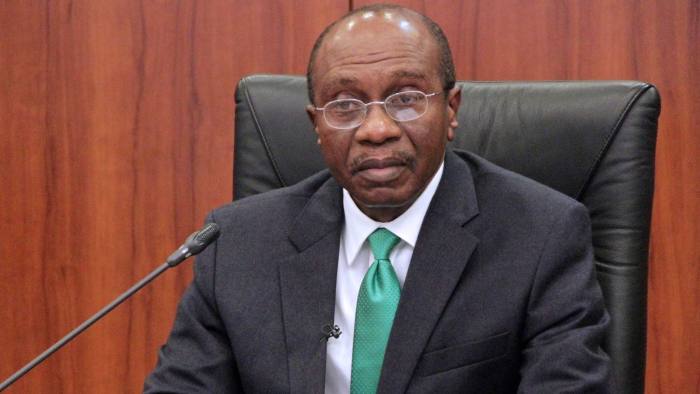
CBN Governor, Godwin Emefiele, in a report stated that the recovery of the foreign reserves from its low point 3 years ago was a sign of growth.

“Our external reserves have risen from $23 billion in October 2016 to over $45 billion in June. The foreign reserve will be conserved and utilised strictly for diversification of the economy, and not for encouraging more dependence on foreign food import bills,” he said.

He affirmed the need for a different strategy to grow the economy apart from relying on revenue from exports.

“While the drop in our export earnings arising from our reliance on crude oil exposed the fragility of our domestic economy in 2016, it also reinforced the view within the CBN and the Bankers Committee on the need to revise our growth strategy as a nation,” he stated.

He said with crude oil as a major source of the country’s foreign exchange, the nation’s economy will always be vulnerable to fluctuations in the price of crude oil.

South Africa pharm to pay UK NHS eight million pounds over illegal market competition

SOUTH African drug firm Aspen has offered to pay the National Health Service £8m, as part of a wider package, to resolve competition concerns over the supply of a fludrocortisone acetate 0.1 mg tablets.

The offering comes off the back of an investigation by the Competition and Markets Authority (CMA) into suspected anti-competitive arrangements regarding the drug.

PharmTimes reports that the arrangement marks the first time the CMA will secure such payment to the NHS in one of its pharmaceutical investigations.

The CMA has been investigating claims that Aspen entered into arrangements with two rival companies in 2016, and confirmed that competition law had been broken by Aspen paying competitors to stay out of the market. The arrangements subsequently left Aspen as the sole supplier of fludrocortisone, with the ability to set prices without facing any competition.

The CMA has announced that as a result of the case, Aspen approached the organisation with a proposed package to resolve the differences, which includes admission of illegality: Aspen admits it was party to an illegal, anti-competitive agreement, by way of settlement, and compensation to address CMA’s concerns: Aspen will commit to pay £8 million to the NHS – without the Government having to launch court proceedings for damages.

This is intended to address the CMA’s concerns that as a result of the impact of Aspen’s behaviour, the NHS paid a higher price for fludrocortisone.

The disgraced company will also pay a maximum fine of £2.1 million, once the CMA has concluded its investigation if it reaches a formal decision that the law has been broken. The CMA is continuing its investigation given other companies are involved.

Andrea Coscelli, the CMA’s chief executive, said that the organisation launched the investigation because they consider it “unacceptable for the NHS – and the taxpayers who fund it – to have to pay millions of pounds more than they should for this life-saving drug.

“This is the first time a CMA investigation will secure payment for the NHS. The £8 million Aspen has agreed to provide will save the NHS the time and expense of seeking damages in court. Importantly, Aspen has also committed to ensuring there are more competitors in this market, giving the NHS the opportunity to secure better value for UK taxpayers’ money in the future.”

He added that the organisation “welcomes Aspen approaching” to find a new way of addressing the CMA’s concerns.

The CMA currently has other unrelated investigations open in relation to six other pharmaceutical drugs.


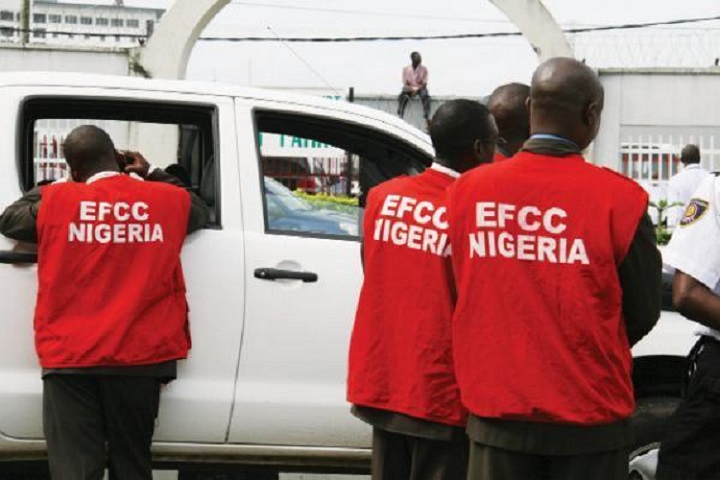
EFCC: Atiku’s son-in-law, Babalele arraigned for $140,000 money laundering

ABDULLAHI Babalele, the son-in-law to the former Vice President Atiku Abubakar, has been arraigned on a two-count charge bordering on money laundering.

Babalele was on Wednesday arraigned by the Economic and Financial Crime Commission (EFCC) at Federal High Court in Lagos.

The EFCC on August 9th filed a two-count charge against Atiku’s son-in-law for allegedly aiding the cash payment of the sum of $140,000 without going through a financial institution.

The prosecutor of the EFCC, Rotimi Oyedepo who signed the charges said Babalele had committed the offence since February 2019.

The count read thus:

COUNT 1: That you Abdullahi Babalele on or about the 20th day of February 2019 in Nigeria within the jurisdiction of this Honourable Court. procured Bashir Mohammed to make a cash payment of the sum of $140,000. 00 (One Hundred and Forty Thousand United State Dollars) without going through a financial institution, which sum exceeded the amount authorized by Law and you thereby committed an offence contrary to Section 18(c) of the Money Laundering (Prohibition) Act, 2011 as amended and punishable under Section 16(2)(b) of the same Act.

Count 2: That you Abdullahi Babalele on or about the 20th day of February,2019 in Nigeria within the jurisdiction of this Honourable Court, aided Bashir Mohammed to make cash payment of the sum of $140,000. 00 (One Hundred and Forty Thousand United State Dollars) without going through financial institution, which sum exceeded the amount authorized by Law and you thereby committed an offence contrary to Section 18(a) of the Money Laundering (Prohibition) Act, 2011 as amended and punishable under Section 16(2)(b) of the same Act.”

However, Babalele before Justice Nicholas Oweibo pleaded not guilty to the two-count charge.

Also arraigned by the EFCC was a former associate of Atiku, Uyiekpen Giwa-Osagie and a legal practitioner on a three-count charge bordering on a $2million money laundering in the build-up to the 2019 general elections.

The EFCC disclosed that in the charge was Erhunse Giwa-Osagie, a brother to Atiku’s associate.

The antigraft said the two defendants had conspired to make a cash payment of $2million on February 12, 2019, without going through a financial institution.

The duo pleaded not guilty to the charges.

Consequently, Justice Oweibo ordered that Babalele and the Osagie brothers be remanded at the EFCC custody pending the hearing of their bail application on Thursday, August 15.

Daura Emirate to Buhari: We only enjoy 24-hour power when you are around

PEOPLE in the neighbouring communities under the Daura emirate in Kastina have decried a shortage in power supply, which only improves only when President Muhammadu Buhari is in town.

Leaders from the five local government areas under the Daura emirate made this statement during a courtesy visit to the president at his home in Daura during Sallah.

“Anytime the President is around we enjoy 24 hours power supply. But if he is not around, the power supply is not always stable,” Mohammed Saleh, one of the leaders, said.

The leaders requested that the president addressed issues plaguing the communities.

Earlier in May, the Daura emirate council had suspended all activities regarding the celebration of Eld-Al-Fitr, due to reported cases of insecurities ravaging some part of the state.

Amongst such cases was the kidnap of the district head of Daura, Umar Musa, who was reportedly abducted by suspected bandits.

Also, 34 people were reportedly killed in some part of the state, which led to the prescription of capital punishment for kidnapping, cattle rustling and armed robbery.

However, Buhari in his reactions to the leaders’ outcries, said his mission is to fight for the poor while ensuring that campaign issues, such as security, economy and corruption are resolved.

The Emir of Daura, Umar Farouq, during the Sallah Durbar held in his palace, urged Nigerians to show support to the president in overcoming the challenges faced by the country.

The president had also hosted the Presidents of Guinea Conakry, Alpha Conde, who celebrated the Eid in Nigeria.