Home Blog Page 2317

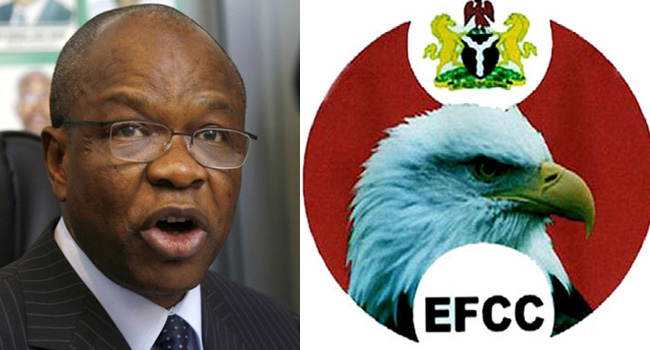
N1.23 bn Fraud: Court grants ex-INEC boss N1bn bail, warns him not to intimidate EFCC witnesses

A former Chairman of the Independent National Electoral Commission (INEC), Maurice Iwu, who was alleged of money laundering totalling N1.23 bn has been granted bail in the sum of N1 billion with two sureties in like sum.

Iwu, a professor of  Pharmacognosy was arraigned by the Economic and Financial Crimes Commission (EFCC) on four counts charges bordering on concealment, fraud and money laundering of N1,203,000 between December 2014 and March 2015.

He was the INEC chairman from June 2005 till April 2010 when he was removed from the office due to issues of integrity in the electoral processes.

Giving the ruling on Friday, Justice Chuka Obiozor at the Federal High Court Ikeja, Lagos ordered that Iwu be remanded at the Ikoyi prison pending the fulfilments of the bail conditions, according to Punch.

His bail conditions were to provide N1 billion, together with two sureties. He said one of the sureties must own a landed property in Lagos while the other must be a professor or a civil servant not below Grade Level 16.

The EFCC had fingered Iwu among the ‘beneficiary’ of the N23.29 bn slush funds allegedly shared by former Petroleum Minister, Diezani Allison-Madueke to influence the result of the 2015 presidential election.  The 2015 election saw to the emerging of President Muhammadu Buhari unseating the ruling president Goodluck Jonathan.

The over 1.2 billion Iwu had received was said to be domiciled in a bank account of the  Bioresources Institute of Nigeria Limited, a company he currently heads as the Executive Director.

During the hearing of the bail application on Friday, Iwu’s counsel, Ahmad Raji, prayed the court to grant him bail.

The prosecution lawyer, Rotimi Oyedepo, rather opposed. He urged the court to use its discretion not to grant the bail. The EFCC counsel added that there was evidence of the possibility of the defendant intimidating or interfering with the witnesses if he was granted bail, adding the witnesses were mostly INEC officials with whom he had worked closely.

He told the court that the former INEC boss “ought to have reasonably known that the N1.23bn formed part of proceeds of an unlawful act, to wit: fraud.”

He noted his action was in contrary to sections 18(a) and 15 (2) (a) of the Money Laundering ((Prohibition) Act 2011 and was liable to be punished under Section 15(3) of the same Act.

After hearing both the defendant and prosecution arguments, the judge, however, granted him bail, insisting that Iwu should not communicate with any of the witnesses.

Nigeria crude oil exports suffers poor sales, amidst competing US oil production

0

THE glut of crude oil supply in the oil market hit Nigeria’s crude oil exports with poor sales, amidst efforts to balance the market, the International Energy Agency, IEA, on Friday announced a global decline in oil demand growth.

The global energy agency lowered its oil demand growth for 2019 by 100,000 barrels per day to 1.1 million barrels per day and cut its 2020 demand growth to 1.3 million barrels per day blaming uncertainties on the US-China trade war.

“The situation is becoming even more uncertain … global oil demand growth has been very sluggish in the first half of 2019,” the IEA stated in its monthly report.

The IEA highlights that the global oil supply decline poses danger to demand growth of the market.

“Comparing oil demand for May with the same month in 2018, global demand fell by 160,000 barrels per day, for the second year in a row. The outlook is fragile with a greater likelihood of a downward revision than an upward one,” the IEA noted.

However, over forty cargoes of crude oil exports from Nigeria in August were still in need of buyers when Nigeria began publishing its preliminary programme for September exports beginning on July 18 according to a report.

It is the largest oversupply of Nigeria’s crude oil in 2019 considering the time under review when compared to its highest 25 cargoes monthly excess this year.

Nigeria and the United States are major producers of sweet grades crude oil which is ideal for refining into petrol, but US oil exports increased from 260,000 barrels per day in June to a monthly record of 3.16 million barrels per day putting Nigeria’s oil exports sales in jeopardy.

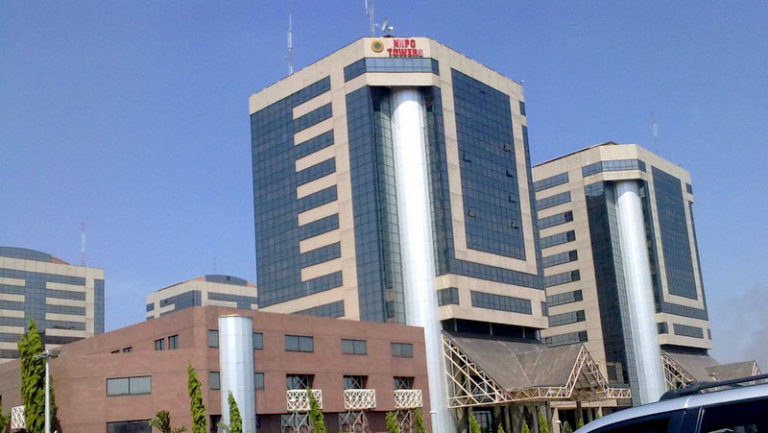
Mele Kyari, the Group Managing Director of the Nigerian National Petroleum Corporation, NNPC, in an interview, affirmed that buyers would always pick interest in Nigeria’s crude because of its quality.

“I think the advantage we’ve had is the quality of our crude, there will always be a need for it,” he said.

According to IHS Markit, Europe has imported around 46 per cent of Nigeria’s oil since the beginning of 2019, India nearly 18 per cent, and the rest of Asia about another 10 per cent.

The Organisation of Petroleum Exporting Countries, OPEC, and its allies have agreed to cut production by 1.2 million barrels per day through to the end of the first quarter of 2020 and its members have shown strong compliance.

However, the IEA was also quick to point out it would be a “temporary phenomenon” because its forecasts show very strong non-OPEC oil production growth next year likely to make the global oil market flooded with crude oil.

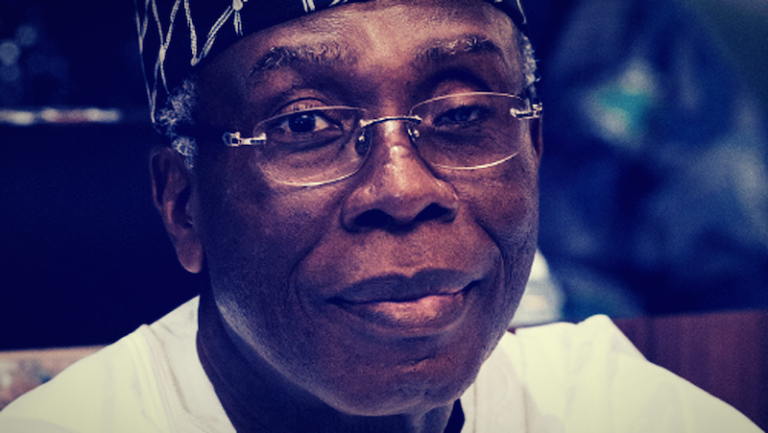
As Audu Ogbeh takes the backseat

By Eric TENIOLA

WHEN President Muhammadu Buhari, GCFR, submitted his list of Ministers to the Senate on July 23, the name of Chief Audu Innocent Ogbeh (72) was missing. He was one of the few Ministers who was not re-nominated by the President. And this led to a conclusion that perhaps the public service career of this colourful politician is over and that henceforth he will retire to his village in Efugu-Otukpa with his wife, Justina Obehi and take the back seat with a role as an Elder Statesman.

If that should be, it is not too early to thank Chief Ogbeh for his contributions to Nigeria. No doubt Chief Audu Ogbeh now has a passport to join the league of Benue state greats including Chief Jacob Obade, the Minister of State in charge of the Nigerian Army in early sixties who recruited most military officers from that zone, Chief Joseph Sarwuan Tarka (1932-1980) who formed the United Middlebelt Congress at the age of 23 along with Chief Isaac Shaahu and others. And became a leader of the region till died and Colonel Joseph Akahan, the Chief of Army Staff from Gboko, who died in a helicopter crash during the civil war at the age of thirty-one in May 1968. Others with similar passports are Brigadier General David Bonaventure Alachenu Mark (71) from Otukpo, Major General (rtd.) Lawrence Anebi Oloja (70) from Idekpa, Okpiko, Chief George Akume (65) from Wannune Tarka, Major General Chris Abutu Garba (71) from Ipole, Senator Daniel Iyorkegh Soror, Brigadier Atom Kpera (78) Chief Barnabas Adyar Iyoriher Gemade from Otukpo, Chief Iyorchia Ayu (66) from Gboko, Chief Ameh Ebute from Ugbokodo, Ambassador Iyorwuese Hagher (70) from Kasar, Chief Paul Unongo from Turan, Brigadier General (rtd) Emmanuel Ikwue from Otukpo, Chief Isaac Shaahu and a few others.

Chief Audu Ogbeh’s life reminds me of what James Baldwin wrote, “Not everything that is faced can be changed but nothing can be changed until it is faced”.

The name Audu Ogbeh caught National attention in 1979 when he was elected as deputy speaker of the Benue state House of Assembly. On October 18, 1979, President Shehu Usman Aliyu Shagari submitted 31 names to the Senate for ministerial confirmation. Benue state had two cabinet nominees, Chief Isaac Shaahu and Chief Paul Unongo. Chief Shaahu was of the NPN at that time. In 1981 there were some allegations made against the then Minister of Power and Steel, Chief Paul Iyorpuu Unongo (82) then of the NPP, who is also from Benue state. At that time the NPN was in control of Benue state and the then governor, Chief Aper Aku (1938-1988) from Ikyobo, Ushongo local government area of Benue state was of the NPN. Notable politicians from Benue state including my good friend Senator Joseph Sarwuan Tarka, Senator Suemo Chia, Senator Ameh Ebute, Chief Isaac Shaahu, Dr. Emmanuel Atanu, V. Iortim, S.O. Adohi, Chief B.A. Chaha, and others were also of the NPN.

Following the allegations on Chief Paul Unongo, President Shagari dropped him from the cabinet and appointed Chief Audu Ogbeh as Minister of Communication at the age of 33. President Shagari later moved him to the Ministry of Power and Steel. It was at this time that I knew Chief Audu Ogbeh who was introduced to me by his bosom friend, Chief Innocent Adikwu, who was then Editor of THE SUNDAY PUNCH. He was also introduced to me later by my colleague and friend, Mr. Muyiwa Adetiba, a gifted writer, who was then a star in the Punch Newspaper who later became Editor of THE SUNDAY PUNCH. In his first term, he was loyal to President Shagari and he did his job brilliantly.

On October 17, 1983, he was re-nominated by President Shagari as a Minister in his second term. Only seven of them were re-nominated. And they were Chief Eteng Okoi Obuli (Cross River), Mohammed Ibrahim Hassan (Bauchi), Alhaji Ali Baba (Gongola), Alhaji Umaru Abdurahman Dikko (Kaduna), Alhaji Adamu Ciroma (Borno) and Chief Audu Ogbeh (Benue) and Dr. Ishael Jikiri Igbani (Rivers). The rest were fresherS. They included Chief Eleazar Chukwuemeka Anyaoku, Chief John Nwodo jnr., Alhaji Sule Katagum, Alhaji Ibrahim Tahir, Alhaji Magaji Mu’azu, Chief J.A. Orhorbo, Mr. Ralph Uwechue, Dr. E.T. Atanu, Alhaji Muhammadu Buhari, Alhaji Haliru Dantoro, Dr. Simi Johnson, Dr. Idirisu Ibrahim, Chief Kehinde Sofola, Dr. Bode Olowoporoku, Chief S.M. Afolabi, Dr. Bimbo Akintola, Alhaji Hassan Mohammed, Mr. Robert Doshun Gumut, Chief Okoi-Obuli, Dr. A.J. Okonno, Alhaji Ali Baba, Mr. Paul Wampana, Chief Emmanuel Adiele, Alhaji Isma’ila Isa, Alhaji Yusuf Maitama Sule, Alhaji Hamisu Musa, Dr. Ishmael Igbani, Mrs. E. Diete-Spiff, Alhaji Muhammadu Lugga, Alhaji Idirisu Koko and Alhaji Bala Sokoto.

On December 31, Major General Muhammadu Buhari toppled President Shehu Shagari. Chief Ogbeh went back to his farm in Benue state. He is an Idoma. The Idomas are people that primarily inhabit the lower western areas of Benue State, Nigeria, and kindred groups can be found in Cross Rivers State, Enugu State and Nasarawa State in Nigeria. The Idoma language is classified in the Akweya subgroup of the Idomoid languages of the Volta–Niger family, which include Alago, Agatu, Etulo and Yala languages of Benue, Nasarawa, and Northern Cross river states. The Akweya subgroup is closely related to the Yatye-Akpa sub-group. The bulk of the territory is inland, south of river Benue, some seventy-two kilometers east of its confluence with River Niger. The Idomas are known to be ‘warriors’ and ‘hunters’ of class, but hospitable and peace-loving. Other tribes in Benue state are Tiv, Igede, Etulo, Abakpa, Jukun, Hausa, Igbo, Akweya and Nyifon.

He returned to full time farming in December 1984. During the period, he set up a number of personal projects including Medium Scale Rice Mill, 14,000 Tree Cashew Plantation and a Poultry Farm.

He also consulted for several state governments and established a number of notable projects, including a large scale pineapple project for Cross River State and 2 rice mills – for the Family Economic Advancement Program in Abuja and for General Jeremiah.T. Useni in Langtang, Plateau State.

While in full-time agriculture, he answered the call to serve and was appointed to the 19 member National Constitutional Conference Commission in 1993. He was later appointed to the eight-man National Reconciliation Committee, which was inaugurated on December 28, 1995, under the leadership of my former teacher, Chief Alexander Opeyemi Akinyele, the Loboshin of Ondo Kingdom. General Sani Abacha inaugurated the committee with a view towards full reconciliation among Nigerians. He later dissolved the committee.

In 1998, he directed the presidential campaign of Dr. Alex Ekwueme, under the PDP and became a full-time member of the party; which won the elections in 1999.

He is also a member of Eisenhower Exchange Fellowships Incorporated, based in Philadelphia, United States of America. He has written five plays which include three published works. One of his plays, the Epitaph of Simon Kisulu was staged at Muson Center in 2002.

The brutal politics in Benue state almost took his life as he was attacked by hired assassins and was presumed dead after the attack in 1999.

On November 11, 2001, Chief Audu Ogbeh succeeded his Benue state colleague, Chief Barnabas Germade who in November 1999 defeated Chief Sunday Awoniyi as Chairman of the party. Chief Audu Ogbeh’s term as chairman was tumultuous. The puzzle I still don’t understand till now is why President Obasanjo picked on Chief Ogbeh to be the National chairman when in 1998 he was the campaign manager of Chief Alex Ekwueme in his Presidential bid at the Jos Convention.

Chief Ogbeh reorganised the party and ensured the party’s victory in the 2003 election. From day one we knew that the marriage between President Obasanjo and Chief Audu Ogbeh can’t work. One grew up in a military constituency where 100 percent total loyalty to your boss wrong or right is required while the other grew up in a rather free world of ideas where you can agree and disagree on principles. The gubernatorial election in Anambra state in 2003 and other crises exposed the division between the two men.

Shortly after the Presidential election in 2003 he was faced with a difficult decision either to support President Obasanjo’s third term bid or to abide by the constitutional provision which allows any individual to serve only two terms. The decision he took became risky. Towards the end of his tenure and with his increasingly vocal denunciations against the excesses of the Obasanjo administration, he came into conflict with the president.

Chief Audu Ogbeh’s family was harassed and subjected humiliation and embarrassment. His wife, Justina Obehi Ogbeh from Ekpoma in Edo state and his five children were not spared in the ordeal.

In a letter dated December 6, 2004, he told President Obasanjo to do something about it. “About a month ago, the nation woke up to the shocking news of a devastating attack on Anambra State, resulting in the burning down of radio and television stations, hotels, vehicles, assembly quarters, the residence of the state chief judge, and finally, Government House, Awka. Dynamites were even applied in the exercise; and all, or most of these actions, in the full glare of our own police force, were shown on the NTA for the world to see. The operation lasted three days. That week, in all churches and mosques, we, our party, and you as head of government and leader of this nation, came under the most scathing and blithering attacks. We were singly and severally accused of connivance in action and so forth. Public anger reached its peak. You set up a reconciliation committee headed by the Ebonyi State governor, Dr. Sam Egwu, and we all thought this would help calm nerves and perhaps bring about some respite.

But quite clearly, things are nowhere near getting better. While the reconciliation team attempted to inspect damaged sites in Anambra, they were scared away by gunfire, further heightening public anger and disdain for us.   Bomb explosion in Government House, Awka On Tuesday, the 30th day of November 2004, there was another shocking development – a reported bomb explosion in Government House, Awka. Since then, the media, public discourse within and even outside of our borders, have been dominated by the most heinous and hateful of expletives against our party and your person and government. It would appear that the perpetrators of these acts are determined to stop at nothing since there has not been any visible sign of reproach from law enforcement agencies. I am now convinced that the rumours and speculations making the rounds that they are determined to kill Dr. Chris Ngige may not be unfounded.

The questions now are: What would be the consequences of such a development? How do we exonerate ourselves from culpability? Worse still, how do we even hope to survive it? Mr. President, I was part of the Second Republic and we fell. Memories of that fall are a miserable litany of woes we suffered, escaping death only by God’s supreme mercy. Then we were suspected to have stolen all of Nigeria’s wealth. After several months in prison, some of us were freed to come back to life penniless and wretched. Many have gone to their early graves un-mourned because the public saw us all as renegades. I am afraid we are drifting in the same direction again. In life, perception is reality, and today, we are perceived in the worst light by an angry, scornful Nigerian public for reasons that are absolutely unnecessary. Mr. President, if I write in this vein, it is because I am deeply troubled; and I can tell you that an overwhelming percentage of our party members feel the same way, though many may never be able to say this to you for a variety of reasons. But the buck stops at your table, and in my position, not only as chairman but also as an old friend and loyal defender of your development programmes, which I have never stopped defending, I dare to think that we can, either by omission or commission, allow ourselves to crash and bring to early grief, this beautiful edifice called democracy. On behalf of the People’s Democratic Party, I call on you to act now and bring any, and all criminal, even treasonable activity to a halt. You and you alone have the means. Do not hesitate. We do not have too much time to waste.”

Obasanjo’s response on December 12, 2004 was laced with bile even from the first paragraph where he wrote: “I am amused and not surprised by your letter of December 6, 2004, because after playing hide and seek games over a period of time, you have finally, at least in writing, decided to unmask and show your true colour.” Ogbeh refused pressures to resign from office and throughout the yuletide holidays of 2004 the nation was kept agape by the standoff between the party chairman and the president.

In early January, not even a reconciliatory lunch of pounded yam was enough to reconcile the two men and Ogbeh finally resigned following apprehensions about his life. The fact that the resignation was announced by President Obasanjo’s spokesperson, Mrs. Oluremi Oyo, gave credibility to the rumour that Chief Audu Ogbeh resigned under duress.

He claimed later that he resigned only to avoid conflict within the party, and due to a desire to return to farming. He handed to someone from President Obasanjo’s military constituency, Colonel (rtd.) Ahmadu Adah Ali (82) of the ALI MUST GO FAME, who was Minister of Education between 1978 and 1979 during the tenure of General Olusegun Obasanjo as Head of State.

In December 2005, he formally resigned from the PDP. It was not until 2015 that he joined the All Progressive Congress (APC) as a pioneer member. On November 11, 2015, President Muhammadu Buhari appointed him Minister for Agriculture and Rural Development.

In March last year, he lost his brother, Michael and this affected him seriously for they were very close since they both lost their parents Pa Ogbeh Ejembi and Madam Egbi Ogbeh nee Odinya.

In the last three and a half years, his work in the Ministry of Agriculture has been commendable.

The political obituary of Chief Audu Ogbeh is yet to be written. Deputy Speaker, National Chairman of a ruling party, three-term Minister, these are notable achievements of a worthy public servant.

Eric Teniola,  a former director at the Presidency wrote from Lagos

AU silence on xenophobic attack shameful – FG

THE Federal Government on Friday described as shameful the silence and inactions of the African Union (AU) on the persistent xenophobic attacks on Nigerians and other Africans in South Africa.

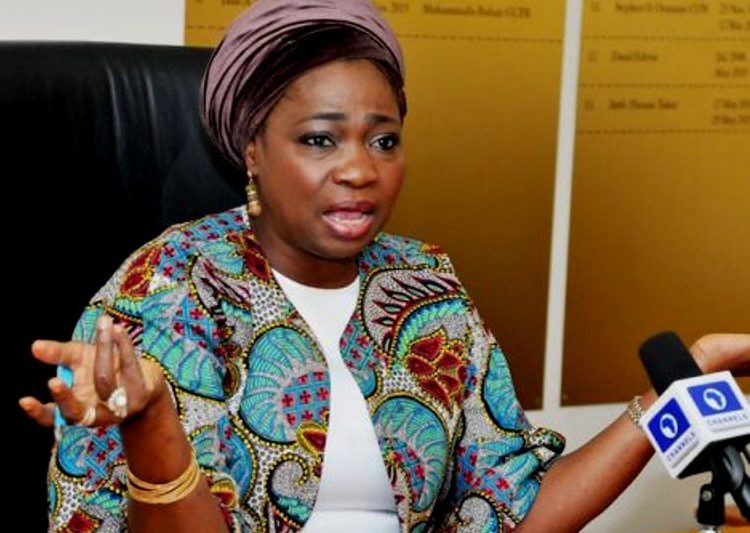
Abike Dabiri-Erewa, Chairman of Nigerians in the Diaspora Commission disclosed this during Sunrise Daily, ChannelsTV programme held to discuss and proffer likely solutions to the menace.

She said a stronger policy action becomes imperative to address the problem, especially through the executive arm of both Nigerian and South African governments.

“As the Nigerians were robbed, others were also robbed…the killings of xenophobic attacks against Africans in South African are something South Africans should deal with. I have also said it several times; even the African Union has to intervene,” says Dabiri-Erewa. “It’s a shame that in the 21st century, we are talking about Africans killing Africans when we should be talking about Africa taking the continent to higher levels.”

The Senate, Dabiri-Erewa had earlier warned over the attacks saying it would no longer be tolerated. The National Association of Nigerian Students (NANS), due to killings also threatened to shut down South African investments in the country.

So far, 118 Nigerians in South Africa have been reportedly killed in recent years.

The former federal lawmaker cited how the South African authorities turned back Nigerians aboard airline to their country, and the Nigerian government had to retaliate. She also mentioned the sudden increase of visa fee by the SA embassy leading to Nigeria taking the same decision.

The former presidential aide, however, disclosed that ministers of foreign affairs from both nations would meet when Nigeria’s cabinet is fully inaugurated to solve the issue and review previous agreements signed by both countries.

She also called for reorientations of the South Africans through billboards, jingles, and cultural exchanges among others to discourage crime rates. She added that eight South African policemen have been charged to court over the killings.

“The ministers at the level of foreign affairs with his counterpart in South Africa will have to review what they put in place called the early warning signals, and if they agreed it’s not working and something stronger needs to be done.

“I’m sure as soon as the minister resume office that will be looked at. I agree, we need a stronger policy in that regard but you can’t tell us we don’t have the moral authority to demand the outcome of investigations. We do and we will.”

Concluding, she noted efforts made to persuade the NANS who had threatened to attack South African investments in the country. “But if you keep hearing every day of deaths, that will be difficult. But we have appealed to them and they have agreed that may not be the solution. But it will get to a point where you can’t just keep begging them anymore.”

In his remarks, Dr. Dapo Thomas, Senior Lecturer at Department of History and International Studies, Lagos State University (LASU) said Nigeria has been in a fixed-position since 1994 for not taking decisive action against the South African government over the years of killings.

He, however, advised the government to use its strength since diplomacy appeared to have failed. “You concentrate on your area of strength and you take it from that position to weaken your adversary”.

Some of the strategies he identified include showcasing superiority in like areas of trade relations, the extent of diplomatic relations and the political clouts of the government.

“These are things you are supposed to utilised but if you fail to use any of these instrumentalities, then what are you doing,” he queried.

Fraud: Court Jails former New Prudential Bank MD, Adetunji Abudu

0

THE Economic and Financial Crimes Commission, EFCC, has secured the conviction and sentencing of Adetunji Abudu, a former Managing Director, New Prudential Mortgage Bank Limited, to two years imprisonment for N195m fraud before Justice I.N. Buba of the Federal High Court sitting in Ikoyi, Lagos.

EFCC made this disclosure in a statement on Thursday.

The convict was arraigned on Wednesday, February 17, 2016 on a four-count charge of acting in contravention of the Banks and Other Financial Institutions Act( BOFIA) 2004 to the tune of N195m( One Hundred and Ninety-five Million Naira).

Abudu, while being the Managing Director of the bank, obtained a N35m loan and another N110m loan without authorisation.

The former New Prudent Bank boss also approved the setting off of a N50m loan granted to Total Access Concept Limited by Addoser Micro-finance Bank, which was also not authorised in accordance with the bank’s policy and in contravention of BOFIA 2004.

In another count, the defendant failed to disclose his interest in Total Access and Integrated Concept Limited, an offence contrary to Section 18(8) and punishable under Section 18 (11) of the BOFIA LFN 2004.

The defendant pleaded not guilty to the charges preferred against him by the prosecution, thereby leading to his full trial.

In the course of the trial that began on April 12, 2016, the lead prosecution counsel, A.B.C. Oziokor, called seven prosecution witnesses and tendered several documents that were admitted in evidence by the court, while the defence presented five witnesses.

Both parties consequently adopted their written addresses, after the closure of the case.

Delivering his judgment on Justice Buba found the defendant guilty on counts one, two, three and four as charged.

The Judge further held that “The court has considered the fact that the convict is a first-time offender, a family man and a breadwinner.

“The court will be lenient, given that the convict is a first offender. But this will also send the right signal that it is this type of attitude that has led our financial institutions into trouble.

“This is a matter the convict should not have allowed to go through the rigours of a criminal trial, having been given the opportunity to refund the money. But he still remained obstinate.”

The Judge, therefore, sentenced the convict to two years on counts one, two, three and four, without an option of fine, with effect from the day of Judgment.

The sentences are to run concurrently.
The convict was ordered to make restitution to the complainant, in accordance with Section 321(a) of the Administration of Criminal Justice Act, ACJA, “if the properties released cannot meet up the amount of exposure to the complainant.”

ActionAid to politicians: Fix public schools, check corrupt practises 

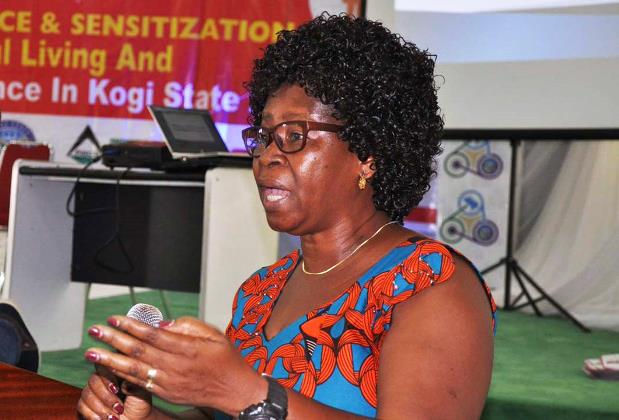
Ene Obi, Country Director of ActionAid on Thursday tasked politicians and relevant government authorities in the country to fix public schools and make it competitive in order to check the trend of Nigerians travelling abroad to acquire quality education. 
She made the call during a two-day stakeholders’ dialogue organised by the Non-Governmental Organisation in collaboration with Policy Alert under the SCRAP-C Project in Uyo, Akwa Ibom State.
Obi said it was high time the common people in the country started to actively engage in the fight against corruption by making government officials accountable.
“When I attended public schools, many of the leaders also attended public schools but today they take their children to study outside the country with the money they have looted because we know the child of whom they were,” Obi said.
“Because of corruption, those students would go and study abroad and still come back to the country and start struggling with the few jobs.”
She said corruption has far-reaching effects than HIV/AIDs and malaria in the country because the future of Nigerian children, both born and unborn, are being ruined.
She charged the audience to demostrate active citizenship by ensuring that the goverment  fight corruption more vigorously.
“Why is it important to empower Nigerian citizens to effectively fight corruption? The answer is in the social cost of corruption and how it has fuelled unemployment and poverty and undermined the Sustainable Development Goals (SDG). All of us must acknowledge the fact that corruption is our common enemy. You don’t have to be silent when and where you need to speak.”
In his remarks, Inihebe Effiong, a human right lawyer who was the keynote speaker, charged the federal government to listen to the concerns of the common people, rather than using the instrumentality of the state to suppress the people.
“We are unhappy that despite the fact that our president used taxpayers money to treat his ear infection at a hospital abroad, he is not listening to the cries of the citizens. When the former governor of Akwa Ibom State had an accident, he quickly ran abroad for medical attention despite the earlier claim that the Ibom Specialist Hospital had the capacity to handle medical cases for which Nigerians run abroad.”
People in atendance include traditional rulers, the state chairman of Christian Association of Nigeria (CAN), Reverend Ndueso Ekwere; the state Commissioner for the Independent Corrupt Practices and other Related Offences Commission (ICPC),  Mr Shola Shodipo; members of the civil society organisations, youth groups, students and journalists.

Court convicts oil thieves in Port Harcourt

0

The Federal High Court sitting in Port Harcourt has convicted 12 oil thieves for illegally trading in petroleum products.

The presiding judge, Justice A. T Mohammed who delivered the judgment on Wednesday, sentenced the criminals to a fine of N100,000 each.

The convicts are Kabiru Saidu, Saleh Muhammed, Yusuf Bala, Salisu Usman, Hamisu Sha’Ibu, Aliyu Muhammed, Umar Mohammed, Muhammed Aliya, Sunday Emmanuel Udo, Malam Garba Abubakar, Ifeanyi Duru and Sani Haruna.

Acting Economic and Financial Crimes Commission, EFCC, spokesman, Tony Orilade, in a press release, said the convicts were intercepted by men of the Nigerian Army, 6 Division, at different locations in Port Harcourt for dealing in petroleum products without a licence.

Trading in petroleum products without a license violates Section 4(1) of the Petroleum Act, Cap P10 Laws of the Federation of Nigeria, LFN, 2004, and punishable under Section 4(6) of the same Act.

It is unclear, how much Nigeria loses to crude oil theft daily but an AfriCheck report in 2015 estimates that between 250,000 to 100,000 barrels of crude oil are stolen daily.

The EFCC, Port Harcourt zonal office, arraigned the convicts on a one-count separate charge, bordering on illegal dealing in petroleum products.

Investigations carried out by the EFCC revealed that the convicts were arrested alongside trucks with registration numbers: XL 985 KRD, XE 471 GUS, KMC 846 XA, NSR 08 ZL GME 185 XX;  MKA 719 ZB; JMT 155 YR; BDG 196 XS; KAF 681 XA; EZA 766 XA and XR 690 PHC.

The count charge reads “That you Kabiru Saidu, sometimes in, 2017 at Abuloma, in Port Harcourt, Rivers State within the jurisdiction of this Honourable Court did distribute petroleum products, AGO, conveyed in a truck with registration number XL 985 KRD and thereby committed an offence contrary to Section 4(1) of the Petroleum Act, Cap P10 Laws of the Federation of Nigeria (LFN) 2004 and punishable under Section 4(6) of the same Act”.

The defendants pleaded guilty when the charges were read to them.

In view of their pleas, prosecuting counsels, A. Osu, C. O Ugwu, Esin-Otu Ebipade, F. C Obinwa, and M. T Iko prayed the court to convict and sentence the defendants accordingly.

Counsels to the defendants, M. M. Suleiman, Babatunde Opadola and E. X Eboh did not oppose the prayer of the prosecution.

Justice Mohammed ordered the convicts to pay a fine of N100,000 and ordered that the products found with them should be forfeited to the Federal Government.

#RevolutionNow protest: Counsel vows to review court detention order on Sowore

INIHEBE Effiong, Counsel to Omoyele Sowore, Convener of the #RevolutionNow protest has vowed to file a new application to ‘vacate’ and counter today’s court ruling which extended Sowore’s detainment to 45 days.  

Justice Taiwo Taiwo of the Abuja Federal High Court, Thursday morning, earlier granted to the Department of State Security Service (DSS) right to keep the accused in their custody pending the outcome of investigations by the security operatives.

But Effiong, who is also the National Legal Adviser of the African Action Congress (AAC), a political platform Sowore rode to contest for presidency in 2019, described the decision as a cowardly attempt by the Federal Government to clamp down on innocent citizens.

“We will review the decision and see the reasons adduced by the judge and also possibly make an application to have that order vacated,” Effiong told The ICIR.

He said the application would be made next week.

“We respect the court. But we are still of the position that the federal government does not have any reason in law, to have even made the application to say you want to detain him because the issues that led to his arrest are matters of public knowledge.”

Sowore, ahead of the planned nationwide #RevolutionNow protest was arrested by the security operatives. But the arrest has largely been condemned by the Nigerian Labour Congress, Amnesty International Nigeria office and other notable Nigerians who have demanded his release.

Moreover, Effiong emphasised that a team of defense lawyers lead by Femi Falana, a Senior Advocate of Nigeria (SAN) would have developed new strategies prior today’s ruling but resolved to suspend the undisclosed move until when needed.

He insisted the actions against Sowore infringed on fundamental human rights of the activist.

“If the terrorism Act is now being used to clamp down on people who disagreed with the government, it is a sad commentary for the country and as human rights lawyers; it is a collective responsibility to ensure the precedent is not set.”


#RevolutionNow protest: EU backs freedom of speech in Nigeria

THE European Union (EU) on Thursday threw its weight behind the principles of freedom of expression in Nigeria, saying it remains fundamental in any democratic dispensation.

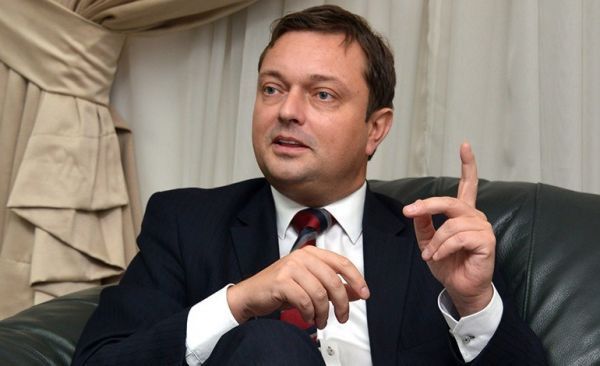
Ketil Karlsen, the EU envoy to Nigeria disclosed this while reacting to the #RevolutionNow protest held in selected parts of the country and eventual arrest of Omoyele Sowore, Publisher of Sahara Reporters newspaper.

“The European Union stands firm on the principles of freedom of speech and our fundamental values. Of course, it is important in any democratic society for people to be able to participate,” says Karlsen, adding that he was not aware of any petition from the protesters to report poor governance of the current administration.

“I am not aware of any petition following the latest events in Nigeria but what I can say is that as long as people seek peaceful means to demonstrate and voice their political opinion, this is what we see as a natural part of a thriving democracy.”

But he said the responsibility still lies with the Federal Government to manage its internal affairs in line with provisions of the judicial system as it would be inappropriate for the EU to judge if the action taken against Sowore was right or otherwise.

According to an exclusive interview with Punch, Karlsen spoke at an orientation programme held for the 2019 Erasmus+ Scholarship Awardees in Abuja.

“Of course, any democracy or any society in the world must jealously guard and make sure that such pronouncements are always non-violent and that they respect the fundamental rules of the game and democracy at the end of the day and it is for the Nigerian justice system, in the end, to follow up on specific cases and as long as these cases are being dealt with in the Nigerian justice system, it is not for the EU or the EU ambassador to judge what is right or wrong in these occasions but of course we always follow very carefully when there are dissenting voices in the countries where we operate and we listen very carefully to all of them,” he added.

Sowore was arrested by the Department of State Security (DSS) for allegedly planning to overthrow the government. But lawyers and other human right activists had insisted the accused has the right to express himself, public gathering as well as freedom of opinion.

Justice Taiwo Taiwo the Abuja Federal High Court, Thursday morning, earlier granted the request of the DSS to further detain the activist beyond the statutory 48 hours to 45 days pending investigation for the alleged offense committed.

Court remands former INEC boss Maurice Iwu over 1.2bn fraud

A FEDERAL High Court has ordered the remand of  Maurice Iwu, former chairman of the Independent National Electoral Commission (INEC) in the custody of Nigeria’s anti-graft agency till Friday when his bail application would be heard. 

The order was given by Justice Chuka Obiozor on Thursday during the sitting of the court in Lagos, according to ChannelsTv.

The Economic and Financial Crimes Commission (EFCC) had arraigned the former INEC boss for concealment, fraud and money laundering of N1.2 billion.

In four-count charges, EFCC alleged that Iwu encouraged the concealment of a total of N1,203,000 between December 2014 and March 2015.

The sum was said to be in a bank account belonging to Bioresources Institute of Nigeria Limited, a company where Iwu is currently the Executive Director, and domiciled in the United Bank for Africa, UBA Plc.

The anti-corruption agency believed that the money was part of the N23.29 billion slush fund allegedly shared by former petroleum minister, Diezani Allison-Madueke, in a build-up to the 2015 presidential election.

Iwu was not only the former INEC officials fingered as one of the beneficiaries of the fund, but Auwal Jibrin, former Deputy Director of the commission had also been sentenced to six years imprisonment for receiving gratifications from the former Minister of Petroleum.

At the court hearing today, Iwu, however, pleaded not guilty to all the charges.

His counsel rather applied for bail. While the bail application hearing would be heard on Friday, the court ordered that Iwu should remain in the EFCC custody.

Maurice Iwu, a professor of Pharmacognosy, was appointed the chairman of the electoral commission in June 2005 and was removed from office in April 2010 over his questionable conduct of the election.  He was replaced by Attahiru Jega in June 2010.