

Court orders arrest of Pinnick, other NFF officials over alleged fraud
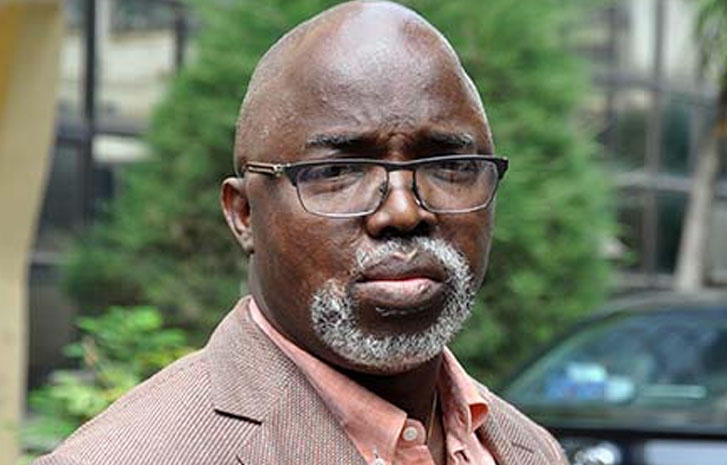
A FEDERAL High Court in Abuja has issued a bench warrant for the arrest of the President of the Nigeria Football Federation (NFF), Amaju Pinnick and four other officials of the organisation accused of misappropriating funds belonging to the football body.
Justice Ijeoma Ojukwu gave the order on Monday after the case involving the NFF officials was called and they were absent in court.
Also, those affected by the arrest order are NFF Secretary, Sunusi Mohammed; the 1st Vice-President, Seyi Akinwumi; the 2nd Vice-President, Shehu Dikko and an Executive member, Yusuff Fresh.
The Federal Government had earlier this year filed a 17-count charge, marked FHC/ABJ/CR/93/2019, before the court, in which it accused the NFF officials of alleged misappropriation of $8,400,000 belonging to the football body.
The money was said to have been paid by the Fédération Internationale de Football Association (FIFA) to the NFF as appearance fees in the group state of the Russia 2018 World Cup.
The defendants are also accused of “moving dishonestly and intentionally the sum of about N4bn” belonging to the NFF without the consent of the NFF.
Justice Ojukwu gave the order for the arrest of the defendants upon an oral application by the prosecution lawyer, Celcius Ukpong when the case was called and the defendants were absent.
Details shortly.
NAN
“No evidence to show the money was legitimately earned,” court rules on Patience Jonathan’s loot

THE Federal High Court in Ikoyi, Lagos on Monday, has ordered the permanent forfeiture of the sums of $8.4 million and N9.1 billion recovered from Patience Jonathan, wife of former President, Goodluck Jonathan.
The court’s ruling is based on a previous application by the Economic and Financial Crimes Commission, EFCC, arguing that the monies were proceeds of criminal transaction.
On April 19, 2018, the presiding judge, Mojisola Olatoregun ruled in favour, of an ex-parte application filed by the EFCC, for the interim forfeiture of the various sums of money against Patience and several companies fingered in the case.
The companies are Globus Integrated Service Limited, Finchley Top Homes Limited; AM-PM Global Network Limited; Pagmat Oil and Gas Limited and Magel Resort Limited.
The funds were stashed in the following banks: Skye Bank Plc (now Polaris Bank Plc), Diamond Bank Plc, Stanbic-IBTC and First Bank Plc.
Patience, through her lawyers, Chief Ifedayo Adedipe (SAN) and Chief Mike Ozekhome (SAN), opposed the application and insisted that the funds legitimately belonged to Mrs. Jonathan, but the court held that the EFCC proved its claim beyond reasonable doubts.
Her appeal was subsequently dismissed by the Court of Appeal in Lagos before she proceeded to the Supreme court.
The ICIR reported the decision of the Supreme Court directing the former first lady to go before the Federal High Court to explain why the funds should not be permanently forfeited to the federal government, therefore upholding the interim forfeiture order.
The EFCC, through its counsel Rotimi Oyedepo, had on October 29, 2018, moved a motion for the final forfeiture of the sums of money to the federal government.
In his judgment, Justice Olatoregun affirmed that the money was reasonably suspected to be proceeds of crime.
“There is no reason provided in the affidavit to convince the court or to show cause why the monies should not be forfeited to the federal government of Nigeria. There is no evidence to reasonably show, beyond doubts, that the monies were legitimately earned,” he said.
He granted the EFCC’s application that the money should be permanently forfeited to the FG.
Details of the recovered and forfeited to the government include:
1) The sum of $3,645,013.73 (Three Million, Six Hundred and Forty-Five Thousand, Thirteen United States Dollar, Seventy-Three Cents) found by the EFCC in account number: 2031277178 domiciled with First Bank of Nigeria Ltd.
2) The sum of $4,361,393.24 (Four Million, Three Hundred and Sixty One Thousand, Three Hundred and Ninety-Three United States Dollar, Twenty Four Cents) found by the EFCC in account number: 1771421299 domiciled with Skye Bank Plc.
3) The sum of N1,800,494,000.00 (One Billion, Eight Hundred Million, Four Hundred and Ninety-Four Thousand Naira) found by the Commission in account number: 4011019539 domiciled with Fidelity Bank Plc.
4) The sum of N226,376,700.23 (Two Hundred and Twenty Six Million, Three Hundred and Seventy-Six Thousand, Seven Hundred Naira, Twenty Three Kobo) found by the Commission in account number: 1102001996 domiciled with Eco Bank Ltd.
5) The sum of N1,085,576,947.99 (One Billion, Eight Five Million, Five Hundred and Seventy-Six Thousand, Nine Hundred and Forty-Seven Naira, Ninety Nine Kobo) found by the Commission in account No.1102001996 domiciled with Eco Bank Ltd
6) The sum of N39,418,712.12 (Thirty-Nine Million, Four Hundred and Eighteen Thousand, Seven Hundred and Twelve Naira, Twelve Kobo) found by the Commission in account number: 0019213687 domiciled with Diamond Bank Plc.
7) The sum of N7,213,303.50 (Seven Million, Two Hundred and Thirteen Thousand, Three Hundred and Three Naira, Fifty Kobo) found by the Commission in account number:0026718889 domiciled with Diamond Bank Plc.
8) The sum of N55,930,024.50 (Fifty Five Million, Nine Hundred and Thirty Thousand, Twenty Four Naira, Fifty Kobo) found by the Commission in account number:0026838491 domiciled with Diamond Bank Plc
9) The sum of N174,166,207.06 (One and Seventy Four Million, One Hundred and Sixty-Six Thousand, Two Hundred and Seven Naira, Six Kobo) found by the Commission in account number: 0024351590 domiciled with Diamond Bank Plc.
10) The sum of N858,923,982.55 (Eight Hundred and Fifty-Eight Million, Nine Hundred and Twenty Three Thousand, Nine Hundred and Eighty-Two Naira, Fifty-Five Kobo) found by the Commission in account number:1011744356 domiciled with Zenith Bank Plc
11) The sum of N1,809,666,494.68 (One Billion, Eight Hundred and Nine Million, Six Hundred and Sixty Six Thousand, Four Hundred and Ninety Four Naira, Sixty Eight Kobo) found by the Commission in the account number: 4011019560 domiciled with Fidelity Bank Plc
12) The sum of N1,000,494,000.00 (One Billion, Four Hundred and Ninety-Four Thousand Naira) found by the Commission in account number: 4011019546 domiciled with Fidelity Bank Plc.
13) The sum of N317,397,458.26 (Three Hundred and Seventeen Million, Three Hundred and Ninety-Seven Thousand, Four Hundred and Fifty-Eight Naira, Twenty Six Kobo) found by the Commission in account number: 0016971559 domiciled with Stanbic IBTC Bank Plc.
14) The sum of N1,809,666,494.68 (One Billion, Eight Hundred and Nine Million, Six Hundred and Sixty Six Thousand, Four Hundred and Ninety Four Naira, Sixty Eight Kobo) found by the Commission in account number: 4011019577 domiciled with Fidelity Bank Plc
15) The sum of $429,381.87 (Four Hundred and Twenty Nine Thousand, Three Hundred and Eighty-One United State Dollars, Eighty-Seven Cents) found by the Commission in account number: 2110003170 domiciled with Skye Bank Plc.
Fatoyinbo of COZA steps down from pulpit amidst rape allegation

BIODUN Fatoyinbo, the Senior Pastor of the Commonwealth of Zion Assembly (COZA), has taken a leave of absence from his pastoral work amidst alleged cases of rape on Monday.
Fatoyinbo who announced the decision via his official Instagram handle said he was following spiritual counsel from Christian leaders and spiritual mentors.
The pastor, although, said stepping down from the pulpit would break his “heart to tatters”, he believed it was the right action to take after he was alleged of two-time rape by Busola Dakolo, a photographer and wife of a popular singer, Timi Dakolo.
“The past few days have been very sobering for me. I have taken time to pray and seek spiritual counsel from Christian leaders around the world who feel very concerned about the ongoing reports in the media. I have solicited their guidance on actions I should take that is honouring to our Lord Jesus Christ and the work He has called me to do,” Fatoyinbo sympathises himself and the situation in the initial paragraph of the post.
“Drawing from their counsel and that of the leadership of the Commonwealth of Zion Assembly and owing to my love for God’s word and the sacred honour of my called, I have decided to take a leave of absence from the pulpit of the church,” the statement read in part.
He said to step down was in the interest of believers of Christ so as not to let the issues concerning him caused a distraction to their worship of their Lord.
Fatoyinbo clarified that he had only stepped down from the ministry, but his confidence remains “unwavering” in the Lord. He trusted the Lord to lead and guide him in the situation as he added he did not understand all that was happening.
While the clergyman described the situation as “turbulent times”, he asked COZA members and the general public to seek God’s face on the matter.
After Busola alleged the pastor on Friday of rape through a video interview, many Nigerians have called for proper investigations on the issue, calling for justice.
In fact, Busola was not the first female that had alleged the COZA pastor of rape, a lady named Ese Walter also accused the pastor of raping her in 2013. Then Fatoyinbo neither reacted nor gave a public response to the lady’s disclosure. However, the pastor responded to the Busola’s allegation same day she had narrated how he raped her. Fatoyinbo reacted on Friday, stating he had never raped anyone.
But Nigerians launched into a protest on Sunday at COZA churches in Abuja and Lagos. He, thus, cancelled a one-week planned programme scheduled to start on Monday.
THE ICIR noticed that his official Instagram Page still read he was the senior pastor of the church two hours after the statement was released. “Official Instagram Page for Reverend Biodun Fatoyinbo, the Senior Pastor of the Commonwealth of Zion Assembly (COZA) Worldwide,” the account introductory part read.
WaterWide wants clean toilets for the girl-child in rural Nigeria
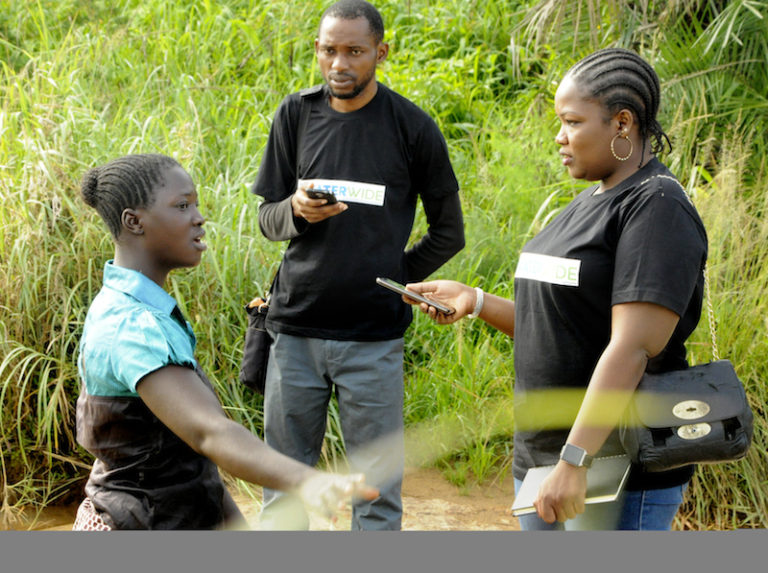
CREATING awareness on the health challenges the girl-child in rural areas face as a result of poor sanitary systems; the need for water, female-friendly toilets, providing solutions and importance of clean and safe toilets in the rural areas of Nigeria.
The need for toilets has been undermined in most rural areas in Nigeria to the point that most houses in such areas are built without an attached toilet. According to the National Bureau of Statistics (2009), access to safe sanitation between 2003 and 2008 in Nigeria was 57.6 per cent; 77.7 per cent in urban areas, 46 per cent in rural areas and 21 per cent for the rural poor. One of the major issues facing girls in the rural areas of Nigeria is inadequate access to clean, decent and safe toilets. Although all humans share the vital need for adequate access to toilets, biological realities differentiate their sanitation experiences. The girl-child generally has more sanitation needs and uses the toilet frequently and longer than the male gender, especially during their monthly menstruation. Regular use of an unclean toilet endangers the health of many girls and as such, needs to be addressed. However, most unclean toilets are as a result of a poor water system in rural areas.
Michel Baingi Mulebu, a Kigali-based general doctor, says that many diseases are likely to occur due to using dirty toilets and urinals, for instance; urinary tract infections (UTIs) are mostly acquired after using a dirty toilet, used by someone who is infected. The girl-child in rural areas are unaware of some of these endangering diseases because they see it as a norm they have to endure in their society while some are ashamed to talk about it. So they end up keeping it to themselves, and if diseases are not treated at an early stage they can lead to more harmful ailment.
It is natural for a girl-child to become conscious of her body as she goes into puberty, she now needs privacy and is no longer comfortable using an open or dirty toilet, especially when that is the only one she has access to. She unconsciously begins to hold in the urine or faeces till the ‘right’ time, possibly in the night when no one can see her before easing herself. This does not just expose her to constipation, UTI, digestive tract disorders and in rare cases kidney damage but also places her at the risk of rape, kidnap and other dangers. As a result of unclean toilets, most people in rural areas have resolved to open defecation.
According to a 2016 report by UNICEF Nigeria, Nigeria is among the nations in the world with the highest number of people practising open defecation, estimated at over 46 million people. As at 2019 the figures have not exactly improved, according to a Water, Sanitation and Hygiene (WASH) Specialist for UNICEF, Mr Bioye Ogunjobi Nigeria is delivering approximately 160,000 improved toilets annually, however, he described the current effort as a drop in the ocean, saying that there was a need for all stakeholders including the media to redouble efforts toward ensuring access to improved toilet facilities for the populace, especially those in underserved rural communities.
These challenges will continue to thrive if solutions are not provided; below are possible solutions that should improve sanitary usage in the rural areas and keep the girl-child safe.
Awareness, education and promotion of hygiene – hygienic living can never be overemphasized. Most girls in the rural areas of Nigeria are unaware of the need to maintain a clean environment.
Health – The Ministry of Health has to promote hygiene, there should be constant awareness and promotion of sanitary hygiene in such areas, the girl-child needs to be educated from a young age on how to keep her body clean, how to take care of her vagina and maintaining a toilet clean. The lack of education prevents most women in rural areas from cleaning their vagina correctly, or they do it with leaves or sheets of paper, or use contaminated water.
Water – The Federal Ministry of Water Resources (FMWR) can promote hygiene by providing several water resources in rural areas. Water resources like boreholes and taps should be constructed in rural areas so that the residents enjoy enough water to keep their sanitary environments clean. This way, the girl-child has enough water to keep herself clean and safe from toilet infections.
Female-friendly toilet – a female-friendly toilet is very necessary and more should be built in rural areas. Toilets with locks for privacy, water for cleaning and strictly for girls should be built to keep the girl-child safe. In areas where it’s difficult to get enough water resources, pit latrines should be built since they do not necessarily need too much water to be maintained. Hygienic public conveniences should be built to avoid open defecation.
However, if a change is to be achieved, monitoring and evaluation of these projects should be taken seriously. Maintaining a clean toilet should not be particular to only urban areas, there should be a widespread awareness in rural areas about the immediate and future dangers a girl-child faces using a dirty toilet. The efforts of government, CSOs, media, public and private bodies, rural communities are vital in achieving a hygienic sanitary environment.
WaterWide is a non-profit organisation that tracks government spending and international aids for water, sanitation and hygiene (WASH) in rural communities in Nigeria.
Diezani bribe: Court slams six years jail term on INEC deputy director
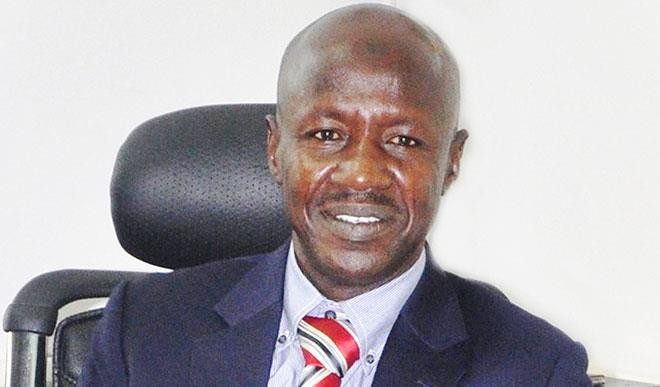
JUSTICE Yusuf Birnin-Kudu of the Jigawa State High Court in Gumel convicted and sentenced Auwal Jibrin, Deputy Director of the Independent National Electoral Commission, INEC, to six years in prison on a six-count charge for unlawful enrichment and gratification.
He was also convicted alongside Garba Ismaila, who is expected to serve seven years for their alleged role in receiving gratifications to the tune of $115,010,000, from former Minister of Petroleum, Diezani Alison-Madueke in the build-up to the 2015 presidential election.
Acting EFCC spokesman, Tony Orilade, who disclosed this in a statement in Abuja on Sunday, said the two convicts received N45m out of the N250m disbursed in Jigawa State to influence the outcome of the 2015 elections.
The Economic and Financial Crimes Commission, EFCC Kano zonal office had acted on intelligence report which led to their prosecution and subsequent conviction.
Jibrin and Ismaila had pleaded ‘not guilty’ to the six and seven counts against them, setting the stage for full trial during which the prosecution presented five witnesses and tendered 20 exhibits against them.
One of the charges reads that “That you, Auwal Jibrin, while being a public Servant, Deputy Director with Independent National Electoral Commission, Dutse sometime in 2015, at Dutse within the Judicial Division of this Honourable court dishonestly received the sum of ₦45,000,000 (Forty Five Million Naira) from Garba Ismail, which you were not authorized to receive and you thereby committed an offence punishable under section 122 of the Penal Code,” the statement reads.
In his ruling, Justice Yusuf Birnin affirmed that “the prosecution proved beyond a reasonable doubt, all the elements and facts of the case as contained in the charge and the testimonies of prosecution witnesses and exhibits tendered.”
He added that the defence team failed to counter the evidence presented by the prosecution through its witnesses.
The court thus found the first defendant guilty as charged on count two, while the second defendant was found guilty on counts one and three.
They were discharged on counts four, five and six but dismissed their plea for mercy before pronouncing their sentence.
The judge further ordered the final forfeiture of the recovered monies and property attached to the investigation with the exception of a three-bedroom flat attached at No. 1 Hadejia Road, Birnin Kudu, Jigawa State.
SPECIAL REPORT: Inside Nigeria’s prisons where thousands languish for years without trial
In this report, Evelyn OKAKWU spotlight the condition of the victims of poor administration of justice in Kaduna prison.
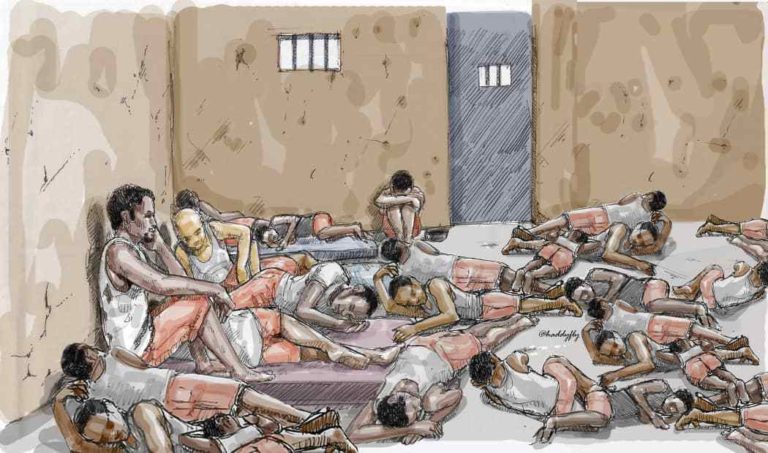
For nearly two years, Chris Chom and 61 other inmates shared a filthy cell in the Kaduna State Central Prisons.
According to the 34-year-old, the cell had only three beds, so the inmates slept in a pile on the bare floor at night and yearned for the day they would see the priceless light of freedom.
Mr Chom spoke with undercover reporters from PREMIUM TIMES who visited the prison last December. He said what was worse for him than his prison experience was the fact that the authorities could not explain why they were keeping him.
His journey to the prison started on July 14, 2017. A chef, he had just returned from Abuja to visit his family in Kaduna. He was about to take a nap that afternoon when he heard a shrill cry from a nearby building occupied by his maternal uncle, Ayuba James.
Abel, Mr James’ 10-year-old son, had always been a bit difficult. He was born with sickle cell anaemia, a condition that earned him sympathy from many.
So when he heard Abel’s cry that afternoon, he rushed over and found the boy being flayed by his father. Mr Chom’s intervention would change his life in a manner he never anticipated.
Mr Chom found young Abel already badly beaten.
“It all happened so fast that I could not even ask what the boy had done to warrant such a treatment,” he recalled.
“Seeing the state that the boy was in, I knew he had to be rushed to the hospital. But on our way to the hospital, the child died,” Mr Chom said.
The child was confirmed dead at the Kachia General Hospital, according to Mr Chom.
Days later, the police arrested Mr Chom. After three weeks with the state CID in Kaduna State, they transferred him to the Central Prisons along Independent Way, where the reporters found him last December.
Until his release from prison in February, Mr Chom said he still did not know the reason for his arrest and detention.
Mr James was also arrested.
PREMIUM TIMES spoke with Mr James, who was regarded by prison inmates as Mr Chom’s “casemate.” He corroborated Mr Chom’s account of the incident regarding Abel, whom he said he was only trying to “discipline.”
“Yes, all that he (Mr Chom) has said is true. He had nothing to do with it. He had come that day to take my son after I hit him in anger. But I never meant to kill my son,” said Mr James.
Mr Chom spoke on his life in prison.
“I have not spent two weeks in this place without falling sick. We feed on two meals per day — watery beans in the morning and cornmeal with watery draw-soup in the evening.
“I don’t remember what it feels like to have normal sleep. We practically sleep on top of each other because this place is too small for our population. There are 62 of us with three beds in the cell,” he said.
According to Mr Chom, the inmates and prison officials relate well. He, however, decried the state of facilities and food at the prisons.
“The food is such that even a slave should not be made to eat it,” added another inmate who refused to give his name.
Illegal Detention
Mr Chom regained freedom on February 27 after 21 months in prison for an “offence” he said he did not commit.
The police filed a case of murder against him, but he said: “Even the prison officials regard me as a victim of circumstance.”
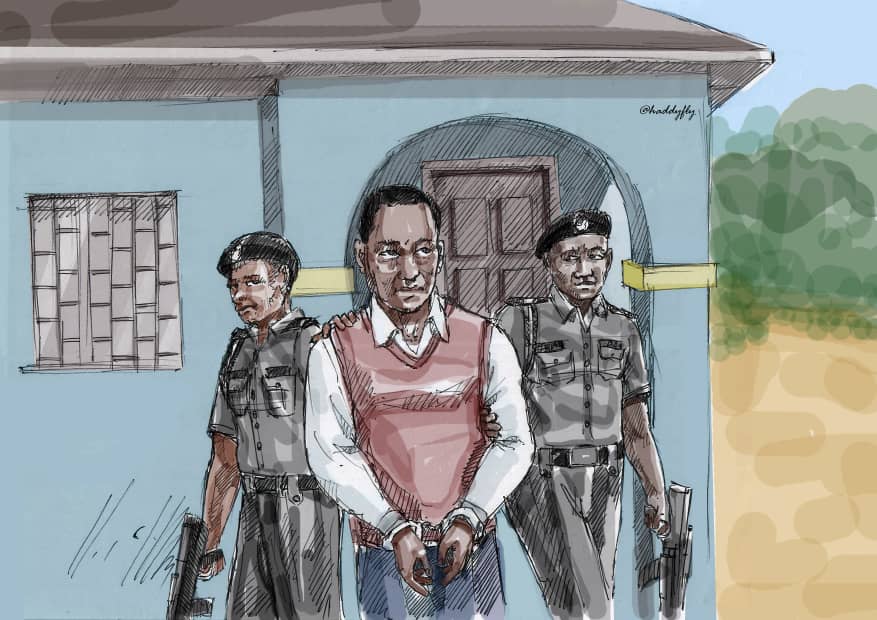
An Abuja-based lawyer, Monday Ejeh, described as shocking the decision of the court to remand him.
“I have not seen any offence in what you have explained. How is it possible that he has been there for over a year? Why would any judge or magistrate order such a person detained?” Mr Ejeh queried.
Although Mr Chom has been released his case is still on-going.
“They just granted me bail. I am still expected to return to court. I cannot even return to Abuja, where I was working in a hotel before all of these,” he said in a telephone interview with this newspaper in March.
Mr James faced a similar charge but he said their lawyer was working towards his release on bail.
Mr Chom was one of many Nigerians remanded in prisons across the country over strange “crimes.”
Global Statistics
According to figures provided by a global prison data organisation, World Prison Brief, awaiting trial inmates in Nigerian prisons has risen from 62 per cent in 2000 to nearly 70 per cent.
The total prison population in 2000 stood at 44, 450 but had risen to 73, 248 by May 2019.
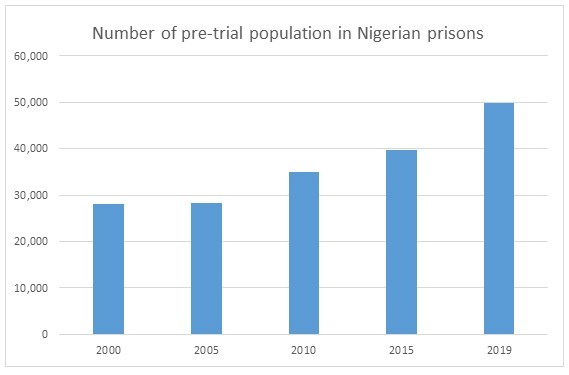 The institute adds that the population of women prisoners within the period rose from 709, representing 1.9 per cent, in 2000 to 1, 520 or 2.1 per cent in 2019.
Forgotten in Jail
Some of those detained for what should pass as petty crimes have been forgotten in prison.
The case of Abdullahi Mohammed, a 49-year-old man arrested in May 2013 “for stealing a handset”, stands out. The offence regarded as theft under Nigerian laws, and it attracts a prison term not exceeding five years, according to section 287 of the penal code.
The penal code is the legal instrument for the adjudication of criminal matters in northern Nigeria. The section states thus: “Whoever commits theft shall be punished with imprisonment for a term which may extend to five years or with a fine or both.”
Forgotten by his family and country, Mr Mohammed’s case was drawn to our reporter’s attention by an official during our visit to the prison.
“Whenever I remember this man’s case, I lose complete faith in Nigeria’s judicial system,” said the official who declined to give his name.
Mr Mohammed explained how he ended up in prison.
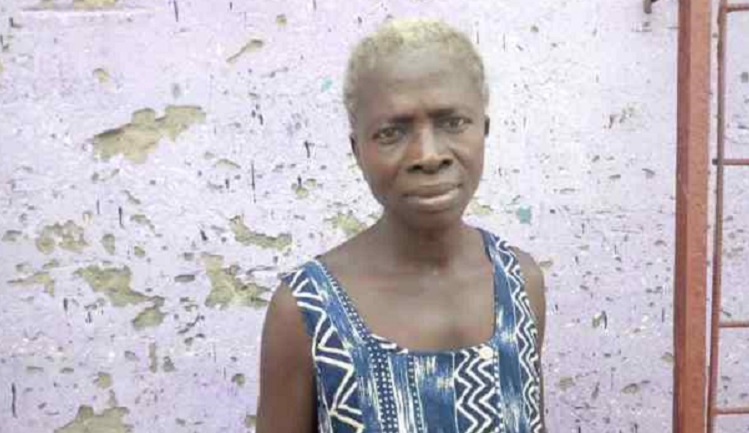
“I stole a handset valued at N15, 000 in 2013. The high court judge said I should go to jail or pay a fine of N50, 000. I had no one to pay for me, so I have been here since,” he said. Mr Mohammed has been battling with various illnesses in prison.
Mr Ejeh said the detention of an accused who failed to pay their bail bond does not mean detention without trial.
“His case is different. When a person is given a condition for bail and he fails to meet the condition, that person cannot claim to have been detained without trial. Section 35 (1) of the Constitution has provided that where a person is detained longer than three years without trial, that person is entitled to be released, with or without a condition for bail.
“However, if there is a bail condition, then that case is different. But in this case, all he needs is a lawyer who can apply on his behalf. A man whose offence attracts a term of five years will surely be allowed to go if he approaches the court under this circumstance,” Mr Ejeh said.
Estranged by Detention
PREMIUM TIMES reviewed the cases of 150 detainees at the Kaduna State Central Prison, Warri Prison in Delta State, Kirikiri Prison in Lagos and Kuje Prison in Abuja. One feature common to most detainees was their inability to keep in touch with their families for prolonged period of time.
Haruna Shuaibu, a 24-year-old man, was arrested for alleged robbery in January 2015. He is yet to contact his family, more than four years after his arrest.
Mr Shuaibu claimed he knew nothing about the crime for which he was arrested.
“I have not been able to contact my family since I came here. I have no phone. I have made repeated attempts to send emissaries through released inmates to my family. But apparently, none of them has been able to reach my family because I still have not heard from them,” Mr Shuabu said during our visit to the prison in December.
Mr Shuaibu said he was arrested at a market called Kasuwan Bauchi in Kaduna State where he had gone to sell his cattle.
The 24-year-old who said his family resides in a village in Bauchi State said he had been unable to reach them. He is not sure they think he is alive.
Mr Shuaibu could not remember the number of times he had been taken to court but said he did not understand the terms of his bail.
A Complicated Case
While Mr Shuaibu’s inability to reach his family may have contributed to his prolonged detention, some inmates have no way of helping themselves, even when in contact with their families.
After six years in prison for allegedly raping a 19-year-old, Wale Akinnusi is still on trial.
“I am in close contact with my wife and children. But we have no money to get a lawyer,” the 51-year-old told PREMIUM TIMES.
Mr Akinnusi was arrested and detained at the KiriKiri Prison in Lagos, after the girl he was guarding accused him of sexual abuse in 2013.
Mr Akinnusi’s wife, Oluwakemi, told PREMIUM TIMES her husband was arrested after the girl accused him of making her have an abortion. She said they were not living together at the time of the incident.
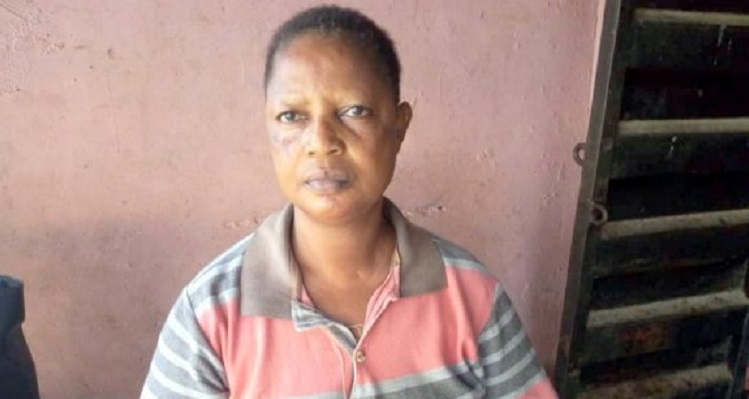
Mrs Akinnusi said she missed her husband back at home.
“I really would like to have him back. It’s been hell training these children alone, and I am sick. I have been down with arthritis. Our eldest daughter, who just graduated, was leaving secondary school when this incident occurred. I had to cater for her education all by myself,” said Mrs Akinnusi.
A lawyer, Ogugua Ikpeze, said Mr Akinnusi could have been granted speedy trial.
“If his case is on trial, the court cannot grant him bail. The only thing they can do is to order accelerated hearing into the matter,” Ms Ikpeazu, a professor, said.
More Legal Opinion
As explained by Mr Ejeh, prosecuting agencies have contributed to escalating the menace of prolonged detention before or during the trial.
“A good example of how this problem is created by lawyers is the issue of holding charge. This refers to a situation where the prosecuting agency takes a person to a lower court for an offence that the court ordinarily should not have entertained, for lack of jurisdiction.
“The lower court, though without jurisdiction, will order the remand of that person pending his trial. This is common in South-South and South-West states; for example, Rivers and Lagos states. While the person is remanded in prison, his file may be sent to the Ministry of Justice or even remain with the police.
“Section 376 of ACJA talks about holding charge for the purpose of getting legal advice from the Department of Public Prosecution (DPP) domiciled in the AGF’s office of the Ministry of Justice. In that situation, ACJA requires that the advice be ready in 14 days,” Mr Ejeh said.
He, however, noted that bureaucratic bottlenecks also affect the efforts of lawyers to meet up with the time frame for getting such legal advice.
Mr Ejeh, who acknowledged other factors that give rise to the detention of pre-trial inmates, said lawyers have a fundamental role to play in checking the menace.
This investigation was supported by the Institute for War and Peace Reporting and the International Centre for Investigative Reporting (ICIR).
From cocoa to cannabis: Nigerian farmers seek fortunes inside forbidden farms

In this report, Bayo Akinloye tells the sad story of farmers who produced cocoa, the mainstay of the economy of South-west Nigeria in the past, but have now abandoned the crop for a more rewarding but illegal one, cannabis
HIS telephone rang only twice before he picked it. His muffled voice indicated that he was speaking with head tucked between pillows. It was 10:34 pm last May. “It’s not true,” says Yemi Owolabi, Ondo State Commissioner for Information, when he was asked what he thought about cocoa farmers in the state going into cannabis cultivation.
“Cocoa farming is a huge money-spinner. Cocoa is gold,” he explains further, even though medicinal marijuana has been projected to be a billion-dollar industry in the next few years.
Yet, a month-long investigation by THISDAY points in the opposite direction: Cannabis farming is the new money-spinner and farmers, particularly cocoa farmers, are massively embracing its cultivation.
Read Also:
- https://www.icirnigeria.org/fg-plans-distribution-of-five-million-cocoa-seedlings-in-2021/
- UN coordinator condemns Boko Haram attack on civilians, aid workers in Borno town
- Nigeria launches registration portal for COVID-19 vaccination
- Court sentences former French president to jail for corruption
Inside Nigeria’s forbidden farms
Many former cocoa farmers who spoke on their newfound golden plant said they wished they had started planting cannabis long ago. Some even merely use their cocoa farms as a cover to cultivate cannabis.
One of them is Niyi Adams. His darting look indicated unease. He had never taken a stranger to his farm before. Even though he has been cultivating cannabis for many years, he has not been able to grapple with the risk of falling into the hands of the National Drug Law Enforcement Agency (NDLEA). Adams is one of the dwindling numbers of Nigerian cocoa farmers now reaping bumper harvests cultivating cannabis.
“I’ve been a cocoa farmer for up to 32 years,” he says in local Yoruba dialect. “I’ve made a fortune from the proceeds of cocoa since I was a youth. I learnt cocoa farming from my father.” But he was not satisfied. With a grin on his face, Adams admitted that the allure of lucre was irresistible.
In Lagos alone, according to one of the farmers’ claim, a cannabis farmer can make at least some millions of naira a day.
“Ah, the profits from cannabis are very huge and the cost of production is low,” he explains matter-of-factly. “Also, cannabis does not suffer any diseases that affect other crops like cocoa.”
His cannabis farm is hundreds of kilometres away from where he lives – far into the bush, away from prying NDLEA officials’ eyes. As a cannabis farmer, he spends months on the farm, especially before the harvesting season. But the cultivation and consumption of Indian hemp are illegal in Nigeria and it must hold enormous risks for any farmer to engage in its production. The Ondo State commissioner did talk about the run-ins cannabis farmers have with the law.
“There’s no money you want to make in cannabis that will make you as wealthy as cocoa farmers,” Owolabi insists. “How much can you make from cannabis? The cannabis farmers have daily battles with the NDLEA.”
But investigations reveal that in the South-west states of Ondo, Osun, Ekiti and Oyo, many cocoa farmers are not hesitating to cultivate cannabis as an alternative in spite of the enforcement agency.
Twenty-five-year-old Deji Iyanda is one of such farmers. The reporter found him at another far-flung farm. With coarse hands, hefty shoulders and a rough face, Iyanda is uncharacteristically convivial. He dropped out of college of education because his parents did not have enough money to send him to school.
“I ventured into cannabis farming as soon I realised that my parents could not cater for my higher education,” explains Iyanda.
Unlike the much older Adams, this young cannabis farmer talked about his activities with ease.
“I’m not boasting. It’s true. I’ve built two houses and have two cars,” he reveals with two fingers from each of his hands raised to the sky, “and I’m taking care of my aged parents.”
Without specifying though, he claimed he has made a lot of money as a cannabis farmer.
“I have markets in the South-west and in the South-east.”
Cocoa farming has never had an appeal for young Iyanda. “I can’t wait for years – ah! I can’t spend years in the sun trying to dry any crop and some wicked middlemen will come and rip me off,” he says. Iyanda, Adams and their ilk cannot wait to have cannabis legalised in Nigeria.
Cannabis farming: The world leaving Nigeria behind
In Nigeria, there seems to be no sign of foreign companies’ interest in local cannabis. But farmers who spoke with THISDAY said they are already ‘exporting’ the product to neighbouring countries.
James Akorede is 35 years old, who began to cultivate cannabis 10 years ago. Like Iyanda, he was eager to show off his cannabis-gotten material success.
“I began cannabis farming 10 years ago. I have two houses and a car,” he announces.
Though he inherited cocoa farms from his grandfather went to school with their proceeds, Akorede feels cultivating the crop is a thing of the past. According to him, there is no chocolate industry in the country. He also pointed out that the government at all levels have no plans to rejuvenate the cocoa industry.
“No cocoa processing plants anymore. But the cannabis market is huge; the consumer is large,” he explains. He sells his cannabis beyond the borders of Nigeria.
“I have customers from neighbouring West African countries like Benin, Togo, Ghana, and Cameroon,” he reveals, as he scratched his armpit under the scorching sun.
“I have markets in Lagos, Ibadan, and Abuja too.”
Walking deep into the bush with dry leaves rustling under one’s feet, Shadrach Arinola led the way into his cannabis farm after trekking for more than an hour.
The vast cannabis farm of the 67-year-old is incredible. Even though he has been into cocoa cultivation all his years, “built many houses and sent many of his children abroad from cocoa farming’s proceeds”, he soon fell into hard times.
“But things fell apart a few years back,” he notes. “Though I still make some income farming cocoa but not like before.” One of his sons, who had returned from the United States of America, introduced him to cannabis farming. “NDLEA destroyed a large part of my cannabis farm two years ago”, he said, but today, he is back to the business.
“I said goodbye to cocoa and welcomed cannabis because of its huge profits. The return on investment is very high. There is no amount of frustration from the NDLEA that will stop me from investing in cannabis,” Arinola vows.
The statistics of cannabis seizure and destruction by the anti-narcotic agency can be daunting for any would-be cannabis farmer. Between 2013 and 2015, the NDLEA destroyed farmlands containing 68.1million kilogrammes of cannabis, worth N681 billion on the street.
In 2013, out of the 339,968kg of drug seized by the NDLEA, 205,373kg of it was cannabis alone. That year, the agency destroyed 847 hectares of farmland across the country, containing an estimated 10,051,554kg of cannabis.
In 2014, it confiscated 158,852kg of cannabis and destroyed 4,529 hectares of cannabis farmland containing an estimated 53,719,342kg of cannabis plants. In 2015, the cannabis, the NDLEA said it seized 871,480kg of cannabis and destroyed 377 farmlands with 4.4 million kilogrammes of cannabis.
For 72-year-old Hafiz Ogundele, those figures are not sufficient to stop him from joining the set of farmers working “less but making more money”.
It is Arinola’s conviction and success that is pushing him to start a cannabis farm. His plan is to begin cultivating cannabis by 2020. “Since cocoa farming is not encouraging,” he reasons, “and new improved varieties of cocoa seeds aren’t available, I’m determined to start a cannabis farm next year.” Ogundele lamented that he had attended many seminars organised by various government’s agencies.
“The ADP promised cocoa farmers new varieties and pesticides to combat cocoa plant diseases. But all the promises did not yield any results. So my production was very low which resulted in low revenue,” the aged farmer says.
According to him, at a point, he was unable to take care of his family. All his responsibilities could not be met.
“Next year, I’ve made up my mind. I’m jumping on the bandwagon of cannabis farming.”
Olusola Adeleke, a consultant for the International Institute of Tropical Agriculture (IITA), believes that what makes cocoa farmers ditch cocoa for cannabis is because “cocoa planting is a perennial crop that needs a lot of good agronomic practices year in, year out.
“But cannabis is not like that. It is a sought-after crop. A bag of cannabis can fetch a farmer some N200,000,” the agriculture expert says. Adeleke believes legalising cannabis farming will do more good than harm to Nigerians.
“With what I have seen the legalization of cannabis will be a huge welcome and it will add to the government’s internally-generated revenue – both farmers and the government will be happy,” Adeleke says.
Cannabis farming: The billion-dollar industry
As Nigerian authorities continue to live in self-denial about the booming local Indian hemp industry, other countries of the world have started to see the economic potential of this psychoactive drug. Last April, a Ugandan producer consummated deals to export $160 million worth of cannabis to pharmacy chains in Canada and Germany.
In fact, an Israeli firm, Together, has set up a business called ‘Industrial Hemp Uganda Ltd’ in partnership with local Ugandan businessmen. Two months ago, Industrial Hemp received 20,000 orders from pharmacies in Canada and Uganda.
“We signed annual supply contracts with pharmacies in Canada to the tune of $100 million and €58 million for Germany,” the company has said. “The current contracts run for 10 years, but along the way, we shall expand to satisfy future demands.” This is happening even though cannabis is illegal in Uganda and Together is opening an export-focused cannabis cultivation facility there and coordinating with regulatory bodies. As of April, the Ugandan authorities had received applications from 14 different companies that want to cultivate cannabis and export it, which is legal under the Narcotic Drug and Psychotropic Substances (Control) Act 2015 of the country.
Since 2018, many stores in Canada have been struggling to meet the demand for cannabis. Most residents are made to get the products through a government-run website, and on the first day of legalization, the Ontario cannabis store had processed 100,000 orders and had only been able to supply a few. When cannabis was legalized in Colorado, the United States of America, it took three years to meet up with demand.
It was only in 2012 that Uruguay announced it would be the first country in the world to legalize recreational cannabis use. In large part, the move was aimed at replacing links between organised crime and the cannabis trade with more accountable state regulation.
Later the same year, voters in Washington State and Colorado became the first in the United States to support the legalization of the drug for non-medical use. Some reports from Colorado State University, recently found that the cannabis industry has contributed more than $58 million to the local economy primarily through tax and other fees.
In many parts of Latin America, governments want their farmers to have access to the potentially lucrative medicinal cannabis markets that are developing. Corporations have also expressed interest. For example, Altria, which owns cigarette brands including Marlboro, has made a $1.86 billion (£1.46 billion) investment in a Canadian cannabis company. A report from Prohibition Partners estimates that the European cannabis market will eventually reach €56.2 billion ($62.6 billion), of which €37.5 billion ($41.8 billion) will be medicinal and the rest recreational. Many European countries, including Germany, have legalized cannabis for medical purposes.
African countries such as Zimbabwe and Lesotho have also legalised medicinal marijuana. In Zimbabwe, both individuals and cooperation may apply for a license to grow the plant while in Lesotho, they solicit for foreign investment to grow medical marijuana on their soil, in order for them to become one of the top exporters.
Ondo governor advocates legal production of cannabis

Governor Rotimi Akeredolu of Ondo State has relentlessly canvassed for the legalisation of production of cannabis for economic gain, particularly in terms of exports. When our reporter spoke to Owolabi weeks ago, he disclosed that his boss and the Chairman/Chief Executive of NDLEA, Col. Muhammad Abdallah (retd.), were on their way to Thailand to strike a deal on how to export cannabis. The governor told his hosts, “We are here to study how cannabis can be of more advantage to the state (Ondo) and Nigeria at large just the way the Thai government has done. Cannabis is used for medical purposes.” While in Thailand, Akeredolu, with Abdullah in tow, visited the Faculty of Pharmaceutical Sciences, Naresuan University, Phitsanulok and were shown how to control cannabis, licensing and pharmaceutical benefits of cannabis. They also toured the university’s cannabis research laboratory.
With an estimated value of $145 billion in 2025, Akeredolu said his state must have a bite of the cannabis ‘pie’. “We all know that Ondo State is the hotbed of cannabis cultivation in Nigeria. We know how to grow it and it thrives well in the Sunshine State,” he had said on Twitter. “We would be short-changing ourselves if we fail to tap into the legal marijuana market.”
According to Akeredolu, the state government’s focus will be on medical marijuana cultivation in controlled plantations under the full supervision of NDLEA. After his visit to Thailand, the Ondo State governor appealed to the President Muhammadu Buhari-led administration to reconsider the country’s stance on cannabis.
“I strongly implore the federal government to take this (commercialising cannabis) seriously as it is a thriving industry that will create thousands of jobs for our youths and spur economic diversification,” he said.
Sowore thinks Nigeria can do better
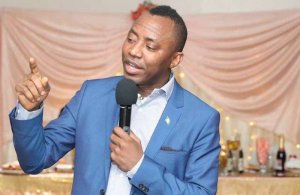
Akeredolu is not the only Nigerian who sees potential in Indian hemp production. During the last general election campaigns in Nigeria, Omoyele Sowore, the presidential candidate of the African Action Congress (AAC), strongly believes Nigeria can do better with cannabis. At least, he once vowed that Nigeria would export marijuana if he was elected president of the country. He said people are making billions from cannabis while Nigeria is lagging behind.
“We have to start taking care of our weed (cannabis), such that we can also contribute to the GDP of the world,” he said. Sowore claims that Nigeria has the best weeds (types of cannabis) in the world and that they are grown in Ekiti State.
“I’m very serious,” he says. “People are making billions out of that particular plant that is very potent in Nigeria. We should be focusing on it,” he stated.
“Our NDLEA should get the notice, memo in advance that Nigeria will be exporting weed to cure cancer in other parts of the world. Instead of chasing after people who are growing weed (cannabis) whereas we are not chasing after our politicians who are smoking cocaine in their houses.” But Abdallah is not buying any of that, saying: “The NDLEA under my leadership has been consistent in our opposition to legalisation and decriminalisation of cannabis. “For example, ‘Operation Thunderstorm’ undertaken by the Ondo State Command of the NDLEA destroyed 3,900.73 hectares of cannabis sativa planted in forest reserves.”
Many cannabis farmers who spoke with THISDAY think Abdallah is lying through his teeth. “Ask him and his boys why they haven’t prosecuted any of us? Ask them to show you all the cannabis they’ve claimed to seize before burning?” one of the farmers says. “You can quote me: NDLEA agents collude with big-time cannabis farmers. They don’t collect bribes. They get many bags of cannabis as kickbacks. They sell them outside the borders of Nigeria.” But the agency’s Head of Public Affairs, Jonah Achema, said the opposite.
“Who said we don’t prosecute cannabis farmers? We do. We have zero tolerance for illicit drugs and the highest number of people we have arrested so far are those who cultivate cannabis and those who deal in cannabis,” Achema says. Though he did not provide a figure of the number of cannabis farmers prosecuted in Nigeria, he directed attention to the NDLEA’s website.
“The statistics are there on our website – go and check it,” he advises.
After a repeated search of the website, no record was found regarding the number of cannabis farmers arrested, prosecuted or undergoing prosecution. Yet, according to the Nigerian Hemp Act, “In this Act “Indian hemp” means any plant or part of a plant of the genus cannabis… Any person who knowingly plants or cultivates any plant of the genus cannabis shall be guilty of an offence and liable on conviction to be sentenced either to death or to imprisonment for a term of not less than twenty-one years.” The legislation also states that any person who exports any Indian hemp “shall be guilty of an offence and liable on conviction to imprisonment for a term of not less than twenty-one years”.
Kayode Ajulo, an Abuja-based lawyer and former National Secretary of the Labour Party (LP), observed that under the NDLEA Act, which came about by the promulgation of Decree Number 48 of 1989, the possession or smoking of cannabis, or even allowing one’s premises to be used for dealing in cannabis, can result in a prison sentence from 15 years to life. “A careful perusal of the NDLEA Act will reveal that there was no mention of the legal use of narcotics. What could appear to seem as a provision for legal use is provided for under Section 3 of the NDLEA Act,” he notes. That section provides that NDLEA shall have responsibility for facilitating “rapid exchange of scientific and technical information and the conduct of research” geared towards eradication of illicit use of narcotic drugs and psychotropic substances.
It is based on that provision that the NDLEA gave a letter of “No Objection” to Medis Oil Company Limited and two others to import seeds of industrial cannabis for research purposes.
“Similarly, Under Article 3 paragraph 5 of the 1961 Single Convention on Narcotic Drugs to which Nigeria is a signatory to, it is envisaged that as a result of research, a drug may be deleted from schedule IV of the 1961 Single Convention,” explains Ajulo, “if researches reveal its therapeutic advantages.” Considering the high rate of unemployment in Nigeria, Ajulo believes that legalising cannabis will provide job opportunities for many Nigerian youths – that is already happening in Ondo, Osun, Ekiti, and Oyo. “It is succinct to point out that the war on drugs is often far costlier than the drugs themselves,” he adds. “Thus if the money pumped against the use of drugs could be redirected in cultivating marijuana for economic use, there will be a great boost in the economy of the country.”
At this point, he thinks the National Assembly should be lobbied to amend the provisions of the NDLEA Act and other relevant laws in order to make room for the legal production, manufacturing, sale, and use of cannabis in Nigeria, which, in turn, will boost the economy of the nation as a whole. “The NDLEA should also enforce the provisions of the 1961 Single Convention on Narcotic Drugs,” Ajulo argues, “and allow the use of Marijuana for medicinal purposes.”
Cocoa farming: going, going, gone?
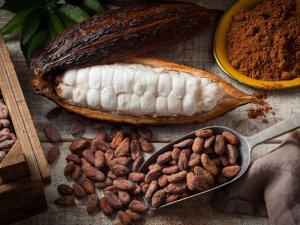
Owolabi did not admit that cocoa production and its profitability have dipped.
Against the backdrop of declining production and the collapse of the commodity board members due to market liberalisation, the National Cocoa Development Committee was established in December 1999 by the Olusegun Obasanjo’s administration. Its objective was to develop a sustainable blueprint for reviving the waning cocoa sector.
Other objectives included improving cocoa quality and increasing production from 170,000 tons to 320,000 tons per annum in the short term and in the long term to 600,000 tons per annum.
Decades earlier, in the 1950s and 1960s, it was a top foreign exchange earner and at a point, Nigeria was the world’s second largest producer of cocoa. The average cocoa production soon began to decline from 420,000 tons in the ‘60s to 170,000 tons in 1999.
Production climbed to 389,272 tons between 2000 and 2010 but fell back to 192,000 tons in 2015 and 2016. After dropping to fourth place, Nigeria is now the sixth largest producer of cocoa in the world.
Besides the numbers, there is a growing army of cocoa farmers ready to move on to where the pastures are greener.
A cocoa farmer in Osun State, South-west Nigeria, complained about the menace of middlemen in the cocoa farming value chain.
In the cocoa production chain, Abolaji Sunday, who has been planting cocoa for 15 years complained about cocoa farmers becoming peasant farmers, toiling day and night while produce buyers and exporters smile. “After spending so much on hiring labour and purchase of chemicals, the farmer is not in a position to cost his input and give a price – he has no option than to sell at the price dictated by the buyer,” laments Sunday.
There was a time, he said, that he had to source for a loan through a cooperative society when the landowner raised his yearly rent from N25, 000 to N100,000.
“This is because of the sudden jump of cocoa price from N18,000 to N50,000 per stone in the 2015/2016 season,” he discloses.
“I paid upfront for two years to avoid losing the farm. By 2017, the price of cocoa dropped to N29,000 per stone. Even when I had to renegotiate with my landowner to adjust the rent as regarding the new price, I am still servicing the loan to date.”
For Olugbenga Ojo, in his 27 years of cultivating cocoa, the situation in its production chain has continued to impoverish the farmer. “The produce buyer sits comfortably in his office in the city and dictates how much the farmer gets paid for his efforts,” a tired Ojo lamented, sighing.
“As farmers, we cannot dictate the selling price of our cocoa – the buyers do that. There is nothing we can do about it for now.”
Another cocoa farmer of 25 years, Lateef Okunola admitted that it is no longer possible to live comfortably only on cocoa farming. He sees many problems plaguing cocoa cultivation.
“If I have enough capital, I would be able to do things differently. The cost of hiring labour to work on the farm is now high. I would have gone into cassava production, piggery, palm tree plantation, etc. It is no longer possible for a farmer to live on proceeds of the yearly cocoa production,” laments Okunola.
“The old people that planted these cocoa trees,” he says pointing to the plants, “over forty years ago were getting five to 10 tons as yield per year. Hardly can we get five bags of cocoa from the same farm at the end of the season nowadays. It explains why young people are leaving cocoa farms.”
There are other issues like the poor application of chemicals on cocoa farms, which affects the quality of cocoa produced – and often leads to huge loss of foreign exchange earnings on the global market due to rejection of cocoa produced in Nigeria.
“There was a report of too many chemicals in the cocoa produced in Nigeria when we were using copper sulphate (CUSO4) to spray our cocoa. It was later banned with the warning that any farmer caught using it will be arrested and prosecuted,” he recalls.
“We now use Altrax, Redomin, and Blueboat, Red Force or Cham D fungicides as substitutes. We also have pesticides like Gammalin 20, Adrex 40, Rocket, AK-47, etc. This problem was as a result of the disappearance of extension officers from the farm. They used to be around decades ago to educate farmers on the application of chemicals on our farms.”
Even after 20 years of cocoa farming, Fatai Babatunde cannot hide his frustration.
“We need a lot of money to buy farm implements, pesticides and hire labour to work on the farm. We also need money to embark on cocoa regeneration by replanting new cocoa on our farms that are already getting old,” Babatunde complains.
“But unfortunately, the government does not support us in any way that could enhance our productivity. We only hear that the government distributes pesticides, fertilizers, cocoa seedlings, etc. None ever got to us – the real cocoa farmers.”
This investigation was supported by Ford Foundation and the International Centre For Investigative Reporting, ICIR.
Nigerian Army launches attacks on bandits, recovers arms cache and destroys camps
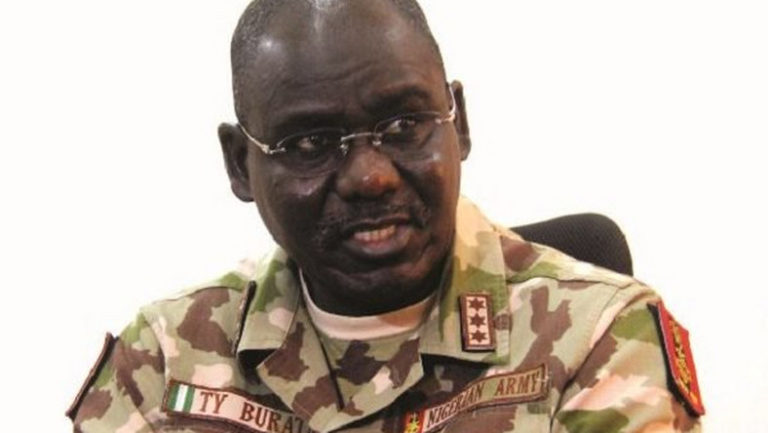
THE Nigeria Army authorities on Saturday disclosed that troops on Operation HARBIN KUNAMA III has successfully launched attacks neutralising bandits and destroying their camps across Sokoto, Katsina, Zamfara and Kebbi states.
Director of Army Public Relations, Sagir Musa, made this known in a statement on Sunday, saying the number of casualties suffered by the bandits was yet unconfirmed but five of their camps were destroyed in Gando Forest of Kebbi State.
Among the many items recovered from the bandits were 25 motorcycles, 8 AK 47 rifles, 2 General Purpose Machine Guns, 2 G3 rifles, 3 dane guns, 9 AK 47 magazines and 48 rounds of 7.62mm special ammunition.
Speaking on behalf of the General Officer Commanding GOC, 8 Division, Maj. Gen Hakeem Otiki, he said the operation which covered Katsina, Kebbi, Sokoto and Zamfara states witnessed a series of successful simultaneous ground operations activities which involved raids, ambushes, cordon and search with the occasional support of the Air Task Force component which the troops are poised to sustain.
“Similarly, troops deployed in Super Camp covering Bena, Jega, Danko and Wasagu encountered and annihilated an unconfirmed number of bandits and destroyed five bandits’ camps in Gando Forest of Kebbi State,” he said.
Troops of Operation HARBIN KUNAMA III have in a renewed efforts arrested several gangs of bandits terrorizing Isa, Rabbah and Burkusuma communities around Sububu Forest in Sokoto State as well as in Batsari, Safana and Kankara in Dumburum Forest of Katsina state. pic.twitter.com/amfqXGFuCj
— Nigerian Army (@HQNigerianArmy) June 29, 2019
Musa emphasised that the military operations were geared to dislodge the bandits from their hideouts to enable internally displaced persons to return to their homes safely.
“The operation is to facilitate the return of refugees and Internally Displaced Persons back to their homes, creating the enabling environment for economic activities to thrive and instil confidence in the locals to remain in their villages and continue their normal lives unmolested,” he said.
He also assured residents of the various communities of the Nigerian Army’s readiness to provide adequate security and improve synergy and collaboration with other security agencies within 8 Division’s area of responsibility with the aim of combating banditry, cattle rustling, and kidnapping.
Not even as an unbeliever will my husband rape someone- Omodele Fatoyinbo defends husband

PROTESTERS stormed the Commonwealth of Zion Assembly (COZA) headquarters in Abuja on Sunday following the alleged rape of Busola Dakolo by the General Overseer, Abiodun Fatoyinbo, even as the pastors’ wife, Omodele defended her husband integrity.
In an interview with Y!Naija on Friday, Dakolo, photographer and wife of musician Timi Dakolo had claimed the preacher had sexual knowledge of her as an underage teen while she was still a member of the church.
However, during the Sunday service, wife of the embattled man of God has defended her husband’s integrity before the congregation when she said that— “Not even as an unbeliever will my husband rape someone.”
“No let me talk,” she interjected before her husband stopped her from commenting further on the matter.
The General Overseer made it known that he was taking the advice of his mentors and elders in the church who were “handling the situation” after claiming he was the best pastor in the world.
“Like I always say, I am the best pastor in the world.
“I know that if I wasn’t the pastor of this church, I would have been a member of this church.”
This also came after the G.O revealed the cancellation of the yearly special programme “Seven Days of Glory,” scheduled to hold from July 1-7, 2019 to a later date, “You cannot put artistes through this,” Fatonyibo said referring to the protests ongoing at the COZA grounds.
The COZA7DG, which usually host several international ministers, and this edition was meant to host pastor Korede Komaiya and Prophet Gideon Danso.
Fatoyinbo also implored members of the church to keep their calm and obey new rules as security operatives in church tried to keep aggrieved protesters at bay and from storming the church.
“I am a peaceful person by nature, and I beg everyone please keep your calm, don’t start any violence. Once you are leaving the church follow the directions of the security men, so that if anything happens to you, you will not say it is COZA,” he said.
The COZA senior pastor has since denied the rape allegations.