Home Blog Page 2366

Inauguration: Religious, political leaders call for peace, unity

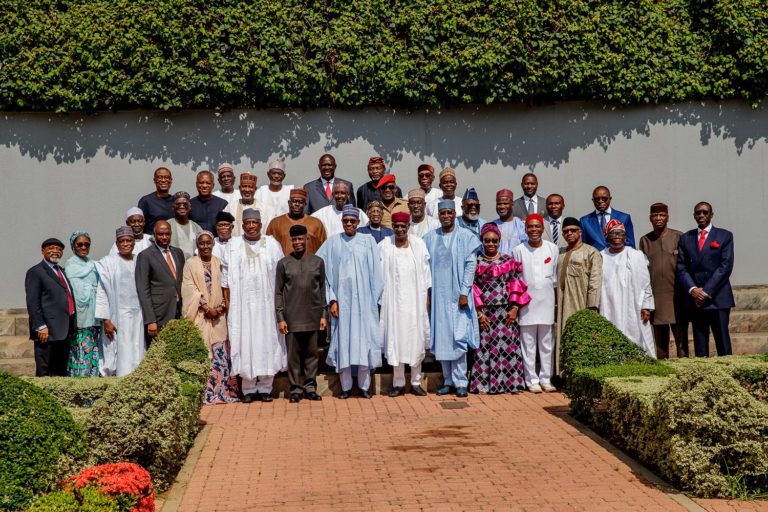
LEADERS of all categories had gathered at the National Christian Center on Sunday to pray for Nigeria and all subsets of the country ahead of the 2019 presidential inauguration ceremony slated for Wednesday, May 29.

Speaking at the inter-denomination service, Archbishop Augustin Akubeze, the president Catholic Bishops Conference represented by the Catholic Archbishop of Abuja, Cardinal John Onaiyekan spoke on the theme: “lets us choose life, not death”.

He called on the leaders to tell themselves the truth, accept their failure and do things the right way as the blame game of pointing accusing fingers at others will not take the country far.

“ The country isn’t in a state worth rejoicing for and many have lost all hope in the future of the country; the ranks of poor people are swelling by the day, as they hopelessly watch in frustration the rich swinging in affluence. All is not well, but all is not lost either,” Onaiyekan said.

He advised Nigerians to be mindful of those who seek to manipulate the diversity of the nation’s ethnicity in a game of divide and rule for selfish interests.

He said religion evokes a strong emotion that should help solve the ills of our nation, not compound them.

“Those who manipulate religion for their selfish personal interest end up destroying religion and harming the nation.

“But the basic provisions about freedom of religion are valid and must be scrupulously respected by all, especially by those who control state instrument of corrosion,” Onaiyekan said.

He lamented the insecurities in the country, “whereby gunmen- and women-unknown and known have been sowing death, destruction and misery almost everywhere. Property, well-being, harmony and peace are endangered by generalised insecurity

“This is the truth and not political propaganda mounted to discredit the government, and the nation must be mobilised to join hands to face the disaster looming over all of us,” he said.

He urged the leaders to yield to the serious warning from well-intention wise leaders, as there was a need for a drastic change of governance if the nation is to be saved from imminent chaos.

“Doing nothing but complaining and pointing fingers at others is to wait for the worst to happen. The positive and the most responsible action is to stand up to be counted and get involved in building the nation of our dream.”

Prayers were made for divine guidance for the new administration to offer good governance; security and economic challenges; various arms of government; peaceful co-existence; Nigerian families and the unity of the church.

Vice President Yemi Osinbajo, in his remarks as the special guest of honour, called on all to season their speech with grace as stated in Colossians 4 verse 6, and hope for a brighter and better future for the country.

He reminded Christians of the potency of their words, as it could heal or destroy, depending on the manner it is presented.

Osinbajo encourages Nigerians to stay united.

General Yakubu Gowon, the former head of state, also charged Nigerians to pray for president Buhari and all leaders to execute good governance and safeguard the interest of the state irrespective of religious differences.

The Secretary to the Government of the Federation (SGF), Boss Mustapha in his closing remark underscored the need for prayer in the country, reminding all to always pray for Nigeria to see the good of the land.

“God has demonstrated his love for Nigeria in different locations, and I say without any iota of doubt that Nigeria belongs to God and to God alone.”

The 2019 presidential inauguration is to hold, on Wednesday, May 29, at the Eagle Square, Abuja.


Elevating virtue: The subversive courage of Oyedapo Oyekunle Olorunyomi

By Chidi Anselm Odinkalu

Introducing a people defined by hierarchies

NIGERIA is a country defined by hierarchies in which everyone is expected to fit neatly into a box. These hierarchies are many and multi-dimensional. They vary in both shape and size and we have signature tunes for sign-posting them. You know a generational put-down when it’s uttered. When you hear, “Am I your mate?” or “your time will come”, it doesn’t matter if you are already sixty-something year-old grand-parent. “Where are you from?”, is a marker for geographical hierarchy that easily also conflates multiple sign-posts of ethnicity, religion, race and even presumed political persuasion. “You no know say you be woman?!” assumes lessons in propriety are exclusive to one gender. It is Nigerian to accept these hierarchies and their implications without question. To not subscribe to this is to subvert something widely considered essential to the Nigerian identity. It’s an invitation to trouble.

Our Nigerian hierarchies and accompanying boxes of identity even find expression in our sartorial preferences. They’re also canaries for prejudice and for competing claims of exception. Those who don’t fit into these boxes are worse than mere outliers. They could also end up as outcasts. Civic ecumenism in Nigeria is thus at once endangered but fascinating. It’s both vice and virtue. In this, art imitates form. A Nigerian who appears to embody these virtues could end up being both endangered and, simultaneously, a subject of considerable fascination. Notoriety is their reward. The best-known exemplar of this is Fela— he was so notorious, he did not need the luxury of a surname; so admired, everyone believed they knew him on intimate, first name terms.

Neither faint of heart nor “agbero” bourgeoisie

This is not a fate for the faint of heart. After all, we are Nigerians, the largest community in Africa. Just about any fraction of us against one person would be an army. Even in a world now dominated by fatuous obsession with seconds of infamy, no one dares to embrace an army’s worth of ire just for the sake of cheap popularity or fame. It takes conviction and courage to go against Nigerian hierarchies and all that they entail.

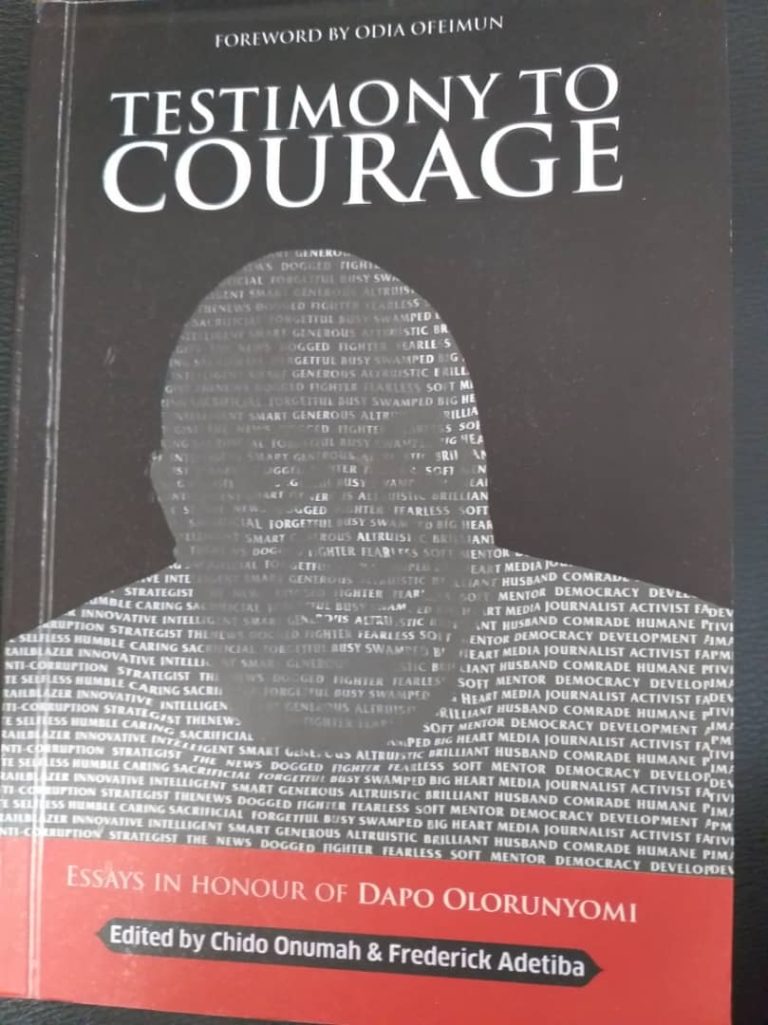
This is the point of Testimony to Courage. It is a collection of “Essays in Honour of Dapo Olorunyomi”, another Nigerian who, like Fela, is descended from a lineage of Christian missionaries and, also like Fela, is now best known by an edited form of his first name as “Dapsy”. Those of us too animated by Nigerian hierarchies to feel so intimate with our Egbon would take liberty to preface “Dapsy” with “Oga”. You know this cognomen has passed the test of acceptance when it receives the reluctant approval of the ideologically fastidious Biodun Jeyifo, Emeritus Professor and Dapsy’s teacher, who would have voted it down because “it sounds like and rhymes with ‘Popsy’ and ‘Momsy’, two of the most overused terms of the special argot or vocab of the over-pampered offspring of our national bourgeoisie.”[1] But he is prepared to grant an exception to its use for one of his favourite students because “there is nothing in (Dapsy’s) character and his sensibility that smacks of the moral and social universe of our agbero bourgeoisie.”

A conclave of witnesses to civic ecumenism

The book is at once about a man, his life’s passions, and about courage as a civic virtue. Courage, on its own could be both virtue and vice. As an end in itself, it is meaningless. It only makes sense as a means and its elevation to virtue assumes the existence of a larger goal into whose service it is pressed with consistency. Three of Dapsy’s abiding passions—Nigeria, other people and truth – receive substantial attention in the book. It’s easy to stray into one, some or all of these and forget about the book. Yet, a review of the book would be bereft without these.

Testimony to Courage hews close to the man in its ecumenism and disregard of Nigerian hierarchies. It contains 91 essays, 90 of which are relatively short. The exception, predictably by essayist, Odia Ofeimun, occupies all of 34 pages. These are clustered into three different parts that supposedly capture the essence of Dapsy’s life, work and values. Part 1, containing 33 essays, is devoted to his “Journalistic Exploits”. Part two contains 26 essays and deals with his “Activism and Democratic Struggle”. The 32 essays in part three are devoted to his “Legacy” of “Investing in the Future”. The categories are far from neat. Three additional essays are published as prologue, preface and introduction. They are all worth reading and highly readable.

The contributors include senior citizens above 80 and young people in their 20s; senior politicians on the one hand and citizens, some of whom hold them in barely concealed contempt, on the other; pastors and atheists; Christians, Muslims and traditional worshippers; men, women and every gender in between. At one end of the generational spectrum of authors are people like Akin Olorunyomi, Dapsy’s elder brother who was there when he was born and named in 1957, Wole Soyinka, after whom Dapsy has built one of the institutions that has become his hallmark, and Ropo Sekoni, an Emeritus Professor, who was Dapsy’s lecturer in the university over 40 years ago. At another end you have contributors like Omotola Aderinsola, who confesses to having known Dapsy for “less than a year”,[2] and Farooq Kperogi, who has never met Dapsy in person. With a few exceptions, the editors manage to distil from this conclave of witnesses a rich and highly readable variety of insights about man, virtue and country. The rulers of Nigeria have quite a lot to learn from the civic ecumenism of the book and of its subject for, true to Dapsy’s inclinations, it cannot be said of this book that any part of Nigeria is marginalized in it!

Constancy and coincidence; dissonance and diversity

This rich variety makes it somewhat difficult to be too categorical about the book. Testimony to Courage is broadly characterized by transcendental themes, some in dialogue with others. These are themes of constancy and coincidence; dissonance, diversity, and even the divine. It also offers a deep trove of information on Dapsy from the biographical to the aesthetic, which provide both context and interpretation for the deep strain of conviction and courage that he is known for.

Let’s begin with the biographical. We learn from the book that Dapsy was born in Kano to parents who lived in Keffi, but whose origins were in Okun-land. His grandfather was an ordained Baptist Minister and his parents were of the missionary persuasion. There is evidence of a deep pedigree that is emblematized in his birth names: Oyedapo (royalty has merged); Oyekunle (home filled with royalty); Adeniran (crown belongs to family). For a man who belongs to that rare species born adult, the irony is telling that this book formally gets launched on 27 May, usually marked in Nigeria as “Children’s Day”. His brother, Sola Olorunyomi, narrates, for instance, that Dapsy was wont to defy wearing a bib around the dining table at home with the refrain “do I look like a kid!?”[3] For his sins, his younger sister, Adenike Odebiri narrates, his mother shipped him off to boarding school at four so as to “give her peace in the house.”[4] He ended up going to a Koranic school in what is today Zamfara State and attending six different primary schools in six years. By the time he was finished with secondary school, Dapsy had lived in Bauchi, Gusau, Ilorin, Keffi, Makurdi, Mubi, Zaria, becoming proficient along the way in English, Fulfulde, Hausa, Yoruba as well as in the Bible and the Qur’an. He would later go to Ife for his undergraduate studies and then Yola for his compulsory national service. It’s no coincidence that his other endearments are “Mallam” or “Almajiri”.

The theme of coincidence and trouble is constant in Testimony to Courage. Dapsy’s mother did not have a monopoly of inventive ways to manage his penchant for trouble. Senior Advocate of Nigerian (SAN), Femi Falana, narrates that at the University of Ife, where they were editorial collaborators in a campus magazine, The Voice, the authorities banned the journal. In Dapsy’s professional biography, the rendezvous with reportorial immolation appears with unceasing regularity. As editor of another campus newspaper, The Rapport, he reportedly published a factually accurate story of how “a senior lecturer marched a female student into the hall to conduct a special examination for her”, outside the examination schedule. Unable to fault the story nor contain the furore caused by it, the university authorities had the magazine banned.[5] As a reporter with African Concord, he wrote a story about the cynical sclerosis of the Ibrahim Babangida regime in April 1992 that got the regime angry. When they could not get the magazine to withdraw the story, the regime had the Concord group shuttered.[6] That led to the founding of The News and Tempo stable under Gen. Sani Abacha but, “before long, both magazines were proscribed by the discredited dictator.”[7] They set about looking for him and when they could not find him, they even closed down his family life by arresting his wife, Ladi, and child![8]

Dapsy would later join forces with Dele Olojede at Next, which became so successful in investigative and enterprise journalism it had to be “rested”. Vanguard Editor, Eze Anaba, mourns Next as “a brilliant initiative that came too early.”[9] His latest enterprise, Premium Times, has not been without its own share of troubles but the digital revolution now provides some inoculation against similar pretensions to martial decapitation of journalistic irritation. The point of Testimony to Courage, however, is the constancy of Dapsy’s commitment to truth even in the face of a rampant cemetery of publishing titles that testifies to the official conspiracy against it.

There is an easy point of consensus in Testimony to Courage. As co-editors, Chido Onumah and Frederick Adetiba sum up in the introduction, “one thread run across everyone’s experience of Dapo Olorunyomi—his extraordinary humanity.”[10] This “extraordinary humanity” often expresses itself in unusual generosity that “shows total disregard for personal comfort, privilege or position”. The word “bohemian” appears in more than a few places in the book,[11] evidence of an attribute about which, Idowu Obasa complains, “makes people who are modestly conscious of these things appear very vain and self-centered.”[12]

Far from a bookend, this kind of dispute over the nature and limits of virtue is a major theme of the dissonance that is evident in Testimony to Courage. There is an illuminating dialogue in the book between medium, message, values and means. The various authors, for instance, can’t seem to agree even on what Dapsy does and where he has made his mark. Odia Ofeimun believes that the book is by “media activists” about a man who has been at the cutting edge of “investigative journalism”.[13] Yet most of the articles arguably centre not on his journalism but on his activism, humanism and institution building. Later in the book, Ofeimun would admit to many more dimensions to Dapsy’s narrative, acknowledging him also as a leading student activist and a “civil society stalwart.”[14] In his own words, Dapsy is quoted as describing himself as being engaged in “content production enterprise”, from which vintage he sees publication merely “as a platform.”[15] All this is not unconnected, of course, with the disruptive impact of the digital revolution on journalism, free expression and activism producing much more information without necessarily improving enlightenment. The resulting “assembly line” journalistic value-chain makes it impossible to shut down publishing today as the military did before.

With so much dissonance on such fundamentals, Testimony to Courage is naturally in diversity of viewpoints and insights on matters big and small. For instance, two contributors to the book include recent Osun State Governor, Rauf Aregbesola[16] and former Lagos State Governor, Bola Ahmed Tinubu,[17] whose self-image is as agents of good. Yet two of the contributions describes their class as part of “the rampant power they had criticized in the past”[18] and as now representing the “compromised bowels of the decadent institutional structures that were the object of the strictures” of Dapsy’s work.[19]

This diversity is replicated on even minutiae. Nobel Laureate, Wole Soyinka (Kongi), describes Dapsy as “mild-looking”.[20] For those inclined to think of the subject on this account as mild and retreating, Elor Nkereuwen counters that she found him “loud and boisterous”, an attribute, she makes clear, she doesn’t like.[21] Omotola Aderinsola even found him “slightly pot-bellied”. From their keypads, however, what would otherwise appear negative manage to come out almost as endearments. Confirming this, they both confess to how they are separately drawn to him as a peerless mentor. The dialogue between Kongi, Omotola Aderinsola and Elor Nkereuwen is also a record of an inter-generational conversation mediated by Nigeria’s hierarchies. Is it possible that the man who is required to be mild-mannered before his elders can also be boisterous before his Aburos? What this says about what matters to the different generations is one of the subliminal under-currents of Testimony to Courage. It falls to Waziri Adio, caught as he is between the generational hierarchies, to reconcile the appearances of contradiction in a man who is “at once understated and forceful, playful and serious, unassuming and cerebral, carefree and caring; approachable and cerebrally intimidating.”[22]

Testimony to Courage is more than just a collection of feel-good testimonials. It is a very serious and multi-disciplinary contribution to contemporary political economy, history, civic activism, security and media studies, with some spell-binding vignettes. Dare Babarinsa tells of the arrogant perfunctoriness with which Ibrahim Babangida made himself “President” instead of military “Head of State”, as his predecessors were known.[23]

In another section, we learn that pioneer chairman of the Economic and Financial Crimes Commission (EFCC), Nuhu Ribadu, whom Dapsy would serve as Chief of Staff, was, in an earlier life during the reign of General Abacha, his tormentor, as a minion of Zakari Biu, the powerful ex-Police Commissioner who was one of Abacha’s security Commissars. In that capacity, Ribadu was one of the security men who kept tabs on Dapsy. He confesses that to this day, he still has “Dapo’s passport recovered from those days.”[24] It must now be a collector’s item.

In one of fate’s bitchier twists, Ribadu himself, from Adamawa, in north-east Nigeria, was forced into exile after his EFCC tenure, on which journey Dapsy became his Ebenezer. To smuggle him across Nigeria’s land borders for that escape, he had to be dressed up in “a fitting Yoruba dress… with a matching Buba.”[25] It remained for him to find an equally fitting Yoruba name. So, they gave him the name “Bayo”.[26] His otherwise uneventful march into exile was punctuated at the border with Benin Republic where the Gendarmes thundered: “Arretez! Ou allez vous?” To which his minder, no doubt prompted by the spirit (to use a Nigerianism), responded without missing a beat: “Porto-Novo. Mon ami va rencontrer sa fiancée! stern questions from armed Gendarmes, who knew the height men could go to have a rendezvous with a lover across the border.”[27]

That lover, of course, is freedom, a lover the contours of whose intimacies and assignations with Dapsy are chronicled in every page of Testimony to Courage. The pieces are crafted with wit, humour, profound depth of recall, clarity mostly and, surely for a Nigerian book, occasional bombast. For example, Omoniyi Ibietan indulges in a spot of “totalizing the phenomenology of my encounter with Dapsy, his intentionality…”,[28] a line that would feel entirely natural in Ene Henshaw’s This is Our Chance or, indeed, in Uanhenga Xitu’s, The World of Mestre Tamoda. A relatively brief index should ordinarily help readers navigate the book although it could easily have been more helpful if it had been more extensive. Navigation would have been helped, also, by indicating the names of contributors against their entries in the table of contents. Without that, locating particular authors or sections in the book can be cumbersome. If only to correct this, among other goals, this book deserves a second edition. When it happens, that edition could also offer an opportunity to such important and close collaborators of Dapsy’s as Bayo Onanuga, Babafemi Ojudu, Seye Kehinde and even Ifeanyi Uddin, to meet editorial and production deadlines.

The courage to re-make our world

Unsurprisingly for a book whose principal protagonist is a descendant of Christian missionaries who has survived arrest, detention, torture, exile, and critical illness, to inch beyond the earthly landmark of three scores, Testimony to Courage genuflects before the divine with elements of a thanksgiving. One contributor who confesses to not knowing whether Dapsy is “a Christian or a Muslim or both” nevertheless pronounces him “an embodiment of God Almighty.”[29] Reflecting Dapsy’s inclination to take the long view, it falls to Idowu Obasa to put the remarkable narrative encapsulated in between the covers of the book into perspective. Obasa recalls that Dapsy’s many run-ins with power “led to what appeared to be permanent exile in the USA” but admits that he “cannot fail to thank God for the fact that if he had not run away to the USA those many years ago, we may have lost him two years ago.”

Herein lies the strongest message of the book—the man of courage who lives to tell the tale is usually the one who takes a long view. The courage to which this book testifies is of a more fundamental variety than that of a media practitioner or of an investigative journalist. It is about the courage to seek to re-make society away from the hierarchies that make demi-gods of a few, tarnish the other with toxic prejudice and diminish opportunities for everyone. It is a courage born of educated curiosity and underpinned by the inexactness of an experimentalist. It is courage of the wayfarer’s variety defined by a journey on which the destination may be known but the route unclear. It is this uncommon courage that Dapsy continues in different forms to embody.

In a country where “those who are least deserving get the loudest accolades” while “some who are deserving get their recognition after their death”,[30] Testimony to Courage is evidence that the supplication for civic canonization does not always have to await earthly mortality. Sometimes, a generation must acknowledge its best in order to encourage many more not to give up on virtue. At the personal level, I suspect it may offend against Dapsy’s natural modesty to be held up to such high admiration or become the object of such elevated fascination. He may yet be persuaded to accept with some reluctance, however, that it’s a price worth paying for the cause of recruiting more people to his inestimable passion for humanity and for a country that works for all who care to call it their own.

Dr. Chidi Anselm Odinkalu is Senior Team Manager, Africa, Open Society Justice Initiative.


Title:                   Testimony to Courage: Essays in Honour of Dapo Olorunyomi

Editors:               Chido Onumah and Frederick Adetiba

Publishers:          Cappa & Omega Co., 2251 Tangayika St., Maitama, Abuja

Page Numbers:    404

Price:                   Unstated

Year Published:   2019

Those asking us to refund IAAF are “enemies of this country”, says Dalung

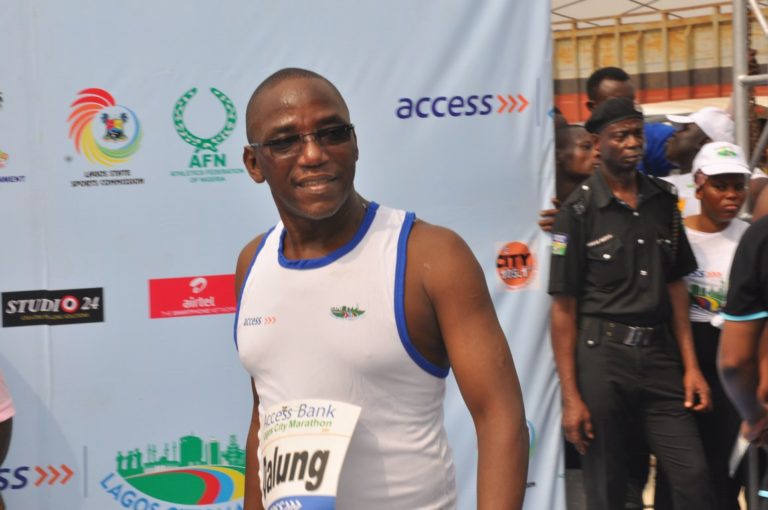
SOLOMON Dalung, Nigeria’s Minister of Sports, has described those asking Nigeria to refund $130,000 to the International Association of Athletics Federations (IAAF) as “enemies of this country”.

The IAAF says it erroneously overpaid Nigeria to the sum of $130,000 in grants in 2017 and wants the Athletics Federation of Nigeria (AFN) to refund the surplus funds, but Dalung is having none of it.

According to a letter addressed to Ibrahim Gusau, the AFN President, by the IAAF, Nigeria would be sanctioned if the said funds were not refunded within a given period of time.

“Failure to receive the funds back within that period, we will have no alternative than to apply appropriate sanctions against your Federation,” the letter read in part.

However, in a chat with journalists during Saturday’s Okpekpe Road Race in Edo State, Dalung wondered why Nigeria should refund the money when it did not force the IAAF into releasing it in the first place.

“I think Nigeria has been unfairly treated because the issue has been painted and promoted as if there was any wrongdoing on the part of Nigeria. Certainly not,” he said.

“Grants were released to Nigeria on the 17th of May 2017. IAAF on the 19th confirmed the transaction; those from IAAF after two months turned around and cried foul that it was a mistake.

“I smell a rat in the whole thing and I believe that the whole thing has been orchestrated in an attempt to blackmail Nigeria. Even when we went into it, we were not even convinced what the mistake was, is it a mistake of Nigeria or that of IAAF?

“When did they realise they made a mistake when the transaction was confirmed? I made a mistake in transferring money, I realised within 10 minutes and I called my bank and I retrieved the money. Why did it take IAAF two months to realise a mistake? An international organization, highly reputable?

“I think it is not about money erroneously credited to Nigeria, but there is a calculated attempt just to diminish and destroy Nigerian athletics, otherwise, I don’t see why they call it a mistake. We didn’t apply for a grant.”

On the possibility of Nigeria being banned from taking part in world athletics, Dalung waved that aside.

“Ban us for what? What has Nigeria done? What is the crime? Did we steal money from them? Did we ask them to transfer money to us?” he queried

“They transferred money to us, they confirmed the transaction to us, then after two months, they woke up from slumber. Is IAAF telling us they are as much disorganised as that?

“Where Nigeria is wrong, Nigeria will own up, but you cannot wake up and just realise that they have something to hold on to.

“We are not even convinced that there is any mistake, the money was sent for the golden relays and it was done. Are they saying there were no golden relays?

“I think those promoting this are trying to cry blue murder; I think they are just enemies of this country and we should ask questions.”

It’s the wish of Allah… Yari on APC losing Zamfara State

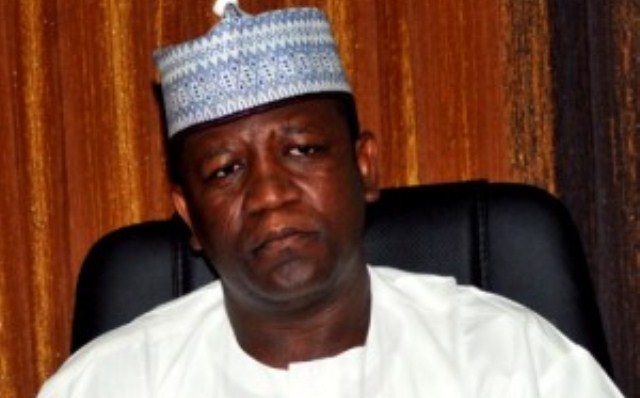
ABDULAZIZ Yari, the Governor of Zamfara State says it was the wish of Allah that the APC  lost Zamfara State.

Yari said this while addressing some APC supporters who had come to the Government House to show solidarity with him on Saturday, according to his spokesperson, Ibrahim Dosara.

We would have loved “to provide more dividends of democracy to the people of the state, but as Allah wanted it, the supreme court judgement went the way it happened”, Dosara quoted Yari as saying.

The Governor added that they (the APC) did everything possible to ensure that the state did not slip from their fingers.

Timeline of events

However, chronological analysis of the events that eventually culminated in APC losing Zamfara State suggests that Yari was, in fact, the main architect of the party’s misfortune in the state.

It was his quest to foist his desired candidate, Mukhtar Shehu, his current commissioner for finance, as the APC governorship candidate, that tore the party into two factions, with the other group loyal to Kabiru Marafa, a serving Senator who also wanted the governorship slot.

Yari refused to cooperate with the members of the APC National Working Committee that were sent to the state to conduct the governorship primary election. He accused the party’s National Chairman, Adams Oshiomhole, of bias, saying that the NWC members he sent to conduct the primary election were on an assignment to rig the process.

The governor threatened outright violence against the NWC members should they dare to set foot in Zamfara State.

His exact words: “I am warning members of that committee that they should never come to Zamfara, they should never put their legs in this state, and anything that happens to them, Adams Oshiomhole should be held responsible.”

On several occasions where a date and venue were agreed for the governorship primary election to hold, the exercise ended in a fight between the two factions. (Even at the Supreme Court premises on Friday, members of both factions also exchanged blows.) On one occasion, however, both factions held parallel primary elections, none of which was recognised by the Independent National Electoral Commission (INEC).

Attempts to foist on INEC the candidates that emerged from the Yari-faction failed initially as INEC would have none of it. However, following a judgement of a state high court, the electoral commission had no option than to readmit the APC into the ballot, and the party went on to record a resounding victory in the governorship, state assembly and federal legislative elections.

The Marafa-faction took the matter to the Court of Appeal, where the judgement of the lower court was overturned and the matter was decided in favour of the appellant, which means that INEC was right to have barred the APC from the election in the first place.

The judgement of the Court of Appeal was upheld on Friday by a five-man panel of judges, led by the Chief Justice of Nigeria, Tanko Mohammed, and the sum of N10 million awarded against the appellant, which, in this case, was the Yari-faction.

PDP benefits

Bello Mutawalle, Governor-elect of Zamfara state.

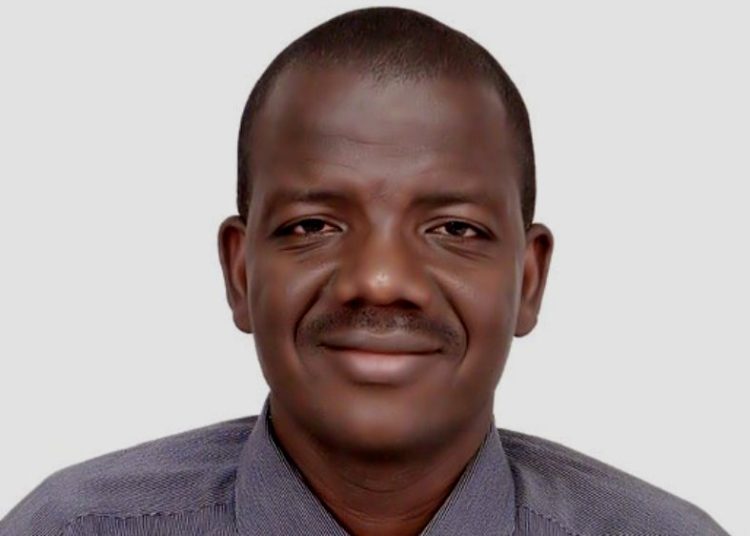
INEC has already declared the Peoples Democratic Party the winner of the 2019 elections in Zamfara State. This means that Bello Matawalle, the governorship candidate of the PDP in the election, is now the governor-elect and would be sworn into office on May 29.

Asides Matawalle, 34 other PDP candidates in the election are having the last laugh at the moment as they have all been returned elected.

Only one of the State Assembly position, that of Maru south state constituency, will be held by Kabiru Hassan of the National Rescue Movement (NRM).

Announcing the decision, INEC Chairman, Mahmood Yakubu, stressed the importance of political parties adhering to the rules of election practice in the country.

“I wish to seize this opportunity to draw the attention of all stakeholders, but particularly the political parties, to the implications of the supreme court judgment on the Zamfara matter,” he said.

“It is clear that properly conducted party primaries are cardinal to the proper internal functioning of political parties, the electoral process and our democratic system at large.

“Therefore, political parties must take very seriously the conduct of primaries according to all extant rules, including the monitoring of the processes by INEC to avoid a repeat of the Zamfara experience.”

Mr President, may we discuss your cabinet?

By Simon Kolawole

Your Excellency, I want to seize this opportunity to wish you the best of the Ramadan season as you prepare to be inaugurated for your second term in office. May the lessons of Ramadan — especially the aspects of sacrifice and service to God and humankind — guide your next steps as the leader of this potentially great country called Nigeria. I have many complaints about your first four years in office, some of which I have written about in this space, but I would rather let the past be gone and hope for a new chapter as you renew your mandate on May 29. But I also have many things to say ahead of the next four years, some of which I will be writing about in the coming weeks.

Can we first talk about your ministers, Mr President? Before I proceed, I have a sad story to tell you. I was a fierce supporter of the candidature of Gen. Olusegun Obasanjo at the dawn of this democratic era in 1999. I campaigned for him in my little corner, believing that he had the capacity and the goodwill to take Nigeria to the right place. I believed he was not corrupt, and was further energised by his promise to fight graft if he was elected into office. I was also fascinated that he could keep the military guys in check so that we would consolidate our new experience of democracy. I voted for him even though my political sympathies were elsewhere.

On his inauguration at the Eagle Square on May 29, 1999, Obasanjo delivered a powerful speech, promising to fight corruption. At some point, he stamped his foot on the platform to demonstrate his determination. He said it would no longer be “business as usual”. Good God, I was over the moon! I said finally, Nigeria was going somewhere after the devastating years of Gen. Sani Abacha. To tell the truth, Your Excellency, police officers stopped collecting their N20 tribute from commercial bus drivers at checkpoints. Civil servants started resuming work at 8 am. Everybody seemed to take Obasanjo seriously. It definitely looked like the dawn of a new era. But it was short-lived.

As soon as Obasanjo appointed his first cabinet and named Chief Tony Anenih as the minister of works, my heart broke into pieces. That singular gesture proved to me that Obasanjo was joking about fighting corruption. At that point, I gave up on Obasanjo. It was not about Anenih per se, but I tend to analyse people’s intentions by their actions. It was a foreboding signal. If Obasanjo had made Anenih special adviser on political affairs or minister of cooperation in Africa, I would not have minded. But ministry of works is too central for any government to use for political patronage, so I immediately understood Obasanjo’s direction. It was a sad story. It broke my spirit.

Now, Mr President, let me say here that I will pre-judge your second term by the ministerial appointments you make after your inauguration. First, I have asked my fasting Muslim friends to help pray that we would not wait for another six months for a cabinet and they have assured me that they would spare no “rakat” in doing that. You are aware your delay in naming a cabinet in 2015 did no favours to the economy. I would even say we are yet to recover from the damage this inflicted on the system. That period was so critical to the repair of many economic fundamentals that would later shape the exchange rate and worsen inflation, unemployment and poverty.

Mr President, I will now be straightforward: if you retain certain ministers, I will finally give up on your government. I have seen enough reasons to lose faith but there is this never-say-die spirit that keeps me hoping even when it does not make sense. That is in my DNA. I have, however, been gravely worried that most of the ministers have been saying quietly that they are returning. In fact, I am told more than half of your cabinet will be re-appointed. I hope this is a joke, Mr President. Tell me it’s a joke, Mr President. Assure me, Mr President, that this is a joke. This is a cabinet you should have dissolved years ago! How on earth would they be retained? Say it ain’t so, Mr President.

Your Excellency, if you retain Mallam Abubakar Malami as your minister of justice and attorney-general of the federation, I will finally give up on you. It will show that you are not getting the memo or there is something you are not telling us. One of the most important cabinet positions in a civilised society is that of the attorney-general. In fact, that is the only ministerial position mentioned in the constitution. The position is too critical and too powerful to be toyed with. A president will never get sound and frank legal advice if the attorney-general prostrates to greet him. The position requires a cerebral and principled appointee. I will leave it at that.

Mr President, if you appoint election losers as ministers, then I will surrender. One of them is Senator Abiola Ajimobi, the “constituted authority” in Oyo state who lost his bid to return to the senate after spending eight years as governor. Tell me he is not on your list, Mr President. Of course, we know Alhaji Adebayo Shittu will not return as minister. Or will he? No, Mr President, you won’t do that to Nigeria. Neither would you reward Alhaji Abdulaziz Yari with a ministerial appointment after his election as a senator from Zamfara west was annulled by the Supreme Court. I know you have the power to appoint whoever you want, but use that power wisely.

I hope, Your Excellency, that we are not going to see Chief Audu Ogbeh in your cabinet again. If you love him so much, you can send him as ambassador to Thailand so that he can go and regale Thais with his tale that the Asian country is experiencing increasing unemployment because of the “rice revolution” in Nigeria. Ogbeh is very good at embarrassing the country at the slightest opportunity. I hope never to see Solomon Dalung at FEC meetings again, and this has nothing to do with his beret. To cut a long list short, Mr President, if you return more than five ministers, you will be sending a depressing message to Nigerians about your direction in the next four years.

Beyond the issue of individuals to be appointed, Your Excellency, is the need to bring in relevant people into the cabinet to meet the glaring skill deficiency. I cannot believe that you have never appointed an advanced and experienced economist as minister since you came to office. I just cannot believe it — not at a time of our worst economic crisis in decades. We have a ministerial team full of lawyers and not one economist. I don’t understand. This is a great opportunity for you to address the glaring deficiencies in your appointments. It also affords you a golden chance to correct the lopsidedness against some sections, including women and youth.

Mr President, what is keeping your administration going is not the performance of your team but rather the enduring faith in you and the hope that you will eventually come good. But you are as good as the people you assemble to assist you. If you had IOUs in the first term, you have either discharged them or they have expired. It is now time to prove the growing army of critics and doubters wrong and to reassure the enduring believers that you are on top of your game. You need a brand new team of those whose competence is not in doubt and those who have fire in their bellies. Trust me, Mr President: most of your ministers are fatigued and have nothing more to offer.

If you are bent on doing favours, there are some ministerial slots you cannot afford to joke with. I list them: finance, education, health, defence, petroleum, power, attorney-general, works and interior. Long after you have left the stage, those are the things Nigerians will remember you for. A strong economic team (in which there are indeed economists), a revamped education system, a fit health sector, an infrastructural revolution, an efficient petroleum sector and massively improved internal security will change the fortune of Nigerians if you make them your priorities. All ministers are important, but some are more important than others.

Finally, Mr President, you must now take your cabinet more seriously. Your “non-interference” philosophy, which you take as a strength, is actually a weakness. It is your government. You cannot afford to be aloof! Where is monitoring and evaluation? It would make sense if you fire ministers once in a while. The joke in town is that you are the best employer of labour: you never fire anyone, no matter how woefully they perform! Non-interference has given many ministers the cover to be doing things at odds with the advertised values of your administration, secure in the faith that no one is watching and no one will be punished. Not good, Mr President, not good.

Lest I forget, Mr President, can we have a new way of doing things at the federal executive council? All I hear every Wednesday is that a contract has been awarded to buy dustbins for Damaturu or clear the drainage in Akungba. That is a bit disgusting. Governance is serious business. There should be more to FEC than contract awards. They should be discussing serious policy issues. Let Nigerians look forward to ministerial briefings that will give them confidence that the country is in safe hands and that a great future is loading. All these contract talks are banal. It has been so since 1999. We need a new direction, Your Excellency. Enough of these meaningless routines!

Meanwhile, until my next letter, please accept, Mr President, the assurances of my best wishes.

AND FOUR OTHER THINGS…

ZAMFARA ZEROS

In the end, the All Progressives Congress (APC) has lost it all in Zamfara state. After months of crises and legal battles, the Supreme Court has declared that the party did not hold primaries in the state and therefore was not eligible to participate in the general election. All its results in the house of assembly, governorship, house of reps and senate polls were nullified. Candidates of the Peoples Democratic Party (PDP) instantly became the beneficiaries. I don’t like to gloat but I just cannot hold myself from celebrating that fact that Alhaji Abdulaziz Yari, the outgoing governor, will not enjoy the retirement benefit of becoming a senator after mismanaging Zamfara for eight years. Sweet.

OIL THEFT

Question: describe in not more than two words why crude oil is $70 a barrel but the benefits to the federation account are not commensurate. Answer: oil theft. In April 2012, Dr Ngozi Okonjo-Iweala, then minister of finance, raised the alarm that Nigeria was losing about 400,000 barrels per day to crude oil theft (usually perpetrated with the connivance of security agencies and government officials), the value of which was $1 billion daily. It was one of the reasons we couldn’t build massive forex reserves despite high oil prices. All indications are that oil theft is back in full swing — meaning the more things seem to change, the more they remain the same. Slippery.

FULANI RADIO

A few days after former President Olusegun Obasanjo spoke about “West African fulanisation” — which many have taken the liberty to interpret as they wish — the last thing you would expect from the federal government is to announce the establishment of a radio station for the Fulani as “a vehicle for social mobilisation and education”. No matter how well-intentioned, this is difficult to justify in a multi-ethnic society where there is already an endemic suspicion that there is a “Fulani agenda”. Whose brainwave is the radio idea? Will there be radio stations for other ethnic groups as well — in the spirit of balance? Are radio stations not better left to the private sector? Baffling.

MYTH BUSTER

“LOL” used to mean “Lots of Love” in the heyday of SMS, but it soon transformed to “Laugh out Loud” and “Laughing out Loud” when instant messaging apps such as BBM and WhatsApp took the centre stage. There is a joke that a girl sent this message to her ex-boyfriend: “Heard you lost your mum. Take heart. LOL.” You can guess how the boy interpreted it! But have you been told recently by some Christian fundamentalists that LOL actually means “Lucifer Our Lord”? If you believe that, then you could as well believe that SWAG means “Satan’s Wishes Are Granted”, YOLO means “Youth Obeying Lucifer’s Orders”, and “ROFL” means “Rise, Our Father Lucifer”. LOL.

Simon Kolawole is the founder and CEO of TheCable. He tweets @simonkolawole.

Nigeria Air Force launches “devastating airstrikes” against Boko Haram

The Nigerian Air Force says it has launched another round of “devastating airstrikes against Boko Haram and inflicted heavy casualties on the dreaded terrorist group

This was contained in a statement issued on Saturday by the NAF spokesperson, Ibikunle Daramola, an Air Commodore, who said the insurgents were fleeing from air bombardments by the Niger and Chadian Air Force when they “met their Waterloo with the Nigerian Air Force”.

“The Air Task Force (ATF) of Operation LAFIYA DOLE has inflicted heavy casualties on Islamic State of West Africa (ISWAP) elements in devastating air strikes conducted at Tumbun Hamma on the fringes of Lake Chad yesterday, 24 May 2019,” the statement read.

“The attack was conducted following credible intelligence reports indicating that the terrorists, who had fled the series of air strikes conducted by Nigerian, Nigerien and Chadian Air Forces, around the Malkanori-Tumbun Rego general axis of northern Borno State, had converged in Tumbun Hamma.

“The attack was preceded by series of Intelligence, Surveillance and Reconnaissance (ISR) missions which confirmed heavy presence of terrorists in several structures, along with their logistics items, spread across the small settlement.

“Accordingly, the ATF scrambled an Alpha Jet aircraft to attack the location, recording a successful direct hit in the centre of the target area leading to the neutralization of several terrorists as well as the destruction of their structures and logistics.

“The NAF, operating in concert with surface forces, will sustain its operations to completely degrade the terrorists in the Northeast.”

The Nigerian military has maintained that Boko Haram has been technically defeated, however, reports show that while the insurgents no longer control territories like they did in the past, they are still very active and carry out regular attacks against military and civilian objectives in the North East region of the country which has remained their stronghold.

One soldier was reportedly killed while three others were injured when a Boko Haram attacked a military base in Gubio, Borno State on Sunday, May 19.

Ezekwesili points pitfall in Nigeria’s education, calls for increase in cost of learning

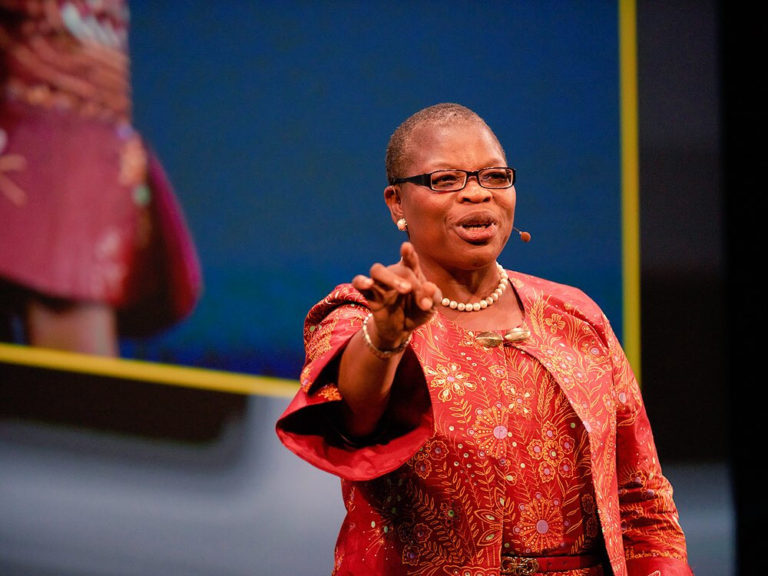
OBY Ezekwesili has said the problem faced with Nigeria educational sector isn’t funding, but the collapse in the price of tertiary education which has compromised its value.

The former minister of education said this at the launch of Edfin, Nigeria’s first educational micro finance bank on Thursday.

She said the low cost of education in Nigeria has deteriorated its quality, calling on the government to increase the cost of tertiary education to sustain its value.

“You must have a solution that the pricing of education does not get taken down to the level where it cannot sustain quality that is what’s going on now”, Ezewesili said.

She said the problem with the sector isn’t funding, “If you fund a dysfunction well, you will get a well-funded dysfunction.”. She says failure to address it, has put the country into trouble.

“Our country is in trouble because education is in crisis. A decade plus ago, I told the mission that if we did not address the crisis in education that in a matter of years. In fact, my prognosis at that time was that by 2020 that we will produce the most hardened criminals,” Ezekwesili said.

She underscored the challenge of the sector, as one where, parents are comfortable paying N500, 000 in top secondary school for their children but protest about learning cost at the tertiary level, which compromises educational relevance and quality

Ezekwesili, therefore, says “those who have the capacity to pay should pay the right price for tertiary education and for those without the capacity to pay, edufinance and a subsidy from the federal government that is well designed will come to ensure that they are not left out of education”.

Edufinance as described by Bunmi Lawson, managing director of the microfinance bank, is that which ensures access to finance for educational needs.

“We are here today to mark the start of a journey one wherein the future everyone who wants to has access to quality education; where those who need finance; or you are a parent, you may be a student wanting to further your education or a teacher who need loans to improve their standard of living or their teaching skills. All stakeholders in the education ecosystem having easy access to the finance they need are the future we envisage.”

However, Reports show that funding is the biggest problem confronting Nigeria’s education system. The percentage of the budget allocated to education annually is abysmally low. In 2018, only 7.04 per cent was allocated to education. This is far below UNESCO’s recommended 15-26 per cent.

Nigeria’s educational system also is in crises of infrastructural decay, neglect, waste of resources and sordid conditions of service.

The increase in privatization of government-owned universities has led to tertiary education becoming the exclusive preserve of the rich upper class; in a country where more than 90 per cent of the population is currently living in abject poverty.

Those in the public institutions also are continuously faced with a plethora of industrial actions, hindering the liquidity of the education system, while many can’t gain admission into them either.


CSO rails at lawmakers for failing to pass police reform bill

THE House of Representatives has been criticised for not passing the police reform bill by Citizen’s Gavel, a civil society group and civic tech organisation, which likened the decision to throwing the baby out with the bathwater.

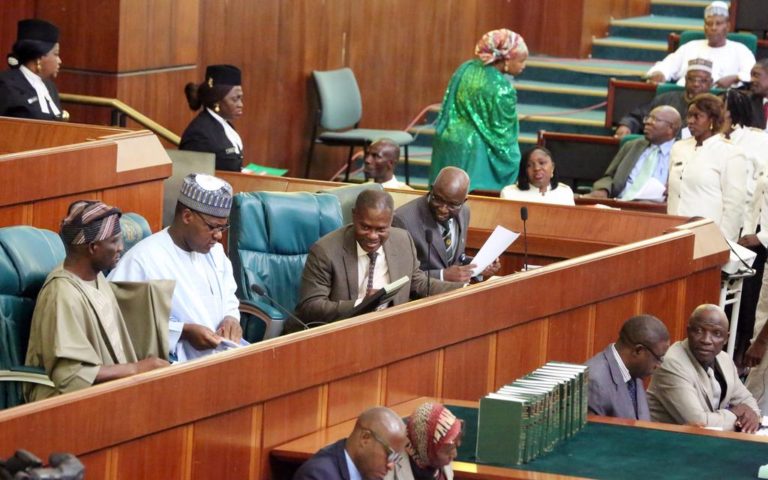
A little over a month after the same bill was passed by the Senate, the House of Representatives, on Wednesday, rejected the Police Act (Repeal and Re-enactment) Bill, 2018, popularly called the Police Reform bill.

This decision, the lawmakers had said, was reached because “most of the provisions of this bill are against the constitution”.

“Unless we amend the constitution, we can not implement the bill. The bill also proposed the reduction of the number of DIGs, are we moving forward or backward? The bill is also referring to the Police as police force which is against the constitution,” explained Abubakar Lawal, chairman of the house committee on police affairs.

In its press statement released on Friday and signed by the group’s team lead Nelson Olaonipekun, Gavel said the lower legislative chamber would have done a better job if it simply removed the sections in conflict with the constitution and passed others.

Or it could have passed “the bill and let those provisions be removed when tested in court rather than throwing the baby out with the bathwater,” it added. “The present set has sent the country back to the dark age.

“In recent times, citizens have complained about the increase in police brutality, police extortion, poor welfare of police and extrajudicial killings across Nigeria. After the unfortunate death of Kolade Johnson in Lagos, several other persons have died in a similar manner, and this has left citizens to wonder who will be the next victim,” the statement said.

“Citizens on several occasions have admonished the National Assembly to strengthen laws on police accountability and in extreme cases called on the National Assembly to investigate above-mentioned instances.

“The Police Reform Bill has been before the House of Representatives and Senate. While the Senate has taken the bold step to pass the bill, the House of Representatives has taken Nigerian back to the old colonial days by refusing to pass the 21st-century law.”

Gavel pointed out that the Police Act currently in force is old-fashioned as it was enacted in 1943. It further called for a massive overhaul of the system, especially through passing the proposed amendment which “promotes human rights, efficiency and effectiveness of the police”.

The CSO also urged the coming ninth National Assembly to prioritise the lives of Nigerians and police officers by ensuring the swift passage of the bill.

Among other things, the bill makes provisions for the establishment of a police fund and community police forum. It also makes illegal the taking of liquor or intoxicating substances while on duty, stipulating a fine of N20,000 or three months imprisonment as a penalty.

Celebration in Gusau as S’court declares PDP winner of guber election

CELEBRATION broke out in Gusau, the capital of Zamfara State, following the victory of the People’s Democratic Party (PDP) governorship candidate, Bello Mutawalle at the Supreme Court on Friday.

Reports say residents of the city came out into the streets to celebrate the court judgement and commercial motorcycle operators rode around jubilantly holding Mutawalle’s posters.

“I hope the new administration would make life better for the people. I was not surprised at the verdict owing to what has been happening right from the party primaries to date,” the News Agency of Nigeria (NAN) quoted a resident, Aliyu Hussain, as saying.

Also expressing his satisfaction at the verdict, the APC factional state chairman, Sirajo Mai-Katako, who belongs to the Kabiru Marafa APC faction, described the judgment as a good development in the nation’s democracy.

Mai-Katako said the Supreme Court judgement has underscored the need for people’s freedom of choice towards those who occupy political offices, noting that the party was more concerned about justice and fairness than it was about producing the governor.

He further urged the people of Zamfara to show total support to the new incoming governor.

Earlier on Friday, the Supreme Court had affirmed the Court of Appeal’s nullification of the All Progressives Congress (APC) from the 2019 gubernatorial election in Zamfara State and awarded the sum of N10 million against the party.

Prior to the election, the Independent National Electoral Commission (INEC) had barred the APC from fielding any candidate because the party had failed to hold its primary election within the window provided by the electoral commission.

However, following an order of a state high court, INEC readmitted the APC for the election, which was won by the party’s governorship candidate, Mukhtar Shehu.

But in a ruling later in March, the Court of Appeal nullified the order of the lower court which reinstated the APC to be part of the election, and held that INEC was right in the first instance to have barred the party from participating in the exercise.

Shehu and the Zamfara APC further appealed the ruling at the Supreme Court and the judgement was given on Friday against them.


Ikorodu residents bemoan flood in community

By Yusuf Akinpelu

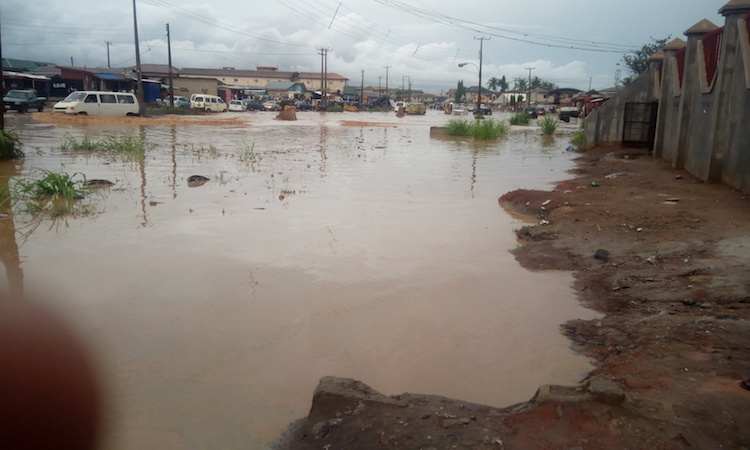
OF all things, rain is not something residents of Owutu, an area in Ikorodu, Lagos state, currently pray for because each time it falls, it comes with horrific experiences.

Heavy rainfall is usually followed by flood on roads, blockage of streets and drainages, hike in transport and freight fare, as well as difficulty in pedestrian ambulation, the residents have said.

Owutu community and others such as Asolo, Isawo, Ojokoro, Agbede, Ori-Okuta, Igbo-Olomu are some of the communities that constitute Ikorodu West local council development area.

Visits to the area by the reporter this week revealed the difficulty residents in the area face each time there is a heavy downpour

“Can you see? This is just rain that lasted for one hour. How about when the rain begins to fall continuously — for three consecutive days, for instance?” a woman, whose road to her residence on Olu Adebayo street has been blocked by flood, said with disgust.

Roads to other adjoining streets such as Gunwa-Ola, Omodisu have also been blocked.

Last Sunday when heavy rain fell, 55-year-old Olanrewaju Jaji said her son was almost trapped in the flood that covered the Asolo-Isawo road.

“When rain falls here, it comes with droppings from hell.


The flood has nowhere to go because there is no drainage


“My son had just completed his university education at the University of Ibadan. He was returning home last Monday with his heavy luggage when he fell inside the flood from the okada (motorcycle taxi )that was carrying him.

“I thank God that he was not injured or that something worse happened. But this situation is serious. This road ought to have been done to a stage where  it would not cause danger to the people in the community.”

As for Lekan Toheeb, a tricycle rider (commonly called maruwa or keke napep), plying the road during the rainy season has not been a good experience.

“This rainy season is giving us headache. Workers can’t go to work. Since morning my keke has broken down. Please help us beg the government to do something. I’ve been here for the past two hours, repairing my keke,” he lamented.

The reporter observed as a number of people turned back home because of the difficulty in transporting themselves to their place of work.

Mrs Adebayo, a trader in Asolo area, also echoed her frustration about the heavy downpours and the attendant hike in transport fare.

Transport fare to Agric bus stop which normally ranges between N50 and N100 now costs N500.

“We have to pay more for transport because of the flood.

“See the front of my shop: flood. I had to use this stick to divert the dirt elsewhere. It’s just too hard for us.”

Another tricycle rider named Qosim who spoke to the reporter recalled the state of the road before the state government began expansion on it. He blamed the hardship they face on the negligence of the government.

“This problem began since when the bitumen on the road was scrapped off,” Qosim recounted. “Had it been they didn’t scrap it off then, it wouldn’t have been this difficult.

“Each time rain falls, the potholes become deeper. If the roads are smooth, one can still navigate the flood.

The entrance to Olu Adebayo street, Asolo, blocked by flood


“But if you unknowingly ride your keke into those holes and the engine sucks water, it will break down immediately. It is water that caused the breakdown of those you see there,” Qosim said, pointing at a number of broken tricycles metres away.

He suggested levelling of the road as a temporary solution but was sceptical if the government quick intervention.

“Since they abandoned work on the road in December [last year], the road has gone from bad to worse.”

Although governor Akinwunmi Ambode had earlier said the project would be completed between March and April of this year, but he has not fulfilled the promise yet.

The project which started in 2017, according to the signpost of the project, is expected to last for 20 months.

When contacted, the Lagos state Commissioner for Information, Kehinde Bamigbetan, said he was indisposed and could not “speak for now”.

He, however, said the Commissioner for Works should be reached instead for information.

The reporter called Mr. Ade Akinsanya, Lagos state Commissioner for Works and Infrastructure, but he did not answer any of the calls. He also did not reply to the text message sent to him.