Home Blog Page 2370

Doctors, other health workers go without pay for 13 months in Abia – NMA

THE Nigerian Medical Association has disclosed that the Abia State government owed its health workers at the State Teaching Hospital not less than 13-month salaries.

Francis Faduyile, NMA president, made this known in Abuja while reading the communique issued at the end of the 59th Annual General Conference and delegates’ meeting of the association, Punch reported.

Faduyile said the Management Board of the Teaching  Hospital was as well owed a ten-month salary.

“We expressed great displeasure and frowned on the failure of the Abia State government to pay the salaries of doctors and other health workers working at the Abia State University Teaching Hospital for up to 13 months and Abia State Hospital Management Board for 10 months”, he said.

Apart from the Abia government, the NMA also frowned against Imo State government who it said their members are being paid 70 per cent salaries.

“We also expressed great displeasure and frowned on the payment of 70 per cent salaries to doctors and other health workers working with the Imo State Government since September 2015.”

NMA  considered the action of both Abia and Imo governments as unacceptable.

The president complained of how Nigerian doctors get low payment when compared to counterparts in other countries.

“The NMA would appear at the next meeting of the Nigeria Governors Forum to discuss the issue with state governors,” he said.

Faduyile said during the AGM that not less than 2,000 medical doctors leave the country annually for other countries.

A media report in March noted how  Saudi-Arabian health officials conducted recruitment tests for Nigerian doctors en masse.

Isaac Adewole, Nigerian health minister, had expressed worry on how some state governments could not recruit and keep medical doctors, including specialists, in their secondary and tertiary hospitals.

“In many cases, most local government health facilities do not have doctors. These are related to poor welfare and remuneration package at various levels amongst other factors,” Adewole said on May 2, during the AGM.

NLC to protest on Monday against attack on members

THE Nigeria Labour Congress (NLC) has disclosed plans to embark on a protest on Monday, May 13, in reaction to the violent treatment of its members who picketed the official residence of the minister of labour and employment, Chris Ngige, on Wednesday.

During a press briefing held at the Labour House, Abuja, after a meeting of its Central Working Committee (CWC), president of the NLC, Ayuba Wabba, said the planned protest “is going to be seriously massive” and the trade union is prepared for the labour minister.

The CWC insisted that the protest held by union members was lawful and described its violent disruption by thugs as undemocratic, repressive, and anti-workers. The committee called for a full investigation and prosecution of the thugs and their sponsor.

The disruption, Wabba noted, led to the damage of vehicles used to convey the protesters, and nine members of the Congress were admitted for treatment at various hospitals.

The NLC said its members at various airports, and those in all 163 member-countries of the International Trade Union Confederation (ITUC), have been directed to disgrace the minister anytime he travels by air.

“The CWC resolved that they were ready to be killed by the thugs hired by Ngige, but this time around we should also tell him that he does not have the monopoly of violence. It is because we thought that in a civilised system, workers should be seen to respect the rule of law and respect the rule of engagement,” the Congress president said.

The NLC also called on President Muhammadu Buhari to make sure Ngige, whom they referred to as “a square peg in a round hole”, is one of the federal ministers who are not re-appointed into the cabinet.

Reacting to questions, Wabba stressed that Kokori was appointed on personal merits and the only problem is the labour minister wants to remain the fund’s sole administrator.

He said the protest will still be held even if the minister apologises for his conduct before Monday as a way to symbolically assert the workers’ right to peaceful assembly and to demonstrate.

In response to a question from The ICIR, the NLC president insisted the minister and his direct siblings, “anybody who answers his name”, will be disgraced at airports because he has tried to undermine the interest of workers, and the Congress learnt his son was also involved in attacking workers.

“Anywhere and everywhere that himself is seen by workers, they should raise the placard to remind him that he has not enjoyed the goodwill of workers,” he said.

He added that the law enforcement agencies, to whom complaints have been lodged, claimed that the security agents sighted at the scene of the Wednesday protest and who did nothing to protect the workers were not deployed to be there, “so possibly they could be his security guards”.

He said the Abuja police commissioner personally visited the attacked protesters admitted at the hospital.

Here’s the full statement of the labour leader:

An emergency meeting of the Central Working Committee, comprising presidents and general secretaries of all unions, met at Labour House, Abuja. The meeting reviewed the circumstances surrounding the refusal of the minister of labour, Dr Chris Ngige, to inaugurate the board of the Nigeria Social Insurance Trust Fund, a body where NLC has substantial stake and by extension the people of Nigeria, and where also he has continued to run the place as a sole administrator for the past three years. After a directive of President Muhammadu Buhari to inaugurate the board alongside over 500 boards, as it stands today, only this board has not been inaugurated.

A lot of reasons have been adduced, and also a lot of controversies have been associated with such. The meeting reviewed also the decision of the congress this year to continue to engage the minister for failing to inaugurate this very important board of which the ultimatum that was given actually ended on the 1st of May, 2019. Clearly, it was part of the reason he couldn’t attend and celebrate the May day with the teeming workers of Nigeria.

The meeting similarly reviewed the decision of the picketing of the official residence of the minister and his office, noting that it was lawful as it was done along public thoroughfare, and also the labour law allows such picketing because he is a public officer occupying public office. And even the president of countries have tolerated the issue of picketing on such occasions. And therefore as the minister of labour, he knows that there is a clear provision in our law, for picketing, walk-out, and even strike out. For him to have descended so low to, instead of addressing the issue, to now resort to use of thugs to attack workers who are on a peaceful conduct of a protest, is something that is less than desirable. It is not only undemocratic, it is repressive, it is also anti-worker. And that clearly has shown his posture as a minister that has come to be anti- the workers he is supposed to protect.

This is highly condemnable. The Central Working Committee condemned such action by a minister of labour, which has not happened even in the military setting and has never happened in the history of industrial relations in Nigeria. This is clearly a violation of the fundamental rights of workers, and trade unions, and by extension Nigerians, the freedom of association and even to protest where their rights are abridged. The Central Working Committee further observed that in the course of unleashing this mindless violence caused damage to the vehicle of workers, affiliate unions and congress, and also unleashed attacks on workers, and some workers actually sustained various degrees of injury.

As of the last count, nine workers were actually admitted and treated in various hospitals in Abuja. This happened under the very watchful eyes of security agencies, and we have also been able to capture all the thugs that were actually used to attack workers. Those pictures and records have been transmitted to security agencies. Up till now, we are surprised there was no apology or any show of remorse in this very disturbing act.

The CWC accordingly apart from condemning the action in strong terms also resolved to put on notice government to note that the right of workers as I said cannot be abridged. This right is a right that is fundamentally guaranteed by various conventions of the ILO, and in particular the Nigerian Labour Law. CWC expressed shock that whereas there were detachments of security agents there, which is actually the case to protect and ensure that the process is peaceful, it was under their watchful eyes that these defenceless workers were attacked. And clearly we can say that apart from condemnation we demand full investigation and a prosecution of those that are involved.

Accordingly, CWC also resolved to demand an unconditional and unqualified apology from minister of labour, Chris Ngige, and by extension government, both for the primitive behaviour of the minister and its suspicious silence, explaining that whereas even in the case of protesters that were protesting and barricaded a major road leading to the airport, the person of the number two citizen of Nigeria, the vice president, found it necessary to stop, step out of his vehicle, and address the indigenous community, and address their grievances, and also addressed their protest. This is what happens in a civilised society. We are certainly taken aback where a minister that is supposed to uphold our labour laws has descended so low.

We are not surprised, because we were told this is also his antecedent, and he has used thugs at various times even while he was in his own state. And therefore certainly he is a square peg in a round hole; and clearly this has demonstrated why labour issues have not received the attention they deserve. The CWC therefore resolved to hold Dr Chris Ngige and members of his family personally responsible for the violence inflicted on the workers that were injured. And we have also directed all our workers, particularly at the airports, in Nigeria and around the world, that wherever they are seen, they should also receive the same disgrace.

To workers at all our airports, particularly also in the diaspora, where ITUC operates, particularly in the 163 countries where ITUC has members, that all the airports, his name and identity have already been circulated, and [we have directed] that the same disgrace should be extended to him and members of his family. 

The CWC called for the arrest and prosecution of those thugs immediately and also their sponsor which is well-known. The CWC demanded that government should come clear on what is happening, because the silence also does not address the issue. The CWC also resolved to embark on a national protest on Monday, May 13 2019, in Abuja, against the victimisation of its members, by Ngige and his thugs, and has accordingly directed that all its members and civil society allies commence immediate mobilisation. 

The CWC resolved that they were ready to be killed by the thugs hired by Ngige, but this time around we should also tell him that he does not have the monopoly of violence. It is because we thought that in a civilised system, workers should be seen to respect the rule of law and respect the rule of engagement. That is why few workers were engaged to symbolically pass the message of protest against the delay in the inauguration of the board.

A lot of reasons have been adduced and a lot of issues also raised in defence of why the board has not been inaugurated alongside all of other 500 boards that have so far been inaugurated. He has raised the issue of corruption and we want to say clearly, labour is against corruption, labour cannot be corrupt in any case. The investigation carried out by EFCC of the activities of the Nigeria Social Insurance Trust Fund in the last five years pointed to the fact that his representative, his permanent secretary, judgement has been obtained, they have looted our funds. And therefore we are not surprised he is trying to shift the blame. And we call on government, if the issue is about corruption, let there be a high judicial panel to find out who is actually corrupt, is it the minister or workers. And therefore we cannot hide under the issue of corruption and say the board should be delayed.

One, corruption under this dispensation? Is it under this board that has yet to be inaugurated? If it is under the previous members, his permanent secretary represented him, and they did everything possible to actually protect the permanent secretary, until the EFCC insisted that prosecution must go on. And he was prosecuted, judgement has been obtained, and we are going to make the judgement available to all members of the press. So who is corrupt in this case? We stand to say none of our members that were inaugurated on the board have been found wanting. I want to say that clearly. If he has any fact, we challenge him on that; and we challenge government.

Finally, the CWC also demanded that the board of the Social Insurance Trust Fund should be inaugurated and also the chairman already approved by the president, Chief Frank Kokori, should be made the chairman, because we realised that the only reason why they want to substitute Kokori is because Kokori cannot compromise. Let me make the point very clear that the money is workers’ money. It is actually contribution by employers for the social protection cover of their employees; and that is why the employers have two members and NLC has two members. That is the only reason. Event the Federal Ministry of Labour has only one representative, and there is one representative from the CBN. So if it is about stake, we have more stake. 

We want to put it before you that he is corrupt and that is why he doesn’t want people that are upright to be there. That is the only reason, and any other reason given certainly cannot be substantiated. On that note, comrades, we are very passionate about this, and that is why the Central Working Committee has met on an emergency basis to respond to this challenge. Certainly, people like Ngige are not fit to hold public office. By our labour laws, he is supposed to be the chief conciliator, and if the chief conciliator should descend so low to be attacking his constituents, his social partners, he is bringing a situation that is unwarranted and is condemnable.

No excuse can be given for that. He is public office holder, and he is holding that office in trust. In many jurisdictions, we have protested to their residents. And in any case, we did not access his house. It was on a public street, and everybody can see that it is our right, and is allowed in law. And also the continuous delay of this very key labour market institutions, because two are still outstanding, one is the National Labour Advisory Council. For four years, this board has also not been inaugurated. No reason has been given.

And therefore this has been his character, this has been his dealing with labour, and that is why we have had the worst administration in terms of managing labour and that is why we have had crisis in almost all the sectors in industrial relations. It is unfortunate, and we demand that Mr President should also exit people like Ngige. He has not demonstrated enough capacity, he has not demonstrated enough will, and he has not conformed to the tradition that all of us are known for, the tradition of making sure that the tripartite is carried along.

Nigeria earns $180bn from deepwater oil block operations – NNPC Boss

SEVEN out of the eighty-seven deepwater oil blocks in Nigeria are producing, while six are at different stages of development, the Group Managing Director of the Nigerian National Petroleum Corporation, NNPC, Maikanti Baru, on Wednesday announced at the ongoing Offshore Technology Conference in Houston, Texas.

Bello Rabiu, Chief Operating Officer, Upstream of the NNPC, who represented Baru made this disclosure while delivering a paper, titled ‘Deepwater operations in Nigeria: The journey so far,’ at the panel session organised by the Petroleum Technology Association of Nigeria at the conference in Texas.

Deepwater operations involve mining for oil at offshore depths exceeding 200 meters and extending up to 200 nautical miles seaward from the coasts of Nigeria.


READ ALSO:

Nigeria currently has eighty-three deepwater oil and gas blocks out of which thirty has been awarded to oil firms. However, only eight oil blocks have been issued oil mining leases (OMLs) that have begun production.

Baru stated that Nigeria held approximately 13 billion barrels of oil, out of which about two billion had been produced with a huge volume yet untapped.

“Discovered deepwater assets in Nigeria hold approximately 13 billion barrels of oil, out of which about two billion has been produced. There is a huge volume yet untapped and opportunity abounds.

“Also, the industry has committed capital in excess of $65 billion and generated revenue exceeding $180 billion, thereby, creating value for all stakeholders. There are more barrels of oil to be recovered. Therefore, more opportunities are waiting,” he said.

The Central Bank of Nigeria, CBN, 2015 report revealed that after the first Oil Mining Licence, OML, for deepwater operations was issued in 1993, International Oil Companies, IOC, in the country committed $864 million for exploration and production activities in the first six years of its operations.

This later increased to $1.3 billion at the end of 1998 which reflects the low participation of indigenous oil firms due to its exorbitant costs according to data obtained from the Department of Petroleum Resources 2017 Oil and Gas report.

He stated that the deployment of the latest technology is a leap the corporation intends to maintain. Emphasising that of the 15 floating productions, storage and offloading (FPSO) vessels in Nigeria, seven have been deployed for deepwater operations.

“I expect an upward trend in activities within the deepwater operations in Nigeria and continued deployment of leading technology,” he affirmed.

Admitting that half of the deepwater blocks were open and urged players in the oil and gas sector to start to open up adequate linkages to the local economy.
“At my last count, about 10 deepwater projects are lined up for sanctioning. Also, given the lead time for project maturation, the time to build is now for us to achieve the results we desire, seizing the chance to develop our oil and gas industry and by extension the economy.
“The gains enumerated in terms of production and reserve growth, revenue and value creation, manpower and technology development need to be sustained. I must reiterate that sustaining these gains means all hands must be on deck.
“We must leverage the expected growth in deepwater for national development. We expect within the next 10 years that production from Nigeria deepwater would double,” he said.

Data Sources:

CBN Report 2015 | DPR Oil and Gas Report 2017

NYSC DG’s appointment followed due process – Senate Committee

FOLLOWING a probe by the Senate committee on the authenticity of the appointment of Shuaibu Ibrahim as eighteenth director-general (DG) of the National Youth Service Corps,(NYSC), the committee has confirmed that the appointment followed a due process.

The Nigerian Army had followed due process and laid down rules in the NYSC Act CAP L84 LFN 2004 in the appointment of Shuaibu Ibrahim as the new DG of NYSC, the investigation has revealed.

In May, the army announced Ibrahim as the new NYSC DG after the redeployment of the former DG of the scheme, Maj. Gen. Suleman Kazaure, and eight other generals in a major shake-up.


READ ALSO:

This development raised concerns in different quarters that the presidency ought to announce the replacement of Kazaure.

Section 5 of the NYSC act stipulates that only the president could make such appointment.

“(I) There shall be for the service corps a Director-General who shall be appointed by the President,” the section reads.

The matter was brought to the attention of the Senate on Tuesday, April 30, by Dino Melaye (Kogi West), stating that the appointment was an ‘infraction’ of existing laws.

He said, “There has been an infraction perpetrated by the Chief of Army staff in appointing a new Director-General for the NYSC. According to Section 5 of the NYSC Act, A Director-General is to be appointed by the President. The Chief of Army Staff through signal removed the DG of NYSC and through signal appointed his replacement.

“The Act gave authority to the President. Previous Directors-General were appointed by the President. We are not in a banana republic. NYSC is not a formation of the Nigerian Army but on the enactment of the National Assembly.”

 The report of the Senate committee, as presented by Chairman of the committee, Obinna Ogba, said, that the Chief of Army Staff (COAS) was invited to explain the appointment, but was represented by J.A.T Ochegbu, Army’s Acting Secretary, who made written and oral presentations.

Ochegbu in his presentation, explained that three suitable and qualified candidates were nominated for the president to choose from and their nomination was conveyed to the President through the Minister of Defense via a letter dated 13 February 2019, while the minister of defence confirmed to the DG the president’s approval of Ibrahim via a letter dated 18 April 2019.”

He said the committee found out that “the appointment is in accordance with the provisions of NYSC Act” and that “no law was violated as presidential approval was granted before the appointment.”

“The committee hereby recommends that due process was followed in the appointment,” he added.

Senate President Bukola Saraki, in reaction to this, reiterates the senate commitment in its role in ensuring due process.

He said: “That is why we are here, at all times to ensure that the interest of Nigerians and due process is followed.

“If there are many more like this, that affects Nigerians, we must play our roles in ensuring that we bring it to the attention of us here and we do our own work,” Saraki said.

EFCC arrests Kwara lawmaker over N4 million land scam

THE Ilorin Zonal Office of the Economic and Financial Crimes Commission (EFCC) has arrested a member of the Kwara State House of Assembly, Adebayo Muhammed, over allegations of obtaining money under false pretence to the tune of about N4 million.

EFCC’s Acting Head of Media and Publicity, Tony Orilade, made this known in a statement on Thursday, in which he stated that the crime was committed in 2015.

According to Orilade, Muhammed, who currently represents Malete/Ipuru Constituency in the Kwara State House of Assembly, allegedly “sold some plots of land which did not belong to him to a group of teachers, and issued receipts to the buyers in the name of a non-existent company”.

Since the fraudulent transaction, Muhammed has consistently resisted all attempts by his victims to recover their money.

“After paying about N4million to the lawmaker, we decided to carry out survey on the plots of land, so as to put our survey number in the Deed of Transfer between him and us but only to discover through the officials of the Kwara State Ministry of Land and Housing that the said plots of land belonged to the Federal Ministry of Land and Housing,” Orilade quoted the complainants as saying.

“Other people who also wanted to develop the plots of land he sold to them were equally barred from constructing anything on it.”

Orilade said Muhammed would soon be charged to court.

Last week, the EFCC arraigned four officials of the Kwara State Government House on charges bordering on money laundering, embezzlement of public funds and abuse of office.

The officials include Abubakar Ishiak, the Permanent Secretary; Shina Mudasir Akorede, the Director of Administration and Finance; Rasaq Momonu, the Controller of Finance and Account, and Hafeez Yusuf, a Cashier.

They were arraigned last Thursday before Justice Babangana Ashigar of the Kwara State High Court, Ilorin.

Similarly, the Guardian reports on Thursday that several other top officials of the Kwara State Government have been arrested by the EFCC for allegedly withdrawing over N1 billion from the state’s account days before the Governorship election in February.

They include the Commissioner for Finance, Nurudeen Banu; Accountant General, Sulaiman Ishola; Commissioner for Water Resources, Yusuf Abdulkadir; Head of Service, Susan Modupe Oluwole; Special Adviser, Commissioner for Energy, Eleja Taiwo Banu; Chief of Staff, Abdulwahab Yusuf; officials of the Secretary to the State Government, and those of the Government House.

Something ‘fishy’ is going on in Maiduguri Prison, state govt. officials affirm

OFFICIALS of the Borno State Government says there is “something fishy” going on in the Maiduguri Prison which the hierarchy of the Nigerian Prisons Service is trying to hide from the public.

This was made known by the Borno State Attorney General and Commissioner for Justice, Kaka-Shehu Lawan, while presenting a report of an investigation into allegations of rape, sodomy, abortion and other crimes going on in the prison.

This is coming just days after Amnesty International (AI) released a report alleging that children and women were being sexually abused and violated in the Maiduguri Prison and at the Giwa Barracks, a military detention facility where suspected Boko Haram members are being held.

AI’s investigation was prompted by a report by Sahara Reporters, written by Charles Okah, the convicted mastermind of the October 1, 2010 bombing in Abuja. Okah is serving a life sentence in the Maiduguri Prison from where he wrote the report.

The report, among other things, claimed that some male children inmates were being kept in the same cells as adult prisoners who sodomise them on a regular basis and even use them to make money from other prisoners who want to sleep with them.

Following the report, Governor Kashim Shettima formed an investigative panel, headed by the state’s Attorney-General, Lawan, to look into the allegations and ascertain the true state of things. However, authorities of the prison refused to cooperate with the panel and would not allow them access into the prison.

Lawan said that after the committee was inaugurated, it commenced its assignment by paying a visit to the headquarters of the Borno Prisons Service to see the State Comptroller of Prisons.

“Unfortunately, upon arrival at the state headquarters of the NPS, we realised that the nominee of the NPS in our committee, DCP Ahmed Oduba, has been recalled without our knowledge. This was confirmed to us by the state comptroller himself. That was where the drama all began,” Lawan said.

He continued that after going through the documents the committee presented to him, the Controller “told us that his hands were tied (and) that he cannot take any decision at his level until he gets a clearance from the NPS headquarters Abuja”.

“Being a committee of highly experienced people, we came back to the Secretariat of the committee to officially write a letter to the Comptroller General of the NPS (Ja’afaru Ahmed), which was sent to him on the 29th of March, 2019. Another reminder letter was sent to him on the 4th of April, 2019, still asking him to grant this committee access to the prisons in order to carry out its investigation,” Lawan continued.

“We also reminded the CGP that the governor of the state is the chief security officer of the state and has the right to show concern over any security situation that may erupt in the state. And we also reminded him that the NPS is part of the membership of the state security council.

“We also wrote to the office of the National Human Rights Commission, to prevail on the Comptroller General of Prisons to reply to our letter and grant us access to the prisons but all proved abortive.

“We have had six sittings on this matter and at the end, we have resolved to write our report to inform you that we met an administrative brick wall as a result of the lack of cooperation from the Prisons headquarters Abuja as well as the Borno command of the NPS.

“We therefore conclude that there is something fishy within the prisons, but because of lack of access to the prisons, we were unable to unravel the mystery.”

Shettima’s outburst

Governor Shettima described the actions of the Controller General of Prisons as “detestable and condemnable” and asked the federal government to “beam light on him because he who has nothing to hide, has nothing to fear”.

“They think by creating a brick wall, we will sweep it under the carpet. We will not,” Shettima said.

“I deliberately requested for the presentation of this report because we want the world to know that we have made efforts to investigate the allegations.

“We cannot afford to play the ostrich here. It is true we have a problem of child prostitution and forced abortion. These were cases that were prosecuted by the Borno ministry of justice, and culprits were jailed, only for one to hear similar crimes being committed in the prison. So there is more to it than meets the eye.

“We can’t deliberately embarrass the federal government; most especially (as) the issues of child prostitution, rape, sodomy and mass abortion have assumed an international dimension and any sensible government will not turn a blind eye to the atrocities that have been inflicted on our younger ones.

“We are going to handle this matter with all sense of maturity because we do not intend to overheat the polity.”

Prison authority speaks

Reacting to the development, spokesman of the Nigeria Prisons Services, Francis Enobore, said the authorities were already aware of the allegations which he said, “were as spurious as they are unfounded”. He, however, added that the CGP had commissioned an investigation.

Enobore also explained that the Borno State Committee was denied access into the Maiduguri Prison on the grounds of “national security” and not because the prison authorities undermined their legitimacy.

“Everyone knows how fragile the security situation has been in the country and especially the North East. And the CGP strongly feels the service cannot be acting on unfounded allegations to jeopardise the security of the country,” Enobore said.

“This is not in any way meant to disrespect the Borno governor; he is a gentleman, whom even the CGP holds with much respect.”

The prisons spokesman said the NPS did not want the Borno State committee to usurp the Service’s responsibility.

He admitted that there are minors being held in the Maiduguri Prison, but clarified that Maiduguri is a peculiar situation and that such was not the case in all the prison facilities across the country.

“We all know the peculiarity of the situation in Borno State and we all know why those underaged children are kept in the prisons. Those children are being ‘processed’ so that they can be taken to a more secure facility.

“And the fact that they are in the prison does not mean they are being kept in the same cell(s) with adults. There are cells for adults and for children; we have cells for males and females. So those allegations are not true,” Enobore said.

Pope issues new rule mandating report of sexual abuse in Catholic Church

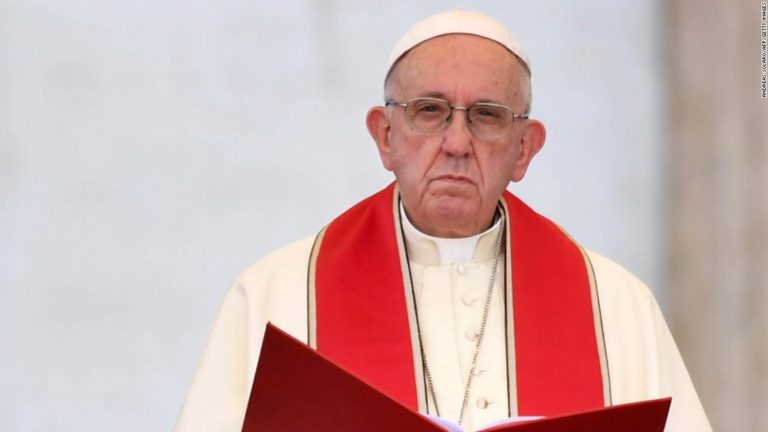
POPE Francis on Thursday issued new global rules for reporting sexual abuse in the Catholic Church, mandating for the first time that all dioceses set up systems for reporting abuse and cover-ups.

The new rules require all Catholic dioceses around the world to have a “public and accessible” system in place for reporting abuse by June 1, 2020.

The new norms which cover internal Catholic Church procedure, make provision for the reportage of abuse or cover-up to civil authorities, presenting a top-down imposition which must be adhered to by all dioceses.

Archbishop Charles Scicluna, Vatican’s top investigator of sex abuse, in a report by CNN revealed that the new rules add a layer of accountability for church leaders.

“First of all that leadership is not above the law,” Scicluna said, “and second that leadership needs to know, all of us in leadership we need to know, that if the people love the Church they’re going to denounce us when we do something wrong.”

Ouellet also added that “besides the abuses on the minors and on the vulnerable adults that the harassment or violence or abuse of power also be reported.”

Also, Top Vatican official Cardinal Marc Ouellet was reported to have said that the mandatory reporting requirement was the most important element in the new rules.

Most dioceses in the US and Europe already have these systems, and the new norms will likely be more important in countries where there are not already well-established guidelines for reporting and handling sexual abuse.

Under the new rules, investigations into credible reports of sexual abuse must be completed within 90 days, and a no-retaliation clause protects the person reporting abuse from tit-for-tat claims or obligations for them to keep quiet.

There has not previously been a uniform, universal system in the Catholic Church for reporting and investigating allegations of abuse.

The new rules were set out in an Apostolic letter, called a “Motu Proprio,” issued personally by Pope Francis, which calls for a three-year trial period for the initiative.

Although the norms represent an important clarification of procedures to be followed, they do not deal with the question of what happens to a priest or bishop who breaks these rules.

To date, no church official has been publicly sanctioned for a cover-up, and a lack of accountability is something that survivors have been concerned about for years.

Kurt Martens, a professor of canon law of the Catholic University of America in Washington, DC, called the new rules an “immense and revolutionary gift to the entire Church.”

“The new law offers whistleblower protections for all victim reporters and requires that every diocese in the world have publicly accessible ways to report abuse,” Martens tweeted. “That is simply revolutionary.”

For decades the Catholic Church has been plagued by a series of sex abuse scandals in different countries around the world.

The new norms follow a global meeting on sex abuse at the Vatican in February and represent Pope Francis’ pledge to offer “concrete measures” to combat sexual abuse.


ICPC denies “Chief Legal Officer” prosecuting NFF

CONTRARY to a report that a  17-count charge has been brought against the NFF, the Independent Corrupt Practices and Other Related Offences Commission (ICPC) has disclosed that it did not authorise its Chief Legal Officer to file a case against the officials.

In a report by TheCable, Celsus Ukpong, Chief Legal Officer who had earlier filed the case–suit no. FHC/ABJ/CR/93/2019, on behalf of the Attorney-General of the Federation on Tuesday, charged five NFF officials before the Abuja Division of the Federal High Court with over 17 allegations bordering on corruption.

Rasheedat Okoduwa, spokesperson of the anti-graft agency denied, that Ukpong was acting on behalf of the agency. She said that Okoi Obono-Obla is still the chairman of the Special Presidential Investigation Panel (SPIP) till date.

“Mr. Ukpong is not prosecuting NFF on behalf of ICPC. The commission has withdrawn him from SPIP. The secretary to the government of the federation in a letter dated 14 February 2019 also directed the chairman of SPIP to release him immediately,” Okoduwa said.

On Tuesday, SPIP, acting on behalf of the federal government, alleged that NFF officials had transfer the sum of four billion naira to a yet to be identified account and misappropriated $8.4 million, belonging to the federation, paid however, by the Fédération Internationale de Football Association (FIFA) to the NFF as appearance fees for the 2014 World Cup in Brazil.

Hon. Suleiman Yahaya Kwande, Chairman, Media and Publicity Committee of the NFF, earlier in a statement described the charges filed against its leadership as not a directive from the Federal Government of Nigeria.

“The orchestrated media blitz about the existence of such charges is nothing but the desperate and malicious efforts of the Chief Okoi Obono-Obla led Special Presidential Investigative Panel (SPIP) to lend itself as an instrument of cheap blackmail in the fight for the political leadership of NFF.

“Currently pending before the Federal High Court, Abuja is Suit No. FHC/ABJ/CS/17/2019 filed by NFF against SPIP and 3 others, including Chief Obono-Obla himself. NFF in the suit is challenging the competence of SPIP under the law to purport to investigate or prosecute NFF or its leadership,” read the statement.

The accused persons are Amaju Pinnick (NFF president), Seyi Akinwunmi, 1st vice president, Shehu Dikko, 2nd vice president, Mohammed Sanusi, general secretary and Ahmed Yusuf Fresh, NFF executive member.


Buhari nominates Emefiele for second term as CBN governor

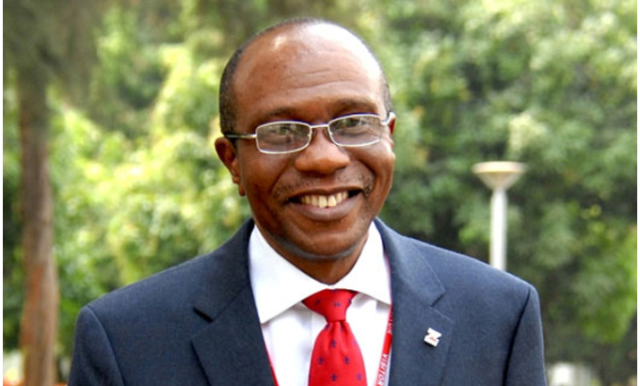
PRESIDENT Muhammadu Buhari has nominated Godwin Emefiele for another five-year tenure as the governor of the Central Bank of Nigeria (CBN).

The letter for the tenure renewal was signed by Buhari on Wednesday, the Cable reports. The letter has already been forwarded to the Senate for its confirmation.

Emefiele was appointed in March 2014 by the former President Goodluck Jonathan. He had replaced Lamido Sanusi Lamido after the latter suspension. 

According to CBN Act, the Senate will have to confirm Buhari’s nomination.

If the Senate confirms the nomination, Emefiele will be the first CBN governor to work for two tenures since the country returned to democracy in 1999. Since 1999, no CBN governor had been nominated for a second term.

Emefiele’s current tenure will end by June. But if his nomination is  approved by the Senate, his new tenure will run till 2024.

Under his watch, Nigeria slipped into its worse recession in more than a decade. The country was steered out of the recession later in 2018.

The 57-year-old banker, until his appointment in 2014, was the group managing director of the Zenith Bank Plc.

Why Appeal Court upturned tribunal ruling on Osun State gubernatorial election

THE Court of Appeal sitting in Abuja has nullified the judgement of the Osun State Governorship Election Petitions Tribunal which declared Ademola Adeleke, candidate of the Peoples Democratic Party (PDP), winner of the September 2018 gubernatorial election  in the state.

The Independent National Electoral Commission (INEC) had declared the All Progressives Congress’ candidate, Adegboyega Oyetola, winner of the election, following a supplementary poll held September 27, 2018.

Adeleke was leading the polls after the initial election was conducted on September 23, 2018, but the election was declared inconclusive because the number of cancelled votes was higher than the margin of lead between the two candidates.

In his petition to the election petitions tribunal, Adeleke argued the initial election ought not to have been declared inconclusive and prayed the tribunal to hold that he was the winner of the poll.

Two of the three-man panel made up of Justices Mahmood Sirajo, Peter Obiora and Adeboye Gbolagunte, gave judgement in Adeleke’s favour, ruling that the initial election ought not to have been declared inconclusive. They also held that the supplementary election was marred with corrupt practices, hence would not be allowed to stand.

However, Justice Sirajo, who was also the chairman of the tribunal, gave a minority judgement, dismissing PDP’s appeal and upholding Oyetola’s electoral victory.

Dissatisfied, Oyetola filed an appeal with the appellate court, challenging the judgement of the tribunal and urging the court to set it aside. Adeleke, the PDP, the APC and INEC were joined in the suit as the first, second, third and fourth respondents respectively.

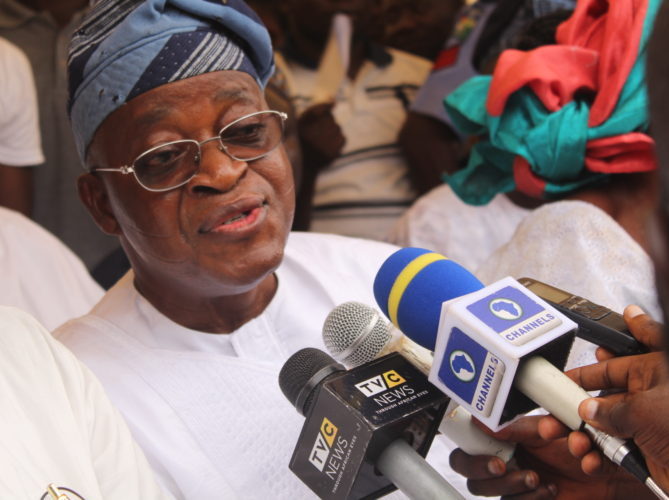
Adegboyega Oyetola, Governor of Osun State.

Delivering the lead judgement on Thursday, Justice Jummai Sankey, ruled that Oyetola’s appeal “has merit and succeeds”, and went ahead to nullify the judgement of the Osun governorship election petitions tribunal.

Oyetola’s appeal was based on 39 grounds, from which he raised 12 issues. Justice Sankey resolved all the issues but two in favour of the appellant and against the first and second respondents, which is Adeleke and the PDP respectively.

One of the issues raised by Oyetola was that Justice Obiora, who read the lead judgement at the tribunal, did not attend the tribunal’s proceedings held on February 6, 2019, but had relied on the information provided by witnesses on that day to write his judgement. Oyetola argued that it was improper for Obiora to have relied on information of a proceeding which he did not take partake in to form part of his judgement. Justice Sankey agreed with this and resolved the issue in Oyetola’s favour.

Similar appeals filed by the APC and INEC respectively, challenging the ruling of the Osun governorship election petition tribunal, were also each upheld by the Appeal Court.

Other members of the panel namely, Justices Abubakar Yahaya, Isaiah Akeju and Bitrus Sanga, agreed with the lead judgements in the three appeals, but one of them, Justice George Mbaba, disagreed.

Disputed Judgement

Delivering a minority dissenting Judgement, Justice Mbaba said it was inaccurate to say that Justice Obiora did not attend the tribunal’s proceedings of February 6. He pointed out that according to the copy of the proceedings of the said day at the tribunal, it was clearly stated that the tribunal was complete and that the three members of the panel were there.

Mbaba said what was missing in the copy of the proceedings as presented before the appeal court was Justice Obiora’s signature. He argued that the fact that Obiora’s signature was missing does not expressly mean that he was absent in the tribunal on the said day. He said the argument that Obiora did not attend the court session of February 6, 2019, was a “well-articulated speculation” as many factors could be responsible for his signature not appearing on the copy of the court proceedings that was presented to the appeal court.

On the other issues raised by the trio of Oyetola, the APC and INEC, in their respective appeals, Justice Mbaba resolved them against the appellants and in favour of Adeleke and the PDP.

“All the findings of the lower tribunal concerning what happened during the rerun election were correct. I cannot fault them,” Mbaba said.

He subsequently struck out the appeal and awarded the sum of N200,000 against Oyetola in the first appeal.

Mbaba also expressed displeasure that appeals that were similar in interest and issues were being filed separately, thereby overburdening the Appellate court. “Parties with common interest and issues should be encouraged to file joint appeals,” he said.

Supreme Court to have the final say

Nathaniel Oke (SAN), counsel to Adeleke and the PDP.

In a brief speech after delivering the judgement, the head of the appeal panel, Justice Sankey, said she looks forward to the judgement being tested at the Supreme Court as that would further strengthen the country’s political jurisprudence.

Counsel to Adeleke and the PDP, Nathaniel Oke (SAN), told journalists shortly after the court sitting that they intend to appeal the judgement at the Supreme Court.

“I am categorically telling the world that we still have a right of appeal to the Supreme Court which is the highest court of the land. We are not satisfied with the majority judgement as delivered, and we are exercising our right of appeal to the Supreme Court for the final determination of this issue of the Osun State governorship election as held in 2018,” Oke said.

For their part, the counsels to Oyetola, the APC and INEC, described the judgement as a welcome development and a boost to the electoral system in Nigeria.

Abiodun Owonikoko, one of the lawyers that represented Oyetola in court, said the judgement would enable the governor “to settle down and face the job for which he was elected”.