Home Blog Page 2372

NFIU insists on June 1st date for commencement of LG financial autonomy

THE National Financial Intelligence Unit (NFIU) has reiterated that the June 1 date for the commencement of the new guideline with regards to local government funds remains sacrosanct.

This was contained in a statement issued by Ahmed Dikko, NFIU’s acting spokesperson on Wednesday, the second of such statements in one week.

“The Nigerian Financial Intelligence Unit (NFIU) is using this second press statement on the above subject to reiterate its position that the 1st June effective date of the guidelines to all financial institutions and public officials on the local government funds stands,” the statement read.

“The Unit also maintains its understanding of the 1999 constitution that no debit is allowed on any local government funds unless and until the funds are credited to and reach the bank accounts of a local government in any state of the federation.

“The provision of the cumulative cash withdrawal not exceeding N500,000 per day is also firmly in place effective 1st June 2019.”

Dikko said the NFIU would not hesitate to sanction any financial institution that violates the new guidelines once.

The new NFIU guidelines, when it takes full effect, would ensure that local governments get their allocations directly into their bank accounts, unlike the current practice where state governments run a joint account with the LGAs which is directly controlled by the state governors.

The joint state and local government account system will only exist for the receipt of allocations from the federation account but not for disbursement, according to the new guidelines.

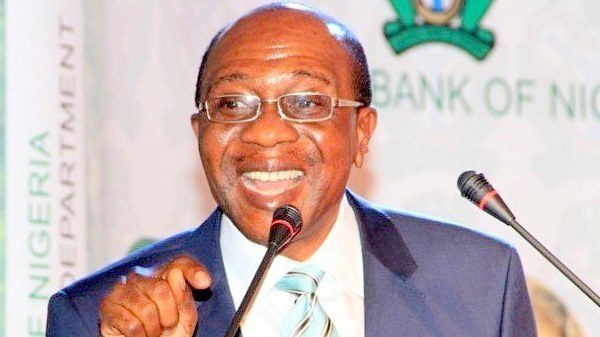
We will grow palm oil sector again, it’s more lucrative than crude, says Emefiele

GOVERNOR of the Central Bank of Nigeria (CBN), Godwin Emefiele, says Nigeria will aim to grow the palm oil sector again as the price is higher than that of crude oil in the international market.

Emefiele said this after a Senate panel cleared him for another five years in office following his reappointment by President Muhammadu Buhari. He added that the cocoa sector would also be given attention.

He said kudos should go to Buhari for the turn around being witnessed in Nigeria’s agricultural sector, as it was the president who insisted that “we must produce what we eat”.

“On agriculture, the credit should go to the president. It was what he said ‘eat what we produce’, that birthed the anchor borrowers programme,” Emefiele said.

“We have started looking at palm oil. The price of a barrel of palm oil is more than a barrel of crude oil. We will grow that market again. After palm oil, we will focus on cocoa in the south-west.”

While admitting that Nigeria has workable policies, Emefiele said implementation of these policies has been neglected “because we see sabotaged activities”.

“CBN will ensure that those who seek to undermine the policies of Nigeria will be brought to book. Pray for us because the road ahead is tough,” he said.

Emefiele’s screening by the Senate committee was more of ceremonial as the lawmakers unanimously agreed that he deserves a second term at the helm of affairs of the CBN.

One by one, members of the panel eulogised him and urged him to keep up the good work.

Chairman of the panel, Rafiu Ibrahim, said seeing Emefiele’s achievements, it was little wonder that he has become a target for blackmail on social media.

“I do not have any question for the Governor. I am overwhelmed. I wish you well and pray for you. May God continue to guide you,” Ibrahim said.

“Now, we know the reason why there are some videos on social media because in Nigeria, once you are a good person, some people will always try to bring you down. We will expeditiously take a report to the chamber for consideration. You can take a bow.”

Ibrahim was apparently referring to the recent audio clip making the rounds on social media in which Emefiele and another top official of the CBN were said to be discussing how to cover up an alleged N500 billion fraud.

The CBN has since denied the allegations and explained that the audio clip was maliciously edited in order to mislead the public.

The other members of the Senate panel, Philip Aduda, representing the FCT, and Kurfi Umaru, representing Katsina Central, all congratulated Emefiele on his reappointment and wished him well for the future.

Emefiele was first appointed by former President Goodluck Jonathan on June 3, 2014.

His comments that palm oil is more expensive than crude oil, had also been expressed by Tope Fasua, an economist and the presidential candidate of the Abundant Nigeria Renewal Party (ANRP) in the just concluded 2019 general election.

Fasua, during a presidential debate in December 2018, said Nigeria has no business relying on crude oil as our major source of income.

“A barrel of crude oil sells for $50 dollars today. A barrel contains 159 litres, that means a litre of crude oil sells for N116 or thereabouts, (but) one litre of palm oil sells for about N4oo, and it takes less effort (to produce),” he said.

Workers’ strike: Obiano to meet resident doctors on Thursday

THE Association of Resident Doctors of Chukwuemeka Odumegwu Ojukwu University Teaching Hospital (COOUTH) in Anambra, has expressed optimism towards reaching a favourable resolution with the state government to end the indefinite strike tomorrow. 

President of the association,Dr. Obinna Anigbaoso told The ICIR on phone that, the government would be having a meeting tomorrow, May 16th, with the resident doctors.

“I am hopeful, that the governor [Willie Obiano]will meet with us tomorrow,” but he added that the strike would continue because the Congress has not yet reverted their resolutions.

He explained that, compared to their colleagues in other federal and state hospitals, who are paid with a national scale, health workers in Anambra received a lower salary, hence, an exodus of resident doctors to other states.

Governor Obinao had issued a press release on Monday, through the Commissioner for Information & Public Enlightenment, Mr C.Don Adinuba pleading all resident doctors, to exercise patience, as the government is about to review the salaries of all public servants in the state.

Don Adinuba told The ICIR in an interview that the Anambra state belongs to the doctors because they are major stakeholders.

He said the government would do everything to address their problem.

“The governor came in last night, and his readiness to meet doctors tomorrow shows the government’s willingness to listen, and if the two parties come to a compromise, then the strike would be called off immediately.”

He said the state is currently reviewing workers salary, even as they await completion of the national minimum wage.

“We plead the doctors to have a change of mind, and be patient with the government, between now and when the national minimum wage is implemented. We want to be the first to start paying them the new minimum wage,” Adinuba said.

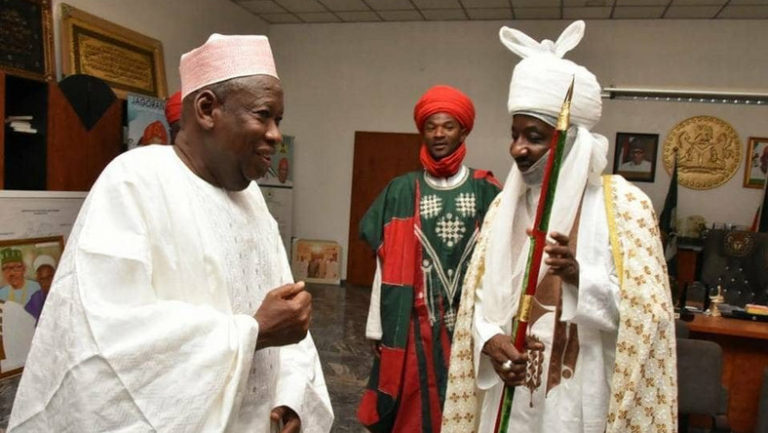
It’s illegal…Kano court rules out appointment of Ganduje’s four new emirs

A Kano high court has declared the appointment and installation of four new emirs in Kano State as illegal.

The court sitting was held on Wednesday at Ungogo Judicial Division in Kano. It voided the four new emirs’ appointment by Abdullahi Ganduje, governor of the state, the Cable reported.

The state high court had on May 10 issued an ex parte order restricting Ganduje from going ahead with the establishment of new Emirates or appointing any new emir.

But Ganduje defied the order, he had issued out appointment letters to the emirs, while they have already assumed office.

The new Kano emirate was created after a bill dividing the whole Kano State emirate into five was passed into law on May 8. Thus, the influence of Lamido Sanusi, the current Kano emir, is reduced in the state as the local government areas being ruled upon has been reduced to 10 against the whole 44 LGAs, according to the new law.

The members of the Peoples Democratic Party( PDP) in the State Assembly filed the suit against Ganduje. The caucus claimed that the assembly had not followed a due process before enacting the Kano Chieftaincy Act, establishing the four new Emirates. They mentioned in the lawsuit that the ACT was presented to the floor of the State’s Assembly on Monday, May 6, while by Wednesday, it had been passed and signed into law.

Also to overrule Ganduje’s action, Kano Kingmakers on Tuesday filed another suit challenging the division of the emirate.

The kingmakers who took the legal action are Madakin Kano, district head of Dawakintofa; Yusuf Nabahani, district head of Wudil; Abdullahi Sarki-Ibrahim, district head of Gabasawa; and Bello Abubakar, district head of Dambatta, Mukhtar Adnan.

Presidential election petitions tribunal adjourns sitting to May 22

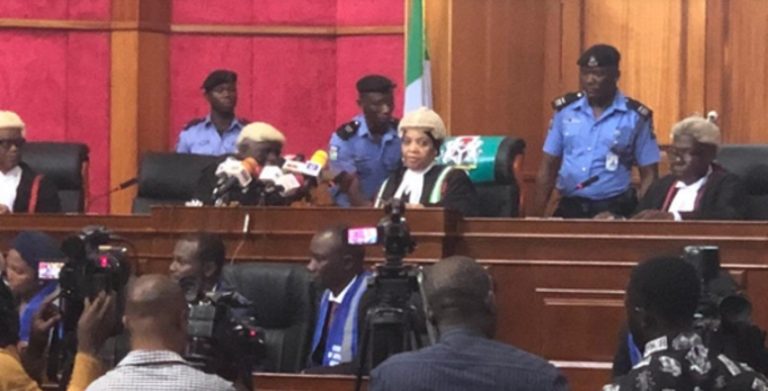
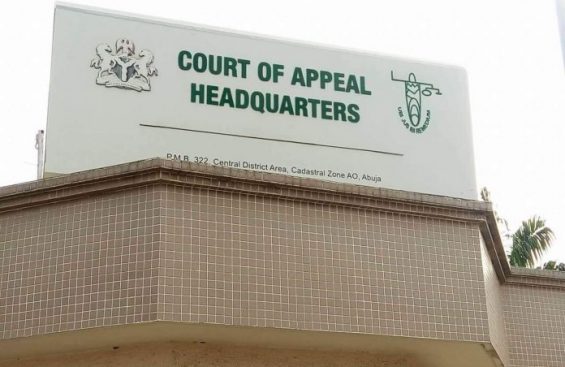
THE Presidential Election Petitions Tribunal sitting at the Court of Appeal Headquarters in Abuja has adjourned its sitting to May 22 for hearing of the application for the Chairman of the tribunal to withdraw from the case.

The tribunal, which is headed by the President of the Court of Appeal, Zainab Bulkachuwa, kicked off its hearing on Wednesday, into the petitions submitted by the Peoples Democratic Party (PDP) and its presidential candidate, former Vice President Abubakar Atiku.

The petitioners want the tribunal to hold that President Muhammadu Buhari was not the winner of the 2019 presidential election as announced by the Independent National Electoral Commission (INEC).

However, the tribunal’s sitting kicked off amidst allegations of possible bias against Justice Bulkachuwa whom the PDP has asked to recuse herself from the case.

The party said it has no confidence that Bulkachuwa, being the wife of Adamu Bulkachuwa, a politician, who contested and won the Bauchi North Senatorial Senate on the platform of the All Progressives Congress (APC), would be impartial in presiding over the tribunal.

At the commencement of proceedings, the lead counsel to the PDP, Levi Uzoukwu, asked to be allowed to address the chairman of the tribunal behind closed doors for 10 minutes, alongside the lead counsel for the respondents.

In response, the counsel to President Buhari, Wole Olanipekun (SAN), said he has no objection to the request, but suggested that two lawyers from each party in the suit should be allowed to take part in the discussion. This was also agreed to by the counsel to INEC, Lateef Fagbemi.

A total of 10 lawyers, two representing each of the five parties in the petition − the PDP, Atiku, the APC, Buhari and INEC – went into the closed-door session.

Narrating what happened at the session, Justice Bulkachuwa said the petitioners asked her to withdraw from presiding over the petition. She said she had also received a letter from the PDP National Chairman, Uche Secondus, demanding the same thing.

Bulkachuwa explained that the matter was already in the public domain and so would be handled as such. She, therefore, asked the petitioners to file a formal application to that regards.

Uzoukwu, Atiku and PDP’s counsel, said his team would file the application on Thursday, while the respondents’ lawyers, comprising Wole Olanipekun (SAN), Yunus Usman (SAN) and Lateef Fagbemi (SAN), representing  Buhari, INEC and the APC respectively, said they would need time to study and respond to the application accordingly.

The case was adjourned to May 22 for the hearing of the application.

Abuja residents trek long distances to work as police cordon off road leading to Appeal Court

WORKERS in Abuja, especially those whose offices are located around the Central Business District and the Three-Arm Zone,  found it difficult to get to their workplaces on Wednesday as the police cordoned off the road leading to the Court of Appeal.

The police are yet to issue an official statement as to why the road was cordoned off but the development may be connected to the commencement of the presidential election petitions tribunal at the Court of Appeal Complex.

Workers coming from the Nyanya/Karu axis of Abuja were met with a heavy gridlock at the new Goodluck Jonathan expressway leading up to the Court of Appeal and then onward to the Office of the Head of Service, the Eagle Square and the National Secretariat.

Many people were seen coming down from buses and taxis to complete the rest of the journey on foot, trekking several hundreds of meters before they could get to their destination.

Police Patrol Trucks parked across the roads on Wednesday.

Those coming from the Asokoro axis met the barricade just before the Louis Edet Complex that houses the Headquarters of the Nigerian Police. Those going further into the town took another route while those heading to the federal secretariat and OHS had to walk the long stretch.

The Federal Capital Territory Police Command did not issue a prior notice to inform the public that the route would be closed to commuters on Wednesday hence the difficulty that a lot of people faced.

It is yet unclear whether the route would be open to the public today or would remain closed until the conclusion of the sitting of the presidential election petitions tribunal.

The ICIR contacted the Force Public Relations Officer, Frank Mba, who said that the FCT Police Command has an explanation. When The ICIR called the FCT PPRO, Anjuguri Manzah, he said he was on leave and could not comment. He agreed to provide the contact details of the acting PRO but he is yet to do so at the time of this report.

FCT Police Commissioner, Bala Ciroma, when contacted, redirected this reporter to his PRO. When informed that the PRO said he was on leave, Bala said he has instructed him to give a statement to that effect. The statement is still being awaited as at the time of this report.

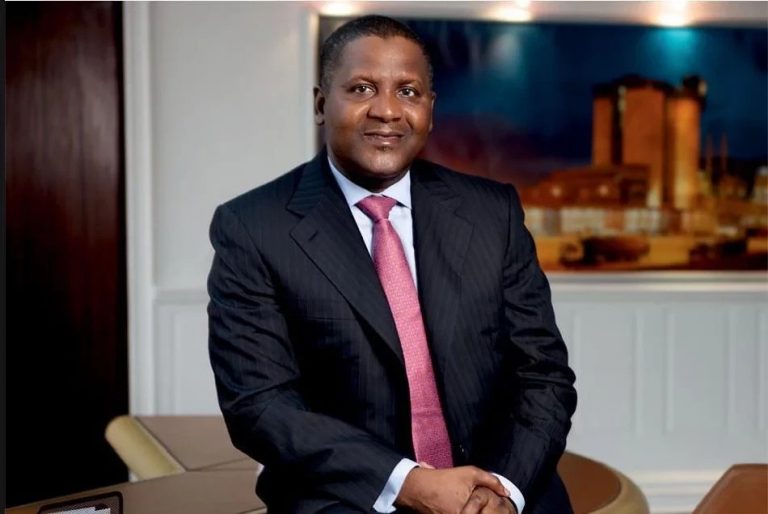
Dangote refinery awards $368m worth of contracts to local contractors

DANGOTE Refinery and Petrochemical on Monday in Lagos announced the award of $368 million to 120 local contractors at the site as part of its contribution to Nigeria content development initiative as it gears up to be Nigeria largest oil supplier.

During an official tour of the facility with the members of Nigeria Institute of Public Relation (NIRP) and pressmen at the facility, Devakumar Edwin, the Group Executive Director, Strategy, Portfolio Development and Capital Projects, Dangote Industries Limited, revealed that there are several Nigerian content opportunities in the company’s refinery and petrochemical project.

Edwin disclosed that the company has imported world’s largest Reactor Regenerator and well as a Crude Column, which is equivalent to 30-storied building weighing about 100 fully loaded trucks. He said that the Dangote Petroleum Refinery can meet 100 per cent of the Nigerian requirement of all liquid products, such as Gasoline, Diesel, and Kerosene and Aviation Jet and also would have surplus of each of these products for export.

He added that the company also possess strategically located marine infrastructure for crude receipts and product trade when the refinery is fully completed. He noted that the 650,000 barrels per day refinery has been designed to process a variety of light and medium grades of crude and produce extremely clean fuels that meet Euro V specification.

The refinery would ensure that the security of local supply of petroleum products is guaranteed as well as the availability of petrochemical feedstock (Poly-propylene & Polyethylene), he said.

“Current consumption of Urea in Nigeria is 700,000 tonnes. There is very poor per hectare usage of fertilizer leading to very poor crop yield. By 2020, the Nigerian population, which is around 207 million, would lead to increased food consumption.

“Estimates point out that around five million tonnes of fertilizers are required per year in Nigeria in next five to seven years bifurcated into 3.5 Million tonnes of Urea.

“Dangote Fertilizer Project is the largest Granulated Urea Fertilizer complex coming up in the entire fertilizer industry history in the World, with an investment of $2.0 Billion capacity of 3 Million tonnes per annum.

“The Dangote Fertilizer complex consists of Ammonia and Urea plants with associated facilities and infrastructure, to produce 3 MMTPA Urea,” he said

Edwin said that the Dangote Company have trained and employed 250 artisans, but have intention to train 900 Nigerian engineers in India, in partnership with the Nigerian Content Development and Monitoring Board (NCDMB) and the National Directorate of Employment (NDE), kicked-off of training for 200 youths in its host communities, as part of its corporate social responsibility initiatives. Currently, boast of 3580 Nigerian personnel excluding contractors and subcontractors at the site.

With a fast-growing population and poor infrastructure, he said the refinery would also reposition Nigeria as an attractive investment destination and a major industrial hub in Africa.


US suspends drop box visa applications in Nigeria

THE United State embassy on Tuesday announced the indefinite suspension of dropbox process of visa renewals in all its consulates in Nigeria.

In a statement made available on its website, the embassy said visa applications would no longer be accepted by DHL in Nigeria. Although the suspension does not affect those who have already submitted their passports via “Dropbox” prior to the suspension

“All applicants in Nigeria seeking a non-immigrant visa to the United States must apply online and will be required to appear in person at the U.S. Embassy in Abuja or U.S. Consulate General in Lagos to submit their application for review.

“Applicants must appear at the location they specified when applying for the visa renewal.

“Processing of diplomatic and official (A, G, and NATO class) visa applications will continue unchanged.

“Mission Nigeria’s processing procedures are regularly reviewed in order to assess our ability to quickly, efficiently, and securely process visa applications.

“The U.S. Mission is taking this step to provide more efficient customer service and promote legitimate travel, and will continue to facilitate applications of established travellers to the best of its ability,” the statement read.

Prior to this new development, it was possible for Nigerians to renew their existing or expired visa online via the visa drop box service which entails the accurate posting your documents to the US visa service centre in the country, and acquiring the visa and passport without applicants necessarily being present.


Medical experts, policymakers interact on improving quality healthcare in Nigeria

NIGERIAN health workers and policymakers have raised a concern for a quality healthcare provision and the attainment of universal health coverage (UHC) in the country.

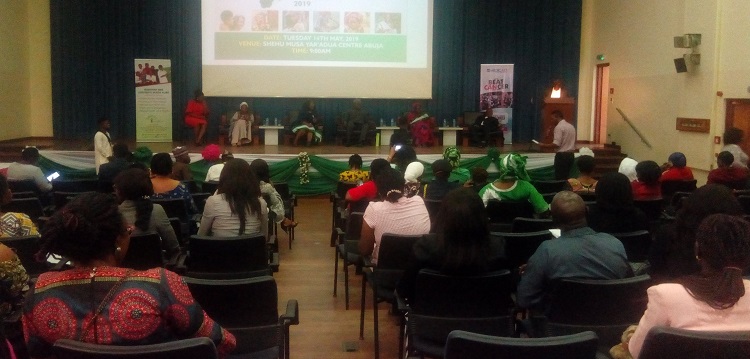
The issue was the core of a one-day symposium that was held at the Shehu Musa Yar Adua Centre, Abuja on Tuesday. Titled The Nigerian women and Health Care Symposium, the programme was an effort to ensure that Nigerian women contribute to the drive to achieve quality health coverage for all.

The UHC is part of sustainable development goals (SDGs) that the United Nations member states, including Nigeria, have agreed to achieve by 2030.

According to the World Health Organisation, UHC means all people and communities should receive promotive, preventive, curative, rehabilitative and palliative health services they need without suffering financial hardship.

Giving the keynote address, Ogeoma Okeka, Managing Director of Healthcare Business Support Systems, said Nigeria lack good strategy and governance that would help in achieving quality healthcare.

He said Nigerian policymakers need to re-strategise since no improvements have been made in attaining fair access to quality care.

Okeka said the National Health Insurance Scheme (NHIS) has only helped to cover the formal sector but the informal sector was poorly captured.

To reach the masses for proper health care, he said the Primary Healthcare Centres (PHCs) need to be built.

He encouraged the government to put in place good basic amenities for medical practitioners in the PHCs.

The Chief Medical Director of the National Hospital Abuja, Jaf Momoh, represented by Umar Aisha who is also a staff of the hospital noted that a system whereby Nigerians are provided healthcare without being asked to pay before the services is needed in the country.

“We find unconscious people who may be wealthy but have relations who do not have access to the account,” she said to discourage out of pocket payment for health services.

Aisha narrated how patients stay in the wards weeks after being discharged because of money issues. “Some of the patients stay in our wards for weeks after discharge because we are trying to bargain with them on how they are going to sign an undertaking before being released.

“They offer to pay monthly or seek help from faith-based organisations,” she said.

President of the Nigerian Medical Association, Francis Faduyile, in his goodwill message, said women are needed to improve health statistics of the country.

“It is important for women to see how we can improve the health insurance scheme and health statistics of our country, he said”

Also, there was a contribution from the International Federation of Women Lawyers (FIDA).

Chuyem Rhoda, the representative appealed to the Nigerian government to give assent to the National Health Insurance Commission bill.

According to her, the main objective of the bill is to ensure the effective implementation of the national health insurance policy that enhances access to healthcare services to All Nigerians; as well as to promote and regulate health insurance in Nigeria.

“This will to a large extent improve the UHC, especially for women and children,” she said.

The new bill was proposed in 2017. Section 1 of the bill states that a body to be known as the National Health Insurance Commission will be established.

How China made excess of N6.83trn from Nigeria in 4 years

By Theophilus Abbah

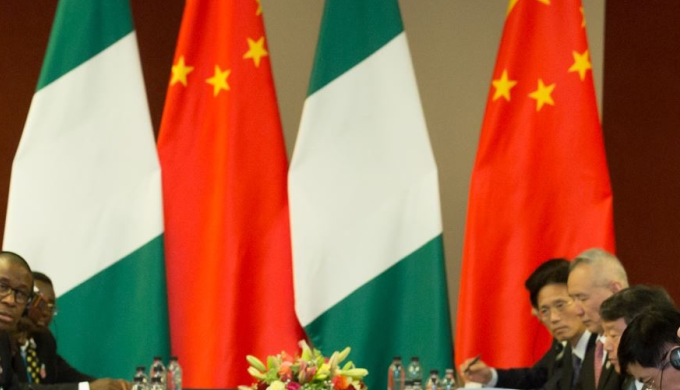
AN analysis of trade statistics has shown that trade relations between China and Nigeria is heavily to the disadvantage of Nigeria.

Data from the National Bureau of Statistics (NBS) showed that Nigeria recorded N6.83 trillion worth of trade deficit with China in the last four years.

Between 2015 and 2018, Nigeria imported goods worth N7.65 trillion from China and exported N818.46 billion worth of goods to China, translating into a trade imbalance of N818.46 billion.

Analysis showed that in 2015, Nigeria imported N1.57 trillion goods from China and exported only N157.49 billion goods to the country, leading to a trade deficit of N1.41 trillion.

Interestingly, in 2016, Nigeria’s imported from China jumped up while export to China slumped, further widening the trade imbalance.

With a trade deficit of N1.61 trillion in 2016, Nigeria’s export rose to N1.73 trillion while import slumped to N122.14 billion compared to 2015.

In 2017, Nigeria’s import and export to China leapt, leaving Nigeria with a trade deficit of N1.57 trillion as a result of N1.79 trillion spent on imports as against N220.57 billion received from exports to China.
Nigeria recorded the highest trade deficit with China in the last four years in 2018 with a trade imbalance of N2.24 trillion.

In 2018, Nigeria exported goods worth N318.26 billion to China and imported N2.56 trillion goods from that country.

Imports from China has been a major foreign exchange (forex) drain on Nigeria’s economy and this led to forex restrictions for importation of certain items that Nigeria deems it has advantage to source locally.

However, even the forex restriction for importation of certain items, such as toothpicks, could not ease the forex burden being exerted on the economy by importers of China’s goods.

To reduce the burden on forex, especially in relation to dollars, on July 20, 2018, the Central Bank of Nigeria (CBN) began the sale of foreign exchange in Chinese Yuan (CNY), signalling the consummation of the Bilateral Currency Swap Agreement (BCSA) signed with the People’s Bank of China (PBoC) on April 27, 2018.

The apex bank said the currency swap between Nigeria and China, which would be Special Secondary Market Intervention Sales (SMIS) retail, would be dedicated to the payment of Renminbi-denominated letters of credit for raw materials, machinery and agriculture.

On three different occasions, Nigeria has injected a total of $868.56 million, translating to 141.47 Chines Yuan into the Secondary Market Intervention Sales (SMIS) to reduce the burden of using dollars to import from China.

Meanwhile, Nigeria’s trade imbalance with China is not new because NBS data showed that Nigeria had a trade deficit of about N6 trillion with China between 2013 and 2016.
Analysis showed that out of Nigeria’s total import bill of N29.91 trillion between 2013 and 2016, China accounted for N6.41 trillion.

This is a huge gap when compared with N714.97 billion worth of goods Nigeria exported to China within the four-year period. A subtraction of Nigeria’s exports from imports from China will show a trade deficit of N5.70 trillion, in favour of China.

The huge trade imbalance is largely as a result of Nigeria’s moribund manufacturing industry that has left Nigerians depending on China for most consumables.

The Minister of Trade and Investment, Dr. Okechukwu Enelamah, said Nigeria is making efforts to deepen industrialisation, reduce imports and increase exports.

On industrialization, Dr. Enelamah said the ministry has aggressively been implementing the Nigeria Industrial Revolution Plan and the establishment of the Nigeria Industrial Policy and Competitiveness Advisory Council is yielding results.

The Minister said to accelerate the Nigeria Industrial Revolution Plan, work has continued on Project MINE, (Made in Nigeria for Exports), to aid structural transformation of the Nigerian economy by increasing the manufacturing sector’s contribution to GDP to 20 per cent by 2025; contribute to sustainable inclusive growth by creating 1.5 million new direct manufacturing jobs in the initial phase; and to increase and diversify foreign exchange earnings to at least US$30bn annually by 2025, by increasing manufacturing sector exports.

He said special economic zones, such as the pilot phase of Enyimba Economic City, Funtua Cotton Cluster and Lekki Model Industrial Park, will increase exports from Nigeria.

He said the Council has made many high-level interventions to address industrial sector issues such as electricity supply, broadband penetration and access roads.

He cited an example with the recent Road Infrastructure Development and Refurbishment Investment Tax Credit Scheme, under which the private sector has committed to sponsoring the construction or rehabilitation of road projects across the country.

He said that MSMEs are key to industrialisation and economic growth, he said the ministry has made a noticeable improvement in the access to finance for this category of investors.

“In the last four years, there have been sustained efforts to build capacity, increase access to finance and eliminate bottlenecks to conducting business in Nigeria, “he said.