Home Blog Page 2373

ASUU chairman sues FUOYE management over indefinite suspension without pay 

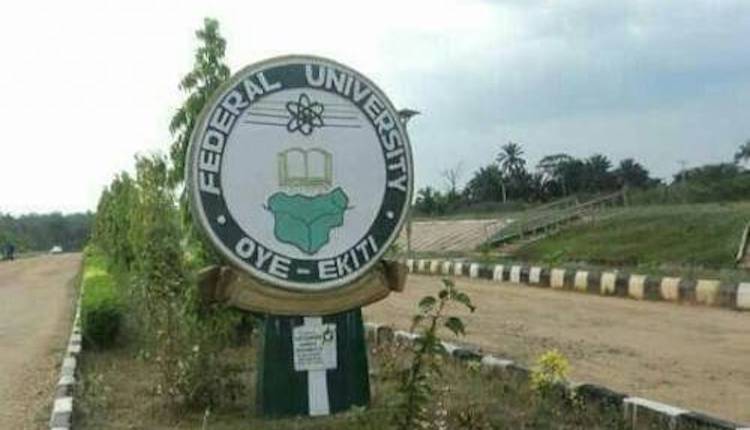
The Chairman, Academic Staff Union of Universities (ASUU), Federal University Oye-Ekiti (FUOYE) branch, Gabriel Omonijo, has sued the management of the university at the National Industrial Court of Nigeria, Akure, over his indefinite suspension without pay from the university.
Omonijo in the suit made available to The ICIR claimed that his suspension without pay by the management of the university because of his involvement in the production of the State of FUOYE Report was illegal and a violation of the provisions of Trade Union Act.
The suit was filed on April 29, 2019, at the National Industrial Court of Nigeria, Akure, by Omonijo’s lawyers, Funmi Falana and Taiwo Olawanle from Falana and Falana’s Chambers.
He argued that his suspension without pay by the university did not follow the due process as stipulated in the university’s conditions of service, which is an embodiment of the Acts that established the university.

READ ALSO:
Omonijo said the investigation panel that recommended his suspension without pay to the university was biased based on its prejudiced composition because of the membership of the Deputy Vice-Chancellor of the university, Abayomi Fasina, who was alleged in the report of “State of FUOYE” which is currently being investigated.
He said that his suspension without pay by the University is wrong and unjust as he was only invited in respect of the allegations made in the petition by the Academic Staff Union of Universities (ASUU) to the Minister of Education.
The ASUU chairman stated further that the purported Investigation Panel saddled with the responsibility to investigate the allegations made in the petition to the Minister turned round to place him on suspension without pay due to his position as the Chairman of ASUU in the institution.
Omonijo, therefore, engaged the services of Falana and Falana’s Chambers which wrote a letter to the university vide a letter dated  March 11, 2019, informing the University of its illegality of the constitution of the investigative panel, among others, but the University responded vide a letter dated  March 15, 2019, and signed by the Ag. Registrar of the University, Olayinka Ajayi, stating that the issues raised in the said letter are receiving the attention of the University authorities.
He said that the university was yet to recall him from the suspension since February 14, 2019, despite several efforts he made to resolve the issues that led to his hasty suspension.
The following were other prayers of the Claimant at the Industrial Court:
A declaration that his suspension without pay from the University via letters dated 14th and 15th February, 2019 is null and void and of no effect whatsoever.
A declaration that the suspension from the University on account of the petition sent to the Minister of Education by the Academic Staff Union of Universities (ASUU) is illegal as it violates the provisions of Trade Union Act.
An order setting aside the Claimant’s letters of suspension without pay dated 14th and 15th February, 2019 as same is unknown to law.
The Claimant sought an order directing the defendant to reinstate him to his status as Senior Lecturer and to pay his salaries, allowances and entitlements from February 2019 till judgement is given in this suit.
He also sought an order restraining the defendant from further interfering with his rights, privileges and performance of his duties as the Chairman of the Academic Staff Union of Universities, Federal University Oye-Ekiti (ASUU-FUOYE) branch.
The ICIR reports that the senior lecturer in the Department of Water Resources, Faculty of Agriculture was suspended twice by the management of the university through two letters of suspension.

Group raises alarm over safety of rig at OML 83 & 85 in Bayelsa

A  NIGER Delta group, the Ifalibobou Revolutionary Movement, (IRM) on Tuesday expressed safety concerns over the state of an oil rig deployed to oilfields at Koluama coastal communities in Bayelsa.

The group issued an ultimatum to First Exploration and Petroleum Development Company (First E&P) to clarify the safety records of the rig within 72 hours to avoid a repeat of the 2012 rig disaster in the area.

It demanded that failure to show proof of integrity of the facility, the rig should leave the territorial waters of Bayelsa in Southern Ijaw and Brass Local Government Areas of Bayelsa..

First E&P, an indigenous oil firm in 2015 acquired Oil Mining Lease (OML) 83 and OML 85 oilfields when Chevron Nigeria Limited (CNL) divested its 40 per cent interests in the oil blocs to become its operator.

A rig blown out in January 2012 at Chevron’s oilfield in the area resulted in a fire outbreak that burnt out the KS Endeavor rig in 48 days.

The affected coastal are Koluama 1&2, Ekeni, Foropa, Fish Town, Ezetu and Sangana, (KEFFES)

The leader of IRM, Joseph Sese in a statement in Yenagoa expressed sadness that the company began operations in the area without taking cognisance of the negative impact their operations would have on the host communities.

“We express our deepest concern over the sudden appearance of an oil drilling rig contracted by First Exploration and Petroleum Development Company in the Territorial waters of KEFFES host Communities in Southern Ijaw and Brass Local Government Areas of Bayelsa state.

“As aboriginal indigenes of the coastline and territorial watchdogs, we are highly vexed by the manner of your voyage for oil exploratory activities in our offshore waters without any show of the integrity of the rig to the community.

“As the incident of 16th January 2012 is still fresh in our memory except  you jack-up your rig and leave our region within seventy-two hours (72hrs) for the safety of your workers and equipment.

“We sincerely don’t want a repeat of the disastrous gas exploration that caused severe damage to our marine environment and the entire ecosystem of the KEFFES region.

“The way and manner your rig appeared in our territory is a sad remembrance of the way and manner the Rig, K.S. Endeavor came into our coast in an oil exploratory activities without an EIA Report and Contingency Plan as required by law.

“The end of it was colossal damage to Human and Environmental Elements.

“It is imperative to state that your drilling operation will generate severe environmental impact such as Air and Water pollution, climate change, overexploitation of the marine ecosystem.

“It will yield major ecological and environmental stresses with irreversible loss of species, destruction of habitat and climate catastrophes.

“Your activities will impact not only the states and dynamics of natural resources and ecosystem but also alter human health, wellbeing, welfare and economic wealth since these resources are support fortunes to the human lives in the area”, the statement read in part.

According to the statement, the oil rig is stationed to drill the Ayala oil field, (OML83) with a potential reserve of 200 million barrels of oil equivalent.

Also, Madu oil field, (OML85), with a potential of 140 million barrels of oil equivalent, including 45 per cent gas deposits.

In a reaction, Mr Mathew Sele-Epri, Chairman KEFFES Rural Development Foundation described the threats as baseless and a ploy to seek attention adding that the community leadership was in a transparent relationship with First E&P.

Sele-Epri said that the allegations by Sese as false and unfounded as the company had established a mutually beneficial relationship with the KEFFES communities for over three years.

“These allegations are completely false because First Exploration and Production has an existing relationship with KEFFES Rural Development Foundation which I am privileged to lead.

“We signed a Global Memorandum of Understanding (GMoU) in August 2018 are it is being implemented, it is also false that the community is not aware of the deployment of the rig, the community was duly informed before the rig arrived.

“We negotiated and got 18 employment slots for the communities and three people from Foropa where Sese hails from are currently working on the rig and the allegation on the safety of the rig is spurious.

“There is no form of doubt on the integrity of the rig because the company has been working with the regulators through the stages of the field development and we believe the regulators have the expertise to police the industry.

“The claims on EIA is also untrue, we in the community fully participated in the EIA conducted by Chevron before the divestment and when First E&P took over they have done some baseline studies and we took part in sample collection,” Sele-Epri said.

She went to school but her desk is still empty… Birthday wishes pour in for Leah Sharibu

NIGERIANS have taken to social media to wish Leah Sharibu, the only Dapchi schoolgirl still in Boko Haram captivity, a happy birthday as she turns 16 on Tuesday.

There was also a march organised by some concerned citizens in Abuja, calling on the federal government to intensify actions aimed at securing her release. A peaceful demonstration was also observed at the premises of the Nigerian High Commission in the United Kingdom on Tuesday.

Tributes have been pouring in on social media from notable as well as ordinary Nigerians, some eulogising the little girl who refused to renounce her Christian faith in exchange for her freedom, and others condemning the federal government for allowing the girl to remain in captivity more than one year after her schoolmates were released.

Obiageli Ezekwesili, former Minister of Education and co-convener of the Bring Back Our Girls (BBOG) group wrote on Twitter:  “She went to school but her desk is still empty. #SheIsSixteenToday. Leah Sharibu? #NeverToBeForgotten.”

Former Governor of Ekiti State, Ayodele Fayose, shared a similar post saying: “As Leah Sharibu marks her birthday in captivity today, I join other Nigerians and lovers of peace in the world to urge the FG Govt to ensure her release. God will sustain and her family members.”

Amnesty International also called on the Nigerian authorities to “redouble their efforts to rescue the hundreds of civilians still detained by Boko Haram – including Leah Sharibu, who was abducted from her school in Dapchi town, and the remaining Chibok girls”.

Many wondered why President Muhammadu Buhari would accept in the first place, a deal by the Boko Haram where the group would not release all the children abducted from Dapchi in February 2018.

“If Leah Sharibu was the daughter of a well-known politician, this story would have been over before it began,” tweeted one Evans Alex.

Soyinka likens Leah Sharibu to Mandela

Meanwhile, Africa’s foremost Nobel Laureate, Wole Soyinka has likened Leah Sharibu to South Africa’s first black President, Nelson Mandela.

In a poem titled “Mandela comes to Leah”, which he presented during an event at the Georgetown University in Washington, United States, Soyinka said Leah reminded him of Mandela who refused to be released from prisons after he was given some conditions that were not acceptable to him.

“We must celebrate the exception who said ‘no’ “as it reminded me of Mandela who refused conditional release,” Soyinka said. “Faith is not of compulsion. Her torch undimmed in the den of zealots.”

Describing terrorism as “horror and evil”, Soyinka said it has got to a point “where we have to go beyond the material analysis of this phenomenon. It goes beyond poverty and marginalisation. The ideology of sheer morbidity”.

“We must simply jettison the language of political correctness. Political correctness is turning the African continent into the graveyard of freedom and liberty if we don’t call things by their proper names,” he said.

“We are dealing now with the toxin of power which barely manifests itself under the cloak of religion.”

Buhari says Nigeria’s elite has failed by not providing better education for young people

PRESIDENT Muhammadu Buhari says Nigeria’s elite have failed by not providing better education for the young people.

Buhari said this when he hosted Vice President Yemi Osinbajo and other security agency heads, to a breaking of fast on Monday at the Presidential Villa, Abuja.

He said he feels hurt whenever he sees little children commonly referred to as Almajiri begging along the road.

“When I drive around the country what upset me very much is the status of our poor people in this country – you see young people, the so-called Almajiris with torn dresses, with plastic bowl. They are looking basically for what to eat,” Buhari said.

“The question of education (to them) is a luxury. I think Nigerian elite, we are all failing because I think we should have a programme that will at least guarantee some basic education for our people no matter how poor they are.”

The president commended Osinbajo for the free school programme which his office has been overseeing, saying it has improved the enrolment into schools across the country since the pupils are now guaranteed of at least one good meal a day.

“But, culturally some of us are quite merciless, we don’t care about what happens to others we just keep on moving forward,” Buhari added rather sadly.

He called on the elite to initiate programmes that will guarantee some basic education for young people regardless of their poverty level.

Osinbajo, who spoke on behalf of the members of the cabinet, appreciated the president for inviting them, both Muslims and Christians, to the breaking of fast with him.

He added that regardless of ethnic and religious affiliations, “Nigerians must continue to be their brothers’ keepers and must work towards building a united nation”.

Nigeria’s education sector has not fared any better since the Buhari administration took power in 2015. Between then and now, the budgetary allocation to the sector has not exceeded seven per cent of the entire budget every year.

Also, a programme begun by the administration of former President Goodluck Jonathan, which was aimed at modernising the Almajiri system, has been abandoned.

The programme which was launched in April 2012 saw modern schools constructed across several states of Northern Nigeria where the almajiris were enrolled, projects that gulped billions of naira. However, reports show that the schools have either been abandoned and have become dilapidated.

INTERVIEW: How CBN, SGF others frustrate efforts to retrieve N20 trillion stamp duty – Consultant

In this interview with Abdulaziz Abdulaziz for www.leaks.ng, Mr Tola Adekoya, of the School of Banking Honours, gives an account on how his school first brought the issue of the unremitted N20 trillion stamp duty to the fore and who are those with questions to answer.


HOW did your agency the school of banking honours come about the issue of unremitted stamp duties for the government?

The School of Banking Honours is the first innovation enterprise institution in the banking sector. We are the first banking monotechnic listed by NBTE in Nigeria.


We figured out that there is a major problem with banking in Nigeria today which is retrenchment. The youth of this country are running away from banking going into other professions like accounting and so on. They believe banking is a closed market and with the retrenchment going on, they became scared and so the onus is on us as the first banking monotechnic to create alternative jobs that will engage them in large volumes as to make banking attractive and what we are putting in place is what we described as shadow banking. All those expensed bankers that are been retrenched are going to be absorbed at a lower level than banking to be able to teach, impact their skills on the incoming younger generation for banking not to lose its relevance. That is the main focus.


To start up, we carried out the research, we brought out about 12 products that will sustain shadow banking. The first of those 12 products is stamp duty, which is overlooked in banking for over 20 years until our research brought it out.


The evidence you need to see on the stamp duty is to look at any cheque leaf from any bank you will see “stamp duty paid” embossed on the cheque leaf but these monies are not remitted to the government and that was where our research started.


What year was this?

 We started in 2011 and then moved into 2012, the cashless policy started in January 2012.


What did your research reveal? What were the revelations?

The research revealed that since 1993, when Nigeria Interbank Settlement System NIBSS took over cheque clearing from government, the government has not been receiving stamp duty paid on cheques. We demanded CBN to ensure that these monies get into government coffers as provided by section 23 of the CBN Act of 1991. Section 23 exempts only naira currency issued by CBN from stamp duty, all other transactions are to be charged with stamp duty and the federal government financial regulations put this stamp duty at N50 while the threshold the level for which it should begin is actually N1000.


There is the issue of N20 trillion that the government supposed to earn. How did you arrive at this figure?

 Very simple! Number one; the cashless policy was an innovation of Central Bank and it is supposed to provide alternatives to cheque payment which will be faster and electronically delivered. But various laws are there, we approached CBN to partner.


When?

 That was February 2012 they started cashless policy January 2012 and we approached them in February to partner on shadow banking and they turned us down so we got an agreement with NIPOST to represent the government in collecting the money, after all, NIPOST can issue stamp. And so we got all the approvals, we did press conference with NIBSS on the 4th of January 2013. We were set. In fact, three banks were supposed to be collecting money for stamp duty for us these are First bank, Standard IBTC and Unity bank and we were set but NIBSS that has the figure, the volume of transactions from 1000 upwards rose up in arms against us forgetting this approval for government and…


What was their contention?

 At the time we had the approval they had the approval to charge on transactions from N500,000 upward while the approval we got from government is from N1000 upwards and the managing director of NIBBS Mr. Folashodun Adebisi Shonubi challenged me to say that “look transactions below N500,000 to 1000 are so voluminous so huge that if you apply N50 on them we will be recording revenue that will push oil into a distance second”; these were his exact words on 7th January 2013 when we served NIBSS a letter of engagement to be sweeping stamp duty from the banking sector into government sector. We are just going to get our commission and probably share with them.


But they were not interested in that, they were interested in blocking the government from realizing the full potentials of the law that has been in place for over 20 years before the cashless policy came into existence.


And so the fellow felt that I shouldn’t have gone to the government to get that kind of approval without discussing with him and that was my grudge with him. To say that you were not the one that licensed us, you are not our regulator, you are not even our financier so who are you to be challenging me for doing what has to be done right in this country. So the tension became sharp and we told him that if whatever your position is put it into writing and he put it into writing to say that the approval from CBN is against any additional charges to customers.


Some few weeks later, you won’t believe it, CBN issued a circular that banks should now be collecting what they (NIBSS) complained about. They would now be collecting from N500,000 down to N1000 and then they shut out government, that is criminal.


How did they shut out government?

 They issued the circular and then we said, where is the government’s share? And when they didn’t listen to us we served them a demand notice and then NIBBS said come and collect it, I have all the papers. He (the then NIBSS managing director) sent an email to me on the 5th of July 2015, come and collect it. But CBN is adamant, CBN that gave approval and then switch the approval of the government for the private sector has been restricting it.


How are they restricting it?

It’s quite easy. They have a mandate you are supposed to accept only naira currency from stamp duty and so we expected them to issue a circular which they didn’t. The circular they issued only favoured the banks against the government. It favoured banks against their paymaster and that is what I object to, that’s how they tried to frustrate the collection of stamp duty based on NIBSS complaints.


Same year you went to court with NIPOST and some other entities, tell us about it.

That was quite later in the year, I think we went to court only in 2017 this issue has been on since 2012 we went to court in 2017, what led to court cases in the first instance was NIPOST, they became unnecessarily ambitious.

They signed the masters services agreement with us, we got approval from CBN, NIBBS ran to CBN to block it. CBN blocked it and then switched government approval to the private sector to start collecting while shutting out the government. When we noticed that we said okay the best thing we can do is to get the president of this country to…


But you said NIPOST was over ambitious?

You know we were the custodian of the mandate to roll in stamp duty from the banking sector that was why we signed an agreement and it was based on our research, we needed the government representative, we are not the government, we are just consultants, researchers trying to add value to this country.

So, the onus was on us to right all the wrongs that were being perpetrated by CBN and NIBSS, so we needed to get in touch with the president and commander in chief of the Nigerian armed forces, who at that time was President Jonathan.

 We were trying everything possible to reach him and along the way, we met a woman, who we understand was the cousin to President Jonathan. She delayed us, deceived us for over six months we couldn’t get President Jonathan to report CBN. So we had to look for an alternative that brought us to Kashamu. I am from Ogun state and the only coordinator for Jonathan in Ogun State was Buruji Kashamu so when we met the traditional ruler of our area, he said it was Buruji that will get us Jonathan within 24 hours, but when they set up the meeting with Buruji, he had another plan entirely. He didn’t want to go to Jonathan, in fact, he ran to NIPOST behind us to push us aside that he was going to get them judgement.

 He moved ahead got judgement and did everything, but before Buruji pushed NIPOST into that error, we wrote a letter to NIPOST on 5th August 2013 that it should seek commission on this transactions he cannot keep that money, that money is meant for the entire nation and so they should seek the approval of the Finance Ministry to collect commission like other agencies. FIRS collects a commission, Nigeria Customs Service collects a commission, Immigration collects commission all these people collect commission so NIPOST too should also go and collect a commission for putting your stamp but the first value of the stamp is not your money, and they disagree with me.


Did they claim it?

Yes they wanted to keep all the money, they said their bosses their money is with them, I said you are wrong we only came to you to represent government not that you are going to sit down on this money, what is your total earning, total revenue? You are earning something about N1 billion


So you mean to say that NIPOST went to court to…

 Buruji Kashamu lured them to say he was going to get them judgement, and he did. But in the process of getting them judgement, NIPOST made an error they never sort the advice of the Attorney General of the Federation in accordance with section 58 of his enabling act. It went behind the Attorney General of the Federation went to Buruji Kashamu to initiate an ill-advised court case against banks on one hand and against CBN on the other hand. So we didn’t start any court case we were just watching we were helpless, from trying to see the president of this country to the illegality of a case that didn’t follow due process. We were shocked.


So now before they went to court, before the claim when did they begin to collect the stamp duty?

It is irrelevant to us because they issued a circular in 2016, I mean that is outrageous. We got approval in 2012 and then you switched the approval of the government to the private sector because of the volume of funds involved. CBN tampered to the whims of NIBSS by switching approval of the government for the private sector, that is criminal and we have all the papers then you now came on January 2016 to say that okay you negotiated with NIPOST and KASMAL to now issue a circular in January 2016 against the law.


What was the circular about?

That bank should now start remitting stamp duty of N50 from transactions to government coffers. They opened NIPOST stamp duty account that the money should go there. But the banks were already in court they were fighting NIPOST and KASMAL back for initiating such a court case against them, and the banks won.

The appeal court threw away NIPOST claims and said NIPOST should not have anything to do with stamp duty.

So Kashamu and NIPOST got two judgements; the first judgement was against banks and second was against CBN. But in their anxiety or in their ambition to cover the entire funds due to the entire government they committed perjury in three ways. The first perjury they committed was on contract dates, in the judgement that KASMAL got against banks he said he had contracts with NIPOST ending October 2018. In the judgement on the same contract he had against CBN, he said the same contract ends October 2015, which one should we take? And then when CBN asked NIPOST to say do you have a contract with KASMAL? NIPOST replied to say it doesn’t have a contract.


So who has KASMAL?

It is Buruji Kashamu now a senator. He was the PDP leader in our state and we went to him to take us to Jonathan and he did all these abracadabra and we couldn’t understand.


So now if we come forward, you later got Federal Government appointment you say from the presidency. What happened afterwards?

Yes, well, we went through all the due process we even got the presidential order, the attorney general of the federation has already said they have taken over the matter from NIPOST. NIPOST was shut out for engaging itself in perjury that is a jail-able crime, you went to swear an affidavit in court falsely, you even deposed to the fact that 5% commission on N50 stamp which should be N2.50k, you deposed that it is N7.50K that is three times the amount. These are horrendous acts by NIPOST and KASMAL.

The attorney general was aware of this. In fact, the attorney general set up a committee to investigate NIPOST and KASMAL relationship, we have not heard the outcome of that investigation till date. We submitted memorandum as to the position and everything we have not got the thing. But they have been shut down and so everybody has now fallen back on the copyright certificate issued under Nigeria law to School of Banking Honours. We did the research to say this is the only way we can protect government revenue from manipulators. Of course, CBN is happy that is why it will flow with KASMAL today and NIPOST tomorrow and then turn against them the next day. In another court case and they were trying to mess up themselves up, it has never happened in the history of Nigeria.


Now what happens to the money that NIPOST has collected?

NIPOST has not collected a kobo on their own. They accrued all these ones in CBN, they opened an account which is called NIPOST-STAMP DUTY ACCOUNT and they started putting some money from January 2016, even from the returns they sent to the Secretary to the Government of the Federation and the Senate there are gaps, but that is not our major concern, we are more interested in the totality of the liability of amount accruable to government


The N20 trillion, which is supposed to be accrued to the government, where can we say it is now?

The money is mostly with CBN and NIBBS, they were collecting all those transactions charges from transactions from N500,000 and below that’s the one that the NIBBS M.D said is huge and will push oil to a distant second.

The money is with CBN and NIBBS, the balance for the N500,000 and above are with banks that they have not remitted and we have our strategy to collect those without disrupting anybody’s activity that’s why we are consultants.

We got a presidential order and a contract was signed with us, there were conditions attached to it.


You started sending report to the SGF, how long have you been doing that?

 We got our letter of engagement in October we sent the first report from November, December, January, February, we were sending monthly report until we didn’t get a feedback. If you send a report and you don’t get feedback, then you hold on and appraise the situation, what is happening.


So there was no feedback on all those reports?

No feedback! because we got the letter of employment in October 2017, within that same month the Acting Secretary to Government of the Federation; a fearless, articulate and very hardworking woman took the case to the president to say this is what is happening and he was very shocked. The president approved that we should go and collect the money immediately. But immediately they put a politician there to replace her everything slowed down. We have not seen where our reports are, we have not seen any action the only thing the new secretary to government of the federation did was to arrange a meeting for us with CBN and all the issues CBN brought up we trashed them out and we even wrote our report on that meeting and then we went to start our work on the 5th of February 2018, but we were denied access by NIBBS.


What was the outcome of the meeting?

We told them we were going to start our work on the 5th of February we are not going to wait endlessly, we’ve had approval since 12 October 2017 and CBN had their letter on 19th October so there is no point delaying presidential order so we have to give honour to our president and everything has been documented in a contract with the federal government on the basis of the copyright under the law. That copyright protects government revenue.


What exactly is the Problem?

 The major problem is, CBN is adamant to release the funds owned by the federal government. They invest in the banks and it pays them to keep the money in the bank and it is a better way of sharing government money. And we are against that. Once there is interest in private sector banks then it shouldn’t be regulating them and should not have any business to represent the government in the CBN. There are key persons in CBN that own investment in private sector banks, and so their interest is more in those banks than in supporting federal government employers.


Therefore, as researchers and consultants who are not involved in this dubious act, we have the right to make an approach concerning the money supposed to be owned by the federal government supported by the law.


They have not been able to extricate themselves on the issue, we have a letter of invitation from NIBBS on the authority of the demand issues that we served to come for government collection which is stamp duty that was already with them. So why is CBN stopping us from collecting what is due to government from sweeping into government coffers as earlier approved?


How is CBN responsible for this?

 CBN regulates NIBBS, therefore instructions have to be passed by CBN even though NIBBS have invited us to come with NIPOST but we couldn’t because NIPOST was involved in some judicial scams and we were not interested in that, which was why we invited Revenue Mobilization and Fiscal Allocation Commission.


Revenue Mobilization invited NIBBS and CBN asking them to bring their records but they ran away. CBN has been restricting NIBBS; the two are intertwined. CBN nominates the chairman of NIBBS, NIBBS is not owned by the Federal Government rather a private sector bank. And CBN is there to control NIBBS, but CBN has refused to control them. CBN has refused to meet up to its responsibility on stamp duty as provided by section 23 of the 1999 Act and so we are holding CBN accountable.

 They made a mistake to think School of Banking Honours is a young school and cannot challenge this dubious act, forgetting that the man running the institution is an Auditor/Chartered accountant and have trained with the best institutions around the world. The auditor focuses on documentation, authorities and law and that is why we are effectively representing government this save this country all these monies must come in to represent all the 36 states that have gone comatose.

Chinese company continues illegal charcoal production after NESREA purportedly sealed off facility in Enugu

AN illegal charcoal factory by a Chinese company in Enugu State has continued operation after more than two weeks that the facility was purportedly sealed off by the National Environmental Standards and Regulations Enforcement Agency (NESREA).

In a press release last Wednesday, NESREA claimed that the facility had been shut down, but The ICIR obtained evidence the following day that the company was still in operation.

Investigation by The ICIR, published February 19, had triggered public outrage against the illegal charcoal production and led to pressure on NESREA to close up the factory.

At the time The ICIR conducted an investigation into the illegal activity of the Chinese company, NESREA said it was unaware of the massive felling of trees for charcoal production, and would not act against the company without a petition.

Nearly two months after The ICIR report, a press statement was issued by Sule Oyofo, NESREA’s deputy director of Press, claiming that the charcoal factory by Kwo Chief Investment Limited in Nsukka, Enugu State had been shut down for operating illegal charcoal production and export, adding that the operators would soon be prosecuted.

The ICIR, however, obtained evidence that the charcoal production has been ongoing and the company never stopped its operation days after NESREA’s purported eviction order.

This video was shot at the factory in Obimo, Nsukka on Thursday, May 9 and it shows that business was yet uninterrupted in the factory.

Professor Aliyu Jauro, the director general of NESREA, told The ICIR on Monday that the agency actually sealed off the facility but he was unaware that the company had continued the charcoal production.

As evidence, he showed pictures of the facility being sealed off by the agency’s officials on April 24. He said until the recent amendment of NESREA’s act, the agency had to obtain a court order before sealing off facilities of environmental offenders.

He disclosed that a member of the House of Representatives from Plateau State has an interest in the company, adding that he asked two men who came to represent the company to leave his office.

Jauro said that NESREA had applied to Corporate Affairs Commission (CAC) to find out the real owners of the company but has not gotten a response yet.

“We are just getting the information,” he said after The ICIR told him that the company has been operating since the agency claimed it shut down the charcoal production. “But we will do something about it.”

Jauro continued. “We would make arrangement for our men to go there, but also backed with security. This situation is worth pressing charges because it is hazard violation. We wouldn’t leave them to continue.”

Allegation of N30 million bribe

A source at the factory had told The ICIR that NESREA staff demanded N30 million bribe from the Chinese company but it was willing to offer only N10 million then, and later agreed to pay N15 million which the agency’s officials allegedly rejected.

Therefore, the company last two weeks informed locals to stop supplying logs of hardwood because the factory would stop operation after exhausting its remaining stock.

When The ICIR called Sule Oyofo, NESREA’s deputy director of Press, on Wednesday afternoon to confirm the allegation of demanding N30 million bribe from the company, he said the director in charge of the matter was not in the office at that moment.

He later called the reporter to say that NESREA had issued a press statement and he should send his email address to receive it.  NESREA’s statement, which was published by numerous media outfits, failed to mention the date the factory was shut down by the agency.

But Pele Egbagiri, NESREA’s Enugu field office coordinator, confirmed in a text message that the factory was sealed off on April 24.

He, however, said he was unaware that the factory was still open for charcoal production after more than two weeks that it was purportedly sealed off. “Not aware of that, except a compliance monitoring visit is carried out to the sites to confirm,” he wrote.

Egbagiri denied the allegation that NESREA demanded N30 million from the company. “Is that an accusation?” he asked. “False, anyway. Please refer your inquiries to NESREA headquarters.”

NESREA’s DG, told The ICIR in an interview that the staff that went to the site of charcoal production did a commendable job and did not demand bribe from the company.

Press statement

Aliyu Jauro, director general of NESREA, middle, with other management staff of the agency. Photo credit: NESREA

Below is the full press release issued by NESREA.

“The National Environmental Standards and Regulations Enforcement Agency, NESREA has shut down one of the facilities of a Chinese company, Kwo Chief Investment Limited, located at Obimo in Nsukka Local Government Area of Enugu State for illegal production and exportation of charcoal in Nigeria. The matter will be charged to court shortly.

“Following public complaints on the activities of the company, NESREA had dispatched officers to investigate the allegations leveled against the company. Investigations showed that the company was operating illegal charcoal production facilities at Ikem and Obimo in Isi-Uzo and Nsukka Local Government Areas of Enugu State respectively without permit. This runs contrary to the provisions of the National Environmental (Control of Charcoal Production Export) Regulations 2014.

“The Regulation states that ‘……. a person shall not undertake or engage in any undertaking or activity relating to commercial charcoal production or handling without a valid permit issued by the Federal or State Department of Forestry’.

“The regulation also provides that, ‘a person shall not be granted a permit for charcoal production without having a reforestation and rehabilitation plan for the area from where the charcoal will be derived or produced.’

“In Nigeria, there is a ban on production of charcoal for export, but local commercial production is allowed within the ambits of the law. Indiscriminate destruction of forests for the production of charcoal leads to depletion of forest resources and is one of the causes of climate change.

“The Director General of NESREA, Professor Aliyu Jauro had warned facilities to desist from flaunting environmental laws in the country. Addressing newsmen recently, Prof Jauro said with the amendment of the Act setting up NESREA, the Agency was set to heighten it enforcement activities. He charged companies to ensure they obtain relevant permits as erring facilities will be sanctioned.”


Hope fading as Leah Sharibu marks another birthday in Boko Haram custody

IF Leah Sharibu was home with her parents on a day like this, perhaps she would have been woken from sleep with ‘happy birthday’ songs, a cake brought to her bedside, and she be told to make a wish for her 16th birthday.

Or perhaps her friends would have made her stand in the middle of the class and serenade her with songs and birthday wishes. But all those would remain a fantasy in Leah Sharibu’s heart as she remains a captive in Sambisa forest − for a second consecutive birthday − held by the vicious Boko Haram group.

Boko Haram attacked Government Girls Technical College, Dapchi, in the night of February 19, 2018, a day after the soldiers positioned in the town were moved to another location and snatched Leah Sharibu and 109 other female students into the forest.

A month later, precisely on March 21, all but six of the abducted girls were released following a negotiation between the federal government and the terrorists, brokered by the Swizz government and the International Committee of the Red Cross (ICRC).

Out of the six, only Sharibu remains in captivity, the five others had died in captivity. She was detained because she refused to renounce her Christian faith and convert to Islam.

Millions were paid by the federal government, in hard currency, to secure the release of the Dapchi girls, according to reports including one by the United Nations Security Council, though the Muhammadu Buhari administration has consistently denied this.

Since the past year, it has been one promise after another from President Buhari and his Deputy, Yemi Osinbajo, but it appears there is no concrete action yet to secure the release of the poor Christian girl. At least, none that is known to Nigerians.

On August 27, 2018, Boko Haram released an audio clip in which Sharibu was making a passionate appeal to the president to “to pity me and get me out of this situation”. Days later, on September 7, protesters, including a UK lawmaker, carried out demonstrations at Nigerian embassies across the world, calling on the Nigerian government to secure Leah’s release, but that too did not yield any result.

Leah Sharibu’s captors then started a campaign of mental torture where some hostages were shot at close range while she watched. They first executed Saifura Ahmed, an aid worker with the Red Cross who was captured in Rann, Borno State, and left the following message: “We contacted the government through writing and also sent audio messages but the government have ignored us. So, here is a message of blood. The other nurse and midwife will be executed in a similar manner in one month, including Leah Sharibu.”

One month later, they made good their promise and killed Hauwa Leman, another aid worker, but spared Sharibu and another aid worker, Alice Ngaddah, whom they said would be their slave for life.

While all these happened, the presidency could only issue a statement, calling on the international community to prevail on Boko Haram “to stop these acts of extreme barbarism”. President Buhari would later make a phone call to Sharibu’s mother assuring her that “we will do our best to bring your daughter home in peace and safety”. President Buhari’s “best” is yet to be seen.

May 29 inauguration will be low key – Lai Mohammed

THE Inauguration for President Muhammadu Buhari’s second term on May 29, 2019, will be a low-key event, said Lai Mohammed, the Minister of Information and Culture.

Addressing State House correspondents on Monday, Mohammed said a more elaborate event would be held on June 12 which is the new date for Nigeria’s Democracy Day as announced by Buhari in 2018.

He explained that it was not financially advisable for the country to hold two major celebrations within a two-week interval.

According to Mohammed, invitations have been sent out to world leaders to attend the Democracy Day celebration on June 12.

“Since the first observance of June 12 as Democracy Day falls into an election year, and as a measure to sustain June 12 as Democracy Day, the celebration of the inauguration and the advancement of democracy in the country will now take place on June 12,” Mohammed said.

He said the details of the events slated for the two ceremonies would be unveiled at a world press conference on May 20 in Abuja.

Since Nigeria’s return to Democracy in 1999, the country has celebrated its Democracy Day on every May 29, which was the date, in 1999, when the then Military Head of State, Abdulsalami Abubakar handed over to former President Olusegun Obasanjo.

However, President Buhari moved the celebration to June 12, in 2018, in commemoration of June 12, 1993, presidential election which was largely believed to have been won by the late Moshood Abiola but was annulled by then military head of State, Ibrahim Babangida.

Abiola was also awarded a posthumous national award of Grand Commander of the Federal Republic, an honour that is reserved only for serving or former head of states. At the event, Buhari also apologised to Abiola’s family, on behalf of the federal government, for the “injustice” done to their father by the annulment of the June 12, 1993, presidential election.

FCT administration demolishes night club for constituting nuisance

THE Federal Capital Territory Administration (FCTA) has demolished Caramelo night club located at the Utako District of Abuja saying the building was illegal and constituted a nuisance to the neighbourhood.

It was at the same Caramelo nightclub that officials of the FCTA carried out raids where about 100 ladies were arrested for alleged prostitution, a development which prompted wide condemnation from gender-advocacy groups and human rights activists.

The facility was demolished at about 7 am on Monday and the FCTA officials that carried out the demolition did not allow the workers to evacuate any property, thus, equipment, furniture and drinks belonging to the club all perished. Only but a handful of bottles of drinks and few plastic tables were salvaged according to photos and videos on currently being circulated on social media.

Witnesses said the officials did not offer any explanation but just deployed heavy-duty earth-moving machines into the premise, brought don the structure and left as swiftly as they came.

“We asked them many times, but they did not answer us. They came early and left early,” Premium Times quoted one witness as saying.

The distraught owner of the facility, Maxwell Eze, lamented that his N500 million investment had just been destroyed without any explanation.

“They just destroyed N500 million in a struggling economy. This is deliberate sabotage of this country’s economy,” Eze said.

“Now, not only the 105 people have been rendered jobless, our suppliers and other indirect labourers will have to find ways to earn a living for themselves and families.”

The building before it was demolished.

Eze said Caramelo was properly registered and has paid federal taxes and other levies to at least 15 offices from neighbourhood and professional associations to federal agencies.

Eze showed newsmen a copy of the notice demolition served on the facility a few days earlier, purporting that the building construction was illegal and that the club had been constituting a nuisance to residents.

Recall that after the FCTA had arrested dozens of ladies at the Caramelo nightclub for alleged prostitution, it later issued a statement claiming that facility was constructed on a piece of land that was designated for the construction of a hospital or school according to the masterplan of the city.

FCTA officials that carried out the demolition refused to talk to journalists

Malabu oil scam: Court adjourns hearing on arrest order against Etete, Adoke, others

THE Federal Capital Territory, FCT, High Court in Jabi on Monday adjourned hearing to June 11 on the application to set aside the warrant of arrest charges against former Minister of Petroleum, Dan Etete, former Minister of Justice and Attorney General of the Federation, Mohammed Adoke and four others implicated in the $1.2 billion Malabu oil scandal.

Justice Danlami Senchi, the presiding judge in the case had earlier ordered the arrest of Etete, Adoke, alongside four others namely Ralph Wetzels, Casula Roberto, Pujato Stefano, and Burrato Sebastiano on April 17 for evading trial since 2017.

Etete and his accomplices are facing prosecution by the Economic and Financial Crimes Commission, EFCC, for alleged fraudulent allocation of Oil Prospecting License, OPL 245 and OPL 214, conspiracy, money laundering to the tune of over $1.2 billion, forgery of bank documents, and bribery against Malabu Oil and Gas Ltd that belongs to Etete.

Also standing trial are Shell Nigeria Ultra Deep (SNUD), Nigeria Agip Exploration (NAE) and their officials.

The case involves the 2011 purchase by Eni and Shell of Nigeria of Nigeria’s OPL 245 offshore oilfield reported to be one of Africa’s most valuable oil blocks for about $1.2 billion.

Etete’s counsel, L.O Ikwegwe told the court that she had just been served with the EFCC’s counter-affidavit and would need time to respond to it.

Joe Gadzama, SAN, who is representing the fifth, sixth and seventh defendants told the court that he agreed with his colleagues as he was yet to see the EFCC’s counter-affidavit and therefore, would be asking for an adjournment.

He told the court that he served the EFCC the defendant’s affidavit since April 24, accompanied with the hearing notice, adding that with the new issues introduced in the counter-affidavit, he will be filing additional processes.

He urged the court to make the prosecution an undertaking not to proceed with the arrest since there was a legal challenge to it. He urged the court to put the order on hold since the matter was not heard.

Faje Opasanya, SAN, representing the fourth defendant also told the court that he was also constrained to ask for adjournment as new allegations were raised in the EFCC’s counter-affidavit.

He also told the court to restrain the EFCC from carrying out the arrest order. He stated that if by the next date his clients were arrested, the essence of the application would have been defeated.

Counsel to EFCC, Aliyu Yusuf reminded the court that the defendants’ applications were held for a stay of execution of the warrant of arrest and therefore prayed the court to reject the oral application for the stay.

Justice Senchi adjourned the matter to June 11 for hearing, noting, that the oral stay of execution submission made by the defendants’ touched on the main application and ordered a speedy hearing on the matter.