Home Blog Page 2494

Committee on new minimum wage recommends N30,000 to federal government

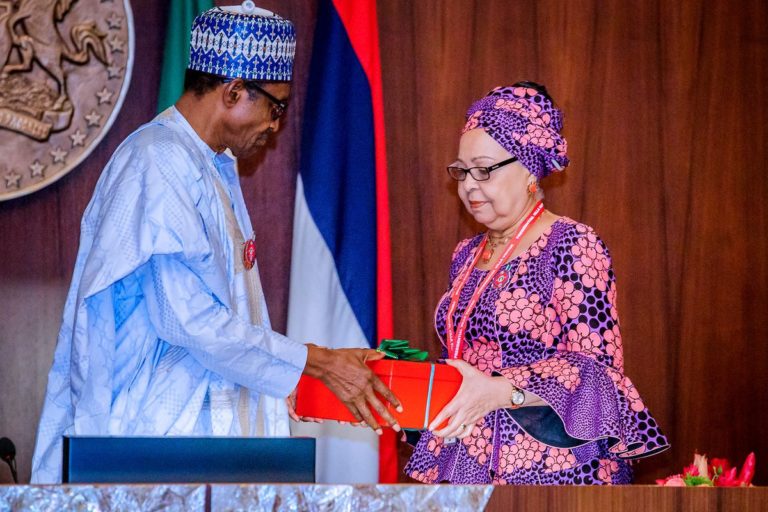
THE tripartite committee on the review of the national minimum wage has submitted its report to President Muhammadu Buhari, recommending that the sum of N30,000 be adopted as the new national minimum wage.

While presenting the report to the President on Tuesday,  chairperson of the committee, former Head of Civil Service of the Federation, Ama Pepple, noted that the government representatives on the committee had suggested N24,000, the panel recommends N30,000 as the new National Minimum Wage of the country”.

She also said the committee has drafted a bill on the new minimum wage to be considered by the Executive the consideration of the government.

In response, Buhari commended the committee for its works and reiterated his commitment to having a new national minimum wage as soon as possible. He assured that the bill will be conveyed to the National Assembly without further delay.

Buhari, however, urged workers not to allow themselves to be used as political weapons.

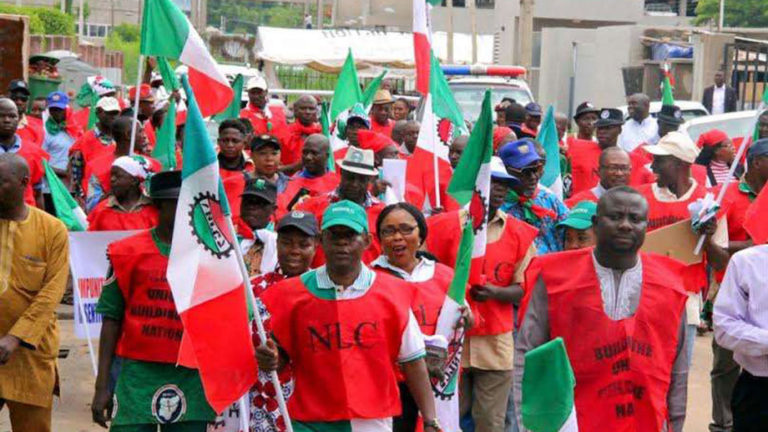
The organised labour, comprising the Nigerian Labour Congress (NLC) and the Trade Union Congress (TUC) had suspended the industrial action it had planned to begin on Tuesday. Ayuba Wabba, National President of the NLC, said the strike was suspended after a meeting of the minimum wage committee on Monday.

Ekweremadu upset at police apathy after alleged assassination attempt

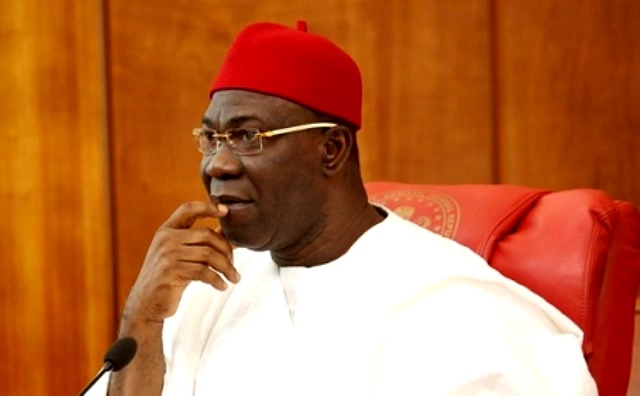
DEPUTY Senate President, Ike Ekweremadu has criticised the response of the Nigeria Police Force after an assassination attempt was made on him and some members of his family early Tuesday.

Ekweremadu’s media aide, Uche Anichukwu, had issued a statement on Tuesday narrating how some hoodlums attacked Ekweremadu’s residence and successfully made it to his room, but a scuffle ensued and one of the attackers was overpowered and apprehended while the others escaped.

Narrating the incident at the floor of the Senate on Tuesday, Ekweremadu berated the Nigerian police for their sluggish response after the incident was reported to them.

“It was about 4 am this morning that some people evaded the security in my house and got all the way to my room where I was sleeping with my wife. There was a struggle, there was a fight with heavy commotion and by the grace of God, we eventually caught one of them and the rest escaped,” he said.

“We handed that one over to the police investigating the matter. The annoying aspect of it or the one that is worrisome is that at that point, I called the inspector-general of police (IGP), his phone was off. I called some of his aides, their phones rang out and nobody replied till now. I called (the) DIG operations, till I left my house, nobody showed up.

“I now had my people invite the DPO in charge of Apo police station. We didn’t see him till about 5:30, he sent his 2nd-in-command who came and he saw the dangerous weapons that they left behind, he left and said that the DPO was coming. Until I left my house by 9 am, the DPO had not come.

“Nobody is safe in this country, I want to appeal to my colleagues and the general public that we all continue to be prayerful, be conscious of our private security, it appears that the security is not in the hands of government but the Almighty God.”

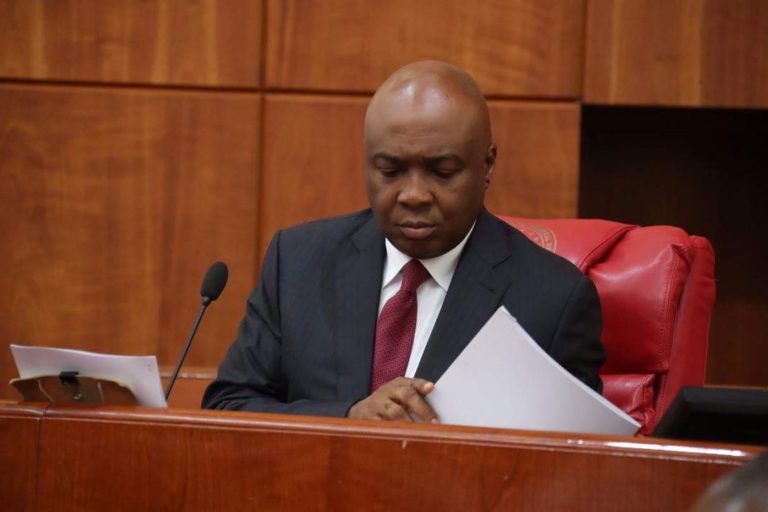
In his response, the Senate President, Bukola Saraki, described the alleged slow response of the police as “disturbing”, wondering if the police were “being partisan with the way they treat cases”.

Corps members won’t be sent to violence-prone areas during elections, DG assures

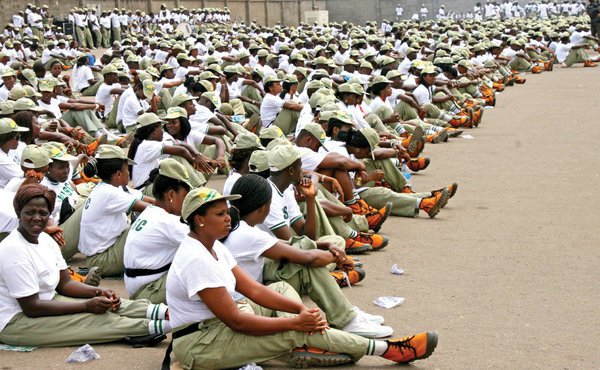
THE Director-General of the National Youth Service Corps (NYSC), Suleiman Kazaure, has assured that corps members that will be chosen to work with the Independent National Electoral Commission (INEC) during the 2019 general election will not be sent to volatile areas.

Kazaure, a Brigadier-General in the Nigerian Army, gave this assurance when he visited the NYSC Orientation Camp in Sagamu, Ogun State.

In the past, corps members have fallen victims of election violence in several parts of the country, but Kazaure said the ugly trend would not be allowed to continue.

He urged the corps members to always be security conscious and mindful of happenings in their environments.

“Your safety starts first by respecting the traditions of your host communities and being at peace with the people you’ve been called to serve,” Kazaure advised.

“Then you must always look out for one another and try to always move in groups. Unnecessary travelling should also be curtailed as this is not ideal of the NYSC scheme.

“At the elections, you must refrain from being partisan. As ad-hoc INEC staff, you must be neutral always and shun material or financial inducements from politicians for your own good and safety.

“I want to also state it here that no corps member will be used as ad-hoc staff in the volatile regions during the elections as their safety is of paramount concern to the scheme.”

Seven corps members were killed in Bauchi State during the violence that erupted after the 2011 general election. Also, one corps member was killed in Ahoada West local government area of Rivers State during the legislative rerun election in the state in March of 2016.

INEC had clarified that it intends to recruit corps members as ad-hoc staff during the 2019 election, as has been in the case in the past. Other people that could work for INEC during the elections are students of federal-owned tertiary institutions, as well as workers in federal government establishments.

Saudi Arabia expresses ‘regret and pain’ over Khashoggi killing

0

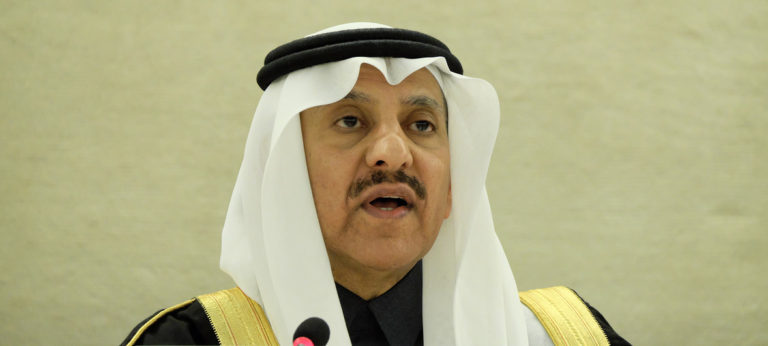
SAUDI Arabia expressed “regret and pain” for the killing of journalist Jamal Khashoggi, during a scheduled review session at the UN in Geneva on Monday, while asserting its commitment to achieving the “highest possible standards” in human rights in the country, including for women and migrants

Confirming that an investigation is still on-going into the death of Mr Khashoggi, who was last seen entering the Saudi consulate in Istanbul, Turkey, on 2 October, The UN News reports that Dr. Bandar bin Mohammed Al-Aiban, President of Saudi Arabia’s Human Rights Commission, and head of the country’s delegation at the 31st Session of the Universal Periodic Review in Geneva, Switzerland told the Member States in Geneva that King Abdel-Aziz had personally initiated the probe.

“The Kingdom of Saudi Arabia has already expressed its regret and pain for the death of Jamal Khashoggi,” Dr. Al-Aiban said. “King Abdel-Aziz has already instructed the prosecution to proceed with the investigation into this case according to the applicable laws and preparation to reaching all facts and bringing all the perpetrators to justice in order to bear the facts to the public.”

Following Dr Al-Aiban’s comments, 40 Member States appealed to Saudi Arabia to find out what had happened to Mr Khashoggi, many also calling for reform to the Kingdom’s freedom of expression laws.

Amid concerns over freedom of expression in Saudi Arabia, the Saudi representative insisted that it was a “guaranteed right”, before noting the launch of “many multilingual television and radio channels” as evidence of people’s right to express their opinions.

The issue was picked up by the many member States, including Denmark, France, Germany and the United States, which although it is not a current member of the Human Rights Council, is permitted as a UN Member State to attend UPR discussions.

Specifically, it urged Saudi Arabia to more clearly define what constituted terrorism in law, so as not to criminalize expression, association or peaceful assembly.

Around 10 countries also expressed concern about the ongoing conflict and humanitarian crisis in Yemen, where Saudi Arabia has faced criticism for coordinating air strikes which have killed civilians.

On the issue of Yemen, Dr. Al-Aiban insisted that Saudi Arabia “affirms its continuous support for the Yemeni people and their legitimate government”, which had requested assistance against Houthi attackers in 2015.

“The Coalition forces are doing their best to spare civilians, particularly women and children, civilian sites, and infrastructure as a side-effect of the armed conflict,” Dr Al-Aiban said, adding that Saudi communities near the border with Yemen continue to come under attack from the rebel Houthi movement’s militia.

Another non-Council member, the Russian Federation, meanwhile, echoed other countries’ comments that welcomed Saudi efforts to increase women’s participation in social and political life, before expressing concern about possible violations of religious minorities, prisoners and detainees, amid reports of alleged torture in detention centres – and of migrant workers, who make up one-third of Saudi’s population.

In addition to many calls for the abolition of the death penalty amid concerns that its use is increasing in Saudi Arabia, Member States present also urged the kingdom to banish the practice of male guardianship of adult women.

Reforms of the practice had only been put in place “partially”, Switzerland’s delegation said, and in most cases, the discrimination against women “persists”.

“Recent news tells us of the oppressive atmosphere creating lethal consequences,” the Swiss delegation explained. “We call for freedom of expression to be reinforced, freedom of association and expression for all, ensuring security for all journalists and releasing from prison all those who have been imprisoned for freely expressing their opinions.”

A total of 97 countries spoke at the Universal Period Review of Saudi Arabia in Geneva on how the UPR system works.

Dr. Al-Aiban noted that Saudi Arabia had accepted more than 150 recommendations made at its last UPR appearance in addition to another 37 recommendations, which it had accepted partially.

According to UPR rules, all 193 UN Member States are reviewed by their peers, at a rate of 42 a year.

The body meets three times a year and reports to the UN Human Rights Council.

States that have been reviewed also receive recommendations which they are expected to implement before their next review.



Labour Suspends nationwide strike

0

THE planned nationwide strike by the labour unions over a new minimum wage has been shelved for now.

The strike was scheduled to start on Tuesday with immediate effect after Labour leaders, government representatives and organised private sector spent more than eight hours deliberating on Monday to reach a consensus on a minimum wage.

The deliberation was in vain as the Tripartite committee decided to convey the resolution of the meeting to President Muhammadu Buhari, for onward transmission to the National Assembly.

The government wants to pay N24,000 as minimum wage, but the labour leaders are insisting on N30,000.

President Muhammadu Buhari on Monday intervened in the impasse by appealing to the labour unions, especially the Nigeria Labour Congress (NLC) to consider the rot his administration inherited from the previous governments.

The President explained that the present government was doing more with the ‘fewer resources’ at its disposal in putting the nation’s economy right. (NAN)

Ozone layer is healing, new UN report says

THERE is an ongoing healing of the ozone layer, findings of a new UN-backed report released on Monday has shown.

The study, ‘Scientific Assessment of Ozone Depletion: 2018’, is the latest in a series of reports, released every four years, which monitors the recovery of ozone in the stratosphere.

Ozone is a layer that protects life on Earth from harmful layers of ultraviolet rays from the sun.

The study shows that the concentration of ozone-depleting substances continues to decrease, leading to an improvement in the layer since the previous assessment carried out in 2014.

The findings are being hailed as a demonstration of what global agreements can achieve, and an inspiration for more ambitious climate action to halt a catastrophic rise in world temperatures.

Ozone in parts of the stratosphere has recovered at a rate of one to three per cent since 2000 and, at projected rates, Northern Hemisphere and mid-latitude ozone is scheduled to heal completely by the 2030s, followed by the Southern Hemisphere in the 2050s and Polar Regions by 2060.

This is due to internationally agreed actions carried out under the historic Montreal Protocol, which came into being over 30 years ago.


READ ALSO:


The Protocol was in response to the revelation that chlorofluorocarbons (CFCs) and other ozone-depleting substances – used in aerosols, cooling and refrigeration systems, and many other items – were tearing a hole in the ozone layer and allowing dangerous ultraviolet radiation to flood through.

The Protocol is set to be strengthened in 2019 with the ratification of the Kigali Amendment which calls for the future use of powerful climate-warming gases in refrigerators, air conditioners and related products to be slashed.

Erik Solheim, Head of UN Environment Programme said:
“The Montreal Protocol is one of the most successful multilateral agreements in history for a reason.

“The careful mix of authoritative science and collaborative action that has defined the Protocol for more than 30 years and was set to heal our ozone layer is precisely why the Kigali Amendment holds such promise for climate action in future.”

The findings provide a ray of hope, less than a month after the Intergovernmental Panel on Climate Change (IPCC), released a watershed report.

The report described the devastating effects of a 2°C temperature rise compared to pre-industrial levels, which UN Secretary-General António Guterres described as an “ear-splitting wake-up call”.

The writers of the report found that, if the Kigali Amendment was fully implemented, the world could avoid up to 0.4 per cent of global warming this century, meaning that it will play a major role in keeping the global temperature rise below 2°C. (NAN)


Falana calls for probe over killing ‘over 492 Shi’ites since 2014’

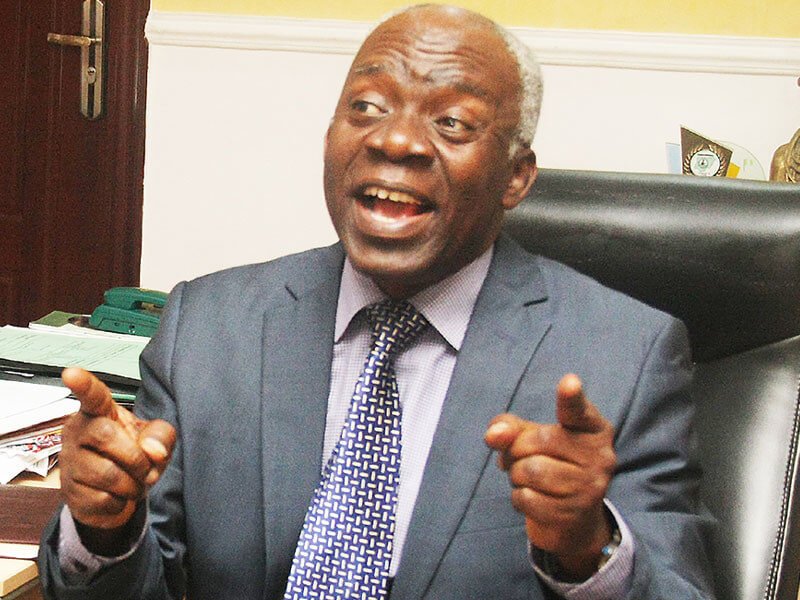
POPULAR human rights lawyer and Senior Advocate of Nigeria, Femi Falana, has called on the National Human Rights Commission to investigate the killing of over 492 members of the Islamic Movement in Nigeria (IMN)  since 2014.

Falana, who is also the counsel to Ibrahim El-Zakzaky, leader of the Shi’ite sect, made this known in a statement on Monday, condemning the Muhammadu Buhari-led federal government for what he described as the “systematic infringements of the fundamental rights” of the group.

He noted that FG “has continued to justify such subversion of the Rule of Law under the pretext of protecting national security”.

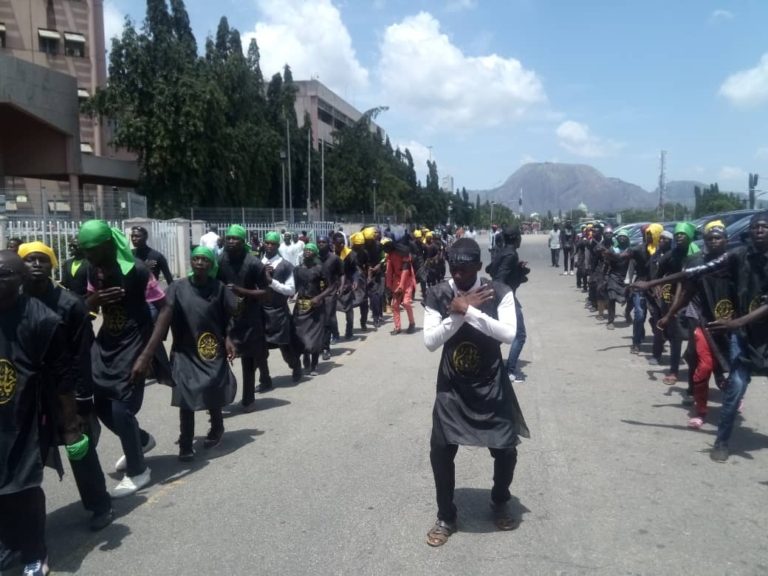
Falana’s statement is coming days after the Nigerian army tried to justify the killing of some Shi’ite protesters in Abuja, whom the army said had thrown stones at them.

The protesters were demanding the release of their leader, Ibrahim El-Zakzaky who has been in the custody of the Department of State Services since December 2015.

Falana pointed out that “in two separate suits, the Kano and Sokoto judicial divisions of the federal high court have upheld the fundamental rights of the members of the Islamic Movement of Nigeria to life, freedom of religion and freedom of expression including the right to engage in peaceful processions. But in utter contempt of the federal high court, the Federal Government has refused to release Sheik Elzakzaky and his wife from illegal custody,” Falana stated.

The DSS allowed El-Zakzaky to address the press in January as a proof that he is still alive.

“It may interest you to know that the 100 Shiites who were charged with the offence of culpable homicide arising from the alleged killing of a soldier in Zaria on December 12, 2015, have been discharged and acquitted by the Kaduna State high court. Following the dismissal of the frivolous charge, the Kaduna state government has turned around to charge Elzakzaky and his wife with culpable homicide before the high court in Kaduna for the alleged killing of the same soldier!”

Falana also listed nine incidents where members of the Shi’ite sect have been killed but the federal government did nothing to prosecute the perpetrators even though they are “well known”.

Femi Falana (SAN)

The incidents include the killing of 35 Shiites, including three of Zakzaky’s children, at a religious convention in Zaria, in July 2014. According to Falana, Nasir El-Rufai, who at the time was a governorship aspirant, visited El-Zakzaky to condole with him. Also, the National Human Rights Commission, headed at the time by Chidi Odinkalu, apologised to the IMN on behalf of the Nigerian government.

Another of such incidents happened on December 12, 2015, when the army killed 348 Shiites at a religious ceremony for allegedly disrupting the convoy of the Chief of Army Staff Lt. General Tukur Buratai.

“Although Sheik Elzakzaky was not at the religious ceremony the army invaded his house two days later, shot at him and his wife and set the house ablaze. Three of his children were killed in his presence while other family members who survived the violent attack were seriously injured,” Falana stated.

“Since the nation cannot afford to turn the Islamic Movement of Nigeria into another terrorist organization like the satanic Boko Haram sect, we request the National Human Rights Commission to conduct a full-scale inquiry into the gross violations of the fundamental rights of the Shiites highlighted.”

Minimum Wage: NYSC members clamour increase of allowance

THE National Youth Service Corp members have clamoured for an increase of their monthly allowance.

This was expressed in a social media campaign on Facebook and Twitter, tagged NYSC allowance.

This reaction came after Suleiman Kazaure, the Director-General of Corps on Monday addressed  members against joining the proposed strike by the Nigeria Labour Congress (NLC), urging them to remain at their duty posts as loyal and patriotic citizens.

He added that there was no provision for strike action in the NYSC Act but services that would uphold the corporate entity of the nation.

The NLC has planned to begin an indefinite strike on  Tuesday over the labour’s minimum wage.

The payment of N19,800 has been paid as the NYSC allowance since 2011.

Meanwhile, the director-general of the corps in August said the Federal Government has begun an upward review of the N19, 800 monthly allowances paid to members.

“The Federal Government is working to increase your monthly allowance. We received a letter from the Presidency through the Ministry of Youth and Sports and copied to the Ministry of Finance, which shows that the corps members’ allowance will be reviewed upward,” he said in August.

But in September, Kazaure said that the minimum wage would determine the allowance of the NYSC. “Whenever the minimum wage of civil servants is increased, an increment in corps members’ allowance will automatically be effected,” he added.

The current national minimum wage is N18,000, but the organised labour demanded that the amount be increased to nothing less than N30,000, taking into consideration the hyper-inflation that is currently being experienced in the country. But the federal government said it can only pay N24,000, while state governments proposed an even lower amount of N22,500.

The labour congress, rejecting the offers from both federal and state governments,  has planned to commence a nation-wide strike action on Tuesday.

Similarly, a popular outcry of the youth corp members have dominated the social media on Monday

Paul Jesutofunmi, a Twitter user compared the allowance to almsgiving. “It’s so deeply annoying for a corp member to be paid N19,800. N660per day including transportation, accommodation is not just enough,” he tweeted.

Similarly, Habib Lateef tweeted that Nysc allowance could not feed for a month.  He tweeted: “This is what they call ‘serving the nation.’”

Also, a tweet by Seun Shewen expressed how the  Nigerian government intentionally made the Nigerian youths suffer for a year by paying a meagre allowance.

“ After going through daily stress in school, only to be paid N19,800 as allowance in this harsh economy. He added that the NYSC is a full meaning of ‘Now Your Suffering Continues,”he tweeted.

UK Military: Nigerian citizens, other commonwealth nations free to apply for a spot

1

THE United Kingdom (UK) armed forces have thrown its door open to citizens of Commonwealth nations to be enlisted into the armed forces, according to reports from the BBC.

In a bid to address the shortfall in the numerical strength of the UK armed forces, the Ministry of Defence intends to recruit more servicemen and women to the Army, Royal Navy and Royal Air Force.

The armed forces are short of 8,200 soldiers, sailors and air personnel, a report found earlier this year reveals.

Ministers are expected to announce the change to recruitment rules today. It is hoped the changes will lead to an extra 1,350 people being recruited every year.

Currently, only 200 Commonwealth citizens per year can apply without having lived in the UK for five years. It is the worst shortage since 2010 said the independent government watchdog, the National Audit Office.

It means people from Commonwealth countries including Nigeria, Australia, Kenya, Fiji and Ghana amongst others will be considered for roles, even if they have never lived in Britain before.

rule introduced in 2016 already allows 200 Commonwealth citizens who have not met the requirement of living in the UK for five years to apply for a limited number of jobs every year.

The five-year UK residency requirement for Commonwealth recruits was first waived in 1998, before being reintroduced in 2013.

According to the Daily Telegraph, which first published details of the plan in Monday’s paper, the air force and navy will begin recruiting immediately and the Army will open applications early next year.

Applications from citizens of countries outside the Commonwealth will not be accepted, the paper adds. Citizens of Ireland and also Gurkhas from Nepal can already join because of special rules.

April’s National Audit Office report also said there were “much larger shortfalls” in the number of military engineers, pilots and intelligence analysts.

It said the armed forces were involved in 25 operations worldwide in 2016-17 – and the air force is undertaking more missions than it has for a quarter of a century.

And a Conservative MP’s report in July 2017 on the state of Army recruitment warned that the armed forces were “hollowing out” due to recruitment issues.

Senate to investigate alleged illegal petrol subsidy payments by NNPC

PRESIDENT of the Nigerian Senate, Bukola Saraki, says the Senate will investigate the recent revelation that billions of Naira being dividends accruable to Nigeria from its shares in the Nigerian Liquefied Natural Gas (NLNG), were illegally diverted and used to pay for subsidies for petroleum products.

Saraki made this known in a statement issued by his media aide, Yusuph Olaniyonu in Ilorin, the Kwara State capital on Monday, hours after the Premium Times published a report detailing how the federal government diverted the sum of $1.05 billion – about N378 billion at N360 to a dollar –to pay for petroleum subsidy despite claiming to have stopped such payments.

Earnings from the NLNG statutorily belongs to the federal, state, and local governments, but according to the report, the federal government unilaterally approved the spending from the NLNG funds without recourse to the other tiers of government or to the legislative arm of government.

Reacting to the recent development, Saraki recalled that a member of the Senate, Biodun Olujimi, had earlier raised concerns over alleged extra-budgetary spendings by the NNPC, and an ad-hoc committee had been set up to look into the allegations.

“Let me assure Nigerians that there will be no cover-up. We are confident the ad-hoc committee will do a thorough job. All the issues will be unearthed,” Saraki stated.

“That is why when the Senate set up investigative committees on issues, we want Nigerians to have confidence in us that we do not act because we want to embark on a wild goose chase. There must be some serious issues to be looked into.

“The revelations by the NNPC GMD have justified the need for this investigation and they have shown that we are acting in good faith.

“When in my ruling on the motion raised by Senator Olujimi, I insisted that we want a transparent, honest and non-partisan investigation on the fuel subsidy issue, it was clear to me and my colleagues that there are certain irregularities being perpetrated and we should let Nigerians know the truth.

“That is why we set up the committee in the first place and to demonstrate the seriousness we attach to the issue, we decided that the adhoc committee should be led by the Leader of the Senate, Senator Ahmed Lawan.

“This investigation will require the GMD (of NNPC, Maikanti Baru) to produce the approval given by the National Assembly and other necessary approving bodies authorizing the NNPC to divert the dividend from the NLNG investment which ought to be paid into the Consolidated Revenue Fund belonging to the three tiers of government for the payment of fuel subsidy.”

The Senate is currently on a two-week break but the lawmakers are expected to resume plenary on Tuesday, November 6.