Home Blog Page 2652

Too late to be ‘ATIKULATE’

0

By Timothy Ola Bamgboye

About a year and a half to the next general election, and months before the timetable is released by the Independent National Electoral Commission (INEC), politicians and their cronies have begun to warm their ways into the hearts of the electorate, as is their practice. There is no gainsaying the fact that Buhari’s recent two-day state visit to Kano where he was sensationally reported to have told a mammoth crowd that “by what I see today, if elections are contested I will no doubt win it” was geared towards whetting the electorate’s appetite for the impending campaigns.

Atiku Abubbakar’s dramatic defection to the People’s Democratic Party and the intense publicity of his person that came in its wake was undoubtedly aimed at achieving the same effect. Invariably, the two major political parties are telling Nigerians in clear terms that they would again be condemned to the proverbial devil and the deep blue sea as they were in 2015.

Preparatory to the 2015 elections, Muhammadu Buhari, the ruthless dictator with scores of human right abuses to his credit, low leadership profile and dismal creative intelligence on display, was repackaged as the disciplined, incorruptible, and regenerated democrat that would rescue Nigeria from the doldrums. With the 2019 elections at hand, it is Atiku’s turn to be rebranded from Nigeria’s politician with arguably the heaviest weight of financial scandals to the highly cerebral messiah the country has been waiting for.

The Nigerian youth who should be screaming Atikugate to high heavens are the ones championing the Atikulate cause. The recurring singsong is: what does morality matter? Aren’t all politicians the same? Those that are more daring wonder if any court of competent jurisdiction has convicted him of any crime? And one is left to wonder “would our mumu ever do?”

In 21st century Nigeria and in a country of over 170 million Nigerians, some persons still think either character or competence is dispensable for a contender for Nigeria’s grandest political office. We compromised competence the last time, why can’t we compromise character this time, gullible Nigerians wonder. This is the amazingly ridiculous mindset of tons of Nigerian youth. How depressing!

Yet, Atiku Abubbakar was not accused of corruption by a traffic-seeking, nameless blogger but by no less an institution than the United States’ Senate. It was not a careless comment by a five-minute-fame-craving senator but a detailed documented allegation of money laundering and bribery by the United States Senate Permanent Subcommittee on Investigations.

Indeed, the amounts allegedly corruptly cornered by this leading presidential aspirant isn’t some paltry sum but a whopping sum of about $40,000,000, $14,000,000, and yet another $2,000,000.

Worse, during the inquisition into the Halliburton scandal that consumed American congressman, William Jefferson, who already bagged a jail term in the United States of America, the convicted congressman unequivocally named Atiku as an accomplice. If these shocking revelations do not constitute a prima facie evidence of Atiku’s super corrupt proclivities, what else could?

Is it that as intelligent as Atiku is, he does not know that politics is perception? Is it that he is not aware of the legal remedy of salvaging his reputation where he is falsely accused and could not have sued for defamation? Is it that since 2010 when this scandal broke out, all he could do is dismiss these grave allegations with the wave of a hand while steering clear of the United States? Or is it rather that his culpability and sorry state nevertheless, he is very much persuaded that Nigerians are blessed with an exceptionally short memory; and that since our mumurity lives on, he can always get away with anything?

If we are hopeful of making any meaningful progress, and entrenching sustainable development in our polity, we need to begin to think straight as a people. And the change of mindset ought to begin with the youth. If corruption is not taken as one of the fiercest enemies of our national life and tackled headlong, corruption will ultimately destroy us. To tackle corruption, we must build strong institutions; and to build strong institutions, we must elect strong men of repute and good report. And to think there are no such people in Nigeria’s most populous black nation is to be short-sighted.

If Atiku is elected into office as Nigeria’s president, no one needs a soothsayer to know he cannot muster the political will to institutionalize an effective anti-corruption system. As intelligent as he is, he evidently lacks the moral compass to fix the cesspool of institutionalized corruption that has been made to fester right from Nigeria’s birth.

What Nigeria needs now is a breath of fresh air. What we need now is a leader not tied to the self-serving, opportunistic and oppressive ideologies that All Peoples Congress  and Peoples Democratic Party have come to be known for. Never again should we allow political principalities to use the media in restricting the choice of president to either the devil or the deep blue sea. It is time we saw through the charade and the disaster any of Buhari or Atiku is bound to become. It is time Nigerian youths began to devote time, energy, intellect and passion towards pushing a third alternative into our national consciousness. Indeed, it is time we let go of our mumurity.

Timothy, a legal practitioner, writes in from Warri, Delta State

Nigeria’s fight against human trafficking: A call for action

0

By Joseph Osuigwe

Nigeria is among the countries with the highest number of human trafficking victims.  Millions of Nigerian young women and girls are at risk of human trafficking, due to gender imbalance, poverty, high rate of unemployment, gender-induced cultural bias, human deprivation and other factors.

Globally, over $32 billion is generated from the exploitation of 27 million victims, of which more than 70% are women and girls. The 2016 Global Slavery Index Report shows that there are over 875,500 Nigerian victims.

On a personal standpoint, the statistic is low, and there is need for government and independent bodies to work towards gathering data on this crime.

NewsMax reveals that every year, over 30,000 victims of human trafficking die as a result of diseases, torture and hunger. Most the female victims die while aborting pregnancy, under the pressures of the trafficker. This also shows that every day, at least 83 victims die, while three to four die every hour. Before the end of this programme, at least eight victims must have died due to human trafficking. Human traffickers or perpetrators often see young people, especially women, girls and children as commodities that can generate 100 times the amount spent recruiting them.

GOVERNMENT HASN’T DONE ENOUGH

Human trafficking remains a great threat to our economic development, advancement and human capital. It saps the very potential of our nation by frustrating the aspiration of our young people. The future of so many young people, especially women, has been frustrated, their dreams shattered, destinies delayed and potentials caged because of the triumph of human trafficking, which often thrives in the shadow and silence of many, and grow due to passive participation of the three arms of government.

While I have always empowered citizens especially young people to be at the forefront of combating human trafficking, it is important for me to say that government has a fundamental role to play in this. First, I commend Nigerian government for the amended 2015 TIP Act and for establishing a federal agency, NAPTIP, to take responsibility for combating human trafficking. But I must not fail to tell government that signing TIP Bill is not enough. You can’t use an empty pocket to fight a crime that is worth over $32 billion. For over four years now, government has been too relaxed in the fight against human trafficking, and only wakes up each time there is outbreak of human trafficking, like the 26 girls who died in Mediterranean sea and the Libya black slavery. It ought not to be so.

Frankly, I have wondered why the Nigerian government hasn’t provided enabling support or encouragement for anti-human trafficking, and why NAPTIP is not well-funded.  I am aware that NAPTIP is not well-funded to fund other grassroots anti-trafficking organizations.

I remember few months ago, when I spoke with some business leaders, trying to engage private sectors in our anti-human trafficking project, I was faced with the following questions: Does NAPTIP fund you? What example has the government shown, and what has the President or lawmakers said about human trafficking that will motivate us to support the cause?  Have they issued public statements against human trafficking when addressing the nation? How many times have you heard them talk about human trafficking during presidential speech? Is there a national call for action?

In fact, I have observed that it will be hard for private sector to put their money into a cause if they are not sure it is of great importance or a priority to the federal or state government.

Government, at federal, state and local levels, need to take a lead in the fight against human trafficking. The President, legislators and judiciary need to be audacious in their public statements and actions to combating human trafficking.

WHAT GOVERNMENT NEEDS TO DO

Policy: Government should ensure that the Trafficking in Persons (TIP) Act is strictly enforced, without compromise. In addition to TIP Act, there is need for protection policies for victims and most vulnerable population in Nigeria. I recommend a Human Trafficking Prevention policy, which will focus on addressing persistent inequalities women face in status and opportunity; empowering homeless, street children, orphans, and young people who are at risk of trafficking; and addressing demand for sex or the commoditizing of women bodies.

Adequate Funding: Both state and federal government should mobilize financial resources to support action against human trafficking. State governors should know that the fight against human trafficking should not be left in the hands of the federal government and its agency. They should initiate programmes to eradicate and prevent human trafficking.

Call for Action and Private Sector Engagement: Both the federal and state governments should have a national call for action to companies to create measures to address human trafficking, through their corporate social responsibilities, contributing their expertise and knowledge to addressing the causes and effects of human trafficking. The Nigerian government should create avenues or platforms for private-sector engagement in combating human trafficking. Looking at how the private sector, including communication companies and banks, are using technology and innovative approaches to address issues on health, education, employment, and transportation in Nigeria, it becomes obvious that little or nothing has been done by private sector in addressing human trafficking compared to other issues.  There is an urgent need for private sector to provide innovative approach, contribute its unique knowledge, expertise and solution to ending human trafficking in Nigeria. Both small and big companies can aid the fight against human trafficking through the use of new technologies, innovation and entrepreneurship. Tech companies can create tools that will help young people to stay safe online, as human traffickers are exploring online platforms to deceive naïve and vulnerable ones in our society. Private sector can participate in combating human trafficking, by reporting suspected human trafficking cases around them. Like I said earlier, soon my organization will develop an Anti-Human Trafficking Reporting Mobile Application, known as TALKAM.  I am very optimistic and certain that as soon as the mobile app is developed, it will enable any one, including the private sector, to report suspected human trafficking cases.

Supporting Non-Governmental Organization:. Government and its agencies should give support to NGOs who are at the forefront of combating human trafficking in different communities.

Develop Tracking and Monitoring Mechanism: Anyone taking someone on a trip either within or outside the country, probably to serve as house servant or do any form of work, should get permission from local, state, or federal government agencies. Such persons should sign a ‘No Exploitation Pledge Form’ and provide details of the destination, work and a surety. These will help the appropriate agency or ministry track and monitor them. I developed this strategy while trying to proffer solutions to exploitation of housemaids.

Research institutes: It is important to have research centres in some federal tertiary institutions, so as to aid the fight against human trafficking.

Empower NAPTIP to have a budget to fund grassroots organizations and researches, build child support centres, build more rehabilitation centres, and provide scholarships and support to victims.

Ministry of Women Affairs and Social Development, Ministry of Youth Development, Ministry of Justice, Ministry of Labour, Ministry of Foreign Affairs and Ministry of Education should take part in combating human trafficking, and include in their budget funds to assist grass root organizations in addressing causes and effects of human trafficking.

Develop a standard trafficking in persons training programme that can be implemented at the academy level for all state and local police, and expand training to prosecutors and judges to include the mental health consequences to victims.

Every state in Nigeria should have a shelter where victims of human trafficking, rape, gender-based violence and other forms of human rights abuses are kept, assisted, and empowered. State governments should have offices that address issues of human trafficking.

Conclusion

If both state and federal governments can handle human trafficking like Ebola, then the will soon become history.

Osuigwe is the Executive Director, Devatop Centre for Africa Development, an NGO committed to the eradication of human trafficking and female genital mutilation.

Drug Abuse: Lessons from the United States

0

Nigeria appears to have woken up from deep slumber over substance abuse among the youth population of the country. The first indication of this was during a visit to Kano recently when President Muhammadu Buhari publicly instructed law enforcement agents to hound down drug traffickers in the country and bring them to justice. And then the two-day Stakeholders’ meeting in Kano called by the office of the Senate President, Bukola Saraki, to discuss substance abuse in the country. The meeting ended on December 20.

It is quite instructive that the setting of this awakening is the ancient city of Kano where drug/substance abuse has long become an epidemic. Yearly reports of the National Drug Law Enforcement Agency (NDLEA) always put Kano on top of cities with the highest substance abuse prevalence.

In 2015 out of a total number of 8, 826 suspected drug offenders arrested , 2,205 came from Kano alone-the highest in the country.  In October during a motion sponsored by Baba Garba in the Nigerian Senate, it was revealed that over three million codeine containing cough syrups are consumed daily in Kano and Jigawa States! And this in addition to other substances commonly abuse among youth in those states and others.

Thirty seven  senators supported that motion and the senate resolved to enact legislations that would check substance abuse among youth in the country. The Senate also mandated the Ministry of Health to provide rehabilitation centres or clinics where victims of drug abuse would be rehabilitated where necessary, and urged the National Agency for Food and Drug Administration and Control, NAFDAC, to embark on a vigorous sensitisation campaign on the dangers of drug abuse and steps in achieving a successful rehabilitation for people with the addiction. The just concluded stakeholders meeting in kano was a fallout of that senate resolve.

But before the senate begins the more tedious process of legislating to check substance abuse and addiction, it is pertinent to call its attention to how other lands are dealing with the problem.

I was one of ten Nigerians who recently participated in a special edition of the US Government sponsored International Visitors Leadership Programme on Substance Abuse Prevention and Rehabilitation. We visited major cities across the US which significant substance abuse challenges and interacted with law enforcement agents, health workers, government officials, teachers, non-profit organisations, prison officials and youth serving jail terms on drug-related crimes.

It was a trip that opened our eyes to the dangers of substance abuse and the best practices to contain and check it.

The US had long treated drug and substance abuse as a crime and offenders routinely sent to jail. But the same people come back to jail shortly after completing a jail term. They go back to drugs and commit crimes to finance their addiction. In a society where access to guns is easy, addiction often leads to violent crimes and murders.

But since law enforcement has failed to stop drug and substance addiction and related crimes, the US has had a rethinking about strategies to check the menace.

The first step is a realisation that drug addiction is a mental health challenge and those suffering from it need assistance and not jail sentences. Addiction is like any other disease and sufferers require help to get out of it into recovery.

Law enforcement in the US has moved from targeting drug users to hunting down illicit drug traffickers and cutting off supply routes. Law enforcement agents in the US now send youths suffering from drug addiction disorder to rehabilitation homes instead of sending them to jail. Only those who commit violent crimes, including murder are sent to jail. But even while in jail, they are made to undergo rigorous rehabilitation programmes to ensure they get clean before leaving jail.

But by far the biggest take away from the trip is the synergy between governments – federal, state and counties, and Non-Governmental Organisations in tackling the problem. There are no government-run rehabilitation homes or treatment clinics for those with substance abuse disorder. The governments and their agencies are not directly involved in drug abuse campaigns, treatment and rehabilitation of victims. Instead, there is an unwritten agreement that the NGOs are better suited to deliver these services, and the reasons are obvious.

NGOs work directly with the people and are more trusted than government agencies, especially on an issue as sensitive as drug addiction. They are also more specialised in the services they deliver, and have more standardised recruitment process. Moreover, because they operate with donor funds, they are much more transparent and accountable than government agencies.

So what the federal, state and county administrations do is to appropriate funds yearly for drug/substance abuse prevention, treatment and rehabilitation and channels these funds to credible NGOs already working in these areas. Thus, not only are the services more professionally delivered, but it ensures more value for money. And this model is already yielding positive results for the US as drug related crimes are going down and more people are getting access to addiction rehabilitation centres.

The lesson for Nigeria is for the government to move beyond issuing public statements lamenting prevalence of substance abuse among youth, to evolving policies directed at supporting local NGOs already doing great work in these areas. Instead of saddling the NDLEA with drug abuse campaign and rehabilitation, the agency should be adequately funded to fight the criminals who traffic these illicit drugs that is killing our youth.

Government funding for drug abuse campaign, treatment and rehabilitation should be targeted at supporting NGOs in the country who are already using their own resources to intervene in this problem. There are many NGOs working in the area of drug abuse, prevention and rehabilitation in different states and communities across the country. Government needs to set up machinery to identify NGOs with appropriate structure to support with funding and give targets on deliverables.

In Abuja, Kaduna and Kano alone, there are not less than 10 of such organisations doing incredible work with their own resources. They include Drugs Danger Smart Advocacy Foundation, Life Challenge Intervention Outreach, Community Intervention Network on Drugs, Parents against Drug Abuse, Substance Abuse & Addiction Recovery Centre and Milestone Rehabilitation Foundation, among others.

Tajudeen Suleiman is a journalist with the International Centre for Investigative Reporting (ICIR)

Innoson hired six truckloads of thugs to manhandle our operatives, says EFCC

Wilson Uwujaren, EFCC spokesman, says Innocent Chukwuma, Chief Executive Officer of Innoson Motors, hired truckloads of thugs to attack operatives of the commission in his bid to escape arrest on Tuesday.

According to Uwajuren, Chukwuma was arrested at his residence in Enugu on Tuesday morning for refusing to honour a series of invitations extended to him in an ongoing investigation.

“A well-known industrialist, Chief Innocent Chukwuma, popularly known by his company’s name, INNOSON, has been arrested by the EFCC,” Uwajuren stated.

“He was picked up at about 11am at his Savage Crescent, GRA Enugu residence on Tuesday, December 19, 2017.

“His arrest followed his refusal to honour invitation by the commission, having earlier jumped an administrative bail granted him in a case being investigated by the Capital Market and Insurance Fraud Unit of the commission’s Lagos office.

“Chukwuma, rather than honour the invitation by the EFCC, mobilised six truckloads of thugs pretending to be staff of his company to his residence, where they manhandled EFCC operatives.

“It took reinforcement from the Enugu office of the EFCC to arrest the industrialist, who is currently being grilled by a team of investigators.”

Chukwuma is currently facing criminal charges before the Federal High Court, Lagos, having been accused of forging shipping documents which he used to obtain loans amounting to N2.4 billion from Guaranty Trust Bank.

The suit was first filed by the office of the Inspector General of Police on December 21, 2015, but it was later taken over by the Attorney General of the Federation on February 18, 2016.

Earlier in November, FG filed an application urging Ayotunde Faji, the judge handling the case, to issue a warrant of arrest against Chukwuma for allegedly refusing to appear before the court and enter a plea in the charges against him.

But the case was adjourned to November 21 for ruling on the application. It’s not clear whether the judge granted the arrest warrant or not.

Gun shots, pandemonium, as ‘armed policemen arrest’ Innoson Motors CEO


Innocent Chukwuma, Chief Executive Officer of Innoson Motors — an indigenous car manufacturing company — has been arrested by law enforcement agents believed to be operatives of the Economic and Financial Crimes Commission (EFCC).

According to a post on the verified Twitter handle of Innoson Motors, Chuwkuma’s arrest was sequel to an ongoing court case between him and Guaranty Trust Bank (GTB).

Armed policemen were said to have stormed Chukwuma’s Enugu residence, shooting live bullets and injuring many people living there.

Pandemonium at Chukwuma’s residence before the “arrest’

Cornel Osigwe, spokesman for Innoson Motors, said his principal was arrested at his residence in Enugu around 9:00 a.m. on Tuesday.

“His arrest is in connection to the ongoing case he has with GTBank. He was never invited by the EFCC; we challenge them to come forward with any evidence showing that he jumped bail,” Osigwe said.

“This is GTBank using federal authorities to persecute an illustrious citizen who has done a lot to improve the economic development of this country.”

Wilson Uwajuren, spokesman of the EFCC, said he had not been briefed on the development, while Meksley Nwagboh, who spoke on behalf of GTBank, said the bank had nothing to do with the arrest.

Islamic council threatens nationwide protests if ‘hijab lawyer’ is not called to bar

The Nigerian Supreme Council for Islamic Affairs (NSCIA), the umbrella body of Nigerian Muslims, has threatened to initiate legal actions and embark on massive protests if Firdaus Amosa is not immediately called to bar and compensated.

Amosa, a graduate of law from the University of Ilorin, had been denied access to the venue of her call to bar ceremony after she insisted on wearing the hijab.

The development has since sparked controversy, as many Nigerians take to the social media to express diverse opinions.

According to a statement issued on Tuesday by Salisu Shehu, Deputy Secretary General of the NSCIA, “Amosa has been victimized, humiliated and traumatised by the Nigerian Law School, the Body of Benchers and the Council for Legal Education on account of her faith”.

The NSCIA maintains that Amosa “has not violated any law” by insisting on wearing her hijab during her call to bar.

“She has been denied of rightfully joining her professional colleagues just because of her religion. She has been exposed to ridicule and opprobrium by standing for her religious rights,” the group stated.

“It begs the question that she is not the only Muslim lady among those concerned, as no one will stand for her when she appears before her Creator to defend the correctness and otherwise of her actions. We reiterate that she has not violated any law.

“The NSCIA demands that the Federal Government, through the Ministry of Justice, call the Council for Legal Education and the Nigerian Law School to order so that they will not stoke religious crisis in the country.

“Our Council patiently waits for what the Ministry will do as it puts other options on the table, including litigation and nation-wide protests.”

“Those who think they can ride roughshod on the rights of Muslims just because their co-Christian colonialists did it successfully will have to wake up and realise that Muslims are equal stakeholders in this country.”

The NSCIA further described the development as “the height of Islamophobia displayed by the authorities of the Nigerian Law School, the Body of Benchers and the Council for Legal Education”.

“Basically, the Constitution of the Federal Republic of Nigeria guarantees Nigerians their freedom of religion.

“There is a constitutional basis that holds and upholds the use of hijab as a fundamental and constitutional right of Muslims in this country.

“It beggars belief that the Islamophobic posturing of the Nigerian Christian establishment is legendary even if this dates back to the Christian colonial past and its vestiges.

“The hatred for Muslims and Islam appears to be a virulent cancer that has spread across the body of those who use religion to oppress and deprive others of their religious rights. We have maintained that Nigeria is a multi-religious country and that cannot be controverted.

“In the United States, female Muslim attorneys are granted their use of hijab as a piece of scarf on the head of a person doesn’t harm anyone.

“In Britain, where the Nigerian legal system originates from, the English lawyers and judges since July this year have started to break away from the centuries-old tradition of horse-air wigs that many consider anachronistic, uncomfortable and expensive.

“While the rest of the world is becoming progressive and pluralistic, the Nigerian religious bigots remain dogmatic, vicious and vindictive when issues concerning Islam arise.

“That the United States of America allows even female military personnel to use hijab and male Muslims to grow their beard as part of their religious rights is worthy of note.

“If Muslim female police officers in Britain that so desire use hijab without let or hindrance, what is the problem in Nigeria?

“What is wrong with the Islamophobic Nigerians who assume that Muslims must abandon their religion to co-exist with them in the Nigerian space?

“How does wearing hijab infringe on anybody’s right in Nigeria? Enough is enough of this chronic hatred and bigoted intolerance! Yours is your religion and ours is ours.

“We stand behind Abdulsalam Firdaos Amosa who acted within her constitutional rights and we insist that she must be called to the Bar and adequately compensated for the humiliation she was subjected to. Enough is enough!”

PHOTOS: Nigeria’s out-of-school children who are now scavengers, sachet water sellers

By Ademola AKINLABI

In July, Adamu Hussaini, Permanent Secretary in the Ministry of Education, acknowledged that the population of out-of-school children in Nigeria was an estimated 10.5 million.

This was in line with the United Nations’ proclamation that half of the world’s 22 million out-of-school children are from Nigeria.

But the figure is generally thought to be an under-estimation of the crisis, given that more children and parents are embracing informal education due to poverty and unemployment, and given Nigeria’s poor record-keeping reputation.

Some out-of-school children are into petty trading to support their family, while others survive by scavenging through heaps of rubbish.

This photo story shows some school dropouts who now engage in all sorts of menial jobs.

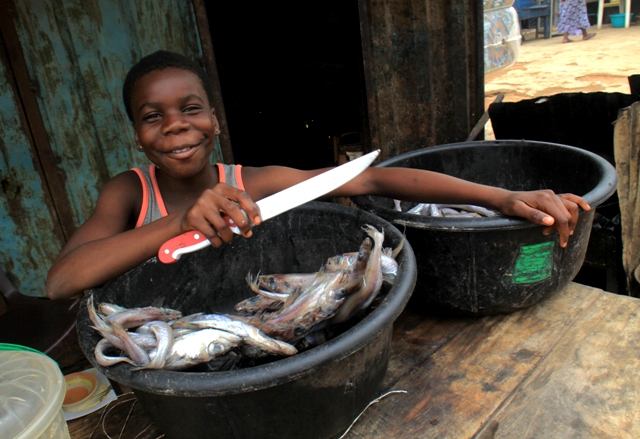
After completing her primary education, Promise is waiting for her mother to determine the next step. For now she helps her mother fry fish for sale.


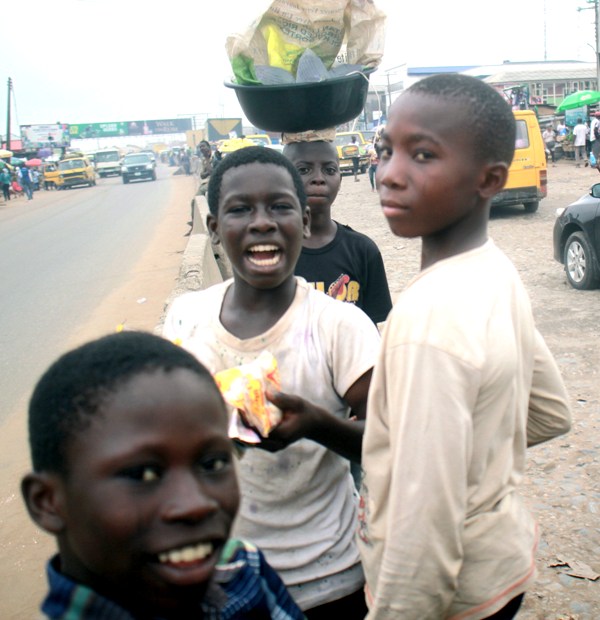
These boys could not continue their education due to lack of funds. To survive, they sell snacks and sachet water along Sango-Abeokuta Expressway.


Due to broken homes, many of these boys dropped out of school and left home to live on the streets. They survive by scavenging through rubbish dumps in search of scraps to sell.


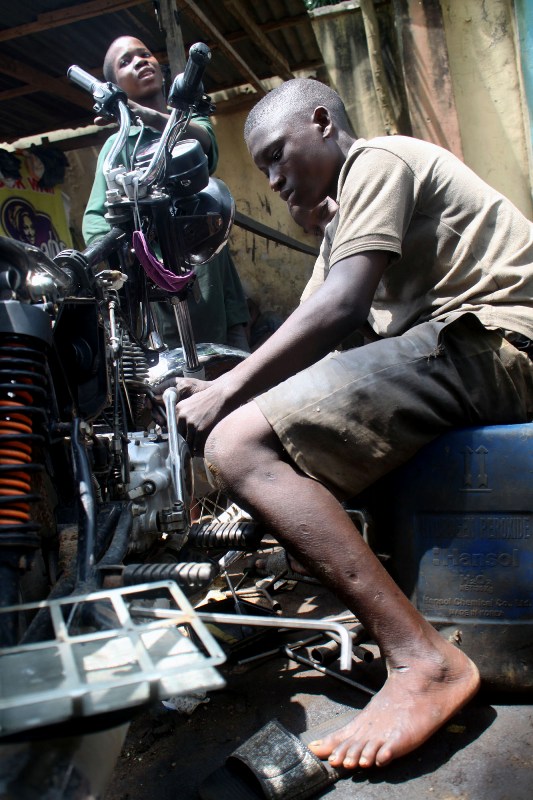
Segun Adigun is eight years old, he never attended school but he is a mechanic apprentice at Jankara, Lagos.


This project, courtesy of the Wole Soyinka Foundation, was mentored by Gbile Osadipe. Ademola Akinlabi is Chairman of the Photojournalists Association of Nigeria (PJAN).

Nigeria does not need democracy…

0

By Martin Ayankaa Ihembe

Experts on democratisation posit that a political society starts its journey to becoming a democracy by establishing an electoral democracy first, followed by polyarchy/liberal democracy, and then advanced democracy. They are all democracy but they differ in content.

Electoral democracy is one that is on the borderline between democracy and authoritarianism. Hence the notion of hybrid regime. It is sometimes referred to as pseudo democracy. Polyarchy, as Robert Dhal calls it, or liberal democracy, adds to democracy the classical liberal political liberties of free speech, freedom of association and the rule of law. These features enhance democratic consolidation by preventing its erosion. Lastly, advanced democracy is one that has completed the democratic journey and cannot reverse to authoritarian regime or electoral democracy. This is found in the global north.

Where then can we place Nigeria in this trichotomization? Having failed in delivering the desired deliverables of democracy in its 17 years of democratic experiment, with visible traces of autocratic tendencies on the part of the ruling elite, the country neatly falls under electoral democracy. Unfortunately, both scholarly and policy concern has been focused more on the need for increased democracy in Nigeria than the all-important issue of state-building. This view is commonly referred to as the “sequentialist debate”. Exponents of the “Stateness First” like Francis Fukuyama and Fareed Zakaria contend that “state-building and liberal constitutionalism must precede electoral democratization if democracy is to achieve stability and deepening”.

In other words, central to attaining and sustaining democracy is the construction of a strong State. Failure to adhere to this sequence would eventually lead to Samuel Huntington’s notion of “premature democratization”. This is the story of Nigeria and most democratizing states in Africa that lack the Weberian legitimate monopoly of force in their territory; which is essential in providing social order, which in turn paves the way for economic development and democracy to thrive. Conversely, others like Mazzuca and Munck maintain that “state construction can be confronted in the course of democratization or through democracy”. This seems to be the pathway taken by Nigeria since the attainment of political independence. Their line of argument stem from the widespread belief that it’s almost inconceivable to have a developmental sequence than the one which starts with electoral competition in contemporary times, largely because the pursuit of liberal democracy has become the zeitgeist of the late 20th century.

However, as persuasive as these contentions are, empirical evidence shows that the ‘stateness first’ sequence happened to be the Western sequence. Before the Industrial revolution, bellicose strategy was adopted in state formation by despotic European monarchs. Democracy was not the guiding idea in developing Europe at that time. During the industrial revolution between 1780 and 1840, Europe had no democracy. Western Europe and its satellite colonies first established a sequence of state-building, liberal constitutionalism, before large scale electoral participation. As we can see in this sequence, it was later in the course their history that measures of limiting state powers like rule of law and democratic accountability were introduced. As I will explain momentarily, this was also the sequence in some East Asian countries.

The failure to build a strong state, limited by the rule of law and electoral accountability, all of which contribute to deepening democracy explain why Nigeria is still a basket case that privileges electoralism which profits political entrepreneurs at the expense of state-building. Yes, democracy might have triumphed in some ideological sense as vociferously acclaimed in The End of History thesis. This is not sufficient to say liberal democracy is the one and only way for democratizing countries like Nigeria to follow in order to attain political development. Based on this, Thomas Carothers, an avid liberal scholar posited that: “it is a mistake to assume that democratization – especially open national elections – is always a good idea.

When tried in countries that poorly prepared for it, democratization can and often does result in bad outcomes”. These outcomes have been seen in Nigeria. If the “Democracy first” sequence was the surefire way to attaining political development and stamping out poverty, India, with an impressive democracy, would have accomplished this given it long democratic history. Rather, the country is extremely corrupt – 79 least corrupt nation according to the 2016 transparency international (TI) report – and cannot deliver democratic deliverables because it doesn’t have a strong state. Nigeria, which conveniently occupies the 136th spot, is also facing the same problem. This also applies to South Africa, which occupies the 45; and Brazil, which is on 40, and is also facing the risk of democratic breakdown.

However, China, which is not a democracy in the western sense, has done so well in terms of development. In spite of its sheer problems of human rights deficit, China has been able to achieve one of the world’s remarkable economic transformation in human history. This has seen it lift over 400 million people out of poverty (See, Weiwie’s China Wave: Rise of A Civilizational State), a figure which accounts for the bulk of global reduction in poverty. If you take China out of the equation you will be left with an abysmal result in this regard. China was able to achieve this because of its strong state system which is driven by Confucian tradition; establish long before it started modernizing. The country also has a merit base bureaucracy which has supported its development agenda. Conscious of this impressive achievement, Fukuyama remarked in 2011 that “U.S. democracy has little to teach China”. Interestingly, despite China’s phenomenal economic rise using it development model, “China has learnt so much from the West and will continue to do so for its own benefit…;” said Weiwei. There is a lot of wisdom in this which poorly governed countries like Nigeria where the Lincolnian idea of democracy has failed to work should learn.

Countries like Singapore, South Korea, and Japan first started out like China by building state first in line with Confucian tradition, before establishing democracy. The West does not see the China option as a viable alternative worth emulating by countries in search of development. This is to suggest that the Western liberal democratic model is the most preferred option as though it doesn’t have loopholes. The Western model itself is in deep trouble as seen in the protracted financial crisis in the global north in spite of its nuanced strengths, excessive money in politics and the role of special interests in the electoral process – America and Nigeria. Obviously, it is on account of these unpleasant developments in America that Joseph Stiglitz drew the conclusion that the U.S. market driven economic model only works for the top 1 percent than the bottom 99 percent. What this says clearly is that even liberal minded scholars are dissatisfied with the current structure of liberal democracy in the West.

Coming back to Nigeria, it’s no news that the country has been detained in the state of premature democratization for the past 17 years without any possibility of attaining political development should the country maintain the status quo. As I noted before, this is so because Nigeria does not have a strong and impersonal state. The state is essentially neopatrimonial in nature. Like America, Nigeria’s democracy is one that works for the elite. My argument is not suggesting that democracy is bad. Not at all! It is good because it engenders the existence of some basic freedoms that are central to the pursuit of happiness and development. But this will make no meaningful impact if the state, to which the institution of democracy is grafted is not strong enough to provide the foundation for democracy to flourish. Bearing in mind the Western and East Asian development sequence, I am of the opinion that Nigeria does not need democracy at the moment. Seventeen years of its practice has only kept the country perpetually in electoral mood at the expense of pursuing developmental courses. The country needs a strong state, after which it can take measures of limiting political power by instituting liberal democratic institutions.

Ihembe Martin, a political Scientist with research interest in political development, can be reached on 08023688848

Kinetic crystallisation, accelerated development… how governors curiously named their 2018 budgets

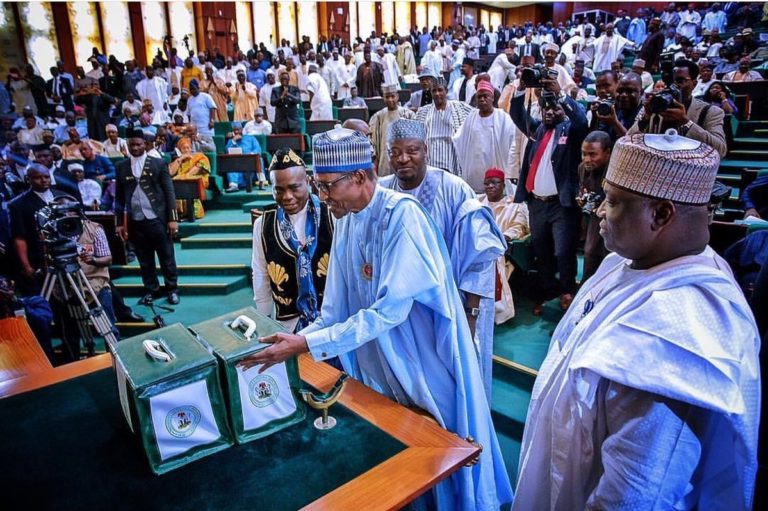
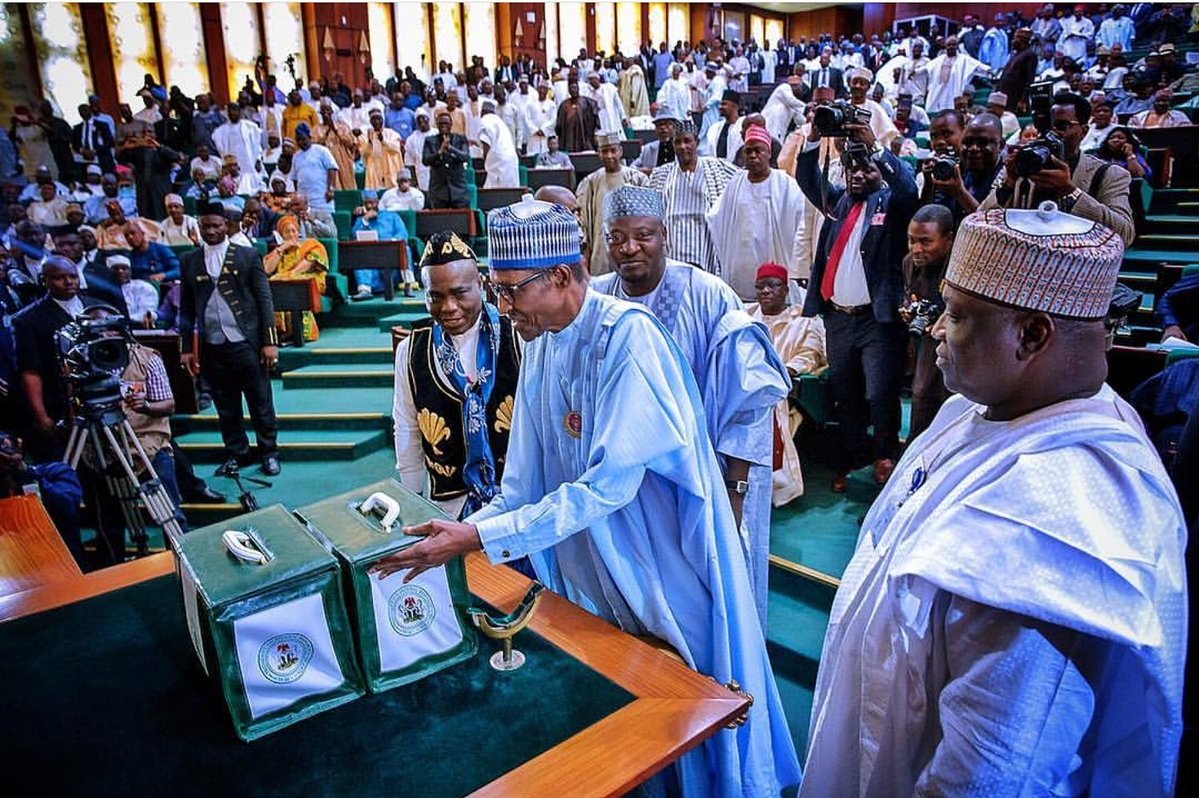
Several states of the federation recently followed President Muhammadu Buhari’s example by presenting their 2018 budgets to their respective state assemblies, but something that caught the eye was the funny, sometimes outrageous names these budgets bear.

Buhari’s 2018 budget was christened “Budget of Consolidation”, but with less than 40 percent of the 2017 budget – termed ‘Budget of Recovery and Growth’ – implemented so far, experts say there is little or nothing to consolidate on.

Bismarck Rewane, an economic expert, had described Buhari’s 2018 budget thus: “It’s a prudent budget, it’s a budget of consolidation but you only consolidate after you achieve the growth that you aspire to achieve.”

How did the states describe theirs?

AYADE’S KINETIC MOTION IN CROSS RIVER

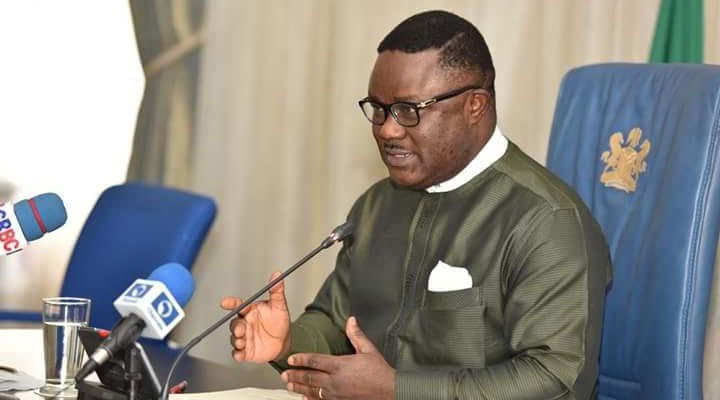
Of all the nomenclatures given to the 2018 budgets presented by the various state governors so far, none is more interesting, or better put hilarious, than that of Ben Ayade’s Cross River State, which he christened ‘Budget of Kinetic Crystallisation’. Whatever that means!

This is aside the fact that the budget amount is an eye-popping N1.3 trillion — the highest-ever by a state government.

This is “a kinetic budget that allows me flexibility to dream to the extent that God has given me the intellectual capacity to reach,” Ayade had said.

“It is a budget that crystallises the depth of our vision into action in the Year 2018. It is meant to draw the perspective of a humongous, large, ambitious budget.

“It is not enveloped by our purchasing capacity but by the capacity of our thought process. It is designed and tailored to fit our dream.”

OBIANO’S VALUE FOR MONEY

If Ayade’s budget of kinetic crystallisation is confusing, what then can be said of Willie Obiano’s ‘Budget of Value for Money, Economic Diversification and Job Creation’?

Obiano recenntly emerged victorious from a governorship election which, though adjudged “free and fair”, was also said to have witnessed high incidents of vote buying and selling.

According to reports from election monitors, all the major political parties in the state used money, and in some cases plates of cooked food, to entice voters.

Perhaps, Obiano, by saying the 2018 budget would be that of value for money, meant to tell citizens of the state that he would have to first get value for the money he spent in buying their votes, before leaving the crumbs for the people.

OTHERS

The list of the needless naming of annual budgets is endless, and at the end of the day they do not achieve anything.

Governor Umar Ganduje of Kano State termed his 2018 budget as ‘Budget of Reality’ but no one can say for sure (other than the man himself) what he actually meant.

In Adamawa, it is ‘Budget of Hope and Empowerment’. In Akwa Ibom, it is ‘Budget of Consolidation on Industrialisation’. In Delta State, it is ‘Budget of Hope and Consolidation’. Jigawa’s is ‘Budget of Economic Diversification and Self-sufficiency’. Nasir el-Rufai of Kaduna State christened his as ‘Budget of Consolidation’.

Katsina State has a ‘Budget of Actualization’, Kwara has a ‘Budget of Sustained Growth and Prosperity’, while Nasarrawa has a ‘Budget of Sustainable Development’. In Ogun, it is ‘Budget of Accelerated Development’! Really?

We cannot begrudge the governors for their style of christening their budgets, but it’s a real wonder how Nigerians are still wallowing in lack and penury with all these wondrous budget names.

Imagine if Ogun State were to experience “accelerated development” in 2018, or Nasarawa were to truly “diversify” its economy, or if Delta actually gave “hope” to the people. Unfortunately, we know that this time next year, we will still be discussing the very issues on which the respective 2018 budgets were built.

So, why have a name that has no meaning in terms abiding by its spirit? Only the governors can answer.

Buhari extends service chiefs’ tenures beyond retirement age

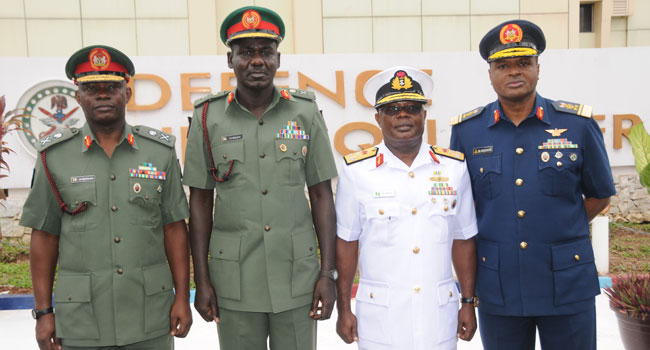
President Muhammadu Buhari has extended the tenures of all service chiefs: Abayomi Olonisakin, Chief of Defence Staff; Tukur Buratai, Chief of Army Staff; Ibok Ete-Ibas, Chief of Naval Staff and Sadique Abubakar, Chief of Air Staff.

According to a statement issued by Tukur Gusau, spokesman of the Minister of Defence, “the extension is pursuant to the powers conferred on the President and Commander in chief of the Armed Forces of the Federal Republic of Nigeria by section 218(1) and (2) of the 1999 Constitution”.

The statement added that Buhari approved the tenure extension after “having carefully reviewed the ongoing military operations across the country and the efforts of the service chiefs in the counter-insurgency operations in the North East coupled with the security situation of the Niger Delta region”.

The current service chiefs were appointed on July 13, 2015. According to the rules of the armed forces, the tenure of service chiefs is two years, after which the President could extend it provided the affected officer has not attained the mandatory retirement age of 60.

Earlier in July, Buhari, who at the time was receiving medical treatment in London, approved the extension of the tenures of the service chiefs until December.

The trio of Olonisakin, Abubakar and Ete-Ibas are long overdue for retirement going by their year of service and their age, but Buhari approved an extension of their tenures.

Buratai, on the other hand, being a member of Course 29 in the Nigerian Army, has not attained the retirement age or maximum length of service yet.

It is not clear for how long this current extension will last.