Akinwumi Adesina, former Minister of Agriculture and current President of the African Development Bank (AfDB), says his $250,000 World Food Award prize money will be used to support African youths in Agriculture.
Adesina said this while delivering his acceptance speech at the award ceremony, which took place in the United States of America on Thursday.
The event was attended by representatives from more than 50 countries including Mike Pence, US Vice President.was also represented.
“There wouldn’t be any rest for me until Africa feeds itself and for that we need the youth,” Adesina said.
“And so, even though I don’t have the cash in my hand, I hereby commit my $250,000 cash prize for the WFP award to set up a fund fully dedicated to providing financing for the youth of Africa in agriculture to feed Africa.
“A day is coming very soon when the barns of Africa will be filled and all her children will be well-fed, when millions of farmers will be able to send their kids to school. Then you will hear a new song across Africa; thank God our lives are better for us.”
Adesina thanked Olusegun Obasanjo, former President, for nominating him as a minister, and Goodluck Jonathan, former President, for giving him the opportunity to serve in his government.
Kim Reynolds, Governor of the host State of Iowa, described Adesina as a worthy winner of the prize, adding that he was a man who grew out of poverty to create wealth.
Reynolds said Adesina’s commitment and dedication in agriculture had positively influenced the lives of many, even beyond the African continent.
“Tonight, we are honouring one of the most dynamic leaders in promoting food security and inspiring young people not only in Africa but around the world,” Reynolds said.
The World Food Prize Foundation announced Adesina as the winner of the 2017 World Food Award also referred to as ‘Nobel Prize for Food and Agriculture’ in June.
The foundation gave several reasonswhy it chose Adesina for the world, including his achievements as Minister of Agriculture under Jonathan.
My guess was like yours when I read a recent report that the Senate was to probe the Nigerian National Petroleum Corporation (NNPC). I can’t tell the outcome of the Senate probe this time but like many probes conducted by the National Assembly, I don’t have much anxiety at all.
Thirty-seven years ago, I was anxious about such a probe. On December 12, 1979, I covered the sitting of the House of Representatives and a motion was brought by Mr Dagogo Princewill (Degema) and Mr. Fola Omidiji (Egba Alake Constituency) to probe the NNPC, following a report that certain money was stolen in the Corporation.
The Speaker of the House then, Chief Edwin Ume-Ezeoke (1935-2011) from Nnewi in the present Anambra state ruled both of them out of order. He then asked the two members to bring a substantive motion for deliberations.
On January 15, 1980, Princewill brought a fresh motion to probe the NNPC. He said: “My enquiry has revealed, Sir, that in this Company there are no adequate personnel especially in the field of accounting and internal audit. I understand too, Sir, that people are being scared away for one reason or the other because they do not come from a particular part of this great country and too, Sir, because they do not belong, or because they were not ex-students of a particular institution. As a result of this, Sir, well qualified people left their jobs in this Corporation. I am told,Sir, that one Mallam M.Y. Wanka,from Bauchi State, a qualified Chartered Accountant, was the only one in the Audit Department. He was frustrated, and he had to leave, and today, he is in the Nigerian National Supply Company as a Representative/Agent in their London Office. Even as at today, Sir, there are only four qualified Chartered Accountants in that Company.
Mr Speaker, Sir, members of the profession of which I am one are very difficult to get — I mean the Chartered Accountants. A Corporation of the magnitude of the NNPC should have gone to the Nigerian labour market and tried its best to get these people. Instead of that, sir, there are only four accountants, two in the audit department and two in the main accounts department. For a Corporation of this magnitude, this is grossly inadequate. The four chartered accountants are not even sufficient in one department not to talk of the whole Corporation. A corporation of this standard should get at least twenty Chartered Accountants. I am also told that the service condition is very bad in this Corporation, and the service condition has made good people run away from this corporation.
Now, sir, the audit report as given by an internationally recognized and reputable firm of chartered accountants, disclosed that they were unable to confirm or find any justifiable reason for the misappropriation of N2.8billion. This is very serious. In this country, we are told that the press is the watchdog of the nation. During the Army regime it was very difficult, if not impossible, to investigate this matter. Now it is falling on our shoulders to do this onerous task. I would like to commend the Punch Group of newspapers who were able to tell us what was happening in this corporation, but they were unable to investigate further what had happened to N2.8billion. Either as a result of inefficiency or misappropriation, this amount is unaccounted for”.
Other members who contributed to the debate were Mr. O. Akinboro)Oke-Ona/Owu/Gbaguar), Mr. M.O. Ugwu(Udi), Dr. E.J. Sowho(Ethiope North), Mr Debo Akande(Ibadan North), Mr Gbadebo Adewumi(Osogbo South), Professor Opayemi Ola(Ekiti West), Mr Abubakar Audu(Anpa South), Prince Awa Ekpo(Eket II), Mr. Charles Adigwe(Awka), Mr E.D.N. Nwandu(Mbaitoli), Alhaji Sanda Kunduga(Kunduga), Dr Junaid Mohammed(Kano West Ward) and the leader of the House then, Alhaji Yinusa Kaltungo(Tangale-Waja South).
At the end of the day the House set up a Committee to probe the NNPC. Alhaji Yinusa Kaltungo declared: “the motion standing in my name read: That in accordance with House Resolution 48 of 15th 1980 the special committee on the Nigerian National Petroleum Corporation should be made up of 15 members to be composed as follows: six members of the NPN, four members of the UPN, three members of the NPP, one member of the PRP and one member of the GNPP. The motion was seconded by Mr Jimoh Damisa (Adabbi/Okehi).
After the motion, two members spoke again. They are Mallam Sidi Ali(Dambata) and Dr Junaid Mohammed(Kano West Ward).
Dr Junaid declared,“Another thing is that we have to subpoena the Council Memo which was written and submitted to the Council asking for a transformation of the NNOC into the NNPC. These are very vital documents and vital personalities. Another person will be the former Chief Internal Auditor who has resigned and is now in Britain as the Representatives of the Nigeria National Supply Company. We have got to summon some of these people. It is absolutely important, Sir, that you co-opt more people as the Speaker of this House in order to make this Committee’s work succeed, otherwise, we are up against a very powerful clique. The Senate has been sitting on the Bill sent by the President to discuss and re-organise the NNPC. This gives us room for enormous suspicion and I think it is absolutely important we know the enormity of the task before us so that we do not deceive ourselves. Mr. Speaker, Sir, we may find that the Committee with all its intentions may be a worthless exercise. I want to add that we it with all seriousness”.
On February 4 1980 the committee was inaugurated by Chief Ezeoke and it was headed by my friend, Dr. James Taribo Sekibo (1939-2013) (Bonny II)) who later became the Odo-Abaji of Canoe House in Okrika, Rivers State.
On March 31 1980, Chief Ezeoke told the House that “I think I would seize this opportunity to congratulate ourselves for the progress we have made so far in respect of the investigation of the missing N2.8 billion in the NNPC. (Applause) Following the events of the last week and the newspaper publications, the stand of this House in respect of the misappropriation of N2.8 billion by whoever it might be in this country, has now been fully justified. (Applause) I will maintain that the investigation must continue. We must satisfy the aspirations of the people who elected us into this august Assembly. I must maintain that we must not be a successful victim of any blackmail, any subversion, and any attempt by inside and outside sources to impede sources to impede the continuation of this investigation. This money, in whatever account it may be anywhere in the world, must be recovered and brought back to this country.(Applause)
As soon as we conclude our investigations, the appropriate committee will introduce a legislation to enable the repatriation of this money, and to ensure that the people involved are adequately punished. Accordingly, the special Committee on NNPC will meet in my office immediately after today’s meeting”.
Sadly, that was the last we heard about Dr Sekibo’s Committee and the report of the Committee. On December 31, 1983, the Military headed by Major General Muhammadu Buhari took over power.
Here, we go again.
Eric Teniola, a former Director at the Presidency, stays in Lagos
EDITOR’S NOTE: This piece was first published in 2013 by Flair Nigeria. The ICIR is reproducing the five-part series in the light of the resurgence of killings in Plateau State, to help readers understand the genesis, depth, brutality and possible solutions to violence in the state.
In the third part of this series, ‘FISAYO SOYOMBO writes on the implications of the killings in Plateau for the state, adjoining states, and the rest of the country.
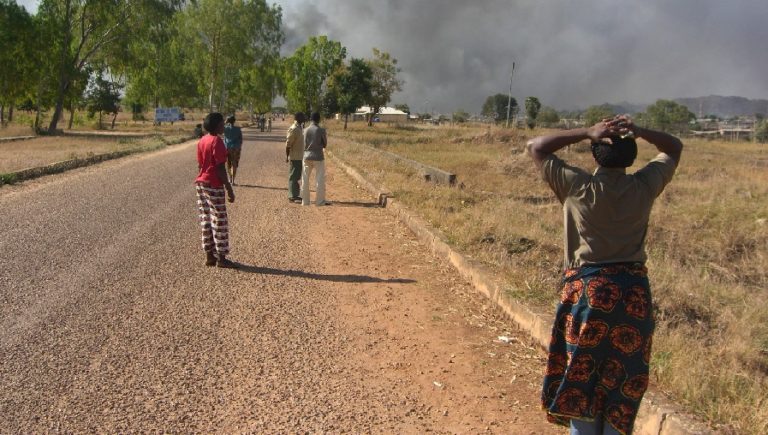
Daniel Choji is clearly angry. It is almost 24 hours since he has known no peace. From the previous day when he received an emergency call from his brother, Choji has been up and about, running helter-skelter from a place to another. In the end, his efforts came to naught.
At about 9pm on Wednesday, December 17, 2013, gunmen believed to be Fulani had broken into a compound in Larwin Village in Heipang District, firing bullets into the rooms. Five people — four of whom were under five years old — died instantly. Choji’s five-year-old nephew, Jerry Dalyop, tenaciously clung on to his life, but his survival turned out to be momentary. The following day, his bubbling light dimmed — eternally. However, his father, grandmother and step sister, who were also injured, made it.
“On arriving Plateau Hospital, the doctors gave their all. I must commend them,” begins Choji, 41, anger plastered all over his face. “They operated upon Jerry, his sister and his grandmother.”
He survived the operation but by the morning of the following day, his condition went downhill. The doctors responded by placing him on oxygen, which only extended his life by a little over two hours.
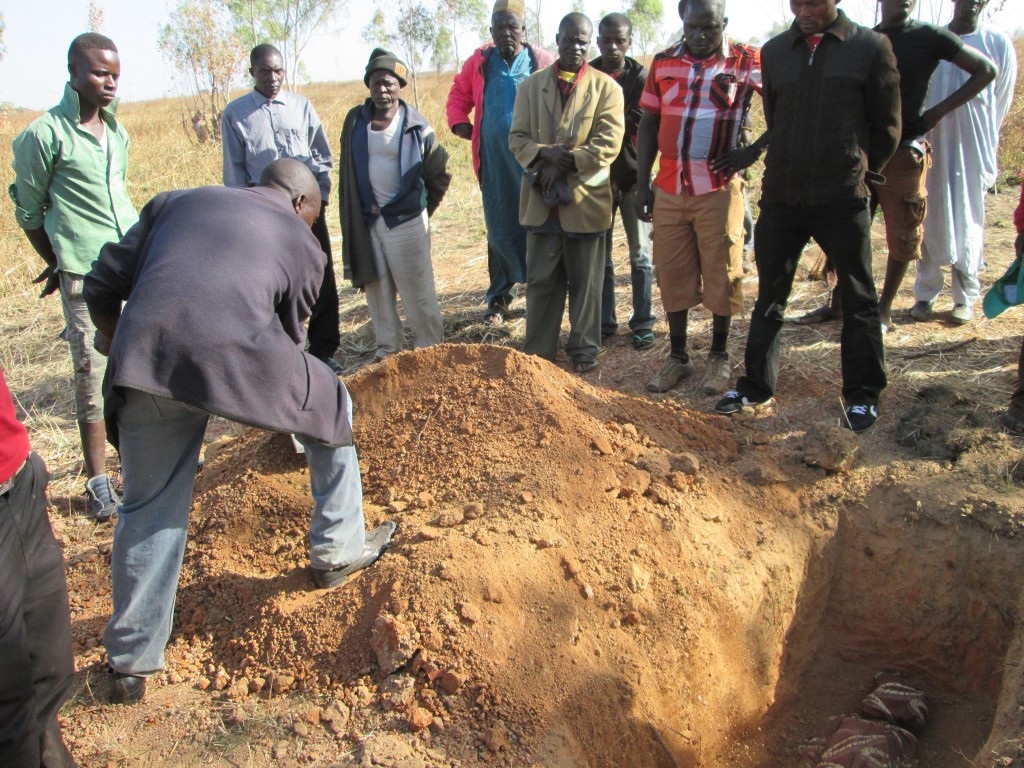
“At about 12pm when I returned to the hospital, I was told he had given up the ghost, because it was a very severe injury,” says Choji, eyes momentarily racing towards the gravedigger heaping sand on Jerry’s recently-lowered remains.
“He was shot across his stomach in a manner that exposed his internal organs. The bullet pierced his stomach from one side to the other, such that his large and small intestines were exposed. The doctors tried everything to fix the intestines back, but the boy couldn’t just survive it.”
Gravedigger heaping earth on the remains of Choji’s five-year-old nephew
MILITANCY IN THE OFFING
A gravedigger heaping earth on the remains of Choji’s five-year-old nephew
Jerry’s death that morning brought the casualty figure from the previous day’s raid to six. Counting from January, it was at least the 535th death. With claims of unreported or underestimated killings, it is highly likely that the real figure is higher. For Choji, these killings cannot continue forever. Soon, he fears, the Berom, who are worst hit by the attacks, will have to take up arms in self-defence.
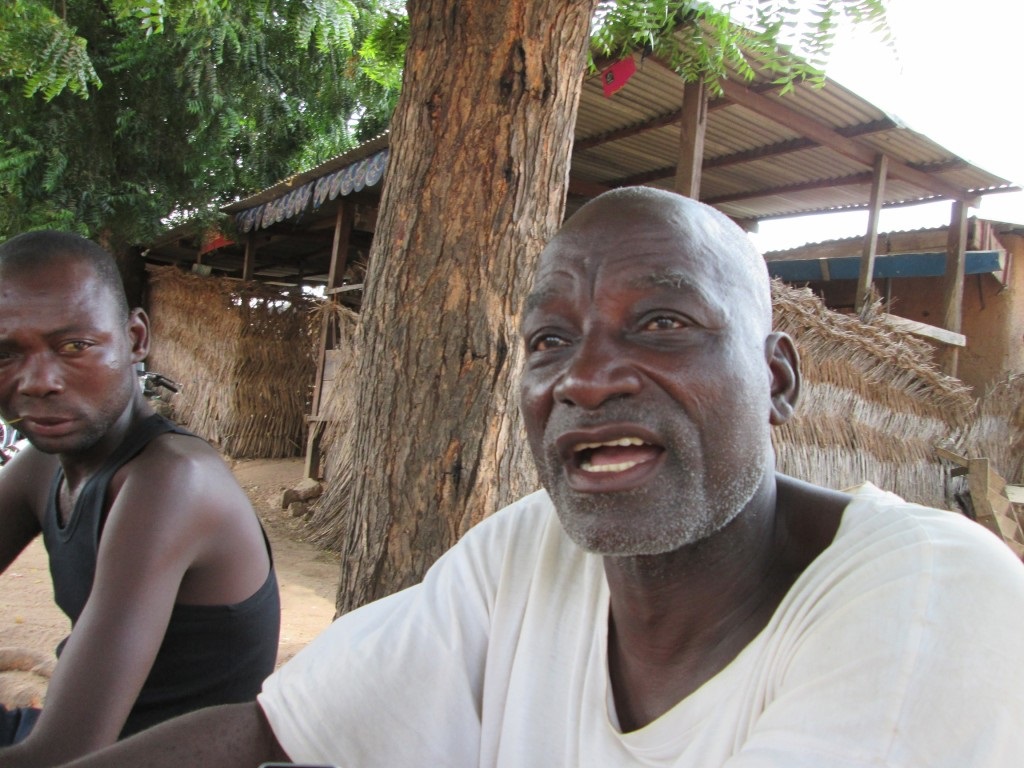
“If the government would allow these killings to continue like this, it must be noted that the Niger Delta does not have monopoly of militancy, neither the Boko Haram,” he warns, because “the victims and their families are all human beings with blood flowing in their veins. What is building up in the minds of people here on the upper plateau is what will take the Federal Government a lot of time to contain if it explodes.”
For now, Choji and co. have been quietening aggrieved Berom youths only because the prospect of raising a generation of militants is not exactly fascinating. With children and youth observing the appalling daily butchery of their friends, families and classmates, a full-blown militant response will be inevitable, sooner or later.
“All the villages are surrounded by mass burial grounds,” he says, “and I am telling you that this is sending a serious dangerous signal to the Federal Government, because by the time you push these people to the wall, by the time the Berom people react, Boko Haram and Niger Delta militancy would be child’s play.”
‘THERE WILL BE CONSEQUENCES’
Choji warns: A full-scale crisis is brewing
Halting years of Niger Delta insurrection and guerrilla warfare that undermined the country’s oil production capacities and resulted in the approximately 2,500 deaths took the Federal Government almost two decades, with President Umaru Musa Yar’Adua’s introduction of the Presidential Amnesty Programme for militants in 2010. Meanwhile, Boko Haram, an Islamist sect, has been attacking state officers, security agents, Christians, students and other public-interest targets since 2009, killing more than 10,000 people.
How long it will take for the patience of the Berom to peter out, Choji cannot say, but he knows “it will be in a very short while”. And this full-scale conflict, when it erupts, is one he believes his people will win — resoundingly.
“I am telling you [that] the Berom people have never been conquered, right from time immemorial,” he boasts. “And even though the Federal Government is watching, we cannot be conquered, because we are true descendants of our progenitors. We inherited everything from them.”
A VILLAGE WITHOUT ITS PEOPLE
Danladi… biding time to run away from Kukah
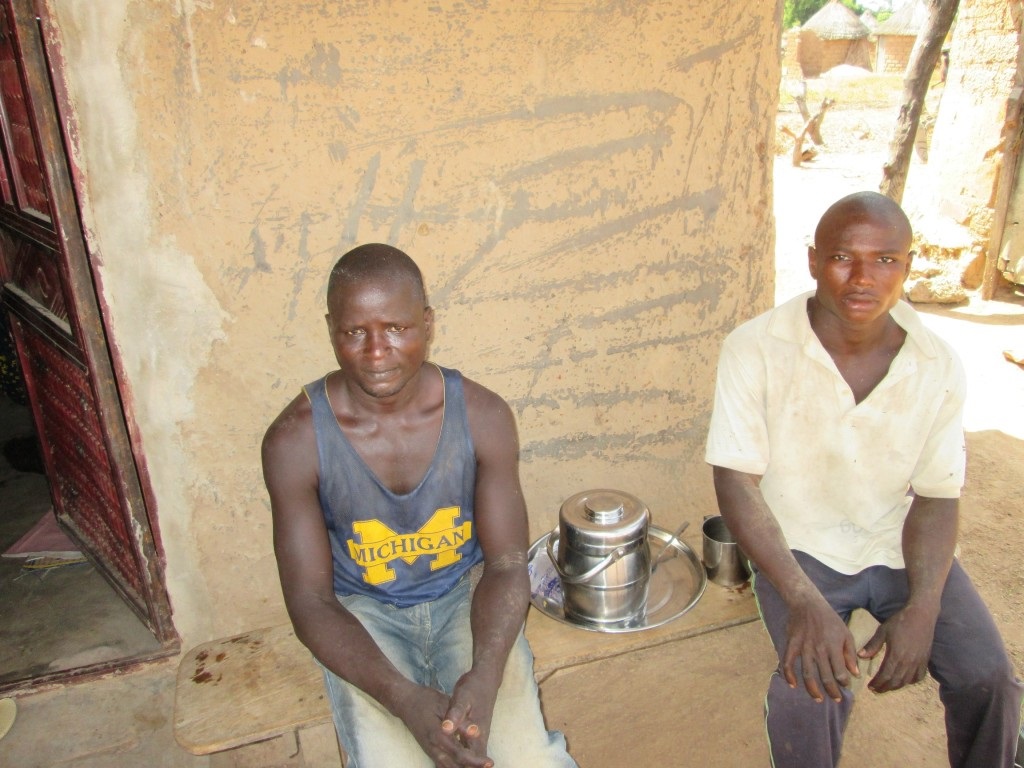
“My name is Danladi Pasayashi,” he introduces himself slickly, evoking memories of Daniel Passarella, the legendary captain of the Argentine national team that won the 1978 FIFA World Cup.
At 63 and having lived in Kukah Village for nearly half of those years, he considers himself an authority on its matters. And he says never has Kukah been this desolate. In all, 21 villagers were murdered between April and November 2013. But since the latest assault three months ago, there have been mass exoduses by people who believe that since government gives no hoot about them, it is only a matter of time before they are slaughtered. Now, a village once inhabited by more than 5,000 people is left with less than a hundred.
This mad rush to leave, he explains, has been kindled by the reluctant acceptance of the military’s inability to match the attackers, either for number or for sophistication of weapons. For example, in the operation of November 27, 2013, which began at about 4am, nine soldiers had the unenviable task of curtailing an invasion by more than 300 attackers. So, rather than fight, they retreated, watching helplessly as buildings were razed, five people were killed, and many were injured.
“I was in the farm at the time when I started hearing gunshots,” Danladi recalls. “When I ran home, I saw that many houses as well as the yam market had been burnt. The attackers were firing gunshots with engine machine guns, Ak47, and G3. I saw them. There was nothing nine soldiers could have done.”
The attackers did not flee until soldiers from Serkin Kudun intervened to bolster the initial nine. Well, the villagers have since been proving they can also flee.
“People are just fleeing this town now, especially since there was no response from either the state or federal government on this issue,” says Dandladi, who is himself only biding his time in Kukah. “Even those of us left here are just waiting to leave. We are appealing to the Federal Government and the Plateau State government to look urgently into this matter, because Fulani people are still grouping with Muslims to launch another attack on the remaining Christians here.”
CHILDREN AND WOMEN EVACUATED
Obadiah and Rotji to abandon Kukah in January
In the compound of Obadiah Bolka — his nonagenarian grandfather, Abednego Nana and 22-year-old brother, Chorbis Nanan were killed — inhabited by more than 100 people at the turn of the year, only five remain. “Those of us living here in the village are feeling the killings very hard,” he says. “We had to evacuate all the children and women outside the village.”
Since the killing of his grandfather, the only great grandfather in the entire village, everyone in the compound suddenly developed the insecure feeling that they had been spotlighted by attackers. By the end of January 2014, he is sure, no one will be left behind in the compound.
“We are only here to harvest our leftover crops,” he reveals. “If government continues to ignore us, all of us will run away in January. And in our compound, we have already concluded that government will not come to our aid.”
The forced emigration of about 4,500 people from Kukah Village in less than a year can be a mini-model upon which to estimate the annual emigration and displacement of people from the villages of Plateau in 2013, and in preceding years. Luckily, the National Emergency Management Agency (NEMA) already saved the public the mathematics. According to an April 2013 report signed by Abdulsalam Mohammed, its North-Central Coordinator, 11,434 people were displaced in Wase and Bokkos Local Governments by communal killings in the previous month.
In a second report the same month — compiled in cooperation with the Plateau State Emergency Management Agency (PSEMA), Nigerian Red Cross Society, Nigeria Police Force, and the Nigeria Security and Civil Defence Corps (NSCDC) — NEMA said 12,051 people had been displaced in Barkin Ladi, Riyom, Bokkos and Wase Local Governments.
“Most of the displaced persons were found to be women and children while the men had either been killed or [had] run away for safety,” states a part of the report, which names churches, mosques, schools, health centres, market squares and palaces of traditional rulers as places where camps have been erected for the victims.
TERRIBLY BAD NEWS
With her decades of community engagement experience, Victoria Ohaeri, Executive Director of non-profit human rights organisation, Spaces for Change(S4C), understands that the trend of displacement and emigration from Plateau State portends serious consequences for the security and socioeconomic stability of the country.
“These displacements increase the ease with which youths can be recruited as insurgents,” she says. “And for an already-insecure northern region with a dense population of unemployed youths, these displacements are terribly bad news.”
It is equally terrible news for a country with a youth unemployment rate officially believed to be 54 per cent, but which, according to Ohaeri, grossly underestimates and contrasts the reality on ground. To add the displaced from Plateau to this rate is a regression the country can ill-afford.
PLATEAU KILLINGS STOKING RESTIVENESS IN THE NORTH
“These displaced persons have been stripped of their sources of livelihood, so they have so much time in their hands to engage in criminalities,” she says. “We all may ignore the tragedy going on in Plateau, but no one knows who the next victim of the resultant criminalities would be.”
For the governments of the adjoining states of Bauchi, Kaduna, Nasarawa and Taraba, where the hordes of Plateau emigrants are thronging, there is an impending resource stress, particularly housing.
As Ohaeri notes, Nigeria currently has a deficit of 17million housing units, meaning 17 million houses are still required to adequately accommodate all of the country’s population. “Now, when you have these hundreds of thousands migrating from Plateau elsewhere, there is clearly a housing stress for their host communities,” she says, “and there is little to suggest that these host states have the resources to accommodate the emigrants.”
These are fears that Daniel Zitta, a displaced person from Kadarko Village in Langtang Local Government, confirmed earlier, saying: “We are 10 in a single room.”
There is again the risk of sexual crimes against women fleeing from danger zones, as they are likely to be held back in unsafe locations. “Displaced women are usually at risk of rape and other forms of sexual assault,” Ohaeri adds. “A number of displaced women who slept in primary schools after the demolition of Makoko in Lagos were raped. It is too early to forget those girls who were raped in Markurdi, Benue State, at officially designated relief camps for displaced victims of flooding.”
By failing to curtail the killings, Plateau State is as well implicitly stripping itself of its resources, courtesy of a shrink in revenue-generating opportunities, from business to tourism. In his piece, The Cost of Jos Crisis, Olisemeka Obeche of The Economy notes the damage to “economic life and social activities”, with tens of industries shutting down and the leftovers operating at “less than 10 per cent of installed capacities.” He writes, too, that “an ominous, dark cloud hovers over the tourism industry” — a huge revenue earner for the state.
Although there is an overwhelming misconception about the parts of the state affected by the killings — attacks are mainly in the villages and not in Jos city as widely believed — the idea of Jos or Plateau State as a whole is generally repulsive to potential investors.
The importance of all these pecuniary factors pales in comparison to other factors that will certainly define the future of Plateau State, as underscored by Gad Peter, Director of Centre for the Advocacy of Justice and Rights (CAJR).
“…children are the future of the society”, Peter said in April 2012. “But we are gradually producing a generation of children that knows nothing about peaceful co-existence, value for human life, respect for law and order.”
That, in blunt terms — and as Daniel Choji frankly suggested — is why Plateau is sitting on a keg of gunpowder.
Blood on the Plateau is a five-part series. This is the third in the series. You may read the first here and the second here.
The Public and Private Development Centre (PPDC) is set to launch ‘Budeshi Waka’, a documentary on the numerous abandoned government projects across the country.
Budeshi Waka is a product of a series of investigative reporting and monitoring of projects awarded by the government, many of them merely ‘completed’ on paper, while residents in the host communities groan in pain and misery.
The PPDC is a civil society organisation whose major objective is to make public procurement as transparent and corruption-free as possible.
This it does through its website: www.budeshi.org, where it publishes details of all contracts awarded by the various ministries, departments and agencies of government, as many as were made available to it through the Freedom of Information (FOI) Act.
Budeshi Waka documentarywill be launched soon but in the meantime, you can watch the trailer below:
Nigeria is seriously lagging behind in a number of important subjects that connect humanity with the basic necessity of life. One of such is the conservation of nature. Several African countries have now overtaken the ‘Giant of Africa’ and courted more partnership and support from foreign countries for the conservation of their resources.
In the nation’s history, the Nigerian Conservation Foundation (NCF) has made strides in its conservation mandates as set out by the founding members. In fact, the Cross-River Gorilla was first discovered by NCF through breath-taking adventure and value-adding research.
The organisation has also recorded success in the establishment of several protected areas (PAs) and it is also credited with putting together the first draft of the Endangered Species Act of 1985.
Much recently, however, I have observed with utter dismay the loosening tentacles and failing grasp of NCF on wildlife and wild places in Nigeria. It seems to have relinquished position to fledgling but vibrant non-governmental organization (NGOs).
Is the foremost NGO deliberately ceding grounds to other upcoming environment-based NGOs? Are other competing NGOs stifling vigour out of NCF? Or is there any method (strategy) in the madness of taking the back seat in ecological research, species conservation, tree planting etc. and occupying the pages of newsprints with events? Certainly, to be eventful is never to be equated with fruitfulness.
Perhaps the expiry implication on products holds true for ageing conservation outfits in Nigeria. This is as seen with the defunct Savannah Conservation Nigeria and other redundant NGOs. It now seems there is a shift in focus — loss of focus possibly — from the old practices of gaining new grounds (nature conservation) through meaningful community interventions, basically to media conservation or ‘yahoo yahoo conservation’, or conservation within the office environment.
I have struggled to reconcile the media hype that attends conservation news with the actual field practice. In this age of unrestricted access to online facilities, it is a known fact the ‘Yahoo Boys’ (internet fraudster) take advantage of the online media to hoodwink and to defraud by plying non-existing supplies for financial benefits. Non-performing political office holders could also be portrayed in exaggerated hue and colour in the media to score cheap political points.
The misleading claims by some state governments of planting several million trees when in actual fact only 2, 000 trees were planted is also worrisome. Regardless of who may be involved, the common denominator is that of scoring cheap points or benefits through media duplicity.
Expectedly, the society criminalises ‘Yahoo Boys’ who, by mere sitting in the comfort of their rooms, fleece unsuspecting members of the public of their hard earned money, while ‘Yahoo Yahoo Politics’ and ‘Yahoo Yahoo Conservation’ are pomped and celebrated. Which is the worst crime?
For the sake of convenience, I have chosen to define Yahoo politics or conservation as (1) the method that brings undue benefits to the actors by gorging potential victims into investing trust and substance into false positives; (2) opportunistic approach to prosperity with the intent to deceive; (3) media nuisance without verifiable substance.
A recent visit to NCF left me wondering wild if I was in a market place or an audition venue as visitors trooped in to see monkeys and catch some fun with music blaring to the fantasy of visitors (a serious violation of conservation ethics and animal rights). Possibly, this explains why NCF is winding up activities in other parts of Nigeria to focus on “crowd control conservation” in Lagos — a money-spinning “ecotourism” venture.
As a not-for-profit establishment, the success of the organisation is based on how well it accomplishes its philanthropic missions and not on the lucre of tourism. Otherwise, it would be necessary to take-off the nonprofit toga and chameleon into a full fledged commercial venture.
Visitors’ willingness to pay entry fees is no less encouraging, as others, including myself, had to pay between N1,500 and N1,000 as entry fees. I should not speak for other visitors, but I see the frequent payments, apart from being a member of the foundation, as my personal support to nature conservation in Nigeria.
Truth be told, the media movement makes the world go round and is fashionable, but there must be an intercourse between the level of work done and media publicity. For example, universities don’t feature regularly in the news but everyone knows they are working to impact the next generations of leaders with relevant knowledge and skills.
I am still very much convinced that real work done either by the politicians or nature advocates can speak for itself rather than banking on the parallax of media stunts. Conservation journalism owes the public the onus of honest reportage so that achievements in nature conservation can be assessed without the prejudice of Yahoo politics where lies or partial truth are manufactured under the guise of political correctness.
It is not too late to get back on-track and shake-off the lethargy of ‘YahooYahoo conservation. Yes, NCF’s back should not be allowed to rest permanently on the ground!
Let the stakeholders rejig the consciousness of the organization as the face of conservation in Nigeria so that the parable of the living dog and the dead lion will not be true of NCF.
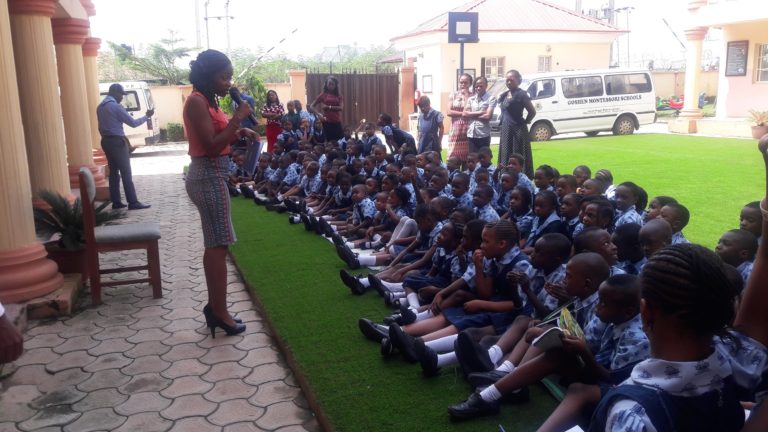
As part of its objective to groom a safety-conscious generation, the Safety Chic Project has concluded its nationwide safety tour, which began on September 28 and ended on October 12.
The Safety Chic Project is the brainchild of Ulomka Multi Solutions Limited, an organisation focused on raising safety consciousness among young people as part of its Corporate Social Responsibility (CSR).
The project entails school visitation to teach young people about health and safety, with the aim of boosting Health Safety Environment (HSE) advocacy and increase awareness.
A book titled ‘The Adventures of Muna’ was also launched as part of the project. Authored by Ugochi Obidiegw, the book is designed to introduce and teach kids safety tips through stories and relatable characters.
The training kicked off in the south-west, at Topflight College, Ifako, Lagos State, and continued at the Pro Labore Dei, Ibadan.
Similar training exercises held in Abuja, with a book reading session held at Christ Chosen Group of schools and Beth Zatha Academy, both in the Gwarinpa area of the FCT, and another at Goshen Montessori School, Kubwa.
Book reading for pupils of Immaculate Conception primary School, Abakpa Nike
In the south-east, three Local Government Areas were visited in Enugu State. Book reading sessions held at Immaculate Conception Primary School, Abakpa-Nike and New Haven Primary School 2, while the safety training took place at St Luke’s College and St Cyprian’s Girls Secondary School, both in Nsukka.
Training sessions were held at Government Secondary School, Abakaliki road, and Abakpa Girls Secondary School, respectively.
A special session was also held for street kids in Enugu, in collaboration with the Straight Street Initiative.
“I have been teaching children safety skills mostly in Lagos,” said Ugochi Obidiegwu, Managing Partner of Ulomka Multi Solutions Ltd.
“I wanted other children in other states to benefit because this knowledge is necessary for all kids irrespective of their locations, hence the plan to visit a few states representing different zones. There’s still so much work to be done but this is a start.”
Members of the Senate Committee on Ethics, Privileges and Public Petitions have criticised the Economic and Financial Crimes Commission (EFCC) for refusing to unfreeze two bank accounts belonging to Patience Jonathan, wife of former President Goodluck Jonathan.
The committee said EFCC has no right to still deny Patience access to the accounts since the court order directing the freezing of the accounts had long been vacated.
The lawmakers said it was wrong for the EFCC to notify the banks of the court judgments freezing the accounts but refuse to write the banks when the freezing order was lifted
“The EFCC cannot take someone to court, and then be the one to serve the bank,” said Obinna Ogba, a member of the senate committee.
“The EFCC is not the judiciary, the judiciary is separate. That is why there are people engaged as court bailiffs.
“Mr. Chairman, I think you need to give a definite instruction for them to open that account now because this bank has no business freezing that account.”
Ogba also accused the banks of taking advantage of such orders to trade with customers’ frozen funds.
Similarly, Mao Ohuabunwa, another member of the committee, wondered why the banks were still refusing Patience access to her accounts.
“Why you responded to that instruction [to freeze the accounts] was because there was a court order,” he said.
“And now you have an evidence to show that the order has been vacated. Then, somebody [EFCC] is now writing you a letter (notice of appeal). On what basis are you basing your actions?”
Sam Anyanwu, Chairman of the Committee, faulted the process whereby the EFCC, rather than the court bailiff, serves the bank copies of court judgements.
“The court bailiff should be the one to serve the court order and the bank should sign for it,” he said.
“It looks as if they [banks] are taking the advantage. The money is available to you [banks] and you are trading with it.”
Anyanwu specifically condemned the decision by Stanbic IBTC Bank to freeze an account linked to Finchley Top Homes Limited, one of the firms affected by the court order, while the account itself was not listed among those to be frozen.
Officials of the bank explained that though the two accounts had been linked, the second account was only frozen because it had not fully complied with the ‘Know Your Customer’ requirements of the Central Bank of Nigeria, and not by any court order obtained by the EFCC.
Anyanwu replied: “We will like to have the statement of the accounts and the mandate cards of the accounts. Then, of course, you said there was a KYC issue on it; the committee will decide on what to do about that.
“If you can implement the EFCC directive, I think you should implement the directive of the Senate. The EFCC is coming on their own but this one (second account) has no impediments; it must be opened. That account must be opened because there is no encumbrance. There is no court order on it.”
The Delta State police command says it has arrested four people in connection with the kidnapping of four British nationals in the state.
However, Andrew Animaka, the state Police Public Relations Officer, said the whereabouts of the kidnapped victims are still unknown.
The Britons, including a husband and wife, were abducted on Friday in Delta State, where they had been providing free medical treatment to locals.
“We are following up on a lead with the arrest of four persons in connection with the incident,” Animaka said. “The suspects are currently in the custody of the state police command in Asaba and are rendering useful information. I can assure you that we are on the heels of the abductors.”
The Police suspect that armed militants, who have attacked oil and gas pipelines in recent times, are behind the kidnapping.
Intelligence sources said the Britons are believed to have been taken to militant camps in the creeks and swamps of the delta.
British diplomats in Nigeria have refused to comment on the abduction.
EDITOR’S NOTE: This piece was first published in 2013 by Flair Nigeria. The ICIR is reproducing the five-part series in the light of the resurgence of killings in Plateau State, to help readers understand the genesis, depth, brutality and possible solutions to violence in the state.
In the second of this five-part series, ‘’FISAYO SOYOMBO details the pains of families of victims, how they have carried on without their loved ones, and how the killings have altered their perception of life.
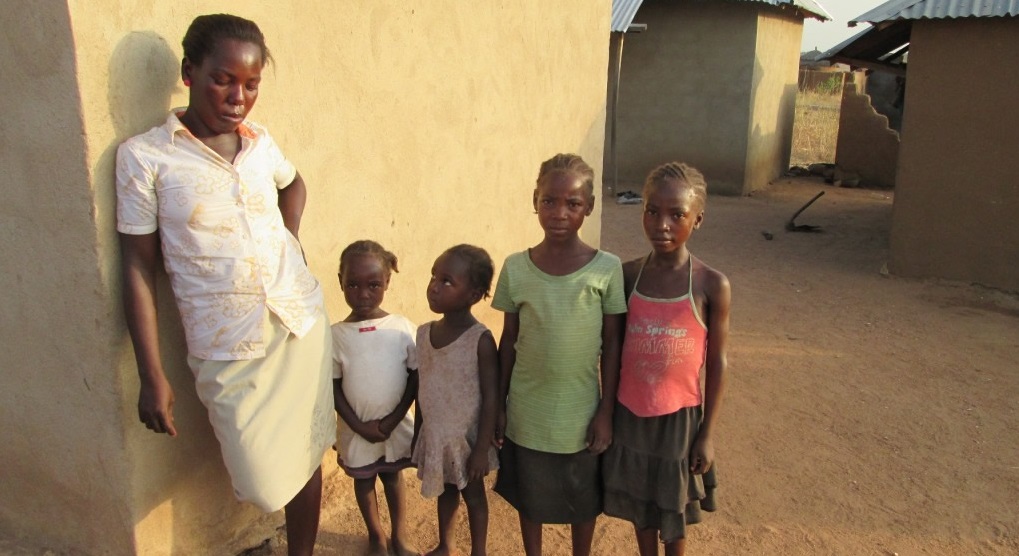
This is the first — and only time — in 11 days that the recorders roll for minutes and everyone is mum. It’s in Tatu Village, in Jos South Local Government (9°48′00″N 8°52′00″E), where little Blessing, the interviewee, is the only survivor of a near-successful extermination of a family of six.
The 10-year-old might as well have been killed alongside her father, mother and three siblings, but on the night of the attack, November 26, 2013, she slept in a relative’s house inside the same compound. While Blessing escaped unhurt, Yob Eliha her host and a widow, survived with burns around her shoulder. Meanwhile, Yop Yakubu, 49, a second widow in the compound, was murdered.
“We don’t know where the killers came from,” Blessing’s aunt, 26-year-old Hanatu, who now looks after her, says of the attack. “All we know is that they forced their way into the compound some minutes after 11pm, and began firing gunshots indiscriminately at the house.”
SHOT IN THE CROTCH
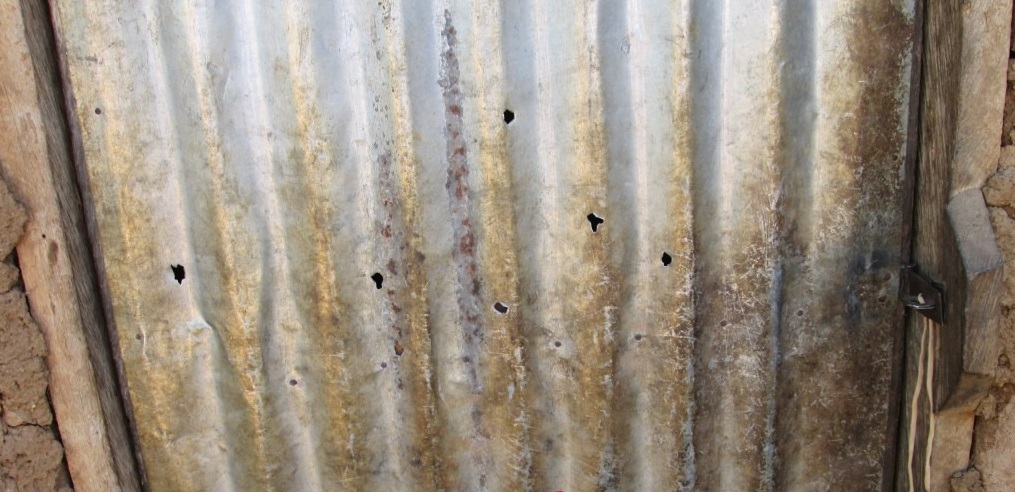
The bullet-riddled house where Blessing’s siblings and parents were killed
Clad in a mangy, loose-fitting robe, Blessing looks away from the camera for the most of the interview, her face contorted by anguish too weighty for her infantile shoulders. She still covets the return of her family. She hopes to have them back with her someday — a day she occasionally asks her aunt to reveal.
“Sometimes, Blessing asks me if her parents and siblings are still coming,” Hanatu says, intently locking eyes with the girl as though picking the words from her nondescript eyes. Hanatu herself buckles while the words slip bit by bit, her voice quivering beyond concealment.
“When she does, I tell her they won’t come again,” she continues, as her voice relapses into a second spell of tremble, this time thinning out like a lit candle running out of wax. Then she stares blankly into space, absentmindedly fiddling with her fingers. Everyone watching understands: her despair knows no bound.
She knows there is no chance any member of Blessing’s family would return. They are all dead and buried. And they never quite had a chance: her father, Davou Yakubu; mother, Yop Davou; sister, Serah Davou (14); and brother, Timothy Davou (12) all suffered multiple gun wounds. The last, Felix Davou, who was only four months, was shot in the crotch. So, really, the possibility for survival never quite existed for them; and Blessing, now in Class Five, will have to accept the austerity of life without the people in whose trusted hands her life began.
‘THE QUEEN OF SORROW’
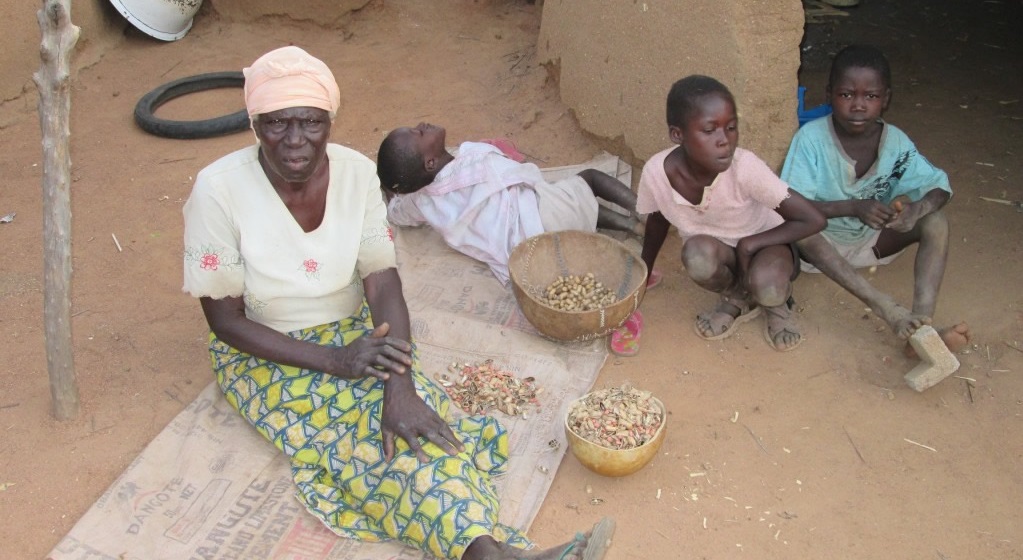
Vongchak: A life of sorrow
“Since my son died, I have been unhappy,” Nandir Vongchak, 80, says. “My life has been filled with sorrow, and this has brought perpetual illness upon me.”
With that, Vongchak synopsises her misery since the killing of her son in June 2013. Nothing about her demeanour suggests otherwise. No smile. No giggle. No semblance of hope. Face stony and carriage emotionless, Vongchak unhurriedly de-husks groundnut borne by two calabashes on the floor. That is how she keeps company every day, waiting till the hour when mortality will terminate memories of her slain son.
“On that day, my son came in from his theology school to greet me,” she recalls, for once paying heed to something other than the two calabashes. Clearly, the groundnuts are her most valuable possession, the source of livelihood for her and the three fatherless grandchildren whose upkeep has now become her responsibility.
After mother and son exchanged pleasantries, son made for his groundnut-and-maize farm in Zamchang, a village in Wase Local Government. On his second day on the farm, he was hacked to death. According to Vongchak, it was a maliciously-intended killing.
“They killed him purposely,” she says, “not that the killers were robbers or that they wanted anything from him. His life was all they hungered after.” This, she is convinced is the intention, because “Wase people do not want to see Taroh people around them. That is why they are hunting and killing Taroh people.”
Vongchak considers it a shame that having been racing away from “Wase people” for much of the last decade, she has finally stumbled. After sacrificing her land in Wase, she was unwilling to sacrifice anything else — especially not her son. Now resident in Dipbong Village in Langtang Local Government, she laments the consequence of her son’s death on the survival and education of his children. Pro tem, she puts up with proceeds from the family’s groundnut-and-bambara nut farm. But she reckons the farm’s support for livelihood will be ephemeral, given its size.
“Land available for farming over here in Langtang is inadequate,” she says, raising her head to let slip a luxuriant patch of white hair on her skin. “So we are just managing. We need help to guarantee the survival of my grandchildren and their education.”
BECOMING A MOTHER WITHOUT COPULATION OR CONCEPTION
Grace: Missing our dad is not funny
Grace Nansoh hates to remember her father who was slain at 50. Of course, she has fond memories of him. But when she remembers him, she misses him sorely — a “punishing” activity she refrains from engaging in. She also knows that missing him will not restore his snuffed life; she understands it offers nothing more than temporary escapism: it won’t ease her pains; it won’t lessen her burdens.
“We don’t want to miss our dad; but actually, we miss him,” she says in a low, mournful tone, tenderly whirling the length of her arms round her four siblings positioned two aside.
These four children — aged 15, 10, 8 and 7 — are her latest encumbrance. As their mother is unemployed, Grace it is who must now feed and clothe them. It is her worry how the quartet will continue their education, how they will survive. Overnight, Grace has become a mother — without copulation, conception, or childbirth.
All four must continue schooling. One who was already tottering on the brink of expulsion recently regained his place in class after his mum ran far and wide for help, and returned with just enough to clear his mounting school-fee debt. To help her siblings out, Grace’s education has been stunted.
“I wrote my SSCE [Senior Secondary School Certificate Examination] last year and I am seeking to further my studies,” she enthuses. “But I am bereft of help.”
And after her mother’s frenzied and frantic struggle to pay her younger brother’s fees, she won’t compound her woes by talking about her own school. She says her mother has her sights on a trading business but she is hampered by finance. While her mother may “not have the means,” Grace believes “God will provide for her.” If only her dad was still alive…
“It is painful that I lost my dad, who left six children and two wives behind,” she laments. “My dad was very helpful to us. Since he died, we have been managing. We seriously miss our dad.”
A speck of tear appears on her right eye. She dabs it and then lifts her head with sudden equanimity and confidence, saying, “We take it that God has said that this will be the end of his life.”
Now, Grace is subjecting herself to the very circumstances that forced “God” to declare the end of her father’s life. That is the stark interpretation of still cultivating the family’s farm in Wase, that same farm where her father was shot, butchered and roasted to death. It is a danger she concedes, but she does not know the worse danger: death by hunger or death by the bullet/machete.
“My dad planted maize and rice on his farm in Wase, so we still go there to harvest it,” she says startlingly. “We are afraid for our lives but we have to do it for our own good. If we leave the crops there to rot, who will feed us? We have to surrender our lives to do it so that we will not die of hunger.”
FROM MARRIAGE TO WRECKAGE
Widowed and lovelorn: Laruba (L) and Rebecca (R)
Saturday October 5, 2013, is a blissful day for Istifanus Sati. The day begins with frenzied merrymaking inside the sprawling family compound in Ket Village, Barkin Ladi. A speaker blares varied genres of Hausa music to an animated audience, many of who down bottle after bottle of beer, smoulder and inhale stacks of cigarettes, and gobble local dishes. It is generally a joie-de-vivre atmosphere. Sati, 26, has just taken a wife — a tender, impressionable 19-year-old whose beauty is just unfurling.
Fast-forward another five days, and Istifanus’s life is turned on its head. In the wee hours of Thursday October 10, 2013, unknown gunmen invade their compound and begin to shoot indiscriminately. Everyone scampers but not everyone escapes. Istifanus, one of the unlucky two, is felled by two bullets, one in his right thigh, and the other in his left leg. It is a grating interruption to his five-day-old marriage; and his wife, Rebecca, has all too soon been tested with the for-better-for-worse marriage axiom.
“My husband was shot five days after we married,” Rebecca says with a wry grin. “I am just feeling bad, because they did not allow me to enjoy my husband. The bonesetters have said he will walk again but when, they themselves do not know.”
After a little over a week at the Plateau State Hospital, Istifanus relocates to Rawhol Kasa, where traditional bonesetters have been working on his legs. “I have spent about N55,000 on treatments,” he moans, “and I have only seen my wife a few times since the shooting.”
Istifanus’s father, 55-year-old Sati Yaroh, was even unluckier, giving up the ghost after suffering gunshots in the neck and the waist. His mum, Laruba Sati, is inconsolable: her husband is dead, her son is down-and-out, her daughter-in-law is forlorn, and the education of five of her seven children is in jeopardy. Life, she says, is now cheerless.
Laruba: Idle, helpless, hopeless…
“Since I lost my husband, I have been sick,” Sati laments. “I am idle, helpless and hopeless now.” Her hopelessness, she says, stems from the arduous task of funding the education of five of her eight children who are in school. She doesn’t see herself making a success of this challenge.
“There is no other means by which I can support their education now that my husband is gone,” she adds, tears of regret welling up in her eyes. “When my husband was alive, he trained the children; he paid their school fees; he took care of me whenever I fell ill; he did everything. But now, everything has been thrown into disarray.”
The only child who would have been assuaging her worries is the same one languishing at the bonesetters’. “The only boy who was supporting me is the one whose legs have now been broken. Isn’t it clear that I am finished?” she yelled into the air, querying no one in particular.
MADNESS AND DEATH BETTER THAN LIVING
Serah: Ready to surrender her life to have her slain family back
“When I think about it, I feel like it is better for me to die than to live without my parents and my siblings.”
On word count to interview time ratio, Serah Dung scores least of all victims of Plateau killings who agreed to voice their feelings. But this is a record that will be immaterial to her, considering that life, itself, has lost its importance. Whenever she remembers her slain family, death is the only elixir that crosses her mind.
Serah had left Kungte Village in Jos South Local Government in the morning of Saturday August 31, 2013, only to be welcomed home in the evening by the corpse of five of the six people she left behind. She did see and examine the corpse of his late father, but that was just the farthest she went. All five corpses had been assembled at the “front of the house” but she was too distraught to look.
“They shot my father in both legs, in the chest and in the forehead,” she recalls, her breath multiplying in intensity. She averts the camera, patently at the return of mental footage of the blood-soaked bodies. “I didn’t really look at the corpses of my mother and my younger ones.”
Serah continues to miss her father, Peter Dung; mother, Rose Dung; and siblings Sati (20), Teiyei (17) and Samson (7), even though his father has three more children from a second wife. “I feel bad … like it is better for me to die because…,” she says and then stops momentarily. A tenuous attempt to complete the sentence ends in tears, a gush of tears that bring the interview to an abrupt close.
Of Serah’s preference for death and Solomon’s battle with madness, it is hard to separate the worse. But what is easy to decipher is the similitude of their pains: both have lost dear relatives, and both are inclined to think there has to be an insane or immortal remedy for their agony.
Like Serah, whose only surviving nuclear kinfolk is her sister, Solomon Pagyang Gwom of ket Village in Barkin Ladi is left with a solitary brother. All others, as well as his parents and his nephews, have been eliminated in an attempted annihilation of his family.
On Thursday October 10, 2013, his septuagenarian father, Pa Tsok Gwom, was killed in the company of his wife, son, daughter in-law, two children and two grandchildren. In all, eight members of the family were wasted in one night. Losing them all in one fell swoop could truly be maddening, so Solomon must be helped before he runs mad.
Solomon… teetering on the brink of madness
“All of them were in their rooms when they were killed,” he recollects through an interpreter, his face tightening in a stirring revelation of anguish. “They shot my father in the knee and in the ribs. They shot his wife in the rear of the head. They shot my brother in the ribs, while his own wife was shot in the head. All others were shot in the head.”
Solomon’s methods of conveying his sorrow are mannish. No tear. No abrupt end to the interview. No shying away from the camera. But it is clear he is not less bereaved than the many others who have lost their kinsmen. He stares stonily — almost blankly — face stationary, hands immobile.
“It really pains me,” the 30-year-old says, his entire body still motionless. “I am in pains up till now. I am still mourning.” These people who were murdered, he emphasises, are the people who were supporting him. And to lose them is cruel.
“I feel so lonely,” he adds, gnashing his teeth and squashing his lips against each other as though to say he has said everything in his mind. But he adds rather scarily: “Anytime I think about it, I fear I might run mad.”
AGONY EVERYWHERE
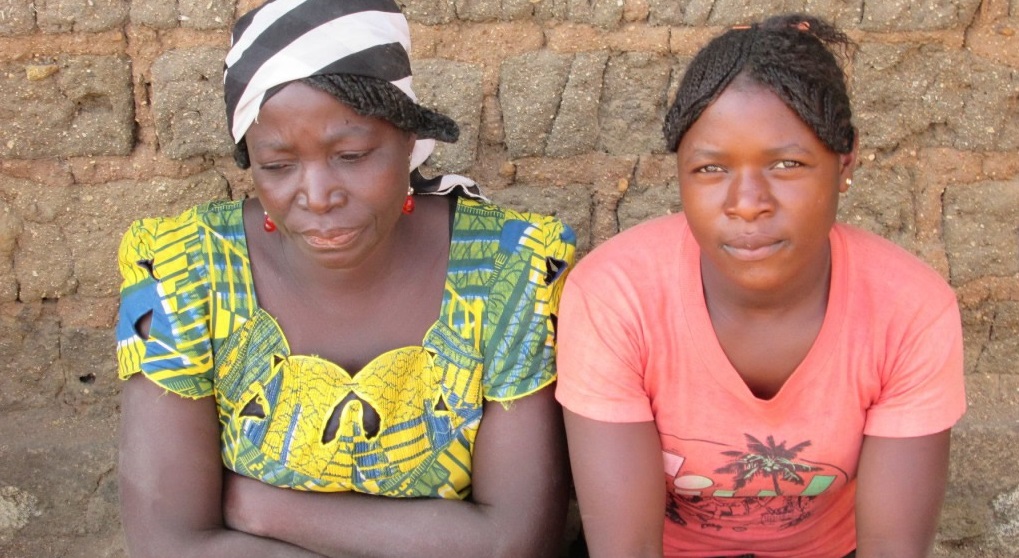
Lami (L) and Jumai (R)
“No! No!! No!!! You cannot leave yet,” a voice yells from deep inside the hut. “This woman in here says she is very hurt; she desperately wants to speak with you.”
Jumai Adamu, the woman in question, is the daughter-in-law of Marene Uttawal, the 105-year-old woman who was active on the farm but has been plagued by partial paralysis of her lower limbs since learning of her son’s and grandson’s murder. Uttawal’s losses are Jumai’s as well: her son and grandson are Jumai’s husband and son, respectively. No sooner had the interview commenced than her insistence on speaking became perceptible. Her husband, the only person she was accustomed to “talking with”, is gone. Now, the 40-year-old needs to talk to someone else, even if it’s a reporter — a stranger.
“Whenever I think about it, I lose my consciousness,” she says. “I no longer understand what I am doing. He was the one who helped us in the house. He took care of us.”
By “us”, Jumai intended herself and her husband’s first wife, Lami Adamu, 45, who — more Uttawal-like in orientation — was laconic. “I hate to remember that my husband is dead,” Lami lamented. “I feel sad every time I do. He was the one person I could talk with, so I feel so lonely.”
In addition to sharing in Lami’s loneliness, Jumai has yet to overcome the loss of her son. “To lose my son in the same attack is heartbreaking,” she adds, her effort to restrain onrushing tears futile. “It is difficult to forget it just like that.”
Although Jumai can take solace in mothering two other sons — Magit Adamu, 22, and Marion Adamu, 19 — beneath that blessing is another sting: successfully bankrolling Magit’s education at Government Secondary School (GSS), Gawarza, is an improbable prospect without her husband. “To pay his school bills, I take up menial jobs in the market, in addition to farming. But what problem will this solve?”
Hanatu: Back to the farm
Someone else with an identical plight in that same compound is 67-year-old Hanatu Sunday, whose son was put down few weeks before his longed-for commencement of fatherhood. This is a boy who, months earlier, promised Hanatu that her days of suffering on the farm were numbered. He had just finished building his house, and his mother’s welfare was next on the cards. So, for Hanatu, not only has her son’s life been ended, the then forthcoming end to her sufferings on the farm has been disrupted.
“The pain of his death is still jarring in my heart. I think about him all the time,” says the farmer of Irish potato, tomato, guinea corn and maize. “He just finished building his house and had not moved in when he was killed. He had assured me that very soon, I would stop farming. He promised to take good care of me.”
Hanatu further discusses the piercing pain of burying his son just before the birth of his baby. “His wife was pregnant at the time he was killed,” she says curtly, disseminating annoyance rather than sadness. “His killers didn’t allow him meet his baby.”
Nevertheless, she is grateful to now have a grandson, the reincarnation of his slain son. “My misery has been halved since his wife put to bed.” A glimmer of smile perks up her face, but it soon evaporates.
“I miss him very much,” she continues. “He used to advise me a lot. He was very strong on the farm. He often worked hard. And that is why since his death, we have made very little from the farm, so little that we barely survive.”
Elsewhere in the same village, Yakubu Maki — only a decade younger than Uttawal — lost his 20-year-old son, “his helper,” to the killers. So selfless was boy to father that a day hardly passes without the father remembering the tragedy.
“He was my helper, my messenger,” says Pa Maki. “He was the one who ran my errands anywhere, even outside the village. There is no single day that I do not miss him.”
WHEN A MAN CRIES
It is three months since Rotji Nanan has not known what he is doing. Since his father, Abednego Nanan Jilang, 90, and brother, Chorbis Nanan, were murdered in Kukah Village in Shendam, Rotji has yet to come to terms with returning from farm without anyone to banter with. This, he says, is the hardest-to-take upshot of their slaying.
“Since the death of my grandfather and brother, I have not been myself,” Rotji cries, making no attempt to impede the tears streaming down his cheeks. Why would he barricade the tears, anyway, when crying is what he does every day?
“I cry every day,” the 21-year-old resumes weepily, wiping the tears off his face, this time. “I am a very sad man. I am used to greeting my father and my brother every day when I return from the farm, but they killed both of them; that is really bad.”
A NARROW ESCAPE
Rose: God is in control
After Rose Iliya heard a boom, she blacked out. In a pool of her own blood, she regained consciousness at the Plateau Hospital. Only then did the images reconvene in her memory: an armed gang had invaded her house; one of them shot her in the pelvis; they thought they “got” her but they were wrong; she made a lucky, narrow escape. Only that all three children in the house on the night did not benefit from that luck; they were felled by the unknown men’s bullets.
Narrating the attack, Rose, 27, recalls that the killers broke into the compound, raining bullets on the first door. Seeing that no one cried, they knew they had drawn a blank. So, they moved to the next door, the parlour, where two innocently-snoring children were fired off.
“After that, they came into my apartment where one of my children was sleeping with me,” Rose says, her voice weak and her face bleak. “They shot my baby and shot me too, thinking they had killed me.”
In the four days that followed, she would spend more than N20,000 at the hospital. Afterwards, she has stuck with the doctor’s advice of dressing the wound regularly at a nearby clinic if it must heal fast.
“The leg is healing,” she says without the positive demeanour that should ordinarily accompany such news. In truth, there is little to be grateful for. Not only is her walk still wobbly, she is haunted still by the loss of three of her five children: Gideon (7), Jack (5) and Elia (10). However, she understands that she will have to move on sooner than later.
“To be sure, it is not easy to lose three of my children in one night,” she says. “I am just taking courage because I know [that] God is aware of what happened. Anytime I recall this incident, I lose my sanity momentarily. But the fact is that God is in control.”
BLOOD ON THE WALL
Inside the house of the Bulas in Rawan Neighbourhood, the walls tell a story. It is already six weeks that the walls have been visited with the most irreverent desecration possible, yet the blood patches refuse to fade, clinging on tenaciously as some sordid memento of the extermination of the entire Luka Bula family.
It happened on November 9, 2013. At a little over midnight on the day, some gunmen arrived to overrun the neighbourhood, located in Rawurum Village, Barkin Ladi — beginning from the Bula family.
“I started hearing gun shots at exactly 12:14am,” begins Dayak Solomon, 27, a neighbour who is himself lucky to still be talking. “But I could not come out because gunshots were fired at my door and at my window.”
Although he remained indoors, he monitored the siege on his neighbours, all ears. At the end, Luka Bula; his wife, Ladi Luka Bula; and five children were put down. A second neighbour lost two children, aged 11 and 8.
“After they broke into Bula’s house, I heard a baby scream ‘Mummy, mummy’,” Dayak adds with unimpeachable precision. “Subsequently, gunshots were indiscriminately fired all over the house.”
He expressed disgust that the crying child did not receive the sympathy of the killers, who continued shooting nonetheless. “They shot all of them. They finished their operation at exactly 1:05am,” he says, nodding assuredly as the words flew out. “Then they started calling one another. I heard someone say, ‘Milei, Milei, Mutari’. Then they went.”
Dayak admits that he does not know the killers. But having heard their voices. he “believes” they are Fulani. He laments that the attacks have become normal but wonders how long government would continue to watch as they die like “bush meat”.
“They killed Julius, who was five months old, placing a gun his mouth and shooting him,” he says almost casually, confirming his earlier statement that frequency of the attacks had grown to confer an element of normalcy on the deaths. “His intestine tore out. They shot the woman in the forehead. They scattered the penis of the husband, and destroyed him everywhere with bullets. This place was full of bullets; I’m sure they expended more than two magazines.”
But what ill have the people of Rawurum committed against the Fulani? “Nothing,” he exclaims. “Nothing, because we have never gone to attack them. Never! We are innocent people. We have wronged no one. The Fulani just come to attack us in the night. They have just taken us as bush meat that must be hunted to death.”
THE RICH ALSO CRIED
There are very few late Nigerian public office holders whose deaths can be remembered to have occurred during their service to fatherland. Gyang Dalyop Dantong is one.
More than 300 people in Riyom and Barkin Ladi Local Governments had been murdered by suspected Fulani herdsmen. On Sunday July 8, 2012 when 63 of those were to be mass-buried at Matse Village, Gyang turned up. It turned out to be his valedictory public appearance. Gunmen believed to be Fulani invaded the burial, and everyone scuttled. Even the soldiers fled. In all, more than a hundred mass-burial sympathisers were killed. Among them was Gyang, the senator representing Plateau North at the National Assembly.
His immediate younger brother, Rwang Dantong, thinks it is a death that could have been averted. “If there was peace, nothing like that would have happened,” says Rwang, a soft-spoken man who generally comes across as too calm to support the ongoing belligerence. “But I saw my brother as a sacrificial lamb to the Berom Land, a person who can die — and he ended up dying — for a cause to help his people.”
Rwang is happy with the equanimity with which his parents have dealt with the death. His 87-year-old father being a retired pastor, all members of the family have taken the calamity in their stride.
“All the way, we have been walking along God’s path. We have been relying on God’s biblical teachings to leave vengeance to him,” he says solemnly. “We completely accept my brother’s death as the will of God, because nobody can take the glory of God.”
If God didn’t allow it, he concludes, Gyang would never have fallen. “And since He allowed it to happen, He knows how to take care of us.”
to be continued…
Blood on the Plateau is a five-part series. This is the second in the series. You may read the first here.
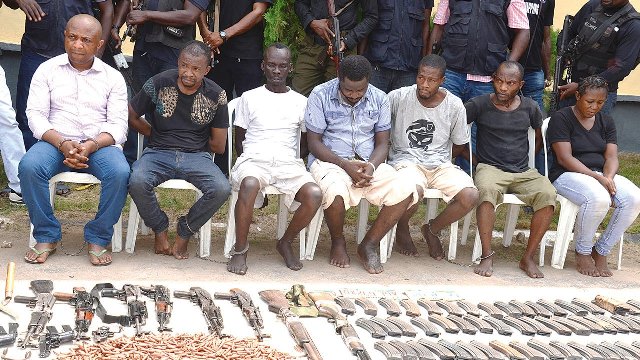
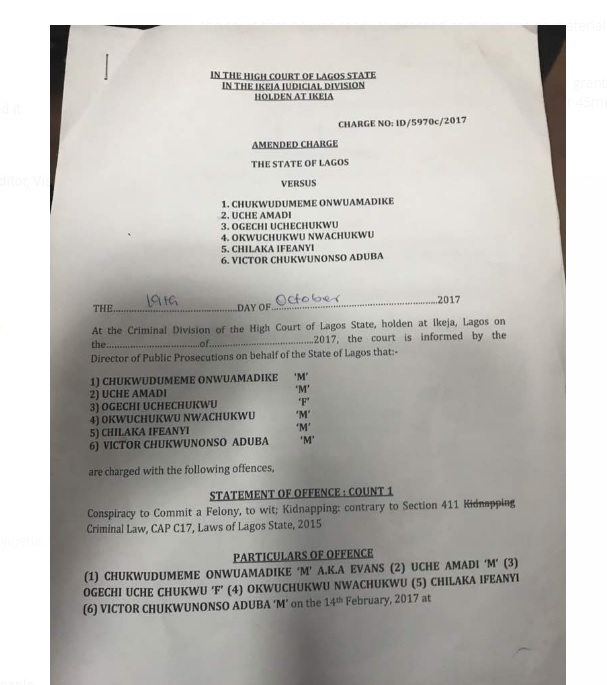
Chukwudumeme Onwuamadike, suspected kidnap kingpin also known as Evans, has changed his plea in the two-count charge of conspiracy and kidnapping brought against him, from guilty to not guilty.
Evans was accused of kidnapping one Donatus Dunu, who later escaped from captivity and made statements that led to Evans’ arrest.
Five other persons believed to be members of Evans’ gang were also arraigned in August.
When the charge was read to the defendants during their arraignment, Evans and the second and fourth defendants pleaded guilty to the two-count charges, while the third defendant, a female, and the fifth and sixth defendants pleaded not guilty.
However, at the resumption of hearing on Thursday, Titilayo Shitta-Bey, Director of Public Prosecution, Lagos State, informed Justice Hakeem Oshodi that the charges against the accused persons had been amended.
Shitta-Bey said the charge still remained that of conspiracy and the kidnap of one Dunu Donatus, but that the amendment related only to the punishment section for the second charge.
She urged the court to allow the defendants take fresh pleas to the amended two-count charge.
But Olukoya Ogungbeje, counsel to Evans, opposed the move for fresh pleas, saying that he had only just been served the amended charge in court and needed time to confer with his client.
He then asked the court to grant him a short adjournment so he could get a proper brief from his clients on how to proceed.
Justice Oshodi then stood down the case for 45 minutes to enable the lawyers confer with their clients.
When the hearing reconvened, the amended charges were read to the accused persons and all of them pleaded “not guilty”.
Following the plea, the prosecution counsel told the Judge that he was ready to proceed with the trial as three witnesses were in court to testify.
In August, after the arraignment of Evans, his lawyer had told newsmen that his client would change his plea to “not guilty” at the next court sitting.
Ogungbeje insisted that it was the police that coerced Evans to plead guilty to the kidnapping charges.
He said that since June when Evans was arrested and remanded, the police did not allow his family members and lawyers have access to him.
“It is settled law that plea of guilty must be made voluntary and direct devoid of any influence, coercion and manipulation,” Ogungbeje said.
“In the meantime, after our brief conferring with our client in open court, he made it known to us that he would change his Police motivated guilty plea to ‘not guilty’ at the next adjourned date.”