Home Blog Page 270

Katsina petitions WAEC, demands cancellation of English exam written by students at night

THE Katsina State Government has called for the cancellation of the West Africa Senior School Certificate Examination (WASSCE) English Language Paper 2 conducted by the West African Examinations Council (WAEC) on Wednesday, May 28.

The state made the call on Saturday, May 31, through its Commissioner for Basic and Secondary Education, Zainab Musa-Musawa.

Musa-Musawa was at the WAEC office in Katsina, the state capital, to deliver a petition containing the state government’s position on the examination. The petition was signed by the Permanent Secretary of the state’s Ministry of Education, Ummukhair Ahmed.

The ICIR reported how students were kept in examination halls in several states in the country by WAEC after the English Language they were to write leaked. Many of the students did not return home until midnight after they were forced to wait to write the examination at night.

The examination body apologised for the delay hours later, pleading with the students, their parents, and other stakeholders to forgive its wrongdoing.

It explained that the delay was part of measures taken to prevent examination malpractice, especially the leakage of question papers.

Addressing reporters at the WAEC office in Katsina, Musa-Musawa said, “Students had to write the examination at night without light until torch lights, handset lights, and security lights were provided.”

She also appealed to schools, parents, and communities to remain patient and await the outcome of the petition.

Gateway Games: Many dead in tragic crash involving Kano contingent

0

AT least 19 people, including journalists, athletes, and sports administrators, have died in a tragic motor accident involving the Kano State contingent returning from the Gateway Games which ended in Ogun State on Friday, May 30.

The fatal crash occurred as the team was returning from the national sporting event, and approaching their destination on Saturday, May 31.

In a social media post by a radio station in Kano, Premier Radio 102.7, the accident was said to have occurred in Dakatsalle Bridge, Kura Local Government Area when a bus carrying 35 members of the team plunged off a bridge. 

Similarly, a report by Daily Nigerian noted that more than 10 people sustained severe injuries in the accident. 

According to an official on the trip who spoke to the newspaper, Ado Salisu, the crash occurred at Dakatsalle Bridge in the Kura  Local Government Area when the bus hit a pothole and somersaulted.

Salisu said that 19 athletes and officials died on the spot, while two others later passed away at Kura General Hospital.

The 22nd edition of the National Sports Festival, tagged “Gateway Games 2025,” kicked off on May 16 and concluded on May 30, drawing athletes from across Nigeria to compete in various sports. 

The festival is Nigeria’s premier sporting event, designed to foster unity and discover emerging talents across the country.

The concluding part of the event had former Nigerian president Olusegun Obasanjo, the Senate President Godswill Akpabio, the state Governor Dapo Abiodun, and other dignitaries in attendance.

Efforts by The ICIR to speak with the Kano Police PRO Abdullahi Haruna and the Commissioner of Information Ibrahim Wayya on the tragedy proved abortive.

Mokwa flooding: Obi demands more support for victims as Sowore blames tragedy on government

FORMER presidential candidate Peter Obi has called on the Federal Government and other tiers of government in Nigeria to step up support for the victims of flooding in Mokwa, Niger State, which has claimed over 100 lives.

Obi made the call on Saturday, May 31, asking for prompt provision of essential relief, such as shelter, food, clean water, and medical care to those affected by the disaster.

“The scale of destruction is unimaginable – entire families have been displaced, livelihoods destroyed, and whole communities thrown into mourning. My heart goes out, with deep compassion, to all the victims, their families, and the entire Mokwa community. At a time like this, we are reminded of the importance of empathy, solidarity, and swift action to support one another through grief and loss.” Obi said.

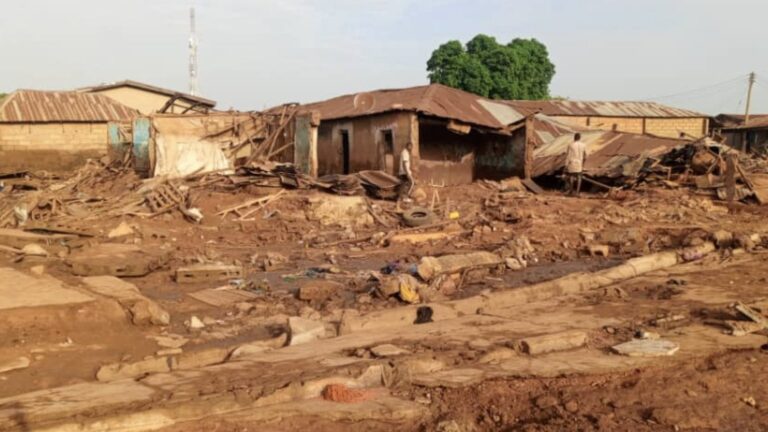
On Thursday, May 29, The ICIR reported that at least 21 people, including minors and women, were confirmed dead after floods swept through Tiffin Maza and Anguwan Hausawa communities in Mokwa town.

The disaster, triggered by a heavy midnight downpour that lasted over five hours, submerged dozens of homes, forcing families to flee for their lives.

However, the number of casualties snowballed thereafter, ballooning beyond 100.

Obi expressed deep sorrow over the loss of lives and the destruction of more than 3,000 homes in the tragedy. He described the disaster as a heartbreaking and deeply troubling development for the nation.

He said the incident was a reminder for Nigeria to urgently re-evaluate and greatly improve its disaster preparedness and response systems.

“We must invest in sustainable and proactive solutions that protect lives and property, particularly in vulnerable riverine communities, as the rainy season continues,” he added.

Obi applauded the efforts of the Niger State Government and emergency workers involved in the rescue and relief operations.

“I extend my deepest condolences to the government and people of Niger State, and to every family that has lost a loved one. May God Almighty console them, forgive the sins of the departed, and grant them eternal rest,” he said.

Meanwhile, a prominent activist and former presidential candidate, Omoyele Sowore, in a social media post on Saturday believed that the Mokwa flooding was more than a mere natural disaster.

“Over the last ten years, the flooding caused sometimes by the Lagdo Dam overflow from Cameroon has ravaged Nigeria with near zero attempts to prevent these catastrophes,” he said.

Sowore accused the Nigerian government of failing to prevent the disasters, noting that the government continued to fail the citizens and sacrifice them to natural and government-made disasters.

“Like several other state governments, the Niger State government receives Ecological Funds from the Federal Government. Still, it typically squanders these funds without investing in disaster prevention, leading to life-changing calamities” he added.

The ICIR reported that the Deputy Governor of the State, Yakubu Garba, confirmed that over 100 lives were lost in the flooding.

Garba said this during an on-the-spot assessment visit to the affected area on Friday, May 30, according to the News Agency of Nigeria.

Accompanied by officials from the National Emergency Management Agency (NEMA) and the Niger State Emergency Management Agency (NSEMA), Garba said the death toll was higher than earlier reported.

WHO seeks urgent global action against flavoured tobacco, nicotine products

0

THE World Health Organisation (WHO) has called on governments around the world to urgently ban all flavoured tobacco and nicotine products, including cigarettes, pouches, hookahs, and e-cigarettes, to protect young people from addiction and disease.

The WHO made the call on Friday, May 30, in a statement marking World No Tobacco Day 2025, where the global health body warned that flavours like menthol, bubble gum, and cotton candy “turn harmful nicotine products into ‘youth-friendly bait and masking their toxicity.”

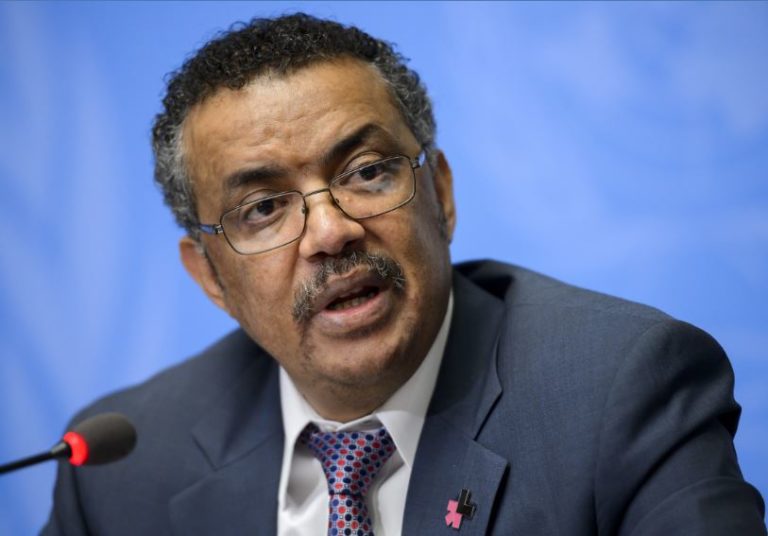
The WHO Director-General Tedros Adhanom Ghebreyesus, said the increasing use of flavours fueled a new wave of addiction and undermining decades of progress in tobacco control.

“They undermine decades of progress in tobacco control. Without bold action, the global tobacco epidemic, already killing around eight million people each year, will continue to be driven by addiction dressed up with appealing flavours,” Ghebreyesus said.

The statement further noted that the organisation’s new publication, “Flavour accessories in tobacco products enhance attractiveness and appeal,” revealed how flavours and accessories like capsule filters and click-on drops were being marketed to bypass regulations and hook new users.

The WHO noted that more than 50 countries had banned flavoured tobacco, while over 40 countries had prohibited e-cigarette sales. However, flavour accessories remain largely unregulated in many places.

It also said countries like Belgium, Denmark, and Lithuania had taken steps to control flavoured products and urged other nations to follow suit.

The WHO Director of Health Promotion Rüdiger Krech, on his part, condemned the marketing tactics of tobacco companies, describing them as manipulative and harmful.

We are watching a generation get hooked on nicotine through gummy bear-flavoured pouches and rainbow-coloured vapes,” Krech said, adding that “This isn’t innovation, it’s manipulation. And we must stop it.”

The WHO reiterated that all tobacco products, including heated tobacco, expose users to cancer-causing chemicals and should be strictly regulated.

In January 2025, a civil society organisation, Corporate Accountability and Public Participation Africa (CAPPA) called on the National Assembly to increase the budgetary allocation for tobacco control from N10 million to N300 million in the proposed 2025 national budget.

The group made the appeal to the lawmakers as they reviewed the N49.7 trillion appropriation bill presented by President Bola Tinubu in December 2024.

The CAPPA’s executive director, Akinbode Oluwafemi, stressed the urgent need for increased funding to address the “devastating impact” of tobacco use in Nigeria. 

According to him, tobacco consumption remains a leading preventable cause of death globally, with Nigeria recording over 26,800 tobacco-related deaths annually. 

He highlighted the broader health implications of tobacco use, including non-communicable diseases such as cancer, heart disease, and chronic respiratory illnesses, which he said placed a significant burden on the nation’s healthcare system.  

Ejiofor demands probe into killing of Nigerian by Swiss Police

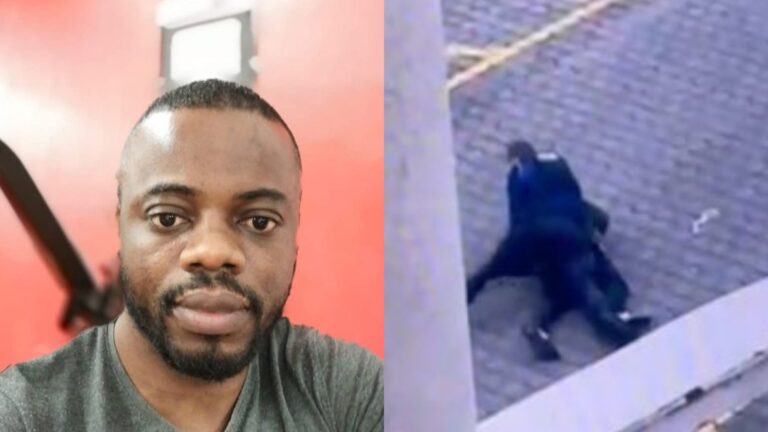
HUMAN  rights lawyer, Ifeanyi Ejiofor, has called on the Nigerian Government and the Government of Switzerland to launch a thorough investigation into the controversial death of Michael Kenechukwu Ekemezie, a 39-year-old Nigerian man who allegedly died on May 25 following a violent confrontation with Swiss Police in Lausanne.

Ejiofor made the call in a statement released on his X handle late Friday, May 30, describing the incident as very “sad and unfortunate”.

“Ekemezie had lived in Switzerland for over a decade, working hard like many others to pursue a better life. But on that day, his life was cut short in a brutal encounter with law enforcement. This encounter bears chilling similarities to the infamous murder of George Floyd in the United States, exactly five years earlier” he said.

The ICIR reports that a viral video circulating on X (Twitter) shows the moment the Nigerian who hails from Awka North, Anambra State, was pinned to the ground by a Swiss police officer, crying out in pain and shouting, “You’re hurting me.”

Ejiofor noted that Nigerians and other Africans living in Switzerland had staged protests, demanding accountability, transparency, and justice. However, the Swiss authorities’ response, he said, had been lukewarm.

He criticised the Swiss authorities for their inadequate response, stating that it fell short of the minimum standards of transparency and urgency expected in such “grave cases of state-sanctioned violence.”

Ejiofor demanded a full, independent, and transparent investigation into the killing, the public release of the identities and roles of all officers involved, and the immediate suspension and arrest of those officers pending the outcome of the probe.

“We remember how the world watched in horror on May 25, 2020, when George Floyd, a 46-year-old Black man, was murdered in cold blood – a White police officer knelt on his neck for over nine minutes while Floyd was handcuffed and lying face-down on a street in Minneapolis. His final words/dying cries, his helplessness, and the silence of those around him sparked a global reckoning with racial injustice and police brutality” 

“Sadly, history has repeated itself on May 25, 2025. The footage emerging from Lausanne shows Michael, too, handcuffed and pinned face-down, by an officer who used brutal force that proved fatal. His distress was visible. His life could have been saved. But he was left there – ignored, unheard, ultimately lifeless. No attempt was made to help him. He was subjected to lethal force that ultimately led to his death” the lawyer said.

Ejiofor described the poor global coverage,  particularly from the international media, as both unacceptable and deeply disturbing, suggesting it may be a deliberate attempt to downplay or conceal the brutality of the killing.

“What is equally painful is not only the brutal manner of Mr. Ekemezie’s death but the deafening silence that has followed it. Unlike the global response that followed George Floyd’s death, the murder of Mr. Ekemezie has received little to no coverage from major international media outlets such as CNN, BBC, or Al Jazeera. Within Nigeria, mainstream media has also largely remained silent” he added.

He stated that after receiving an official briefing from Ekemezie’s family, a legal team promptly initiated efforts to seek justice by submitting a detailed and strongly-worded petition to the Swiss Embassy in Nigeria, demanding the immediate identification, arrest, and prosecution of the officers involved in the act. 

“We have also formally petitioned the Nigerians in Diaspora Commission and other relevant government bodies, demanding prompt diplomatic engagement with the Swiss Government. The life of every Nigerian citizen, whether at home or abroad, must be treated with dignity and protected with resolve.

The ICIR reported that George Floyd, a Black man, was killed in May 2020 after police officers responded to a call that he had used a counterfeit $20 bill at a convenience store in the city.

The Minneapolis police officer Derek Chauvin, murdered Floyd by kneeling on his neck for more than nine minutes as he begged for his life and repeatedly said, “I can’t breathe.”

He was found guilty by a jury in April 2021 of second and third-degree murder, second-degree manslaughter, and was sentenced to 22 and a half years in prison. 

Death toll in Niger flooding rises to 100 – Official

0

NIGER State Deputy Governor, Yakubu Garba, has confirmed that over 100 lives were lost following the flooding in Mokwa Local Government Area of the state earlier this week.

Garba said this during an on-the-spot assessment visit to the affected area on Friday, May 30, according to the News Agency of Nigeria.

Accompanied by officials from the National Emergency Management Agency (NEMA) and the Niger State Emergency Management Agency (NSEMA), Garba said the death toll was higher than earlier reported.

The ICIR had on Thursday, May 29, reported that at least 21 people, including minors and women, were confirmed dead after flood swept through Tiffin Maza and Anguwan Hausawa communities in Mokwa town, in the early hours of Thursday.

The disaster, triggered by a heavy midnight downpour that lasted over five hours, submerged dozens of homes, forcing families to flee for their lives, according to a resident Yunusa who spoke with The ICIR.

Confirming the incident, the Niger State Emergency Management Agency (NSEMA) in a statement by its Director General, Abdullahi Baba Arah, stated that over 50 houses were washed away, leaving families homeless and entire communities in shock.

However, speaking with journalists during his visit to the site, Garba said that over 100 bodies had been recovered, adding that search and rescue operation was still ongoing.

“I have been briefed by officials from NEMA and NSEMA, who have been on ground since the incident occurred for search and rescue operations.

“I was told that over 100 people lost their lives and some are yet to be buried as search and rescue operations are still ongoing,” he said.

Addressing displaced persons at the Internally Displaced Persons (IDP) camp in Mokwa, Garba urged them to remain patient as the state government mobilises relief efforts. 

He assured the victims that the state had received relief materials from NEMA, including food items, blankets, and mats, which had been handed over to the council chairman for distribution.

Garba pledged to escalate the situation to the governor and push for additional support for the affected communities.

He also cautioned residents against building structures on waterways, warning that such practices worsen the impact of flooding and could lead to more disasters in the future.

On her part, NEMA’s Director-General, Zubaida Umar, stated that her agency had deployed teams to coordinate search and rescue operations and provide relief materials in collaboration with the Red Cross and NSEMA.

Tinubu loan requests breach Fiscal Responsibility Act – CSJ

THE Centre for Social Justice (CSJ) has raised concern that President Bola Tinubu’s new loan request approval to the National Assembly breaches the provisions of the Fiscal Responsibility Act (FRA).

The CSJ argued this in a statement released on Friday, May 30, by its Lead Director, Eze Onyekpere.

Tinubu had, on Tuesday, May 27, sought the National Assembly’s approval to borrow foreign loans worth $24.14 billion to finance critical projects across various sectors of the economy, particularly infrastructure, health, education, and water supply.

The loan, if approved, will push Nigeria’s total debt to N183 trillion, The ICIR reported.

In his submission of Friday, the CSJ said, “Our first reaction is a call for careful consideration of all circumstances, possible scenarios and consequences surrounding the proposed loans.

“This can only be done when the request for approval is pitched against extant legal and policy provisions on debt management in Nigeria.

It cited the most relevant law that the request has breached to be the Fiscal Responsibility Act (FRA).

It said the law provides inter alia in section 41 (1) that the framework for debt management during the financial year shall be based on the following rules-

(a) Government at all tiers shall only borrow for capital expenditure and human development, provided that such borrowing shall be on concessional terms with low interest rate and with a reasonably long amortization period subject to the approval of the appropriate legislative body where necessary.

The CSJ cited also that section 44 (1) of FRA states that any Government in the Federation or its agencies and corporations desirous of borrowing shall, specify the purpose for which the borrowing is intended and present a cost-benefit analysis, detailing the economic and social benefits of the purpose to which the intended borrowing is to be applied.

It further cited section 48 (1) to state that ​the Federal Government shall ensure that its fiscal and financial affairs are conducted in a transparent manner and accordingly ensure full and timely disclosure and wide publication of all transactions and decisions involving public revenues and expenditures and their implications for its finances.

It highlighted the following challenges to have arisen from the President’s request for approval in the light of the provisions cited.

“The specific listing of projects to be financed by the loan have not been presented to Nigerians and therefore not in the public domain.

“Flowing from the first challenge, no cost benefit analysis of the projects for which borrowing is sought has been presented to Nigerians. Cost benefit analysis enables informed discourse and review of the propriety of the projects on which the proceeds of the loan will be invested,” CSJ argued.

It noted further that section 48 (1) requires that all the relevant information and facts related to this request for loan approval should be fully and timely disclosed by the executive to Nigerians before any approval is sought or granted by the National Assembly. The required information is not available in hard copy or any electronic portal of the executive or the legislature.

It argued further that in the circumstances, President Tinubu has observed the FRA in breach and consideration of the request by the National Assembly cannot proceed in defiance of the law.

“Considering Nigeria’s bloated public debt which according to the Debt Management Office stood at N144.665 trillion as at December 31 2024 and the very high percentage of retained revenue set aside for debt service over the years, borrowing without public input is a violent disregard to due process and extant law,” CSJ stated.

In light of the foregoing, CSJ demands that the list and schedule of all projects for which the loans are sought, their intended locations and the cost-benefit analysis of specific projects should be published in hard and soft copies and made available to every Nigerian who intends to make an input into the borrowing process.

It said the National Assembly cannot proceed to take such a monumental decision in further approving the bloating of the national debt to over N180 trillion without the input of Nigerians obtained through a public hearing.

“The loan approval process should not be rushed as demanded by the President and accepted by the leadership of the National Assembly who asked the Senate Committee on Local and Foreign Debts to review and report back in two weeks. The review should hear and consider the input of a broad spectrum of Nigerians before approval or rejection.

“Approval should not be on a blanket basis but on a project-by-project consideration,” the CSJ added in its demand.

Why Nigeria mortgage system is failing – Expert

THE vice chairman of the Estate Surveyors and Valuers Registration Board of Nigeria, Stephen Jagun, has decried the struggling state of the Nigerian mortgage system, stating that higher interest rate and unstable foreign exchange affect its success.

Jagun, an industrial expert in the building business, shared this concern in an interview with The ICIR.

“If you check anywhere in the world, one of the primary needs of man is shelter. This is critical,” Jagun stressed.

He said one of the major issues is access to funds and challenges of higher interest rate funds for mortgage institutions.

“In Nigeria, people in the mortgage business struggle to get funding with a benchmark interest rate above 27 per cent.

“So, it’s the source and funding costs that are making mortgages not viable,” he explained.

According to Jagun, the Nigerian system and its policies are not allowing investors to bring money from abroad into the building industry.

“They feel unsafe because most of our policies are based on sentiment and someone’s body language. When they do bring funds at all, they do so on a short-term basis,” he maintained.

The facility manager noted another big challenge is the duration it takes for a housing mortgage to be fully paid for.

He said, “Also of concern is the duration of the mortgage. It takes close to 20 to 25 years for a mortgage to be fully settled. In a country where there’s no job security, it’s a challenge. It’s even harder for banks to stand on such long-term lending, or else they will go under.”

Jagun established that when a mortgage agreement is reached between a developer and a subscriber, that most times results in a lawsuit when the subscriber suddenly starts defaulting on the instalment payment.

He explained, “I attended the launch of a mortgage bank that wants to partner with some developers to bring delivery and value to the market and deliver on the plans.

“The idea is for developers to bring something to the table, and the mortgage bank to take it from there. By so doing, the developers are not afraid their projects will get stuck as the mortgage bank is to fund it.”

Jagun further raised concerns about the affordability and the decency of a mortgage plan for the homeowners.

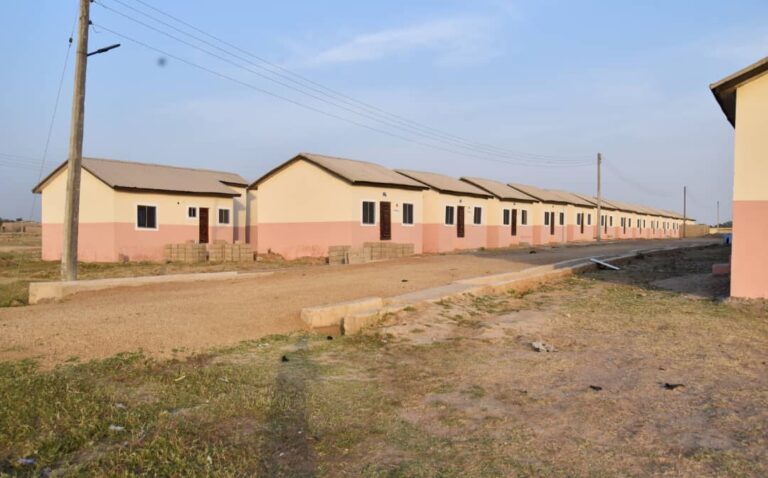
The ICIR reported that Nigeria faces a growing housing deficit which has risen from about seven million in 1991 to an estimated 28 million in 2023.

The Federal Mortgage Bank of Nigeria (FMBN), founded in 1956, is the apex mortgage bank in the country.

The FMBN, which is responsible for providing mortgages to low-income earners through the National Housing Trust Fund (NHTF), has been facing operational and financial capability restraints that limit its efficiency over the decades.

Despite the crucial role the mortgage industry plays in the Nigerian economy, findings show that the mortgage sector has long been plagued by inefficiencies, a lack of transparency and complex bureaucratic hurdles that make homeownership an uphill battle for millions of Nigerians.

In 2023, the Nigerian government put the housing deficit statistics at 28 million units with an estimated funding need of N21 trillion.

These statistics allude to the need for urgent interventions in the Nigerian housing sector.

Also, at a recent forum in April this year on the establishment of the National Mortgage Registry (NMR), the managing director/chief executive of FMBN, Shehu Usman Osidi, noted the inefficiency in the mortgage system.

“The current mortgage system in Nigeria is notoriously slow and bureaucratic, with approval timelines often stretching into months or even years,” Osidi reportedly said.

EFCC charges Emefiele with stealing, fraudulent acquisition of 753-unit Abuja mansion

0

THE Economic and Financial Crimes Commission (EFCC) has filed new charges against former Central Bank of Nigeria (CBN) Governor, Godwin Emefiele, accusing him of unlawfully acquiring a 753-unit housing estate in Abuja and managing billions of naira through proxy accounts during his tenure.

In an eight-count charge filed at the Federal Capital Territory High Court in Abuja, and reported by Premium Times, the EFCC alleged that Emefiele collaborated with an associate, Eric Ocheme (currently at large), to acquire the estate located at Plot 109, Cadastral Zone C09, Lokogoma District, Abuja. 

The property spans approximately 150,462.86 square meters and comprises 753 housing units.

The EFCC claimed that Emefiele collaborated with Ocheme to execute the acquisition in August 2021. 

The anti-graft agency also accused Emefiele of laundering billions of naira through companies namely Kelvito Integrated Services and Ifeadigo Integrated Services, using multiple Zenith Bank accounts suspected to hold funds from unlawful sources.

Among the allegations, the EFCC alleged that between 2019 and 2022, Emefiele kept large sums in proxy accounts: ₦167 million in 2019, ₦1.23 billion in 2020, ₦2.94 billion in 2021, and ₦1.98 billion in 2022, all linked to Kelvito Integrated Services. 

Another ₦900 million was allegedly held in an Ifeadigo Integrated Services account by the former CBN governor. 

Recall that the EFCC handed over the estate to the Federal Government after it secured a court order for the forfeiture of the estate.

However, Emefiele is making frantic efforts at the Court of Appeal in Abuja to set aside the judgment granting the Nigerian government full control of the estate.

In November 2023, Emefiele was sent to Kuje Correctional Centre over an alleged N1.6 billion procurement fraud after he was arraigned on a six-count charge before an FCT High Court.

The ICIR reported on March 7, 2023, that a forensic analyst confirmed before an FCT High Court that the documents used by Emefiele to request the payment of $6.2 million to foreign election observers were forged.

The analyst, Bamaiyi Meriga, disclosed that he appeared as a witness for the EFCC during Emefiele’ strial.

Meriga, who appeared before Hamza Adamu, a judge, told the court that following forensic analysis of the documents, he discovered clear evidence of forgery of the signature and seal of execution, different from the original version.

In another case involving the former CBN governor in April 2024, a Lagos State High Court granted N50 million bail to him for abuse of office and other infractions.

The judge, Rahmon Oshodi, ruled on the bail application and admitted Emefiele on bail with two sureties in like sum.

The former CBN governor is still facing various cases bothering on fraud in different courts.

INEC fixes dates for Ekiti, Osun governorship elections

THE Independent National Electoral Commission (INEC) has scheduled the governorship elections in Ekiti and Osun states for June 20 and August 8, 2026, respectively.

The INEC Chairman, Mahmood Yakubu, announced the dates on Friday, May 30,  during the swearing-in of six newly appointed Resident Electoral Commissioners (RECs) recently confirmed by the National Assembly.

Providing the timelines for political parties, he explained that party primaries for the Ekiti election would take place between October 20 and November 10, 2025

He said parties were expected to submit their nomination forms via INEC’s online portal by 6:00 p.m. on December 22, 2025.

He added the final list of candidates would be published on January 18, 2026, while campaigns would begin on January 21, 2026, and must end 24 hours before election day.

“For Ekiti State, the election will be held on Saturday, 20th June 2026. However, party primaries will start on 20th October 2025 and end on 10th November 2025 to enable political parties to upload their nomination forms to the dedicated portal, which automatically shuts down by 6.00 pm on 22nd December 2025, i.e., not later than 180 days before the election. The final list of candidates will be published on 18th January 2026, while campaign in public by political parties will commence on 21st January 2026 and end 24 hours before election day.

“In the case of Osun State, the election will be held on Saturday, 8th August 2026. Party primaries will start on 24th November 2025 and end on 15th December 2025. The portal for the upload of nomination forms by political parties closes at 6.00 pm on 9th February 2026, i.e,. not later than 180 days before the election. The final list of candidates will be published on 9th March 2026, while the campaign in public by political parties will commence on 11th March 2026 and end 24 hours before election day,” he said.

Yakubu noted that the full timetable and details for both elections had been made available on INEC’s website and social media platforms for public access.

Addressing concerns about pending bye-elections and the suspension of the Continuous Voter Registration (CVR) nationwide, the INEC boss acknowledged that the number of bye-elections had increased to 17.

“The Commission is aware of the concern expressed by many Nigerians about the pending bye-elections and the resumption of the Continuous Voter Registration (CVR) nationwide. The number of bye-elections has now risen to 17. We are aware of the urgency to commence the CVR, particularly in view of the forthcoming governorship election in Anambra State. We want to assure Nigerians that we are finalising our preparations for both activities, the details of which will soon be made public.”

Earlier this month, the Commission released the personal details of candidates for the 2025 Anambra State governorship election, urging public to scrutinise the documents submitted by political parties. 

The call for verification, which includes academic credentials and other key records, was in line with the Electoral Act 2022.

The publication followed the conclusion of party primaries conducted by 16 political parties.

It also urged aspirants with reasonable grounds to believe that a candidate provided false information to challenge the nomination of the candidate in court.