Home Blog Page 271

Ground rent: Wike’s aide slams Kingibe for opposing property revocation 

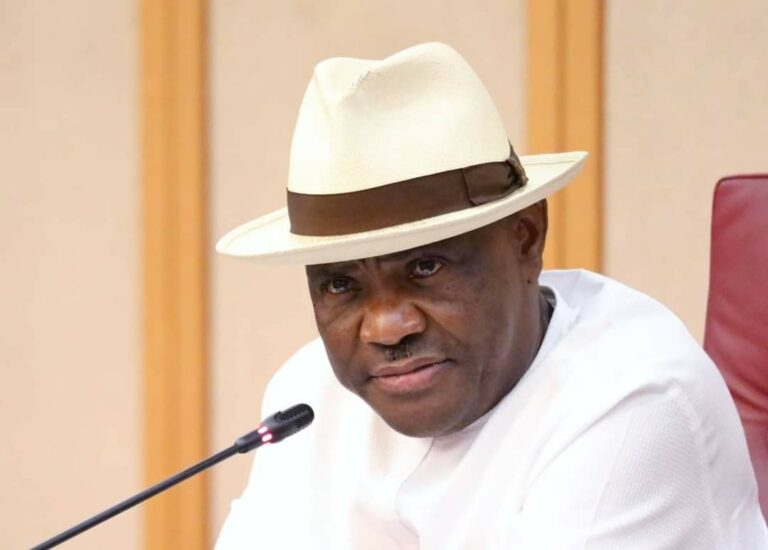
LERE Olayinka, the Senior Special Assistant on Public Communications to the Minister of the Federal Capital Territory (FCT), Nyesom Wike, has warned the senator representing the FCT, Ireti Kingibe, to desist from frequent opposition to the minister’s actions.

Olayinka issued the warning while reacting to the senator’s comments on the enforcement of payment of ground rent in the nation’s capital.

“It is ridiculously embarrassing that a serving senator of the Federal Republic of Nigeria, whose duty is to make laws is ignorant of the provisions of Section 28, Subsections (a) and (b) of the Land Use Act.

“For the education of Senator Kingibe, Section 28, Subsections (a) and (b) of the Land Use Act provides that ‘The government may revoke a Statutory Right of Occupancy on the ground of; (a) a breach of any of the provisions which a certificate of occupancy is by Section 10 deemed to contain; and (b) a breach of any term contained in the Certificate of Occupancy,” Olayinka said.

The ICIR reported that  FCTA sealed off the headquarters of the Peoples Democratic Party (PDP) in the Wuse district of Abuja, including other private and public buildings such as the headquarters of the Federal Inland Revenue Service (FIRS), the Nigerian Security Printing and Minting Company, Nigerian Postal Service, and the Power Holding Company of Nigeria (PHCN)T on Monday, May 26.

The FCTA listed 4,794 properties which it said it revoked for non-payment of ground rent, some for over four decades.

Reacting to the development, Kingibe said the sealing of properties was executed outside the bounds of the law.

She argued that the sealing of properties over unpaid ground rent undermined livelihoods, eroded public trust in institutions, and threatened the fragile social and economic stability of the FCT.

She said as a senator, she would not turn a blind eye while residents were subjected to enforcement practices that “contravene established laws and compound their suffering”.

In his reaction, Wike’s spokesperson said there were conditions that must be met in land allocation and one of them was annual payment of ground rent.

“Now, is annual payment of ground rent not part of the terms contained in the certificate of occupancy? Or Senator Kingibe just chose to advertise her myopic attitude to anything Wike?”

Olayinka said Kingibe’s recent ‘diatribe’ against the FCT minister was a further advertisement of her ignorance of the Land Use Act “and penchant for seeking cheap political gains on every issue.”

Olayinka said Kingibe should rather have said that “land owners in the FCT have rights to refuse to pay necessary bills stated in the certificate of occupancy issued to them, and that when they so do, the government should simply pick samba and tambourine, and sing their praises.

“Now, if land allottees refused to pay ground rent for 10 to 43 years, Senator Ireti Kingibe will just look away if she were the FCT Minister?”

The ICIR reported that the revocation list, approved by Wike, includes a number of high-profile institutions and organisations, namely Central Bank of Nigeria (CBN), Independent National Electoral Commission (INEC), Nigerian National Petroleum Corporation (NNPC), Nigerian Television Authority (NTA), and the News Agency of Nigeria (NAN).

Others affected include Borno and Kaduna State Government lodges, Nigerian Security Printing and Minting Company, Nigerian Postal Service, and the Power Holding Company of Nigeria (PHCN)T

Despite President Bola Tinubu’s intervention, which stopped the revocation of the affected properties for 14 days, Wike has vowed that enforcement would proceed regardless of ownership, stressing that the government would act in line with established legal procedures.

WASSCE results improve while UTME scores drop in six years

IN a concerning trend for Nigeria’s education sector, recent data show that the majority of candidates sitting for the Unified Tertiary Matriculation Examination (UTME) from 2020 to 2025 scored below the 200-mark threshold.

This raises fresh concerns about the preparedness of students seeking admission into tertiary institutions.


UTME results from 2020-2025

According to figures compiled and visualised by The ICIR, the proportion of UTME candidates scoring below 200 has remained alarmingly high over the past six years, peaking in 2021 at 87.2 per cent. That year, over 1.14 million candidates failed to meet the benchmark.

Other years reflected similarly troubling figures.

The data suggests that despite slight improvements in 2023 and 2024, a substantial majority of students continue to underperform in the UTME.

The UTME data for candidates who scored below 200 are:

2020 – 79.2 per cent (1.54m)

2021 – 87.2 per cent (1.14m)

2022 – 78.1 per cent (1.38m)

2023 – 76.7 per cent (1.17m)

2024 – 76.1 per cent (1.40m)

2025 – 78.5 per cent (1.53m)

The 2025 data referenced here was before the resit done in parts of Lagos and south east sates.

In contrast, the West African Senior School Certificate Examination (WASSCE) paints a more encouraging picture. From 2020 to 2024, the percentage of candidates who obtained five credits – including Mathematics and English – was consistently above 70 per cent, except in 2020.

WASSCE results from 2020-2024

The data of WASSCE that shows candidates passing with five credits including maths and english:

2020 – 65.2 per cent (1.0m)

2021 – 81.7 per cent (1.27m)

2022 – 76.4 per cent (1.22m)

2023 -79.8 per cent  (1.29m)

2024 – 72.1 per cent (1.30m)

The disparity between WASSCE and UTME results has reignited debates among education stakeholders about the alignment of secondary school curricula with the demands of university entrance exams.

Meanwhile, both examinations continue to face challenges. The ICIR reported how students wrote WASSCE with torch lights at night and how students were kept in examination halls till midnight after a paper they were supposed to write leaked.

Similarly, this organisation published a report on some of the scandals that have rocked JAMB in recent years.

Just this year, a glitch in JAMB’s system forced 336,845 candidates to resit UTME.

The ICIR reported that the glitch led to a candidate committing suicide in Lagos State after she obtained a low mark.

Niger confirms 21 dead as flooding wreaks havoc in Mokwa

0

AT least 21 people, including minors and women, have been confirmed dead after a flood swept through Tiffin Maza and Anguwan Hausawa communities in Mokwa town, Niger State, in the early hours of Thursday.

The disaster, triggered by a heavy midnight downpour that lasted over five hours, submerged dozens of homes, forcing families to flee for their lives, according to a resident Yunusa who spoke with The ICIR.

Confirming the incident, the Niger State Emergency Management Agency (NSEMA) in a statement by its Director General, Abdullahi Baba Arah, stated that over 50 houses were washed away, leaving families homeless and entire communities in shock.

Arah noted that search and rescue operations were ongoing, with Mokwa Local Government Authority, local divers, and volunteers combing through the wreckage for survivors and bodies. 

According to him, three people, a woman and her two children,  have been rescued and are receiving treatment for injuries and trauma at the Mokwa General Hospital.

“NSEMA is in receipt of a report of a deadly flood disaster that ravaged two communities.

“Twenty-one corpses have so far been recovered of those who sadly lost their lives in the incident while over 10 persons are still missing as search and rescue operation is still ongoing,” he said.

The Chairman of Mokwa Local Government Area, Jibril Muregi, in a separate statement, expressed his condolences to the bereaved families and called on the relevant authorities to swiftly deploy emergency relief and humanitarian aid to the affected areas.

Muregi also stressed that the disaster had led to loss of lives, destruction of homes, and displacement of several residents.

“In the wake of this disaster, we urgently call on the Niger State Government, through the Ministry of Humanitarian Affairs and Disaster Management, and the Niger State Emergency Management Agency (NSEMA), to deploy immediate relief materials and humanitarian assistance to the affected areas.

“We also use this medium to appeal to the Agro-Climatic Resilience in Semi-Arid Landscapes (ACReSAL) Project to expedite the long-overdue process of awarding and commencing the construction of waterways in Mokwa.

“This critical infrastructure is essential to mitigating future flood risks and protecting lives and property,” Muregi added.

In 2022, Nigeria experienced one of the worst flooding incidents in decades as 35 states and the FCT were affected by floods, leading to the loss of several lives and damage to properties. Thousands of people were also displaced from their homes and hectares of farmland were destroyed in the process.

Since then, there have also been several flooding incidents in several parts of the nation. 

The ICIR reported that no fewer than 259 people lost their lives, and more than 600,000 others were displaced by severe floods across Nigeria in 2024. 


Tribute: Ngũgĩ wa Thiong’o: A giant of African Literature

ON May 28, 2025, the world bid farewell to one of Africa’s most fearless literary icons, Ngũgĩ wa Thiong’o. His passing at the age of 87 marked the end of a life defined by storytelling, resistance, and the power of language.

For over six decades, he wielded his pen as a weapon, using fiction, essays, and drama to expose colonial injustice and demand cultural sovereignty. His unyielding belief that language is the soul of identity, that is visible in his writing, became the heartbeat of his work.

Born in 1938 in Limuru, Kenya, during British colonial rule, Ngũgĩ grew up amid the tensions of the Mau Mau rebellion and the struggle for independence. These early experiences became the foundation of his literary themes. His debut novel, Weep Not, Child, was the first English-language novel published by an East African author. It was followed by ‘The River Between’ and ‘A Grain of Wheat’, which explored Kenya’s path to freedom and the moral cost of revolution.

In 1977, Ngũgĩ co-wrote the play Ngaahika Ndeenda “I Will Marry When I Want” in Gikuyu, performed by and for local villagers. The play’s critique of post-independence corruption and inequality was so provocative that the Kenyan government imprisoned him without trial. While incarcerated, he famously wrote Devil on the Cross, his first novel in Gikuyu on toilet paper.

That moment catalysed his most radical decision to abandon English entirely. In ‘Decolonising the Mind’, Ngũgĩ argued that language is not neutral it’s political. Writing in a colonial language, he said, alienates people from their culture. From then on, he dedicated his work to promoting African languages as tools of empowerment and resistance.

Due to his his political activism and his writing which critiqued the Kenyan government, he was forced into exile. He was initially detained without trial in 1978 for producing a play in Gikuyu, his mother tongue, and later learned of a plot to kill him upon his return to Kenya. This led him to self exile in the UK and then the US. 

He then went on to teach at universities around the world, including Northwestern University and Yale University. He continued to inspire through novels like Matigari and Wizard of the Crow, which combined folklore, satire, and political critique. Throughout his life, he remained a committed champion of linguistic and cultural decolonisation.

Ngũgĩ wa Thiong’o’s death has left a deep void in world literature. Yet his legacy endures in every African child who reads in their mother tongue and in every writer who dares to challenge power through the written word.

Mauritanian Sidi Ould Tah succeeds Adesina as AfDB President

0

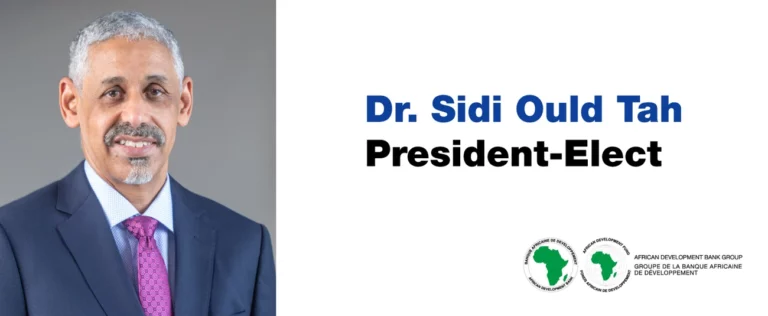
MAURITANIAN Sidi Ould Tah has been elected president of the African Development Bank  (AfDB) Group.

The announcement was made at the Bank’s annual meeting held in Abidjan, Côte d’Ivoire, on Thursday, May 29.

He will replace Nigerian Akinwumi Adesina, the outgoing president, who has served in the capacity since 2015.

Tah was elected by the Bank’s Board of Governors, comprising Finance and Economy Ministers or Central Bank Governors of the bank’s 81 regional and non-regional member countries.

The board is the highest decision-making authority for the bank.

The Minister of Planning and Development for Côte d’Ivoire, and chairman of the board of governors of the bank, Niale Kaba, announced his election.

The winner was required to obtain at least 50.01 per cent of both the regional and non-regional votes.

A Mauritanian national, Tah brings over 35 years of experience in African and international finance.

He served as president of the Arab Bank for Economic Development in Africa (BADEA) for 10 years from 2015 and was a minister of economic affairs and finance of Mauritania.

Tah has held senior roles in multilateral institutions and has led crisis response, financial reform, and innovative resource mobilisation for Africa, including the establishment of BADEA’s $1 billion callable capital programme for African MDBs.

“The Board of Governors Steering Committee received and approved a total of five candidates by the closing date of 31 January 2025. The list of candidates was officially announced on 21 February 2025.

“The election of a new president comes at a crucial time in the Bank Group’s six decades of existence. Africa has remained resilient despite climate shocks, economic disruption, and a shifting geopolitical landscape, but needs to move faster or risk falling behind on delivering on the African Union’s Agenda 2063 and the Sustainable Development Goals, summed up in the Bank Group’s High 5’s,” the AfDB Group stated.

Tah will assume office on September 1, 2025 for a five-year term, following the end of the second mandate of the outgoing president, Adesina.

Some reforms during outgoing President Adesina’s tenure

Adesina’s presidency began in 2015 with the launch of the “High 5s” development priorities: Light Up and Power Africa, Feed Africa, Industrialise Africa, Integrate Africa, and Improve the Quality of Life for the People of Africa.

Those priorities have made a profound impact as the High 5s have impacted on the lives of over 565 million people across Africa.

From leading the Bank to achieving the largest capital increase in its history, Adesina raised the bank’s capital from $93 billion in 2015 to $318 billion  – an unprecedented achievement in the history of the AfDB.

Some of the Bank’s notable achievements include the largest capital increase in its history, from $93 billion in 2015 to $318 billion.

Other major achievement is the record replenishment of the African Development Fund, raising $8.9 billion.

At the Bank Group 2025 Annual General Meeting on Monday, May 26, Adesina remarked, “These are not just figures. They are futures. They are hopes realised.”

Looking ahead, Adesina believed the Group had been transformed from what it used to be into a global institution.

He said the responsibility of African leaders was to build on the past, to look far into the future, and find within themselves what courage it would take to stand up for Africa’s interests.

Adesina is expected to hand over the baton of leadership to Tah on September 1, 2025.

“Leadership may change, but the mission remains. The Bank’s direction is clear, its resolve strong, and its commitment to Africa’s development unshakable,” he charged his successor.


Tinubu’s addiction to loans will mortgage Nigeria’s future – Atiku

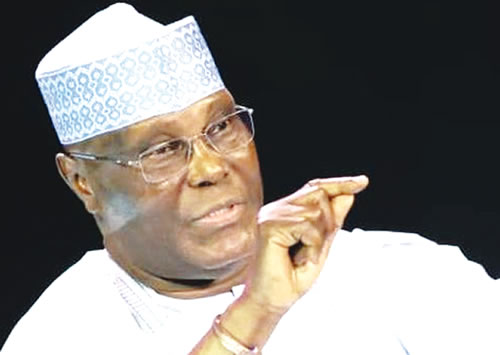
FORMER Vice President Atiku Abubakar has said that President Bola Tinubu’s addiction to loans would mortgage  Nigeria’s future.

He expressed his concern in a statement shared on his X handle on Thursday, May 29.

According to the former vice president, the announcement by the Tinubu-led All Progressives Congress (APC) government to pursue fresh external and domestic loans is a reckless and dangerous move that threatens the future of Nigeria and generations yet unborn.

“Despite national outrage, this administration is pushing ahead with plans to borrow $21.54 billion, €2.19 billion, and ¥15 billion — an equivalent of over $24 billion, which is more than 60 per cent of Nigeria’s total foreign exchange reserves.

“This borrowing spree will raise our total public debt from ₦144.7 trillion to a crushing ₦183 trillion,” he stated.

The president said in the loan request, submitted on Tuesday, May 27, to the National Assembly, that it aimed at funding key projects in infrastructure, health, education, and water supply.

An analysis by The ICIR showed that if the president’s request is approved, every Nigerian could owe about N770,000 as the country’s debt profile would rise to N183 trillion.

In his statement on Thursday, the former vice president lamented that Nigeria’s debt burden was already at alarming level.

He noted that as of December 31, 2024, the country’s public debt stood at $94 billion or N144.7 trillion.

“Since President @officialABAT assumed office in 2023, public debt has jumped by 65.6 per cent.

“Under the APC-led administration since 2015, public debt has ballooned by 1,048 per cent, from ₦12.6 trillion to ₦144.7 trillion,” Atiku said.

He stressed that the debt-to-GDP ratio had exceeded 50 per cent and the debt-service-to-revenue ratio was over 130 per cent, adding that the government was spending more on repaying loans than it earned.

He said the move was not just unsustainable but immoral.

Atiku further maintained that Tinubu’s administration was borrowing money not for development but to service existing loans, fueling a debt spiral that left nothing for infrastructure, education, healthcare, or jobs.

He said this addiction to borrowing by the APC-led administration had turned public finance into a Ponzi scheme — borrowing to pay debt, then borrowing again to pay interest.

“Nigeria is now caught in a vicious cycle that mortgages the future to pay for the past. We warn that this is economic sabotage in plain sight. We demand that this reckless borrowing plan be halted immediately.

“We call on lawmakers, civil society organisations, the media, and the international community to take urgent action to stop this looming catastrophe. Nigeria must not be sold into debt slavery,” he urged.

WAEC apologises to students, parents, schools for late-night English exam

THE West African Examinations Council (WAEC) has issued an apology to students, schools, and parents for the inconvenience caused by the disruption in administering the 2025 English Language paper on Wednesday, May 28.

The organisation tendered the apology in a statement released on Thursday.

It acknowledged the disruption experienced by candidates during the English Language Paper 2, conducted several hours later than scheduled in many centres across the country.

The WAEC explained that the delay was part of measures taken to prevent examination malpractice, especially the leakage of question papers.

“We recognise the importance of timely conduct of examinations and the impact of this decision on the candidates, their schools and parents, and we sincerely apologise for any inconveniences caused,” WAEC’s Acting Head of Public Affairs, Moyosola Adesina, said.

The ICIR reported that many students writing the paper were stranded in several states in Nigeria, including Osun and Kwara, and remained in examination halls till midnight.

Parents informed this organisation Wednesday night that their children told them the English Language paper they were supposed to write leaked, and the examination was delayed instead of being cancelled or rescheduled.

Another twist to the ongoing examination saw students using torch lights inside the dark in a widely circulated video.

The Federal Ministry of Education condemned the development and described it as “completely unacceptable.”

In its Thursday apology, WAEC explained that the delay was largely due to the Council’s strong commitment to safeguarding the integrity of the examination.

“While maintaining the integrity and security of our examination, we faced considerable challenges primarily due to our major aim of preventing leakage of any paper.

“While we successfully achieved our objective, it inadvertently impacted the timeliness and seamless conduct of the examination.”

The examination body also cited additional contributing factors, including logistical difficulties, security issues, and sociocultural dynamics, which affected operations in certain areas.

“Despite our best efforts, we encountered logistical hurdles, security concerns and sociocultural factors that negatively influenced our operations.”

The WAEC said it was working with security agencies to streamline the process and improve operational efficiency in subsequent exams to prevent a recurrence.

The ICIR reports that the 2025 WASSCE for school candidates commenced on April 24 and is scheduled to end on June 20.

Despite continued hardship, Tinubu hails his reforms in 2nd anniversary speech

0

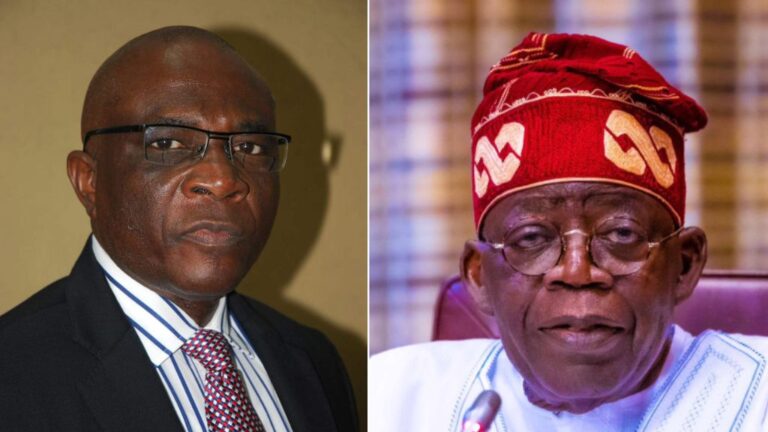
PRESIDENT Bola Ahmed Tinubu has declared that his administration’s economic reforms are working, two years after he assumed office. 

In an address marking the second anniversary of his government on May 29, Tinubu commended his decision to remove fuel subsidy, the unification of exchange rates, and a raft of tax and fiscal policies, which he said were necessary steps to put Nigeria on a path to stability and growth.

“Inflation has begun to ease, with rice prices and other staples declining,” Tinubu said, adding “The oil and gas sector is recovering; rig counts are up by over 400 per cent in 2025 compared to 2021, and over $8 billion in new investments have been committed. We have stabilised our economy and are now better positioned for growth and prepared to withstand global shocks.”

He claimed that the government’s reforms raised state revenue by N6 trillion in 2024, reduced fiscal deficit, and boosted external reserves by 500 per cent.

“Our debt position is improving. While foreign exchange revaluation pushed our debt-to-GDP ratio to around 53 per cent, our debt service-to-revenue ratio dropped from nearly 100 per cent in 2022 to under 40 per cent by 2024. We paid off our IMF obligations and grew our net external reserves by almost 500 per cent from $4 billion in 2023 to over $23 billion by the end of 2024.

“Thanks to our reforms, state revenue increased by over N6 trillion in 2024, ensuring that subnational governments can reduce their debt burden, meet salaries and pension obligations on a timely basis, and invest more in critical infrastructure and human capital development,” Tinubu said.

While the president maintained the worst was over, The ICIR reports that millions of Nigerians continue to struggle with high living costs and shrinking incomes.

The gap between policy gains and everyday struggles remains stark as the impact of fuel prices, which have soared since the subsidy removal, is still enormous on people in the country. 

While Tinubu lauded his administration’s tax reforms as ‘fairer’ and aimed at @reducing the burden on small businesses, “traders, artisans, and low-income families continue to grapple with rising costs and shrinking purchasing power.

Tinubu acknowledged the pain of his reforms but argued they were necessary to prevent a “fiscal crisis that would have bred runaway inflation, external debt default, and an economy in free fall.” 

He pointed to improvements in tax collection, increased investments in solid minerals, and ongoing upgrades in healthcare and education as signs of progress.

Tinubu also claimed his administration was eliminating multiple taxation, adding that the tax reforms would protect low-income households and support workers by expanding their disposable income.

“Essential goods and services such as food, education, and healthcare will now attract zero per cent VAT. Rent, public transportation and renewable energy will be fully exempted from VAT to reduce household costs further.

“We are ending the era of wasteful and opaque tax waivers. Instead, we have introduced targeted and transparent incentives supporting high-impact manufacturing, technology, and agriculture sectors. These reforms are not just about revenue but about stimulating inclusive economic growth,” the president.

“We have breathed new life into the solid minerals sector as part of our efforts to diversify the economy. Revenue has increased phenomenally, and investors are setting up processing plants as the sector dumps the old pit-to-port policy and embraces a new value-added policy,” he added.

The president further stressed that his administration was revitalising over 1,000 primary health centres (PHCs) nationwide. 

He added that an additional 5,500 PHCs were being upgraded under our Renewed Hope Health Agenda.

“We are establishing six new cancer treatment centres. Three are ready. We offer free dialysis services in pilot tertiary hospitals and subsidise the service in others. Under the Presidential Maternal Health Initiative, over 4,000 women have undergone free cesarean sections. Lastly, we have expanded health insurance coverage from 16 million to 20 million within two years,” he stressed.

Two years in office: Tinubu presidency spreads misleading information

SINCE taking office on May 29, 2023, the Nigerian president, Bola Ahmed Tinubu, and his media team have frequently come under scrutiny for spreading misinformation and half-truths to shape public perception.

The presidency has repeatedly, through official press statements, social media posts, and media appearances, pushed narratives that often fall short of factual accuracy in some cases.

Last year, when Tinubu clocked one year in office, The FactCheckHub examined how the president’s media team, led then by Ajuri Ngelale, spread misinformation regarding the UAE visa ban and NASDAQ’s closing bell, among others.

Though Ngelale has stepped down, the spread of false or misleading information by the presidency and  media aides continue unabashed.

Tinubu’s media aides include the Special Adviser on Information and Strategy, Bayo Onanuga; Special Adviser on Media and Public Communication, Sunday Dare; Special Adviser on Policy Communication, Daniel Bwala; Senior Special Assistant on Print Media, Abdulaziz Abdulaziz; Senior Special Assistant on Digital/New Media, O’tega Ogra; Senior Special Assistant on Media & Public Affairs, Tope Ajayi; Senior Special Assistant on Public Engagement, Fredrick Nwabufo; Senior Special Assistant on Strategic Communications, Linda Nwabuwa Akhigbe; Senior Special Assistant on Media & Communications (Vice President’s Office), Kingsley Stanley Nkwocha and Special Assistant on Social Media, Dada Olusegun.

In this report, we spotlight a series of false or misleading information shared by President Tinubu and his media aides two years into his four-year administration.

Tinubu misleading claim about crude oil production

Addressing Nigerians via a nationwide broadcast in the early hours of August 4, 2024 following the nationwide protests across the country, President Tinubu highlighted some of the meaures taken by his administration to cushion the effects of economic hardship on the citizens.

During the address, the president claimed that Nigeria had increased crude oil production to 1.61 million barrels per day. However, findings by The FactCheckHub show that the claim was FALSE.

According to the data from the Organisation of Petroleum Exporting Countries (OPEC), Nigeria’s average daily crude oil production stood at 1.276 million barrels per day (bpd) in June 2024, based on data submitted by the Nigerian government, which is an OPEC member.

OPEC gathers data on crude oil production from direct communication from member countries and secondary communication, such as energy intelligence platforms.

This represents an increase of just 25,000 barrels daily from 1.251 million barrels bpd recorded in May 2024.

According to secondary sources, Nigeria retained its position as the largest oil producer in Africa with 1.362 million bpd in June 2024, closely trailed by Libya, which produced 1.2 million bpd for the same month.

False information about foreign investment 

In the nationwide broadcast on October 1, 2024, Tinubu shared updates on the nation’s progress, economic outlook, and security measures as Nigeria marked its 64th anniversary.

During the address, the president said that Nigeria attracted foreign direct investments worth more than $30 billion in the previous year (2023). However, checks by The FactCheckHub show that the claim is FALSE.

Nigeria received a total of $59.77 million in foreign direct investment (FDI) in the third quarter of 2023, when Tinubu became Nigeria’s president, according to official data from the National Bureau of Statistics (NBS). In the fourth quarter of 2023, FDI amounted to $183.97 million, while the first quarter of 2024 saw $119.18 million in earnings. Altogether, Nigeria attracted $362.92 million in foreign direct investment over the nine months between July 2023 and March 2024. This is lower than the amount mentioned by Tinubu in the presidential broadcast.

Misleading images of ‘Secretary of State Parolin’

Ahead of the inauguration mass for Pope Leo XIV held on May 18, 2025, the Nigerian presidency shared photos of Tinubu’s visit to the Vatican via the president’s official X handle and one of his media aides, Bayo Onanuga. In the post, the Presidency said Tinubu was warmly received by Cardinal Pietro Parolin, the Vatican’s Secretary of State.

In the photos shared, the president was seen talking with the cardinal as he posed for a picture with him. However, the person he posed for photographs with was not Parolin, as claimed in the X post.

Findings by The FactCheckHub show that the person in both images was Cardinal Kevin Joseph Farrell, the Prefect of the Dicastery for the Laity, the Family and Life, Camerlengo of the Holy Roman Catholic Church, President of the Commission for Confidential Matters, and President of the Committee for Investments.

 Onanuga’s misleading claim about Julius Debrah 

On January 6, 2025, one of Nigeria’s presidential spokespersons, Bayo Onanuga, claimed that Julius Debrah was the Chief of Staff to the immediate-past president of Ghana, Nana Akufo-Addo.

Onanuga posted the claim on X (formerly Twitter) to announce the Nigerian president’s arrival at the inauguration ceremony held for the newly elected Ghanaian president, John Mahama, on January 7, 2025.

Checks by The FactCheckHub show that the claim was MISLEADING, as Debrah is the current Chief of Staff to Ghanaian President, John Mahama, who was sworn-in this January.

To verify the claim, our fact-checker subjected the keyword “chief of staff to president Nana Addo Akufo” to an advanced Bing search. The results showed that Mrs Akosua Frema Osei-Opare was the Chief of Staff to ex-president Akufo-Addo, who served from 2017- 2025.

Further findings revealed that Julius Debrah was the Chief of Staff to the President Mahama during his first tenure after he was appointed in February 2015, when Prosper Douglas Bani was removed and assigned as Ambassador Extraordinaire and Plenipotentiary.

Debrah was later re-appointed as Mahama’s Chief of Staff on January 6, 2025 and he received President Tinubu in that official capacity when the Nigerian president arrived Ghana ahead of the inauguration.

A misleading image to falsely portray Obi’s record

On April 29, 2025, Dada Olusegun shared two contrasting images on X to compare water transportation in Anambra State under Peter Obi’s governorship tenure (2006 – 2014), and Lagos State under the current Governor Babajide Sanwo-Olu.

In one image, Obi was seen in a wooden canoe in a flood-ravaged area. The second image showed Sanwo-Olu aboard a modern watercraft. Olusegun captioned the post: “Water transportation in Anambra under Obi Vs Water Transportation in Lagos under Babajide Sanwo-Olu.”

A reverse image search conducted by The FactCheckHub revealed that the photo was taken in October 2022, eight years after Obi left office, during a visit to flood victims in Anambra State. At the time, Obi was a presidential candidate under the Labour Party for the 2023 general election.   Presidency shares misleading video during #EndBadGovernance protest

During the August 2024 #EndBadGovernance protest in Nigeria, the Nigerian presidency shared a video of President Tinubu purportedly issuing a passionate plea to Nigerians to embrace peace and “look beyond temporary pains.” The video also appeared on Tinubu’s official X account.

However, findings by The FactCheckHub showed that the video is an extract from an old broadcast by Tinubu. A Google reverse image search conducted on some keyframes obtained from the video showed that the longer version was posted by Tinubu on July 31, 2023.  The text version was also posted on Nigeria’s State House’s website same day.

 Onanuga’s false claim that Nigeria budgeted 97% of revenue for debt servicing in 2023

In June 2024, a New York Times article about Nigeria’s economic situation drew a response from the Nigerian government.

The article, titled ‘Nigeria Confronts Its Worst Economic Crisis in a Generation‘, talks about fuel subsidy removal and the floatation of Nigeria’s currency by the Tinubu-led administration and their impacts on the population.

Reacting to the report, the Nigerian presidency, through Onanuga, described the article as a “jaundiced report” and claimed that the current economic crisis was a consequence of the bad economy Tinubu inherited.

Onanuga then claimed that the 2023 Appropriation Act was inefficient as it proposed to spend 97 percent of the country’s revenues to service debt.

However, the claim was FALSE, according to findings by FIJ. In 2023, the country was projected to generate N8.46 trillion in revenue and spend N6.31 trillion servicing public debt. According to the Debt Management Office (DMO), which coordinates the management of Nigeria’s debt, this represented a debt-servicing ratio of 73.5 per cent.

Bwala’s false claims about Ndume projects, bills passed

In April 2025, Daniel Bwala claimed that Senator Ali Ndume has not had any executed projects throughout his 22-years stay in the National Assembly.

He made the claim (video times stamp: 15:39 – 17:01) during an interview on Channels TV’s programme, Sunday Politics, on April 13, 2025, in response to earlier criticisms of the presidential media team by Ndume on the same programme on April 11, 2025.

Bwala also stated that despite spending 22 years in Nigeria’s National Assembly as a lawmaker, Ndume had not completed a single project in Southern Borno, his constituency. He also accused the senator of neglecting over 120,000 internally displaced persons (IDPs) from his constituency who are still refugees in Cameroon.

Findings by The FactCheckHub revealed some projects executed by Ndume as a senator and multiple bills sponsored and passed by him as a lawmaker.

This fact-check is republished from The FactCheckHub.

6,549 Nigerians killed, 3,804 others abducted since May 2024, says group

NO fewer than 6,549 Nigerians have been killed and 3,804 others abducted in incidents of mass atrocities across Nigeria since May 2024, according to data released by the Civil Society Leaders (CSL) on Wednesday, May 28.

The data identified Borno, Katsina, Zamfara, Kaduna, Benue, and Plateau as the six most dangerous states in 2024, while Katsina, Sokoto, Niger, Borno, Zamfara, and Kaduna were listed as the states with the highest risk of abduction. 

The data was released at a media briefing by the Executive Director of Global Rights, Abiodun Baiyewu, in commemoration of its 8th National Day of Mourning victims of mass atrocities.

“In 2024, no fewer than 5,353 people were killed and 5,171 abducted. An additional 1,196 people have been killed, and 1,367 kidnapped so far in 2025 bringing the number to at least 6,549 Nigerians killed,  and 3,804 abducted across the country since the last commemoration of the National Day of Mourning on May 28, 2024.”

Baiyewu, who explained that the data was curated from terrorists and bandits’ atrocities across the country, said that the CSL was making a patriotic call for justice amid the deafening silence of Nigerian leaders.

While assessing President Bola Ahmed Tinubu’s second year in office, Baiyewu emphasised his administration’s continued failure to address the widespread insecurity across the country.

“We demand the President and his administration fulfil their constitutional duty of ensuring the security and welfare of all Nigerians in accordance with Section 14(2)(b) of the 1999 constitution as amended.”

The group raised alarm on the emerging terror groups such as Lakurawa and Mahmuda, stating that they operated openly, extorting residents, imposing taxes and demanding ransom in exchange for peace.

In seven separate demands, the group challenged the Nigerian government to track and disrupt ransom and extortion networks and hold the enablers and funders of terror accountable.

It also urged the government to investigate and prosecute all perpetrators of violent crimes, including those responsible for election-related violence in 2023.

The ICIR reported how Tinubu’s government has been struggling with widespread insecurity across Nigeria

Despite pledges to tackle terrorism, banditry, and violent crimes, the nation continues to grapple with persistent killings, ransom kidnappings, and assaults on rural communities.

Recent months have seen a surge in violence across regions, raising concerns about the government’s state and federal capacity or willingness to protect its citizens.

From Benue to Borno, Plateau to Niger, and Ondo to Sokoto, state governors are struggling to contain the menace, as armed groups unleash chaos, displace communities, and cripple local economies, particularly agriculture.

Before assuming power, Tinubu repeatedly urged former president Goodluck Jonathan to resign over Boko Haram attacks. 

Two years into his tenure, the nation has been under the blanket of insecurity.