Home Blog Page 272

MRA urges full implementation of FOI Act as law clocks 14 years

0

MEDIA Rights Agenda (MRA) has demanded full implementation of the Freedom of Information (FOI) Act by public institutions in Nigeria, as the law clocks 14 years today, Wednesday, May 28.

In a statement, MRA criticised federal, state, and local government institutions for widespread non-compliance and ignoring requests made through the Act.

The organisations also criticised their failure to appoint FOI desk officers or submit annual reports to the Attorney-General of the Federation, as required by law.

The importance of the Freedom of Information Act as a cornerstone of democratic governance is globally recognised.  It is an essential tool for combating corruption, building knowledge societies, and enabling citizen participation in governance. Yet, too many public institutions continue to treat the Act with disdain by ignoring requests for information or refusing such requests, failing to designate FOI desk officers, and failing to submit their annual implementation reports to the Attorney-General of the Federation as required by law,” said MRA’s Deputy Executive Director, Ayode Longe.

Longe described the recent Supreme Court decision affirming the FOI Act’s applicability across all tiers of government as a critical step forward but stressed the need for concrete action.

The ICIR had on April 12, reported the apex court’s ruling on the Act, affirming that the National Assembly has the power to enact laws on public records and archives.

The Court emphasised that the FOIA, designed to promote transparency, citizen engagement, and accountability in public governance, was binding throughout the federation.

MRA further urged public institutions to comply fully with the FOI Act by improving record-keeping, proactively disclosing information, responding to requests promptly, and enforcing sanctions against non-compliance. 

The group also called for better training for public officials, support for state-level implementation, and protection for journalists, whistleblowers, and citizens who demand accountability.

MRA’s call comes against a backdrop of poor compliance exposed by recent FOI rankings. The 2024 National FOI Ranking, jointly conducted by The ICIR, MRA, BudgIT, and other civil society groups, revealed that 72.2 per cent of MDAs failed to respond to FOI requests within 14 days

Only 1.22 per cent of MDAs were fully proactive, while 84.9 per cent of MDAs outrightly failed to disclose requested information. The ranking also showed that while the number of ranked MDAs increased to 245, the proportion of those demonstrating full compliance remained alarmingly low.

Despite these challenges, MRA noted that the FOI Act had been crucial in exposing corruption, uncovering the mismanagement of public funds, and empowering journalists, civil society groups, and citizens to demand accountability.

The ICIR reports that the FOI Act, in various sections, highlighted the right of any individual or organisation to access information from government ministries, agencies and departments.

Section 1, subsection (1) of the FOI act, states that “Notwithstanding anything contained in any other Act, law or regulation, the right of any person to access or request information, whether or not contained in any written form, which is in the custody or possession of any Public official, Agency or institution howsoever described, is established.”

Also, section 2, subsection 4, of the same Act mandates public institutions to ensure that information requested by an individual or organisation is widely disseminated and made readily available to the public through various means, including print, electronic and online sources, and at the offices of such public institutions.

In case there’s a reason as to why an FOI request will not be granted, the Act states that the affected organisation must give written notice to the applicant that the information will not be granted, referencing the section of the Act under which the denial is made.
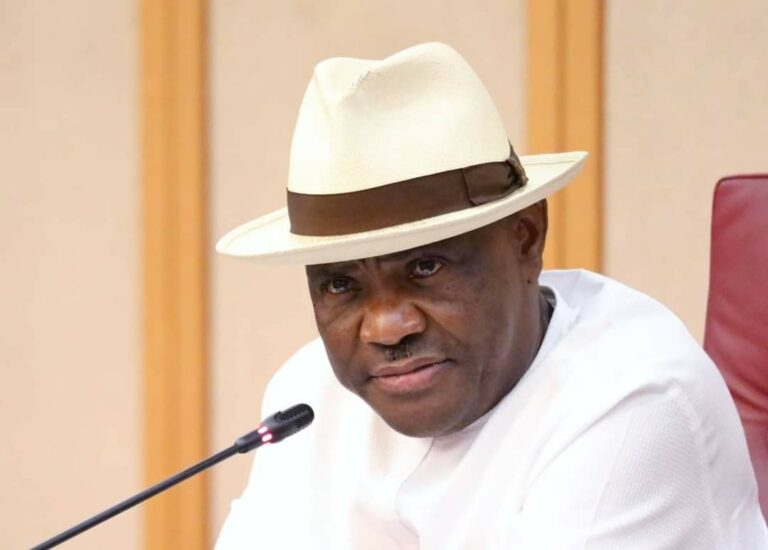
Wike counters NEMA, dismisses suicide bombing claim outside Abuja barrack

0

THE Federal Capital Territory Minister Nyesom Wike has dismissed claims by the National Emergency Management Agency (NEMA) that Monday’s explosion outside the Mogadishu Barracks in Abuja was a suicide bombing attempt.

Speaking with journalists on Wednesday, May 28, during a road inspection, Wike dismissed NEMA’s version of the event, insisting that the explosion was an accident, not an act of terrorism. 

He said the victim had unknowingly picked up an Improvised Explosive Device (IED) from a quarry site where rocks are blasted, placed it in his pocket, and it detonated later.

“The security agencies never stated that it was a suicide bomber. Therefore, we should avoid creating unnecessary fear among the public. NEMA is not the lead security agency; security agencies are responsible for such matters.

“What happened was that someone went to a quarry site, where rocks are blasted, and took an explosive device, placing it in his pocket without understanding its danger. The device then detonated on him.

“This does not mean it was a suicide bombing. We must be careful with the narratives we promote; we should not send misleading messages to residents,” he was quoted to have said.

Recall that NEMA had in a statement on Tuesday, May 27, painted a different picture.

According to the agency, a suspected suicide bomber wearing an IED tried to infiltrate the Mogadishu Barracks but the device exploded before he could gain entry, killing him instantly and injuring a passerby. 

The agency said the explosion occurred around 1:47 pm and involved multiple emergency responders, including the military, police, State Security Services (SSS), and the Federal Road Safety Corps (FRSC)

The statement reads in part: “The team met stern-looking security personnel at the already cordoned scene.

“Information gathered revealed that a suicide bomber attempted to sneak into the barrack but met his waterloo as the IED exploded on him while trying to negotiate an entry.

“The suicide bomber died instantly leaving one passerby injured. The EOD unit of the NPF (Nigeria Police Force) evacuated the injured to the National Hospital and took over the scene for further investigation; bringing the operation to a close at 17:29hrs.

“Stakeholders present included NEMA, Military, NPF, DSS, and FRSC.”

Meanwhile, the Federal Capital Territory Police Command has yet to confirm either version of the claims as it only stated that a “comprehensive investigation” was underway to determine the cause and nature of the explosion.

The Police Public Relations Officer, FCT Police Command, Josephine Adeh, in a statement, said officers from the Explosive Ordnance Disposal (EOD) Unit were deployed to the scene after the Command received a distress call around 2:50 pm. 

Adeh confirmed that one male victim was rescued and taken to a hospital, where he is receiving medical attention. 

“One male victim was rescued at the scene and promptly taken to the hospital, where he is currently receiving medical attention. A comprehensive investigation has commenced, including detailed forensic analysis, to ascertain the exact cause and nature of the explosion,” the statement read.


Every Nigerian to owe N770k as Tinubu’s new loan request pushes debt to N183trn

PRESIDENT Bola Tinubu has asked the National Assembly to approve new foreign loans worth $24.14 billion, a move that could raise Nigeria’s total debt to N183 trillion, if approved.

If this happens, every Nigerian could owe about N770,000 based on the country’s estimated population of over 237.5 million people citing estimated mid year data estimate from Worldometer.

The loan request, submitted on Tuesday, May 27, is aimed at funding key projects in infrastructure, health, education, and water supply. It comprises of

  • $21.54 billion in U.S. dollars

  • €2.19 billion, which equals about $2.5 billion

  • ¥15 billion (Japanese Yen), which equals around $102 million

When converted using the official exchange rate of N1,583.74 to $1 (as of the day before the request), the loan adds up to about N38.23 trillion.

Nigeria’s current debt situation

Nigeria’s public debt already stood at N144.67 trillion as of December 31, 2024, according to the Debt Management Office (DMO). Adding the new loan would increase the total to around N182.90 trillion.

What this means for Nigerians

With a population of 237.5 million, every citizen could technically be responsible for about N770,000 of the country’s total debt of N183 trillion.

This is a significant jump from N656,514 per person in September 2024, as reported  by The ICIR when the total debt was N142.32 trillion and the population was around 216.78 million.

Tinubu’s latest borrowing has spurred mixed reactions from concerned Nigerians and economic experts, and further generated political undertones.

President’s aide’s clarification

In a Facebook post on Wednesday, May 28, the special adviser to the president on economic affairs, Tope Fasua, described the latest request by his master as not seeking any large borrowings, but that the request was in line with a three-year plan, including for the states.

“The economy is growing, and borrowing is normal. Nigeria is still one of the least borrowed countries around the world and in Africa.

“Our focus is not on borrowing but on growing local capacity, productivity and revenues. The economy is transforming. Stay positive and get productively involved,” he asserted.

What the data shows about Nigeria’s economic growth, productivity

According to the National Bureau of Statistics (NBS), Nigeria’s GDP grew by 3.84 per cent in Q4 2024, and 3.40 per cent overall in 2024, an improvement from 2.74 per cent in 2023.

However, productivity remains a challenge. According to data on labour productivity (measured as GDP per hour worked) is low at $6.8, placing Nigeria 143rd out of 191 countries globally.

For a nation with the 6th largest population in the world, this labour productivity value reflects the disconnect between the country’s large population and its economic performance.

Nigerians react

A Development Economist, Kalu Aja, who spoke on the ballooning debt by the Tinubu administration, queried the lack of accountability in the fuel subsidy removal, stressing that,” If you cannot account for subsidy, you cannot account for borrowing.”

On his part, Laitan Ishola, while reacting to Fasua’s assertion, wants to know what the government use the loan it borrows for as compared to other countries.

“A significant portion of our borrowing is used for recurrent expenditure like salaries and overhead costs, rather than for infrastructure development. A considerable amount is also used to cover existing debt obligations.

“This same loan and bond are meant to settle outstanding national pension liabilities,” he lamented.

Adebowale Yusuf believes that a growing economy with a positive outlook through workable reforms needs good borrowings to transform into a bigger economy that can cater for all the needs of its populace within the shortest possible time.

He imagined that if the loan were used for infrastructure development, it could bring progress to the country.

He asked, “Is that not more revenues, more infrastructures, more employment and low inflation in the long run because of capacity enhancement and efficiency?”

Olagunju Olowu posits that “any foreign loan that is not tailored towards capital projects that have the capacity to yield a return on investment, whether in the short or long term, will lead to the economic crisis.”

Experts position 

Experts have repeatedly raised concerns about Nigeria’s debt sustainability and the country’s appetite for borrowing.

They have noted that inadequate infrastructure is hindering productivity, especially in the manufacturing and agricultural sectors.

The chief executive officer of Economy Associates, Ayo Teriba, had told The ICIR that “borrowing is not criminal as the country faces serious infrastructural challenges, but borrowing to pay interest on outstanding debts is wrong.”

Another renowned economist, Muda Yusuf, had said, “We need to be worried about the interest rate we pay on the Eurobond because it is commer­cial debt and we need to be worried about even the current interest rate on Treasury bills and Feder­al Government bonds, they are too high. These things impose a lot of pressure on government finances, from the point of view of debt servicing.”

A look at recent figures shows that Nigeria’s debt servicing costs have significantly increased, impacting its fiscal position.

In the first four months of the year, external debt servicing surged by 50 per cent year-on-year, reaching $2.01 billion, according to the Central Bank of Nigeria (CBN).

This increase is attributed to rising global interest rates and the depreciation of the naira, making dollar-denominated debt more expensive.

FCTA to announce hike in ground rent, says Wike

THE Minister of the Federal Capital Territory (FCT), Nyesom Wike, has announced that the FCT Administration would soon announce an increase in ground rent rates for property owners in the nation’s capital.

Addressing journalists on Wednesday after inspecting ongoing infrastructure projects in Abuja, Wike described the refusal of residents and institutions to pay ground rent as the biggest challenge facing his administration.

He lamented that despite the high demand for improved public infrastructure, many residents continued to evade their financial obligations to the government.

“My greatest challenge is the refusal of people to pay what they owe,” Wike said.

“People want facilities, they want infrastructure, but nobody asks where the funds come from. Abuja is not an oil-producing city; we rely solely on taxes,” he added.

The minister revealed that some defaulters owed as much as 20 years’ worth of ground rent, even though rates have not been increased for several years.

He criticised what he called a culture of entitlement and non-compliance, particularly among elites who, he noted, were quick to obey tax laws abroad but ignored them in Nigeria.

“It is unfortunate that many elites own houses overseas. They understand the consequences of not paying taxes abroad — such properties can be forfeited. Yet, when it comes to their own country, they refuse to comply simply because they believe there are no sanctions.

“Look at the arrears — 20, 30 years. And how much is it? We have not increased the ground rent, but we are working towards that, and I can assure you we will do so. The president has granted a two-week waiver. Let no one think that blackmail or intimidation will deter us; we will do what is necessary,” he vowed.

The ICIR reported on Monday, May 26,  that the FCT Administration began sealing off buildings whose owners failed to pay the ground rent.

Among those affected were high-profile institutions such as the National Secretariat of the Peoples Democratic Party (PDP), the National Agency for the Prohibition of Trafficking in Persons (NAPTIP), the Federal Inland Revenue Service (FIRS), a branch of Access Bank, and a TotalEnergies filling station.

The move sparked backlash from some quarters, with both the PDP and the FIRS condemning the Wike-led administration’s action as undemocratic.

Responding to the controversy, President Bola Tinubu intervened, issuing a 14-day ultimatum for all affected parties to settle their outstanding debts.

The directive also includes payment of penalties ranging between ₦2 million and ₦3 million, depending on the property’s location within the FCT.

Wike, however, remained resolute on Wednesday. “Let no one think that blackmail or intimidation will deter us; we will do what is necessary,” he said, reaffirming his commitment to enforcing the law regardless of status or affiliation.

The minister also disclosed that he had recently signed over 1,500 certificates of occupancy and deeds of assignment, stressing the need for residents to play their part in the city’s development. “If you pay your taxes, you will see the difference it makes. That is what we are striving to achieve,” he stated.

EGU seeks applications for Science Journalism Fellowship  

THE European Geosciences Union (EGU) seeks applications for the 14th edition of its Science Journalism Fellowship competition.

Journalists with an interest in earth, planetary, or space sciences are invited to apply for this fellowship. It provides an opportunity to accompany geoscientists in the field and gain a deep understanding of their research objectives, methods, discoveries, and motivations.

Applicants should propose a story idea centred on a geoscience topic, including planetary or space sciences, that has strong potential for public interest. Proposals should preferably spotlight prominent researchers based in Europe and demonstrate a unique, well-informed approach to the subject.

Selected fellows will receive up to EUR 5,000 (approximately US$5,594) to support project-related expenses.

The application deadline is June 17.

Interested applicants can apply here.

Schools shut down over diphtheria outbreak in Imo

0

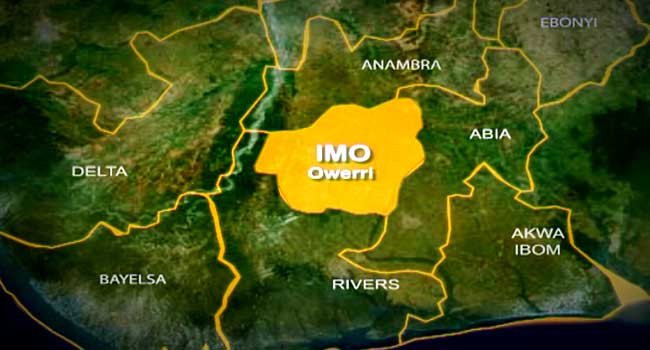
SCHOOL in Mbutu Community, Aboh Mbaise Local Government Area of Imo State, have been shut down following the outbreak of diphtheria that has claimed the lives of several children. 

The outbreak, which began less than a week ago, has already resulted in multiple fatalities, according to a report by Daily Trust.

Caused by a toxin produced by corynebacterium, diphtheria is a vaccine-preventable disease covered by one of the vaccines provided routinely through a childhood immunisation schedule.

The bacterial infection usually affects the mucous membranes of the nose and throat.

Confirming the development, the chairman of Aboh Mbaise LGA, Iheukwumere Henry Alaribe, in a statement dated Monday, May 26, announced the temporary closure of schools to prevent further spread of the disease. 

He said parents had been directed to keep their children indoors to reduce the risk of exposure.

Alaribe stated that the World Health Organisation (WHO), the Department of Disease Prevention and Control in the Imo State Ministry of Health, and health workers from the LGA were working together to investigate the outbreak and manage the situation. 

He added that an isolation centre had been established at Mbutu Health Centre, where affected children were being quarantined. 

He urged parents to vaccinate their children against diphtheria.

“In light of this outbreak, parents who have not yet vaccinated their children are strongly urged to do so without delay. Vaccinations are crucial for preventing the spread of diseases and protecting our children’s health,” the chairman stated.

The statement further appealed to the public to remain calm and cooperate with relevant authorities as efforts were on to control the outbreak.

The outbreak in Imo came amid growing national concerns over diphtheria in Nigeria. The House of Representatives, during a plenary session on March 12, had urged the Federal Government to launch a nationwide diphtheria vaccination campaign after the death of a 12-year-old student at King’s College, Lagos. 

The Lagos State Government had confirmed that 14 other students were hospitalised, out of which 12 responded well to antibiotics and diphtheria antitoxin therapy.

Reacting to the outbreak, lawmakers highlighted the rising toll of the disease, with over 24,000 confirmed cases and more than 1,200 deaths across multiple states since 2022, warning that without urgent intervention, more schools could face similar outbreaks.

Beyond calling for mass vaccination, the lawmakers also demanded an urgent review of health and safety measures in federal unity colleges. 

They emphasised the need for improved infection prevention strategies and a stronger emergency response framework to ensure student safety. 

Additionally, they urged relevant agencies to step up public awareness campaigns to educate parents and school authorities about the risks and prevention of diphtheria.

Two years in office: Peace eludes Plateau despite Gov Mutfwang inaugural pledge to confront insecurity

GOVERNOR Caleb Mutfwang of Plateau State first promised during his swearing into office on May 29, 2023, to tackle insecurity that had plagued the state since 2001.

However, the ‘Home of Peace and Tourism’ continued to witness mass killing and destruction as the violence spilled into rural areas of the state to this day.

Mutfwang, who had described the previous administration as a failure during his campaign speeches, emphasised the need for a new era of accountable and people-centred leadership in Plateau State.

“We cannot afford to trade off the destiny of our great people of Plateau State due to meaningless personal squabbles and disagreements. The APC led government has failed disastrously in the most basic responsibility of protecting its citizens and their properties,” he said in one of his speeches.

Vowing to restore the glory of Plateau State, Mutfwang declared, “The time for the deliverance of our people is now”—a phrase that has since become a defining slogan of his administration.

Two years after assuming office 

Although attacks had continued since Mutfwang assumed office, a series of attack  staBillrted on December 23 and continued through to Christmas day, 2023. Over 96 people were reportedly killed in several communities in the Barkin-Ladi and Bokkos lLocal Government Areas (LGAs).

The Police confirmed that 221 houses were set ablaze across 12 villages, farm produce were looted, while many residents were also injured. Other reports revealed at least 140 people dead.

Not long after terrorist issued fresh threats on December 29 via a letter, to residents of Pushit community in Mangu LGA, a neighbouring LGA with Bokkos and Barkin-Ladi, the government imposed a dusk-to-dawn curfew on January 23, 2024.

At least 30 people were reported to have died, and several others injured in a series of attacks Mangu town, despite the curfew imposed.

According to Amnesty International, from December 2023 to February 2024, at least 1,336 people were killed. Of those killed, 533 were women, 263 were children, and 540 were men.

More than 18,000 people were displaced from the three LGAs within the period.

The ICIR reported in June 2024 that despite insecurity plaguing Plateau, the state government appropriated N3.5 billion naira for lawmakers refreshments.

In October 2024, Bokkos witnessed more than ten devastating attacks in atleast eight of its communities.

The targeted communities where the inhabitants are mostly farmers struggling to rebuild their lives after the incessant attacks on them by gunmen suspected to be bandits and terrorists.

Again in March 2025, Bokkos was plunged into another crisis with the death toll rising after the recovery of 40 additional bodies to 52, on 6 and 7.

President Bola Tinubu vowed that those behind the gruesome attacks will be apprehended and made to face the full weight of the law, even though  data is scarce on the number of assailants arrested who have continued to commit these atrocities in Plateau State.

Tinubu described the violence as “unacceptable” and directed security agencies to hunt down the perpetrators.

However, Muftwang described the recent wave of violence in the rural communities as a genocidal attack, alleging that the assault on the region is sponsored and deliberate. He decried that bandits have taken over 64 communities in his state, insisting that the violence was not retaliatory but rather part of a deliberate campaign to uproot indigenous communities.

The governor expressed outrage over the continued killings and attributed the attacks to unidentified terrorist groups.

Not long after Bokkos attack, over 40 people were killed in a midnight attack on Zike community in Bassa, on March 14. Mutfwang urged citizens to be vigilant and defend themselves against recurring attacks by criminal elements.

In a reaction to the attack in Bassa, Tinubu condemned the violence in Plateau State, urging the governor to find a lasting solution to persistent communal conflicts.

“We cannot allow this devastation and the tit-for-tat attacks to continue. Enough is enough. Beyond dealing with the criminal elements of these incessant killings, the political leadership in Plateau State, led by Governor Caleb Mutfwang, must address the root cause of this age-long problem,’ Tinubu said.

Plateau State was hitherto known for its harmonious communal relations, hillsides, spectacular waterfalls, high altitude, and a temperate climate that has long attracted foreign visitors. However, violence broke out in September 2001, following a political disagreement that led to the killing of at least 1,000 people, leaving approximately 220,000 displaced persons in less than one week.

US suspends new student visa interviews over social media vetting policy

THE United States (US) government has temporarily suspended scheduling of new interviews for student and exchange visas, a move that may impact thousands of Nigerian students hoping to study in America.

According to a report by Politico, the decision is part of a wider plan by the US to expand its social media screening and vetting procedures for prospective students.

Politico reported that a diplomatic cable from the US Secretary of State, Marco Rubio, instructed consular sections to halt new appointments for F, M, and J visas until further notice.

However, the cable clarified that interviews already booked would proceed as scheduled, meaning students with existing appointments are not affected.

The cable, dated Tuesday, May 27, reads: “Effective immediately, in preparation for an expansion of required social media screening and vetting, consular sections should not add any additional student or exchange visitor (F, M and J) visa appointment capacity until further guidance is issued.”

This development comes as a major blow to Nigerian students, who make up a significant portion of international students in the US.  Nigeria ranks as Africa’s leading source of international students and 7th globally.

According to the 2024 Open Doors Report on International Educational Exchange, Nigerian student enrollment at US colleges and universities rose to 20,029 in the 2023/2024 academic year, marking a 13.5 per cent increase from the previous year.

The sudden halt in visa processing followed earlier signals from Rubio, who in March, 2025, had expressed concerns about students allegedly using American universities for activism instead of academics. 

The US Secretary of State cited the case of Rümeysa Öztürk, a Tufts University doctoral student, who was arrested and later released on bail after writing an op-ed in support of Gazans during the Israel-Hamas conflict.

This development was also on the heels of the US government revoking Harvard rights to enrol foreign students effective immediately.

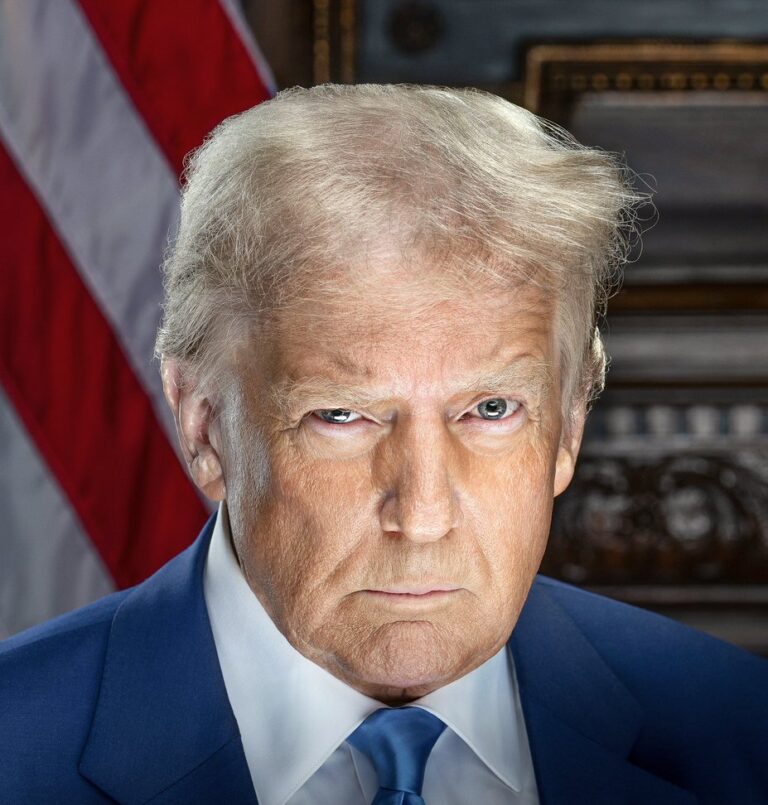
The President Donald Trump’s administration, through the Department of Homeland Security (DHS), had on Thursday, May 22, accused Harvard of refusing to comply with requests for records involving nonimmigrant students, ranging from disciplinary records to protest-related footage spanning the past five years.

The DHS Secretary, Kristi Noem, alleged that Harvard had created an unsafe campus environment that was hostile to Jewish students, promoted pro-Hamas sympathies, and enforced racist diversity, equity, and inclusion policies.

She stressed that as a result, the university had forfeited the privilege of enrolling international students.

Tinubu seeks NASS approval for fresh $21.5bn loan, N758bn pension bond

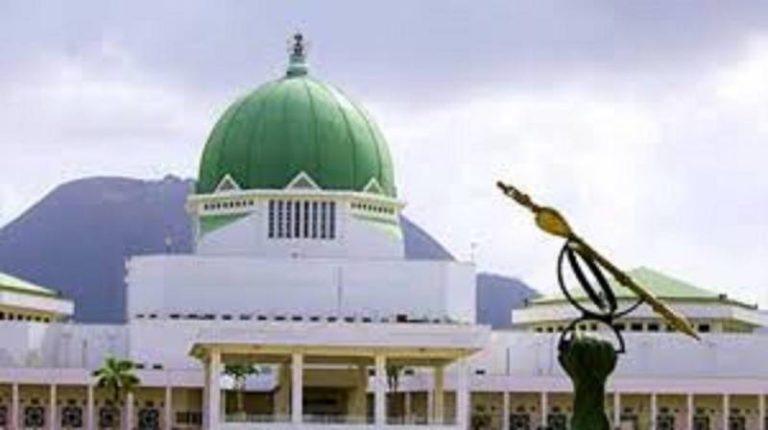
THE National Assembly has received a formal request from President Bola Tinubu for a $21.5 billion external loan and a N758 billion domestic bond to settle outstanding pension liabilities.

The requests were read on the floor of the Senate during plenary on Tuesday, May 27.

The loan is aimed at financing critical projects across various sectors of the economy, particularly infrastructure, health, education, and water supply.

It has been referred to the Senate Committee on Local and Foreign Debts for scrutiny, with a report expected within two weeks.

Similarly, Tinubu sought the Senate’s authorisation for the issuance of Federal Government bonds in the domestic debt market to settle outstanding pension liabilities under the Contributory Pension Scheme.

The bond issuance, amounting to N757.9 billion, is intended to address long-standing pension arrears and fulfil the government’s commitment to retired public sector workers.

The president also requested Senate approval to raise $2 billion from the domestic market to support investments in critical sectors of the economy.

“This request is under the provisions of Section 44 (1) and (2) of the Fiscal Responsibility Act 2007 and Section 1(7) of the Executive Order, which requires National Assembly approval for all new borrowings and appropriation of the proceeds,” Tinubu stated.

The request was also referred to the Committee on Local and Foreign Debts for consideration within two weeks.

Tinubu had written to the House of Representatives, requesting approval for the revised 2025–2026 external borrowing plan.

Under the plan, the president sought to borrow $21.5 billion, €2.2 billion, 15 billion Japanese yen, and a €65 billion grant.

According to the letter, read on the floor of the House by the Speaker, the loans are intended to address the country’s infrastructure deficit and improve employment, among other objectives.

The ICIR can report that Nigeria’s total public debt rose to N144.67 trillion as of December 31, 2024.

This is because the Federal Government depends on both external and domestic borrowing to fund critical projects amid revenue shortfalls.

However, there have been calls on the government to be more prudent in its spending while utilising its limited resources for strategic purposes.

In its 2025 Appropriation Act, the Federal Government is running on a N54.99 trillion budget. However, a recent disclosure by BudgIT raised concern that over 11,000 projects worth nearly N7 trillion were inserted in the 2025 budget by the National Assembly.

A breakdown of the budget shows the country is to spend N14.317 trillion for debt servicing, N13.64 trillion for recurrent expenditure, and N23.963 trillion on capital expenditure (development fund), with the fiscal deficit put at N13.08 trillion.

Tyla beats Wizkid, Tems, Asake to claim Afrobeats Artist Award

SOUTH African superstar Tyla solidified her status as Africa’s leading musical export on the international stage, taking home the Favourite Afrobeats Artist award at the 2025 American Music Awards held Monday night at the glitzy Fontainebleau, Las Vegas.

The 22-year-old ‘Water’ hitmaker outshone a stacked category that featured some of Nigeria’s biggest musical giants Wizkid, Rema, Tems and Asake.

Asake earned his nomination following the success of his third studio album Lungu Boy, while Tems was recognised for her acclaimed debut Born In The Wild.

Rema’s nomination came on the heels of his sophomore release – HEIS – which cemented his place as one of Africa’s most consistent hitmakers

Tyla’s win further cements her trailblazing momentum as the face of a new generation of Afrobeats and Amapiano artists breaking barriers globally.

But the night belonged to Billie Eilish, who swept all seven of her nominated categories, including Artist of the Year, Album of the Year, and Song of the Year, making her the most awarded artist of the evening.

In a surprising twist, fan favourites Taylor Swift and Ariana Grande walked away empty-handed, suffering the night’s biggest snubs despite multiple nominations.

Hip-hop legend Eminem made a notable comeback, winning his first AMA in 15 years. He clinched Favourite Male Hip-hop Artist and Favourite Hip-hop Album, marking a triumphant return to the awards spotlight.

The 2025 American Music Awards once again highlighted the global evolution of music, with artists like Tyla proving that African stars are not only present but they are dominating.