Home Blog Page 273

Obi questions N700k fee on Anambra drug traders despite shop closures

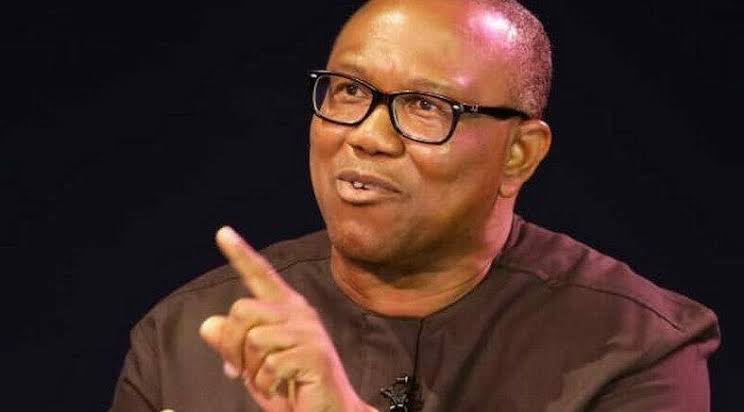
FORMER Anambra State Governor, Peter Obi, condemned the alleged demand of N700,000 from traders to reopen their Onitsha Head Bridge Market shops.

The former Governor described the action as “insensitive” and called on authorities to reconsider the charge.

The ICIR reports that the N700,000 demand and an ‘undertaking form’ to be signed by pharmaceutical traders’ shop owners across the board, followed months of closure of the market by the National Agency for Food and Drug Administration and Control(NAFDAC) in its fight against substandard drugs. The N700,000 payment and signing of the letter of undertaking by all pharmaceutical traders at the Onitsha Head Bridge market shops is a precondition for reopening of their shops, respectively, an affected shop owner who was not officially authorised to speak on the matter told The ICIR.

Obi, in a statement released on Tuesday, May 27, via X, recalled his earlier visit to the market during the initial phase of its closure. He said he had stood in solidarity with regulatory authorities, including the National Agency for Food and Drug Administration and Control, in their efforts to rid society of fake drugs and counterfeit goods.

“I recall visiting the Head Bridge Market during the initial phase of its closure, standing in support of the authorities to ensure our society is free from fake drugs and counterfeit goods,” Obi stated.

NAFDAC Logo and professor Adeyeye
NAFDAC Logo and The Director General of NAFDAC, Prof Christianah Adeyeye

He explained that his support was based on the understanding that investigations would be conducted quickly and the market reopened promptly to reduce the hardship on small business owners, many of whom are already struggling under Nigeria’s current economic climate.

“It is, therefore, deeply unfortunate to learn that shop owners are now being asked to pay N700,000 to reopen their stores,” he said.

Obi expressed concern over the impact of such charges on small and medium-scale enterprises, pointing out that more than seven million Micro, Small, and Medium Enterprises have collapsed in Nigeria in the past two years.

“Our MSMEs’ businesses are at a ‘we can’t breathe’ stage, and the very system that should be offering them oxygen to support their breathing is instead suffocating them,” he said.

He described the demand for such payment as “economic sabotage” and urged relevant authorities to reconsider the decision in the interest of justice and economic recovery.

“These shop owners have already endured prolonged closures, mounting unpaid bills, and economic strain. Adding further burdens to them and their families at this time is simply unjust,” Obi added.

While affirming his earlier position, the former presidential candidate said, “Let us prioritise compassion, economic recovery, and the survival of our small businesses at this critical time in our nation.”

He appealed to the authorities once more, saying, “Please review and drop this charge. Allow these businesses to reopen. Compassion must lie at the root of government action.”

Meanwhile, a pharmaceutical dealer at the Onitsha Bridge Head Market, who is a victim of business closure but explained that he was not among those found guilty of fake drug selling, while speaking with The ICIR  alleged that “the exercise was shrouded in secrecy.”

“They didn’t make their findings on the so-called fake drug. How can everyone with a shop pay N700,000 whether NAFDAC finds them culpable of fake drugs or not? The payment is across the board and not even those not guilty of fake drugs are exempted,” he noted.

The ICIR reached out to NAFDAC’s official spokesperson, Abubakar Jimoh, but the phone was switched off as of the time of filling this report.

Explosion near Abuja military base sparks fresh security concerns

0

BARELY five months after a deadly blast rocked a school in Abuja, Nigeria’s capital, another explosion has sent shivers down the spines of the city’s residents.

On May 26, an explosion rocked a bus stop opposite the Mogadishu Cantonment, one of the largest military barracks in Abuja.

Initial reports indicated that the blast claimed the life of one person, suspected to be a suicide bomber, while another individual was critically injured.

A short statement by the Nigerian Army on its X handle, confirmed the incident, adding that the explosion happened at the bus stop opposite the cantonment.

“Explosion at bus stop opposite Mogadishu Cantonment, Abuja. Situation under control. Details later,” the statement read.

Reacting to the incident, the Federal Capital Territory Police Command confirmed that a “comprehensive investigation” was underway to determine the cause and nature of the explosion.

The Police Public Relations Officer, FCT Police Command, Josephine Adeh, in a statement, said officers from the Explosive Ordnance Disposal (EOD) Unit were deployed to the scene after the Command received a distress call around 2:50 pm. 

The area, located along the busy Mararaba-Nyanya bypass, was cordoned off to ensure the safety of residents and commuters.

Adeh confirmed that one male victim was rescued and taken to a hospital, where he is receiving medical attention. 

“One male victim was rescued at the scene and promptly taken to the hospital, where he is currently receiving medical attention. A comprehensive investigation has commenced, including detailed forensic analysis, to ascertain the exact cause and nature of the explosion,” the statement read.

While the military and police did not officially confirm any deaths, videos circulating from the scene showed a man’s lifeless, disfigured body being carried into a security vehicle.

This latest explosion came barely five months after the incident at the Tsangagyar Sani Uthman Islamiyya School in Kuchibuyi village, Bwari Area Council, where an improvised explosive device (IED) detonated, killing two men who had allegedly brought the device to the school. 

The blast also left a female trader and a third visitor critically injured.

Abuja has not only witnessed attacks by suspected terrorists, it has seen several cases of abduction of its residents by gunmen in recent months.

Children’s Day: Tinubu seeks end to bullying, other abuses

NIGERIA is celebrating Children’s Day today – a day set aside to honour and reflect on the challenges facing children, and the importance of children in national development.

This year’s theme, “Tapping into the Untapped Natural Treasure,” highlights the immense potential children hold and the urgent need to nurture, protect, and empower them.

In a statement personally signed by President Bola Tinubu and released by the Presidency on X to mark the day, Tinubu described Nigerian children as “the heartbeat of our nation’s future and the custodians of tomorrow’s promise, innovation, and leadership.”

However, he warned that these treasures would not thrive in an environment plagued by bullying, violence, and neglect. 

He condemned child bullying in all forms and emphasised the need to build a society where every child feels safe, respected, and heard – both in physical spaces and online.

“Just to be clear, violence, bullying, and neglect have no place in the Nigeria of today,” the President said, adding that “A child who learns in fear cannot learn well. A child who grows in fear cannot grow right.”

Citing troubling statistics on issues affecting children, Tinubu noted that globally, more than one in three children experience bullying, while in Nigeria, up to 65 per cent of school-age children faced physical, emotional, or social aggression.

He said the situation was unacceptable and promised stronger action by his government.

The president outlined key initiatives already underway in Nigeria, including the National Plan of Action on Ending Violence Against Children (2024–2030), which provides a strategic framework for prevention, prosecution, and support for victims.

He also acknowledged progress in child protection laws, noting that all 36 states had domesticated the Child Rights Act.

However, Tinubu stressed that laws alone were not enough and that there must be collective action from parents, teachers, religious leaders, lawmakers, and communities at large to address issues affecting children.

“I commend states taking bold steps for our children’s welfare and urge those yet to act: now is the time. Our children are not just statistics – they are the heart of our nation,” he said.

He challenged Nigerians to recognise children not just as future leaders, but as present-day treasures who deserve dignity, peace, and love.

FCTA seals PDP headquarters, others

THE Federal Capital Territory Administration (FCTA) sealed off the headquarters of the Peoples Democratic Party (PDP) in the Wuse district of Abuja on Monday, May 26.

According to eyewitnesses, FCTA officials arrived at the premises around 2 p.m. and directed the security personnel to contact those responsible for the property.

The move is linked to a broader initiative launched in March by the Minister of the FCT, Nyesom Wike, targeting properties with outstanding ground rent obligations.

The PDP headquarters is among 4,794 properties whose land titles were revoked by the FCTA for non-payment of ground rent, some for over four decades.

The revocation list, approved by Wike, includes a number of high-profile institutions and organisations, namely Central Bank of Nigeria (CBN), Independent National Electoral Commission (INEC), Nigerian National Petroleum Corporation (NNPC), Nigerian Television Authority (NTA), and the News Agency of Nigeria (NAN).

Others affected include Borno and Kaduna State Government lodges, Nigerian Security Printing and Minting Company, Nigerian Postal Service, and the Power Holding Company of Nigeria (PHCN)

The FCTA had warned that enforcement would proceed regardless of ownership, stressing that the government would act in line with established legal procedures.

“Ownership of the revoked 4,794 properties… had already reverted to the FCTA,” the FCTA stated, adding that “As from Monday, next week, the government will begin to exercise its rights of ownership on the affected landed properties without consideration as to ownership.”

The PDP, one of Nigeria’s main opposition parties,  has yet to issue an official statement on the sealing of its headquarters.

The ICIR reports that Wike is a PDP member who took appointment in President Bola Tinubu’s government, after the president won the 2023 election.

Since he accepted the offer, endorsed by his party, the PDP has been in tatters, swimming in pools of crises that have led to many of its members detecting to the ruling All Progressives Congress (APC)

Many stakeholders in the party have been at war with the minister, including Governor Siminalayi Fubara, his successor in Rivers State, where he was governor for eight years before becoming a minister.

Tinubu eventually suspended Fubara for six months after the crisis between him and Wike got to its peak in March.


Saudi Arabia deports Sheikh Gumi, blocks him from performing Hajj

0

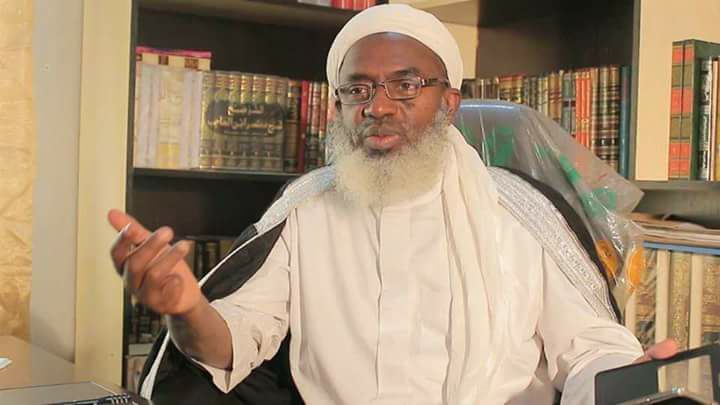
CONTROVERSIAL Kaduna-based Islamic scholar, Ahmad Gumi, has been barred from participating in the 2025 Hajj pilgrimage.

Gumi was deported by Saudi authorities after he was initially granted a visa to travel to the country.

Gumi, who reportedly arrived in Medina on Saturday, May 24, around 10:30 p.m. aboard an Umza Air flight, was denied entry and deported upon arrival.

The Hajj is an annual Islamic pilgrimage to Mecca, Saudi Arabia, and is considered one of the five pillars of Islam. It is a mandatory religious duty for Muslims that must be carried out at least once in their lifetime by all adult Muslims who are physically and financially capable of undertaking the journey. 

Confirming the incident on his Facebook page on Monday, May 26, Gumi suggested that his political views might have influenced the decision.

“For some obvious reasons, my views about the world politics, the Saudi authorities are uncomfortable about my presence in Hajj after giving me the Hajj Visa,” he said.

He further expressed gratitude to the Nigerian government for promising to intervene with Saudi authorities, saying: “Thanks to the Nigerian authorities who have pledged to take up the matter immediately with Saudi authorities. That is the value of our cherished freedom and democracy.”

While Gumi did not specify the exact reasons for the Saudi decision, his controversial public positions on national security and terrorism in Nigeria have often placed him in the spotlight. 

The ICIR reports that Gumi has been outspoken about the killings of children and women in the ongoing Gaza-Israel conflict.

In several of his posts, he has condemned the violence in Gaza, sharing reports that blame the administration of United States President Donald Trump.

He has also criticised Arab leaders for ‘welcoming’ Trump into their countries despite his policies on the conflict.

Previously, Gumi has acted as a negotiator between the Nigerian government and terrorists whose hideouts he had visited in different states with the sacked Executive Secretary of the National Health Insurance Scheme (NHIS), now the National Health Insurance Authority (NHIA), Usman Yusuf, a professor.

Gumi had also called for dialogue with the terrorists on several occasions, saying that terrorists had taken up arms due to government neglect and injustice and that they did so in self-defence.

He predicted that the country would be peaceful if terrorists were granted free education and basic amenities. He also warned against using the military approach to address insecurity in the North, recommending that amnesty be granted to them.

A day after bandits were declared terrorists in Nigeria, Gumi had described the decision as an exercise in futility.

“The decision by the government will not have any practical value because even before the declaration, they had been fought and treated as terrorists. So it is just a nomenclature which I believe will not change the dynamics on the ground,” he had said.

Global Youth and News Media Prize seeks entries

THE 2025 edition of the Global Youth and News Media Prize seeks entries for its journalism award. 

This year’s award highlights outstanding collaborations with young people that help strengthen and sustain local newsrooms.

The competition is open to all types of news organisations worldwide, regardless of platform, age group, or structure.

To be eligible, the outlet must be effectively serving a local community, in part through a meaningful partnership with young people (defined as those up to university age).

Entries may be submitted directly by candidates or nominated by third parties. The award aims to showcase and share impactful examples of successful youth and newsroom collaborations globally.

The submission deadline is June 16, 2025. Apply here.

Reps succumb to pressure, withdraw bill seeking to force Nigerians to vote

THE House of Representatives has announced the withdrawal of a controversial bill that sought to amend the Electoral Act 2022 and make voting compulsory for eligible Nigerians following widespread public outcry.

The Speaker, Tajudeen Abbas, announced the withdrawal of the bill on Monday, May 26, in a statement, noting that the decision followed consultations with key stakeholders.

The ICIR reported that the bill was co-sponsored by the Speaker and Daniel Asama Ago, and had passed its second reading. It proposed penalties, including potential jail terms, for citizens who failed to vote in elections.

It imposed a maximum of six months imprisonment or a fine of no more than N100,000 for Nigerians of voting age who fail to vote during elections.

Prominent human rights lawyers and civil society groups were quick to condemn the bill. They called it unconstitutional.

Human Rights lawyers Femi Falana, Olisa Agbakoba, Yiaga Africa, an election observation and civic advocacy organisation, disapproved of the bill in separate statements. 

In the latest statement, the Speaker said the bill was introduced with the best intentions to boost civic engagement and address low voter turnout, which has plagued recent electoral cycles in Nigeria.

“The Speaker of the House of Representatives, Abbas Tajudeen, wishes to inform the public that, following extensive consultations with a broad spectrum of stakeholders, he has decided to withdraw the Bill to Amend the Electoral Act 2022 to make voting mandatory for all eligible Nigerians, which he co-sponsored with Daniel Asama Ago.

The speaker explained that the bill was introduced to bolster civic engagement and strengthen democracy by encouraging higher voter turnout, copying from countries like Australia, Belgium and Brazil.

“Compulsory voting has long been practised with notable success in countries such as Australia, Belgium and Brazil, where it has helped sustain participation rates above 90 per cent, while nations like Argentina and Singapore have also implemented similar measures to foster inclusivity at the ballot box,” the speaker said.

Tajudeen noted that he acknowledged that lawmaking is ultimately about the people and that any reform must respect individual freedoms and public sentiment. Rather than compel participation, he said he was committed to exploring positive incentives and innovative approaches that would make voting more attractive and accessible to all Nigerians.

The Speaker stated that the withdrawal would create room for further dialogue on how to best foster a culture of voluntary participation that respects both democratic values and the rights of citizens.

It’s worth recalling that this public outcry echoes a similar backlash in 2024, when the same Speaker who sponsored this bill was forced to withdraw a controversial bill he proposed and was widely condemned for threatening free speech and silencing dissent.

The Counter Subversion Bill, which had reached the first reading in parliament, was pulled back by Abbas, after widespread condemnation by Nigerians.

The bill, introduced in July 2024, included 24 clauses that proposed harsh penalties for a range of activities deemed subversive. Among the most contentious measures was a 10-year prison sentence or a hefty fine for refusing to recite the national anthem, and a five-year sentence for erecting illegal roadblocks or organising unauthorised protests and curfews.

Police confirm abduction of resident in Abuja estate

0

TENSION gripped residents of Kuchibuyi village in the Byazhin area of the Federal Capital Territory (FCT) after gunmen stormed Grow Homes Estate in the early hours of Monday, May 16, and abducted two people in a daring attack.

The FCT Police Command, in a statement by its spokesperson Josephine Adeh, confirmed the incident, stating that the attackers gained access to the estate by breaching the rear perimeter fence. 

Adeh noted that a distress call was received around 1:00 a.m. from police officers stationed in front of the estate, adding that while responding to the incident, officers engaged the attackers in a gun battle that lasted approximately 40 minutes.

She further stated that one of the abducted victims, identified as Chinyere Joe, was rescued during the shootout, while the second victim was taken away by the fleeing assailants.

“Upon swift deployment to the scene, it was discovered that the armed attackers had breached the estate through the rear perimeter fence and forcefully abducted two victims. 

“The responding police officers exchanged gunfire with the attackers for about 40 minutes and rescued one of the victims, identified as Chinyere Joe. Unfortunately, the attackers escaped with the second victim,” the statement added.

The police anti-kidnapping unit, in collaboration with the Army and other security agencies, has launched an intensive operation to track down the perpetrators and rescue the remaining abducted victim.

The police urged residents to remain vigilant and cooperate with law enforcement officers by reporting any suspicious activity.

The attack on Grow Homes Estate in the Byazhin area of the Federal Capital Territory (FCT) is not an isolated incident as it highlights a disturbing pattern of insecurity that has increasingly plagued Nigeria’s capital and its surrounding areas in recent years. 

For instance, in February 2025, The FCT Police Command rescued a 25-year-old lady, Promise Eze, from a suspected ritualist and armed robber at a hotel in the Wuse area of Abuja. 

According to the statement, Promise Eze, from Ebonyi State, was found on Friday, January 31, tied to a chair, and her mouth sealed with plaster.

“She was found unconscious and in distress. Officers acted immediately, freeing her from captivity and rushing her to Wuse District Hospital, where she was resuscitated,” the police said.

A similar incident occurred in a hotel in the Wuse area of Abuja in 2024, where a man was apprehended for allegedly attempting to kill a lady for ritual purposes.

The man had reportedly tied the lady’s hands and legs but was caught and forced to loosen her.

He was eventually arrested by officers of the National Security and Civil Defence Corps (NSCDC) and handed to the FCT police who paraded and charged him in court.

Earlier in January this year, The ICIR reported how Eliojo Salomey, a 24-year-old serving National Youth Service Corp (NYSC) member based in Mararaba, a fast-growing community near Abuja, was allegedly butchered by her boyfriend, a gospel singer, Timileyin Ajayi.


FLASHBACK: Tinubu asked Jonathan to resign in 2013, 2014, but what has changed under him?

BEFORE coming into power, PRESIDENT Bola Ahmed Tinubu at various intervals repeatedly urged former president, Goodluck Jonathan, to resign over Boko Haram attacks before coming into power. Two years into his tenure, however, questions are being raised as to whether Tinubu has made any difference.

In March 2013, Tinubu called on Jonathan to immediately resign for his failure to curtail the worsening insecurity challenges bedevilling the country.

“If it is happening in these other states for some of these years and you have not gathered enough intelligence to nip it in the bud you have failed, please resign, you cannot continue to blame one IGP or the other,” he said.

In November 2014, Tinubu, who was the National Leader of the All Progressives Congress (APC), said Jonathan’s administration lacked the wherewithal to tackle the country’s security challenges.

Tinubu said, “I saw the sea of refugees caused by the Boko Haram insurgents and the lies coming from Jonathan’s administration. They have exhibited failure, lack of capacity, vision and creativity. The lies of yesterday are what they repeat today and are what they will repeat tomorrow. They are lying to you.”

Tinubu who accused the Jonathan government of lying and toying with the security said: “I don’t have time to explain the logic of their lies.”

Fast forward to December 2014, Tinubu argued that Jonathan, through his constant excuses to Nigerians, had effectively admitted his inability to govern the nation, and therefore insisted that he should resign.

Tinubu, who made these declarations during project commissioning or official government ceremonies, consistently expressed the wisdom that his party would have handled the situation more effectively.

In one of his statements, he said, “If you control the armed forces and you are the Commander-in-Chief of the Armed Forces of the Federal Republic, why should any part of this country be under occupation? And you give us excuses every day. In any civilised country Jonathan should have resigned. But if he will not resign, he should wait for our broom, we will sweep him away. 

“The thieves that daily steal your money have not given you any job, they cannot create jobs, and they are starving states of funds to pay workers’ salaries. The best thing to do is to sweep them away through broom revolution. APC is a party of the masses.

“It now behoves on you to begin a house-to-house campaign that this is a party of the masses.”

After emerging as the All Progressives Congress (APC) presidential candidate for the 2023 general elections, in June 2022, Tinubu promised a secure a prosperous and united Nigeria in his victory speech.

He said his emergence as president would birth a new orientation for nation-building and national transformation.

He emphasised the need for love among the country’s nationalities and a shift from an era of division, violence and hate across the nation.

He also promised to eliminate criminals, including terrorists. “They have been worrying us, but we will eliminate them. We are Nigerians. We are sure that no animal in the darkness of the night, no intruders, no destroyers, can bring Nigeria backward.

“On security, my policy is not artificial, created to sound good for this campaign. Our security policy is based on dedicated study and long conversations with experts in this field.”

What has changed?

Tinubu was sworn in as the President of the Federal Republic of Nigeria on Monday, May 29.

In his inaugural speech on May 29, he also pledged to prioritise security and effectively tackle the menace of insecurity.

“Security shall be the top priority of our administration because neither prosperity nor justice can prevail amidst insecurity and violence.

“To effectively tackle this menace, we shall reform both our security Doctrine and its Architecture.

“We shall invest more in our security personnel, and this means more than an increase in number. We shall provide better training, equipment, pay and firepower,” the President stated.

However, Amnesty International (AI) on June 14, 2023, said more than 120 people were killed a few days after Tinubu assumed power.

The ICIR data showed that the security situation did not change under his administration, as over 600 people were killed under him within 45 days between May 29 and July 13, 2023.

According to data, the killings happened primarily from activities of non-state actors like bandits, Boko Haram insurgents, ethnic militias, armed robbers and other non-state actors.

In June 2024, frustrated after marking one year in office battling increasing insecurity, Tinubu vowed revenge against terrorists condemning the bomb attacks in Gwoza Local Government Area of Borno State.

The President described the attacks as desperate acts of terror and a clear manifestation of desperation arising from pressure mounted against terrorists by the Nigerian security forces.

At least 2,336 people were killed in various violent attacks within the first three months of 2024, according to data sourced and analysed by The ICIR.

This shows an approximate average of 26 persons killed daily between January 2024 and the end of March 2024. 

Also in March, over 100 students were kidnapped in Kuriga town in Kaduna state. The incident generated public outrage among Nigerians.

Insecurity continued unabated, resulting in more than 4,556 fatalities and 7,086 abductions between 29 May 2023 and 22 May 2024, according to the ICIR data.

Resign if you can’t handle insecurity 

In January 2024, following a surge in kidnapping cases, a former Vice President of Nigeria, Atiku Abubakar, advised Tinubu to resign if he could not handle the insecurity challenges currently bedevilling Nigeria.

He accused the President of being a fiddler when the nation was insecure.

A few days after Atiku’s call, civil society organisations (CSOs) in Nigeria also appealed to Tinubu to declare an emergency due to the nation’s insecurity. 

Tinubu cancelled his 72nd birthday celebration, scheduled for Friday, March 29, due to the rising hardship and insecurity in the country.

In October 2024, Tinubu said his administration made significant progress in the fight against insecurity 16 months after he took over.

Experts and high-profile individuals have continued to call the President out for failing to handle the rising insecurity and accused him of enjoying foreign trips while insecurity continued to ravage the country, particularly Benue, Borno, Plateau to Niger, and Ondo to Sokoto.

Similarly, the Labour Party (LP) presidential candidate, Peter Obi, recently asked President Bola Tinubu to immediately suspend his ongoing retreat in France and return to confront the escalating wave of insecurity sweeping across the country.

Obi’s statement came amid widespread outrage over a series of deadly attacks that rocked communities in Plateau and Benue States, since Tinubu departed from Nigeria on April 2.

However, the Federal Government claimed that Tinubu was effectively in charge of Nigeria’s governance from Europe. 

After vowing that those behind the attacks on several communities in Plateau State would be apprehended, the president pushed the responsibility to the state governor, Caleb Mutfwang, asking him to address the “age-long” communal issues connected to killings in the state.

The ICIR reports that the president has only condoled with the families and the states struggling with insecurity without taking any effective action to combat the issue despite vowing repeatedly to bring those involved to account.

Monarch berates government failure to prosecute ‘real crude oil theft’

0

THE chairman of the Traditional Rulers Council of Bayelsa State, Bubaraye Dakolo, has criticised the Federal Government for failing to prosecute and jail people he described as real perpetrators of oil theft in the Niger Delta region.

Dakolo chided the government for the neglect, despite the trillions of dollars worth of crude stolen from the country, and oil being the mainstay of the nation’s economy.

Dakolo expressed his displeasure with the situation on Monday, May 26, during a Channels Television programme, ‘The Morning Brief.’

He said rather than the government identifying and prosecuting the real thieves, it goes after poor residents in the region.

He said, “From the record we have today, there are about 200,000 barrels of crude oil stolen every day, and this amount of crude oil cannot be put in your mouth or pocket. So, ocean-going vessels are used in stealing them, but the Nigerian State is chasing victims of oil thievery — those who are not able to go to school, those who are not able to buy trousers for themselves, those who cannot afford three square meals.

“The oil thief is not the youth in the Niger Delta who are painted as oil thieves. The oil thieves usually have properties on Banana Island and in choice places in Abuja. The oil thief will have properties in London and other parts of Europe and America.”

Dakolo alleged that the real oil thieves would have a yacht, glossy skin and would not want to come to the creeks of the Niger Delta even for a day.

“If he has to come, he will come with a military escort, police escort, doctors, nurses, and all.

“In case he is bitten by a mosquito, they would have to cure him because he loves his life dearly, he wouldn’t want to take the risk of coming to be in the swamps of the Niger Delta,” the Monarch maintained.

While berating the government for not knowing who the real oil thieves were, Dakolo claimed that no oil thief had been arrested, prosecuted, and jailed by the Nigerian government for years.

“If you go to the Kirikiri Correctional Centre, there is not one oil thief on the list of persons ever jailed.

“If you go to Kogi Prison, there is not one oil thief on that list; if you go to Kuje Prison as well, there is no oil thief listed among those who have ever been jailed,” he stated.

He further expressed concern over the revenue lost in crude oil theft to the country, describing it as a lack of accountability by the government.

“The Federal Government not properly defining who an oil thief is has set us on this trajectory. As we speak now, about $3 trillion worth of oil has been sold or extracted over the years, and most of it has been outright stolen, never brought to Nigeria.

“Of course, you must have heard of the ‘Abacha loot,’ which, even though the man has been dead for about 27 or so years, the money keeps coming every year,” Dakolo said.

The ICIR can report that in February this year, the Chief of Defence Staff, Christopher Musa, raised the hope of the security agencies and oil industry operators working towards achieving Nigeria’s target of 2.5 million barrels of crude oil per day.

He had earlier, in July 2024, expressed the determination to curb oil theft in the Niger Delta within three months and increase production.

In June last year, The ICIR reported that the Nigerian government was losing over N16 billion in revenue daily from crude oil production, which amounted to N1.62 trillion between January and May that year, as outputs dropped considerably.

The latest data from the Organisation of the Petroleum Exporting Countries (OPEC) shows that Nigeria’s crude oil production failed to improve, dropping further to 1.401 million barrels per day (bpd) in March, heightening the growing apprehension over the 2025 budget implementation.