Home Blog Page 271

Falana, Agbakoba, Yiaga Africa reject bill making voting compulsory

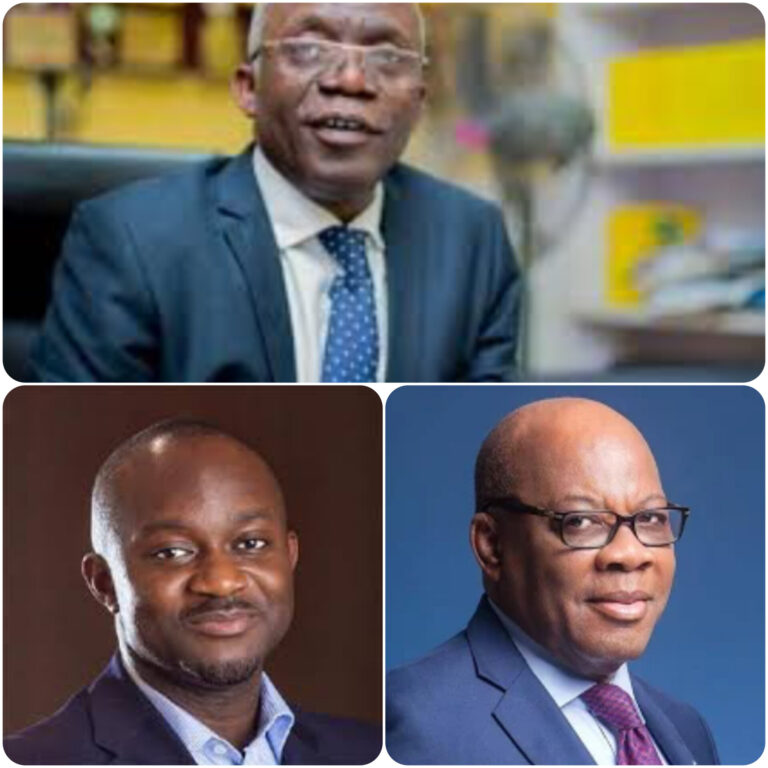
PROMINENT human rights lawyers Femi Falana and Olisa Agbakoba have opposed the proposed bill to make voting compulsory Nigerians.

Similarly, Yiaga Africa, an election observation and civic advocacy organisation, disapproved of the bill.

They described the bill as unconstitutional.

The ICIR reported that during plenary on Thursday, May 15, the bill seeking to amend the Electoral Act 2022, and make voting compulsory for Nigerians of voting age passed second reading in the House of Representatives.

It is jointly sponsored by Speaker Tajudeen Abbas and Daniel Asama Ago, a lawmaker from Plateau State and member of the All Progressives Congress (APC).

According to the bill, the amendment seeks to address voter apathy and boost civic participation. It proposes a six-month jail term or a fine of N100,000 for eligible citizens who fail to vote.

However, in a statement issued on Monday, May 19, titled Compulsory Voting is Not Enough’, Falana criticised the proposed legislation on constitutional grounds, arguing that the bill contradicts several provisions of the 1999 Constitution, which protect citizens’ rights to privacy, freedom of thought, and freedom of conscience.

“The Speaker of the House of Representatives probably wants Nigeria to join Egypt – the only African country out of 23 globally with provisions for compulsory voting.

“The said constitutional provisions protect the fundamental rights of the Nigerian people to privacy, freedom of thought and conscience, as well as the freedom to register and vote in national and state elections conducted in Nigeria.

“However, it is doubtful whether the Speaker and his colleagues have paid sufficient attention to the relevant provisions of the Constitution. Otherwise, they would have realised that the compulsory voting is constitutionally invalid in every material particular on the ground that it is inconsistent with Sections 37, 38, 77(2), 135(5) and 178(5) of the Constitution.

“Compulsory voting cannot be legalised in vacuo. Apart from the possibility that it may be declared illegal under the current political dispensation, it is practically impossible to prosecute millions of Nigerians who may decide to boycott national and local elections that have been reduced to the periodic renewal of misgovernance, corruption, and abuse of power by pampered members of the political class,” Falana warned.

Similarly, speaking on Channels Television’s Politics Today on Monday, Agbakoba derided the lawmakers’ plan to mandate voting, stating that he would rather go to jail than comply with such a law.

He argued that forcing citizens to vote did not address the underlying reasons why many choose to abstain from elections.

“Look at the ridiculous one in the National Assembly about voting being compulsory. If that bill were to pass, I would say, ‘Agbakoba, we will not obey it.’ I’ll plead a conscientious objection. I’d rather go to prison for six months than to obey it,” he said.

He challenged the logic of the bill, questioning why the National Assembly is pushing to make voting compulsory.

“Why don’t they reverse the question and say, Why are Nigerians not interested? What is the apathy about?”, he asked.

In the same vein, The Executive Director of Yiaga Africa, Samson Itodo, rejected the bill in a statement, arguing that although the bill sought to address low voter turnout, the lawmakers’ approach represented a serious violation of the fundamental rights of Nigerians.

“The said bill is conceived as a legislative intervention to address the abysmally low voter turnout. While the rationale for the bill is plausible because it aims to address one of the biggest challenges in Nigeria’s electoral system, the strong-arm approach adopted by the bill is draconian and it constitutes a gross violation of constitutionally guaranteed fundamental rights.

“Indeed, the right to abstain from voting is itself a legitimate form of political expression protected under domestic and international human rights law,” he said.

The ICIR reported that despite over 93 million registered voters and 87 million who collected permanent voter cards (PVCs), only about 25 million Nigerians voted in the 2023 presidential election.

This translates to a turnout rate of approximately 29 per cent, marking the lowest in Nigeria’s recent electoral history.

The ICIR also gathered regional disparities, with the South-East recording the lowest turnout at 22.3 per cent and the North-Central the highest at 32.83 per cent.

However, Yiaga’s executive stressed that democracy thrives in a climate of freedom, including the freedom to choose whether or not to vote and warned that enforcing punitive measures for non-participation undermined the core principles of voluntary democratic participation.

Can any animal defeat a Silverback gorilla?

YOU have likely come across the viral debate: Who would win in a fight 100 men or one gorilla?  While the silverback gorilla is among the strongest primates on Earth, weighing around 380 pounds and built for power, it is not the undisputed champion of the animal kingdom.

Despite their strength and intimidating presence, gorillas are not invincible. In fact, several animals possess the size, strength, or predatory instincts to potentially overpower a gorilla in a hypothetical one-on-one encounter.

Silverback gorilla: strength and intelligence

Silverback gorillas are the dominant males in gorilla troops, leading through displays of strength and social behaviour. Their bite force is estimated to reach around 1,300 per square inch (PSI), though this figure is speculative due to limited direct measurement. As herbivores, gorillas are not natural combatants and rarely engage in lethal conflict.

Despite their strength and agility, they may struggle against certain animals with specialised adaptations for predation or defence

Contenders:

Elephant: Overwhelming size and power

Adult African elephants can weigh over 10,000 pounds, with tusks in large males weighing over 100 pounds. While elephants are herbivores and not predators, they are capable of defending themselves with considerable force, trampling, uprooting tree with thgeir trunks  or using their tusks when threatened.

Given the vast size difference and the elephant’s defensive capabilities, a silverback gorilla would stand little chance in a direct confrontation.

Crocodile: ambush specialist

Crocodiles are apex predators well-adapted to ambush hunting, particularly in aquatic environments. They are able to camouflage into the environment around them allowing them to sneak up on their prey. With bite forces reaching approximately 3,700 PSI and teeth around 4 inches long, they are capable of crushing bone and subduing large prey.

In or near water, a crocodile would have a clear advantage over a gorilla, whose strength and agility are limited in such an environment.

Both the gorilla and crocodile are tough and sizeable creatures that can inflict a lot of damage when they want. However, if the battle were to take place near water, the silverback gorilla would find itself at a serious disadvantage.

Unlike the gorilla, which might rely on brute force and physical strength, the crocodile uses patience and precision.

Rhinoceros: a heavy-hitter

Rhinos are large, heavily built animals, with some species weighing over 4,000 pounds. Their thick skin and keratin horn, combined with the ability to charge at speeds up to 30 miles per hour, make them formidable defenders.

Though not predators, rhinos react aggressively to perceived threats. A silverback gorilla, despite its strength, would likely be overpowered by a charging rhino.

Tiger: stealth, speed and precision

Tigers are solitary predators capable of taking down prey significantly larger than themselves. They rely on stealth, speed, and precision. A tiger’s agility and powerful bite and claws would be significant advantages in a confrontation.

Anthropologist Rebecca M. Stumpf noted that gorillas would be vulnerable to a tiger’s attack tactics, “Gorillas on their own would be pretty vulnerable to a big tiger and big cats are pretty adept at getting good attack angles and holds.”

Animal behaviourist Marisa Erasmus pointed out that gorillas may respond by fighting, fleeing, or freezing, each with varying outcomes. In a surprise attack, the tiger would likely prevail.

“If a gorilla was confronted by a tiger, the gorilla could fight, take flight, or freeze – these are the three types of anti-predator responses.

Grizzly bear: strength meets ferocity

Grizzly bears are powerful omnivores with strong limbs, large claws, and a bite force of about 1,250 PSI. In a direct confrontation, a grizzly’s size, speed, and brute force would likely overwhelm a silverback gorilla.

Although gorillas are agile and strong, they may not  be able to withstand sustained attacks from predators like bears.

Silverback gorillas are among the strongest primates and display remarkable physical capabilities. However, against much larger or predatory animals such as elephants, crocodiles, rhinos, tigers, or bears, the gorilla would be at a serious disadvantage. While rare in nature, such hypothetical matchups reveal the diversity of survival strategies in the animal kingdom from stealth and precision to overwhelming size and strength

FRSC confirms 3 injured in Karu Bridge accident

THE Federal Road Safety Corps’ (FRSC) Unit Commander in charge of Karu, Ofor Audu, has confirmed that three people were injured in an accident involving a trailer that rammed into a mini truck transporting sachet water at the popular Karu Bridge, along the expressway linking Nasarawa and the Federal Capital Territory, on Monday, May 19.

Audu said that there were no fatalities in the accident. He noted that the injured victims were taken to Nyanya hospital for treatment.

Audu explained that an articulated truck rear-ended the mini truck loaded with sachet water, causing severe damage to the vehicle. He added that the trailer’s driver attempted to flee the scene but was pursued and apprehended by police officers.

The ICIR reports that the accident occurred less than 24 hours after a deadly crash claimed lives at the same location on Sunday, May 18, causing serious gridlock on the road.

It is worth noting that so far this year, the Karu Bridge, along the Nyanya-Keffi road, which connects Benue and Plateau states, has recorded at least three fatal accidents.

In March, the police confirmed that six people lost their lives, and 14 vehicles were burnt in the explosion from a tanker accident within the area.

A heavily loaded Dangote truck lost control and crashed into vehicles in traffic, leading to the explosion. Emergency responders battled the raging flames and thick smoke to rescue people trapped in the inferno.

What does it mean to ‘accept’ or ‘reject’ all cookies, and which should I choose?

By Ahmed Ibrahim, Edith Cowan University and David Cook, Edith Cowan University

IT’S nearly impossible to use the internet without being asked about cookies. A typical pop-up will offer to either “accept all” or “reject all”. Sometimes, there may be a third option, or a link to further tweak your preferences.

These pop-ups and banners are distracting, and your first reaction is likely to get them out of the way as soon as possible – perhaps by hitting that “accept all” button.

But what are cookies, exactly? Why are we constantly asked about them, and what happens when we accept or reject them? As you will see, each choice comes with implications for your online privacy.

What are cookies?

Cookies are small files that web pages save to your device. They contain info meant to enhance the user experience, especially for frequently visited websites.

This can include remembering your login information and preferred news categories or text size. Or they can help shopping sites suggest items based on your browsing history. Advertisers can track your browsing behaviour through cookies to show targeted ads.

There are many types, but one way to categorise cookies is based on how long they stick around.

Session cookies are only created temporarily – to track items in your shopping cart, for example. Once a browser session is inactive for a period of time or closed, these cookies are automatically deleted.

Persistent cookies are stored for longer periods and can identify you – saving your login details so you can quickly access your email, for example. They have an expiry date ranging from days to years.

What do the various cookie options mean?

Pop-ups will usually inform you the website uses “essential cookies” necessary for it to function. You can’t opt out of these – and you wouldn’t want to. Otherwise, things like online shopping carts simply wouldn’t work.

However, somewhere in the settings you will be given the choice to opt out of “non-essential cookies”. There are three types of these:

  • functional cookies, related to personalising your browsing experience (such as language or region selection)
  • analytics cookies, which provide statistical information about how visitors use the website, and
  • advertising cookies, which track information to build a profile of you and help show targeted advertisements.

Advertising cookies are usually from third parties, which can then use them to track your browsing activities. A third party means the cookie can be accessed and shared across platforms and domains that are not the website you visited.

Google Ads, for example, can track your online behaviour not only across multiple websites, but also multiple devices. This is because you may use Google services such as Google Search or YouTube logged in with your Google account on these devices.

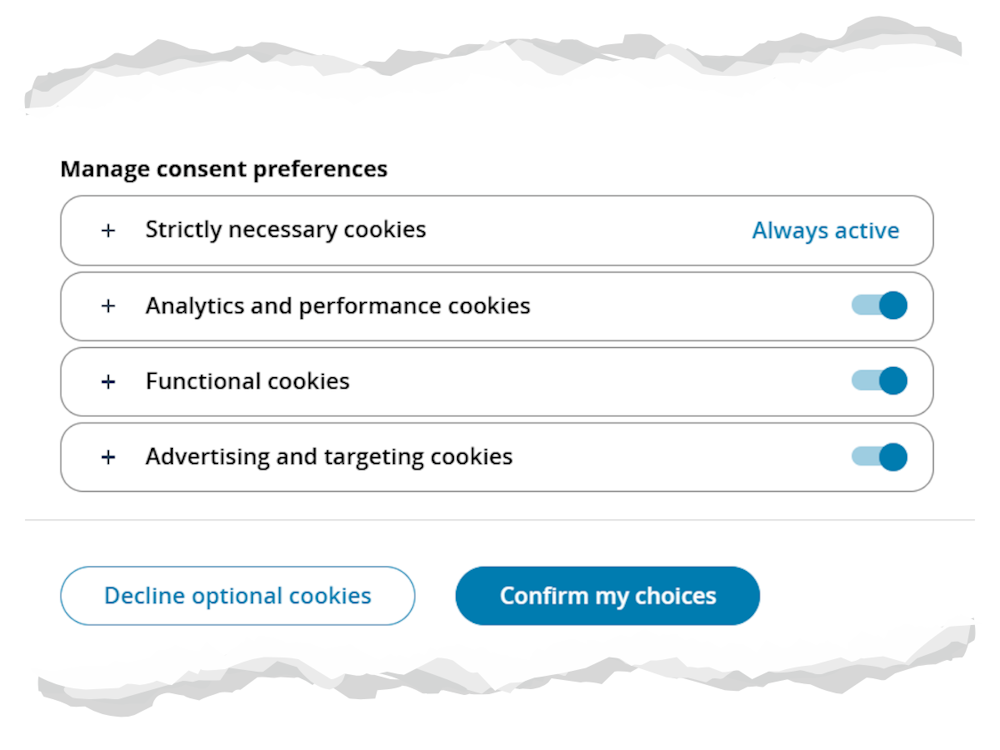
An example of cookie preferences offered by a website.
The Conversation

Should I accept or reject cookies?

Ultimately, the choice is up to you.

When you choose “accept all,” you consent to the website using and storing all types of cookies and trackers.

This provides a richer experience: all features of the website will be enabled, including ones awaiting your consent. For example, any ad slots on the website may be populated with personalised ads based on a profile the third-party cookies have been building of you.

By contrast, choosing “reject all” or ignoring the banner will decline all cookies except those essential for website functionality. You won’t lose access to basic features, but personalised features and third-party content will be missing.

The choice is recorded in a consent cookie, and you may be reminded in six to 12 months.

Also, you can change your mind at any time, and update your preferences in “cookie settings”, usually located at the footer of the website. Some sites may refer to it as the cookie policy or embed these options in their privacy policy.

How cookies relate to your privacy

The reason cookie consent pop-ups are seemingly everywhere is thanks to a European Union privacy law that came into effect in 2018. Known as GDPR (General Data Protection Regulation), it provides strict regulations for how people’s personal data is handled online.

These guidelines say that when cookies are used to identify users, they qualify as personal data and are therefore subject to the regulations. In practice, this means:

  • users must consent to cookies except the essential ones
  • users must be provided clear info about what data the cookie tracks
  • the consent must be stored and documented
  • users should still be able to use the service even if they don’t want to consent to certain cookies, and
  • users should be able to withdraw their consent easily.

Since a lot of website traffic is international, many sites even outside the EU choose to follow GDPR guidelines to avoid running afoul of this privacy law.

Better privacy controls

Cookie pop-ups are tiresome, leading to “consent fatigue” – you just accept everything without considering the implications.

This defeats the purpose of informed consent.

There is another way to address your online privacy more robustly – Global Privacy Control (GPC). It’s a tech specification developed by a broad alliance of stakeholders (from web developers to civil rights organisations) that allows the browser to signal privacy preferences to websites, rather than requiring explicit choices on every site.

GPC is not universally available, and it’s not a legal requirement – a number of browsers and plugins support it, but broader adoption may still take time.

Meanwhile, if you’re worried you may have accidentally consented to cookies you don’t want, you can find an option in your browser settings to delete cookies and get back to a clean slate (be warned, this will log you out of everywhere). If you want to learn even more, the non-profit Electronic Frontier Foundation has a project called Cover Your Tracks.The Conversation

Ahmed Ibrahim, Senior Lecturer, Computing and Security, Edith Cowan University and David Cook, Lecturer, Computer and Security Science, Edith Cowan University

This article is republished from The Conversation under a Creative Commons license. Read the original article.

Fidelity Bank: CBN dismisses panic reports, affirms banking sector stability 

THE Central Bank of Nigeria (CBN) has reassured the public that the banking sector is stable and that depositors’ funds are safe, contrary to certain publications and social media reports on Fidelity Bank Plc’s bankruptcy.

The apex bank reaffirmed this in a statement issued late Monday, May 19, by its acting director of corporate communications, Hakama Sidi Ali.

CBN reassurance came following reports claiming that Fidelity Bank is facing financial bankruptcy which the bank said were misleading and unfounded, assuring its customers and stakeholders of its strong financial position

In its position as the apex regulator, CBN further reassured that the banking sector remains stable.

It stated, “The attention of the Central Bank of Nigeria (CBN) has been drawn to certain publications and social media reports containing misleading information regarding the operations of a regulated financial institution.

“The CBN wishes to categorically reassure the public, depositors, and stakeholders that the
Nigerian banking sector remains resilient, safe, and sound.”

It maintained that, like all other regulated institutions, the bank referenced in the reports is held to stringent regulatory requirements, and there is no cause for concern regarding the safety of depositors’ funds.

It assured to continue to monitor all financial institutions under its regulatory purview and maintains robust frameworks for early warning signals and risk-based supervision.

It stressed that the mechanisms help to ensure that any emerging issues are promptly addressed to protect the integrity of the financial system.

“We urge the public to disregard sensational or unverified claims and rely solely on official channels for information about the financial system.

“The CBN remains dedicated to fostering a secure banking environment where depositors can be fully confident in the safety of their funds. It will continue to monitor and adapt strategies to safeguard the financial interests of all Nigerians and stakeholders in our financial system,” CBN added.

Fidelity Bank refutes report on bankruptcy, clarifies court judgment

Similarly, Fidelity Bank  also refuted the claims in a statement on Monday, May 19.

It stated, “We would like to address recent misleading reports regarding a court judgment involving the defunct FSB International Bank, which have wrongly suggested that Fidelity Bank is facing bankruptcy.”

“These claims are unfounded, and we want to assure our customers, investors, and the public that Fidelity Bank remains financially strong, profitable, and fully capable of meeting all its obligations.”

According to the bank, the issue stems from a legacy transaction from 2002 in which FSB International Bank provided a loan to G. Cappa Plc.

Noting that the case has undergone extensive legal processes, the bank said it is currently seeking clarification on the judgment to ensure that the financial implications are correctly understood.

“We take these malicious reports seriously and are committed to protecting our bank’s reputation and the interests of our stakeholders.

“Rest assured, Fidelity Bank continues to operate as one of Nigeria’s most capitalized financial institutions, with no risk of bankruptcy,” the bank maintained.

The ICIR can report that Fidelity Bank recorded a positive financial position in the first quarter of the year.

A cursory look at its financial statements shows that the bank posted a total equity of N933.14 billion, as total assets of N10.45 trillion were higher than total liabilities of N9.52 trillion.

The bank also posted a positive financial performance as its profit after tax rose by 189.75 per cent to N91.101 billion in March 2025 from N31.44 billion in March 2024.

The first quarter 2025 financial results demonstrate our robust position, the bank stressed.

“We remain focused on our core values and are fully dedicated to supporting our customers and communities,” it added.

Nigerian Reps approve 10-year security for journalist who exposed fake degrees in Benin Republic

0

THE House of Representatives on Monday, May 19, ordered 10-year protection for investigative journalist Umar Audu, whose undercover report exposed the sale of fake degrees from universities in the Benin Republic to Nigerians.

The directive was issued by the House Joint Committees on University, Polytechnic, Interior, Foreign Affairs, and Youth Development, which is currently probing the scandal, according to the News Agency of Nigeria.

Recall that Audu’s investigation uncovered a network of degree mills through which Nigerians obtain fraudulent academic certificates, some of which are subsequently validated by Nigerian government agencies, including the Federal Ministry of Education.

The reporter revealed how beneficiaries of these substandard certificates compete for jobs and other opportunities with hard-working graduates who undergo academic rigours for at least four years to obtain their degrees.   

It also reported that the requirements for the fake degree are O-level certificates – fake or genuine – and money, which vary depending on the course, urgency and class of degree.

Having met with an agent, the reporter obtained the certificate and transcript of Ecole Supérieure de Gestion et de Technologies, ESGT, Cotonou, Benin Republic, on February 17, 2023.

This was after the reporter paid the required amount, including tuition fees for the duration.

Speaking on the latest development, the committee chairman, Abubakar Fulata, announced the development and called on the Nigeria Police Force and the Nigeria Security and Civil Defence Corps (NSCDC) to ensure Audu’s safety.

“We are grateful to Audu for his courage. We urge the Minister of Interior to ensure that the Civil Defence provides the required support alongside the police,” Fulata said.

During his appearance before the committee, Audu also narrated how he secured a degree from a Benin Republic university without attending classes and later had the certificate officially cleared by the Ministry of Education after paying a N40,000 fee.

Also, in response, the Minister of Interior, Dr. Olubunmi Tunji-Ojo, proposed the creation of a centralised automated verification system to prevent such fraudulent activities in the future.

“Such an error did not occur under this administration. However, a unified, automated portal is essential to curb this menace,” Tunji-Ojo said.

Representing the Minister of Education, Mr. Olatunji Alausa, a director in the ministry, Larai Ahmed, said the department responsible for the certificate clearance had been overhauled and that more stringent measures were in place.

The ICIR reported that following the investigation, the Federal Government shut down 18 foreign universities in Nigeria. The government labelled the affected institutions as “degree mills,’’ noting that it had not licensed them to operate in the country.

The National Universities Commission (NUC), in a statement published on its website on Tuesday, January 2, 2024, stated that the affected universities had been closed down.

The development also came a few hours after the Ministry of Education suspended the evaluation and accreditation for university degrees in the Republic of Benin and Togo.

Lagos police arrest officer for assaulting Uber driver in viral video

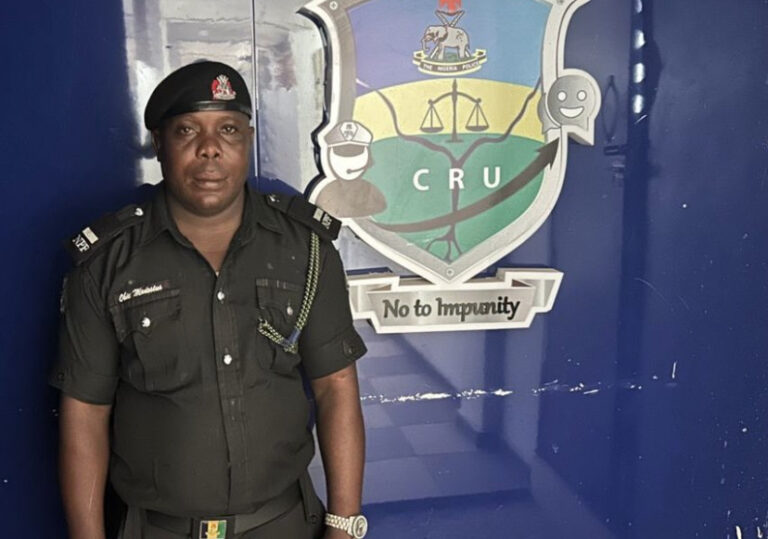
THE Lagos State Police Command has arrested Obic Modestus, a police officer caught on video violently assaulting an Uber driver.

The incident came to light after a video, shared by X user Oyindamola (@dammiedammie35), went viral, showing the officer repeatedly beating the driver. 

In the post accompanying the video, Oyindamola wrote, “A new video of Nigerian police men violently assault!ng an Uber driver. Please spread this video cos this is someone’s father they’re beating!ng like an animal like this.”

Although The ICIR couldn’t confirm the exact cause of the incident, the video showed how the police officer was slapping, manhandling and beating the driver.

He subsequently dragged the driver into the police vehicle despite some of his colleagues calming him down.

The disturbing footage sparked widespread outrage on social media, with many users calling for the officer to be held accountable.

They also lamented the incessant harassment meted out on citizens by the police officers across the country.

Reacting to the viral video on Monday, May 19, the spokesperson for the Lagos State Police Command, CSP Benjamin Hundeyin, confirmed that the officer had been apprehended. 

Hundeyin assured the public that the command was committed to maintaining professional conduct among its officers and would take necessary disciplinary action against any form of misconduct.

“The Police Officer, Inspector Obic Modestus, has been summoned by the Complaint Response Unit (CRU) #LagosPoliceNG. He will be handed over to the Provost Department for appropriate disciplinary measures.

“The Lagos State Police Command, under CP Olohundare Jimoh, will not condone any form of incivility to members of the public,” he said.

This incident adds to a series of reported cases of police misconduct in Nigeria, highlighting ongoing concerns about law enforcement accountability. 

Despite the disbandment of the Special Anti-Robbery Squad (SARS) in 2020 following the #EndSARS protests, reports of police brutality have persisted.

The latest incident came barely two weeks after The ICIR published a detailed investigation of police brutality in Kwara State. The report highlighted how the killings of Quoyum Ishola, allegedly by police officers in the state, added to a disturbing trend of young men in Kwara, particularly those perceived as successful or ‘flashy,’ increasingly targeted by law enforcement officers.

This latest incident has further reignited fears around police brutality in Nigeria, with citizens expressing frustration over repeated cases of law enforcement officers using excessive force on them. 

Trump to call Putin to end ‘bloodbath’ in Ukraine

UNITED States President Donald Trump is scheduled to speak with Russian President Vladimir Putin on Monday, May 19, on the need to end the war in Ukraine.

This is as European leaders intensify calls for the Kremlin to agree to an immediate ceasefire to end the region’s deadliest conflict since World War II.

Prompted by pressure from Trump, delegates from the warring nations convened last week in Istanbul, their first meeting since March 2022, following a proposal for direct talks by Putin, European leaders and Ukraine for an immediate ceasefire.

However, Trump said that meaningful progress toward peace was unlikely until he and Putin met directly, announcing that he would speak with the Russian president at 10 a.m. Eastern Time (1400 GMT) today and the Kremlin confirmed that preparations for the call were in progress.

“The subjects of the call will be stopping the ‘bloodbath’ that is killing, on average, more than 5,000 Russian and Ukrainian soldiers a week, and trade,” Trump wrote on his Truth Social website.

“Hopefully, it will be a productive day, a ceasefire will take place, and this very violent war, a war that should have never happened, will end.”

The ICIR reported that European leaders, with Trump’s support, have made it clear that Russia could face additional sanctions if it does not take peace talks seriously.

However, Putin has remained steadfast in his conditions for ending the war, even as Russian forces continue to advance and hold control over a fifth of Ukraine.

On Sunday, Russia carried out its largest drone attack on Ukraine since the war began. Ukraine’s intelligence service also reported that it believed Moscow planned to launch an intercontinental ballistic missile the same day, although Russia has not confirmed this.

British Prime Minister Keir Starmer held discussions with the leaders of the United States, Italy, France, and Germany on Sunday, May 18, regarding the war, according to a Downing Street spokesperson.

“Tomorrow, President Putin must show he wants peace by accepting the 30-day unconditional ceasefire proposed by President Trump and backed by Ukraine and Europe,” French President Emmanuel Macron said on X after Sunday’s call.

European leaders argue that Putin is not genuinely committed to peace, but they worry that he and Trump could push for a punitive peace deal that would leave Ukraine without a strong security guarantee and effectively cede a fifth of its territory to Russia.

The ICIR reports that Putin has portrayed the war as a pivotal moment in Moscow’s relationship with the West, accusing Western powers of humiliating Russia after the Soviet Union’s collapse in 1991 by expanding NATO and encroaching on territories he views as within Russia’s sphere of influence, including Ukraine.

In February 2022, Putin deployed thousands of troops into Ukraine, sparking the most serious confrontation between Russia and the West since the Cuban Missile Crisis of 1962.

Trump, who wants to be remembered as a peacemaker, has repeatedly called for an end to the ‘bloodbath’ in Ukraine, which his administration describes as a proxy conflict between the United States and Russia.

EKSU gets NUC full accreditation for 18 programmes

THE National Universities Commission (NUC) has granted full accreditation status to 18 academic programmes at the Ekiti State University (EKSU), Ado Ekiti.

The accreditation followed an exercise conducted by the NUC in October and November 2024

The approval was communicated in a letter dated April 30, 2025, signed by the Acting Director of Accreditation, Abraham Chundusu, on behalf of the Commission’s Executive Secretary, according to a statement by the institution.

Announcing the news on Monday, May 19, the Head of EKSU’s Directorate of Information, Bode Olofinmuagun, described the development as a significant achievement for the university. 

“The development also reaffirms EKSU’s growing reputation as the best state university in Nigeria, according to the Times Higher Education 2025 universities ranking,” he stated.

The newly accredited programmes cover a wide range of fields, including Administration, Arts, Engineering, Education, and Social Sciences

The courses include: M.Sc. Business Administration, Master of Personnel Management, M.Sc. Finance, Master of Public Administration, Master of Business Administration, Arabic Studies, Islamic Studies, Philosophy.

Others are Building and Woodwork Technology Education, Electrical and Electronic Technology Education, Metal and Auto Mechanic Technology Education, Christian Religious Studies, Civil Engineering, Electrical and Electronic Engineering, Computer Engineering, Law, Geology, and Psychology.

Reacting to the news, the Vice Chancellor of EKSU, Babatola Ayodele, expressed delight, describing the accreditation as a testament to the collective hard work of the university’s staff. 

He said: “It is a dream come true and a product of tireless efforts by the academic and administrative staff of the University. The university is always better positioned to meet the educational needs of Nigerian youth in cutting-edge and relevant fields of study.”

This was coming barely three weeks after NUC issued provisional licenses to 11 newly approved private universities.

The licenses were formally presented on Wednesday, April 30, at the NUC auditorium in Abuja. While speaking during the presentation, the  Executive Secretary of the NUC,  Abdullahi Ribadu, said there was a growing need for private universities to cater to Nigeria’s youthful population.

He stressed that private universities had significantly expanded the nation’s academic landscape since 1999.

“From just 49 universities in 1999, 23 of which were private, Nigeria now boasts of 298 universities, with 159 (53.3 per cent) being privately owned. The catalyst for this expansion is the increased participation of the private sector,” he said.

Former US President Joe Biden diagnosed with prostate cancer

FORMER US President Joe Biden has been diagnosed with an ‘aggressive’ form of prostate cancer that has spread to his bones, and he is currently reviewing treatment options, a statement from his office said Sunday, May 18.

On Friday, the 82-year-old democrat was diagnosed with cancer after experiencing increasing urinary symptoms and being evaluated for a new finding of a prostate nodule, the statement said.

“While this represents a more aggressive form of the disease, the cancer appears to be hormone-sensitive, which allows for effective management. The President and his family are reviewing treatment options with his physicians,” the statement added.

Cancer cells are commonly found in the prostates of men of Biden’s age, though in most cases they grow slowly.

According to the statement, Biden’s cancer was found to have “a Gleason score of nine (Grade Group five).

The cancer is a more aggressive form of the disease, characterised by a Gleason score of nine out of 10. This means his illness is classified as “high-grade” and that the cancer cells could spread quickly, according to Cancer Research UK.

The ICIR reports that Biden left office in January this year as the oldest serving US president in history, and was dogged by questions over his health and age for much of his presidency.

For years, he had faced questions, including from Democratic voters, over whether he was too old, lacking in mental acuity or physical endurance, for a job as trying as the presidency.

His response to doubters was brisk: “Watch me.”

However, in July last year, he was forced to drop his re-election bid after a disastrous debate against Republican Donald Trump in which fears about his decline and cognitive abilities came surging to the fore.

His vice, Kamala Harris, eventually lost to Trump.

Biden expressed belief that he could have won the election, but questions have long swirled over the responses of staff and key democrats to evident signs of his decline.

Last week, a newly published recording of Biden speaking hesitantly and struggling to remember key events and dates fueled renewed debate over his mental capabilities while still in office.

Going down memory lane, Biden’s life has been marked by personal tragedy. In 1972, his wife and baby daughter were killed in a car crash, days after he had been elected as a US senator at the age of 29.

Biden underwent surgery twice in 1988 for brain aneurysms.

In 2023, he had a skin lesion — a basal cell carcinoma — removed from his chest. He had previously had non-melanoma skin cancers removed.

Biden’s son, Beau Biden, died of brain cancer in 2015.