Home Blog Page 285

FG to close Ijora-Marine bridge for 21 days

0

THE Federal Government has announced a temporary closure of the Ijora-Marine Bridge in Lagos State for 21 days.

The closure would begin at 7.00 a.m. on Sunday, May 18, the Federal Controller of Works in Lagos, Olukorede Kesha, reportedly said in a statement on Tuesday, May 13.

According to her, some sections of the bridge will be completely closed, while others will experience partial closure during the 21 days.

Kesha noted that the repair works would involve lifting the bridge deck to replace worn-out bearings and carrying out other critical maintenance work.

The aim is to make the bridge safer and more comfortable for motorists and pedestrians, she explained.

“We understand the inconvenience this may cause, but this is a necessary step to keep the bridge in good condition and ensure the safety of all road users,” Kesha stated.

Appealing to residents, commuters, and business owners in the area to plan their movements and cooperate during the period, she said traffic diversion had been carefully arranged, and traffic officials would be on the ground to guide motorists and ensure a smooth flow of traffic.

“Safety signs and traffic management tools will be put in place to minimise disruption.

“We sincerely apologise for the inconvenience and thank members of the public for their patience,” she added.

Nigerian government owes MKO Abiola N45bn, Tinubu should pay debt, says Sule Lamido

0

FORMER Governor of Jigawa State, Sule Lamido, has appealed to President Bola Tinubu to settle the N45 billion debt allegedly owed the late Moshood Kashimawo Abiola by the Nigerian government.

Lamido made this call during the public presentation of his autobiography, “Being True To Myself”, in Abuja on Tuesday, May 13.

“I would like to appeal to President Tinubu to close the chapter of June 12. In his book, General Ibrahim Badamasi Babangida revealed that Abiola won the election,” Lamido said. 

He claimed that when he met with former military leader, Ibrahim Badamasi Babangida (IBB), the retired general acknowledged that the government owed Abiola N45 billion.

“When I went to him (IBB), he said Abiola was being owed ₦45 billion. Abiola is doubly punished. One, he was not given the presidency, and two, he is owed,” he said.

He urged the Minister of Information, Mohammed Idris, who represented Tinubu at the event, to convey his message to the president.

The ICIR reports that Abiola, widely known by his initials – MKO – won the 1993 presidential election, annulled by Babangida.

Recall that Babangida, in his new autobiography, “A Journey in Service”, launched on February 20, 2025, publicly admitted Abiola won the election. 

In the book, reviewed by former Vice President Yemi Osinbajo, Babangida dedicated a full chapter to the transition to military rule and the annulment of the June 12 election, widely believed as the most credible, freest and fairest in Nigeria’s democratic history. 

Osinbajo described the annulment as a decision with “cataclysmic consequences” that led to a “military interregnum” considered one of the most vicious in Nigeria’s nationhood.

In the book, Babangida said Abiola, the candidate of the Social Democratic Party (SDP), met all constitutional requirements to be declared Nigeria’s president.

At Lamido’s book launch, Tinubu hailed him as a principled politician whose personal journey mirrors the story of Nigeria’s democratic evolution.

While speaking on behalf of the president, the Minister of Information and National Orientation said the book “is the celebration of a life defined by courage, consistency, and commitment to democratic ideals.

“Alhaji Sule Lamido, though a staunch member of the political opposition and often a critic of the government of President Bola Ahmed Tinubu (GCFR), remains one of the strong pillars of Nigeria’s political evolution,” he said.

Three Kebbi senators dump PDP, defect to APC, cite PDP crisis

Three senators representing Kebbi State in the National Assembly have defected from the Peoples Democratic Party (PDP) to the All Progressives Congress (APC)

They are Adamu Aliero (Kebbi Central), Yahaya Abdullahi (Kebbi North), and Garba Maidoki (Kebbi South). They had visited President Bola Tinubu, accompanied by the Kebbi State Governor, Nasir Idris, and the APC National Chairman, Abdullahi Ganduje, ahead of their defection last week.

Their letters of defection were read during Tuesday’s plenary by Deputy Senate President Barau Jibrin, who presided over the session.

The defection was witnessed by the APC national chairman and the Kebbi State governor.

Some major politicians have defected from the PDP and other opposition parties to the APC in recent weeks.

The ICIR reported in April that the PDP collapsed its structure in Delta State, with the Governor Sheriff Oborevwori, his predecessor Ifeanyi Okowa, and other party members pitching their tent with the APC.

This gale of defections to the APC now appears to be a national phenomenon, despite growing hardship occasioned by its government’s policies.

In Cross River State, several top PDP figures have joined the APC, reflecting a broader pattern of political realignments ahead of the 2027 general elections.

Jibrin described the defections of the three Kebbi senators as a significant victory for the ruling party. He said the decision would boost the APC’s chances in future elections.

“This is a strong indication of what lies ahead for the APC. Nigerians are beginning to appreciate the vision of progressive governance,” he said.

He congratulated President Bola Tinubu and the APC leadership, and urged them to sustain their efforts for the benefit of both the party and the nation.

The senators cited deep-rooted internal crises and unresolved divisions within the PDP in Kebbi State as key reasons for their departure.

The wave of defections has elicited varied reactions. Former Vice President Atiku Abubakar defended members who quit the PDP.

He said such realignments were part of democratic processes.

Conversely, former Sokoto State Governor Aminu Tambuwal criticised the motives behind the moves. He attributed them to personal gains rather than ideological shifts.

Nigerian government approves plans to crash drug prices

0

THE Nigerian government has approved the establishment of MediPool, a new group purchasing organisation that will guarantee a reduction in the costs of drugs and other medical consumables in Nigeria.

According to the Coordinating Minister of Health and Social Welfare, Professor Ali Pate, the approval was made during the Federal Executive Council meeting chaired by President Bola Tinubu at the State House in Abuja on Monday, May 12.

Pate described MediPool as an organisation that would facilitate competitive pricing and act as a supplier of essential medicines and healthcare products nationwide.

He explained that the initiative was designed to consolidate demand from basic healthcare centres and federal tertiary hospitals, allowing the government to leverage bulk purchasing to reduce medical costs.

“Today, council approved Medipool; it’s a group purchasing organisation for competitive pricing and to be supplier of essential medicines and healthcare products across Nigeria, through the Federal Government’s intervention, the basic health care provision fund, but also eventually outside that, through federal tertiary hospitals, so that as a buyer, we can negotiate lower prices. 

“So, it’s using the monopsony power of the government as a large buyer of those commodities, negotiating lower prices and then channelling those commodities,” he said.

 The minister said the scope of MediPool includes procurement planning, distribution monitoring, supply chain management, logistics coordination, quality assurance, and regulatory compliance. 

He stressed that the development also aimed at supporting local manufacturers, encouraging import substitution, and including financial management, payment systems, capacity building, training, and contingency planning to ensure a continuous supply of high-quality, affordable essential drugs through a public-private partnership.

The minister noted that MediPool was developed using models from similar initiatives in countries like Kenya, South Africa, Singapore, and Saudi Arabia.

He stressed that the administration was committed to enhancing local manufacturing, promoting import substitution, and ensuring that Nigerians could access high-quality, affordable medications.

“Medipool has been vetted through the Infrastructure Concession Regulatory Commission, has been benchmarked with other global group purchasing organisations, including Kenya, South Africa, Singapore, Saudi Arabia and many other countries.

“We believe that this is a major intervention that will shape the domestic market, allowing demand for quality pharmaceuticals to be channelled in a way that lowers costs, improves quality, and stimulates local medical manufacturing,” Pate noted.

The development came a few weeks after the Nigeria Customs Service said it had commenced the implementation of Value Added Tax (VAT) and import duty exemption on raw materials essential for the production of pharmaceutical products. 

The NCS spokesperson, Abdullahi Maiwada, in a statement on March 26, noted the decision was in line with the presidential order to boost local production of healthcare products.

The ICIR reports that Tinubu had, in June 2024, signed the Executive Order to increase local production of pharmaceuticals, diagnostics and medical devices. 

Nigeria’s decision to crash drug prices came hours after the United States (US) President Donald Trump signed an executive order aimed at significantly reducing the prices of prescription drugs in the US.

In a statement on Sunday, May 11, via its TruthSocial handle, Trump said the move would lower drug prices between 30 per cent and 80 per cent, and address what he described as a long-standing disparity in global medication costs.

Trump criticised the high cost of prescription drugs in the US compared to other countries, noting that medications produced in the same laboratories and by the same companies are often five to ten times more expensive for Americans.

Kano varsity shuts female hostel over alleged immorality

THE Maryam Abacha American University of Nigeria (MAAUN) has ordered the immediate closure of the off-campus female hostels, Al-Ansar Indabo hostels, located along UDB Road and in the Hotoro area of Kano metropolis.

In a statement released on Monday, May 12, by the university’s Vice President of Campus Life, Hamza Garba, a doctorate holder, the institution cited safety concerns and violations of its student code of conduct as reasons for the closure.

According to the statement, the decision to withdraw the university’s approval for the hostels was made to safeguard students and ensure that they reside in secure and morally appropriate environments.

“I am directed by the management to write, inform, and bring to the attention of our esteemed parents and students that the university has withdrawn its approval for Al-Ansar Indabo female students’ hostels located at UDB Road and Hotoro,” the statement read.

He detailed several infractions, including reports of immoral behaviour, poor water and electricity supply, unauthorised movements at night, student violence, and sharing of hostel facilities with unknown tenants.

The students also allegedly breached the school’s regulations governing private accommodations.

“These issues pose a serious threat to the well-being of our students,” he stated.

The university has instructed all students currently residing in the affected hostels to vacate the premises immediately after the ongoing semester examinations. It also warned students and parents against further association with the facilities.

The school said it was working with relevant security agencies to ensure compliance, adding that it would not be held liable for any consequences resulting from non-compliance with the directive.

FG offers N300 billion Sukuk to fund road projects

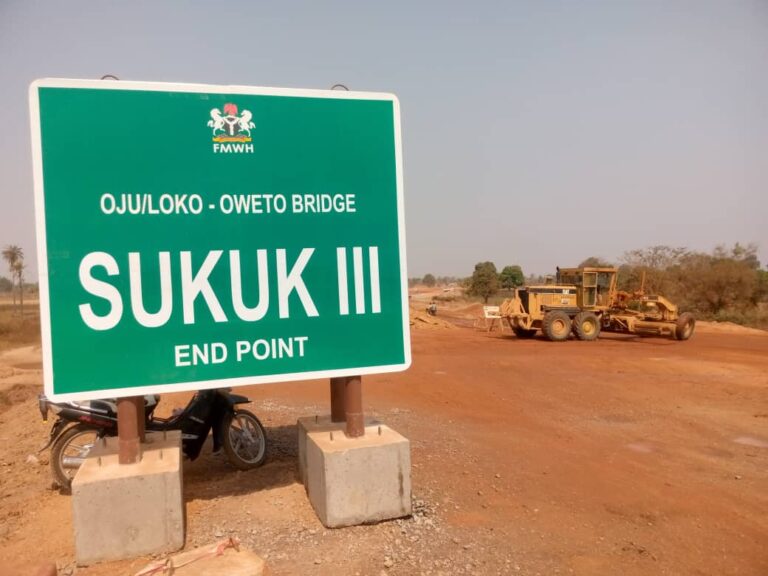
THE Federal Government has launched a fresh N300 billion Sukuk bond to finance the construction and rehabilitation of roads and bridges across the six geopolitical zones, in a move that will further swell the country’s public debt, now nearing N145 trillion.

The Debt Management Office (DMO) announced this on Monday, May 12, in the 2024 FGN Sukuk Offer for subscription.

In Nigeria, a Sukuk fund, or Sukuk bond, is a type of Islamic investment certificate that represents an ownership interest in a specific asset or a pool of assets, rather than a debt obligation like a conventional bond.

It’s a hybrid instrument that combines equity and debt features, where investors receive income from the use of the underlying asset. The Federal Government of Nigeria, for example, uses Sukuk to fund infrastructure projects like roads.

According to the debt office, the offer opens on May 12, 2025, and will close on May 20, 2025, while the settlement date will be May 23, 2025.

Known as a 7-year Ijarah Sukuk, the instrument would be due by May 2032.

The DMO explained that the offer was being issued by FGN Roads Sukuk Company Plc on behalf of the federal government of Nigeria.

“The Sukuk is structured as a Forward Ijarah (Lease) and offers a rental rate of 19.75 per cent per annum, payable half-yearly, with full repayment at maturity through a bullet redemption,” the debt office stated.

It is noted in the offer document that the proceeds would be used solely for the construction and rehabilitation of key road and bridge projects across the country..

The Sukuk will be listed on the Nigerian Exchange Limited and the FMDQ Securities Exchange Limited, providing liquidity for investors wishing to trade in the secondary market.

A unit of the Sukuk offer is priced at N1,000, with a minimum subscription of N10,000 and subsequent investments in multiples of N1,000, the DMO stated.

It listed the issuing houses for the offer to include Greenwich Merchant Bank Limited, Vetiva Capital Management Limited, and Stanbic IBTC Capital Limited, while the technical advisers are CardinalStone Partners Limited, Lotus Financial Services Limited, and Buraq Capital Limited.

It further listed the receiving banks to include Jaiz Bank, Lotus Bank, Zenith Bank, Stanbic IBTC Bank, and Greenwich Merchant Bank.

The offer is also being marketed by several placement agents, including Access Bank, FBNQuest Merchant Bank, United Bank for Africa, GTBank, Citibank, Standard Chartered, Coronation Merchant Bank, and others.

The federal government has raised about N1.09 trillion through Sovereign Sukuk since the instrument was first introduced in 2017, The ICIR reported recently.

In Nigeria, a Sovereign Sukuk, issued by the DMO, is a financial tool that complies with Islamic law (Sharia). It represents shared ownership in specific assets, mainly used to fund infrastructure projects like roads.

Several important roads across the country have been financed using Sovereign Sukuk bonds, with the DMO and the Federal Ministry of Finance overseeing the process.

The Director-General of the DMO, Patience Oniha, had on March 26, while speaking at an event in Lagos State, hinted at the N300 billion Sukuk offer to finance capital projects.

With the N300 billion Sukuk offer for subscription, Nigeria’s total public debt will further surge from N144.67 trillion reported by the DMO as of December 31, 2024.

NED offers grant to support democracy

THE National Endowment for Democracy (NED) has announced a call for proposals for its latest grant cycle, offering up to $50,000 in funding for initiatives that promote democracy, human rights, and civic participation across the globe.

The NED said in a statement on its website that it’s inviting civil society organisations, media groups, and democratic activists to submit innovative project ideas that align with its mission of fostering democratic institutions and values.

The grant is open to both local and international organisations, with a focus on supporting efforts in challenging political environments.

Projects may include advocacy campaigns, capacity-building programmes, independent media development, and initiatives that promote accountability and transparency.

Interested applicants are encouraged to submit their proposals here by May 20.

FG to overhaul underperforming power DisCos

0

THE Federal Government has launched a pilot reform to address major problems in Nigeria’s electricity distribution sector, starting with two underperforming Distribution Companies (DisCos), one in the North and another in the South.

This move comes in response to long-standing issues such as poor governance, outdated infrastructure, and inefficiencies that have plagued the DisCos for years.

The Minister of Power, Adebayo Adelabu, outlined the Electricity Distribution Companies reforms after a meeting with the Japanese International Cooperation Agency (JICA), which presented a roadmap titled ‘Revamping of the Distribution Sector in Nigeria’.

A statement signed by the Special Adviser on Strategic Communications and Media Relations to the Minister, Bolaji Tunji, on Monday, May 12, said the pilot scheme, slated to commence between May and August 2025, will target one DisCo in the north and another in the south.

The aim is to demonstrate a replicable model for operational turnaround, combining internal restructuring, external expertise, and federal oversight to achieve rapid improvements in service delivery.

The JICA’s proposal emphasises reforming DisCos “from within” by integrating outside experts, strengthening leadership, and aligning government support with short-term results in pilot zones to lay the groundwork for long-term sector-wide transformation.

Adelabu stressed the urgency of the intervention when he said, “We can no longer fold our hands and watch the inadequacies of DisCos, whose performances fall short of expectations. This pilot is not optional. We will use regulatory authority to restructure underperforming DisCos and compel compliance if necessary.”

The Minister, who acknowledged persistent resistance to past reforms, pledged to address both universal challenges, such as vandalism and governance, as well as region-specific issues, including cultural barriers hindering operations.

He emphasised that the key to the initiative is resolving the DisCos’ inability to invest in infrastructure upgrades.

“Their lack of investment is not solely due to unwillingness but also a lack of incentives. Returns on infrastructure spending are not commensurate, so we must attract investors and franchise viable and the not-so-viable areas to capable operators, so we can have a mix,” Adelabu added.

He directed the Nigeria Electricity Regulatory Commission (NERC) to enforce franchising opportunities and ensure DisCos cooperation, stating, “NERC must secure their buy-in. Past efforts failed due to resistance, but this time, we will be intentional and decisive.”

The JICA’s Power Sector Policy Advisor to Nigeria, Takeshi Kikukawa, during the presentation, said, “The goal is to deliver immediate results in pilot areas while creating a sustainable foundation for nationwide improvement.”

The ICIR  reports that the Federal Ministry of Power and NERC will finalise pilot details in the coming months, prioritising DisCos with acute operational deficits. The initiative marks the most robust effort to date to resolve the power distribution crisis, signalling a renewed push for accountability, investor confidence, and reliable electricity access.

An earlier report by The ICIR noted that due to persistent liquidity in the power sector and poor performance of the distribution companies in the power sector value-chain, the  Ministry of Finance Incorporated (MOFI) has restructured and taken control of the government’s 40 per cent equity holding in the 11 privatised successor electricity distribution companies (DISCos).

The MOFI is the investment vehicle of the Nigerian government, domiciled with the Federal Ministry of Finance.

Before now, the Bureau of Public Enterprise (BPE) has maintained such control of the government’s 40 per cent.

ICIR investigation on trash-choked Abuja communities spurs action from FCT Satellite Development Department

Following The ICIR Investigation, Satellite Town Development Department (STDD), has responded with an actionable measure to the waste mismanagement within the Nyanya and Karshi communities, even though they failed to provide a lasting solution.

Recall that the department was called out in an Investigation by The ICIR that revealed how poor waste management jeopardises public health, affects businesses, and pollutes the environment through indiscriminate waste disposal caused by their irregularities.

The Satellite Town Development Department (STDD) is responsible for the planning, development, and maintenance of satellite towns, urban areas designed to ease congestion in major cities. It oversees infrastructure projects, including road construction, waste management, drainage systems, and public utilities, to ensure sustainable urban growth.

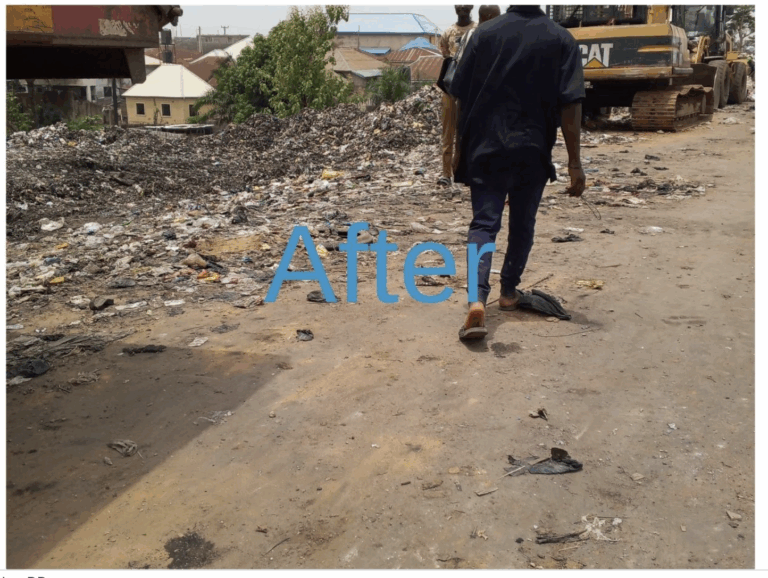
The before and after condition at Kurudu after STDD swung into action following ICIR investigation.
The before and after condition at Kurudu after STDD swung into action following ICIR investigation. Photo Credit: Abdullahi Muritala/TheICIR

Response

The agency has responded by evacuating some of the dump sites in environments like Kurudu and Karu areas of Abuja Municipal Area Council (AMAC). However, they have failed to provide commercial waste bins in the affected areas as the community residents have returned to dumping the refuse indiscriminately.

Recall that the investigation also revealed that some of the locations do not have a waste collection bin, which exacerbates indiscriminate waste disposal in those areas.

On May 4 2025, The ICIR visited the locations and discovered the presence of the department’s heavy trucks and payloader which signifies that while it has been actively evacuating the waste there was no placement of the waste bins to change the practice of indiscriminate waste disposal, especially at the bank of the road.

The ICIR sought to know from the PRO of the STDD, Meeme Felicia, if their actionable measure would include providing waste bins in these locations. She responded that the only measure she was aware of is the sole evacuation that was ongoing.

She said it would be good if The ICIR could contact the FCT Minister, Nyseom Wike, to obtain information if the provision of commercial waste bins was being planned.

This shows that the department is yet to provide a lasting solution on waste management in the areas, despite being allocated ₦116 billion from the FCT 1.15 trillion 2024 budget for infrastructure and waste management projects. It is, however, not clear how much was disbursed.

Evacuation ongoing at Karu village before and after STDD swung into action following ICIR’s investigation. Photo Credit: Abdullahi Muritala/ICIR
Evacuation ongoing at Karu village before and after STDD swung into action following ICIR’s investigation. Photo Credit: Abdullahi Muritala/TheICIR

The ICIR investigation had proffered how strategic placement of waste collection bins can eradicate improper waste disposal and eliminate indiscriminate waste disposal which poses health hazards in these areas.

While there have been some responsive actions by the STDD, the lack of comprehensive and sustainable waste management solutions continues to pose environmental and public health risks in Abuja’s satellite towns.

Read the investigation HERE

UK to end overseas social care recruitment

0

THE United Kingdom (UK) has announced plans to end overseas recruitments for social care workers as part of a strategy to overhaul its immigration system.

The new policy, outlined in the recently released white paper titled “Restoring Control over the Immigration System”, showed that the UK aimed to curb the increasing number of migrant workers in the social care sector and address long-term demographic challenges.

According to the white paper, net migration in the UK reached an unprecedented 906,000 by June 2023, a significant rise from 224,000 in June 2019. 

While the latest figures from June 2024 show a decrease to 728,000, the numbers remain considerably higher than anticipated, prompting the government to reconsider its immigration policies.

The publication noted that one of the key contributors to the surge had been the health and care visa route, introduced in 2022 to address workforce shortages. 

The number of overseas social care workers rose from 37,000 in 2022 to 108,000 in 2023, which it said highlighted the increasing reliance on foreign labour to fill essential care roles.

“A big increase in overseas recruitment, including a shift towards lower-skilled migration, with a substantial increase in worker visas issued below degree level. In 2022, only 16,200 visas were issued to people taking up lower-skilled jobs. By 2023, this had increased to 27,900 following increases in people coming to work in food preparation and hospitality occupations.

“The expansion of the health & care visa route in February 2022 to include the social care workforce also triggered a sharp increase in the number of people arriving via this route to work in below degree-level jobs, from 37,000 in 2022 to 108,000 in 2023. 

“A rapid increase in sponsored study visas at lower-ranked education institutions, driven by a rapid increase in international students applying for master’s degrees in the UK. UK visas for universities globally ranked between 601 and 1,200 increased by 49 per cent between 2021 and 2023; whilst visas for top 100 universities fell by seven per cent over the same period,” the publication added.

The policy change, according to the UK government,  will mean that no new applications for social care visas from overseas will be accepted. 

However, to minimise disruption in the sector, the government said it would allow those currently in the UK on such visas to extend their stay or switch to other roles within the care sector until 2028. 

It noted that after this transition period, the visa route would be permanently closed to new international recruits.

The UK government added that the length of the graduate visa, which allows international students to remain in the UK after their studies, will be reduced from two years to 18 months.

It stressed that English language proficiency requirements would be raised across various immigration routes, adding that adult dependents of skilled workers and students would need to demonstrate basic English (A1 level). 

This will progress to higher levels for visa extensions and settlement, and the standard required level for settlement will also increase from B1 to B2.