The Airline Operators of Nigeria, AON, has lamented the deplorable state of navigational aids at airports across the country, saying the situation was to blame for the many cases of cancelled flights due to poor visibility caused by the Harmattan haze.
Chairman of the association, Nogie Meggison, in a statement on Wednesdayexpressed “gross disappointment and deepest displeasure at the deplorable state of Navigational Aids at airports around the country which makes flying in the Nigerian airspace virtually impossible during the Harmattan season.”
He said the development continues to cause air passengers untold sufferings and frustration as their plans were constantly being disrupted due to flight cancellations.
Meggison recalled that 48 years ago, on December 28, 1968, history was made in the UK “when the first aircraft operated at CAT lll and landed in zero (0) visibility at Heathrow airport.”
“Yet Nigeria is unable to land aircraft with visibility of about 800m,” he said.
The AON chairman noted that the economic impact of the frequent flight delays and cancellations due to harmattan haze has become too heavy on the airlines.
According to him, “50% of scheduled flights are delayed due to weather, shortage of jet fuel, inadequate screening machines at the Terminal Boarding exit points, insufficient parking for airplanes on the tarmac, as well as VIP movement.”
He added that the Lagos airport has been shut down for the past three days while most international and local flights had to be diverted to Cotonou yesterday.
Megisson said, “For the past three days MMA (Murtala Mohammed Airport) in Lagos was shut down until 6pm before flights could land. Hence no airline could fly and passengers were delayed with colossal loss of revenue to the operators.
“A DANA Air flight that departed Abuja at 10am could not land in Lagos and had to return to Abuja until 6pm before flying back again still leaving about 500 to 600 passengers to various destinations stranded at the airport.”
He noted sadly that the Lagos Airport “which is the nation’s biggest and busiest airport is a CAT l airport.
“This means flights cannot land at below 800m due to the obsolete Instrument Landing System (ILS) in place at the airport.
“Yet all the aircraft being operated by the airlines are fully equipped to do a CAT ll or even CAT lll landing.
“If our airports were CAT lll as in Heathrow airport this same day on December 28, 1968, flights would have been able to operate normally in this harmattan season.”
This is the second and concluding part of the report on the Southern Kaduna clashes that have claimed hundreds of lives. The first part was published yesterday.
By Augustine Agbo
Media unfair to Fulani Herdsmen – Miyetti Allah
Members of the Miyetti Allah Cattle Breeders Association of Nigeria, MACBAN, Kaduna State have lamented the negative coverage of the activities of the herdsmen in Southern Kaduna since the crisis began.
The state chairman, MACBAN, Haruna Usman, regretted the negative publicity given to herdsmen, noting that the media had termed the Fulani as aggressors in the conflict and not given them the opportunity state their case.
“I recently granted a national newspaper an interview on the crisis in Southern Kaduna but the newspaper reporter chose to quote me out of context. The publication gave me and my association a very negative publicity”, he said.
He spoke to our reporter only after persistent persuasion and blamed the crisis in Southern Kaduna on lack patience on the path of the farmers who are quick to react to herder’s animals entering their farmlands.
“If a herdsman enters a land, the farmer should report to their leaders and compensation will be paid. We want grazing reserves that will solve the protracted crisis in Southern Kaduna,” he said.
He said that his association does not support the killing of people, adding that anyone carrying gun is a criminal.
The national secretary of the association, Ibrahim Abdullahi also echoed Usman’s worries that it is only the reprisal attack by the Fulanis that are always reported in the media.
He said MACBAN has been doing its best to bring about peace and reconciliation in Southern Kaduna.
He, however, urged the Nigerian government to adopt the Gambian approach to addressing the crisis.
According to him, before entering the Gambia, home countries of the pastoralists must write the host nation stating their number,
state the route through which they come into the country and write an undertaking that they are not coming with sophisticated weapons.
Also, at the border, the government will mount check points comprising of security agencies with officials from the ministry of health and agriculture to ensure that the animals and people are vaccinated.
He advised that Nigeria should discourage the idea of herdsmen moving from point to point in search of greener pasture for their cattle, adding that creating grazing reserves is the best solution to the crisis since there are several forests unutilised in the country.
New CP Kaduna Command just taking charge
Our reporter could not speak to the new Kaduna State Commissioner of Police, Agyole Abeh, as command’s spokesperson simply said his boss would address the press on the Southern Kaduna issue.
When he did address the press, Abeh assured that crime will be brought to its minimum.
Reacting to complaints by residents that the police and other security agencies refused to accompany them to recover the dead bodies of their relatives, the commissioner blamed the people, insisting that if they reported to the police, his men will follow them to claim their corpses.
“Kaduna State is not a small place but we will do everything possible to ensure our response to distress which we are doing”, he stated.
He declined to make comments on other issues raised by our reporter concerning the crisis in Southern Kaduna. An aide of his said that Abeh had just resumed office and had not been properly briefed on the crisis.
Rumour mill, lack of funds compounding crisis
While the crisis continues to claim lives in the area, the negative impact of unprocessed information is compounding the already bad situation in Southern Kaduna.
Findings by the www.icirnigeria.orgindicate that youths in Southern Kaduna are hasty in reacting to any news that filters into their community, without seeking for confirmation and often take laws into their hands by reacting violently to mostly innocent Hausa/Fulani groups in their community.
After such attacks, information also gets to the Fulani communities outside the state, with often overblown casualty figures, prompting reprisal attacks.
This website discovered that traditional leaders in the affected areas have been unable to intervene because many of them are mired in financial crisis asas they are being owed about 12 months salaries.
Some could hardly move with their vehicle to attend reconciliation meetings in the area. Several peace meetings are often shunned by many of the paramount rulers due to lack of funds.
Starvation looms, residents sleep at military base
Ruined houses in Godogodo
As the gunmen hold grip of many of the farmlands in Southern Kaduna, not a few residents are on the verge of starving to death as food is getting increasingly scarce.
In all the communities visited, there is an eminent humanitarian crisis brewing as lack of food is taking a toll on the living condition of the people.
Mary Yakubu, 35, a resident of Fadan Karshi in Sanga council area and a mother of three said that her family had resorted to begging for food to survive.
“Our food stock has run out and I cannot go to the farm to get more food because I may be shot. The risk is high down there”, she said.
Some families have resorted to traveling to safer areas in Plateau State to work in the farms in exchange for food.
Most of the local markets are shut down due to fear of reprisal attacks. On November 29, goods worth millions of naira were destroyed in the weekly Samaru Kataf market in Zango Kataf when some indigenous tribal youths invaded the place killing scores of people.
Daanladi Rabiu, 35, a trader who lost cloths worth about N35m to the crisis told our reporter that he was just a victim of circumstance.
“The vehicle conveying my goods was set ablaze because I am a Hausa man. I have no hand in the Fulani/Farmers crisis”, he cried out
Millions worth of goods were said to have been destroyed on that day as the youths of Samaru Kataf went on rampage in what some of them called a revenge attack for the herdsmen killing of their relations in the interiors.
Burnt vehicle in Samaru Kataf, Zango Kataf LGA
Several commercial interstate transporters have avoided several routes in Southern Kaduna to avoid been caught in the crisis. It has affected several businesses including filling station, local road side traders and farmers as well.
Even our correspondent had to make a quick exit from Samaru Kataf community to avoid mob attack as some of the youths were becoming uncomfortable with the presence of a journalist in their midst.
In most of the communities visited, the few residents found only sleep at the military bases for safety. During the day, they move to their various homes to do minimal house chores.
As the time of visiting the area, there is no existing camp for the internally displaced in Southern Kaduna, no house destroyed had been fixed and no relief material had been provided to the few people left in the affected communities.
The situation in Southern Kaduna is very fluid with all warring groups still battle ready.
Efforts to get the Kaduna state government to react to the situation in Southern Kaduna were unsuccessful as the spokesman to the governor, Samuel Aruwan, did not pick his calls. Aruna also failed to respond to text messages sent to him on Wednesday.
However, earlier in December when our reporter tried to get the government’s reaction on several issues in Southern Kaduna, Aruwa directed him to speak with Governor el Rufai’ s media consultant, Muyiwa Adekeye, who said that the government does not respond to negative allegations or media enquiries.
Adekeye berated our reporter for seeking to publish a “negative” story on Kaduna State, noting that the government was doing a lot of positive things worth reporting.
“We don’t respond to such negative enquiries,” he told the website when asked to respond to goings on in Southern Kaduna.
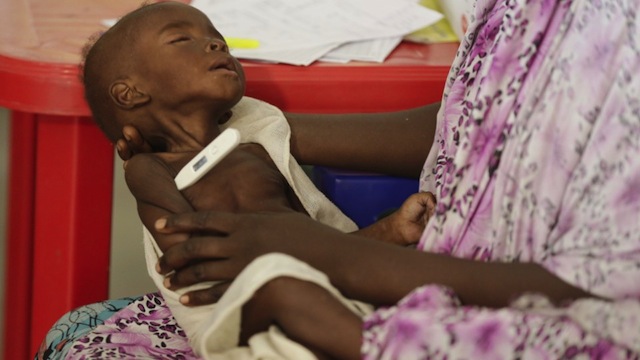
The hope of saving many Nigerian children suffering from hunger and malnourishment next year may have been dashed with no provision made for that purpose in the proposed capital expenditure of N51 billion for the entire health sector in the 2017 budget.
The budget oversight would be particularly felt in childhood malnutrition and vaccines where evidence has shown that increased funding will reduce the record number of children under the age of five who die each day in Nigeria from 2,300 by at least 40%.
The government has tried to underplay the hunger and food crisis that have attended the insurgency in the north east, with president Muhammadu buhari declaring early in December that reports of humanitarian crisis were exaggerated.
The United Nations had announced in a statement that about 5.1 million faced food shortages due to the insurgency in North east Nigeria and the inability of people to go to their farms.
“A projected 5.1 million people will face serious food shortages as the conflict and risk of unexploded improvised devices prevented farmers planting for the third year in a row, causing a major food crisis,” the U.N. Deputy Humanitarian Coordinator, Peter Lundberg, said in a statement Friday.
UNICEF too had warned that over 400 children in the conflict affected areas risked acute malaria and that “more than half of the children could die within 12 months unless urgent measures were taken by the concerned authorities.”
But in a statement released by his senior special assistant on media, Garba shehu, the President dismissed the fears of a food and nutrition crisis as unfounded, indicating that the government does not understand the magnitude of the problem or was failing to face it.
“We are concerned about the blatant attempts to whip up a non-existent fear of mass starvation by some aid agencies, a type of hype that does not provide a solution to the situation on the ground but more to do with calculations for operations financing locally and abroad,” the President said in the statement.
But the federal legislature has been more responsive to these reports. Early this month, the Senate demanded that N95 billion must be budgeted for nutrition to treat children under the age of five who are severely malnourished in the country.
Speaking at a dialogue on nutrition in Abuja, the Chairman, Senate Committee on Health, Olanrewaju Tejuoso, said the N95 billion will be used to treat 1.9 children at an estimated cost of N50, 000 per child.
Overall 2.5 million under-five children are severely malnourished across the country but UNICEF has pledged to support the treatment of 600,000 children in 2017 with Ready to Use Therapeutic Food, RUTF, while the Nigerian government is expected to cater for the remaining1.9 million children.
In an interview with www.icirnigeria.org reporter six days after President Muhammadu Buhari presented the 2017 budget before a joint session of National Assembly in Abuja, Tejuoso said that though the committee had not received the details of the health budget, effort would be made to allocate adequate funds for nutrition.
He said the legislators would discuss with members of the executive to prioritise nutrition and reallocate funds to carter for the malnourished children.
The senator said that “even without the budget, the government has provided some intervention funds for nutrition in the North East because it is an emergency. If it is an emergency, funds must come from somewhere instead of observing children dying.
“What we are saying now is let us make adequate provision for nutrition but we must understand that you cannot spend the money you do not have. We will look at what we have on the ground and then do what is possible”.
It is not yet known the exact amount that has been budgeted for nutrition in 2017 but the Head of Nutrition in the FMH, Chris Isokpunwu has observed that “nearly a half of the amount demanded by the legislators for nutrition alone was budgeted for the whole health systems.”
“Ministries are given envelopes within which they work. So, the Ministry of Finance says health, this is your envelope, you can’t exceed this envelope. You also have to allocate resources within that envelope that you’ve been given, Isokpunwu explained.
“But we also must realise that in health, nutrition is not the only priority. There are lots of competing priorities. I will not say because I am the head of nutrition, all the money must go for nutrition,” he stressed.
In 2016, the paltry sum of N2.4 million which was budgeted for nutrition has not even been released.
Defending the role of National Assembly in approving only N2.4 million in 2016 for nutrition in view of alarming malnutrition crisis in the country, the Vice- Chairman, Senate Committee on Health, Mathew Urhoghide, said that the amount was “proposed by the ministry and that was what we passed.”
Despite Federal Government’s inability to fund nutrition, over one million children with severe acute malnutrition have been treated in the country through donor funding within the past six years.
UNICEF said over 200,000 child deaths have been averted since Community-based Management of Acute Malnutrition, CMAM, began in Northern Nigeria.
CMAN, which began in Gombe State in 2009, has been introduced in 10 other states in the North West and North East where malnutrition is very high.
The states are Adamawa, Bauchi, Borno, Jigawa, Kano, Katsina, Kebbi, Sokoto, Yobe, and Zamfara.
Without government’s intervention, CMAN cannot reach all the children in need because of limited donor funding. According to UNICEF, two out of every three children still do not receive the treatment they need in the eleven states where CMAN operates.
“What’s stopping us from scaling up?” UNICEF Chief of Nutrition, Arjan de Wagt said. “When the resources are there, it is very easy to scale to a million children. That’s not rocket science”.
Nigeria signed up to the Scaling-up Nutrition, SUN, movement in 2011 and signed the global Nutrition for Growth Compact in 2013. In doing so, the country committed to tackling its high rates of child malnutrition. In spite of these commitments, Nigeria has failed to allocate funds to scale up nutrition.
On September 8, 2015, Nigeria also adopted the National Strategic Plan of Action on Nutrition (NSPAN 2014 – 2019). The policy is expected to reduce stunting by 20%, wasting by 15% and increase exclusive breastfeeding by 50% in 2019.
“How can a policy be developed for 2014 to 2019, it is 2016 and there is no funding for it,” Dr.Philippa Momah, the Coordinator of Civil Society for Scaling-up Nutrition in Nigeria (CS-SUNN) said.
At a Town Hall Meeting on Nutrition in Abuja, Momah said, “We find it very disheartening that duty bearers and policy makers finalised the 2016 annual budget for the federation and at state levels within the new zero-based budgeting framework, yet nutrition was not seen as priority issue in a country where over 11 million under-five children are stunted. “
Stunting occurs when children are too short for their age and it is the commonest indicator of under-nutrition in Nigeria. Others are wasting and underweight.
Over 11 million children are stunted in the country and Nigeria also accounts for one-tenth of the global burden of severe acute under-five malnutrition.
About 32% of under-five children in Nigeria are stunted with northern Nigeria bearing the largest burden.
Malnutrition is considered as a social injustice. Experts say stunted children have poor physical growth and brain development, which prevent them from reaching their full potential in life.
The 1,000 days, beginning from conception to a child’s two years of age, is the most critical stage in a child’s mental development and medical experts have concluded that any damage to the brain during this period as a result of malnutrition is irreversible.
DIG Habila Joshak at the flag-off ceremony of ‘Operation Harmony’ in Kafanchan on Wednesday
The Nigerian Police Force, NPF, has flagged off an operation codenamed “Operation Harmony” which it said is intended to restore peace to Kafanchan and all other areas of Kaduna State that have witnessed incessant crisis in recent times.
Representing the Inspector General of Police, Ibrahim Idris, at the event, Habila Joshak, the Deputy Inspector-General, DIG in charge of operations in the NPF, said that the IGP was “concerned by the recent unfortunate sectarian crisis in Kafanchan and neighboring communities in Kaduna state where so many innocent lives were lost and properties worth millions of naira destroyed.”
Joshak stated further that in order to put a final stop to the crisis, the IGP“constituted a Joint Tactical Operation Squad, comprising the Police Mobile Force, Counter Terrorism Unit, Special Anti Robbery Squad, Intelligence Response Team, SIB, EOD, the IGP Monitoring Unit, Police K9 (Sniffer Dog Section), Police Air wing and Police Medical Team with their Headquarters in Kafanchan, which operations will cover the entire Southern Kaduna.”
“I’m here today to flag off this Joint Operations Squad on behalf of the Inspector General of Police to ensure that total peace and normalcy is restored to Kafanchan and environs,” the DIG said.
He assured that the police personnel involved in the operations “will be proactive, work on actionable intelligence and carry out massive deployment and twenty four (24) hours surveillance and patrol, continuous raids of identified criminal hideouts, with a view to arrest promptly trouble makers and their sponsors and nip in the bud violent acts and other criminalities in the general area.”
Joshak added that the squad will cover all the communities, towns, villages, vulnerable points, Government and private infrastructures and facilities in the area.
He also stated that “Police helicopters will embark on guided missions and aerial surveillance of the entire area and will operate in synergy with other Police formations on the ground.”
The DIG Police Operations urged Traditional rulers, religious leaders, public office holders, politicians, opinion leaders, parents and guardians to prevail on their people to support the Police personnel in the discharge of their responsibilities.
He also called on them to “propagate peace, demonstrate love, forgiveness and tolerance in order to promote harmonious coexistence with their brothers and fellow citizens, irrespective of religious, ethnic or political inclinations and differences.”
Joshak assured the people of Southern Kaduna on behalf of the IGP of adequate security and protection of their lives and properties, while urging them to be law abiding and to give peace a chance in their community.
The Ijaw Youth Council, IYC, on Wednesday called on the Federal Government to as a matter of urgency pay 5-month backlog of stipends being owed ex-militants of the Niger Delta region in Presidential Amnesty Programme, PAP.
Eric Omare, spokesman of the IYC, made the call in a statement made available to journalists in Warri, Delta.
Omare said that the IYC was not satisfied with the way the amnesty programme is being handled by the coordinator, Paul Boroh.
He said that Boroh’s excuse that the delay in the payment was because of the Treasury Single Account, TSA, policy of the government, was not enough reason.
The spokesman lamented that the non-payment had subjected the ex-militants to untold hardship and a `miserable’ Christmas celebration.
“Niger Delta ex-militants under the amnesty programme are being owed five months arrears of stipends,” Omare said.
“We also call on the National Security Adviser (NSA), Gen. Babagana Munguno, under whose office the amnesty programme is domiciled, to take steps to immediately effect the payments to avoid unnecessary hostility.”
However, in an earlier interview with the News Agency of Nigeria, NAN, Boroh assured the ex-militants of payment of the stipends, urging them not to be agitated by the delay.
According to him, the Federal Government is aware of the pains they were going through and will ensure that they get their stipends soon.
“I am assuring all beneficiaries under the programme that arrangements are being made to fast-track the payment of their stipends as soon as the Amnesty Office receives its allocation,” Mr. Boroh had said.
All Internally Displaced Persons, IDPs, camps in Adamawa State will be closed by January 2017, said Deputy Governor, Martins Babale.
Babale disclosed this while briefing journalists on the outcome of the State Security Council meeting which held in Yola the State Capital on Wednesday.
He stressed that the administration will do all in its power to ensure that the all occupants of the various camps will have returned to their homes by the end of January next year.
“We will take steps, including encouraging them to settle in villages; we will collaborate with all stakeholders to make sure that between now andJanuary 30th, everyone has left the camps,” the deputy governor said.
Babale, who also doubles as the Chairman of the State Emergency Management Agency, maintained that all the areas of the state affected by the Boko Haram insurgency had been recovered by troops of the Nigerian military and are safe for the people to return to their homes.
He added that the continuous stay of IDPs in the camps was not good publicity for the state.
Commissioner for Information and Strategy in the state, Ahmad Sajoh, said that the council also resolved to roll out a massive enlightenment campaign in order to educate the public on the need to remain vigilant and be on the alert to report insurgents fleeing from Sambisa Forest.
Sajoh pointed out that the state was aware of the capture of boko haram suspects in Lagos and Abuja and hence it does not want to take any chances.
The commissioner added that the state government would collaborate with organisations like the National Union of Road Transport Workers, NURTW, in tracking such fleeing insurgents.
It’s no longer news that Abdulmumin Jibrin, the suspended former chairman of the House of Representatives committee on appropriation, has returned to the country from the United Kingdom.
The embattled lawmaker had fled to the UK citing threat to his life as well as the need to give his anti-corruption movement more international exposure.
Following his return, Chairman of the House Committee on Federal Capital Territory, Herman Hembe, said the Kano State legislator sneaked into the country because he is being investigated by UK authorities for corruption.
“I understand that the suspended Hon. Abdulmumin Jibrin has fled back to Nigeria after report of his ownership of five foreign accounts in Barclays Bank and property located at No. 81, Cotswold Gardens, London, NW2, 1PE in London was published,” Hembe said in an email statement.
“I wish to remind Jibrin that there is no longer hiding place for criminals.”
It is not clear when Jibrin returned to Nigeria, but Hembe maintained that he was trying to avoid investigation by the UK authorities.
“Having realised that even in the UK the National Crime Agency and the Financial Intelligence Unit have already profiled him and may soon open a case against him, he quietly sneaked back to Nigeria.
“His days of freedom are numbered and sooner rather than later he will face the full wrath of the law”, Hembe said.
However, Jibrin explained that he returned to provide additional information to anti-corruption agencies as investigations continue into the allegation of corruption brought by Jibrin against House Speaker, Yakubu Jibrin and other principal officers of the House.
He said: “I returned to the country on the invitation of one of the anti-graft agencies who needed additional information from me as they were finalising investigation and ready to arraign Hon. Hembe and few others.
“I visited the agency and provided what they required and signed to stand witness.”
“Hon. Hembe is obviously aware of this fact and has been panicky and running helter-skelter including trying to get the Speaker to intervene and save him.
On the allegations that he was running from the authorities in the UK, Jibrin replied: “I travelled peacefully from the Nnamdi Azikwe Airport Abuja and landed at Heathrow Airport and same on my way back.
“I also enjoyed my stay in London and other parts of Europe catching up with my vast international network, delivering lectures and granting interviews.”
Recall that Jibrin was accused by a group named “Anti-Corruption Unit” of operating foreign bank accounts while serving as a lawmaker in Nigeria, thereby contravening Nigeria’s code of conduct law.
The group said the lawmaker had stashed millions of pounds in offshore bank accounts.
The group’s director, Ifeanyi Okonkwo, in a statement on September 19said: “Details of the account statement obtained by some lawyers in the UK show that Jibrin has a total £1.558 million pounds (N825 million equivalent) in the account between June 1, 2016 and June 30, 2016.
“Jibrin, however, withdrew the sum of £623.44 within the one month period bringing the balance in the account to £1, 376,193.84.”
To this Jibrin said: “I have responded to the lame allegations and my response is in the public glare.”
Lucky Irabor, a Major General and the Theatre Commander of the counter-insurgency operation of the Nigerian military in the North East codenamed “Operation Lafiya Dole”, has disclosed that the Army arrested a total of 1,240 suspected Boko Haram terrorists after the capture of Sambisa forest, the major stronghold of the insurgents.
Irabor made this known during a press conference at the Maimalari Cantonment in Maiduguri, to brief journalists as well as the general public on the activities of the troops.
He said that the arrested suspects included 413 adult males, 323 adults female, 251 male children and 253 were female children.
He added that they were apprehended during mop-up operations in the forest.
“We are interrogating them to know whether they are Boko Haram members, because there is no way somebody that is not their member would live inside Sambisa forest,” Irabor said.
“We are still on the trail of the terrorists and I want to assure you that all escape routes have been blocked,” he added.
Irabo also said that some of the insurgents have surrendered to authorities of neighbouring Niger Republic.
“Within this period, also, about 30 fleeing suspected Boko Haram members have surrendered to the Niger Multinational Troops on the shores of the lake Chad and we learnt that they were taken to Diffa in the Niger Republic.
“The suspects include 24 males and six females.
“We would like to use this opportunity to encourage the terrorists to give up the fight because the window is still open,” the commander said.
This was corroborated by the Interior Minister of Niger, Mohamed Bazoum, who told journalists on Wednesday that 31 young people from Diffa, who were enrolled into the Boko Haram sect a few years ago in Boko Haram, decided to surrender.
The fighters arrived in the remote desert town of Diffa in groups and were being held by local authorities.
One of them reportedly told newsmen, “I learned that the first who surrendered were not arrested, and I surrendered.
“We expect a pardon from the government so that we can participate in the development of the country and help us get rid of the trauma.”
In June, tens of thousands of people fled Diffa as Boko Haram swept the region.
It was not clear what the authorities would do with the repentant terrorists, but there are reports of a possible reintegration into society.
A security source told Reuters that a meeting was planned for Wednesday in Diffa to discuss “the conditions of surrender,” but did not provide further details.
Boko Haram has killed over 20,000 people and displaced over 2 million since 2009 in an insurgency aimed at creating an Islamic state in Northern Nigeria.
In recent years its attacks have spilled into neighbouring Niger, Cameroon and Chad.
The Army also said it recovered a Quran and a flag believed to have belonged to Abubakar Shekau, a fational leader of the Boko Haram sect.
Irabor said Shekau had escaped when the troops captured the forest.
Chief of Army Staff. Tukur Buratai, had said that the vast Sambisa Forest will be converted into a military training ground.
Arik Air, has accused the Nigerian Civil Aviation Authority, NCAA, of ‘unprofessional’ conduct by going public with the N6 Million fine Issued to the Airline on Tuesday.
Public Relations Manager of Arik Air, Adebanji Ola, said in a statement on Wednesday that the letter should not have been publicised since the deadline given for the company to respond to it had not elapsed.
The NCAA on Tuesday handed a N6million fine to Arik Air Limited for the delay of passengers luggage between December 2nd and 4th, while also ordering it to pay the sum of $150 each to the passengers as compensation.
But in response to the development on Wednesday, Ola explained that Arik Air did everything possible to ensure the passengers got their baggage in good time.
According to the statement, the A330-200 aircraft that was supposed to convey the passengers was damaged by a ground handling truck, and the airline quickly deployed a B737-800 on the London route to minimise the disruption to the passengers.
He added that “all passengers checking in from London were given a letter informing them of the capacity limitation and weight restriction on this aircraft type and advised that some of their baggage would be delayed because of this and transported on the next available flight with capacity. All passengers were accepted on to the flight based on this understanding.
“However, after arriving in Lagos some of them formed pressure groups and took the laws into their own hands disrupting the operations of the airline, assaulting the airline’s employees and destroying its property,” Ola said.
The spokesman also alleged that some of Arik Air’s employees were beaten and hospitalised, and that the passengers disrupted its operations.
“Some of the passengers disrupted our operations for several days thereby making it impossible for the aircraft to operate from Lagos and return from London Heathrow before the night curfew, further preventing the short landed bags from being recovered,” he said.
The statement further alleged that the Federal Airport Authority of Nigeria, FAAN, security personnel watched on as the passengers disrupted, adding that their actions prevented a quicker resolution in the recovery of baggage.
“Some FAAN security personnel were also encouraging passengers to disrupt checking-in process and seated themselves on top of Arik Air check-in counters,” Ola said.
He however assured customers as well as other stakeholders in the aviation industry that it would address the issues raised in the NCAA’s letter within the seven days deadline given in the letter.
A week after he was charged by the Economic And Financial Crimes Commission, EFCC, in Abuja, Italian authorities have indicated their intention to file criminal charges against a former minister of petroleum, Dan Etete, for his involvement in the $1.1 billion Malabu oil deal.
The prosecutors filed the notice in a Milan court last week, premium times can report.
The EFCC slammed a seven-count charge of money laundering and fraud on Etete and others on December 20 at the federal high court, Abuja.
Apart from Etete, another Nigerian identified as Chukwuemeka Obi, is also among the 11 individuals to be charged by the Italian authorities. Shell and Eni are also to be sued, indicating a total of 13 defendants.
Obi and his firm, EVP, had laid claim to about $110 million of the $1.1 billion paid by shell and Eni for OPL 245, considered Nigeria’s richest oil block.
The money is currently trapped in Switzerland where it has been frozen by a court.
Obi sued Malabu for the $110 million in London which he said was his entitlement for helping to facilitate the deal between the oil majors and Malabu.
In July 2013, the high court of justice, queen’s bench division presided by lady justice Gloster ruled in favour of Obi that he was entitled to “a fee of 8.5% of the total disposal consideration of $1.3 billion.”
Following the court’s ruling, the money was transferred to EVP’s Swiss accounts. However, Italian authorities who had by then started investigating the fraudulent deal asked Swiss authorities to freeze the money where it has since remained.
Others found culpable by Italian authorities include: Descajzi Claudio, the CEO of Eni; his predecessor, Paolo Scaroni; Roberto Casula, Armanna Vincenzo, Antonio Pagano, Ednan Agaev, Luigi Bisignani and Falcioni Gianfranco.
Italian prosecutors are also charging Eni and royal Dutch shell for their involvement in the deal as multinational firms.
As part of their findings, Italian prosecutors said officials of Italian oil giant, Eni, may have received $50 million bribe from the $1.1 billion the company and shell paid into a Nigerian government account in 2011.
The money was to allow the oil firms have control of OPL 245, Nigeria’s richest oil block estimated to contain over 9 billion barrels of crude oil.
The Italian prosecutors have now concluded their investigations into the roles of shell and Eni in the OPL 245 controversy and are set to commence prosecution.
The investigators said €50 million cash was delivered to the Abuja home of Casula, who was then the head of Eni’s business operations in Sub-Saharan Africa. The money was supposedly meant for “administrators and Eni executives.”
The investigations also revealed that contrary to claims by shell and Eni, officials of the Italian firm negotiated with Etete and definitely knew the money they were paying to the Nigerian government would end up in Malabu’s accounts controlled by him.
The commencement of prosecution of Italians and multinational firms involved in the shady deals occurred a few days after Nigeria’s anti-graft agency, EFCC, commenced the prosecution of Etete and other Nigerians, including former attorney-general Bello Adoke, and local firms suspected in the scandal.
Sources at the EFCC and the office of Nigeria’s attorney-general, Abubakar Malami, told premium times the Italian prosecutors have been coordinating and cooperating with their Nigerian counterparts. Fabio de Pasquale and other Italian prosecutors have been guests of their Nigerian counterparts several times in the past year.
Also, to ensure seamless prosecution of the indicted officials both in Nigeria and Italy, the two countries recently signed a mutual legal assistance treaty.
Premium times reported how the EFCC on Tuesday, filed a nine-count corruption and money laundering charge against Etete, Adoke, and controversial businessman, Abubakar Aliyu, for their roles in the scam.
Adoke it was, who Authorised the transfer of $801 million of the money paid by shell and Eni to Malabu’s accounts controlled by Etete despite having prior knowledge of the latter’s previous criminalities including manipulation of company registration documents of Malabu.
The former attorney general has however denied any wrongdoing and has pledged to return to Nigeria to face charges.
Etete, who was once convicted for money laundering in France, subsequently transferred over $450 million of the money he received into the accounts of fictitious companies controlled by Aliyu who investigators believe was a front for interested parties and top officials of the Goodluck Jonathan administration, including Adoke. Those four companies were also charged by the EFCC last week.
Etete would later tell a British court that only $250 million of the money truly belonged to him. The €50 million cash the Italian, Casula, received in Abuja is believed to be part of the money transferred to Aliyu by Etete.
Apart from the charges filed on Tuesday, sources at the EFCC and the attorney general’s office told premium times that more charges would be filed against individuals and firms in relation to OPL 245 after the federal high court resumes in January.
In his reaction to the charges filed by the EFCC, Simon Taylor, director of UK-based global witness, said, “we applaud the Nigerian authorities for fighting back against corruption without fear or favour, making sure there are real consequences for taking part in shady deals like with OPL 245.”
“This is a great step forward with the Nigerian authorities showing they are serious about tackling corruption. European and American law enforcement must also step up by fully cooperating and prosecuting anyone else culpable in this corrupt deal,” another transparency campaigner, Nicholas Hildyard of corner house, said.
In reaction to the conclusion of investigations by the Italians, Barnaby Pace, a campaigner at global witness, a UK firm dedicated to transparency in the extractive sector, commended the investigations.
“Shady deals allow corrupt elites to profit at the expense of ordinary citizens. Shell and Eni now have to answer to the Italian courts, the public and their shareholders for their part in the corrupt deal for OPL 245 – oil companies can’t get away with this kind of behaviour any longer,” he said.
The Nigerian parliament is also conducting a new round of inquiry into the controversies surrounding the OPL 245 since its lease was first awarded in 1998.
The department of petroleum resources had told lawmaker of the house committee investigating the matter that due process was not followed in the award of the block and that it was awarded to Malabu only on the directive of then head of state, Sani Abacha.
This report was first published by PREMIUM TIMES and republished here with permission.